Best Of
Heating and Cooling Options for 1850s Greek Revival New York
Hello Everyone,
I recently purchased an 1850s Greek Revival farmhouse knowing most of the mechanicals in the basement needed to be replaced.
I had a few HVAC companies out to give quotes and quickly learned that no one agreed on the right approach for the house, making comparing quotes difficult.
Instead of replacing the mechanicals 1:1 I want to rethink how the house is heated and cooled.
My friend’s father-in-law, who is a retired plumber, shared this site with me and I wanted to post my situation and get some feedback and advice.
The House
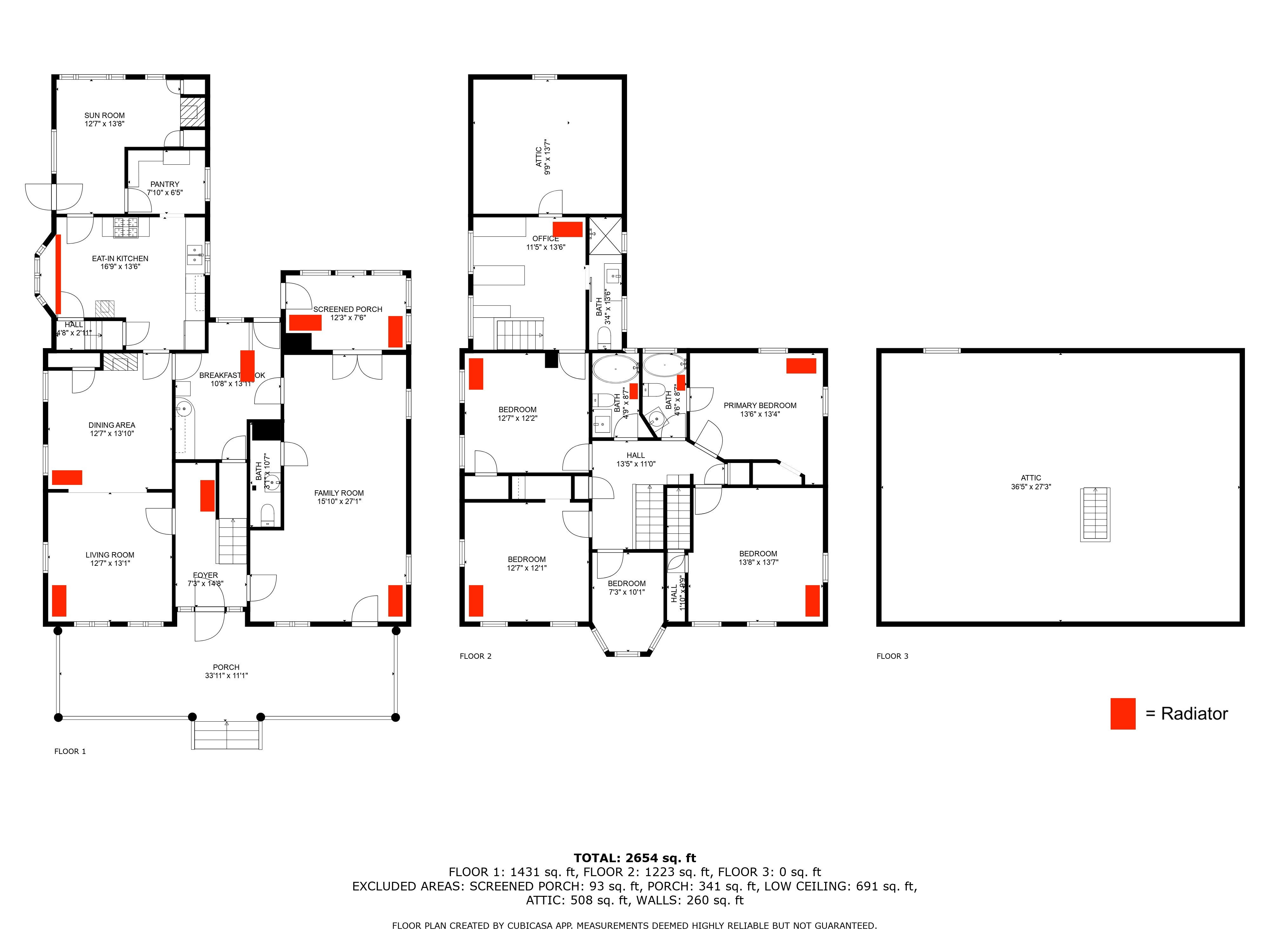
~2,850 square foot 1850s Greek Revival farmhouse in Columbia County, New York.
Main house is two stories with a basement and attic. There is a two-story 1930s extension off the back that has a mudroom and kitchen, with an office and storage on the second floor. No basement or attic over the extension.
At some point in the past the house was split into two units, and there are still two of everything in the basement (boilers, water heaters, well pumps) for the “left” and “right” halves of the house. There are two Nest thermostats that control left and right, both upstairs and down.
Main heating is two oil fueled boilers that heat 15 radiators upstairs and down. One of the boilers is an ancient HB Smith (48 years) and the other is a 10 years old Buderus. The two oil tanks are rusting single-wall units and need to be replaced. There are also two wood stoves, a gas fireplace, and an electric fireplace.
There are two older hot water heaters. The first is 50 gals 27 years old Richmond and the second is 40 gals 18 years old Sears Roebuck.
The previous owners had a few window A/C units in the main bedroom, the office, and one of the living rooms.
Goals
My original goal: to replace the oil tanks with natural gas and install whole-house A/C and humidity control. I have moderate to severe allergies and was also looking into technologies that affect air quality like heat recovery ventilators and HEPA filters.
Originally I thought to take all of the radiators out and install forced air heating and A/C in the attic and basement. I’d seen some old houses do this during my housing search, but almost everyone I talk to advises against taking out the radiators.
The other route is mini-splits but I find these ugly and the installers said I would need a lot of them for the layout of my house. I didn’t get a specific quote but one contractor said it would be north of $100K+.
For what it’s worth, my friend’s father-in-law said he would install Viessmann gas condensing boilers, with one domestic hot water tank, in the basement and leave all the radiators alone, and install a Spacepak system in the attic for A/C in the bedrooms and supplemental heat.
If you read to the end thank you!
 lchamb

Re: Heating and Cooling Options for 1850s Greek Revival New York
I'm with @ethicalpaul — and basically your friend's father-in-law, except that like Paul I'd go with plain vanilla atmospherics rather than fancy condensing units.

Re: What type of vent for one pipe baseboard radiator?
depends on what type of boiler you have. When you say "one pipe" are you referring to steam? If yes, then a hydroscopic coin air vent is not the best however the specifications do allow for venting air from a steam radiator. I'm not a fan of that vent for steam.

Re: What type of vent for one pipe baseboard radiator?
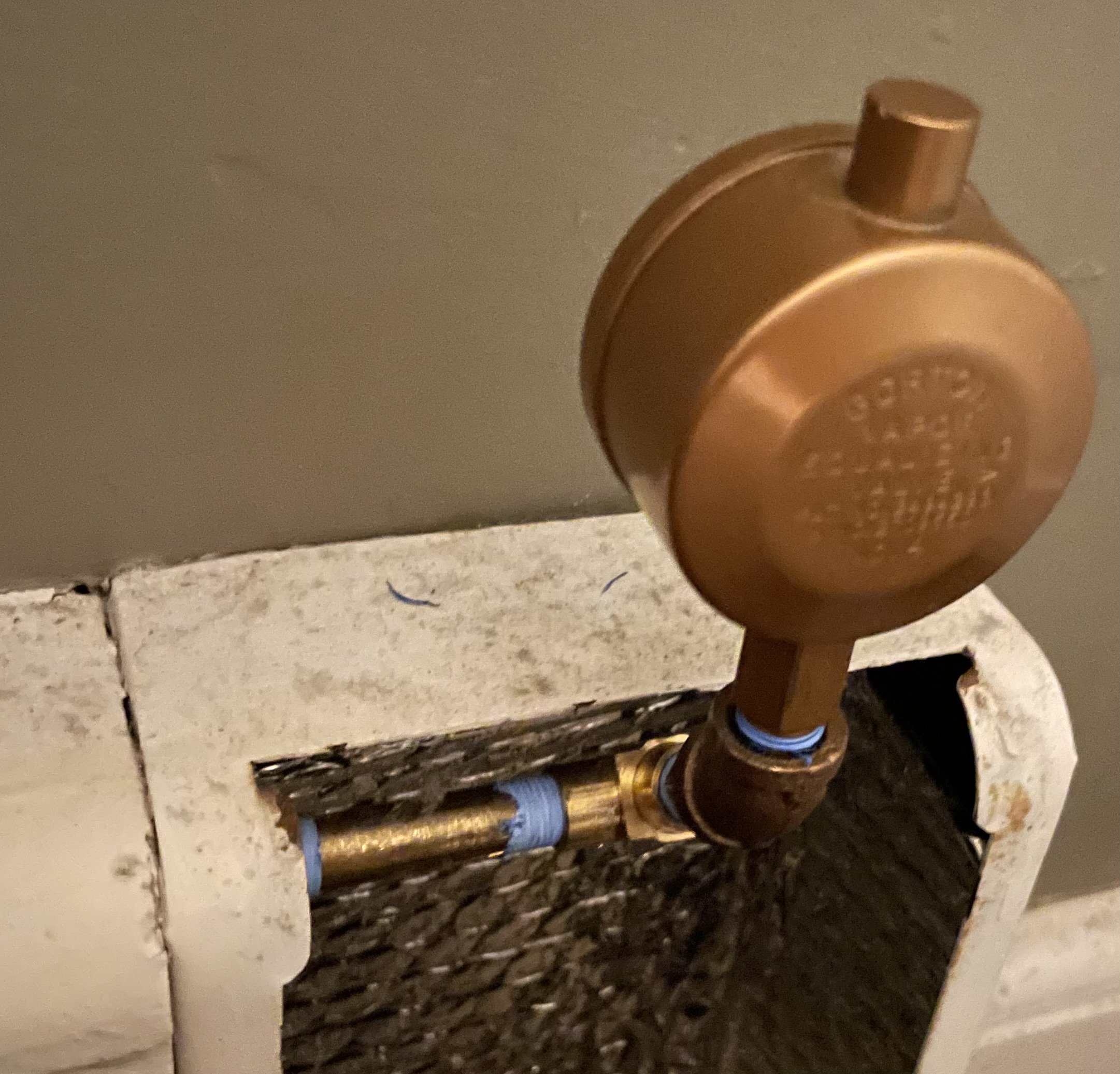
they are marketed as for steam but they are not. you need to figure out how to connect a radiator vent to it, probably need to shift the vent connection around with some fittings and nipples, might need to extend it out of the baseboard cover, can use a straight or angle vent, whichever fits best.
 mattmia2

Re: Looking for recommendations for radiator steam vent for my one pipe system.
- don’t ever buy them at the big box store
2. See above
3. Gorton
4 Maid o Mist
Those are my current rules
Re: Rehashing the old Williamson vs Weil McLain comparison, and new boiler specs
and in the end
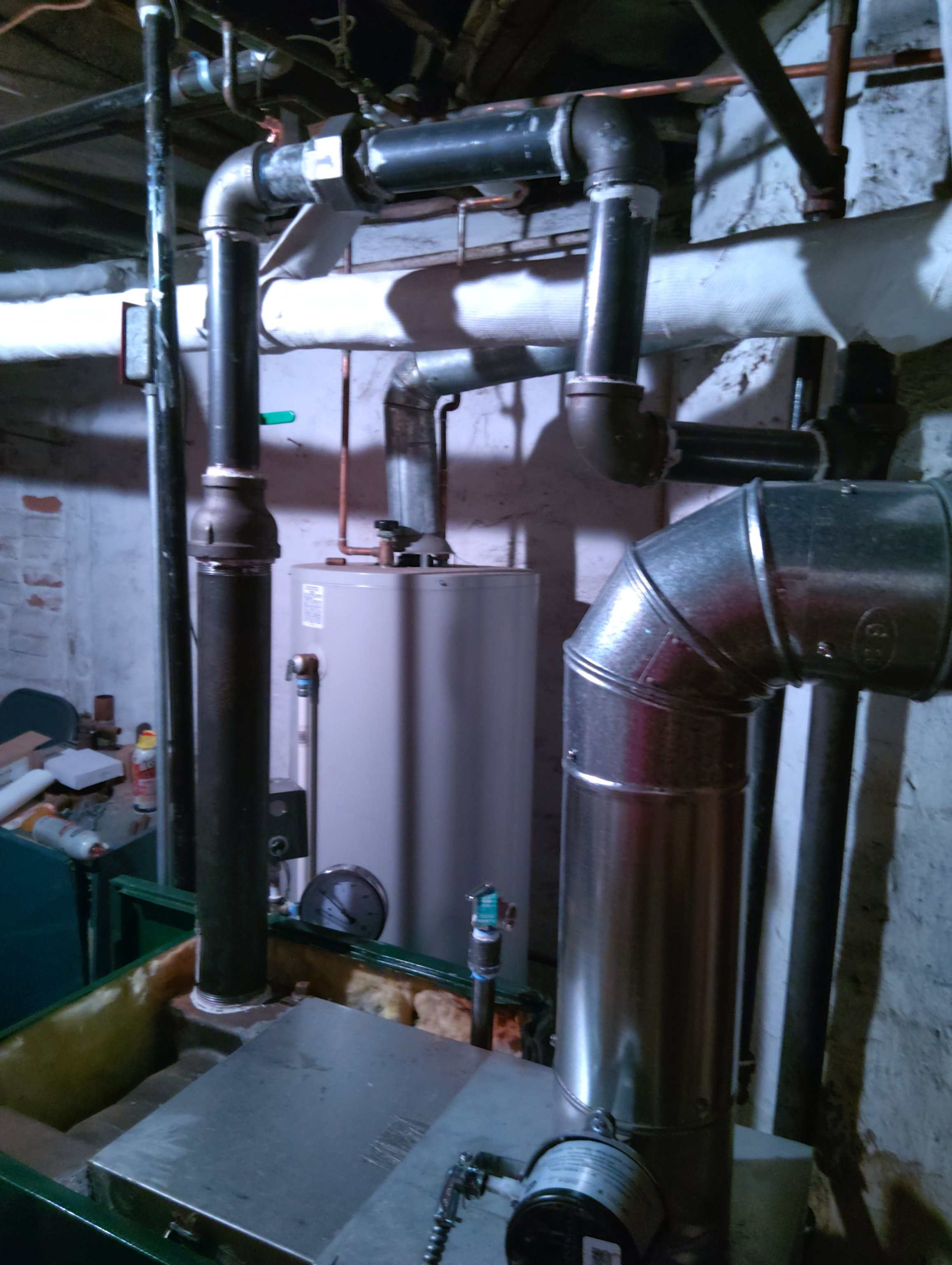
was going to take the 3" up to the elbow but couldn't get the long nipple. it's funny they got crimping solutions for bigger pipe but not threading. . .
so i have skimmed a couple times but haven't run TSP first. compared to the old boiler and piping it has a much more stable water line but not perfectly steady. about 3/8 to 1/2" fluctuation while running. And you can actually track the fluctuations watching the steam guage. it varies about 1/8 or 1/4 of a PSI and then relieves. it is well equalized so i'm having a little trouble figuring what the water level would fluctuate with pressure like that but i haven't linked the phenomenon with high precision and maybe it isn;t the varying pressure that is causing the water level instability.
It isn't carrying a lot of water, no knox, steam circulating to all rads within about 15 mins from cold start. couple are slower. i hadn't balanced the system before so I have a little work to do there.

Re: Undersized steam supply causes carryover, right? Right??
I believe that's exactly his point, right now.
 ChrisJ
Re: Understanding Hydronics
There's no substitute for getting out and working on as many systems as possible. Which means finding someone experienced under whose supervision you can work until you get some experience.
