Best Of
Re: Green Building Advisor: How AI will change your job
The reality of how AI is impacting the trades is that the boss can now integrate AI recording into their techs tablets and record their techs all day and receive an AI generated synopsis that grades all their sales-sta…. I mean service techs on how good they are at recommending products to customers. AI is currently doing the complete opposite of allowing trades people to focus on the trades, it is currently being used to get trades people to focus solely on selling products.
 GGross
Re: Triangle Tube
I will add, I also sourced a replacement flow meter (which is the current and usual issue) and the design has indeed been changed, hopefully for the better. Time will tell.
Cheers.
 mrhemi
Re: Total HVAC Remodel Questions
After you ask all these questions on this thread:
And we asked if you have the actual sizes needed based on a ACCA Manual J calculation, I have a feeling that you have not actually completed that calculation or you can't find a contractor that will do that calculation for you.
So I will ask again about the manual J load calculation. Has anyone completed that math for you or have you attempted to do one on your own? I can't help feeling that you get the impression that an experienced pro can just look at the number you provided and tell you everything you need to know. This reminds me of the DIY auto mechanic that posts this message:
I have looked on YouTube and believe that the valve on my tire is not working as everyone suggests.
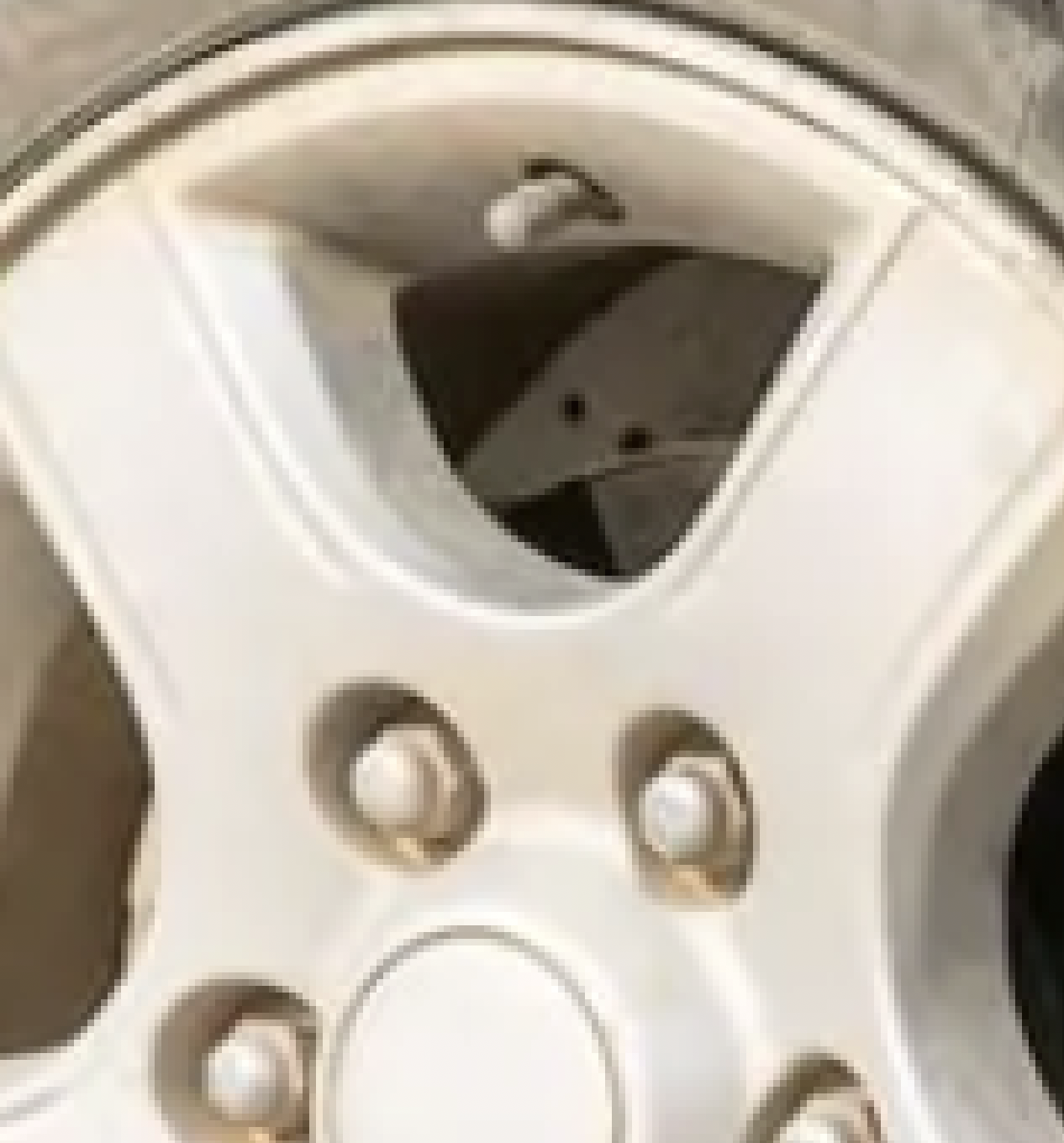
I have had my air compressor connected to this tire valve as shown on all the different websites and videos that I can find. It has been pumping air in this tire valve for over an hour and the tire is just not getting full. No pressure build up, no inflation, nothing. Can someone tell me what I am doing wrong?
After about 20 people ask for a better picture of the tire to see if the seal around the rim has been disconnected? Is there a inner tube? is the compressor hose have a loose connection? Is the compressor actually building up pressure when the hose is disconnected from the tire? all sorts of different suggestions. the original DIY mechanic that posted the original query, the next photo is this one.
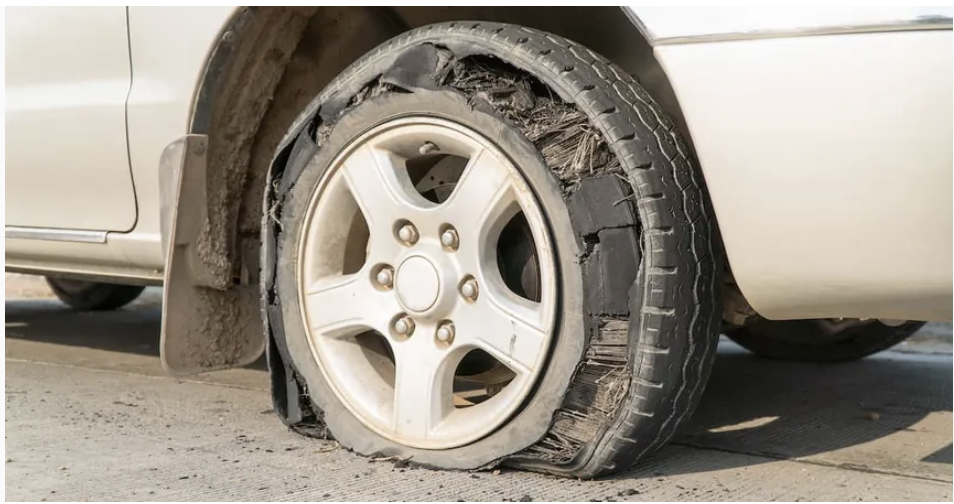
All the professionals with all the advice eventually just stop posting helpful advice, because you just can’t fix $#Up!d. And there you have it.
So, if you really want to know whether a 110,000 BTU heating system is the right size for a 2,500-square-foot home in Michigan, climate zone 5, with some windows, some doors, and some insulation, you probably will not get anyone on this site to say, “YES, that’s perfect.”
If they do, they are telling a big lie.
Now, I am not above a little white lie… or even a big lie, for that matter. So look in the spoiler for the answer you are looking for under this spoiler warning:
YES — That’s perfect.
If that makes you feel better, then go for it. The only problem with this reply is that I do not have to live in that home, and you will have the system you paid for. It may even do an adequate job, but not an exemplary job. Far from it.
Good luck.
This spoiler alert was brought to you by the National Sarcastic Society.
PS Did I mention that you might want to look into getting a Manual J calculation completed on your project. The room by room calculation is preferred if you are designing ductwork.

Re: Heat load calc( to pay, or not to pay)
As an engineer myself I understand wanting to trust your own calculations but unless you you have specific training in this field I'd pay someone to make sure I had not overlooked anything. $400 is literally a drop in the bucket, if your numbers are wrong, the fix could be orders of magnitude higher than that.
I would make sure whoever you hire has the expertise you need.
Bob
 BobC
BobC
Re: Hydronic Snow Melt System in Toronto Questions
yes the farther down the tube in the assembly, the lower the output. Perhaps it can be accommodated with higher supply temperature. I can dig out some info on that tomorrow.
I would ask for an actual design. Most all the tube manufacturers will do a design with a software program.
Basically it comes down to the amount of snow and how quickly you want it to melt and be ice free. That is why there are different performance classes for SIM design.
You have one chance to get it right. Unless they have very short loops, I don’t see 1/2 Pex being a good choice.
 hot_rod
Re: Hydronic Snow Melt System in Toronto Questions
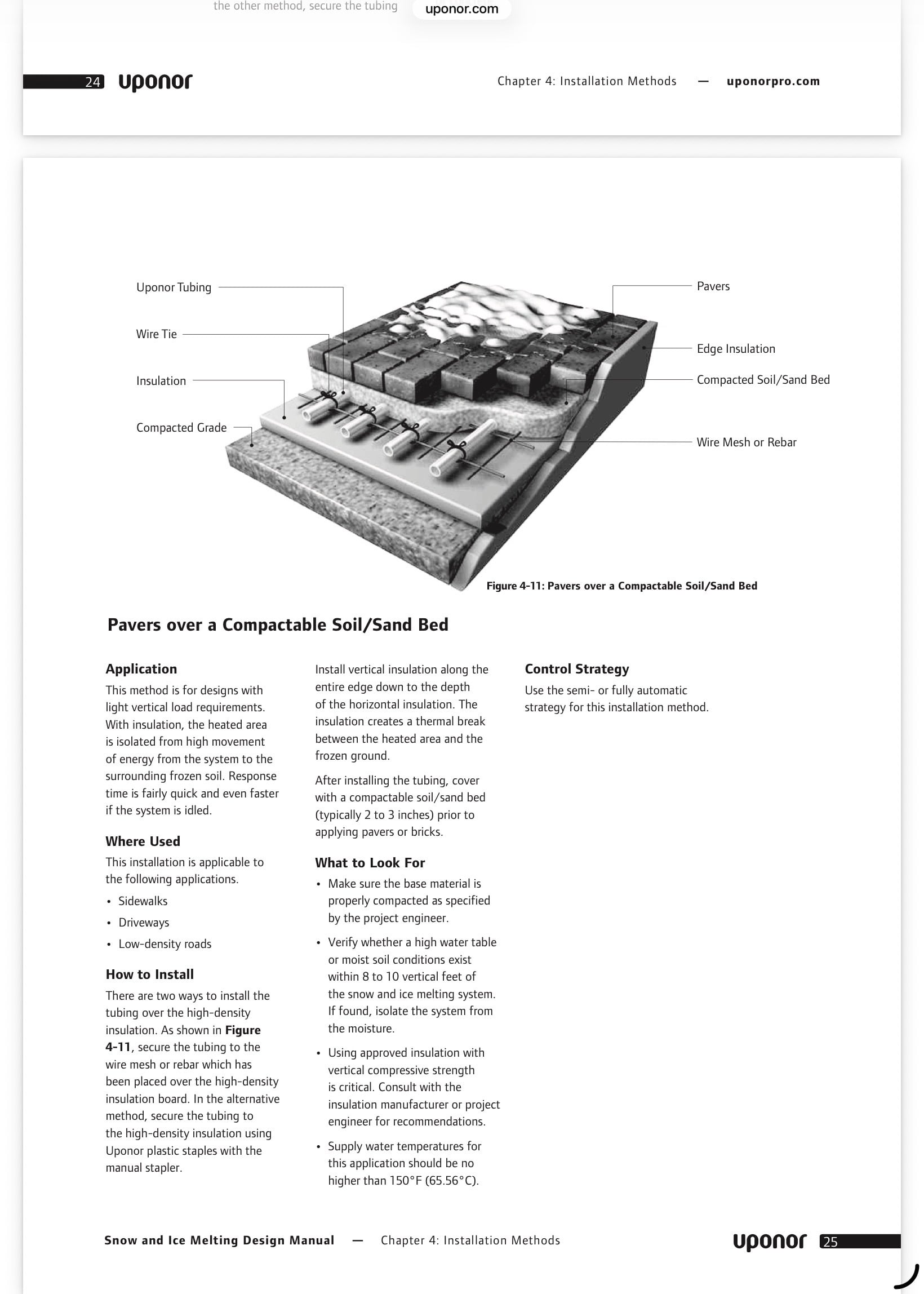
The guide I attached should answer all the design questions and consideration?
Stamped concrete is another option, less installation work. And the tube would be placed about two inches below the surface. So probably a faster responding system. Unless you plan on ideling$$ the slab?
 hot_rod
Re: Help Identifying Bathroom Faucet
panasonic is i believe making their own firmware and possibly control and signal processing hardware and they have documentation that is comprehensible. NEC was my favorite but they merged with sharp then disappeared.
 mattmia2
Re: Hydronic Snow Melt System in Toronto Questions
have they performed a SIM design? What class system, how many btu/ sq ft, etc.
Generally 3/4” tube is used to move enough btus
It is not too hard to do a design yourself, then all contractors bid on the same, correct design.
hot_rod
Re: Jim Davis has passed
I'm sorry to hear of his passing. You always learned something new from whatever he posted.
mattmia2
Re: Jim Davis has passed
This sucks, Matt. We had a great group of all-in dedicated guys back then and we all learned from each other. The guys you mentioned, Darren, Mark Hunt, etc I haven’t spoken to in many years but my goodness the yelling and screaming we did back then, all in great fun. We socialized with Jim Davis and he scared the crap out of us some days. I became a good CO tech (testing, detecting, and eradicating) because of what he taught us. I know, I know: He would go head to head with the manufacturers but he could always back up his **** with test results.
Rest in Peace, Jim Davis.
 JohnNY