Best Of
Re: Is a cap a must?
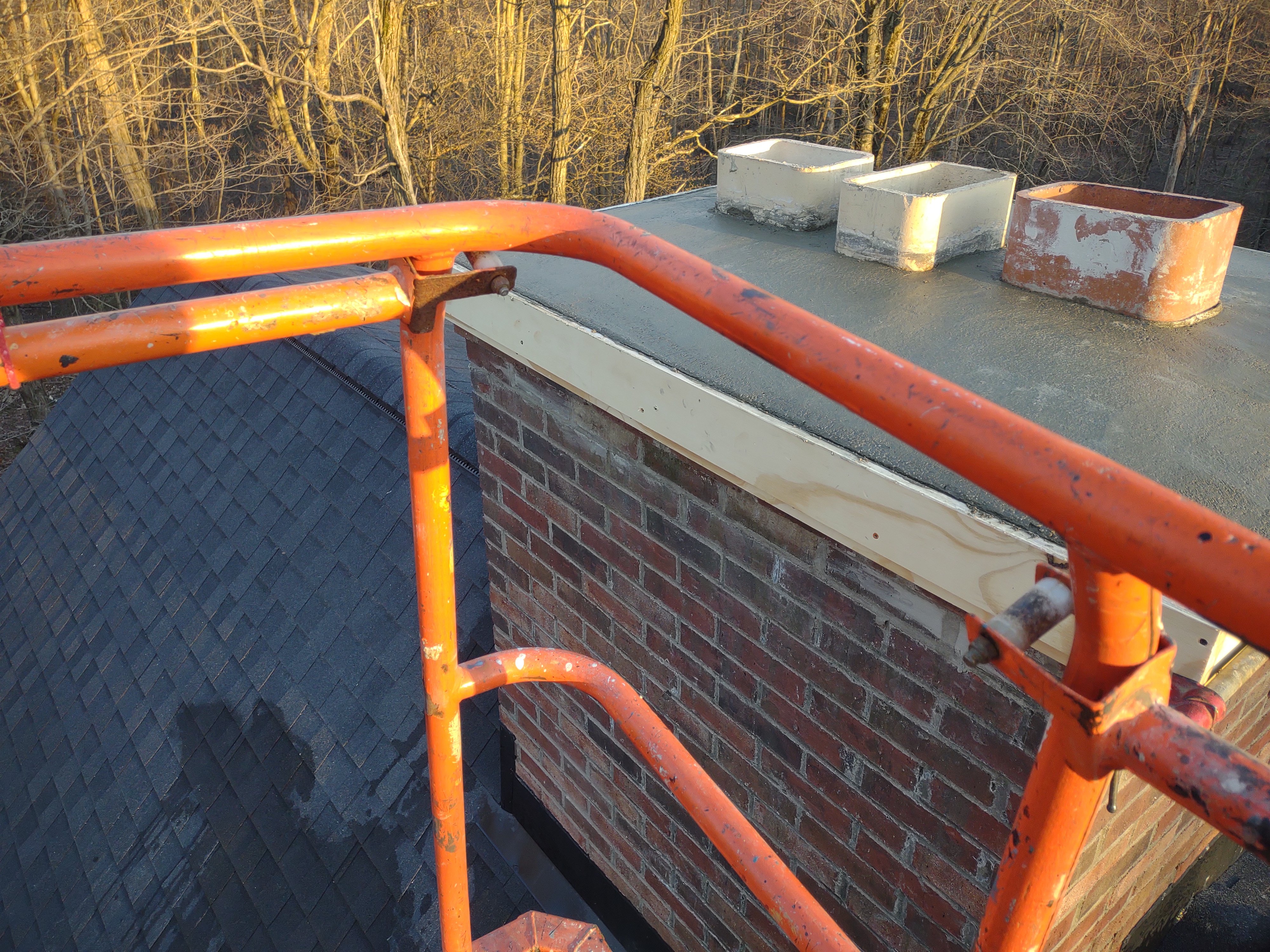
Here is a pic of the top of the chimney just after we poured the cap.

Re: Replacing 30 year old Vesta oil boiler….
I wonder if you looked at the System 2000? I believe the Ascent is their lower priced offering in order to compete with the lower cost cast iron boilers with tankless coils. You can get a lower price on a Burnham with a tankless coil for less than the MPO with an indirect. The difference is the control system does not offer the thermal purge features that EK products are known for. That thermal purge along with the much lower water content of the steel boiler, a more efficient design that can not be matched by a cast iron boiler, will end up with the lowest operating cost. And a big plus is that the EK president and some of their tech support frequent this site and offer assistance over and above the other boiler manufacturers. @Roger might even let you know more reasons you might take a second look at EK.
Don't rule out Steel boilers There have been many steel boiler manufacturers that have equipment that have lasted over 50 years on a regular basis, in both commercial and residential situations. I have done maintenance on thousands of different boilers in my 40+ years and can safely say that the EK boilers are one of the easiest boilers to open up for maintenance. And when I did open them up, There was very little that needed to be cleaned.

Re: TurboMax 30-3 or HTP Superstor Ultra-Max MSSU-45 Help!
Hi, It looks like a leak from the plumbing above the tank caused the problem. Getting warranty might be difficult.

Yours, Larry

Re: Is a cap a must?
The UL 1777 listing requires a rain cap. It does not have to be the one offered by the liner mfr. However, if you make a custom one, you must follow NFPA 211.
Water is the #1 enemy of masonry, esp. chimneys. It breaks down the mortar, softens the brick, stone or terra cotta. The Terra cotta tiles, if made to ASTM C-315, which many are not, does have a vitreous inner and outer face that is water resistant. However, the 1" thick ends are very porous, very hygroscopic clay. These very vulnerable ends are bedded in ordinary Portlance cement (OPC)-based mortar. This mortar absorbs more water than old lime mortar but unlike lime, does not facilitate drying. This, moisture gets trapped in the flue joints. Vapor diffusion drives it inwards towards the drier interior where it encounters the outer face of the flue tile and finding no bridge but instead a capillary break so it condenses and, by gravity, drains down into the lower parts of the chimney where it can take decades to manifest the damage. As you burn, acidic flue gases condense on the walls of the flue, thus resulting in liquid acid draining down into those vulnerable OPC mortar joints. Basic chemistry: acid + base > salt + water. The mortar is converted into sand and salt. Rain keeps these acids and salts soluble so they can migrate. The salt is drawn by osmosis to the exterior face of the chimney where it concentrates as efflorescence. Salt attracts water so an insidious cycle of water, acid and salt conspire to convert the chimney mortar into sand and salt. Thus, you are ledt with a stack of bricks sitting on salty dirt. The 'mortar' has lost its bond so the masonry is no longer intact. It will eventually become unstable and fail.
That is why you keep water out of masonry.

Two short videos this week
Two short videos this week How to Prevent 33% of Boiler Accidents With One Simple Test and Using Thermal Cameras to Find Problems
Using Thermal Cameras to Find Problems Thermal Master sent me a thermal camera to try and I share some ways it can help you in the field
How to Prevent 33% of Boiler Accidents With One Simple Test is about the low water cutoff and how important it is to test

Re: Lochinvar burner cleaning
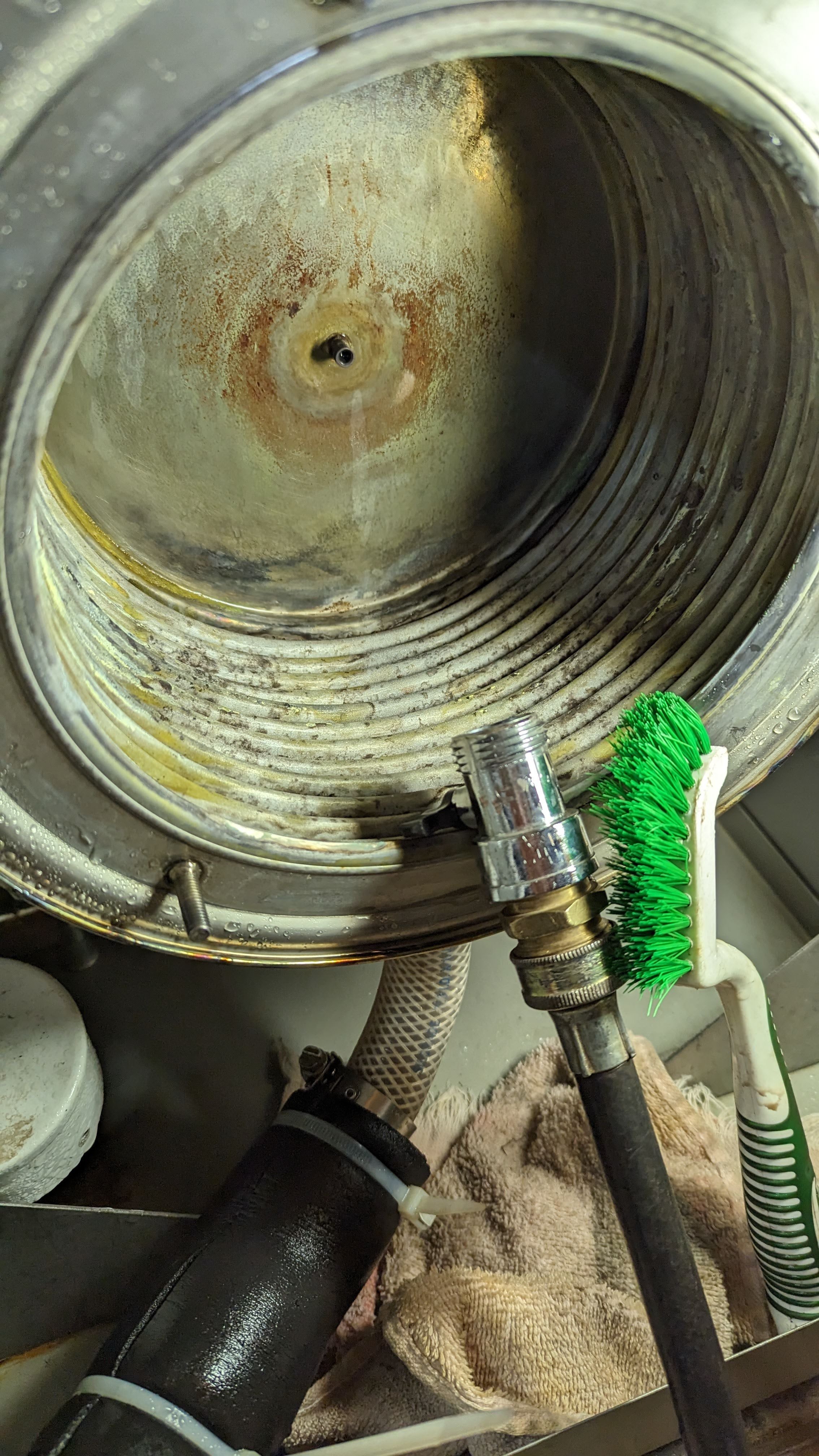
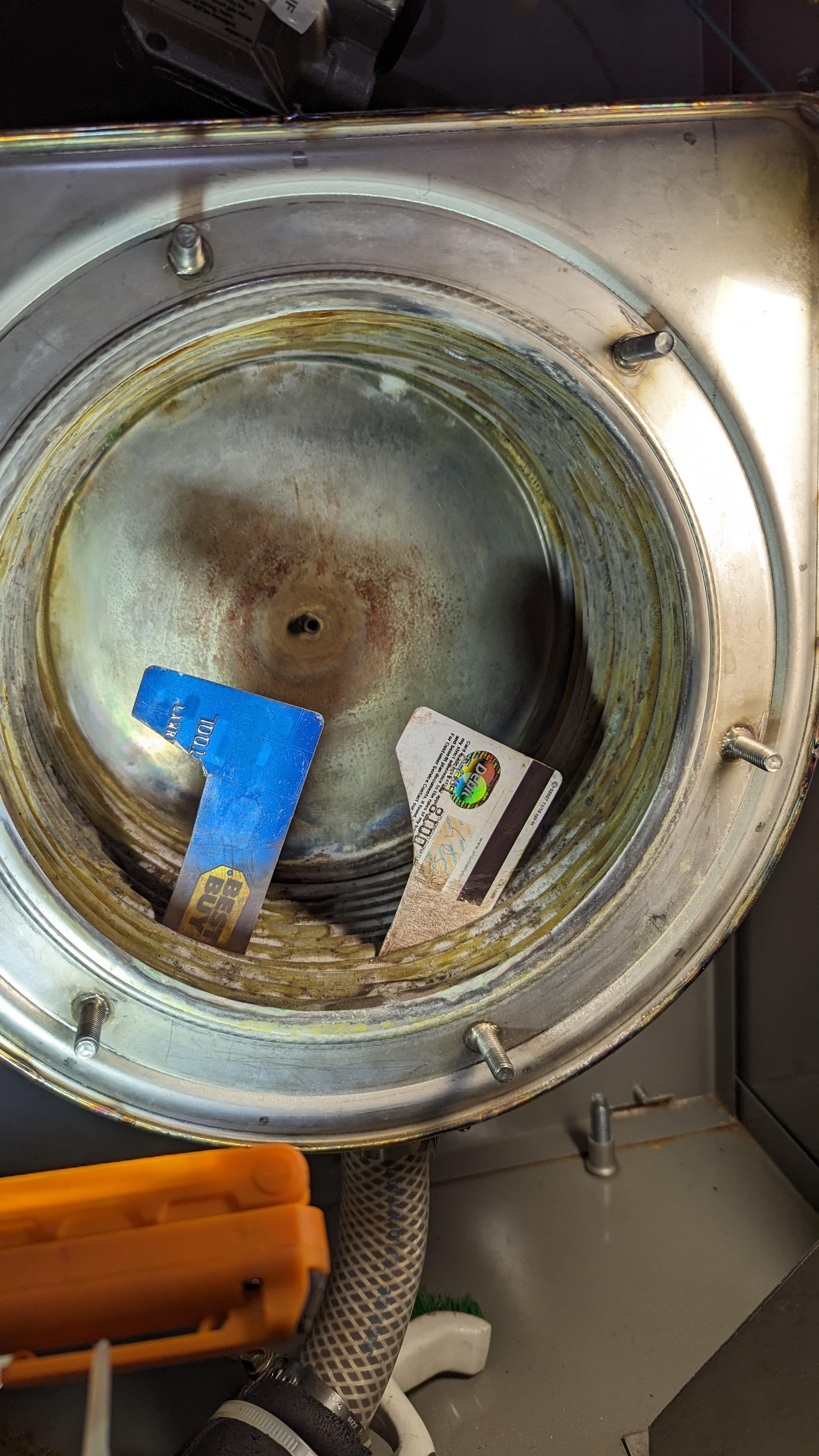
A nylon brush works quite well and the 1/4 turn shut off makes a great sprayer. Attach the condensate drain to a shop vac and spray away. Also, good use of old credit cards for between the tubes.

Re: Central A/C refrigerant leak - 12 year old Lennox system
the drier can be installed inside near the air handler. That prevents the rusting.
 pecmsg
Re: Monoflow/Reverse Return Piping Question
If you can't find Monoflow you could use regular tees with a valve between the tees but why bother?
Reverse return is better and is self-balancing to some extent.
Dont forget with reverse return you can decrease the pipe size of the supply pipe as you take load off and the same with the return the pipe increases as you add load.
Monoflow you have to run the same size all the way around full size. Reverse return has more pipe but the cost is offset somewhat with smaller pipe.
