Best Of
I assume this is no bueno

The meter isn't professional by any means, but this doesn't seem right. Before I make a call, just want to gut check with pros that this is an unacceptable level of CO in a Navien tankless heater exhaust. I've read that some can be present but this seems high.

Circulator aquastat for thermal post purge?
I'm continuing to try to make incremental small improvements on our two Weil Mclain WGO-5 hot water boiler systems. The next thing I'm looking at is installing some sort of post purge to get the residual heat out of the boilers after each heating cycle. The boilers are cold start and typically run for 30 minutes or so before the Tstat is satisfied. Then they sit idle for several hours until the next call, during which some (most?) of the residual heat trickles away up the chimney.
These are 700+ pound cast iron boilers with 10+ gallons of water inside, so there is a lot of residual heat left inside after a burn, and I'd like to recover some of that with post purge. Recently I read a post from someone who was questioning how the Energy Kinetics boilers can advertise such high cycle efficiency, and Roger from Energy Kinetics explained that their high cycle efficiency was due to (1) low mass of the heat exchanger, (2) small water volume inside the HX, and (3) post purge. I can't reduce the mass of our heat exchangers or the water volume, but I can (hopefully) install a post purge.
Because the boilers are so massive, I would like to get at least 20 minutes of post purge capacity. I have seen some electronic controls that could be wired to give me up to 10 minutes of post purge, but I don't think that's going to be enough for maximum heat extraction, and I don't want to go through the trouble of buying and wiring something up only to find the max purge period is too short.
So I'm wondering if I could hard-wire the circulator directly to this Honeywell aquastat that has an external temperature sensor, which I could mount on the supply pipe coming out of the top of the boiler.
I would set the "make" temperature for, say, 100 degrees. Then when the boiler starts cold, the circulator won't start until the water temp in the supply pipe right above the boiler reaches 100 degrees. The circulator will then start, but because there's so much cold water in the system, as soon as the circulator starts, it will flood the boiler with cold water, which will lower the supply temp, causing the circulator to shut off. This process will repeat until all the water in the system has heated sufficiently to allow the circulator to run continuously.
Then after the Tstat satisfies and the boiler shuts down, the circulator will continue running until the supply water temp drops below 100 degrees. At that point, a significant amount of residual thermal energy will have been (hopefully) extracted from the boiler and sent to the radiators.
One possible objection to this setup is that, if the circulator aquastat fails, the boiler will run without water circulation until its own aquastat shuts it down on high limit. I wouldn't want this to happen routinely, but in theory that's the safety mechanism against boiler overheating.
Has anyone seen post purge done this way, and am I missing any obvious alternatives?
 jesmed1
System Design: Solar Thermal Power Generation
I've hit a wall in my engineering ability (as a structures guy) when it comes to thermal dynamics.
In short, I want to replace a custom heat pump's compressor with a proprietary expander tied to a generator, and use Solar Thermal as the heat source to drive the temperature delta thereby generating electricity.
I'm challenged with sizing the component of the whole system in order to build a demonstrator - additionally, I know there are little things in the system design that are needed, but don't know what they are. I am hoping I can get some help.
So here is the concept:
Evacuated Solar Thermal Tubes running dowtherm 10 (or eq.) on a drain back loop into a series of tanks with heating oil. Heating Oil tanks are intended to store enough heat to keep the working fluid @ or above temp for 6-8 hrs. Then there is a loop between the oil tanks and a plate heat exchanger - the loop should stay above 200c for as long as possible. the goal is to generate power at the peak periods of 7-9pm and 6-9am.
Working fluid passes on the other side of the plate heat exchanger and picks up heat (200c+) then pass over the expander - the pressure/phase change driving the expander+generator. The working fluid then passes through a "cooling" plate heat exchanger. To get the bare minimal energy generation, there should be a temperature delta of 30c between the hot and cold sides of the expander. I don't know the pressure drop over the expander - id like help finding out what it needs to be - in order to adjust the mechanical design of the expander. I don't know what the mass flow rate needs to be.
The cooling plate exchanger side has a target of heating water for domestic use - assuming the water should maintain between 100-140F temperature - and assuming a 40ga change over 2x a day (i.e. 2-3 showers a day)
I need to know how many SF of Solar Thermal Tubes I need to achieve the goal of 5Kwh output. I do know that this type of system typically is between 10-12% efficient on energy conversion. If we could get it to 18% efficient - it could be a seed change.
I'd like to be able to figure out: pump sizes, flow rates, thermal storage amounts for the oil tanks, and how much water i need keep in storage (100ga?) and....
Well - by now you can tell I am pretty much out of my depth when it comes to this sort of thing. Help would be appreciated - and ....equations are always appreciated. I just don't know how to calculate between the heat transfers and flow rates....Anyway.
Here is to a new year with better energy possibilities!
- Tryden
 Tryden
Trane Air Handler Fan Constantly Running
I have an old Trane air handler ('92) whose blower immediately and constantly turns on as soon as power is turned on to the air handler. The fan will run despite turning off the thermostat or unplugging G from the board.
I think it is the relay that is faulty and the NO connections remain stuck close, causing the fan to constantly run.
I found a similar looking DPDT switch on Amazon, but it doesn't seem to include any time delay features and not sure if it would be compatible.
I tried finding a replacement online however it seems that the relay is discontinued. There are some posts online that state an appropriate replacement would be the RLY02807 time delay relay, however I'm not entirely sure. Here is its installation manual.
Honeywell ST82U 1004
R8222U 1071
21C144385P01
12AFL 72ALR 120 VAC
6AFL 36ALR 277 VAC
3AFL 18ALR 480 VAC
15AMP RES 277 VAC
10AMP RES 480 VAC


Re: Prevent mold in mini-split heads
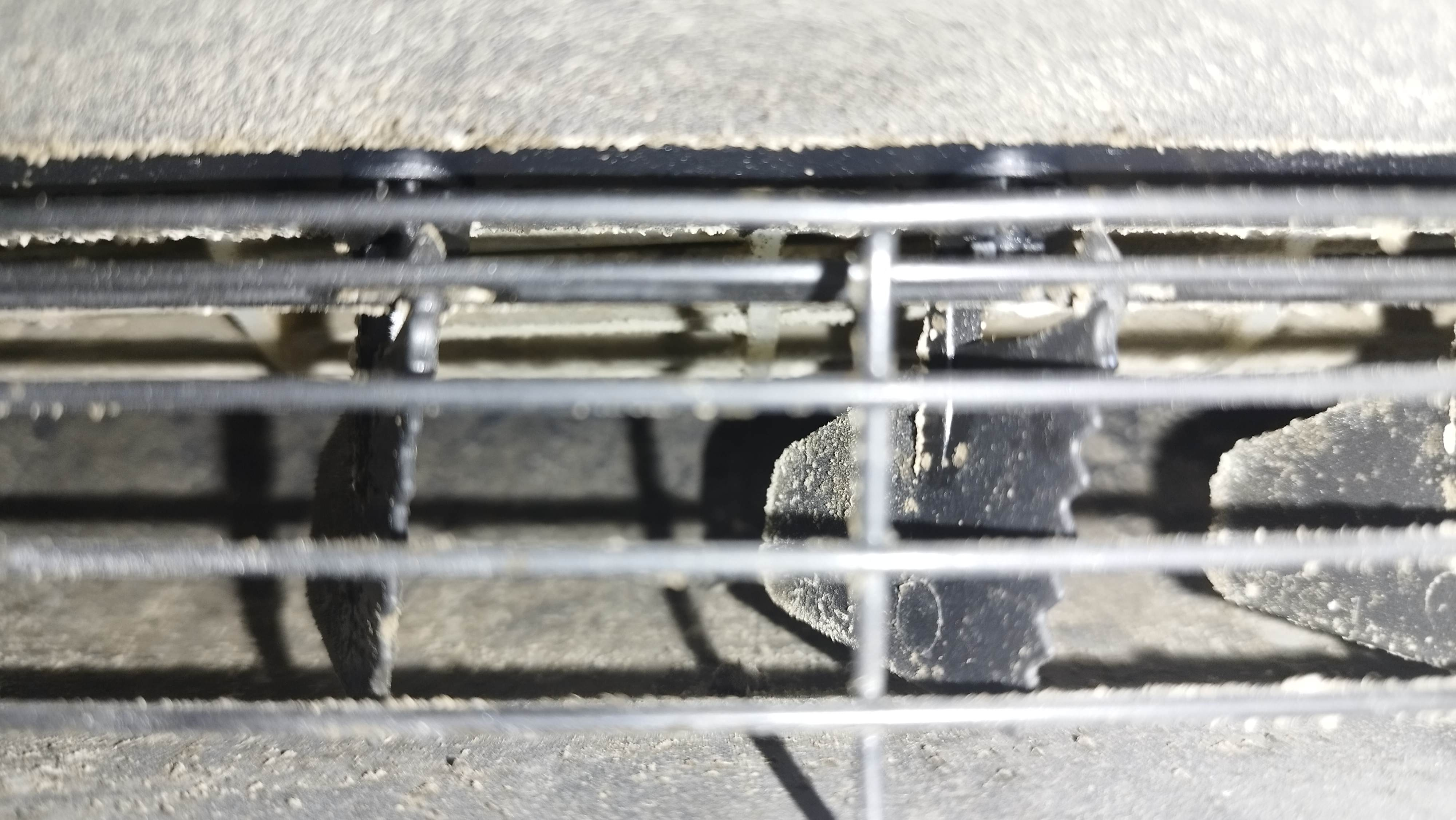
Not the easiest thing to take a picture of but the blower wheel looks like what you would expect for something that sits in pretty much 100% RH most of the time. That is all dust on the surfaces. About 6 years ago the bearing went on the blower and did clean it once when that was replaced.
Not a fan of wallmount design, they really should have put the blower before the coil like most other units out there.
@jpm659er The blower not shutting off is by design. There is no way to measure room temperature otherwise and most people won't spend the extra money for a remote.
This is not really an issue if the unit is sized somewhat correctly and connected to an outdoor unit with good turndown (that is not a multisplit). From the power use on those units, they are cooling pretty much all the time, this means the supply air is bellow 50F all the time.
 Kaos
Kaos
Re: Trying To Estimate Heat Pump kWh Usage
The last time I filled my tank I paid $4.11 per gallon. That equates to $0.35 per kWh, which sounds about what you'd pay in Mass.

Why is my radiator cold? this weeks video
In this weeks video, I discuss many reasons why the steam radiator is cold. Im sure you can add one or two other reasons.

Re: Well pump issues
Has anyone checked the well itself? Over time, it is possible for the well screen to become clogged. This will result in the water level in the well dropping further than it did when it was new, and the pump performance will be affected since it has to lift the water farther. Another possibility is that the overall static ground water level has decreased over the years, with the same result.
Since this is a deep well jet pump, it might be worth looking at the water level in the well with the pump off (the static level) and the water level in the well with the pump on (called the dynamic drawdown). Since you do not see bubbles — and the pump shuts off at 40, though it takes longer than it used to — you are not likely drawing the water down far enough to dewater the well — so that's good. But even so, you may need a pump capable of a greater lift and shutoff pressure.

Re: Trying To Estimate Heat Pump kWh Usage
We're mostly considering the heat pump because she'd like to get AC other than her existing window units.
 JustinS