Best Of
Re: How to- controls question
Here is the info from:
The Wi-Fi Setpoint Control 170 provides precise temperature control of a one-stage heating or cooling system. When connected to the Internet, the Watts® Home mobile app allows the setpoint control to be controlled remotely. An Away mode is quickly and easily accessed to provide energy savings when the heating or cooling system is unoccupied. The setpoint control can be used to control the heat for an indirect domestic hot water tank, a pool, a hot tub, or small outdoor patio, as well as provide cooling for a wine cellar.
The Snow Melting Control 654 is designed to operate electric or hydronic equipment to melt snow or ice from any surface including driveways, walkways, patios, business entrances, parking ramps, loading docks, hospital entrances, helipads or car wash bays. The surface temperature for snow melting is controlled automatically to reduce operating energy costs. The 654 has an automatic start and stop function when used with the Snow/Ice Sensor 090 or 094. Automatic start with a timed stop is available when used with the Snow Sensor 095. The 654 can operate a dedicated hydronic boiler or a mixing device. Isolation relays are required to operate line voltage pumps. Electric systems require a separate GFCI and electrical relay contactor
Looking at the two different controls I see that the 170 is basically a WiFi thermostat that you can check the status of an on/off system over the internet, based only on temperature. This will require constant monitoring to do the job you need it to do. If the outdoor temperature is such that the slab that you do not want ice to accumulate on is at the set point you select, then the 170 will operate the boiler even if there is no need for boiler operation. It will only operate based on the temperature you select and the sampling of the temperature by whatever sensor you attach to it.
The 654 will measure not only temperature of the slab, but will also make a decision on boiler operation based on the presence of ice or snow when using a 5 wire sensor placed in the wash bay slab. If there is no ice at the selected temperature, then the boiler will not operate. So, the 090 sensor that does all the savings by keeping the boiler off if there is no ice, does not connect to the 170. It does connect to the 654. There is a less expensive 095 aerial control that may or may not work for your application. The aerial snow sensor will not operate the boiler if there is no precipitation (SNOW). The car wash always has water on the floor during operation even if there is no precipitation otherwise.
So, I believe the floor sensor will be more accurate. However, if you strategically locate the 095 where the clean rinse water or clean prewash water will make itself known to the 095 then you could go that route. The aerial sensor is not confined to the concrete slab and is less expensive and you can have an extra on hand if needed.
You get what you pay for. If you don't mind constantly checking the system and adjusting the temperature accordingly then go the less expensive route. If you want to take a vacation (or hospital,wedding, or funeral) from the car wash business in January, then you need the control that you can set and forget.

Re: How to- controls question
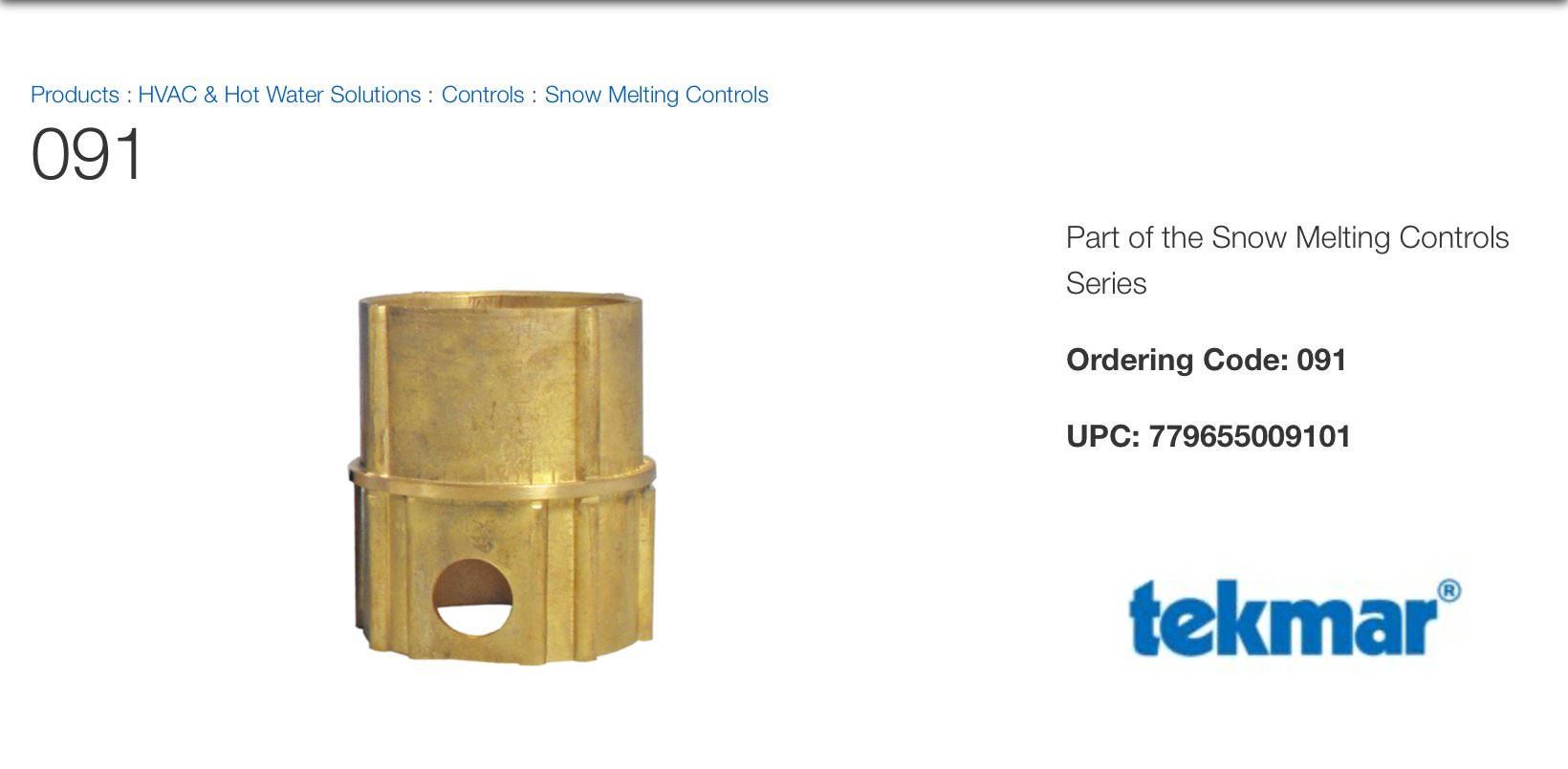
unless you put the sensor cup 091, in the slab along with a conduit, the snow and ice sensor may not be an option.
The task is pretty simple in a car wash bay, keep the slab above 32F. No need to make it. More complicated.
 hot_rod
Re: Transformer/Thermostat
Ah… if you are checking at the service entrance panel…. more than a volt or two difference between the two legs and the neutral is a problem. Ditto for the busses in the switchgear. But if you have a heavy load on one leg but not the other, you might see as much as a five volt difference out in the far reaches at a remote panel, such as a barn a couple of hundred feet away…
A heavy load on one side may drop the voltage at the load a few volts, as well — but it shouldn't change the voltage balance at the panel.

Re: Transformer/Thermostat
I believe that @pecmsg wants to be sure you are measuring the 18 VAC. at the proper terminals. LIKE THIS:
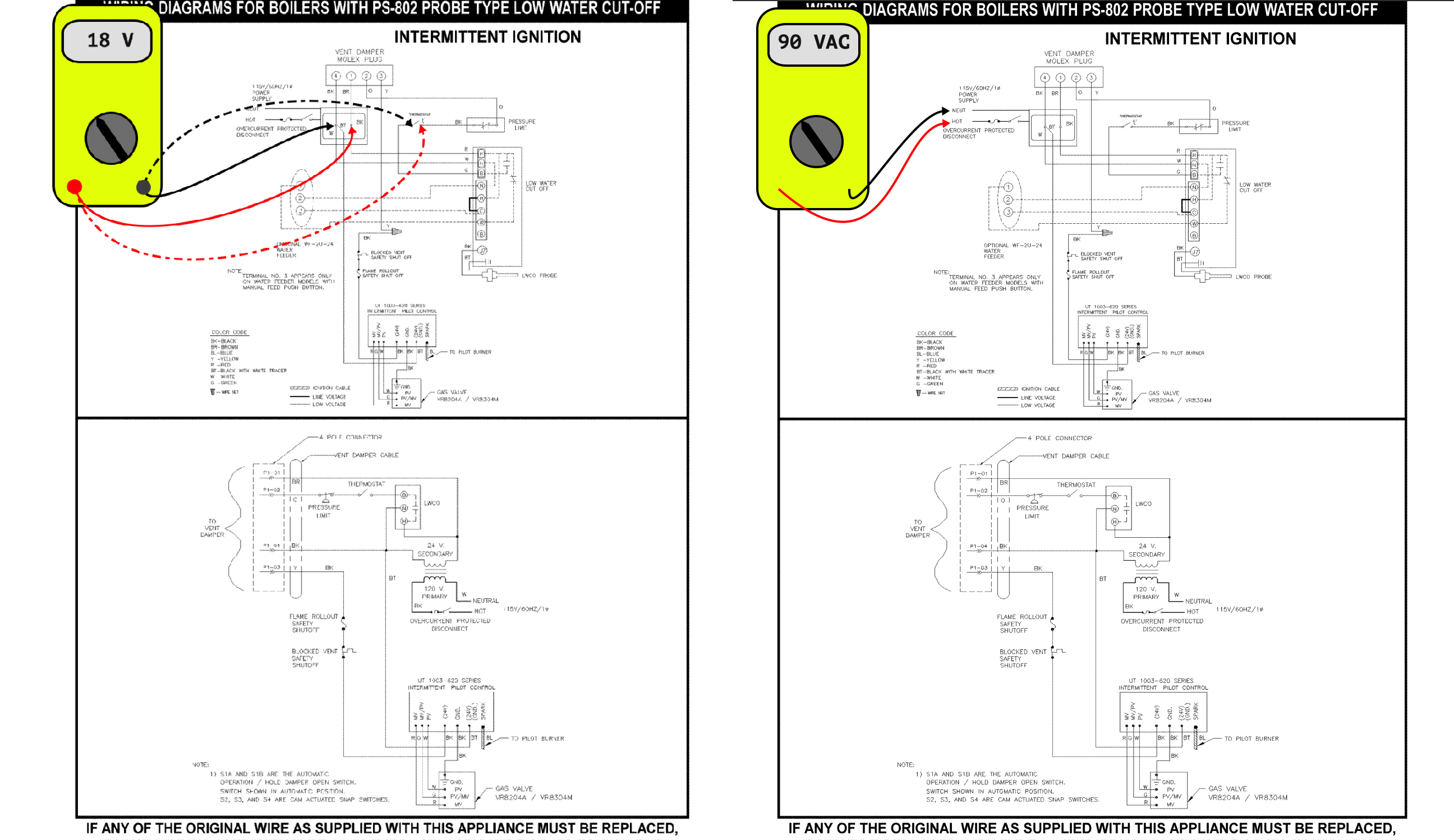
On the left diagram you should be checking the transformer R and C terminals, with the thermostat calling for heat (solid leads) The thermostat should be checked at the thermostat location with the thermostat not calling for heat to get the voltage reading using the R and W terminals at the thermostat.
Some transformers on some steam boilers have up to 5 terminals. You always want to check at R and C
Also did you check the incoming voltage to the transformer? Right diagram if that transformer gets less than 120 VAC coming in then it will hhave less than 24 VAC coming out.

Re: Preferred gauge glass cutter
Yes you can get HP gauge glass, and it is much thicker

Re: Is this at risk of freezing?

Re: Boiler plumbing questions
Typical residential water heaters are in the 30- 40,000 input btu/hr range. So not much horsepower from one of those. It could be enough to keep pipes from freezing, but not much heating on a cold day.
High output tanks run up around 75,000, commercial tanks 500.000 or more.
The only ways to know for sure would be a heat load number for the space, or trial and error.
hot_rod