Best Of
Re: Height difference between primary and emergency low water cutouts
We use a teriiary method. On steam boilers we efeel the danger can be recognized by a high temperature in the lower half of the Hartford loop piping back to the boiler. If the low water fails, the water level will go low, the return water will stop comming throuh the hartford loop, and the drip line will increase the water temperature in the hartford loop (boiler side). If this temperature goes above 180 degrees, the control cut out yeh boiler. This boiler cannot be refired with out a control reset. That is known to the installer.
 exqheat

Re: Age of American Standard boiler G404 Series 4BJ3
The manufacturer's address on the nameplate includes a ZIP code. They were introduced in 1963, so the boiler was made sometime afterwards.
 bburd
bburd
Re: Question about Erie zone valve
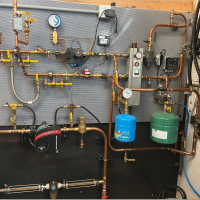
If it us on a 3/4”copper tube loop you are probably moving 2 no more than 4 gpm. Most typical on the shelf 3/4” ZVs are 7-8 Cv
But a 5 even a 3 Cv would work fine.
Those smaller Cv valves usually sell to OEM equipment manufacturers. They are for application with high head circulators requiring a ZV with a high shutoff pressure.
 hot_rod
Re: Exterior insulation on foundation wall
It’s a nice product. I’ve used Densglass to build up architectural details. It’s often used under the stucco / foam layer for commercial builds.
 PC7060
Re: Replacing 30 year old Oil Boiler
It could be a knee-jerk reaction to the current price of oil which is really high. But in the 30 years I owned my home and my commercial building, the oil costs at home were a lot cheaper than my commercial building on NG. Propane in CT is even more expensive than street gas.
I expect the cost of heating oil will be below $3 by fall.
 MaxMercy
Re: old water heater
Montec, I am 71. I have been an authorized rep and installer etc for many manufactures of products and experienced a lot of brands. Service business teaches us a lot, but I have yet to find the crystal ball of foresight. There are too many variables in materials, quality control, installer skills, even shippers cause problems.
I can share that things are made to fail quicker, and use less money in labor and materials to make more sales. In physics we learned : 1) The larger the heater, the cooler the water temp. the longer it lasts, especially gas. This minimizes the flexing of steel and cracking of glass linings. A 5 yr heater, getting its anode replaced every 5 years can last 30 years. I proved it! Well water breaks all the rules and many a heater. Installers make a difference in heater life and performance. Water pressure makes a difference. How much, I do not know. Maximum code pressure; 80PSI. In Baltimore it can get over 130PSI at night. Relief valves begin weeping at 140. Heaters can reach 300 psi and bulge tanks which is never under any warranty. Expansion controls are needed especially in a closed system.
Debris in water will fail a gas heater quicker. One 10 year period the major dip tube manufacturer changed its formula. They supplied almost all the different water heater brands. The dip tube dissolved. Many people switched brands to avoid it, not knowing the brand was not the cause.
Today the simple gas fired standing pilot has been replaced with complex controls that have higher fail rates, even if not leaking. No one can guarantee a leak free heater but a good warranty will fund the replacement and insurance may cover the damages.
My personal choice for a tank, is Bradford White 50-80 gal. For tankless, a Rinnai, and maybe a few other brands. Heat pump water heaters are a failed idea that wastes more than it ever saves. And no plumber will ever fix unless they have an HVAC license. But most manufacture's replace what the will not repair if warrantied. Most "heat pumps" on the heater we worked on failed within 2 to 4 years. Others could not be service without removing pipe built be installer.
 Lance
Lance
Re: Cutting a concrete radiant slab
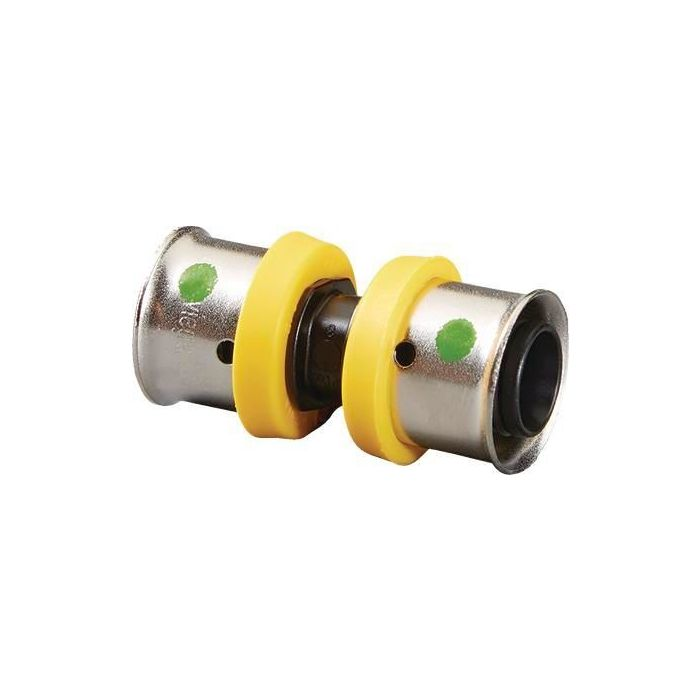
I like these Viega PureFlow couplings for non-PEX A tubing. (Thank you @kcopp.)

Re: Height difference between primary and emergency low water cutouts
So do we- but what happens when you retire?
