Best Of
Re: 1950's Baseboard
Steam boilers are sized based on the connected EDR (Equivalent Direct Radiation) measured in Square Feet.
You do not have a steam boiler by the looks of that radiator. Do not select the replacement boiler size based on the size of the radiators. If you have more radiators than you need as a result of improvements to the home like new windows or insulation upgrades, then you have too many radiators and you may select a boiler that is too big for the house as it stands. You can install a smaller boiler when you have too many radiators and save $$$
One of the nice things about water radiators is that If you have too many radiators, you can make your home more comfortable using a lower water temperature. This will come in handy if you select a modulating condensing boiler that can accept lower return water temperature. By heating the water temperature to 140°F on a cold winter day, you will use less fuel and the home will be comfortable.
When the home was built in the 1950s and the boiler was installed, the plumber may have set the high limit at 180° which causes the room temperature to go above the thermostat set point, then the burner stops when the thermostat is satisfied. As the home cools off, the thermostat will call for heat again using all 150,000 BTUh’s of gas to overheat again. This may actually be uncomfortable. This is a result of oversizing. I would tell my customers this story:
Have you ever been sitting in your easy chair relaxing or reading a book and at some point you feel a chill? Then just about the time that you feel compelled to go to the thermostat to see if it is set too low, you hear that click and the burner turns on. Then you know that the heat is on its way and you forget about it. But a short time later, you feel a little warm. Just about the time you feel the need to see if the thermostat is set too high. You hear that click and you know that the thermostat just shut off the burner. You know that the temperature will be cooling back to the comfort zone shortly.
This is an unconscious reaction to the poor thermostat design and oversized heating system. This may also happen several times an hour because of the short cycling and oversizing resulting from the radiators going up to 180° then cooling off to below 100°. By selecting the proper size boiler with a modulating gas input, the boiler will never react like an oversized boiler and keep your home comfortable with radiator temperature ranging between 100° and 140°
If you are going with a conventional On/Off cast iron boiler the you may be better off with the next size smaller.
This is why I am measuring all the walls, doors, windows, ceilings and floors, and asking about what kind of insulation is in the walls and ceiling. This way I can plug in all those measurements to a heat loss calculation. You may find that you only need a 58,000 BTU boiler and not a 71,000 BTU boiler. That will save you over $$$ on the cost of the replacement boiler and will turn into big savings on your gas bill over the next 20+ years.
I hope this story helps you to decide on a HVAC contractor or plumber that will do the Load Calculation to select the right size boiler.

Re: Installing new bathroom zone on a pretty screwed up system
If the common return is big enough it should be ok. i have a little bit of a concern if you are doing mixing to reduce the temps in the loops but I don't think that will be a problem.
If you have access to each loop connection adding balancing valves will make it act the same as if it were a manifold. It is an unconventional way to do it but if you have a way to balance it and the mains are large enough this part of it should work.
I am concerned that the loops are short enough to get adequate flow through them. Others can help you figure that out.
The bathroom with tile in backer board will act differently than the tubing under wood so it is likely it would be difficult to get them to balance on the same zone.
Is the pex in the loops really 7/8" 3/8" or 1/2" is more typical and 7/8" is really hard to work with.
 mattmia2
Re: some help/advice, pressure shut off, pigtail
There both safety controls and they need to be maintained or replaced. I am sure the LWCO could be taken apart and cleaned. Is it worth it?
With today's price for a replacement maybe.
But look at it this way. Those controls protect the boiler and your house. If they haven't been maintained you could end up in a lot more trouble
I would replace them they owe you nothing.

Re: some help/advice, pressure shut off, pigtail
The bigger elephant is the lwco is supposed to be replaced after 10 years
Re: some help/advice, pressure shut off, pigtail
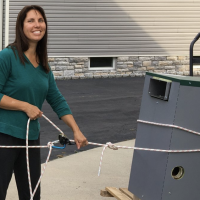
Hi, I like using things wrong. Following on the suggestion of cleaning it out, I'm wondering if a short piece of 1/4" drain cleaning spring, just cut with no bit on the end, chucked into a drill might make quick work of any clog? 🤔
Yours, Larry

Re: Hot water cast iron radiator not heating
50 #'s of pressure?
We need pictures of the gauge and the boiler from a distance.
 pecmsg
Re: Where can I find Pennsylvania code reqs for residential basement oil tanks?
I skimmed through NFPA 31. There is NO mention of any tank distance from a stone/masonry wall. Common sense is to not have the tank touching the wall space it out 2-3 " or so.
I am sure the installers are licensed and getting a permit if the city/state require that and if they are installing tanks and boilers/burners they will be aware of any local regulations.

Re: Axeman-Anderson oil fired boiler vs. Burnham oil fired
If you aren't getting an ohm reading, what are you getting? Open circuit? Closed (shorted)? First thing I'd look at is all your wiring, especially grounds, for being clean and tight.

Re: Hot water cast iron radiator not heating
When you open the small silvery valve at the top of the radiator on the outlet end, does water come out?