Best Of
Re: Low water cutoff not working after cleaning pigtail
You need to take apart the #67 LWCO and clean it. It is also possible that the float has a pinhole in it and its full of water.
It has nothing to do with removing the pressure control.
You need some McDonnell Miller gaskets to rebuild it. It can be done but is a messy job. MM says to replace it when it is over 10 years old but they cost big $$$$
It is an important safety control

Re: How does a radiator vent just fall off?
Try re-tapping 1/8" pipe thread first. Many times the threads just need cleaning out. If that doesn't work, tap 1/4" pipe thread and install a bushing as @EBEBRATT-Ed said.

Re: End of main line vent
No. The best location is not in a tee at the end of the main where the vent can get water hammered. But you're stuck with that location unless you want to cut in a new tee.
It would be better to install a new vent and put it on a long nipple to get it up as close to the ceiling as possible.
What steam pressure are you running at? Is the pressure too high? Should not be over 1.5psi. Lower is much better.
Re: No Flow Through One Radiant Loop
What’s the cold static fill pressure on the boiler? What’s the height differential between the boiler and the highest point in the system?
 Ironman
Re: Can of worms
do you need the bib washer or the packing washer? the bib washer should be a standard size, the packing washer can be replaced with string packing. that boiler drain doesn't appear to be all that old relatively speaking.
 mattmia2
Re: Can of worms
Why? A brass valve usually comes out of a galvanized tee easily.
The stem looks pretty chewed, I doubt you will find a replacement without taking it out and shopping.
Washer and also the seats go bad, not all seats are replaceable.
 hot_rod

Re: Boiler Additive?
The CDA talks about the relative area effect. The less ferrous metals the greater the corrosion of the less nobel.
An example they used.
A ship hull built of copper with iron rivets. The rivets would corrode quickly.
Where as a iron hull with copper rivets, the hull would not see the rapid corrosion.
My thought is a hydronic system all non ferrous except maybe a steel expansion tank. All the potential corrosion happens in the tank.
But for the cost and simplicity of an inhibitor, what do you have to lose?
I think todays systems with so many different metals makes this a more critical issue.
We see steel, iron, brass and alloys, stainless, maybe multiple grades, aluminum alloys in some case, zinc, and copper. These all fall on different locations on the galvanic series tables. Aluminum and copper for example.
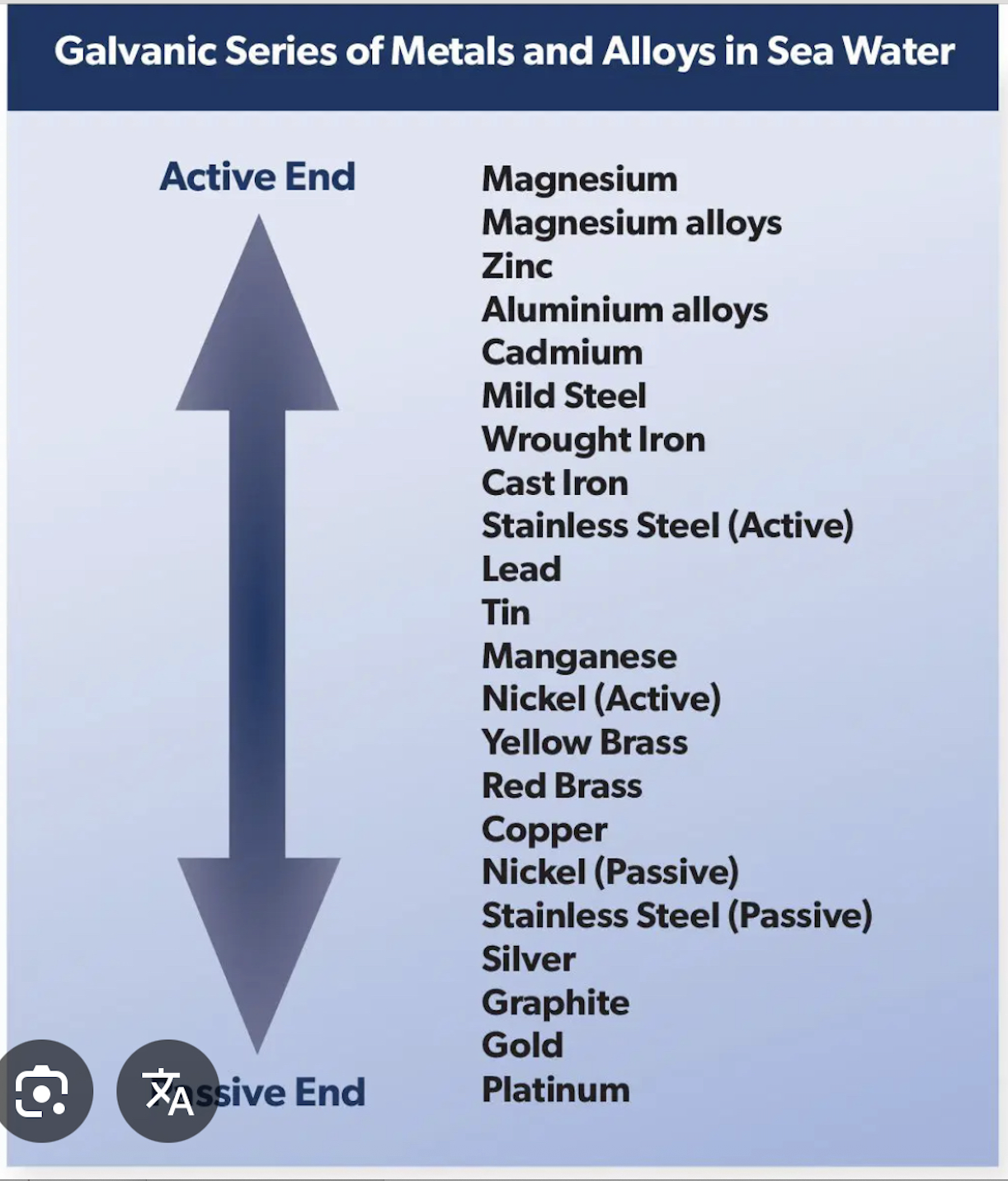
Or aluminum and gold, like the toilets and piping upgrades at the White House :)
Back in the day we had steel, iron and copper in the hydronic systems.
Wood and lead water mains😲
hot_rod
Re: Boiler Additive?
The thing about oxygen ingress through Pex is it is temperature related. The non barrier tube that was used in 180 fin tube systems would corrode ferrous components quickly. Usually the expansion tanks failed first, followed by pump bodies plugging up, threaded nippled detoriating.
This lead the expansion tank manufactures to make “radiant” system tanks, currently called the Extrol pro. A lined steel tank.
Boilers running 120 didn’t have as much of a problem, or as often.
Certainly no harm in using a hydronic treatment, it does multiple tasks. Oxygen scavenging, ph buffer, film provider, lubricates bushings and valves
If you go that route, buy the complete kit that includes test strips.
One example
 hot_rod
Re: Maid O' Mist Brass Blank Orifice Threaded 5/16-32
you can solder up the hole and drill it to whatever size you want. that is what they do with gas orifices if they need to resize them smaller.
mattmia2