Best Of

Re: AMERICAN STANDARD G-27 HELP
I believe we need to start from scratch with @beautifullife534
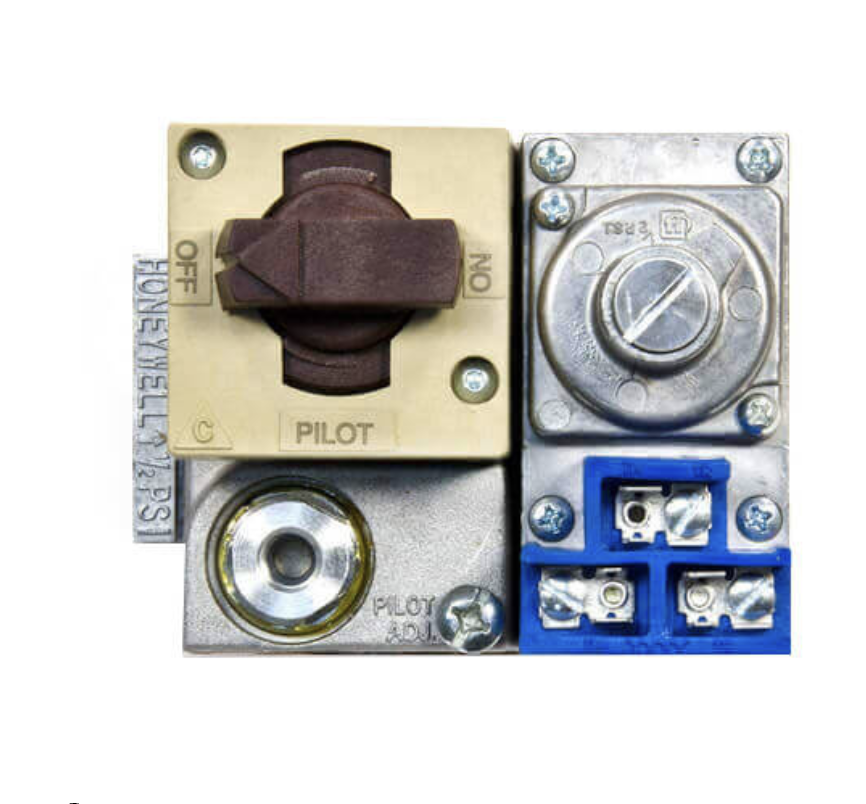
You can use the same valve that you use to light the pilot as the manual valve. It is the same valve you turn to pilot and press down to light the pilot.
- So the first step is to turn that of OFF and wait 5 minutes to clear any gas from the combustion chamber.
- Next is to turn the valve to pilot and push down to let gas flow to the pilot burner and light that with a flame.
- Once the pilot is lit, the thermocouple needs to get hot enough to generate 30 MV (millivolts) of power in order to hold the pilot valve open.
- The thermocouple has two dissimilar metals inside it that generates electricity when it gets hot.
- The pilot flame can make it very hot.
- If the pilot burner is dirty and the pilot flame is too short to engulf the thermocouple in the pilot flame, the metals will not get hot enough to generate enough electricity to keep the pilot burner valve open and it will go right out.
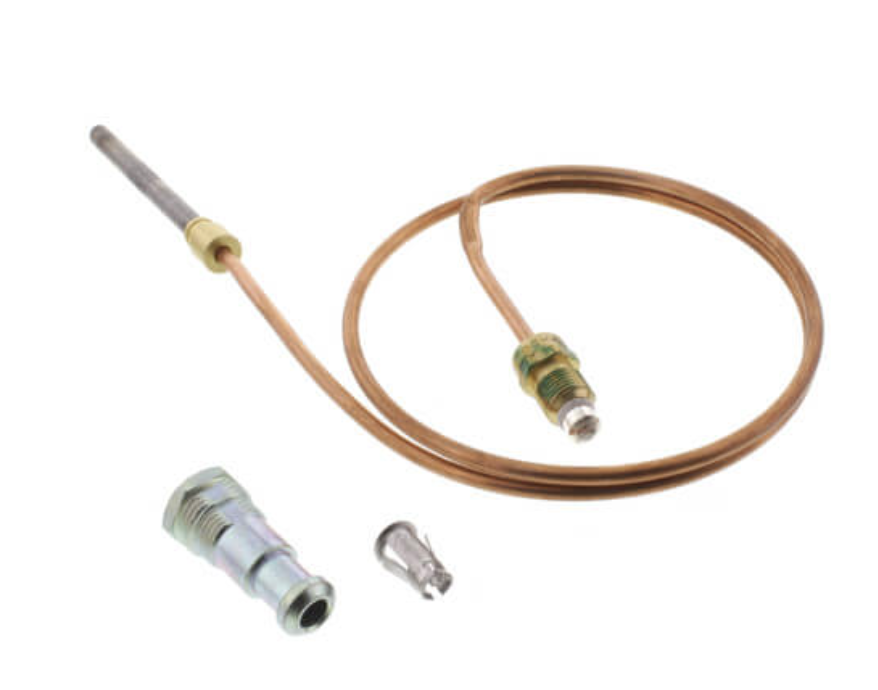
- Another problem can be that the thermocouple is worn out and no amount of heat will cause it to make enough electricity to keep the pilot valve open
Here is a link to a regular thermocouple that you can replace Thermocouple
If you find that the pilot is not large enough to heat up the business end of the thermocouple, then you need to have the pilot burner cleaned.
If the pilot is big enough to heat up the thermocouple, then your thermocouple is bad and needs to be replaced.
Hope This Helps
Mr. Ed
PS. If you attempt to clean the pilot burner, do not put anything metal inside the tiny pilot burner orifice to open it up. Doing that may damage the orifice and make the hole too big. Using a damaged pilot burner is HAZARDOUS and may cause damage, injury or death.

Re: treatment chemical for steam boiler
Thanks everybody! I am very grateful for this discussion.
I think what I am going to do this season is to flush my boiler until the sludge is done and the water is mostly transparent. As I do that, will check pH just out of curiosity.
One problem that I have is there's no easy way for me to incrementally introduce the rectorseal.
What I have done before is to drain the boiler, then remove and clean out the sight-glass (and it's pipes) and then pour the rectorseal into where the sight-glass goes (the whole quart!). Then, re-install the sight-glass and fill the boiler with water and fire it up.
What I would like to do this time is to add measured quantities of rectorseal, and check resulting pH after every addition like you guys suggest.
If I am going to "add and check pH"— I will need to find a way to add the rectorseal to a boiler that is already full. Might need to rig something up for that (I am OK with sweating copper but don't want deal with cast iron fittings unless I can't avoid it). What are your set-ups?
Also, do you do add chemicals when the boiler is active running? Before turning it on? Or when the flame is off and it's idling?

Re: Is this boiler plumbing layout ok?
without knowing the loads we can only guess. it may need a buffer tank or the boiler is way oversized(it might be sized for the dhw load). there is usually an anti short cycle setting in the boiler that will make it hold off firing to let the loops cool some, you might need to set that or make it longer.
 mattmia2
Re: Copper for condensate pipes? Your opinion
Gordo uses stainless steel now in parts of his Hartford loops and where it interfaces with the boiler, that is good because it's always rotting out there first
Re: Copper for condensate pipes? Your opinion
Both get the job done. Ph and water quality play a big factor. Open up a wet return after 10 years, steel or copper. Steel will usually have a good plaque build up and Atherosclerosis. If there is any in a copper wet return, it doesn't adhere to the pipe walls and can be flushed clean easily. Not so with black pipe.
As a general rule, copper ONLY below the water line and on wet returns. If I do have to make a repair on a steam supply radiator branch that is already piped in copper and its not practical time or $$$ wise for the client, I'm using 50/50 solder or silverbrazing the joints..."softer" and greater flexibility. I've seen joints in buildings I did over 35 years ago....No cracks of the solder joint...95/5 joints are more prone to crack as it is a "harder" joint. Mad Dog

Re: Used Roth Oil Tank Installation
If your tank has a pin hole put a magnet with some gasket material over it.
And if the tank is temp. why do you want to fool with a Roth?
Re: Age of vintage pressure gauge?
the scale is just held on with a couple screws. the manufacturer or the oem can put a custom scale on it. it was very common in the days of analog meters for manufacturers to put custom scales and graphics on meters made by someone like simpson. i would say that could be anywhere from the teens to the 50's. if you find out when gurney existed that could narrow it down.
mattmia2
Re: Age of vintage pressure gauge?
That looks like it just came out of its original box! Really nice. Never heard of Gurney either, but all the old ones were well made. Mad Dog
Re: Age of vintage pressure gauge?
I don't have a clue, but I would guess 1920s. Ashcroft gauges are among the best. I never herd of Gurney though.