Best Of
Re: What's a good humidity meter?
from Amazon

govee bluetooth works very well for $12.00. Battery lasted for several years.
 SlamDunk
Re: Mixing valves in oil fired radiant floor heating system
A propane or natural gas condensing boiler can output low enough temp water to feed radiant directly. a cast iron boiler(weather it is gas or oil) can not. It would condense at low supply water temps which will destroy the cast iron. Condensing boilers have special heat exchanges that can handle the condensation. I thought Viessman used to have a condensing oil boiler but i'm not sure. Energy Kinetics also makes some higher efficiency conventional boilers for gas or oil.
 mattmia2
Re: Radiant Floor Heating System – Is a 10°F Single Space - Same Zone Temperature Difference Acceptable?
If the contractor is no longer responding, have your lawyer send them a letter. That will usually grab their attention.
I'd like to know if they can safely raise the water temperature to heat that room properly. Is the boiler currently operating on outdoor reset or just running up to a set temperature?
How many square feet is that alcove? If it's on it's own, dedicated loop, install a thermostat in the room; wired or wireless. Easy.
Or get supplemental heat installed. A small radiator if you can get piping to and from that location. Or even an electric radiator. More difficult.
Change the doors and windows to a higher R-valve. Even more difficult.
Re-do the whole project. Tighter tube spacing. Very difficult.

Re: Radiant Floor Heating System – Is a 10°F Single Space - Same Zone Temperature Difference Acceptable?
Not sure about the law and I could see that being very messy and specific to contracts but I don't think it really matters. I can see no reason why, after completion, someone would not share this information with the owner if it were available. I design well over 100 radiant jobs each year and I rarely have any contact with the building owners, I let all my customers know that they should print a full size copy of the radiant plans and include them for the owner as part of the project along with a digital copy for future reference. As far as I'm concerned that info should always stay with the house, I'm very grateful for the plans and notes that were left from previous owners for my house (along with the box of breakers for my now obsolete panel!)
 GGross
Re: New steam boiler - newbie help
With the fact that most steam heated buildings were sized with radiators that could heat the building to 85° on the coldest day of the year, with the windows open… There is a whole story about that… I believe that those old homes are much better insulated today, with new windows and other energy conserving measures added to lower fuel costs, you will find that the 30% factor built into that NET AHRI sq foot boiler rating is too conservative, so Paul has a point. The opposite direction may also apply if all the old asbestos insulation was removed from all the steam pipes, and no one has replaced that insulation. then a opinion for going up a size may have merit because you size a steam boiler to the attached radiation, not the building's heat loss. And since all those uninsulated steam pipes will be removing heat from the steam at a faster rate than an insulated pipe will, than you may need a bigger boiler.
The best advise is to make sure all the steam mains are insulated. and select the smaller boiler.

Re: New steam boiler - newbie help
Look for a steam boiler with a "Sq Ft of Steam" rating of 300-330. Always round down to the smaller boiler if you land between two of them. Others will disagree with me on this, no doubt.
Re: Mini Split Location
Don't put a 24000 in under any circumstances. You should be able to do 600 sq ft/ton12,000btu. What temperature are you expecting? If the 14,000 won't do it something is wrong unless you have no insulation.
Cathedral ceiling has little effect on the load as the space above your head stays unconditioned when on cooling. You really don't have a good spot to do this with one head. I would use 2 6000 btu or a 6 & an 8 if available. 2 tons for 600 square feet is crazy

Re: What's a good humidity meter?
Before I bought the electronic hygrometer I used to use an oven probe type thermometer with a piece of wet cord over the probe.
mattmia2
Re: Geothermal, one loop field, two air handlers
One thing to watch when you set up your pumps is the primary flow always needs to be above the flow of the two heat pumps. If the flow rate is too low, the heat pumps will pull some of their own return water into the supply without going through the geo loop which will reduce COP.
If those Alphas have IFCs, I'm wondering if it might be better to leave the purge valve closed between the closed spaced Ts to avoid this issue.
P.S. How dare you install a heat pump water heater, it should be a dual tank with a desuperheater! The HPWHs are expensive, unreliable and maintaince nightmares :) On a serious note, do watch how you set up the recirc on it, uncontrolled recirc will wear them out.
 Kaos
Kaos
Re: Radiators make my apartment unbearable during winter
Have you ever heard this expression? "There is more than one way to skin a cat?" It refers to having the ability to understand the problem at hand and looking for alternate solutions to the problem. Another way to look at things for example, like the quote from Mother Superior in the movie version of The Sound of Music when she says "When God Closes a door, he often opens a window".
See how I added that "opening the window" quote for your too much heat problem. L🤣L
We can look at how heat is transferred from the gas or fuel oil flame in the basement to the room in your apartment. Heat can travel 3 different ways. Conduction, Convection, and Radiation.
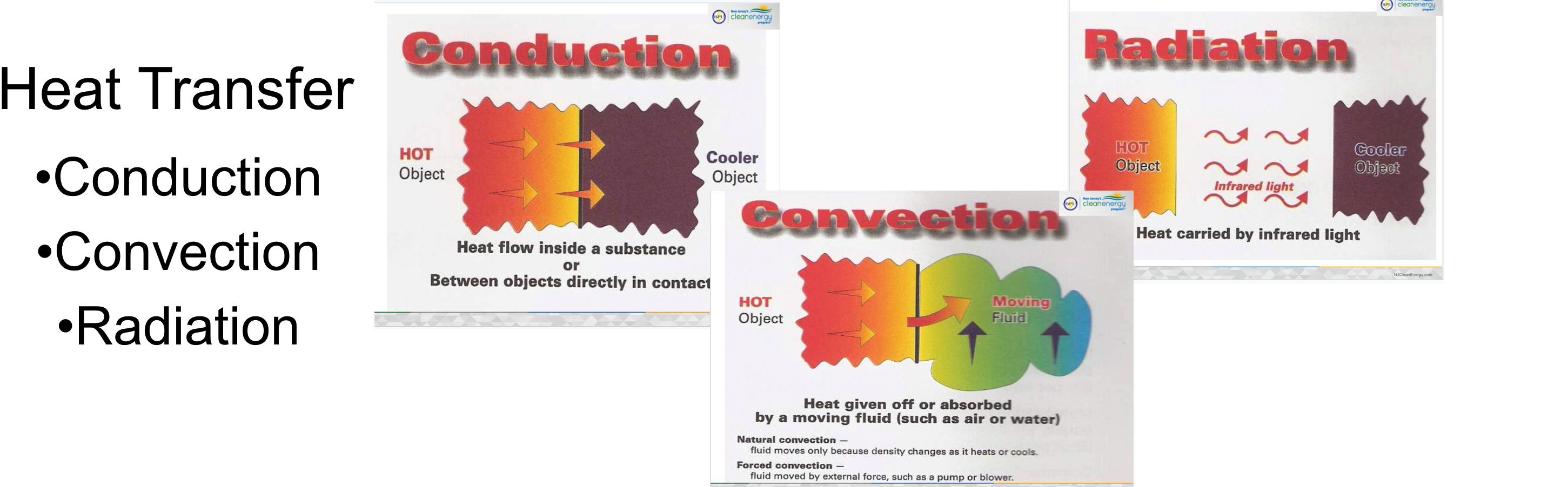
Conduction is when one mass is hotter and that heat moves through the mass to a colder mass that it is connected to. Think of an iron frying pan. You heat the iron where you want to cook stuff but eventually the handle gets too hot to touch. (that is why they invented pot holders). You don’t want to heat the handle but conduction causes the handle to get hot anyway.
Convection is another way that heat is moved from one place to another. This is where you heat a fluid like air or water in one location and move that heated fluid to another location. This form of moving heat is how the boiler gets the heat from the basement to the radiators. What happens is that the flame inside the boiler heats the water in the boiler, then pumps or gravity causes the hot water to move (with all the stored heat) to another location (the radiator) where you can use the heat.
Another form of convection happens inside the room where the radiator is located. The air close to the radiator is absorbing the heat from the radiator and becomes less dense (hot air is lighter than cold air) so that heated air rises above the radiator towards the ceiling of the room. As this happens the air that is already near the ceiling is pushed out of the way. At The same time, the air that is leaving the radiator is replaced by the colder air that is on the floor just in front of the radiator. When that happens that colder air is then heated by the radiator, and we already know what happens to the heated air near the radiator. Since this moving of cold air across the floor and warm air across the ceiling continues to “circulate” around the room, the entire room ends up being a little warmer as a result of convection air currents that move so slowly that you don't even notice.
Finally, Radiation is the way the sun heats the earth. It is said the heat rises but that is not the correct way to make that statement. Hot air rises is the correct way to say it. And the reasonI know this is because the sun is hot and it is above us, but somehow the heat from the sun gets DOWN to us on earth. Radiation travels in all directions using infrared light to heat objects and people without actually heating the atmosphere (the air) in between the source and the object. This accounts for about 20% of the heat you are getting from your radiator.
Now if we look at the problem from another angle, one that you can actually control, then we may be able to get you comfortable this upcoming winter. Let me know it that is of interest to you.
This is the 6 minute introduction to my one day seminar the professional plumbers, and HVAC technicians pay hundreds of dollars to learn. It goes rather fast in most cases because we all should already know this, it is just good to refresh this point so we are all on the same page when if comes time to refer to radiant heat later on in the seminar.
So you are getting little bits and pieces of what the Pros paid for back in the day.
I hope this helps.