Welcome! Here are the website rules, as well as some tips for using this forum.
Need to contact us? Visit https://heatinghelp.com/contact-us/.
Click here to Find a Contractor in your area.
If our community has helped you, please consider making a contribution to support this website. Thanks!
Best Of
Re: Vent Testing and Repair
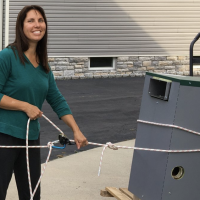
Nice. I LOVE that pressure cooker test rig!!
While you had those Gorton #2s open, did you ever happen to see if the "float" actually "floats"? I found in their #1, it sinks like a stone.
While you had those Gorton #2s open, did you ever happen to see if the "float" actually "floats"? I found in their #1, it sinks like a stone.
Re: Thermostats for Steam/Hot Water Hybrid
For your documentation, the shematic of the RA832 is here:
https://customer.resideo.com/resources/Techlit/TechLitDocuments/60-0000s/60-2481.pdf
see: Fig. 3. Internal schematic and typical hookup for RA832A
https://customer.resideo.com/resources/Techlit/TechLitDocuments/60-0000s/60-2481.pdf
see: Fig. 3. Internal schematic and typical hookup for RA832A
 Sylvain
1
Re: Water in sight glass
Or there's an almost closed radiator somewhere that's draining back to the boiler. 
Had one in one apartment that probably had 20 gallons of condensate in it.
Had one in one apartment that probably had 20 gallons of condensate in it.

Re: System 2000 continuously heating zone 3
Probably the two most common reasons for a zone to start over heating is either a bad zone valve which is letting hot water pass by even when it is closed or a power stealing thermostat, especially Nest's that have been installed. Basically when that Nest is "stealing" power to charge, it creates what is known as a ghost call to the manager. A ghost call is typically not enough of a call to start a heat demand to the system manager but is enough to trick it into thinking it was the last zone calling and cause it post purge to that zone.
 szwedj
4
Re: one pipe steam Radiator vents
It sounds like the banging and the sucking in air are likely symptoms of the same problem. Water is colliding with steam and producing a vacuum and water hammer when the steam collapses. Could be the boiler is priming or surging, could be because of issues with the near boiler piping, could be trapped water somewhere in a main, could be a water seal that was once below the water line that is no longer below the water line, could be excessive pressure, could be a number of other piping problems.
 mattmia2
3
Re: one pipe steam Radiator vents
Thanks guys, but this system is sucking air through the vents DURING the fire. couldn't this mean that the condensate is traveling back prematurely, by cooling off too fast at the boiler in this "one" pipe system?

Re: Gorton air vent quality
There are two reasons why vents will not close:
1] There is a foreign substance or corrosion in the seat hole and pin or head preventing closure
2] The bi metallic strip is in a position were the closing distance, which is the difference resting low temperature position of the head or pin and the closed position is greater than the bi mettalic strips expansion distance or the position needed to create enough closing force. I will go into this when I open another discussion involving testing vents. I got two G#2s from Supply House that were defective one was a replacement that I opened up and repaired.
1] There is a foreign substance or corrosion in the seat hole and pin or head preventing closure
2] The bi metallic strip is in a position were the closing distance, which is the difference resting low temperature position of the head or pin and the closed position is greater than the bi mettalic strips expansion distance or the position needed to create enough closing force. I will go into this when I open another discussion involving testing vents. I got two G#2s from Supply House that were defective one was a replacement that I opened up and repaired.

Re: Gorton air vent quality
I forgot to report that of the 32 that I opened here are the results:
1] G#5 all were repaired and closed at 140F
2] G#6 14 were repaired and closed at 140F
3] GC one was repaired and closed at 140F
4] Some were damaged when they were unsealed
These units were tested 3 times on various radiators with and without master venting and put back in service or reserved for service.
1] G#5 all were repaired and closed at 140F
2] G#6 14 were repaired and closed at 140F
3] GC one was repaired and closed at 140F
4] Some were damaged when they were unsealed
These units were tested 3 times on various radiators with and without master venting and put back in service or reserved for service.
Re: Gorton air vent quality
As I promised February 5, I would get back to you all on this vent issue. I tested 32 Gorton radiator vents that were all purchased in the last 5 months mostly from Supply House and 1/4 from others. These vents all failed as soon as they were installed. There may be others that were installed that failed that I was not told of. Here are the results:
1] G#5 had 3 pcs failed all would not close or remain closed at case temperature 160F
2] G#6 had 26 pcs failed 24 would not close at case temperature 160F, Two would not pass air
3] GC had 1pcs that would not close or remain closed at case temperature of 160F
4] GD had 2 pcs that would not close or remain closed at case temperature of 160F
Please note: Some of the vents were damaged during opening so that they could not be repaired. I had to make a test jig so that the vents could be opened and resealed without damage or burning my fingers.
Please note: If a radiator vent does not close before 160F, it is letting more steam into the radiator than the person designing the system would want.
I also tested 12 Hoffman #40 vents out of the box. Here are the results:
1] One vent failed to close completely ate over 180F
2] 11 pcs closed at a case temperature of around 140F
3] I noticed that there is a clanging sound made when the cartridge holding the alcohol mixture flashed
expanding the cartridge and forcing the pin to close the vent. In several cases this opening and closing
would occur one to several times a minute.
I also tested Gorton G#1 and G#2 mains vents. I will give a detailed account of this in another discussion
that I will open with pictures of the test setup I used and an explanation of vent characteristics and requirements.
1] G#5 had 3 pcs failed all would not close or remain closed at case temperature 160F
2] G#6 had 26 pcs failed 24 would not close at case temperature 160F, Two would not pass air
3] GC had 1pcs that would not close or remain closed at case temperature of 160F
4] GD had 2 pcs that would not close or remain closed at case temperature of 160F
Please note: Some of the vents were damaged during opening so that they could not be repaired. I had to make a test jig so that the vents could be opened and resealed without damage or burning my fingers.
Please note: If a radiator vent does not close before 160F, it is letting more steam into the radiator than the person designing the system would want.
I also tested 12 Hoffman #40 vents out of the box. Here are the results:
1] One vent failed to close completely ate over 180F
2] 11 pcs closed at a case temperature of around 140F
3] I noticed that there is a clanging sound made when the cartridge holding the alcohol mixture flashed
expanding the cartridge and forcing the pin to close the vent. In several cases this opening and closing
would occur one to several times a minute.
I also tested Gorton G#1 and G#2 mains vents. I will give a detailed account of this in another discussion
that I will open with pictures of the test setup I used and an explanation of vent characteristics and requirements.
Re: Not all Old Timers took pride in their work
I am not a Vet but have utmost respect for all of those that served. I think I understand your point about those that served in WWII, I would go as far to say that the work done by MOST people from that era did some of the best work we will ever see.
It's funny.
My house was built in the 1860s. Some additions were done in the late 1800s, also good work.
All of the bad stuff was done in the 30s-50s.
And I'm not exaggerating, literally all of the bad stuff. Flat roof, cutting floor joists, putting pipes in outside walls. Copper pipes run 16 feet with no supports.
Everything before a point, including plumbing was done reasonably well. After a point, absolute garbage. No idea if it's because the house changed hands etc, but what I do know the work is terrible.
Actually, there was also some bad work done in the 80s but it didn't stand out as much as the older stuff to me.
 ChrisJ
1