Best Of
Re: So fresh water carrying O2 causes corrosion. How about a HOT WATER TANK feeder into the boiler?
Early on @hot_rod said: "You are filling mostly with mostly nitrogen, their is approximately 20% O2 in H2O, 78% nitrogen."
I know that Bob Rohr, along with many others, knows this but the way it is written it may be misunderstood that the O part of H2O is being removed from the water. That is not the case. H2O is the chemical compound that is known as water (or ice or steam). Removing the O from that compound is a chemical reaction that will form free oxygen and free hydrogen atoms. That is not the case here for those of you that are new to the concept of dissolved gasses in water. Study Boyle's law for that explanation. The oxygen that is over 20% with the nitrogen that is about 78% along with the other trace gasses in the atmosphere are what Bob is referring to.
Those are the gasses that are dissolved in the water including that oxygen. That O2 will work on any ferrous metals in short order. As the dissolved gasses in the water become void of oxygen as it forms rust in the cast iron and steel parts of the boiler system, the ability of that water to continue to cause more rust vanishes. That is what we are trying to achieve in a hydronic system. Dissolved oxygen depleted water circulating thru the pipes will be inert and will be a great heat transfer medium for a hydronic system. Unless you have oxygen ingress thru non barrier tubing or air vent leaks or packing glands, etc… That water will stay oxygen free for as long as you leave it in the system.
This steam boiler/water heater pretreat discussion reminds me of a bakery that uses process steam to make a type of bread. When it was time to replace the boiler they went cheap on a boiler replacement. Since there was no return condensate to the steam boiler, the water that was being converted to steam was always fresh (full of dissolved oxygen) cold water. As a result, the boilers were failing in as little as 6 years. “What can we do about this?”
By adding a residential water heater and a SpiroVent before the boiler feed, heating the boiler feed water to 140°, the water contained much less dissolved gasses resulting in much less dissolved O2. The boiler would last much longer. Here is the article about it

Re: So fresh water carrying O2 causes corrosion. How about a HOT WATER TANK feeder into the boiler?
Probably much better than your tap water. If it is an open vessel it will still pick up CO2. Dust, mold spores, spiders, whatever is in your air or basement. I doubt the boiler will know or mind.
 hot_rod
Re: Commissioning new Peerless 63-06
the test strips are at least as accurate if not more accurate than a meter that is usually trying to measure conductivity.
 mattmia2
Re: Boiler Protection with 3-way valve?
I'm a bit biased working for Caleffi, but the 280 is an excellent valve for boiler protection. High Cv, union connections, temperature gauge wells, multiple temperature sensors available.
We sell many of these around the world. They are standard equipment on most wood fired and pellet fired equipment to prevent cold operation which leads to creosote formation. So the manual talks about that type of equipment.
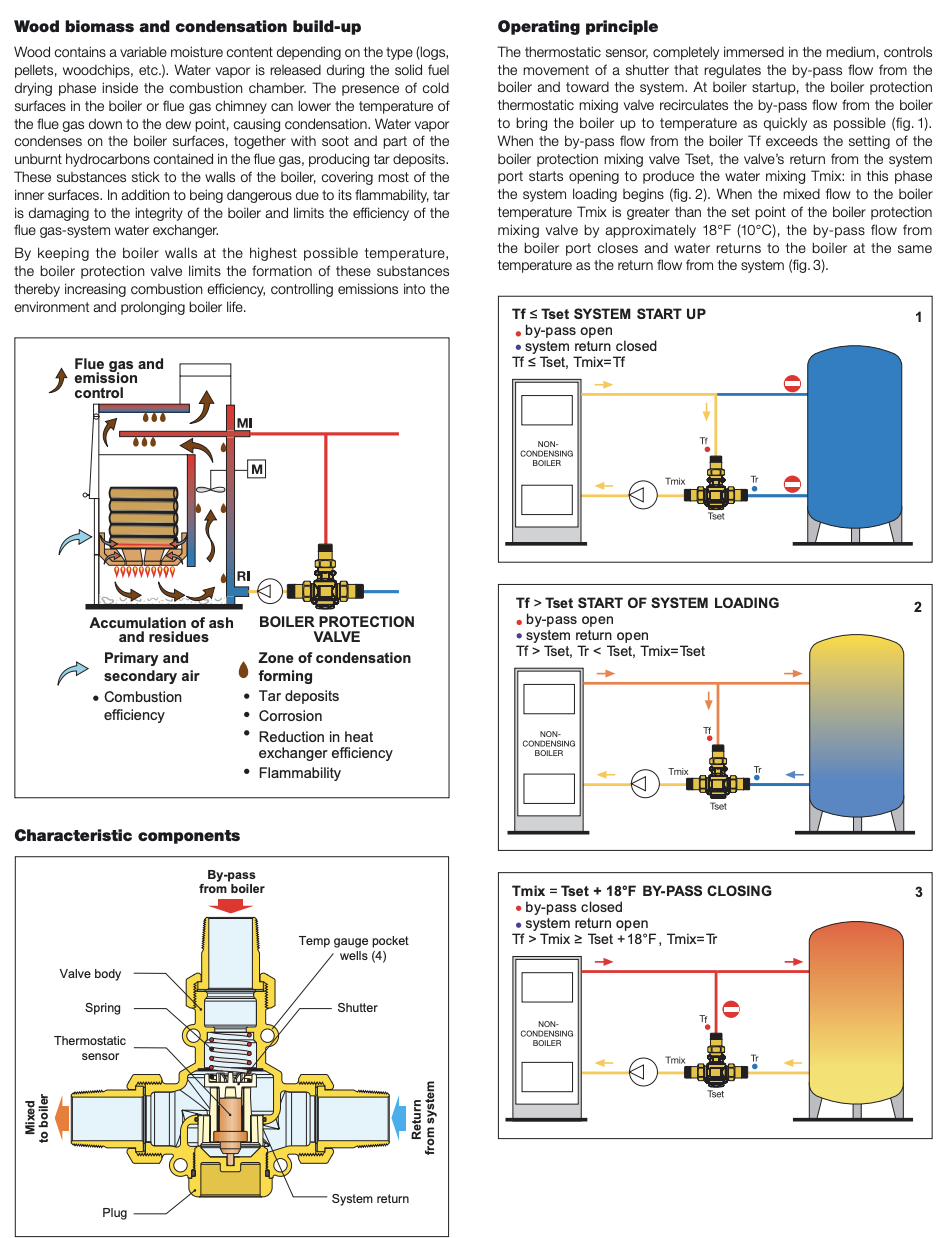
Regardless if you use a valve or electronic solution, the boiler needs to operate to maintain that temperature.
But with a protection valve, shut the boiler off, after the heat call cold start will lengthen cycles and boost boiler efficiency compared to short, under 10 minute cycles.
The type of heat emitters matters, copper fin tube rarely need boiler protection.
Cast rads or large high water content, like gravity conversions, really need protection.
Combining zones helps eliminate shoulder season short cycling. But zoning is a selling feature of hydronics :) catch 22.
In mild conditions it will be hard to eliminate short cycles without maybe tricking the boiler with a anti cycle timer for example. Holding the boiler off when there is a call for heat has some consequences. Comfort might be higher on your list that absolute energy savings?
These are all the challenges with fixed output boilers facing a very wide, dynamic heat load throughout the season.
hot_rod
Re: Want to add water to increase boiler system pressure but stumped
Sometimes "technicians" close the water feed valve because the pressure reducing valve is leaking internally causing frequent pressure relief valve incidents. Watch the pressure gauge after opening the feed (the pressure will go up as the system heats up though). If the pressure keeps slowly rising with the boiler off and the pressure relief valve pops now and then dumping water on the floor, the PRV is leaking internally. A bad expansion tank can also cause this which might explain why it was left at low pressure and locked.
 MaxMercy
Re: Makeup water causing boiler failure due to thermal shock
In theory it's impossible.
A tiny fresh water feed pipe feds the bottom of the boiler pipe mixing with very hot water inside. The cold water doesn't stand much chance.

Re: Honeywell outdoor temperature reading
I'd do the outdoor sensor. I have an airport about 3 miles from my house and even the temp there and at my house is frequently significantly colder because I am in an urban area with a lot of mass and concrete and the airport is mostly out in the middle of a field.
mattmia2
Re: Makeup water causing boiler failure due to thermal shock
No. Only time I had it, was when boiler was running on empty. Boiler was cherry red and customer added water. Goodbye boiler

Re: Viessmann Vitocal AWHP for hydronic baseboards or retrofit floor heating?
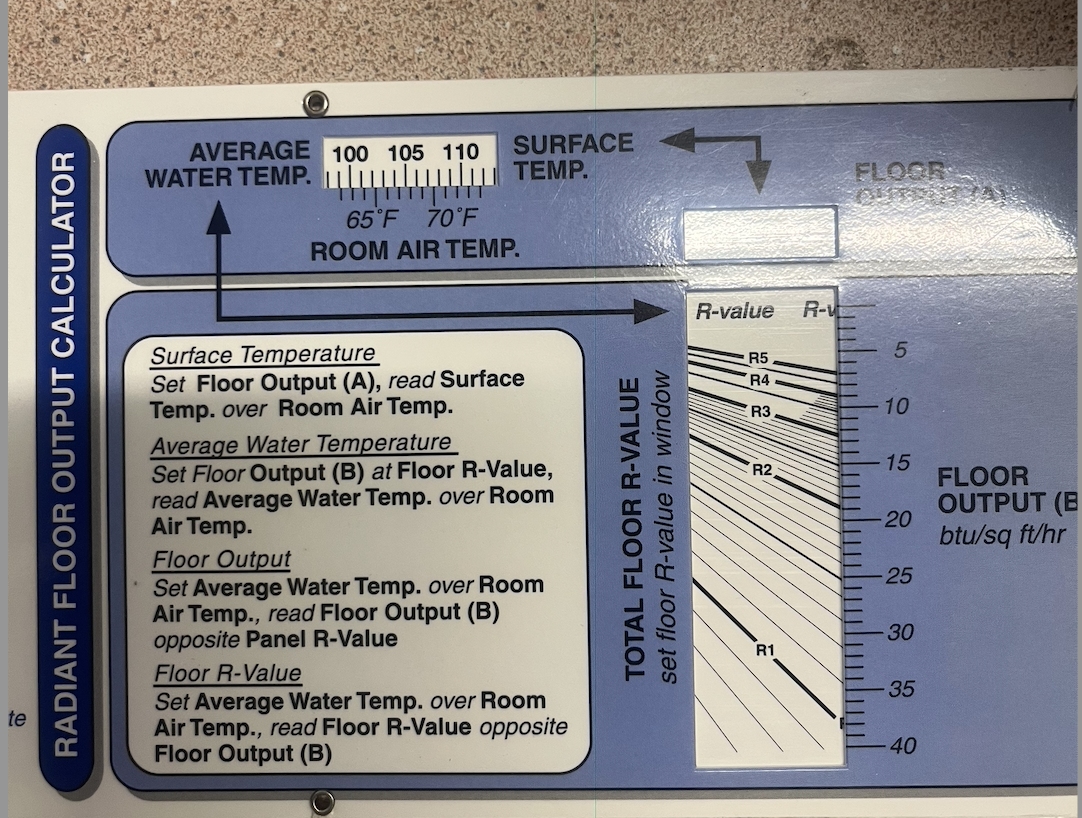
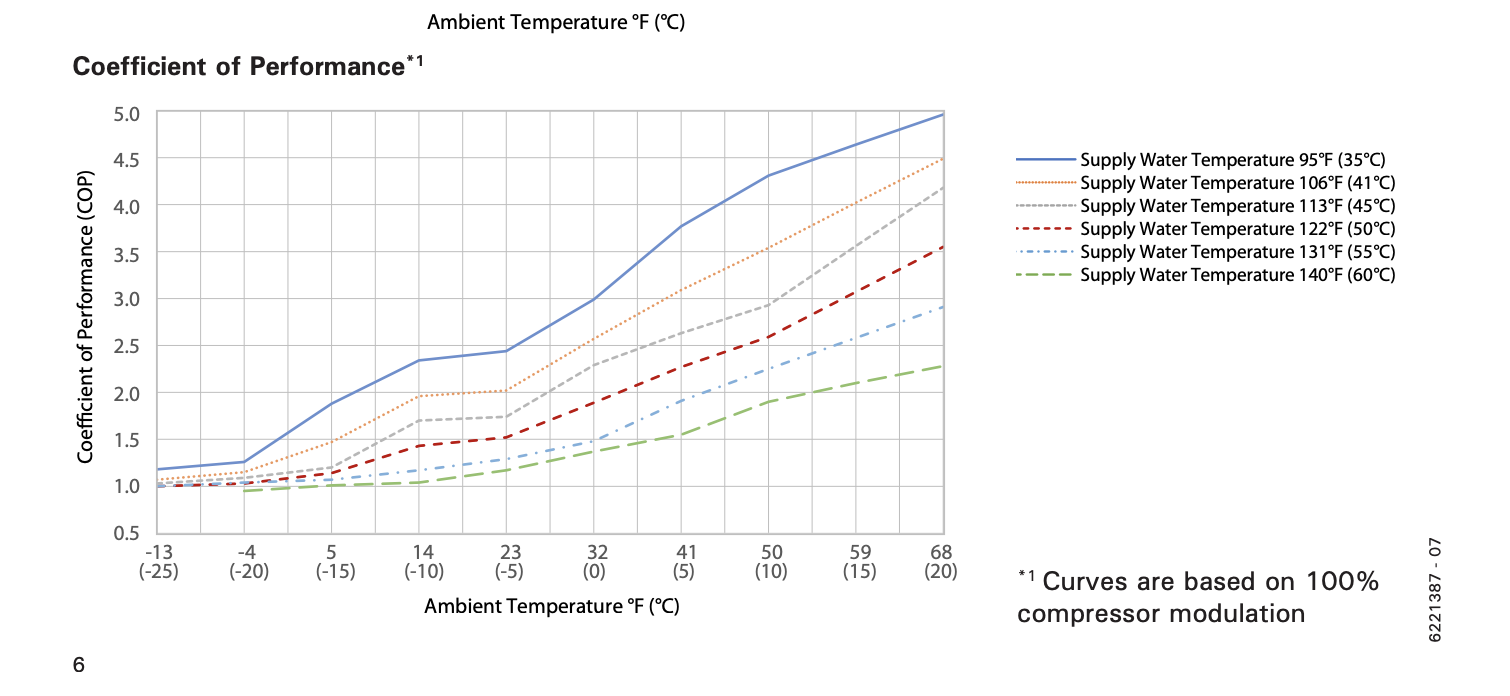
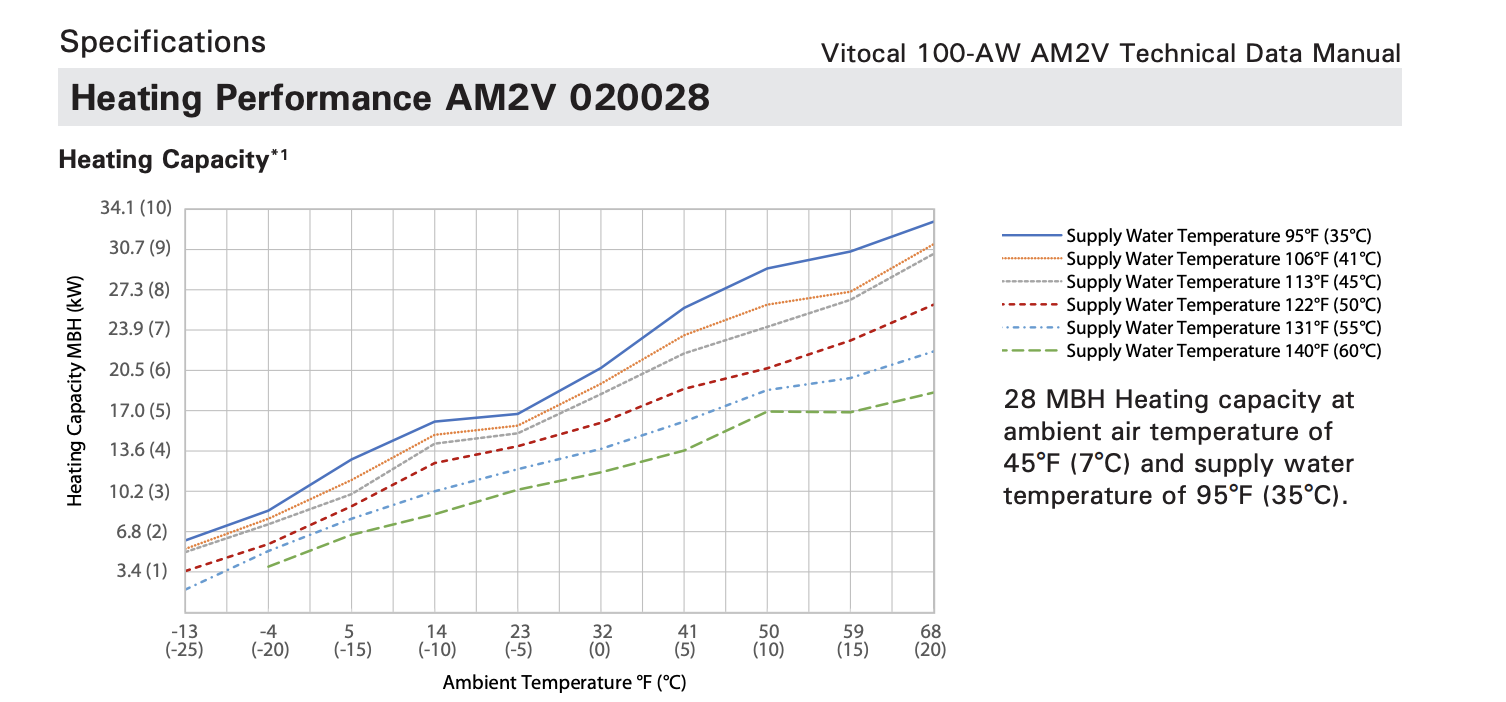
R-1.7 floor, 20 btu/hr design, shows 108 AWT, so around 112-115° supply should do the job. That is comfortable for an A2WHP. 80% of the heating season you will be below that 115° requirement, better COP still.
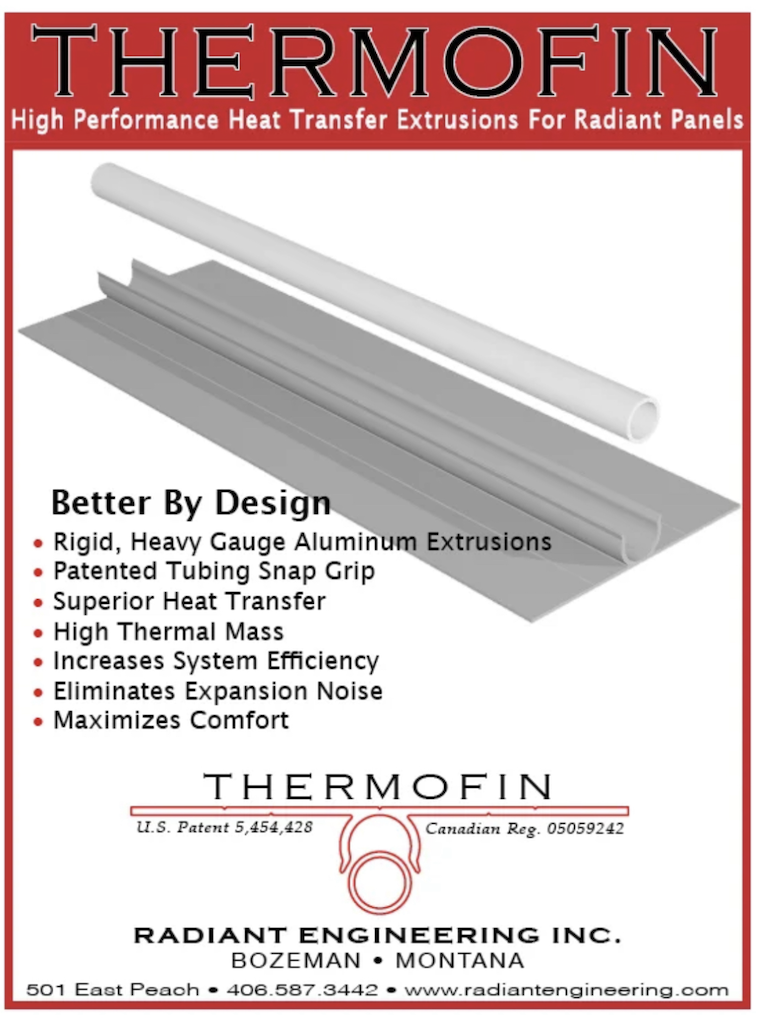
Some key components with transfer plates, the thicker plates will not expand/ contract and make the crinkle/ oil-can noise. The tightness of the tube in the groove prevents the tube from moving, that is where the ticking noise comes from.
Radiant Design used to have ThermoFin and ThermoFin lite. The lite was narrower, a bit thinner gauge too I believe. I've found the lite versions work fine.
It's possible the extruded plates from various tube manufacturers are Radiant Design products re-labeled.
The key to RD fins are the amount of aluminum around the tube channel. The knock off missed that crucial part of the design. This is what gives the channel the holding strength.
It's good to check the output and COP at your expected outdoor temperatures. Down around 14°F COP drops.
 hot_rod
Re: Viessmann Vitocal AWHP for hydronic baseboards or retrofit floor heating?
First step is to figure out your starting point. How many liner feet of baseboard you have and how much oil did you burn through last winter. Winter energy used in Therms*42 is about your heat loss. For more accurate number run the math here:
https://www.greenbuildingadvisor.com/article/replacing-a-furnace-or-boiler
AWHP likes to run at around 115F max, you can then see how much of the house heat your existing baseboards can supply at lower temp.
From there, you need to add extra emitters to make up for the shortfall. The easiest is oversized low temperature panel rads to replace sections of baseboard and a bit of floor heat where easier to get to without major demo.
 Kaos
Kaos