Best Of
Re: Why purge valve above boiler? Pumping Away.
Very simply...its the last spot before the unwanted air gets out in to the system. Mad Dog

Re: Steam device to be identified
it is all the same yet all different. Everything is the same controls we have on US boilers but it is all a different design and manufacturer. It looks like the low water cutout is a Mcdonnell Miller low water cut out that we use in the US.
Unless there is something special about European boilers that can separate the steam and water, the near boiler piping is very wrong.
I assume that this is a 2 pipe steam system, each radiator has a supply and a return, not a single pipe where steam enters and condensate exits through the same pipe at the bottom of the radiator.
I think that is some sort of "boiler return trap". If the pressure in the steam supply main gets too high in comparison to the return for the water to be able to return to the boiler, it allows some steam in to the condensate return to equalize the pressure and allow the water to return to the boiler.
You would have to find the European @DanHolohan to figure out exactly what that device is.
 mattmia2
Re: Piping from scratch
Scrap the system and run new panel radiators . I would run a home run system (3/8" works here).
 Big Ed_4
Re: Cheap, Easy, And Invisible DIY Solar Thermal?
The first thing I thought of when I read your original idea is "Too Hot? Just purge some of that heat". If there is a High Limit temperature for that tubing, you can have a ventilation system operate to dump some of that "overheating" even if it just a damper motor that will allow thermal air flow to reduce the roof temperature.
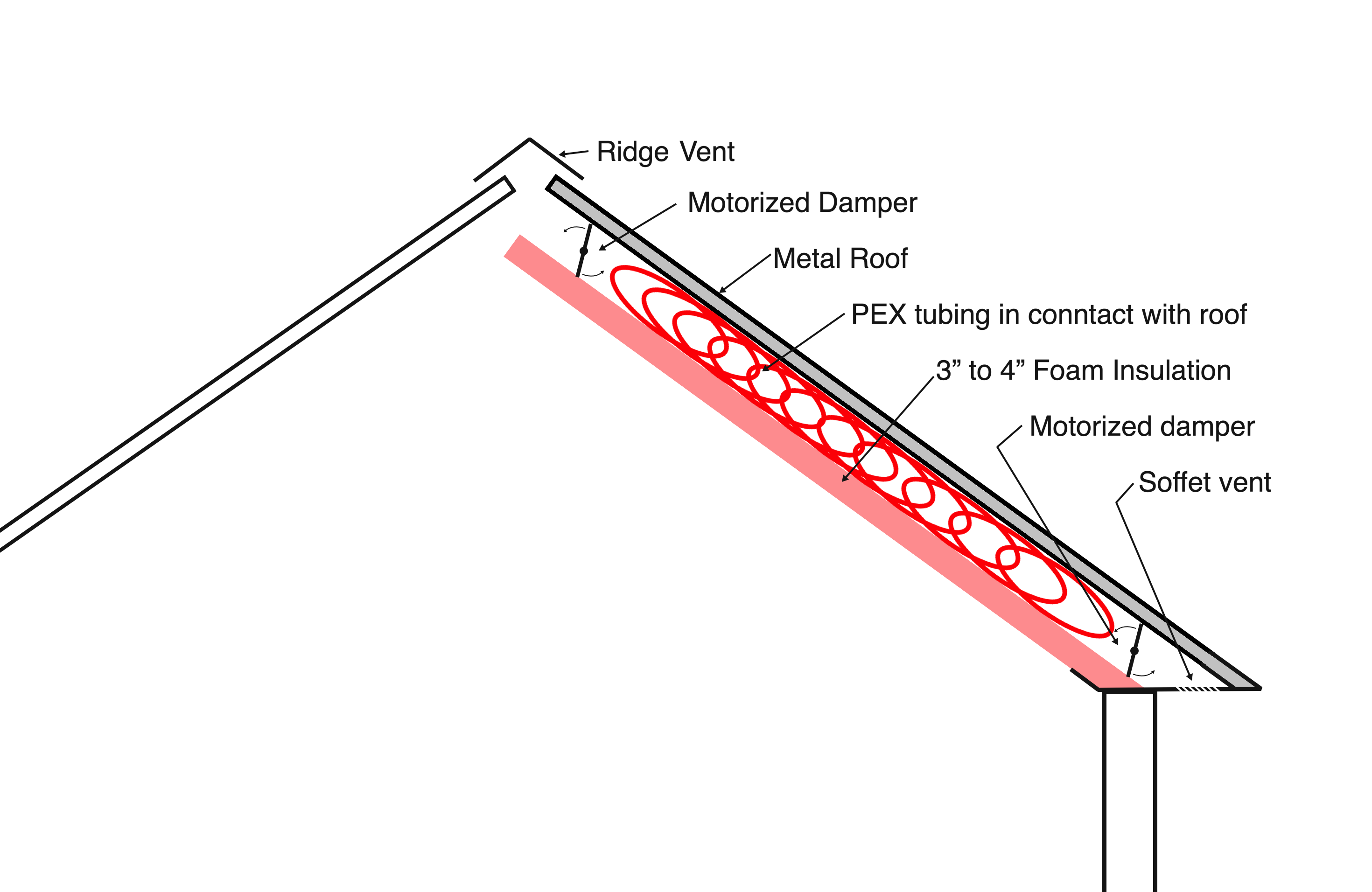
Set the solar roof to the best angle for winter collection and open the dampers in the very hot months to keep the roof from getting 100% of the solar temperature by venting ambient air under the metal roof component. You could also pump cooler water thru the PEX when you are not collecting heat in the summer by dumping that heat into a closed loop geothermal well or field to cool off the tubing
The damper can be a single rod extended thru the roof joists with a pulley or linkage arm at one end, then attach sheetmetal dampers on that rod to fit between the roof joist spaces. One damper motor can move both linkages to open and close the dampers at the top and the bottom of all the joist spaces with PEX tubing

Re: Cheap, Easy, And Invisible DIY Solar Thermal?
There are also thermal actuators (wax motors) for dampers for overheat made for greenhouses and stock barns which have severe overheating problems. Might look into those. No wires, no power required.

Re: Antifreeze
If you use it I think it is fine but do not trust a backflow preventer. Do not make any connection between the boiler system and the potable water.
Do not put a pressure reducing valve on the system.
Fill the system with a hose connection and then disconnect the hose.
We did this on many systems and it worked fine regardless of the type of glycol used.

Re: Fixing the gurgling at the end of my Steam Mains
that….was….hard….
to line it all up.
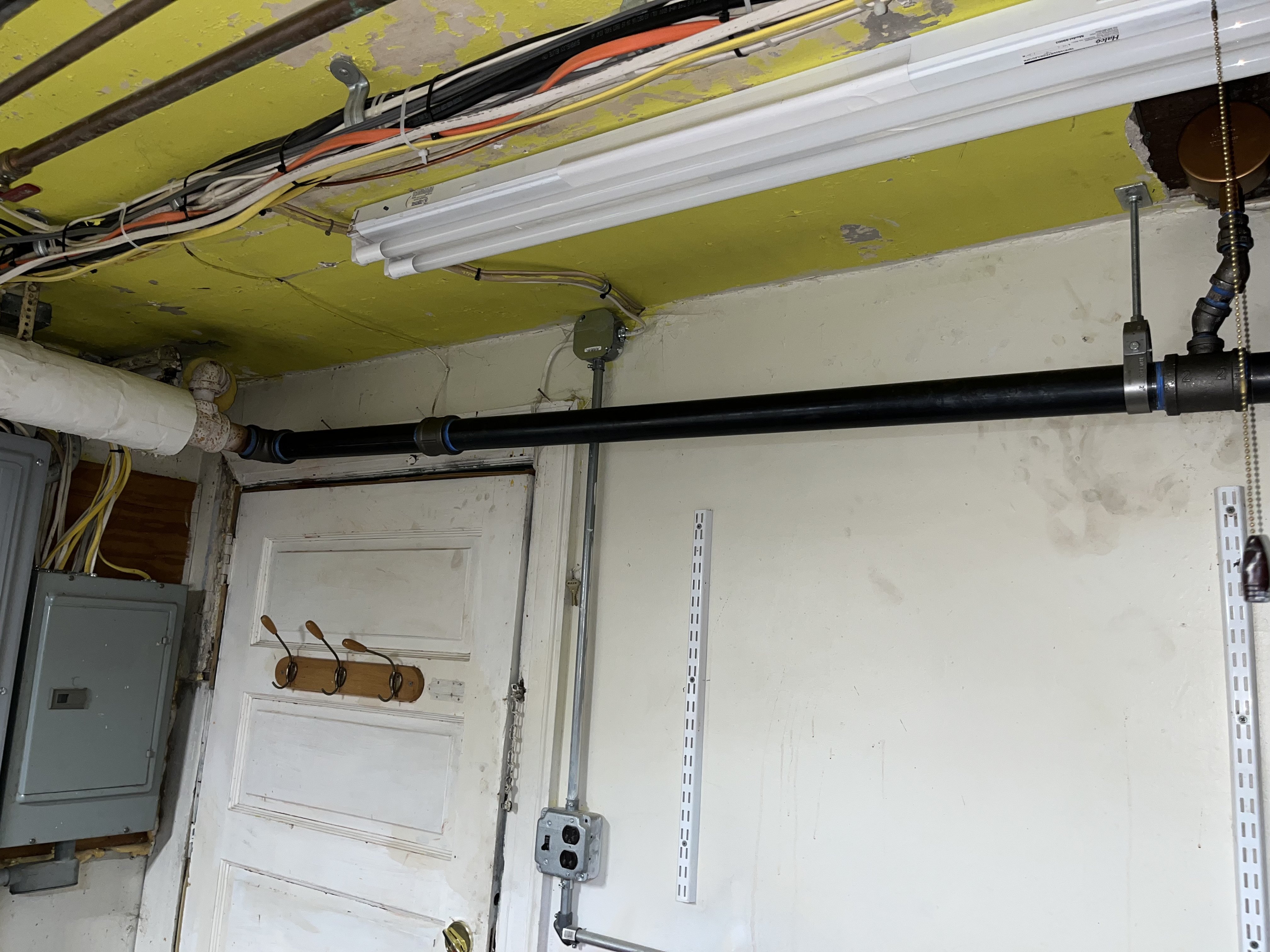
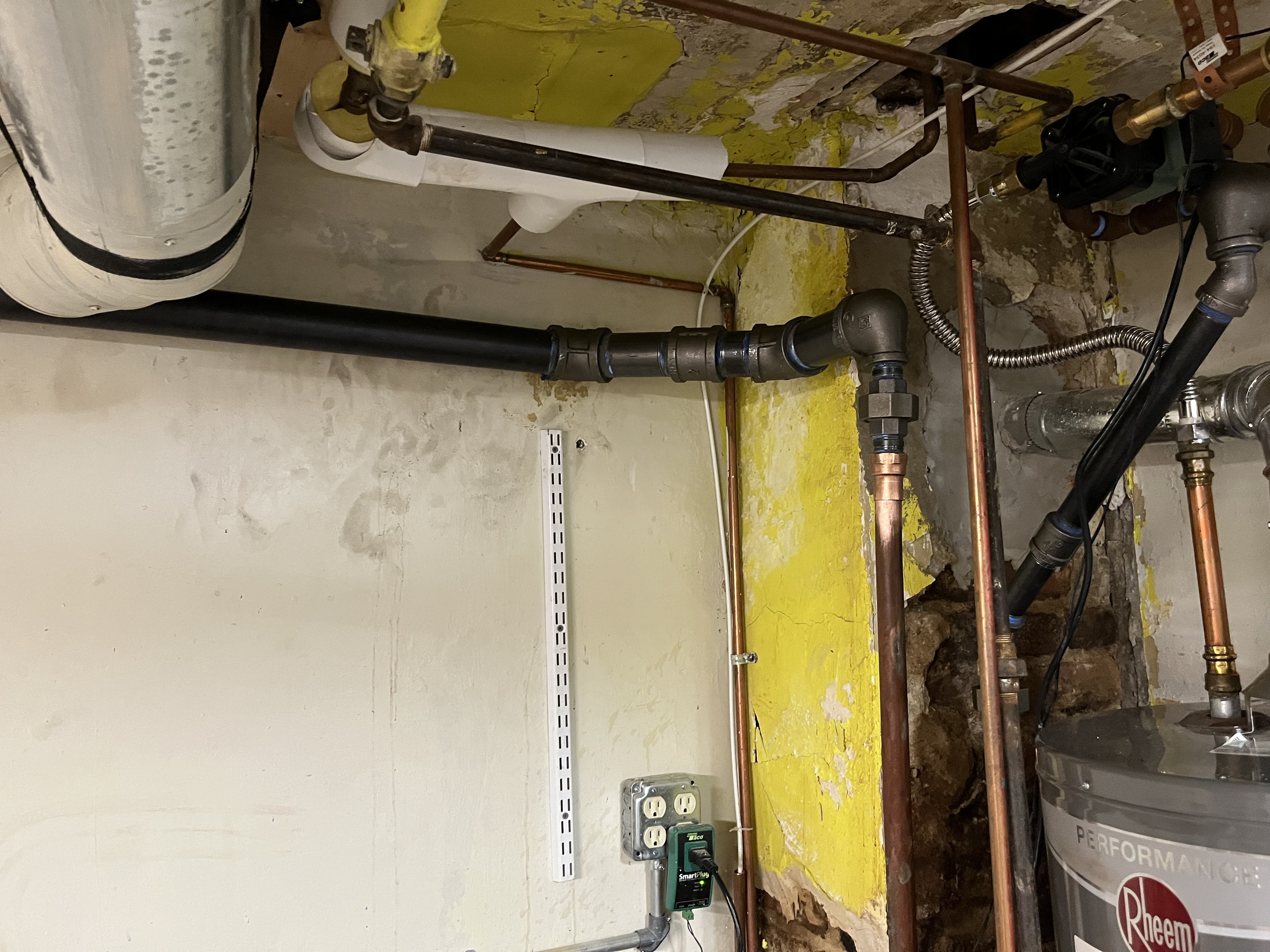
Better not leak!!

Re: Cheap, Easy, And Invisible DIY Solar Thermal?
You may want to also ask over at GreenBuildingAdvisor.com, which has members that are much more attuned to alternative energy.

Re: Cheap, Easy, And Invisible DIY Solar Thermal?
The way to think about a solar collector is not how hot it gets, but how much heat it collects. They're not the same thing, and the difference is important. The DIY solar world is full of collectors that got plenty hot but didn't deliver much heat.
I agree with Jamie that passive solar is probably going to be more effective. The biggest mistake you can make though is to assume it will somehow just work, it needs to be engineered. That means doing year-round energy modeling. I'd recommend software like BeOpt to get you started. The two big drawbacks of passive solar are first that there's no way to turn it off, you have to worry about preventing overheating. The second is that the amount of sun you get doesn't line up with the seasons. The day where the sun is lowest in the sky is December 21, the coldest day of the winter is typically six weeks later on February 1. On February 1 the sun is going to take the same path through the sky as on November 7, which is typically a much warmer day. September 21 — which is cooling season where I live — has the same sun angle as March 21, which is heating season.
Passive solar advocates will say, "position overhangs so that they block the sun in the summer and allow the sun in during the winter." When you start doing the math you'll realize that it's impossible to do this completely.
Re: Cheap, Easy, And Invisible DIY Solar Thermal?
Quality vs quantity is the way we compared evac tubes to flat plate collectors. While the tubes did supply a bit higher temperature the amount the supplied was much lower. Comparing equal foot print.
 hot_rod