Best Of
The Loneliest Place, my new article for PHC News magazine.
This is my first article for PHC news and Im looking forward to many more. In this article, I talk about how it feels to be a service tech on a no heat call on a Friday evening. There's no one to call and the pressure is intense; lots are at stake. I would love knowing your thoughts and you similar experiences. Loneliest place

Re: Burnham Boiler Issue
Should be a wiring schematic inside the front cover, or in the manual. We need to see what else is in that circuit.
Is there a vent damper on the boiler? That is a common cause of no fire conditions.
 hot_rod
Re: Intermittent vs. Interrupted
Short answer is in the last paragraph.
75 years ago the oil industry was the king of home heating taking over from Coal from 100 years ago and older. Since all the gas boilers and furnaces used standing pilots, that was just the way it was back 75 years ago, so it did not need a name like "constant ignition". All the heaters had pilots. The oil heat controls were set up so that the ignition transformer was always on with the burner motor. That meant whenever the burner motor was on the ignition was constant. So the RA116 stack mounted relay was used for constant ignition. And it said constant ignition right on the box.
Some oil burners operated better if the ignition transformer was not on the entire call for heat, so the RA117 Stack mounted relay was used to let the burner operate without ignition. That was called intermittent ignition and it said that right on the box. Once the burner flame was lit, the sensor in the stack dropped out the relay that operated terminal 4 and the ignition transformer no longer was powered, so no spark.
Now fast forward from the 1950s to the mid 1970s and you have an energy crisis. Gas furnaces were made with spark ignition and hot surface ignition and spark to pilot ignition. And all sorts of other configurations. Some oil heat folks were also doing gas heat work and vice versa. This became confusing so Honeywell and other oil burner control manufacturers decided to fix it.
Now you have a constant ignition that is a standing pilot that is on constantly 24/7. That was inefficient. So constant on oil controls were not the same as constant on gas controls. But that was the way it all used to be, and we now need to call constant ignition on the oil burners where a spark is involved something else.
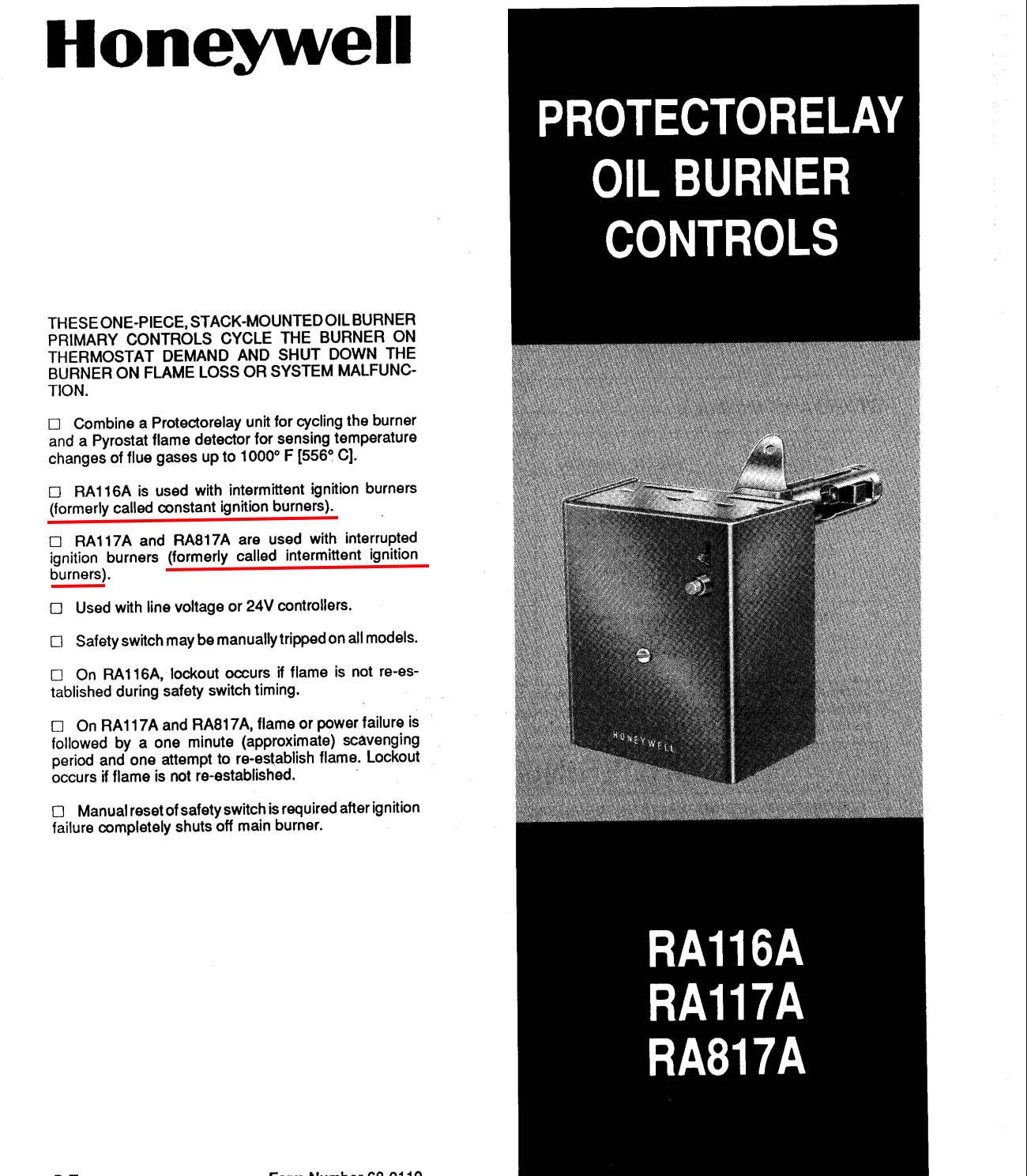
Spark the whole time the burner is operating is now intermittent ignition (Formerly constant ignition) and it said that right on the new boxes of the R116A relay and any other control (like the R8184G relay for oil heat) This was confusing for the old timers that only worked on oil heat but eventually they got over it, (or died off).
Then there were gas controls that sparked or heated up only until the flame was proven, then the ignition dropped out as the flame continued to burn. On oil burners that is now called interrupted ignition (formerly intermittent ignition) and it said that right on the box for the RA117A oil heat control and many other oil heat controls that performed the same way.
It has been long enough that the “Formally constant" and “Formally intermittent” are no longer printed on the box because all the old heads that remember the old names are retired by now.
- Constant ignition = 24/7 ignition (standing pilot)
- Intermittent ignition = ignition lit as long as the main burner is fired (spark to pilot or Spark for oil burner on the entire time the burner is flaming)
- Interrupted ignition = Spark or HSI to get it started, then ignitor or spark goes off when main flame is proven.
Hope this makes it as clear as mud!

Re: Can't get new oil water heater to stop locking out.
Yes they do. It used to be that. They changed it sometime in the last couple years. I went through that with Carlon on the phone. I initially thought it was the wrong burner because they said the same thing you did. Eventually they figured out it changed. It's now .6 at 155psi.
The Becket burner for the Bock 32 I believe is still the .7 or .75 at 100psi.
 2x_Tom
Re: Main air vent location
The returns can't vent air if they are full of water. they have to be pitched if the radiator is heating normally.
 mattmia2
Re: Main air vent location
Thinking on this a bit more, I wonder if those condensate returns are a bit problematic? They may have been okay to be that skinny when new, but how clear are they now. And the apparent lack of pitch makes me think they may be nearly full of water a lot of the time (and thus corrosion products).
Have you opened any of these lines and tried to blow through them (with compressed air)? I have some unpitched dry returns i suspect of constraining my venting on certain radiators.


Re: 2 floor, 2 unit home with two old oil steam boilers. Can I replace with 1 gas boiler, with 2 zones
That said. If I was installing two boilers, I would leave a tee in each boiler's condensate return and a tee in each boiler steam supply.
In an emergency if one boiler fails you can make a couple of temp connections with copper and heat both sides.
I did this in a pretty large Town hall once and tied 2 3" steam systems together with 1 1/2" and it worked well enough while one boiler was replaced. And that trick got me the job because they didn't have to go without heat.

Re: Why Do I Hear Hissing from Main Vent/Quick Vent After a Boiler Stops Running
No, it's air going in as the steam in the system collapses. And it is more or less normal… the vent doesn't open to let air in until it cools off a bit.

Re: Anybody have an opinion on HTproducts Super Stor Ultra Max?
Are these for preheat or are you getting the electric element version?
During no sun conditions the electric element will not deliver what the gas fired tanks will
I would consider one solar tank, series with a gas tank
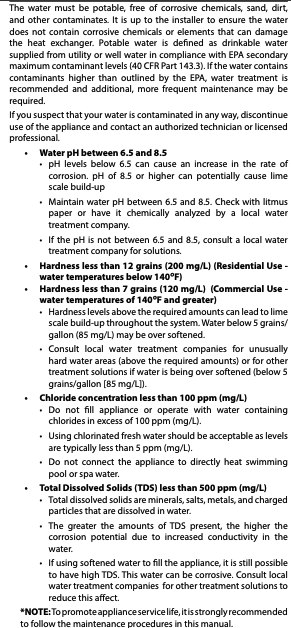
Also test your water to be sure it meets the water spec for that stainless tank, here is the SuperStor water spec. The chloride spec is important with stainless steels.
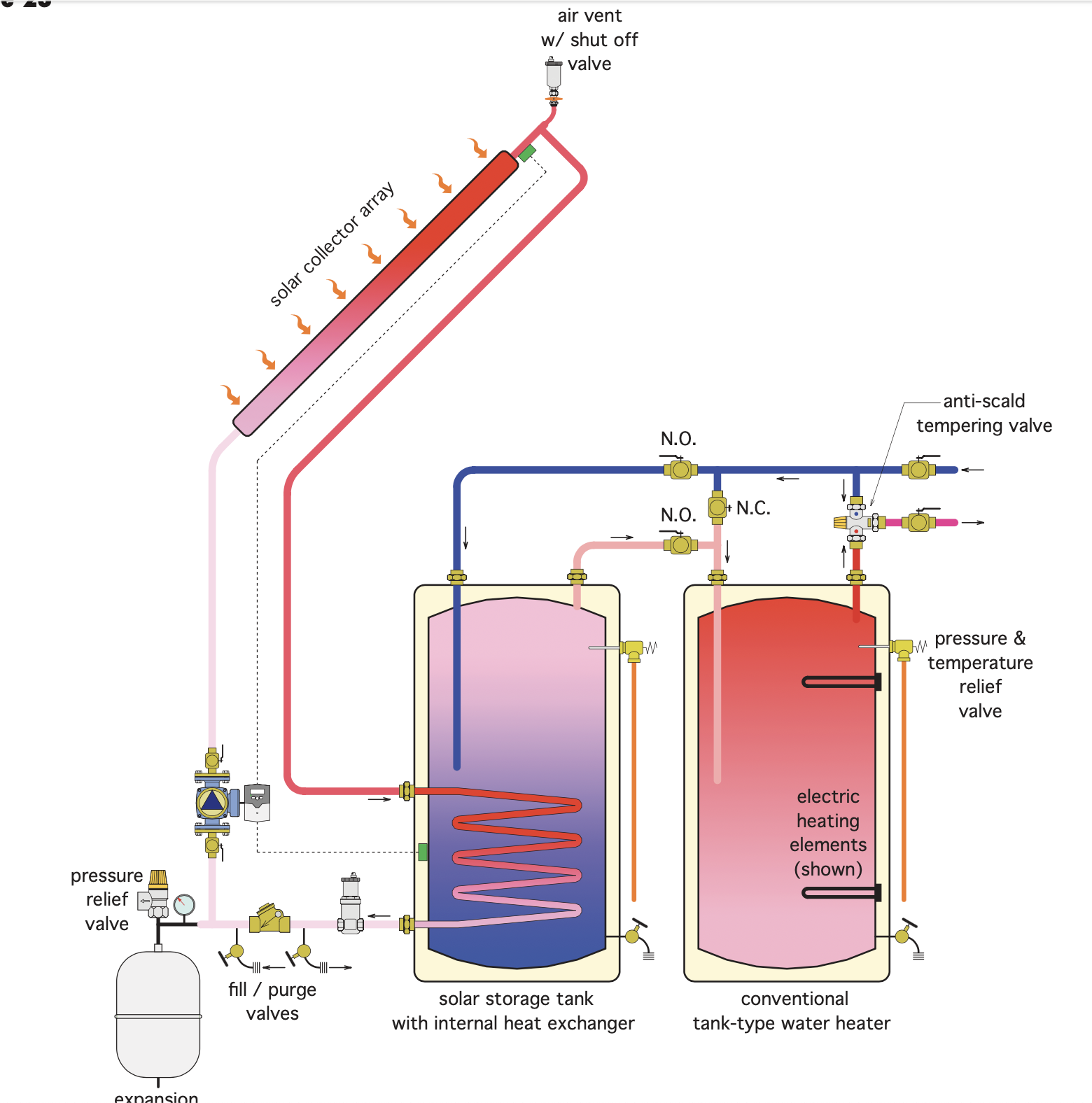
A typical 2-tank solar pre-heat piping, with electric of gas heater
 hot_rod