Welcome! Here are the website rules, as well as some tips for using this forum.
Need to contact us? Visit https://heatinghelp.com/contact-us/.
Click here to Find a Contractor in your area.
If our community has helped you, please consider making a contribution to support this website. Thanks!
Best Of
Re: Energy Kinetics Introduces B100 Compatible Boilers
@BennyV , thank you for your comments.
I feel we need to take a "all in" approach and pursue different ways to use our natural resources wisely. That includes assessing the cost to operate, the source efficiency (how much energy is used to produce and deliver fuel to the home and to generate electricity and deliver that to the home), and environmental impacts (what are the full fuel cycle emissions like CO2 and particulates).
We all also know that fuel prices vary, so as consumers, what makes sense today may not make sense in a year or 5 years. For example, New England residential electricity prices averaged over $0.31/kWh a year ago - that's the equivalent of $12.60/gallon of heating oil, and $9.11/therm for natural gas. Since the price of electricity in these examples is 3x higher than oilheat and 5x higher than natural gas, heat pumps will have a difficult time competing on the cost to operate during New England winters. From that simple cost perspective (and from a reliability in cold weather perspective), it makes sense to have a boiler or furnace in addition to a heat pump so it's an easy decision on which to operate. And with biofuels, the environmental impact gap closes or is even eliminated in cold weather as well.
For reference last year over 4 billion gallons of biofuel were produced, up from 3 billion gallons the year before. Bioheat fuel is uniquely well suited to homes that have oilheat.
Roger
I feel we need to take a "all in" approach and pursue different ways to use our natural resources wisely. That includes assessing the cost to operate, the source efficiency (how much energy is used to produce and deliver fuel to the home and to generate electricity and deliver that to the home), and environmental impacts (what are the full fuel cycle emissions like CO2 and particulates).
We all also know that fuel prices vary, so as consumers, what makes sense today may not make sense in a year or 5 years. For example, New England residential electricity prices averaged over $0.31/kWh a year ago - that's the equivalent of $12.60/gallon of heating oil, and $9.11/therm for natural gas. Since the price of electricity in these examples is 3x higher than oilheat and 5x higher than natural gas, heat pumps will have a difficult time competing on the cost to operate during New England winters. From that simple cost perspective (and from a reliability in cold weather perspective), it makes sense to have a boiler or furnace in addition to a heat pump so it's an easy decision on which to operate. And with biofuels, the environmental impact gap closes or is even eliminated in cold weather as well.
For reference last year over 4 billion gallons of biofuel were produced, up from 3 billion gallons the year before. Bioheat fuel is uniquely well suited to homes that have oilheat.
Roger
 Roger
Roger
3
Re: Energy Kinetics Introduces B100 Compatible Boilers
Thank you to everyone on our team and in the industry for the tremendous research, development, field trials, standards development, and more that all made the broad application of biofuels (B100) for cold climate heating possible. This offers a near term pathway to advance decarbonization, with results that extend all the way up to affordable Net Zero Carbon Home opportunities. These fuels and the applications have made remarkable advancements in the last two decades, and those successes continue to accelerate. For example, our B100 listed boilers can run with No. 2 fuel oil through 100% biodiesel (B100) without any burner adjustments through fuel transitions.
Thank you,
Roger
Thank you,
Roger
Roger
3
Random NYCHA maintenance man on YouTube documents a building right out of the 25 steps
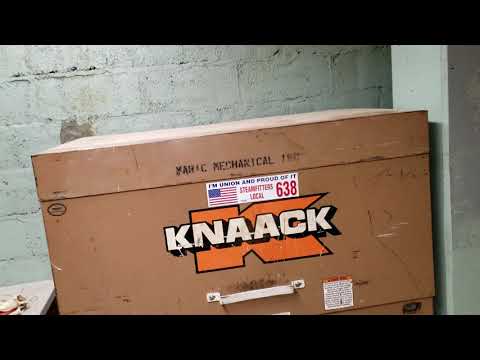 https://youtu.be/yLyYXOi9Fto?si=srNaMBZqILvWmFWr
This video has it all.
Cramped basements. Double trapped return lines. Water and steam spewing from overhead. A zone valve on a steam main. A gauge reading 8psi. A vacuum pump that's completely **** and dumping water all over the floor. Commenters cursing out the man behind the camera.
I'd guess he's arrived at this building somewhere between steps 19 and 20.
He doesn't seem to have figured out that the root cause is steam traps (instead calling it "too much steam") but apparently he's the first person to arrive at that building with more than zero curiosity 🤣🤦♂️...
 ariccio
1
Re: Help Please! Old 2-pipe System
I'm going out on a limb a bit, and maybe you've already taken care of this -- but the Dunham residential systems were and remain exceedingly sensitive to excess steam pressure. In theory the air elinator trap float should close the air vent -- which, incidentally, must be the ONLY air vent on the system -- when the pressure in the boiler gets too high to allow condensate to flow back to the boiler. This will allow pressure from the boiler to build in the dry return, and hold the water level where it belongs. If that float doesn't close properly -- or if it does, but there is another vent ANYWHERE on the system, ... repeat: ANYWHERE -- even on a radiator! ... that won't happen, and the boiler water will back out into and flood the dry return and, very likely, the returning steam main.
This sounds to me very like what you are experiencing.
There are three things to do. First, the boiler must be controlled by a vapourstat, not a pressuretrol, and set to cut out at not more than 10 ounces. This must be verified by an accurate low pressure gauge. Second, go out in the system and, if you find a vent anywhere, remove and plug it. Third, ensure that the float in the air eliminator is free and that the vent opening on the eliminator is really closed when the float is up
Come to think of it, there's a fourth: if you find a steam main somewhere out in the wilderness which terminates, there must be a crossover trap there to the adjacent dry return (and a drip from both the man and dry return to a wet return at floor level) -- and that crossover trap, and the crossover shown in the diagrams near the boiler (which I think you said was missing?), must be operating properly.
If the Dunham air check is in place on the air eliminator, then the system may be able to produce a vacuum of considerable depth -- in which case the check valve on the return must really work.
This sounds to me very like what you are experiencing.
There are three things to do. First, the boiler must be controlled by a vapourstat, not a pressuretrol, and set to cut out at not more than 10 ounces. This must be verified by an accurate low pressure gauge. Second, go out in the system and, if you find a vent anywhere, remove and plug it. Third, ensure that the float in the air eliminator is free and that the vent opening on the eliminator is really closed when the float is up
Come to think of it, there's a fourth: if you find a steam main somewhere out in the wilderness which terminates, there must be a crossover trap there to the adjacent dry return (and a drip from both the man and dry return to a wet return at floor level) -- and that crossover trap, and the crossover shown in the diagrams near the boiler (which I think you said was missing?), must be operating properly.
If the Dunham air check is in place on the air eliminator, then the system may be able to produce a vacuum of considerable depth -- in which case the check valve on the return must really work.

Re: Help Please! Old 2-pipe System
Where does the pipe to the "inlet" of the air eliminator go?
I don't know specifically with the Durham system, but usually that sort of connection is to the steam main to inject pressure in to the returns to let the water return to the boiler if the pressure differential is too high. If you keep the pressure under 10 oz it shouldn't be a problem. Do you have a low pressure gauge that can accurately measure the pressure on the main?
A stopcock is just a plug type of valve, it opens and closes with 1/4 turn.
I don't know specifically with the Durham system, but usually that sort of connection is to the steam main to inject pressure in to the returns to let the water return to the boiler if the pressure differential is too high. If you keep the pressure under 10 oz it shouldn't be a problem. Do you have a low pressure gauge that can accurately measure the pressure on the main?
A stopcock is just a plug type of valve, it opens and closes with 1/4 turn.
 mattmia2
1
Re: Dip Tube Replacement on a Weil-Mclain Gold Plus 60
I made an edit to my last comment: I just wonder if one was a little handy and was able to get a piece of PEX tubing and heat the end a little then make it flare at the end, if that would work just fine for the time left on that tank?

Re: 100 years ago today-- heating fuel choices
In the early 1970's many schools and hospitals that did not have access to natural gas were looking for a cheaper fuel for their steam boilers than #2 fuel oil. The company I worked for in Pittsburgh, Pa. came up with the solution, bituminous coal. We converted many of these boilers to coal using either a ram or screw stoker. The screw stoker was used on smaller boilers while the ram stoker was used on larger units. Most of the conversions were done on horizontal fire tube boilers. To reduce the need for manual tube cleaning, soot blowers were added. Most of the time a brick arch was added to the firebox above the burning coal to enhance the burning of that coal. Other devices were added to help produce a clean burn so smoke from the stack or chimney was almost non-existent. Imagine, burning soft coal with little or no smoke.

Re: Don’t know what to say?
I wonder if this might work just as well?

But you could not clock as many hours as this

So somebody made some extra money here. And they are probably very proud of their work.
But you could not clock as many hours as this
So somebody made some extra money here. And they are probably very proud of their work.
Re: heat energy purge benefits by running circ pump a little longer?
There are several ways to do it. One thread on the topic is here:
https://forum.heatinghelp.com/discussion/comment/1788675#Comment_1788675?
The Beckett AquaSmart is one particular control that has this function built in. I installed one on my boiler:
https://forum.heatinghelp.com/discussion/176551/nice-job-beckett
https://forum.heatinghelp.com/discussion/comment/1788675#Comment_1788675?
The Beckett AquaSmart is one particular control that has this function built in. I installed one on my boiler:
https://forum.heatinghelp.com/discussion/176551/nice-job-beckett
