Augusta Stone Church

This post is a continuation from an earlier post this year:
I was contacted by Scott (@karsthuntr) about evaluating the steam system in this church. It’s the oldest Presbyterian church in Virginia, founded in 1740.
The steam system was installed during a renovation in 1920. The current Burnham was installed about 8 years ago and it was a chop and drop by another contractor. It’s probably the third boiler since the system was added, the original being coal.
There are numerous issues and mistakes that have been made over the years. It’s a simple one pipe system.
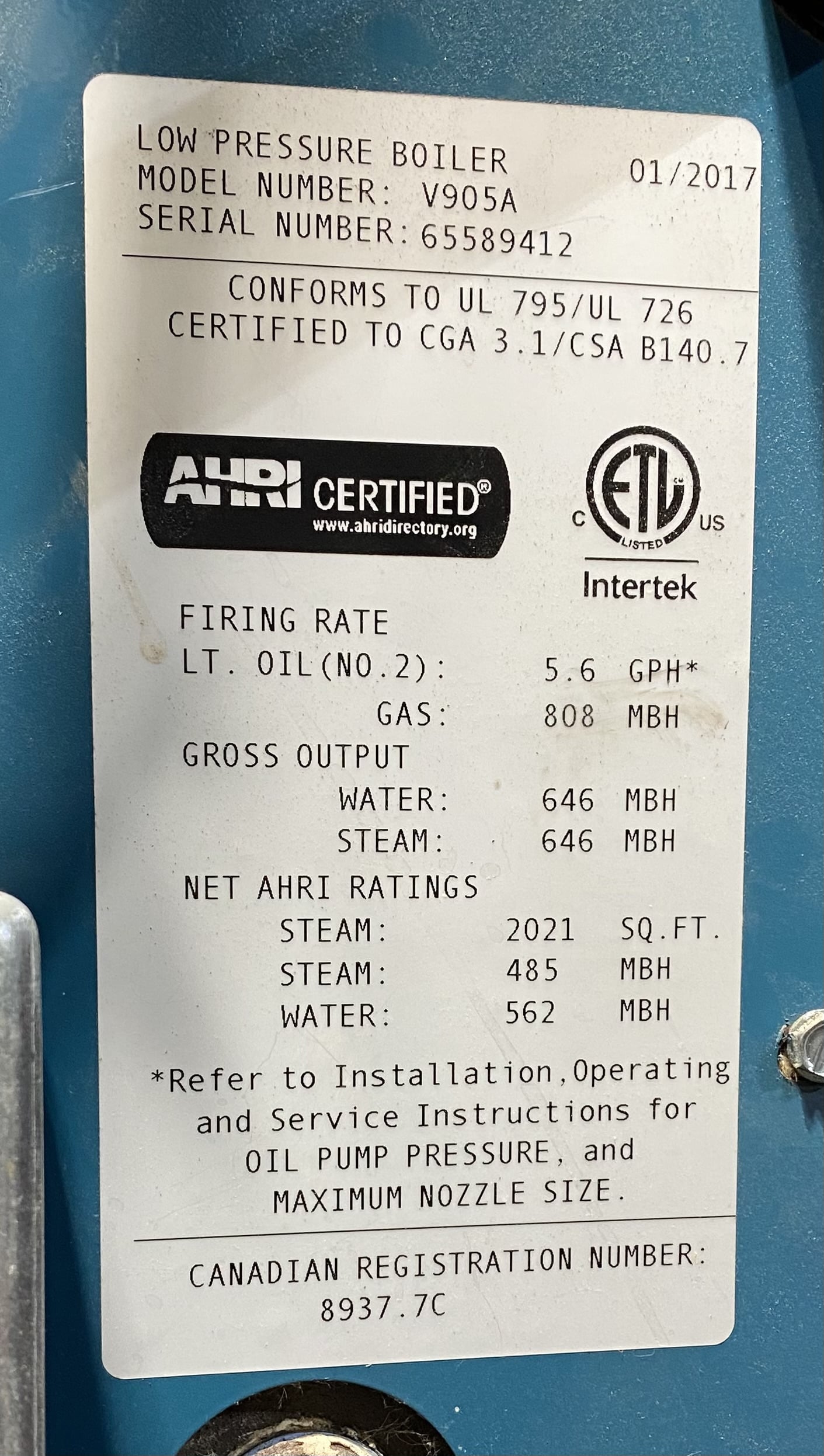
Issue # 1. The boiler is severely oversized. The rating is for 2021 square feet, but the connected radiation is 882 square feet. Compounding that is the fact that it was split into two zones with the smaller one having less than 200 square feet. Some radiators have been removed and two large indirect rads have been disabled.
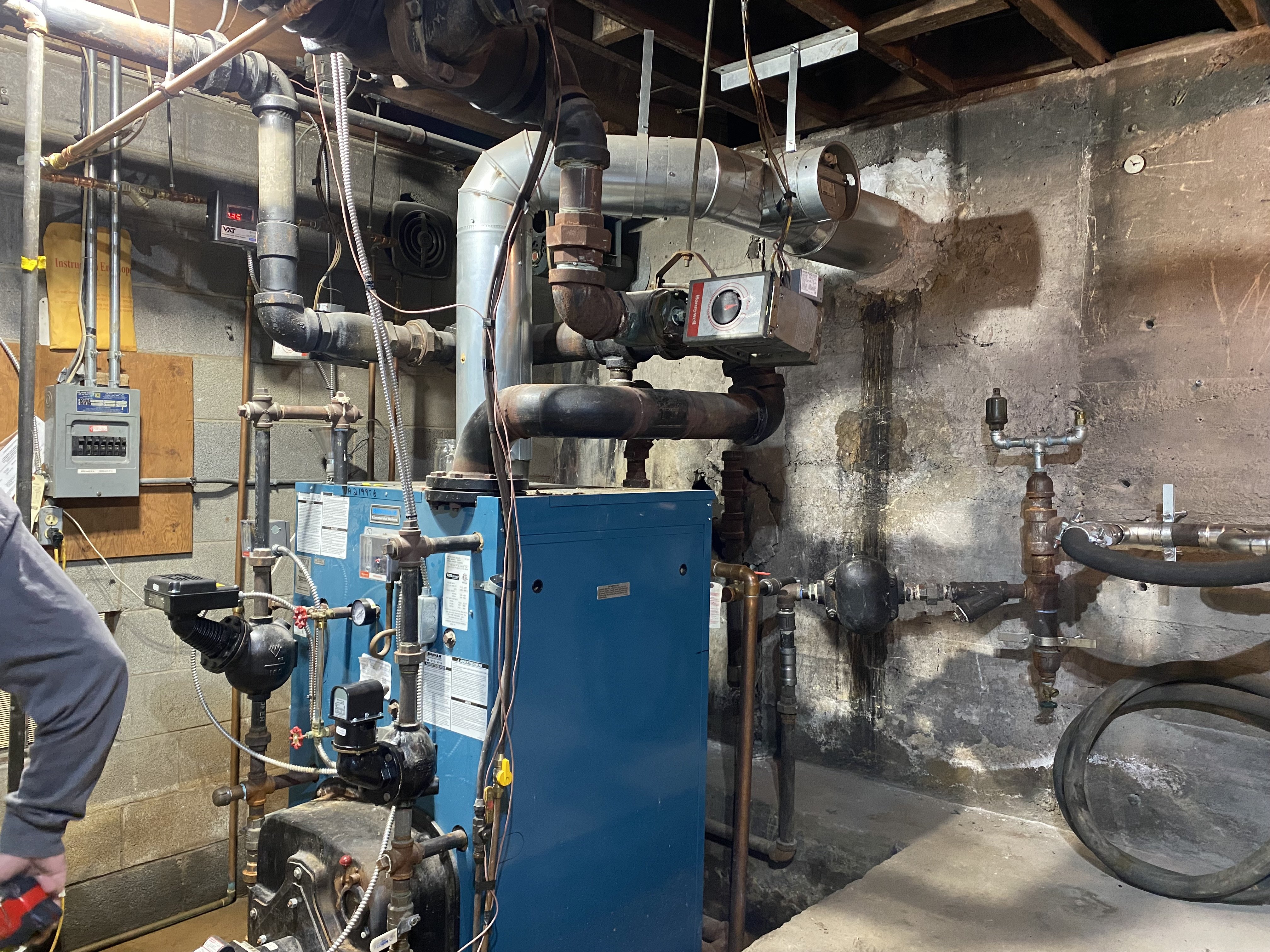
It appears that the system was split into two zones when the boiler that was previous to the this one was done. It was an attempt to heat the smaller office areas without heating the large auditorium. Again, less than 200 square feet of radiation.
Issue #2. The near boiler piping is wrong.
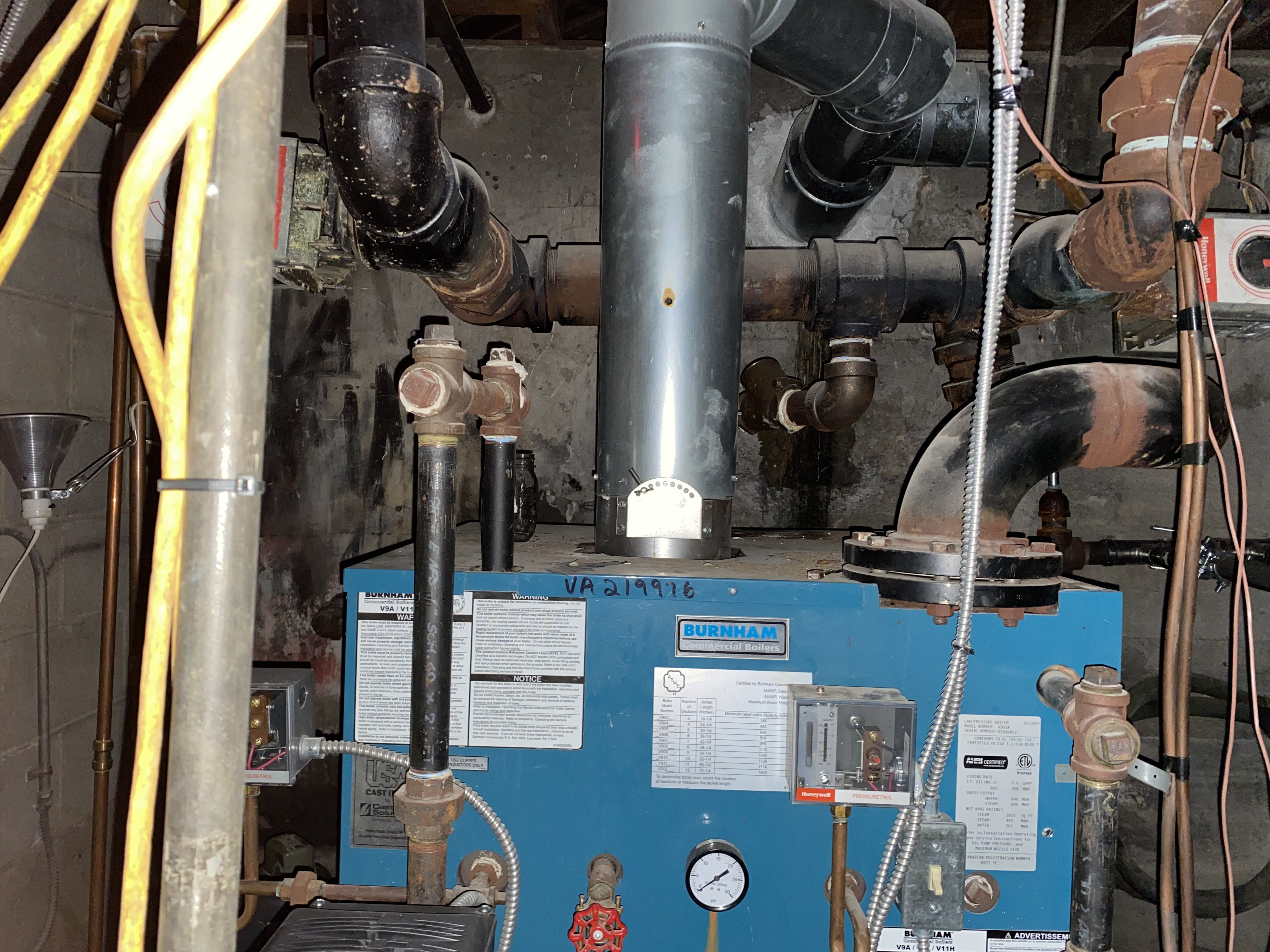
As can be seen, the equalizer is tapped out of the middle of the header and only one riser (3”) is utilized coming from the boiler. The header is also trapping water at a low spot on the left due to the misplaced equalizer.
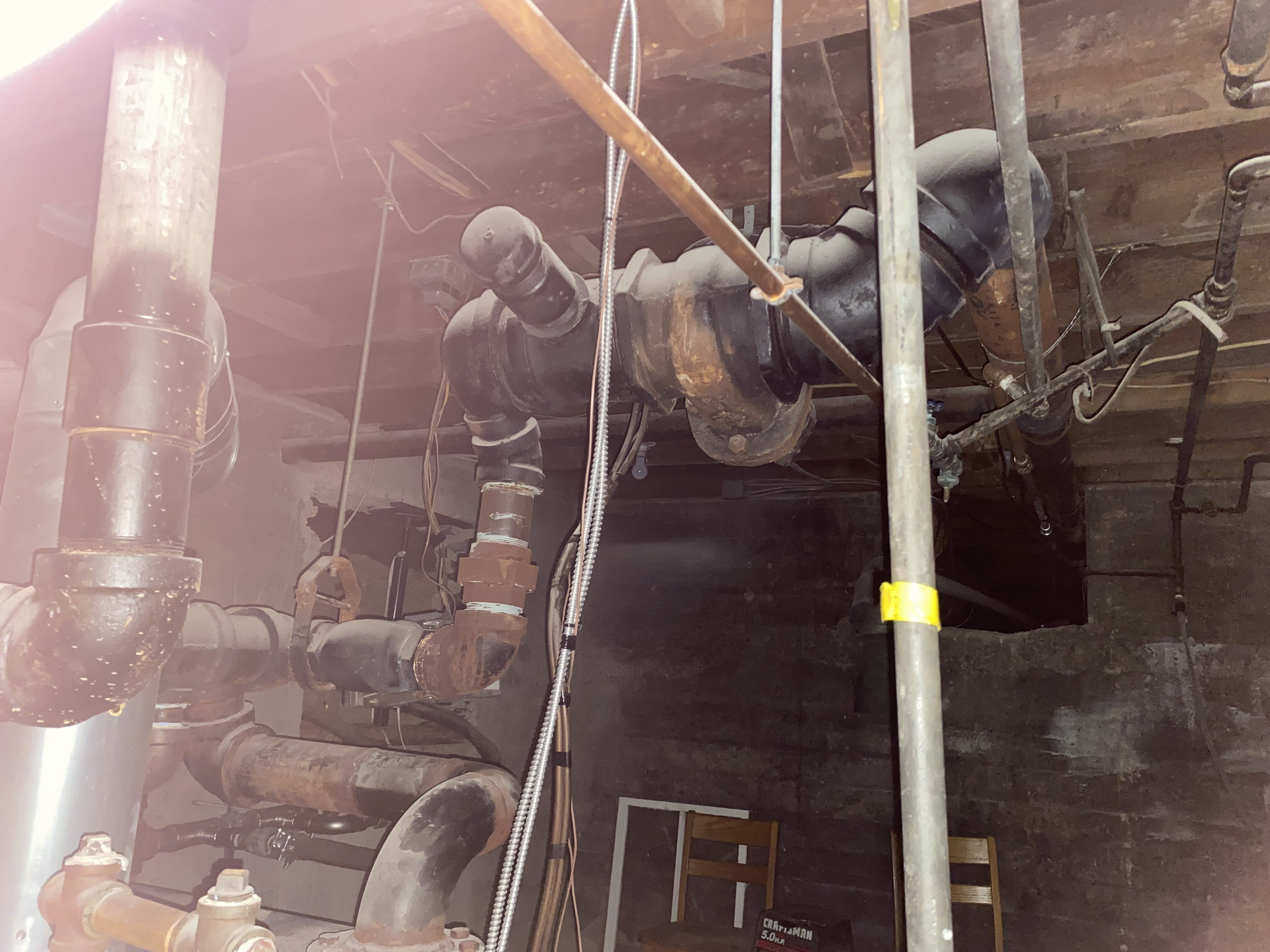
This last pic shows where the small zone was once tapped into the 6” main where it’s now capped.
Issue #3. The dry return piping.
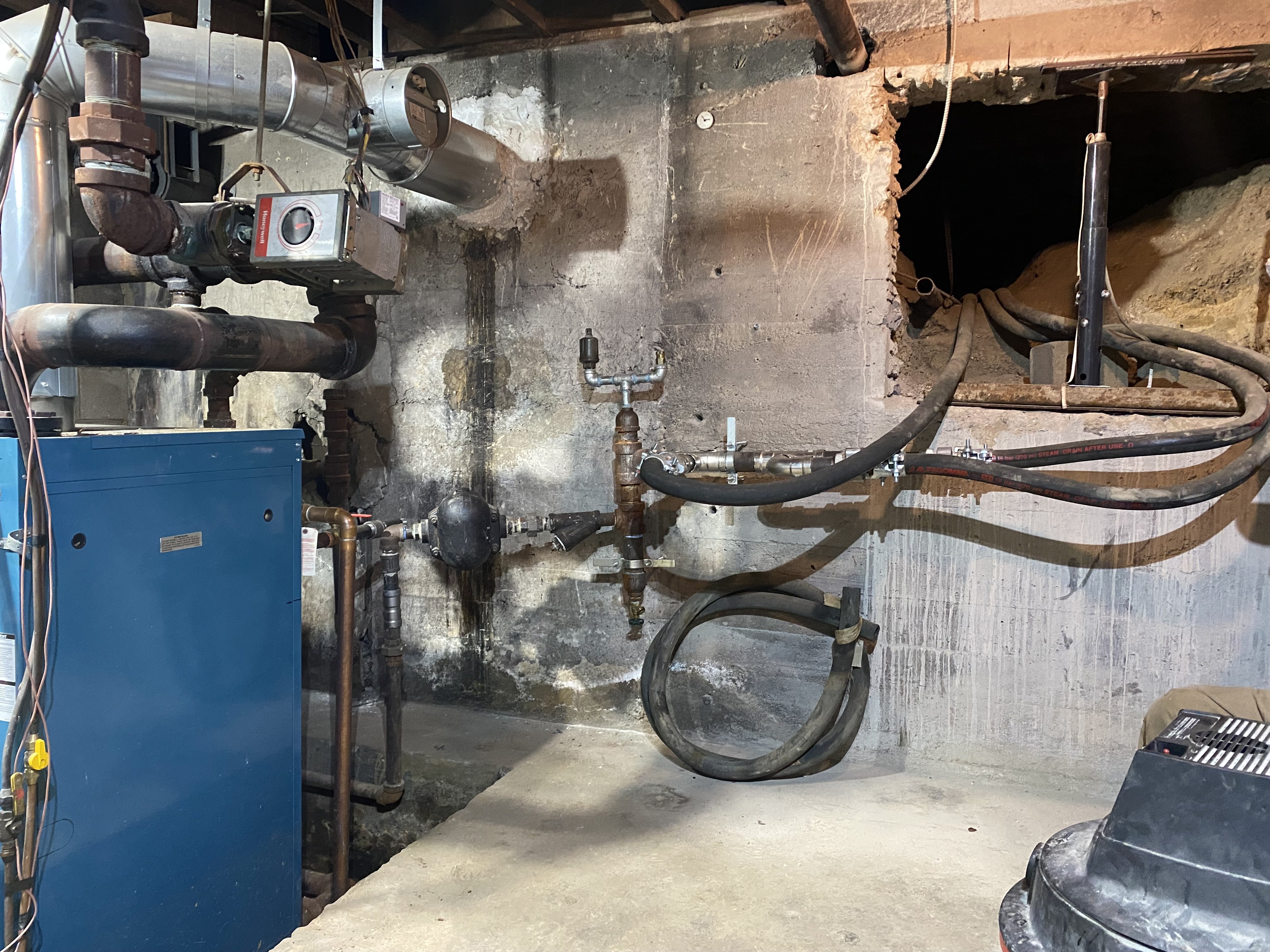
Notice how the 2” return pipe in the opening has been recently replaced with three 1-1/4” flexible lines.
I’ve never seen anything like this done and I told the church that the lines had to be at the proper height with the proper pitch and no traps or sagging. They tried to straighten them, but I think that I’m gonna recommend doing it over with iron pipe. There’s also another return from the small zone behind the boiler. It’s still iron.
Issue #4. The condensate pump.
The boiler is currently not running because the pump is bad and not putting water back in the boiler. Someone recently replaced the motor, but the pump is bad.
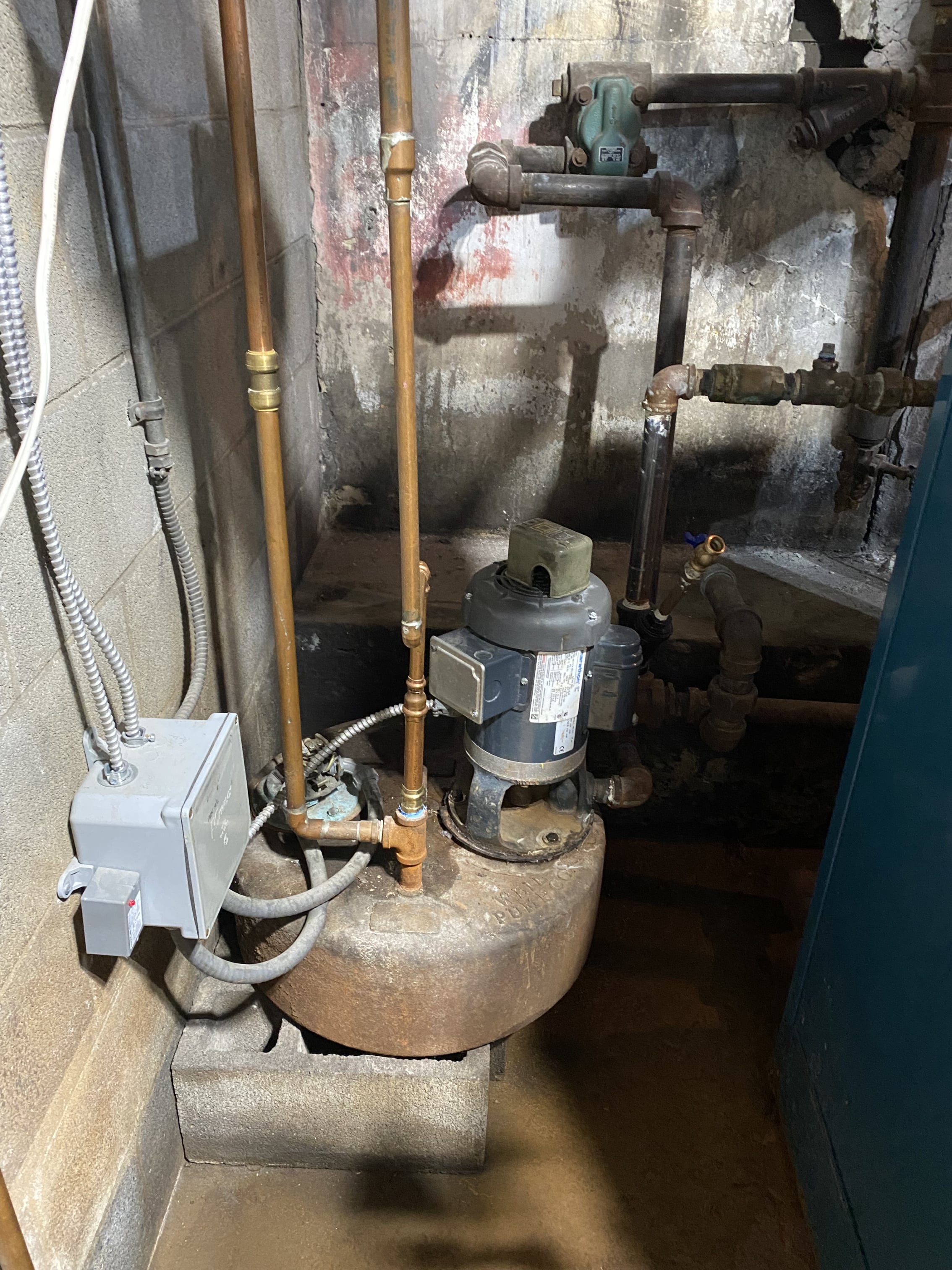
The copper line on the left is the vent and the one one the right is the fill line connected to a VXT controlled by the LWCO. I’ve never seen that done before with a condensate pump.
This pump holds under 10 gallons and I’m questioning whether it’s needed. Please give me some input guys.
If it’s needed to hold excess condensate, it will get set back up as a feed pump. I believe it was added when the previous boiler was done and the system split into two zones.
Issue #5. Traps and venting.
I believe the two return traps were also added when the system was split into two zones and therefore I see no need for them if the system is returned to one zone.
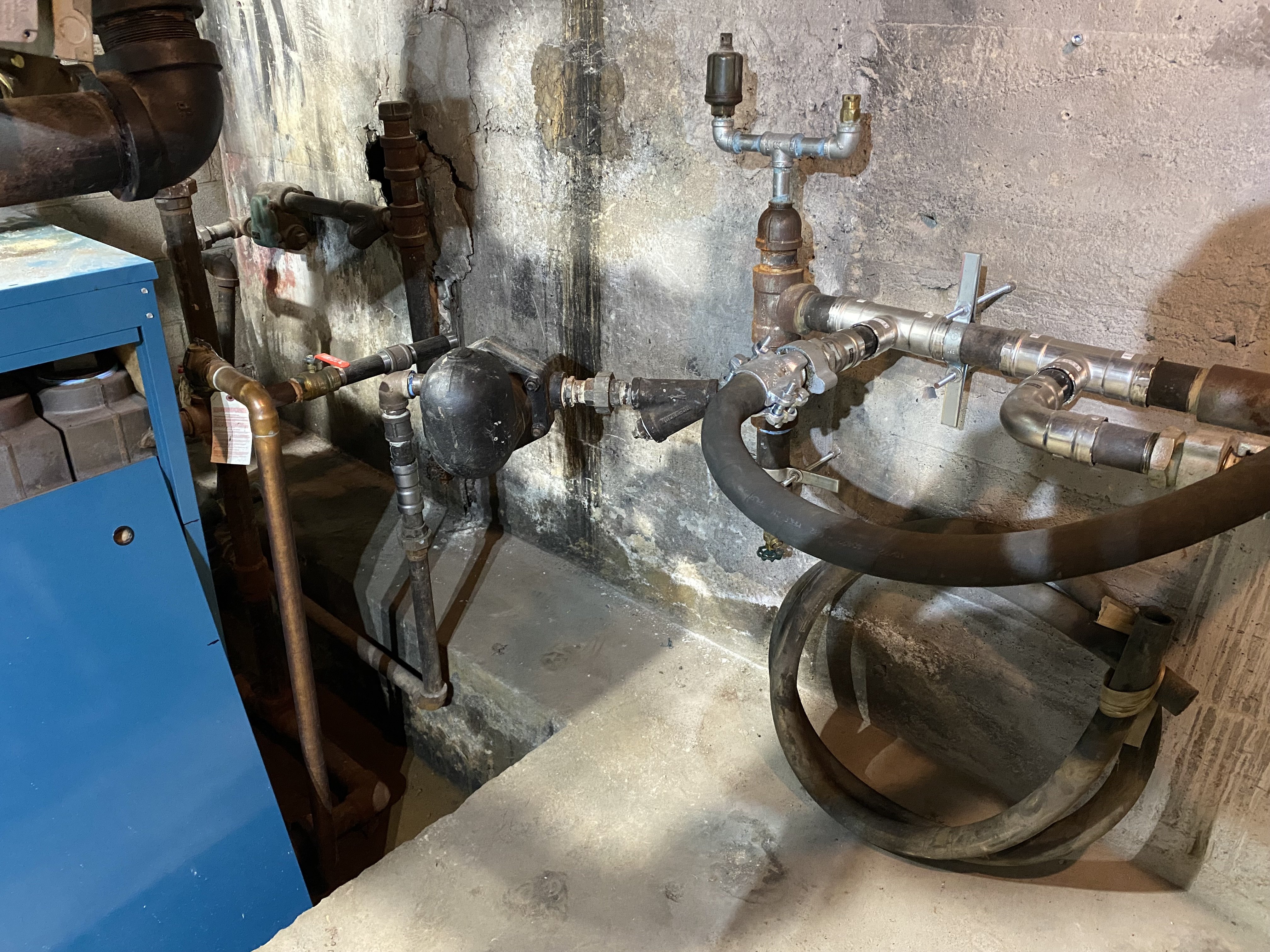
Issue #6. Firing rate
The rating tag calls for a 5.6 gph nozzle, but the burner has 3.0 gph nozzle. That’s within the burner’s range, but I doubt if Burnham would approve.
Professional advice and recommendations are welcome, please.
You can choose to do what you want, but you cannot choose the consequences.


Comments
-
one pipe and zoning usually don't get along with each other.
calling that a "header" is very generous
i bet the condensate pump does not need to exist
2 boilers would probably work better and cost about the same as making the 2 zones work although how much less than 200 ft^2 is important here since the smallest steam boilers are around 250 ft^2
1 -
I agree. Here's where we did something similar many years ago:
Baltimore, MD, USA
Steam, Vapor & Hot-Water Heating Specialists
Oil & Gas Burner Service
Consulting1 -
i wonder if that condensate tank was their way of solving the water exiting the boiler because of that header. and possibly condensate stacking up behind the zone valve. if the motor died it almost certainly wasn't working right.
1 -
I don’t care how many square feet of EDR are in the building… it is a church, and it needs a church-sized boiler. And zone valves are most important. It is a church, for God’s sake. Get it? God’s sake.
But on a serious note, if you are confident about the actual EDR of the building and you can fit two very small boilers in there, that is probably the best way to do it properly. Just make sure there are no hidden rooms with hidden radiators. Remember, it is a church, after all.
Perhaps you can sell the old boiler on a site like Heating Help, Craigslist, or eBay. It is not going to cover the cost of the replacement job, but it could help a little.
A moving company, freight company, or rigging company may cost more than the boiler itself in order to make the sale practical. Still, there is probably someone out there who needs a boiler that size.
Edward Young Retired
After you make that expensive repair and you still have the same problem, What will you check next?
 2
2 -
Imagine 120 years BEFORE the civil war.
Are you replacing the boiler or trying to make that one work? I am guessing the returns in the crawl space rotted out and they used hoses?
The biggest headache is to decide what to do about zoning or not zoning. Until that question is solved you can't really decide anything else.
I would suspect like all churches they don't want to keep the church that warm when unoccupied.
Most steam systems with a boiler feed tank put the MU water into the feed tank and not the boiler. i guess that is what they were trying for but that little tank is hardly a feed tank.
1 -
They’ve been using electric heaters in the secretary and pastor’s offices for a while and are happy doing that. There’s really nothing else on the small zone that would be used when there’s no church service. So, tying the two zones together makes sense.
A dual zone mini split could be added for those offices to replace the electric heaters.
Bob Boan
You can choose to do what you want, but you cannot choose the consequences.0 -
Not a pro — so no comment except… mercy.
Br. Jamie, osb
Building superintendent/caretaker, 7200 sq. ft. historic house museum with dependencies in New England0 -
That is an avenger level repair. Turn on the bat light and we will be on our way to help
0 -
I heard from Beckett today and they said that the boiler could be down fired to 3.25 gph @ 140 psi = 3.85 gph, 539,000 btus. That’s still twice the size needed (265,000).
I’m looking at removing this beast and installing a Megasteam MST892 which would be a precise match to the radiation and maybe less in cost than fixing this nightmare.
Bob Boan
You can choose to do what you want, but you cannot choose the consequences.
 4
4 -
is that boiler that is there now the manufacturer and series that kind of has a habit of developing premature holes in the hx above the water line?
0 -
With the boiler being that much oversized you probably smart to change it out.
If the run is not too long maybe a HW zone off the steamer would work for the offices. But if not much load electric you can't beat the simplicity and lack of needed maintenance.
 2
2 -
the independence is the model that always rots above the water line
 2
2 -
Please do not yell;
I am speaking here as a homeowner with a coal fired boiler heating system and paraphrasing what Brother Jamie has said "Mercy Me, YUCK!!!!!!!!!!"
As you are in an area where Anthracite rice coal can be obtained easily, your heating system can be upgraded with a dual fuel EFM DF520 coal stoker set up for steam heating with some work and reconnect/replace the missing radiators to replace that abomination in my opinion as a lay person.
The EFM DF520 coal stoker boiler has a 3 inch tapping in the steam chest and two 2 inch returns for hydronic heating.
Again I am speaking as a homeowner having grown up with one pipe steam heat; a 3 inch double header coming off the riser in the steam chest makes a great deal more sense with that mess as the 3 inch drop header transitioning to a 4 inch header pipe then rising to meet the existing piping would make much more sense and allow the entire church to be heated eliminating all that excess piping and making a cleaner installation.
You apparently have at least 24 inches in open space above the existing boiler for a double drop header with a drain back to the boiler Hartford loop so it would be an ideal installation to create very dry steam.
The EFM DF520 can be equipped with a dual fuel heating system where I believe natural gas can be the dual fuel used rather than oil.
I am making the popcorn with olive oil and will pass it around here as I wait and see what happens next.
It may be well worth the phone call to EFM in Emmaus, Pa and ask about adding a second riser to the DF520 boiler to increase the steam output more quickly to a double drop header to replace that mess.
Please do not yell.
1 -
@leonz , one would need to check local regulations to see if coal-fired boilers have been outlawed due to air pollution. I know in Baltimore they are prohibited, and have been since the late 1960s.
Baltimore, MD, USA
Steam, Vapor & Hot-Water Heating Specialists
Oil & Gas Burner Service
Consulting2 -
Dear Mr. Boan, the Anthracite coal stoker boilers and furnaces burn cleanly with no smoke and create very high heat per pound of Rice Anthracite Coal. I wish we had access to more friable Sub Bituminous coal from Wyoming or Montana as these coals provide clean heat with very little ash.
0 -
one of my high school teachers said that before natural gas came to the city i grew up in in 1950 the snow would turn gray within 24 hours of it snowing from the coal.
1 -
@leonz
Im glad that burning coal works for you, but am I to understand that you’re suggesting that as a mechanical contractor I should attempt to sell this as a viable solution to the church? Do you really think that they would want to have to have a coal bin installed, find a coal supplier, have someone be there at least twice a day to shovel coal, and put up with the mess that it would create?Bob Boan
You can choose to do what you want, but you cannot choose the consequences. 3
3 -
With an auger fed coal stoker there is no labor other than changing ash baskets.
I mentioned the coal stoker boiler as an option as a hedge against higher fuel costs as it has an auger feed system feeding a burn pot/tuyere. You would have read about it in the file I uploaded.
I mentioned it because it also has a dual fuel option where you simply open the door covering the nozzle and electrodes inside the burner tube to use the gas or oil burner.
0 -
How does replacing the boiler fix the returns, or pump? What does the "evaluation of the system" mean. right now does it heat the building? Banging on Service days? What is the chief complaint to warrant replacement? Yes, I can see how botched the header is but easily fixable
The riser and header looks to be 4" from photos with a pair of 3" (2 1/2"?)zone valves. Flange is 8 bolts -(3" is usually 4) bushing on small zone and reducing heal tee on main zone can be seen
the boiler only calls for one riser 4" into a 4" barrel/header(w/ a 2" loop) this is actually a easy fix to repipe- has the boiler been working fine ? than run 3" to the existing 6" main and run 2" to the 3" main for your offices (200sq EDR)-
if they are really happy using electric in the office - connect the riser/zone it as a back up into the new header with a manual valve (remove the zone valves)
As far as sizing goes- over sized yeah,sure it is, but they lowered the input (nozzle) / don't forget to see how much bare steel in the crawlspace you have the bare 6" ,5" 4" adds up quick - quicker than your 1.33 pick up factor. Usually the friable was removed and not replaced with anything - Plenty of extra bare piping in every church we ever worked in - (not agreeing with the oversizing of the / a boiler,not sticking up for the replacing contractor) . In agreement with Edtheheaterman plenty of spaces in church where the pipes/rads/vents/traps are hidden !
Give them steps to repair/revise - Step 1-pipe returns gravity- see if it works properly - Step 2 lose the hoses - etc,etc,etc Clearly replacing the 905 with a MST is not fixing the rest of the mess- header has to get fixed whether this one stays or goes- When the 905 rots out replace it with your boiler of choosing-
or they can burn coal……..
0 -
@EBEBRATT-Ed stated: "Imagine 120 years BEFORE the civil war"
About 120 years before the American Civil War would place you around the 1740s — long before the United States existed. At that time, New Jersey was still a British colony called the Province of New Jersey.
Life in New Jersey in the 1740s would seem extremely primitive and rural by modern standards:
- Most people lived on small farms or in tiny villages.
- There were no railroads, no electricity, no indoor plumbing, and almost no paved roads.
- Travel was by horseback, wagon, or small sailing vessels.
- Dense forests covered much of the colony.
- Wolves, bears, and mountain lions still lived in the region.
- Much of South Jersey was isolated pine forest and cedar swamps.
The population was surprisingly diverse for the time:
- English settlers,
- Dutch families,
- Swedish descendants near the Delaware,
- Scots-Irish immigrants,
- Germans,
- Quakers,
- enslaved Africans,
- and the Lenape Native Americans all lived in parts of the colony.
New Jersey itself was still developing politically:
- East Jersey and West Jersey had only been reunited into one royal colony in 1702.
- In the 1740s there were frequent land disputes and political arguments.
- The colony was beginning to grow rapidly in population and trade.
A person visiting New Jersey in 1740 would notice:
- small wooden towns,
- taverns and blacksmith shops,
- churches as community centers,
- farmland worked by hand tools and horses,
- and scattered colonial roads that became muddy disasters after rain.
Places that are huge cities today were tiny settlements:
- Newark was a modest colonial town,
- Princeton was barely developing,
- Jersey City did not exist as a city,
- and much of the shoreline was marshland and wilderness.
Princeton University had not yet moved to Princeton permanently, though the College of New Jersey (later Princeton) was founded in 1746. Rutgers did not yet exist.
Shall I go on?
And how does that help @Ironman solve a boiler problem that didn't even exist back then! Boilers were not added to churches until long after that.
Edward Young Retired
After you make that expensive repair and you still have the same problem, What will you check next?
0 -
About 120 years before the Civil War — around the 1740s — Virginia was the largest and wealthiest British colony in North America. It was very different from New Jersey in both geography and society. Virginia in that era was dominated by:
- tobacco plantations,
- river transportation,
- slavery,
- and a powerful landowning class that would later produce many of America’s founders.
At that time, “Virginia” was enormous. It technically claimed land stretching far west beyond the Appalachian Mountains into territory that later became:
- Kentucky,
- West Virginia,
- and parts of the Midwest.
What Virginia looked like in the 1740s
Most settlement was concentrated along:
- the Chesapeake Bay,
- the James River,
- the York River,
- and the Rappahannock River.
Transportation was mainly by water because roads were terrible. Wealthy plantation owners often traveled by boat directly to neighboring plantations or port towns.
Instead of dense towns, Virginia had:
- scattered plantations,
- small tobacco ports,
- courthouses,
- taverns,
- churches,
- and tiny villages.
There were very few true cities:
- Williamsburg was the colonial capital,
- Norfolk was an important port,
- Fredericksburg was growing,
- Richmond barely existed yet.
And that church was not even built yet. the congregation was just forming and were meeting in a small wooden church in 1740. They didn't start building that stone church until 7 years later.
All this imagining has made me tired. I'm going to bed now!
Edward Young Retired
After you make that expensive repair and you still have the same problem, What will you check next?
1 -
-
For what it's worth, anthracite coal truly does burn smokeless and relatively clean. Much of people's recollections of "dirty smoke" is from the other coal families, like bituminous. I'm not expert, but all coal is not created equal.
And Leon, it seems if they have the money to run electric heaters then they probably aren't ultra concerned about the money coal would save them as it involves a small portion of maintenance and possibly hassle with the township. We shall keep this aspect of our old fashioned ways unto ourselves, as it truly isn't the right fit for everyone in this day and age.
1 -
Greetings RascalOrnery,
Yes, dirty bituminous coal is what everyone remembers with it dropping soot on the ground and not anthracite.
I agree with you in that if they have the money to run electric heaters and run that rats nest of a boiler so be it.
0 -
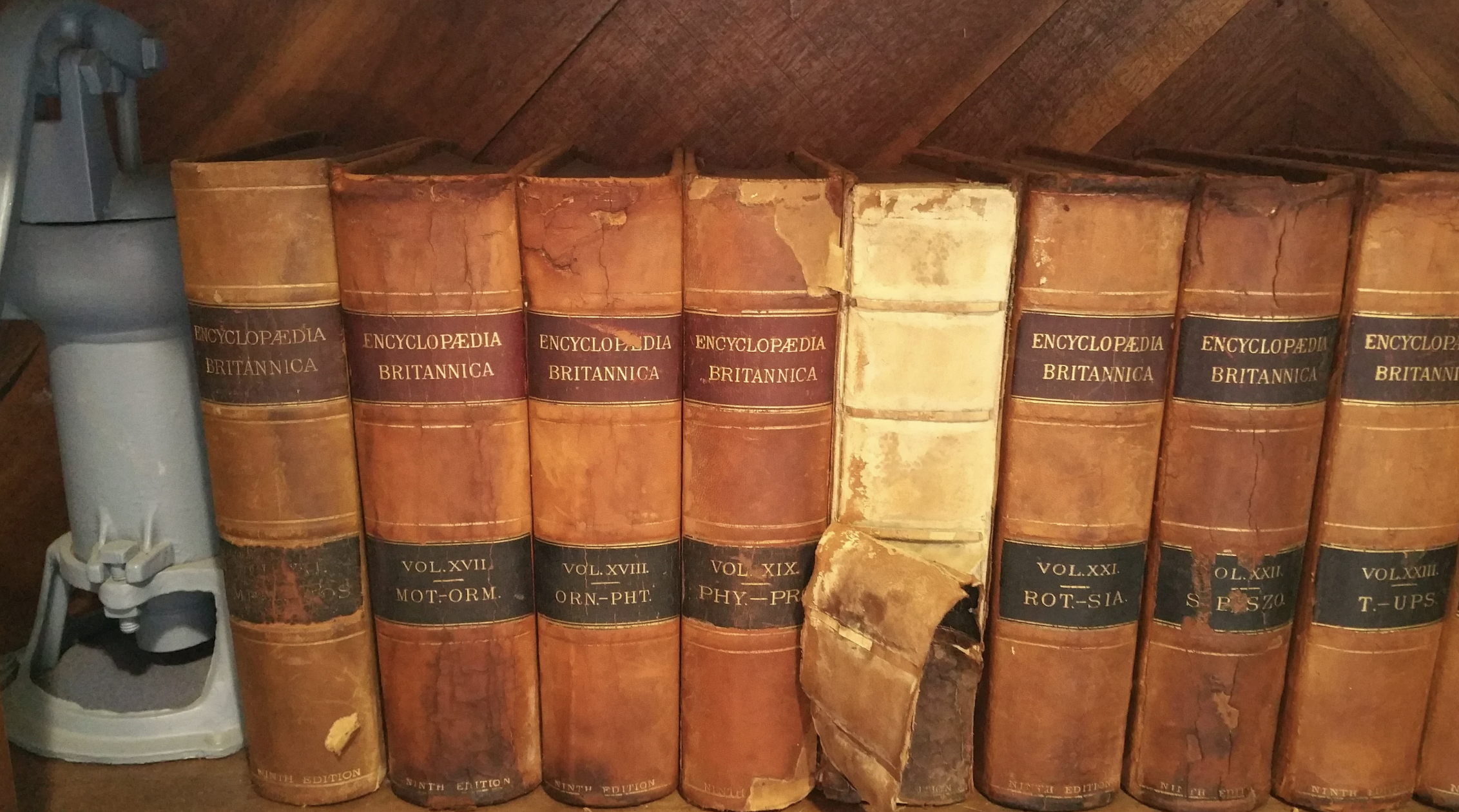
There’s one in the old folks’ home library where my son and daughter put me out to pasture. But don’t ask me anything about President Kennedy or later — the encyclopedia doesn’t go that far. Stops an Eisenhower!
Edward Young Retired
After you make that expensive repair and you still have the same problem, What will you check next?
0 -
Former pro here - I faced a similar problem back in 2016. It was a 160 year old, stone church with an old steam boiler, cracked sections, piped as wrong as possible, and the piping that ran throughout was just as bad. Everything was original except the boiler which was 20 years old. They were exhausted because of the continuous expensive repairs, high gas bills, pipe corrosion, and yet over the past 20 years nobody even mentioned the near boiler piping being a mess.
They’d been saving for years for a one and done solution. They had 6-7 contractors providing them a solution and the cost of that solution. Each one of us were lined up outside the church elder’s office as they called us in one at a time to ,more-less, interview us and ask why we were proposing our specific plan. I was the last one called and we connected immediately, the old school guys especially. I just told the truth. Steam is great but most every single component, fitting, and length of pipe was a century and a half old and the unexpected expenses are killing you. We installed two Lochinvar Knights, an indirect water heater, a home run manifold distribution system using 1/2 pex-al-pex tubing, flushed every radiator, and actually added enough EDR to match the building’s heat loss. The utility costs plummeted, no more unexpected expensive repairs, a comfortable building, and they only had to budget for annual maintenance. My plan satisfied all their needs and then they hired me to install AC for the church, its offices, and a new HVAC system for the Pastor’s home on the same property. 10 years later, 6 years retired, and I still keep in touch with them. It was probably my favorite job in my career and they’re still happy they hired me. There are times when I needed to just gut a job and start over, or I’d walk away. It rarely happened, but I never wanted to be married to a nightmare. Like everything, I learned that the hard way. Whatever your solution, I wish you the best of luckSteve Minnich

 7
7 -
Great to hear from you, Steve!
Unfortunately, the radiators on this job are steam only, so they’re stuck with that.
Bob Boan
You can choose to do what you want, but you cannot choose the consequences.0 -
I didn’t say that I was gonna give them an estimate solely to replace the boiler. Anything that I propose would include all the necessary corrections and repairs.
The present boiler has already been down fired below what Becket recommended and the old masonry chimney was not re-lined when it was installed. So, it’s still firing at twice the size of the connected EDR with the piping pick up included.
Since they’re gonna have to pay to re-line the chimney, it should be done to match a correctly sized boiler, not the beast that’s there now.
I can get a MegaSteam with the factory piping kit for what it would cost just to do the near boiler steam piping that’s there now.
I appreciate constructive suggestions, but your tone suggests you think that you know better than I what’s best for this job when you’ve only seen what’s posted here.
I’ve been doing this for over 50 years. Please show a little respect.
Bob Boan
You can choose to do what you want, but you cannot choose the consequences.2 -
is the header kit going to help you, will it put the risers to the mains and the return and the vent where you need them or will you end up replacing most of it with different fittings and nipples anyhow?
0 -
Looks like plenty of room to make it work and the smaller boiler will help.
1 -
We’d still have to pipe up to the mains, but a couple of 3” lines would not be a big deal. Having to do a 4” header, which the present boiler would require, would be a lot more work.
We’ve been down this exact same road before:
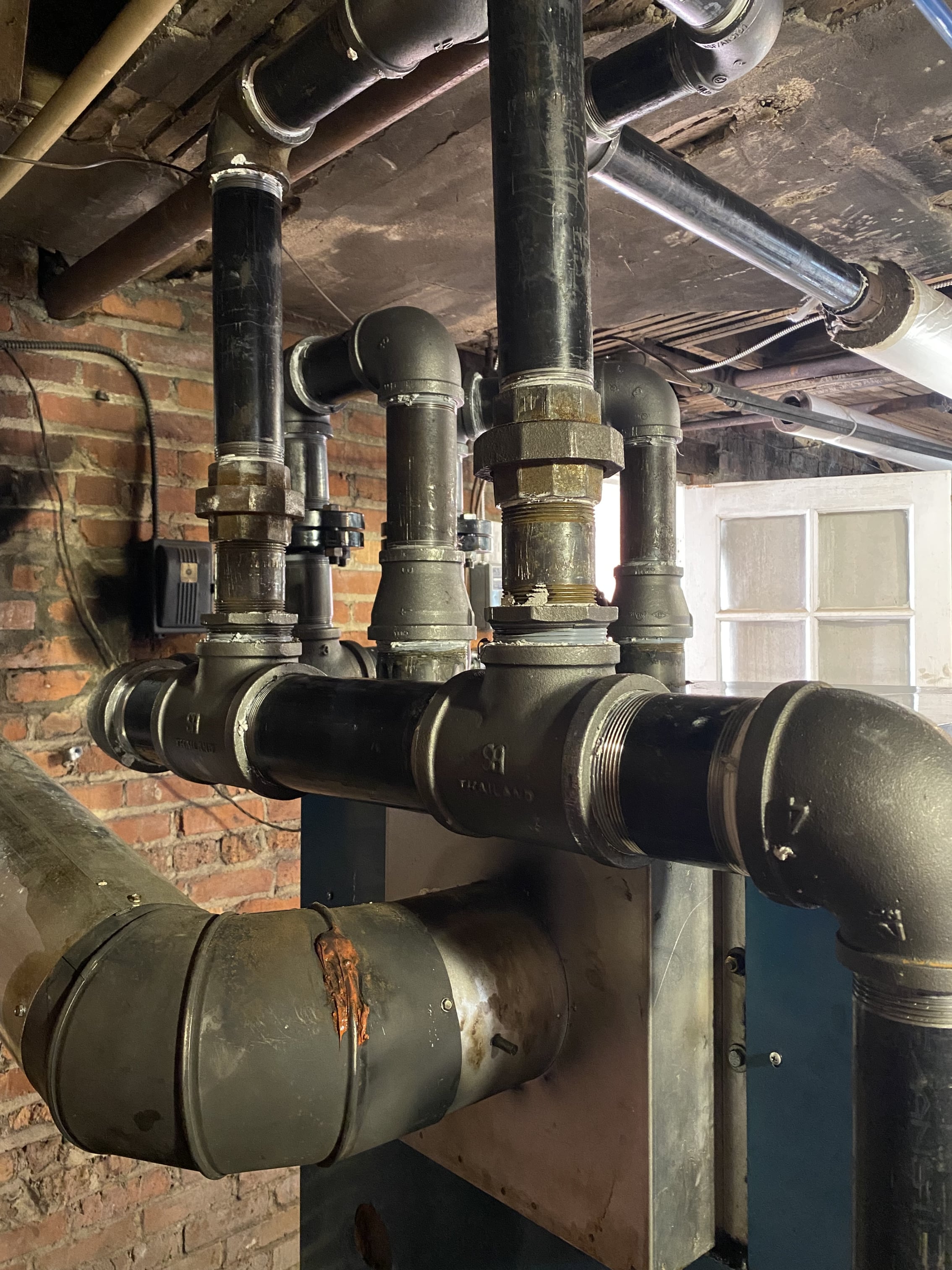
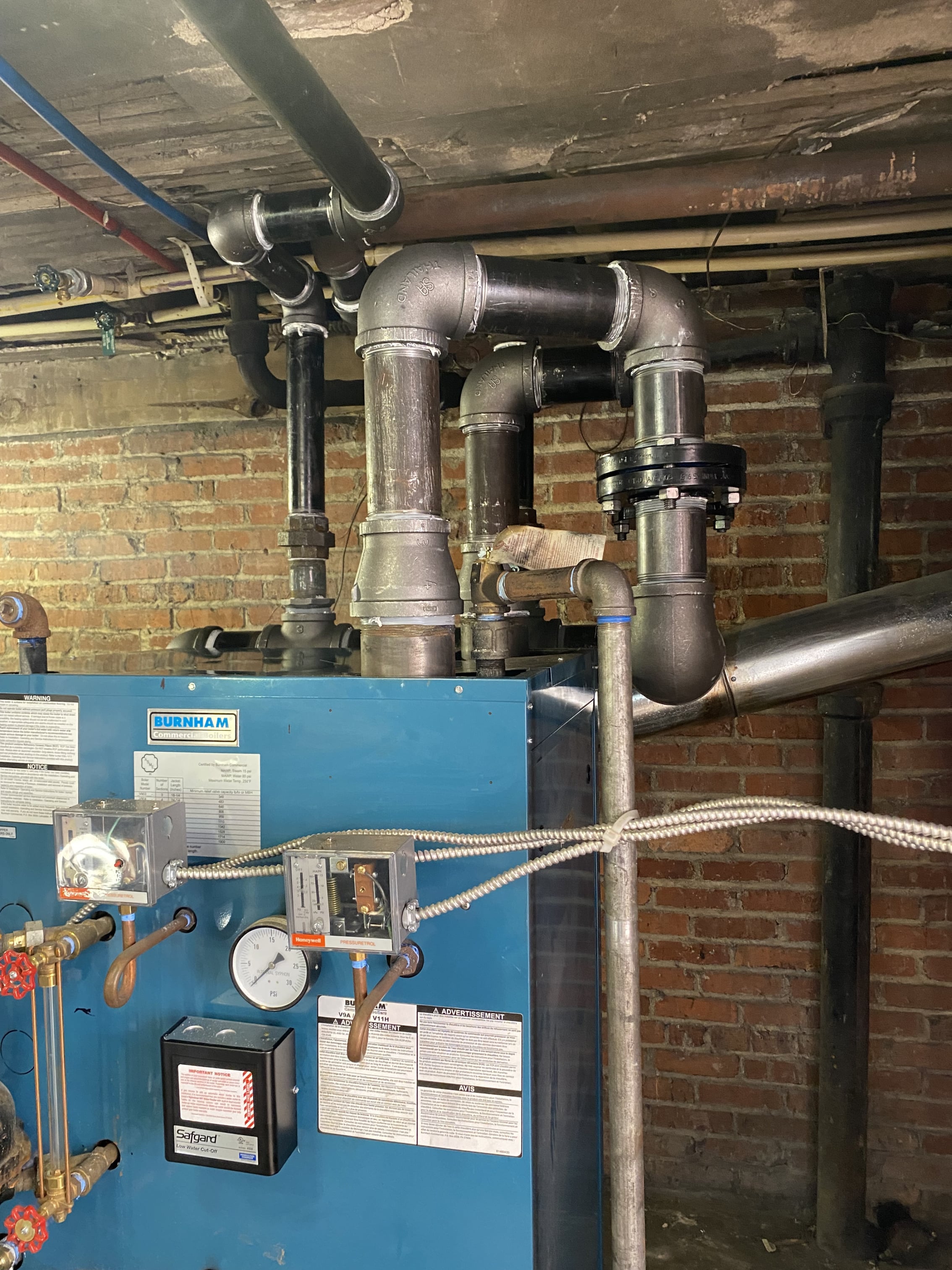
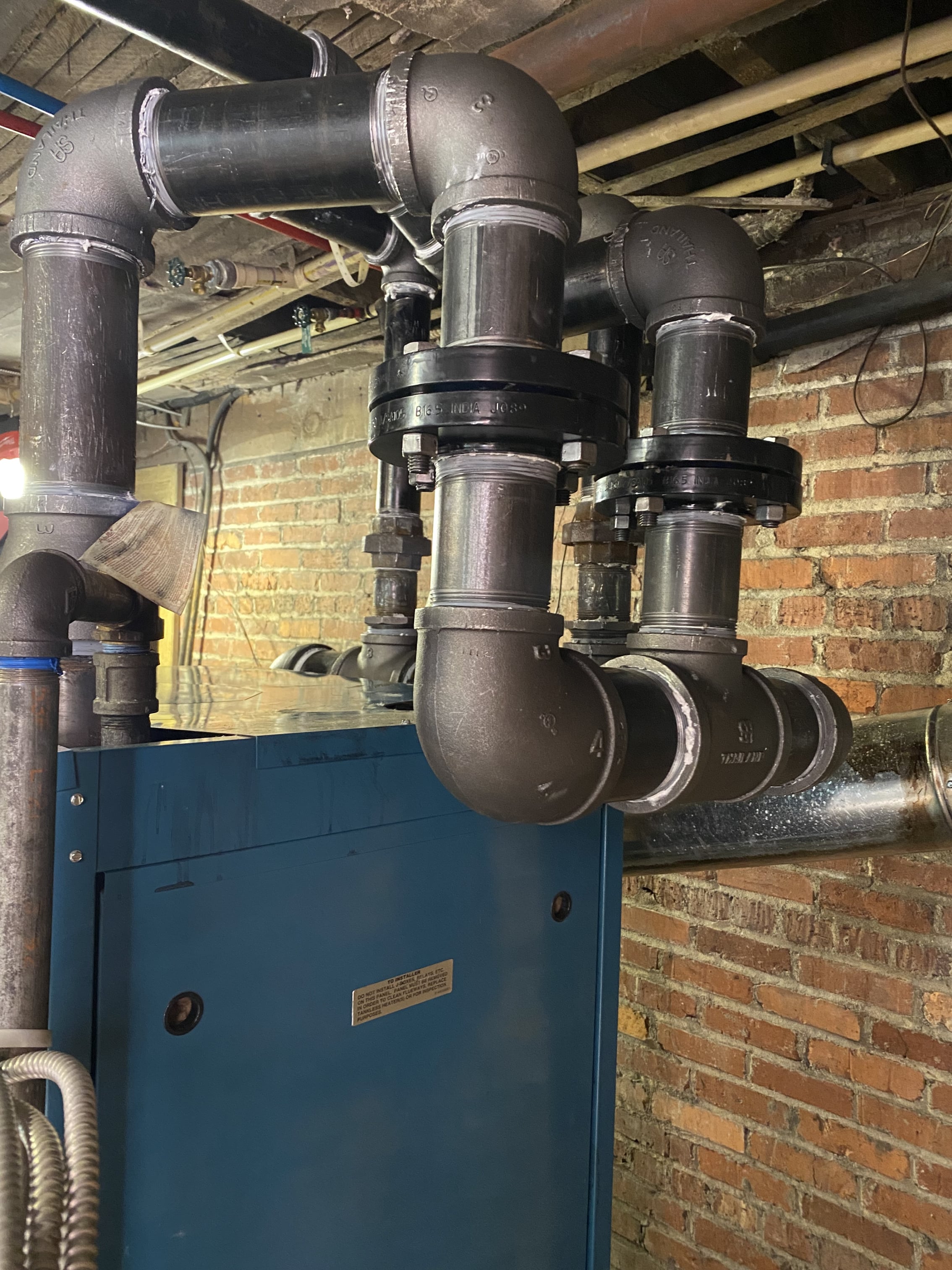 Bob Boan
You can choose to do what you want, but you cannot choose the consequences.1



Categories
- All Categories
- 87.6K THE MAIN WALL
- 3.3K A-C, Heat Pumps & Refrigeration
- 59 Biomass
- 430 Carbon Monoxide Awareness
- 125 Chimneys & Flues
- 2.2K Domestic Hot Water
- 5.9K Gas Heating
- 121 Geothermal
- 170 Indoor-Air Quality
- 3.8K Oil Heating
- 78 Pipe Deterioration
- 1K Plumbing
- 6.6K Radiant Heating
- 396 Solar
- 16K Strictly Steam
- 3.5K Thermostats and Controls
- 56 Water Quality
- 51 Industry Classes
- 51 Job Opportunities
- 18 Recall Announcements