Best Of
Re: Can you please critique this boiler setup that was installed in my house two wks ago
It looks like they disconnected and jacked up the original piping, slipped out the old boiler, and slid the new one in its place using a few fittings.
 MaxMercy
Re: Bit the bullet: bought an HTP UFT-100W on ebay
you can temp the wiring to run it all as one zone with the zone valves manually opened or the circulators paralleled and put the condensate hose in a bucket to get it running so you have heat…
 mattmia2
Re: Water hammer - novice question
Thanks for the commentary…
Regarding water level "does not look too high" - I was trying to say it is not above the water level mark on the side of the boiler enclosure when the hammering occurs. During the non-heating cycle the level typically is somewhat below this line by several inches (like the pic above where you are seeing evidence of oil), though several times I have seen it resting above the water level mark. During heating the level fluctuates less than one inch a couple of times or so per second. It doesn't appear to me to be violent fluctuation (i.e., no water splashing in the gauge) but I am a novice at this. My boiler tech told me it is to be expected during heating. This behavior is very similar now as it was with the old piping. Boiler is early '90s, though I can't vouch for how the earlier owners took care of it.
Drain cycle: 2 different boiler techs have told me a weekly drain until the low water switch activates is a good thing, and I have also read it is a good thing. However I have also read about dangers of too much fresh water addition. Reading more carefully I see a probe-type switch mainly needs a yearly cleaning, and this McDonnell switch seems to be just that. So I will have to interrogate the tech about that next time I talk to him.
Best regards, Steve

Re: DHW mode rapid cycling of boiler
There is a huge difference between an 007 and an 0010, but if you already had an 007 doing okay for 20 years, it's probably okay. With that said, short cycling using that tank still indicates a lack of heat transfer which could be a dirty exchanger an air bubble, or several other possibilities.
 GroundUp
Re: Steam Boiler Side Outlet type..... What was your experience with it?
Never heard of "Green Mountain Makes" Must be a Vermont boiler LOl

Re: Hydronic Boiler Tech Needed in Chicago
Is Dave the @The Steam Whisperer still on the site? He is a Chicago area pro.
You might call Able Distributing and get some referrals, they are hydronic smart. Porter Pipe also.
 hot_rod
Re: Experience with Aprilaire 800 steam humidifier for radiant floor heating???
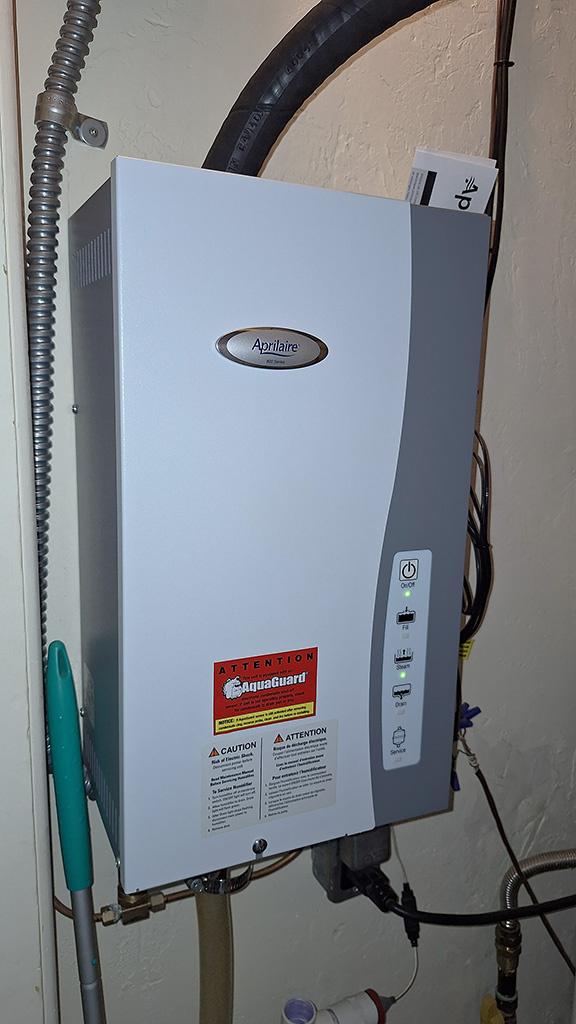
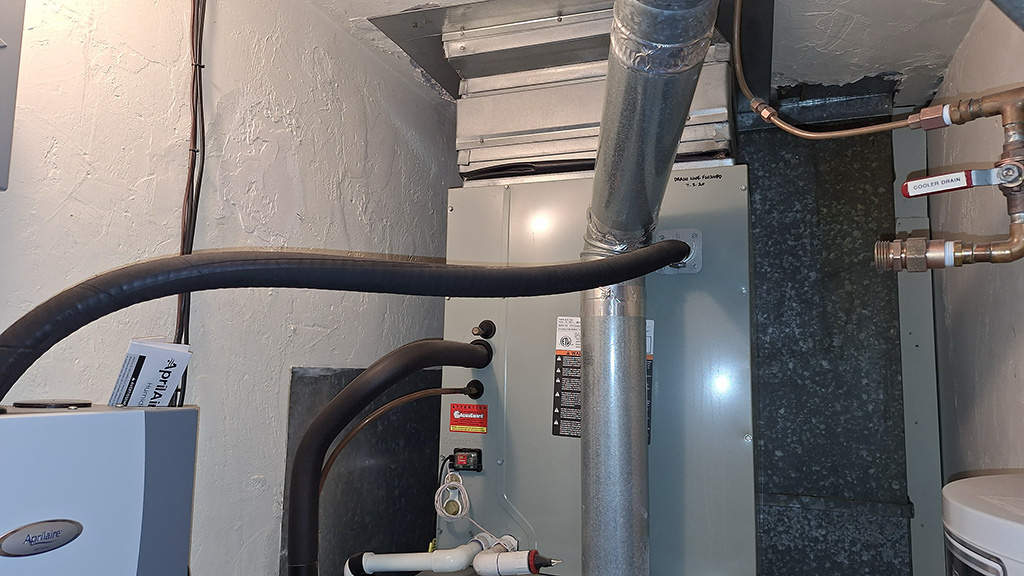
We have enjoyed the Aprilaire 800 in our gas forced air system for 10 years. It's the best thing since sliced bread. Even with Tucson's mild winters, it's always very dry in the house.
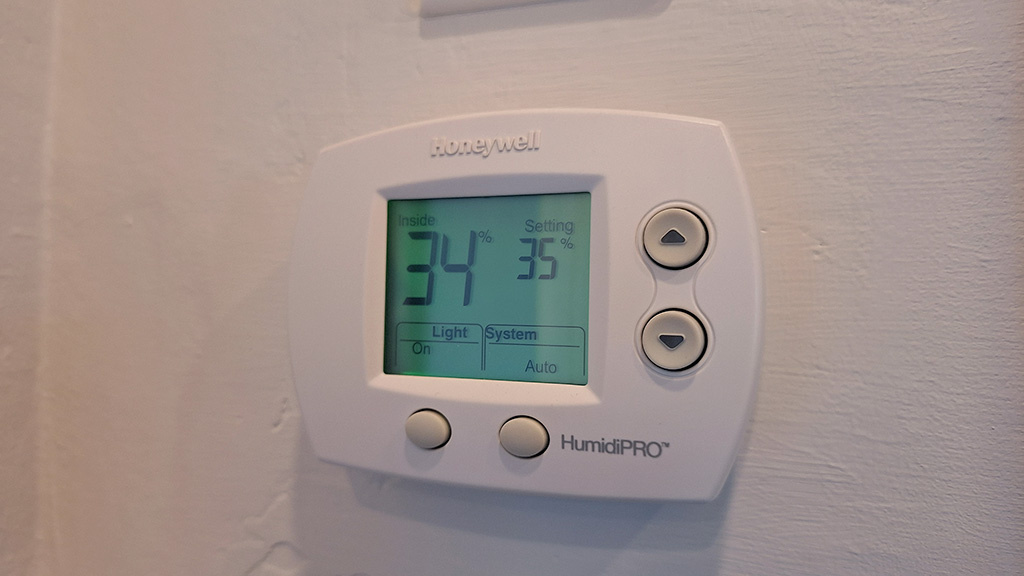
Our 800 is set to boil the lowest amount of water for the 2200 sq. ft. single level house. Yes..., it uses a decent amount of electricity and I estimate ~$20-30 / month in the winter. The provided comfort is worth every penny. The canister only fully drains if there hasn't been a call for humidity in 72 hours or if the 800 is shut off at the control panel. From time to time, some partial draining does occur. With our use (humidistat set to 35%), the canister lasts 2 seasons. I change it before the system forces a canister change. The old "heavy" canister is full of calcium & magnesium.
The insulated steam line gets hot and only steam is released into the ductwork (a bit above the evaporator coil). It should operate in a similiar fashion with the fan pack. With the fan pack, the 800 will run whenever there is a call for humidity. In our system, I keep the ECM furnace blower running at a low "air circulate" speed 24/7 (for air filtration). The 800 will run as needed without a call for heat. Even if I had the fan set to "auto", the 800 will command the furnace blower to start when there is a call for humidity.
After 8 years, the soleniod controlled drain valve did begin to leak. Over time, the hot draining water eroded the non-replaceable plastic seat. It was a $400 part, but not a difficult job to replace.
I can only say good things about the 800. IMO, it has first class design, engineering, and manufacturing.
Paul
 PFloro
Re: How to test this cap?
There are two common ways to measure a run capacitor
- remove the brown wires and connect the brown wires to a meter that measures capacitance
- follow the instructions in this video to test it while the motor is running
In the case of your circulator capacitor you take the amp reading from one of the brown wires while the pump is operating. If that number is too low to get an accurate amperage you can add ten wraps of wire around the ammeter jaw and divide your reading by 10.
So if you get 4.94 amps with 10 wraps then you are really getting 0.49 amps. Now multiply that by 2652 and you get 1299.48
Next you measure the voltage at the 2 brown wires to see that that reading is. If that happens to be 253 volts AC then you divide the 1299.48 by 253 and you get the actual uf reading of 5.1 If your cap is rated at 5 then you are within the tolerance. Good cap.

Re: Can a new steam system be installed in a new residential house?
I've never needed any of this with my 1 pipe system. Steam doesn't really start going out to the radiators until the main vents close. Yeah it will kinda start making it's way out but barely.
I find my 1 pipe system with trvs to be much more flexible than a forced air system.
Id probably still go with 1 pipe just for simplicity and the least amount of space taken up by piping.
Of course id still need duct work for my AC......
 ChrisJ
Re: My New EK-2 Boiler Isn't Meeting Efficiency Expectations. Any Help Appreciated!
Thank you for your post, @wjcandee , and for everyone's comments.
The first point I'll make is if you have any concerns that you feel are not being addressed to your satisfaction, you should contact us directly at (908) 735-2066 and ask to involve your territory manager. This will clear up many of the questions you posed and allow for a prompt resolution. We should have our territory manager and your dealer talking directly about your concerns.
You high water volume system with cast iron radiators has low mass/high mass piping installed (primary/secondary piping), which is excellent.
Regarding efficiency, give the system a chance to work while properly installed. It sounds like you've ironed out some issues so you should be in good shape after our territory manager reviews your job with the dealer.
Here is some background on energy savings, which may or may not be applicable to your situation (I'll use an oilheat example). When we analyze savings, we usually look for two years of prior history and at least one year afterwards. It's difficult to gauge when oil tanks are sometimes completely filled and sometimes not. Over the course of a year and with the delivery company intentionally filling the tank at the beginning and the end of the year will allow much more accurate estimates. It's also important to realize that we need a good "starting fill" to estimate fuel consumption properly. For example, if the tank is completely filled on June 1, the boiler is installed September 1, and the tank is then completely filled again November 1, there are 3 summer months of usage under the prior boiler, so we can't start estimating until deliveries are made sometime (preferably a year) after then November 1 fill. We then normalize the savings using heating degree day data from a local weather station.
Analyzing a mix of heating and hot water fuel use over a short period of time even with degree day data is not a preferred way to gauge performance. You have an EK2, so you will have a large heating load so this may be even more pronounced.
The primary/secondary (low mass/high mass) zone valve opening and closing is protecting the boiler from condensing. The burner will run without shutting off during these cycles. This does not reduce the overall boiler efficiency, but improves comfort and protects the boiler. Here's why: The circulator on the primary loop (which goes out to the radiators) continues to run with high enough flow that the radiators will typically heat much more evenly. Because the primary loop circulator continues to run, the heat distribution is much more even (as compared to a typical boiler where the heating circulator would turn off when the boiler temperature dropped too much from cold returns; this would "pulse" heat out and causes near radiators to heat rooms more than more distant radiators).
There is usually a ball valve on the return of the injection zone, and throttling this somewhat will reduce the number of zone valve cycles. This is a specific setting for a given primary/secondary loop, and once it's set it does not need to be moved again. Nothing hurts the efficiency or the boiler if this is not done, but if it is your preference, it could be adjusted to reduce injection zone valve cycles. Throttling too much could cause the burner to turn off from a high boiler temperature from too much bypassing water earlier than it would with less throttling.
Best,
Roger
 Roger
Roger