How can I use 90 F degree water to heat my new house?

I have a well-insulated 2,000 square foot house on a ranch in northern Nevada that has a hot spring nearby. I've thought about using the water as input to a ground source heat pump, but was told a heat pump couldn't take water that warm. I could also use the water for hydronic floor heating, but was told it wasn't warm enough. I've been trying to find someone that I could pay to help me design something that might work, but can't find anyone so far. What about running the warm water through a hydronic floor system to provide most of the heat and having a boiler as a backup? The ranch is 4 - 5 hours from big cities like Reno or Salt Lake, so its hard to find someone to take on the project. I'm also concerned that if it breaks down, it will be hard to find someone to come out. Any suggestions would be appreciated.
Thanks.
Comments
-
At best you can get 10 Btu/sq/ft from 90F water if that. What's the heat loss?
0 -
It looks to me on casual research that they can handle 90 degrees. Some can go to 120 it appears.
Even if they couldn't, I would consider some kind of bypass loop that recirculated some of the water exiting the heat pump back into the supply in order to moderate/cool the incoming temperature. That nice warm water is too valuable to ignore IMO
NJ Steam Homeowner.
See my sight glass boiler videos: https://bit.ly/3sZW1el
 3
3 -
in four radiant heat
and a small heat pump to make up the very little difference
 1
1 -
How well insulated is well insulated?
The only type of system which offers any hope is radiant floors or ceilings — or more likely, both. You need to have a very clear idea as to how much heat is required to heat your house, and that means doing a careful and thorough heat loss calculation. Then you can begin to wonder if you can meet that heating load with water at that temperature — and, not irrelevant, if you have enough water available. You may find that you need essentially all of the floor and ceiling surface to be heated. You may also find that you will need 20 plus gpm of flow, 24/7 , to maintain the temperature — 30,000 gallons per day. Do you have rights to that much water?
Br. Jamie, osb
Building superintendent/caretaker, 7200 sq. ft. historic house museum with dependencies in New England0 -
The first thing you need to know is the heatload of the home, ideally room by room
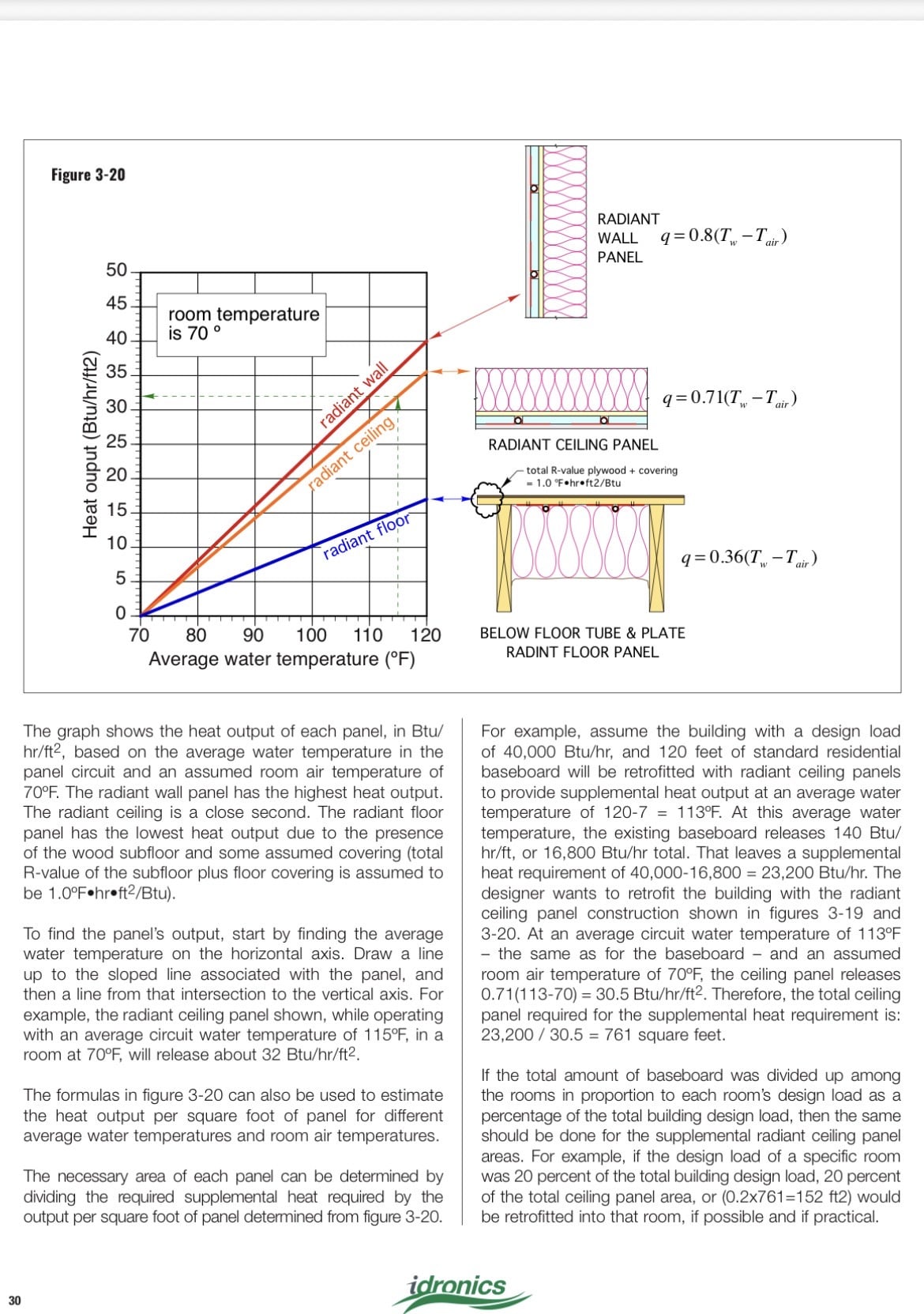
This graph shows some common retrofit options and expected btu/ ft output. Radiant walls are about the high output, and you have a lot if surface area availade
Running that water through a plate HX you would only loose a few degrees, do call it 88 degree supply water
A hp adds a lot of cost to boost maybe 10-15 degrees
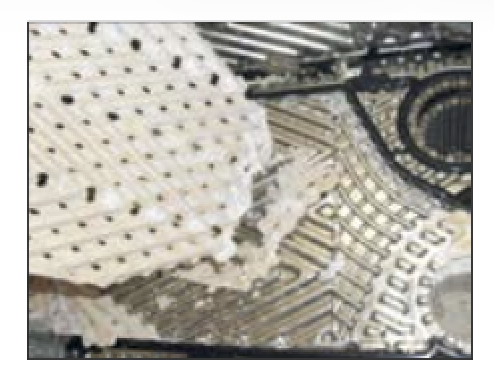
The biggest issue is that Nevada geo thermal water is very hard, so continual descaling of the hx may be needed
 Bob "hot rod" Rohr
trainer for Caleffi NA
Living the hydronic dream0 -
If you were to use the hot spring with a heat pump you have to understand that if you have an oil leak or refrigerant leak it will contaminate the hot spring.
What you need in order to make use of the heat from the hot spring is to use an insulated buffer tank to store hot water and also deliver it to the home using multiple copper coils in the large storage tank,
Using 2 small circulators where one can feed the hot water from the spring to the tank and the other feeding the hot water from the copper coils to cast iron or steel tube radiators with the cooler water allowed to drain back to the hot spring.
The thermal mass built into the cast iron or steel tube radiators along with the thermal mass in the water from the hot spring can be used to its fullest advantage.
 2
2 -
Is this a flowing well or coming down from an elevation?
How would you get rid of that much water?
0 -
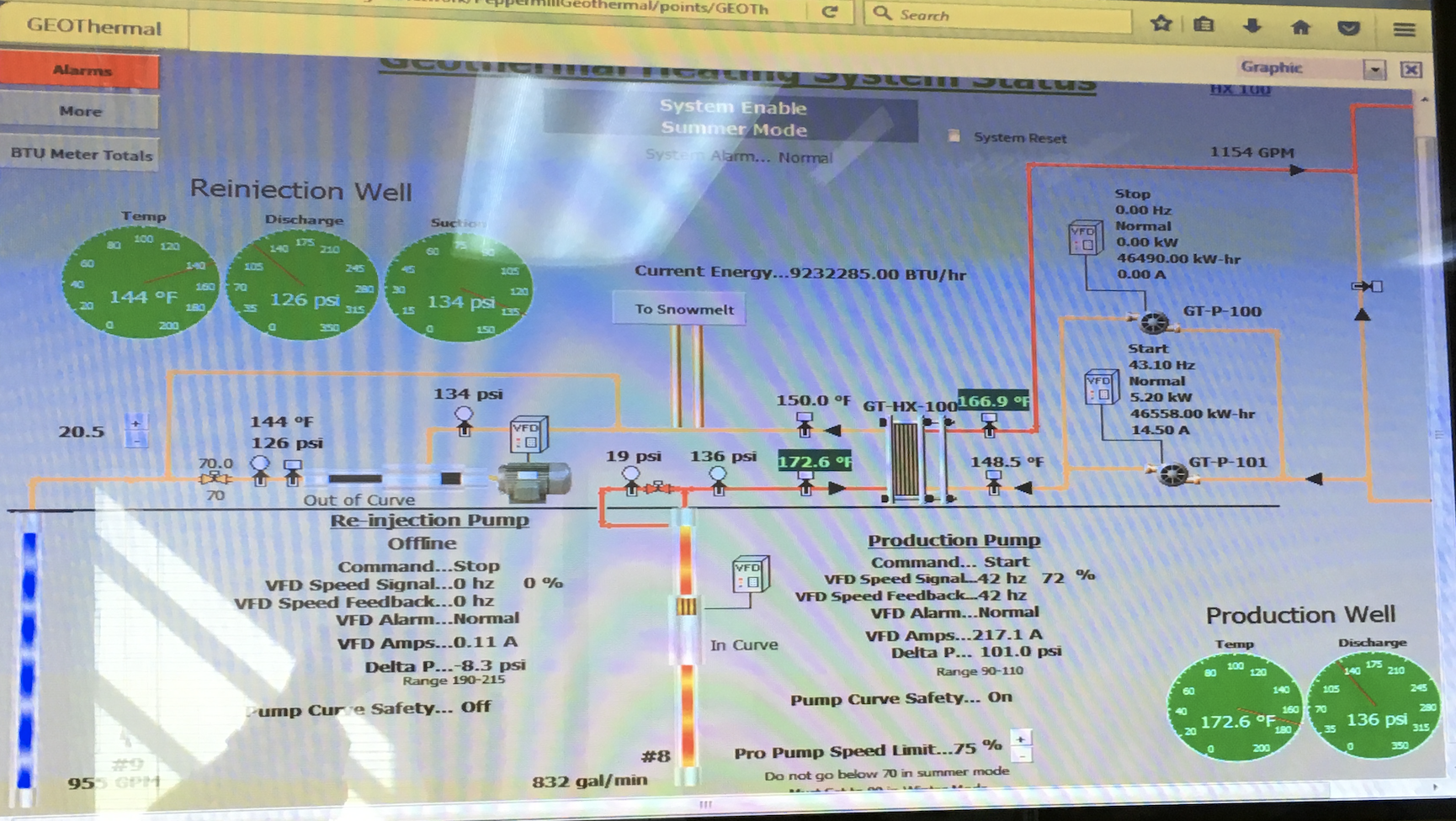
I visited the Peppermill in Reno a few years back and got a tour of their geothermal system which heats and provides DHW for the entire resort, 2.1 million feet of space. They pump and dump.
One pump pulling 176° F from the well, another discharge to help pump back down a well across the property.
 Bob "hot rod" Rohr
trainer for Caleffi NA
Living the hydronic dream1 -
So… we have two critical paperwork steps here. First, does this property have the necessary rights to use enough water? For those unfamiliar with Western water law — like anyone east of the Mississippi! — it is well to remember that just because there is water on a property — or beneath it — does NOT mean that the property owner has the right to use it! Water rights (and mineral rights for that matter) do NOT run with the land.
Then second, how much heat does this place need? Can water at that temperature (85 F mean temp) provide that much heat with a reasonable surface area?
Answer those two, then we can begin think about practicalities…
Br. Jamie, osb
Building superintendent/caretaker, 7200 sq. ft. historic house museum with dependencies in New England2 -
Put a boiler in with baseboard heat as a booster a stand alone system.
use the 90 degree water through a heat exchanger to run radiant heat and preheat your domestic hot water.
You can go oversize on the radiant tubing to maximize use of the 90 degree water which will probably do the job for a good portion of the winter.
What the radiant can't do the boiler will
.Nice and simple and not overloaded with controls.


 3
3 -
so the house is already built and you want to maybe add a hydronic system?
I’m in the Salt Lake area and to get a building permit you need to have a heating and cooling load calculation. Maybe that was the case in your area?
Without that load calculation, it is just a guesstimate as to what could work.
There are a lot of good hydronic companies around Nevada. They tend to be near the resort areas, but quite a few in the Reno area.
Western Nevada Supply in Reno has an excellent hydronics division. I know hydronic reps in that area that may have contractor options. What town are you in?
Bob "hot rod" Rohr
trainer for Caleffi NA
Living the hydronic dream0 -
Thanks for the ideas.
We have more than enough hot spring water to feed a system. Our hot spring normally just flows out to our meadows. I'm just diverting a part of the flow to the house and back to the fields.
Its and old house stipped to the studs. I live in a county with no building permitting requirements.
I like the idea of radiant tubing with the 90 degree water with a backup boiler for very cold times. I need to do heat loss calculations for the house and the radiant tubing to see how it adds up.
Scaling in the heat exchanger is likely to be a problem given the high mineral content of the water.
Thanks also for the suggestion for Western Nevada Supply in Sparks.
0 -
That water diversion may — or may not — be permitted. Don't assume. ASK. People have been shot for less — and I'm not joking.
Br. Jamie, osb
Building superintendent/caretaker, 7200 sq. ft. historic house museum with dependencies in New England0 -
in Colorado I owned the property. Someone else owned the mineral rights. I had to negotiate with them to drive a well!
Check the local regulations!
0 -
@dfrazer.
If the HX might scale you could size the boiler for say 80% of the heat loss. That would be plenty to keep things operational even if you hit design temp. You could also have a spare HX on site.
0 -
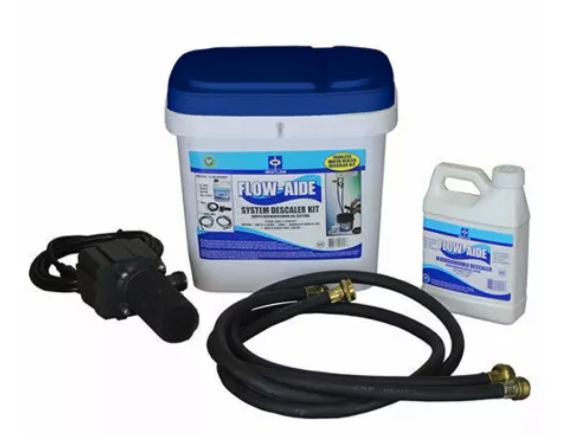
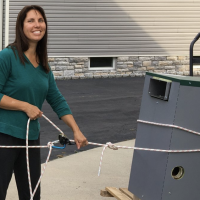
Here is an example of limescale and a plate hx.
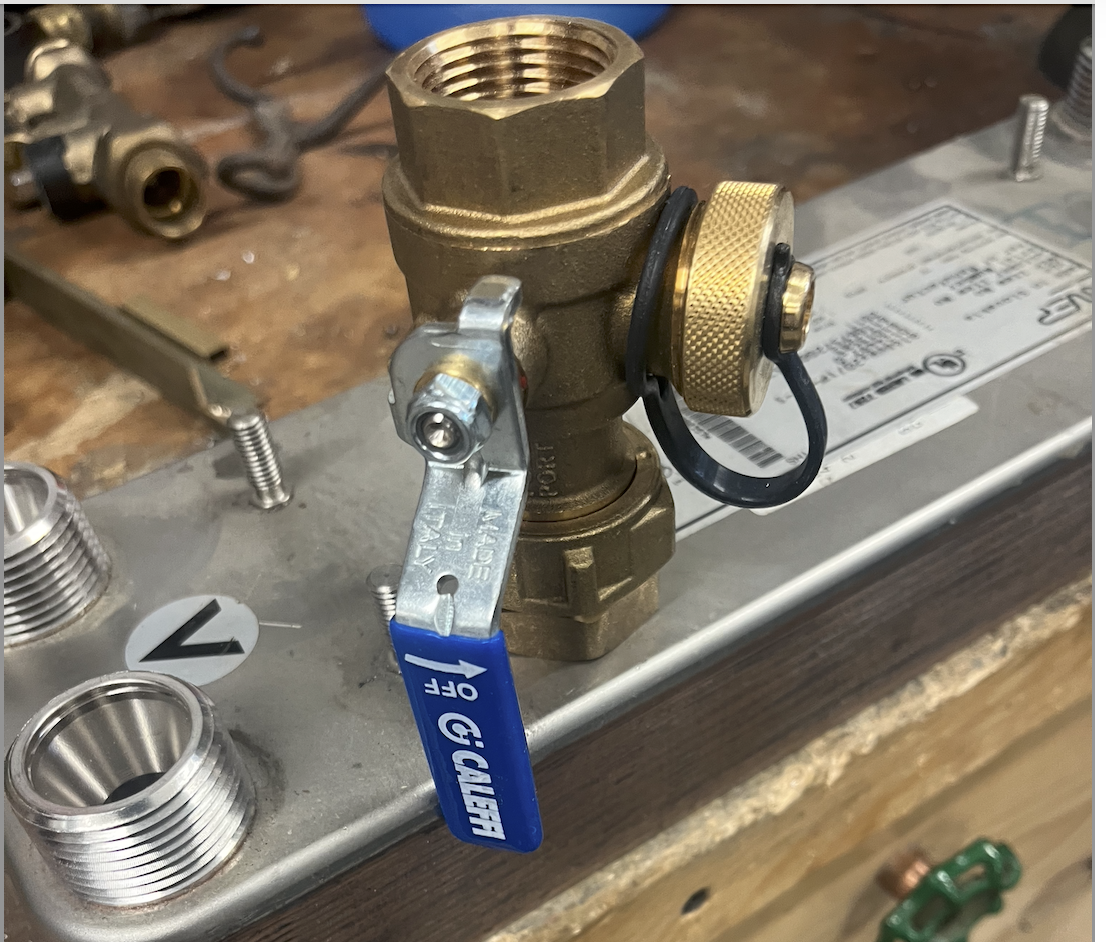
A simple cleaning method is install a flush ball valve on each port. Then connect one of the descaler kits and pump it for an hour. No need to disconnect, loose fluid or pressure this way.
 Bob "hot rod" Rohr
trainer for Caleffi NA
Living the hydronic dream1 -
I suspect the water may be hotter underground. Even a shallow well may give hot enough water to simplify things.
 1
1 -
Also consider a closed loop in the area. The hot spring would heat the surrounding earth and make the closed loop very efficient to the heat pump. You could make the well or trench loop very much shorter than I had to where the ground water temperature was 50 degrees.
You might have some trouble using it for cooling in the summer, but possibly not. After all, air to air heat pumps (air conditioners) cool quite well when the outdoor temp is 100 degrees. Or maybe you aren't using this heat pump for cooling at all.
When I lived in Michigan I had a couple friends who had pump and dump systems so the comment above "what would you do with all that water?" made me chuckle…they ran it to a hose in their back yard and let it run off! Not viable here on the east coast given our more dense lot divisions!
Plus those systems hurt themselves with the minerals as stated above…a closed loop system is better for several reasons
NJ Steam Homeowner.
See my sight glass boiler videos: https://bit.ly/3sZW1el0 -
We can heat our "sun" room with 90+ water in slab. Does well to -20 degrees overnight. Same for the basement floor, painted concrete.
Northern Nebraska, "super insulated" somewhat, house construction.
1 -
Not sure about western water rights but if you take that water and give it right back at a lower temperature is it really taking it at all? Water is water and I doubt that anyone thought about the temperature of the water when they were talking about water rights laws 150+ years ago when when Marshall Dillon was in charge of Dodge City. But @ethicalpaul has the better idea using a closed loop full of better quality water dug into the ground next to the hot water that is coming out of that spring.
Edward Young Retired
After you make that expensive repair and you still have the same problem, What will you check next?
1 -
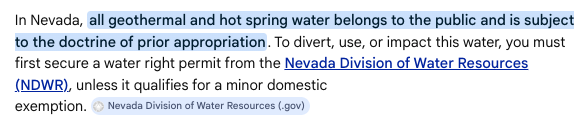
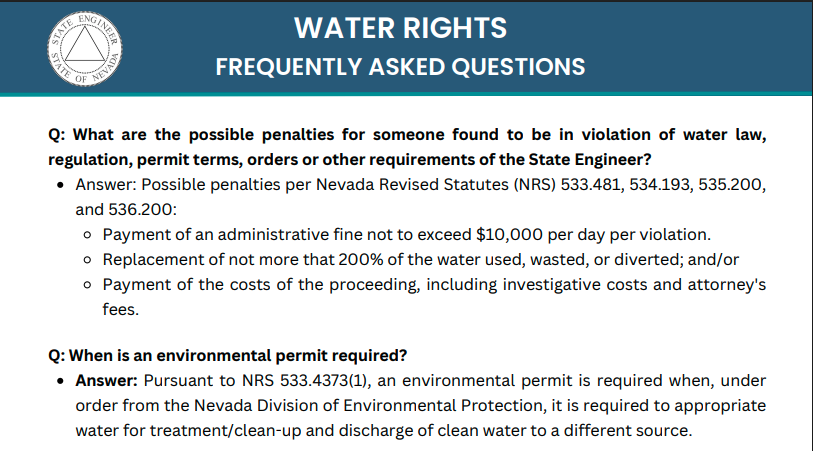
Readily available information, possibly you qualify for a minor domestic exempotion, worth a phone call.
 Bob "hot rod" Rohr
trainer for Caleffi NA
Living the hydronic dream1 -
-
I know there is private use of geothermal water in Utah and Colorado, you just need to apply for the proper permits. The State DNR decides if you are able to get a permit.
Nevada reads like there is a minor domestic exemption available.The DNR in Utah is helpful with their phone support. At some point they suggest you retain a water rights attorney, for legal questions, however.
There are water shares and water rights, typically. Sometimes water shares come with the property but they can be bought and sold, they are similar to a stock certificate. Once you have shares you can have access to water. If it is available to the property.
Bob "hot rod" Rohr
trainer for Caleffi NA
Living the hydronic dream0 -
Consult with Stewart and Lynda Resnick, the wealthiest "farmers" in the U.S. He bought up plenty of those water "stock certificate" in CA 65 years ago—after leaving NJ. They grow nuts and "other stuff." Iran used to be the 'motherlode' of pistachios. Not any more.
0 -
I have been trying to rain for a number of comments here And "minor domestic" is going to be on the order of 80 to 100 gallons per day per person. There is no way that the 30,000 gallons per day an open system will require is going to qualify as "minor domestic"
PAY ATTENTION
Br. Jamie, osb
Building superintendent/caretaker, 7200 sq. ft. historic house museum with dependencies in New England0 -
I’m the water master for a small irrigation company in our neighborhood. To use “secondary” ditch water, or ground water, you need to acquire water shares. the property around me was farm land, so lots came with water shares as they subdivided the farms. Our irrigation company dates back to 1909.
You need at least one share of water to connect to our system.
1 share is an acre foot, about 362,000 gallons. This would cover an acre of land 1 foot deep in water. In general an acre foot will typically cover indoor and outdoor water needs for 3 average households. We pay the state a yearly fee to maintain those shares.
The home we bought had 3 shares of water included.
Your neighbors may know about water rights, certainly the realtor that sold the parcel would know.
In your case you are probably asking for a diversion, if the water is currently flowing out of the ground, it is going somewhere, you want to basically pull some thermal energy, return all the flow back to the aquifer, not consume the water. That may be an easier ask than household consumption, or irrigation.
if you diverted 3 gpm, 24 hours a day that is 28,280 gallon per year diversion. But a call to DNR takes the speculation out of any answers.Water is a huge issue in the western states, always has been. I looked up Utah Water Rights at the .gov website. It is a massive 300 page document with a lot of legal speak. Not easy to wade through, which is why the DNR suggests you consult a water rights lawyer.
Bob "hot rod" Rohr
trainer for Caleffi NA
Living the hydronic dream1 -
You're talking 28,000 gallons per year, @hot_rod . Our OP is talking about that PER DAY.
Br. Jamie, osb
Building superintendent/caretaker, 7200 sq. ft. historic house museum with dependencies in New England0 -
3 gpm= 180 gallons per hour = 4320 gallon per day = 30,240 gallons per week = 129,600 gallon per month = 1.6 million gallons per year.
28,000 gallons per day = 1167 gallon per hour = 19.4 gallons per minute.
At a 10F temperature drop, 3 GPM= 15,000 BTU/hr. 19.4 GPM= 97,000 BTU/hr.
0 -
All the more reason for a large solar storage tank with 5+ sets of coils piped in series feeding the cast iron, cast steel tube or panel radiators.
0 -
At this point the gpm, gpd flow is a moot point if the use of the water is not allowed?
That is the first question to get answered.
Next pinpoint what flow is or could be needed to cover some or all of the heat load. And then what is available and from the source.
There is a good chance the state has the source documented, maybe flow rates, and would know if their are any claims on it.
A typical heating system would not run 24/7 365. Assume 5 months would be 648,00 gallons. IF heat is needed 24/7 for 5 months, doubtful.
Probably find degree day data for his location online.
Bob "hot rod" Rohr
trainer for Caleffi NA
Living the hydronic dream0 -
This Nevada state government website covers geothermal:

 2
2 -
For degree day data go to: "degreedays.net". As hot_rod said: make sure about legality, and take care of that first. If it's a go legally then proceed if there's enough spring water available to do the job. Plenty of good advise on here on the how of that.
0 -
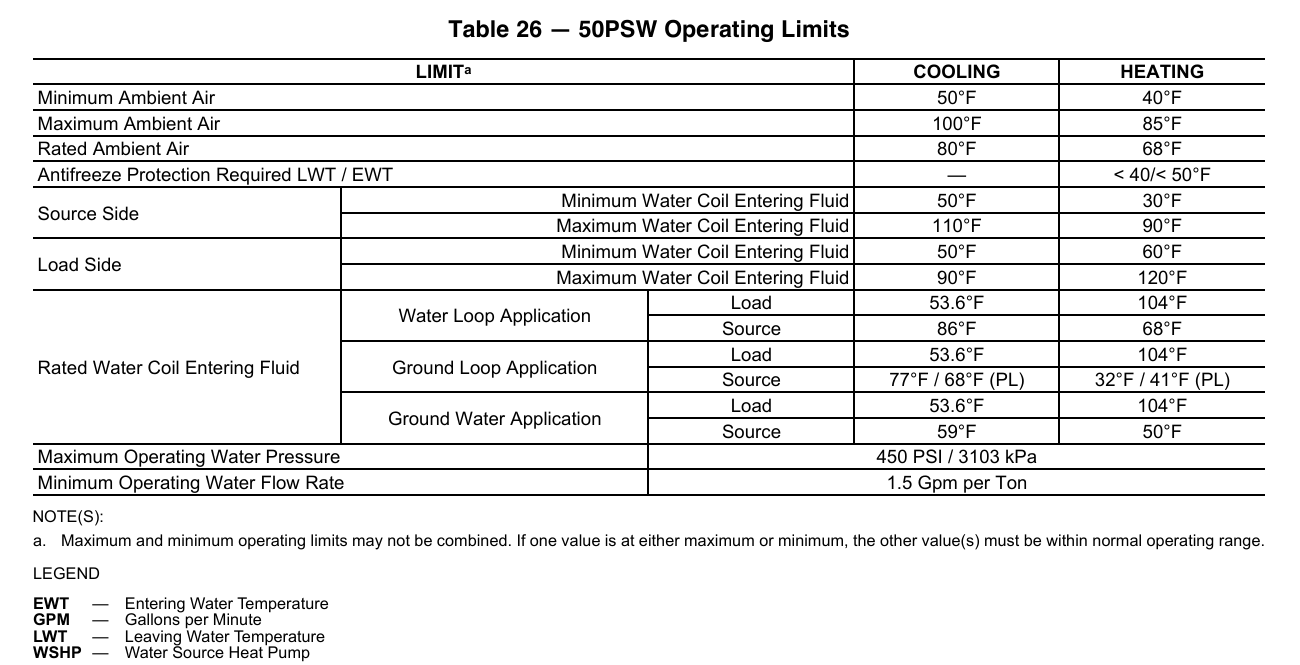
Just use a water-to-water heat pump if you have the flow. Carrier's 50PSW is a good place to start. To quote from the installation manual: "
Ground Coupled, Closed Loop and Plate frame
Heat Exchanger Well Systems
These systems allow water temperatures from 30°F to 110°F. The
external loop field is divided up into a 2 in. polyethylene supply
and return lines. Each line has valves connected in such a way that
upon system start-up, each line can be isolated for flushing using
only the system pumps. Air separation should be located in the
piping system prior to the fluid re-entering the loop field"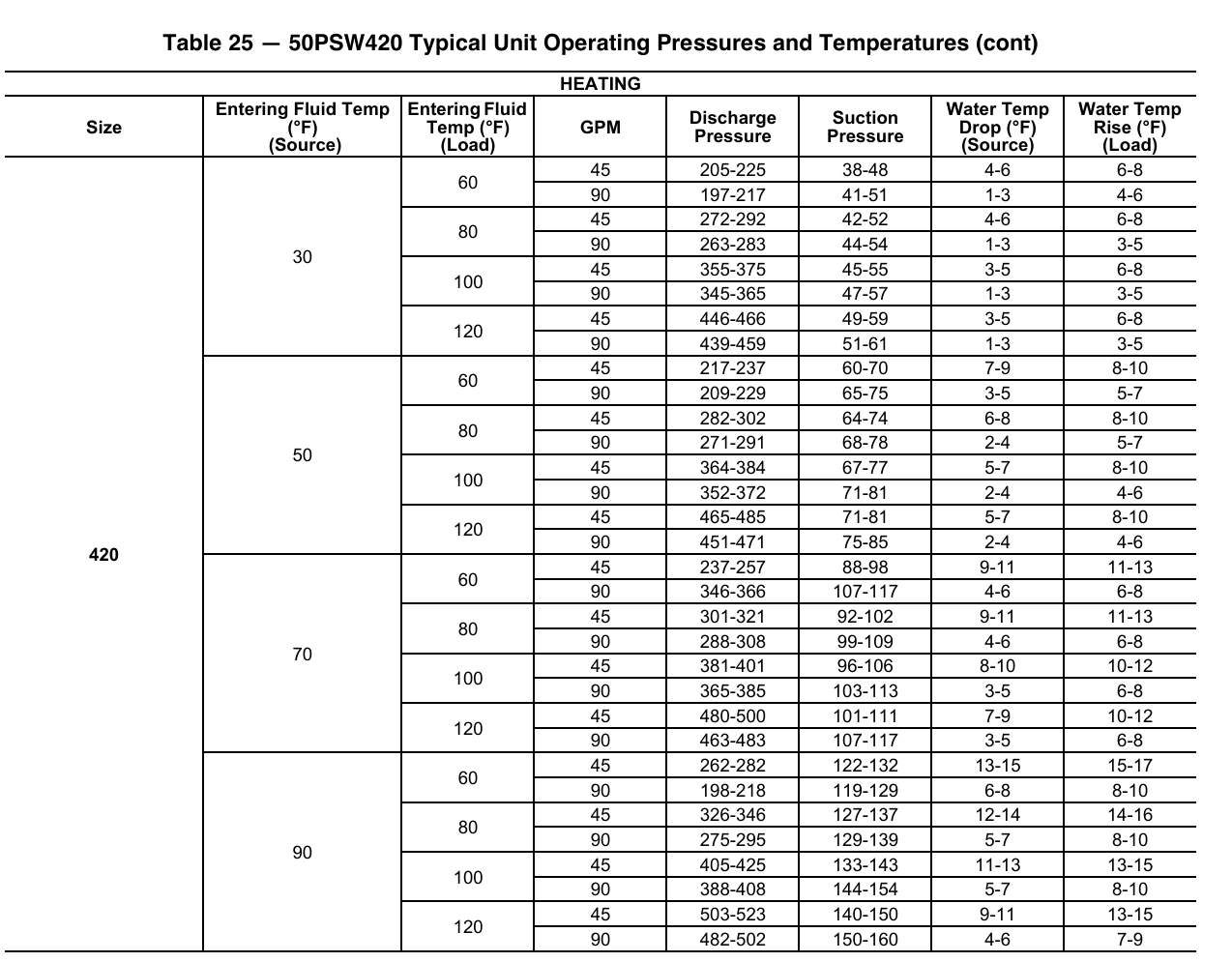
So you should be able to get a 120 degree temperature, that should be fine for a hydro air system to provide heating PROVIDING you have flow. And of course a permit to reduce the geothermal temperature. As others have pointed out you will need a heat exchanger to keep the water streams separate and be able to clean the scale on the geothermal side, but not a big deal so figure 3F drop and some added pumps (source temperature would be 87F - still within the operating range.
 0
0 -
It all sounds doable, but expensive and not a sure-fire way to save money. Scarce skilled labor, high mineral content water, low water temperature, large storage tanks, water rights issues……sheesh.
I'd be more inclined to spend money on a solar electric array, heat pump, radiant heat setup.
8.33 lbs./gal. x 60 min./hr. x 20°ΔT = 10,000 BTU's/hour
Two btu per sq ft for degree difference for a slab1







Categories
- All Categories
- 87.8K THE MAIN WALL
- 3.3K A-C, Heat Pumps & Refrigeration
- 60 Biomass
- 430 Carbon Monoxide Awareness
- 133 Chimneys & Flues
- 2.2K Domestic Hot Water
- 6K Gas Heating
- 124 Geothermal
- 170 Indoor-Air Quality
- 3.9K Oil Heating
- 79 Pipe Deterioration
- 1.1K Plumbing
- 6.7K Radiant Heating
- 397 Solar
- 16.1K Strictly Steam
- 3.5K Thermostats and Controls
- 56 Water Quality
- 51 Industry Classes
- 51 Job Opportunities
- 18 Recall Announcements