Heat Pump Refrigerant Uncertainty

Hi all, I'm considering converting from oil to heat pumps but I'm wondering if this is not the time and I should hold off.
My concern is based on the fact that I see R-454B is being banned in Europe due to presence of PFAS, and closer to home, it seems that Maine is also restricting R-454B.
This would leave me to look into systems using R-32 but it would be nice to know where the industry is going to wind up.
Will there be a decision to invest in R-454B due to the further decrease in GWP that it offers compared to R-32, or is that overshadowed by the PFAS and will the industry settle on R-32?
I realize that I'm asking for the crystal balls to be broken out, but it would probably help the industry if it could settle on something for the next 10-15 years or so.
Thanks for any thoughts you might have.
Comments
-
Trying to predict the future on things like this is, frankly, a mug's game. If you really want to go heat pump — and they can be very good in the right application — go with the best you can find now. The rules will change, yes — but how, or to what, is impossible to predict.
Br. Jamie, osb
Building superintendent/caretaker, 7200 sq. ft. historic house museum with dependencies in New England0 -
There must be something that is Flammable, Combustable, Toxic, Poisonous, Causes Cancer in California, is very corrosive, and is bad for the ozone layer, that we all can settle on. don't you think?
Edward Young Retired
After you make that expensive repair and you still have the same problem, What will you check next?
0 -
Methyl Formate

 2
2 -
don't worry, the fact that we as a species forgot how to make copper tubing around 2005 means that you'll be replacing it before you have to worry about a repair that requires recharging it.
2 -
Beware of the current hype that’s pushing for heat pumps everywhere. If you have an older home, a heat pump may not cut it.
As far as what’s ahead: I’m hearing scuttlebutt about r290 (propane) being the next thing coming down the pike.
Bob Boan
You can choose to do what you want, but you cannot choose the consequences.0 -
@charlie123 , what system do you have now?
0 -
I wasn't going to say that… but the fact of the matter is that if you are pretty much anywhere north of New York City, you would be well advised to keep fuel based — in your case oil — heat for the colder days, as even a very good low temperature heat pump isn't going to keep you comfortable.
Br. Jamie, osb
Building superintendent/caretaker, 7200 sq. ft. historic house museum with dependencies in New England 1
1 -
The internet says it will! …and everything on the internet has to be true, right? Or the govenrment will protect us from anything that is not true, right?
Edward Young Retired
After you make that expensive repair and you still have the same problem, What will you check next?
1 -
R454B & R32 are not all that different. In fact I think 454B contains some R-32 or vise versa.
I have herd nothing about 454B being banned. I have only herd it is or was in short supply.
See the attached
R-290 is already in use mostly in the food service industry and has been around for several years.
0 -
Both R32 and 454B have been used worldwide for years already. I'm not aware of it being banned anywhere. But what do I know. The way things are going, there's probably a Bill out to revert back to ammonia again.
That being said, I wouldn’t abandon the oil heat until you've gone a few harsh winters using the heat pump only to see how it fares. And to see if there's any actual $$ saved with a resistance heat secondary if its a ducted system. Or are you going ductless?
My personal plan is a 2 stage CAC heat pump (not inverter. No resistance heat) and my oil fired baseboard heat for Stage 3. I've already got my EK-1 Frontier in my garage. I keep telling it where the basement is but it won't listen. Hoping my 24 year old R22 CAC will make it for this summer anyway. 🙏
0 -
@HVACNUT said: "Both R32 and 454B have been used worldwide for years already. I'm not aware of it being banned anywhere. But what do I know. The way things are going, there's probably a Bill out to revert back to ammonia again."
I never liked Bill.
However his sister Janet was pretty hot
Edward Young Retired
After you make that expensive repair and you still have the same problem, What will you check next?
1 -
You need to do some accurate analysis if considering converting to an A2WHP to replace a boiler. The operating temperature is one of the areas that needs to be considered. Plenty of cold climate A2WHP as well as W-WHP working just fine in cold climate, Maine, Vermont, throughout Canada, worldwide actually.
I've been running one for my shop for a few years, we get occasional single digit weather.
You may notice most all the boiler manufacturers offer heat pumps now, Weil Mclain being one of the last to enter the market.
This issue will guide you through the info you need to decide.
In some areas they are used in conjunction with a fossil fuel device also. Which may be a good option if you already have a working boiler.
R 290 has been around since the 1920, it got less use as freon type refrigerants came to market.
It is still common in industrial application as well as home window AC and refrigerators.
In the most common ccA2WHP, all refrigerant is outside the home, if that is a concern.
Bob "hot rod" Rohr
trainer for Caleffi NA
Living the hydronic dream0 -
Thanks all for the replies.
@hot_rod, thanks for the link though I think with my existing baseboard, air-to-water doesn't work so well (not hot enough?).
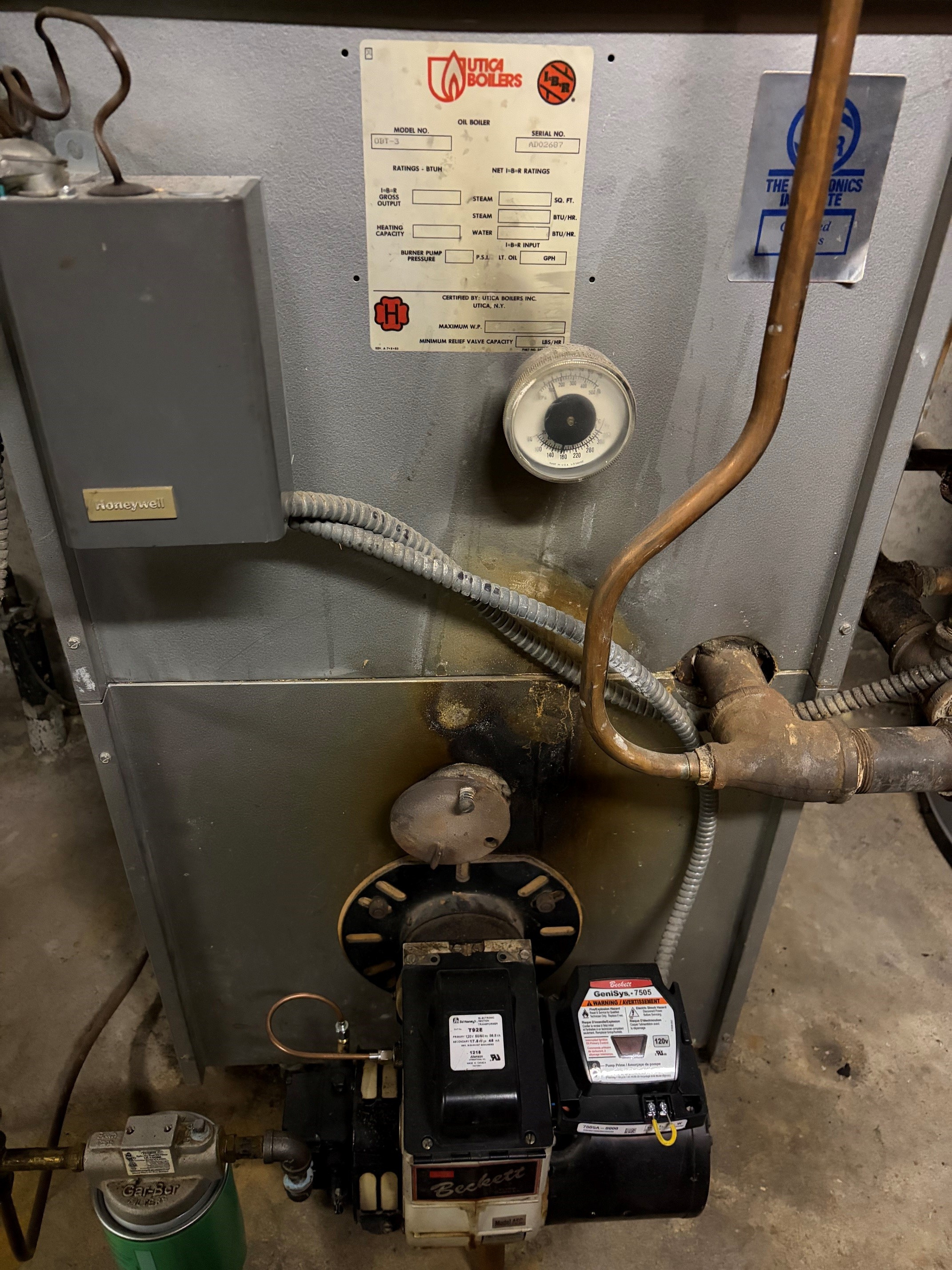
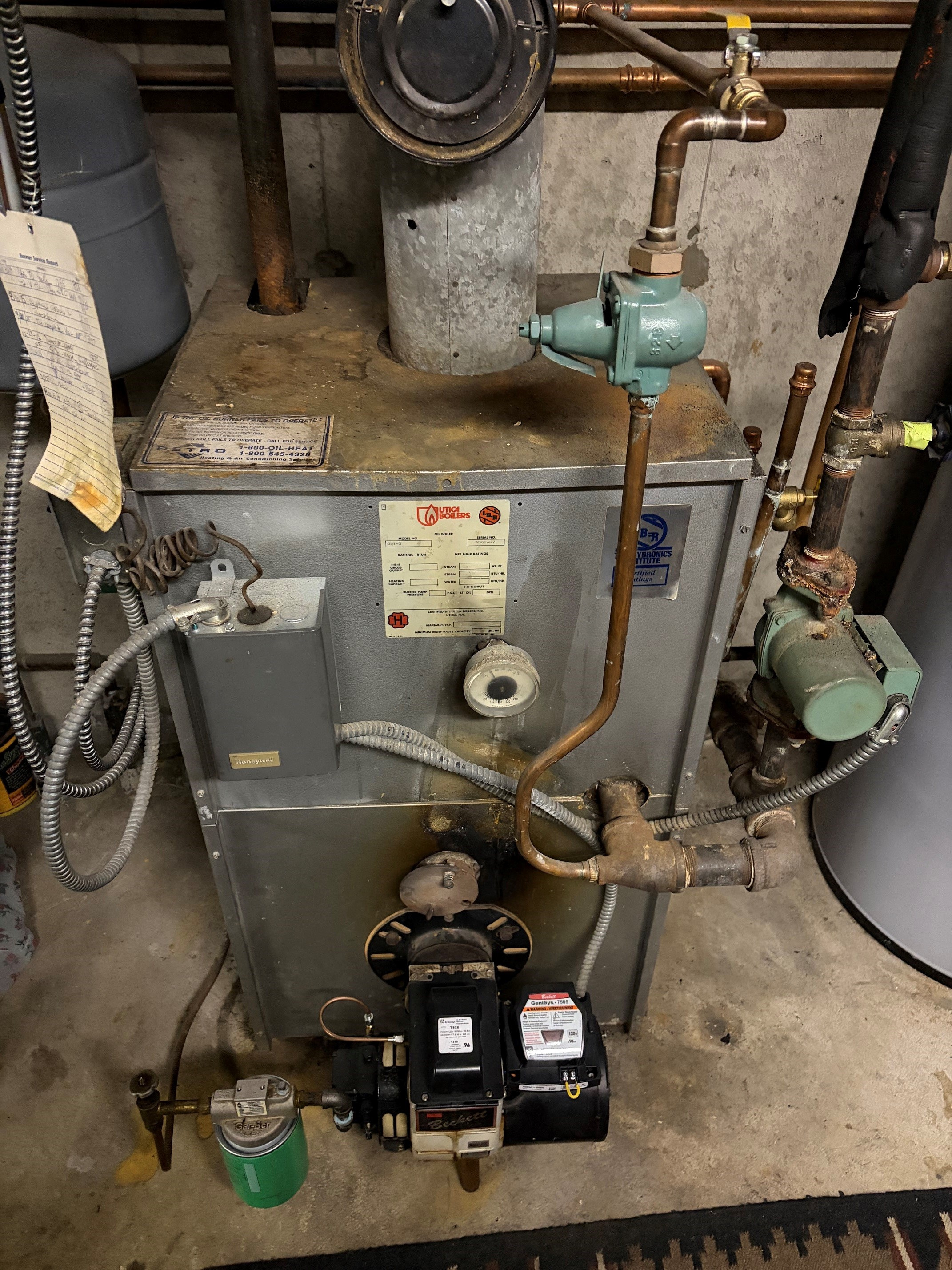
@Steamhead, I'm on Long Island, Zone 4 apparently, and my 900 sq foot house is heated by a 1987 Utica OBT-3 with baseboard. I have a hybrid water heater for hot water.
My oil tank needs to go ASAP and rather than starting to invest back in that aged system I though it would be time to change over.
My plan was to get the oil tank removed now and then figure this out, but I'm being told that without the new heating system in I cannot remove my old tank. Can anyone advise as to whether this is code in Brookhaven, NY or just people covering their butts? I understand their concern but worst case I'll just install a new tank.
Five years or so ago I worked with Dana Dorsett (extremely helpful) and we determined that 2 tons worth of single zone hyper-heat ductless units should cover my needs here.
I'm not opposed to staying with oil, though if my boiler goes I'll need to replace that and put in a chimney liner. And the baseboard units are also 40 years old.
Though I'm sure it'll be grossly oversized, what's the smallest high quality oil-fired boiler that you know of? I know a boiler guy and he mentioned Peerless, I had looked at EK in the past but it was suggested that they're still oversized, and you're mainly paying (a lot?) for the heat-purging ability which you can now do with most boilers apparently.
Gas is less oversized but it's not available here unfortunately.
A few links follow, but it looks like the EU ban is only being proposed and Maine is talking 2040 for refrigerants (though with this plus the shortage of 454B last year, R-32 might be looking better):
Thanks again
0 -
@charlie123 , I found this from a few years ago:
in which your present boiler was described as a 3-pass. I'm not familiar with that model so I was trying to find more info on it.
Assuming it's a fairly good design and has been properly maintained (which is a BIG IF) its efficiency is probably pretty good. How about posting some pics?
And I doubt you need a whole new system to get the tank removed. That sounds like a salesman blasting hot air.
0 -
just a wild guess, but assume 20 btu/ sq ft X 900= 18,000 btu/hr on your coldest day
A room by room heat load calc would be helpful for the total load, and what each room requires.
Then measure how much radiation in each room
Those two numbers would tell you how compatible a HP may be. A 2 ton unit is equal to 24,000 btu/hr
I suspect even the smallest oil boiler you can buy may be twice what you need
Is the system one zone?
Bob "hot rod" Rohr
trainer for Caleffi NA
Living the hydronic dream0 -
@Steamhead: ah, you found some old dialogue, that could be helpful, thanks. Some photos attached.
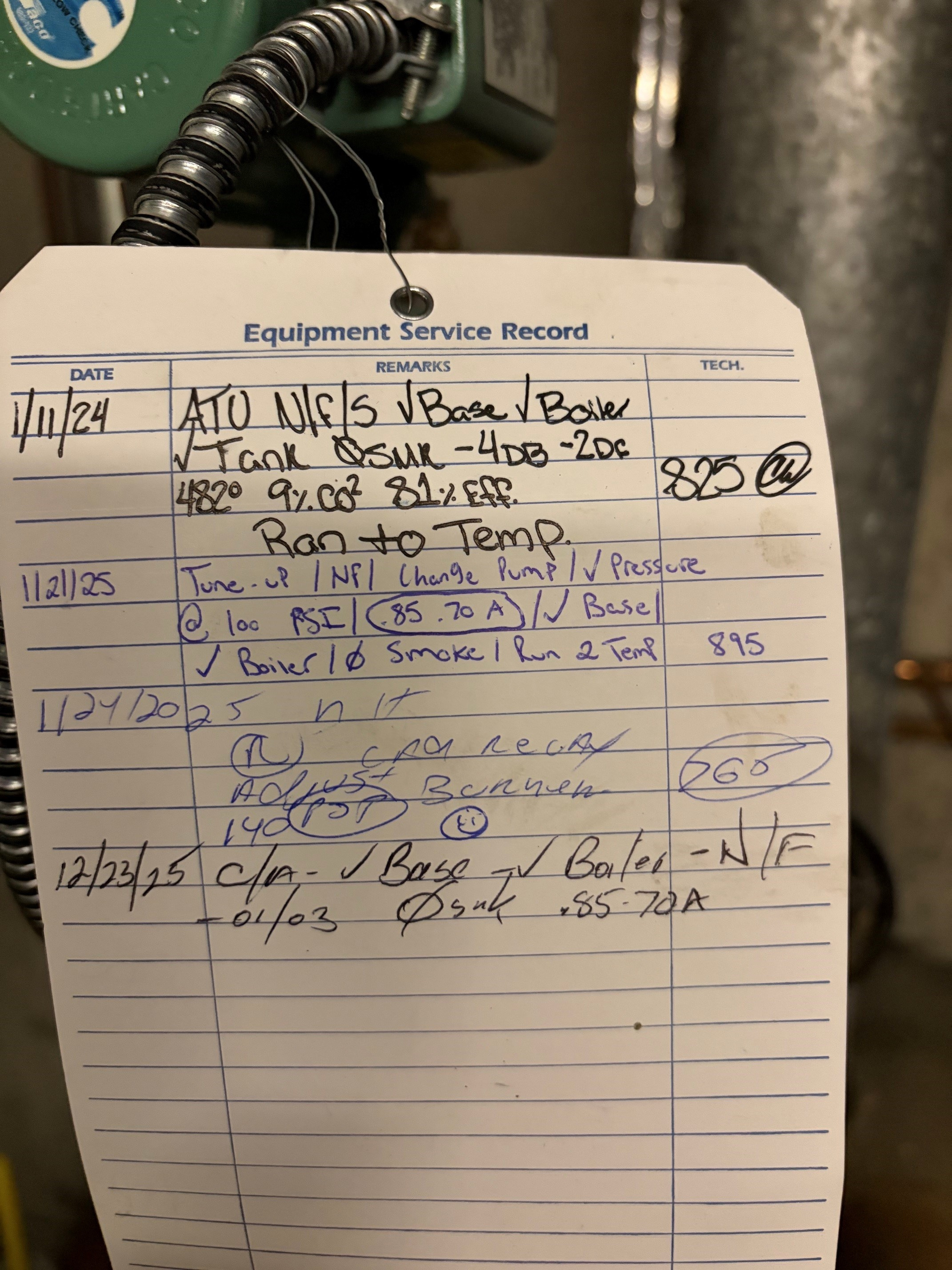
My oil company comes every year for an annual tune-up, but besides trying to ensure that they don't let the tank get too empty before they make the next delivery, I don't need to do anything else. Which I like! And honestly that could be a factor in deciding if I want to go to heat pumps, which would require more maintenance.
Last tune-up efficiency was at 80% but I have no additional info. I was told that this particular boiler tended to burn through in the rear of the unit but there's no discoloration in back like you see in front.
I included recent service notes in case you're able to interpret them.
@hot_rod: I did do a manual-J with Dana's assistance, and that, as well as a dealers calculation based on my oil usage all point to ~2 tons, though Dana suggested that with some insulation/ sealing enhancements I could possibly look at 1.5 tons.
I was recently introduced to a New Yorker boiler which I believe produced 80 Kbtu, which is unfortunately as low as I'm probably going to find. Feel free to suggest any lower-output high quality boilers you might like.
BTW: any idea what the output of my Utica is?
0 -
Long Island? In your area an air to water heat pump will probably manage to keep you at least vaguely warm.
As to having a working heating system — it isn't just local code. You may find that if you have a mortgage you are required to have a full capacity heating system, and you may also find that your homeowner's insurance has a similar clause. In addition to the local building code — and it may not have the requirement, but in most areas with which I am familiar you have to have a fully functional heating system to have or keep a certificate of occupancy on the property.
Br. Jamie, osb
Building superintendent/caretaker, 7200 sq. ft. historic house museum with dependencies in New England0 -
That Utica is a "dry base boiler" meaning the water jacket does not surround the flame. If the oil company services, it properly and makes sure the combustion chamber is in good condition you will not have a burn through.
Not a HP fan myself. Problem is below 30 deg outside air they need to defrost frequently which means the unit is forced into cooling to defrost. And then it uses resistance heat to boost the temp as needed.
HP are less efficient as the OA temp drops.
0 -
@ Jamie Hall: ok, no mortgage but I can't speak to the rest, that's interesting, thanks.
It would be air to air which I assume doesn't impress you much more than air to water?
and @hot_rod: to answer your question, I have two zones here.
0 -
@EBEBRATT-Ed: thanks for the info. I realize that the efficiency takes a hit at the lowest temps but I'd be willing to deal with it for some part of a few days each season. I think that this last winter was an exception, typically it's a big deal to hit 0 degrees, and the hyper heats are getting better and better.
0 -
Definitely not a 3-pass, which is the best design for oil.
My SWAG on that boiler works out to a Net rating of about 80,000 BTU per hour.
If I were going to put a New Yorker in that house I'd look at the CI-HGS-74E. This is a 3-pass cast-iron boiler that is very easy to maintain, and is more efficient than a steel dry-base boiler or a pin-type wet-base type. Its Net rating (what is assumed to be available at the radiators after deducting a standard pickup factor) is 64,000 BTU per hour. Go here:
https://s3-us-west-2.amazonaws.com/catsy.782/CI-HGS+Product+Specifications.pdf
Steel boilers have gotten more efficient, but there are still better choices. Here's New Yorker's:
https://s3-us-west-2.amazonaws.com/catsy.782/APU+Product+Specification.pdf
The Energy Kinetics units are also a very good choice. They're steel, but of a much better design. One example:
But as others have said, the installer is just as important as the boiler itself.
0 -
@Stemhead: thanks for the calculation.
Is it correct that my unit has to run during the summer in order to keep the seals from leaking, but new units are designed in a way that allows them to be turned off for 5 months out of the year?
And are all of these cold-start and can use purge controls?
If so, it would seem that if I was to stay with oil, replacing my boiler would save me a decent amount of $ in oil used.
Aren't the EK's very expensive, and I can get most of their benefit by using purge controls?
0 -
There's more to it than that. But they are all cold-start and have 2012-compliant controls. EK makes their own, the others will use an AquaSmart or HydroStat.
EK monitors this board- @Roger ?
0 -
And where I have to run mine through the summer, these can all be turned off for 5 months? Maybe 'cold-start' answers that question, but wanted to be clear, kills me to pay for oil in summer.
0 -
-
A new boiler will be more efficient but don't think a crazy amount. It's not going to save you 50% of your fuel.
Set up properly and maintained will be more like 10%
0 -
the output drops as the outdoor air temp drops so you need to size it to cover that.
if the air temp is low out of the system you need to design it so that velocity is low or it will feel drafty.
0 -
@EBEBRATT-Ed: I was thinking more like 20-25%, not that I would have a clue but I would hope that a smaller/ more appropriately-sized boiler with purging/ cold start plus a 5-month vacation every year would add up: no?
I very crudely estimated that I wasted ~20 gallons every month during the warm season.
If it matters so little I guess I'd stay with my old boiler as long as possible, thanks.
@mattmia2: I assume that matching the heat pump system to the heat load (not oversizing) and using individual hyper-heat units for each zone for max efficiency would cover me?
0 -
if you could heat with130 degree water on a 0 day you are still running 2 COP. 80% of the heat season you will get above 2 COP
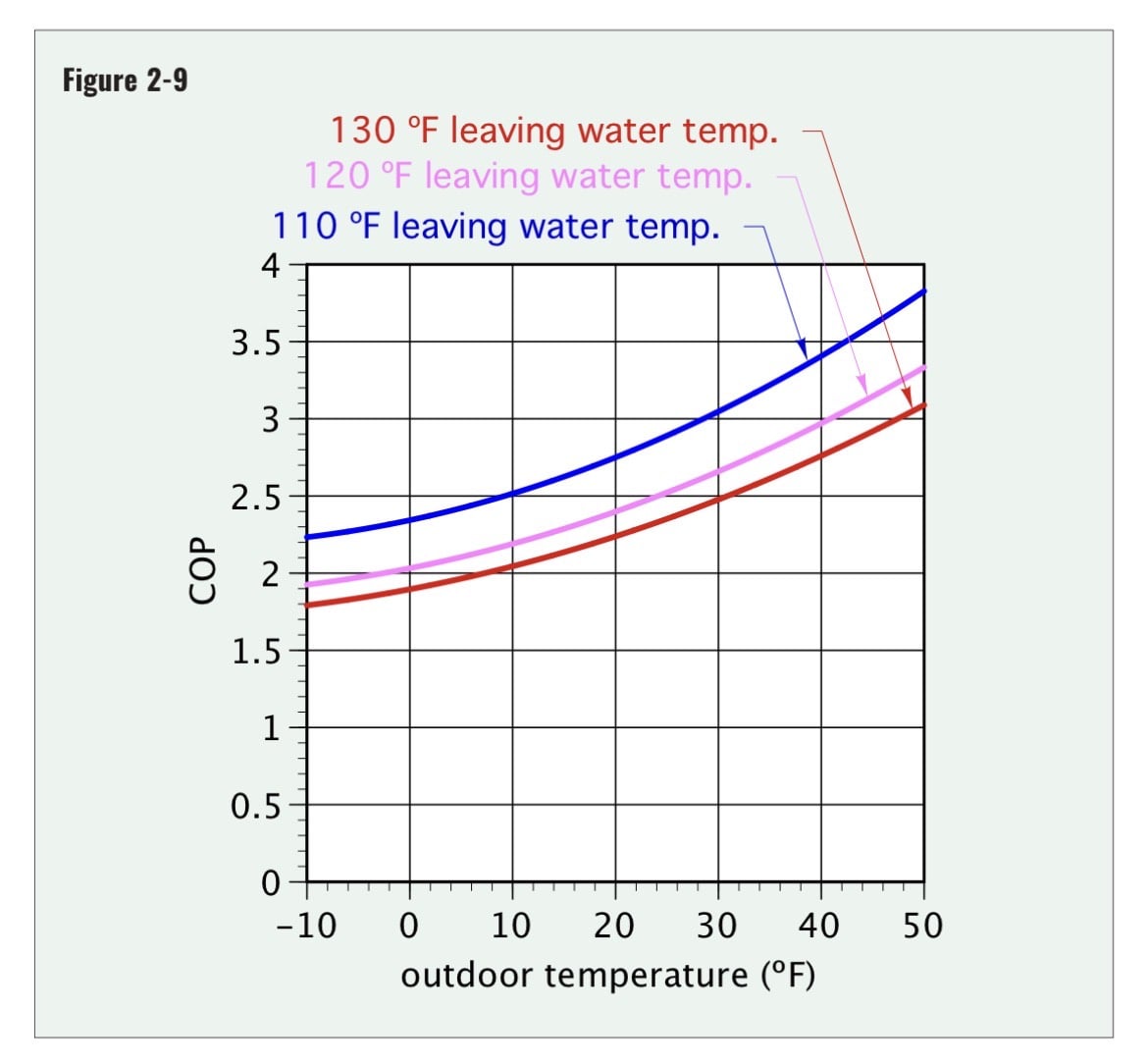
For every quantity of energy in, you get two out
If you know oil and delivered electricity cost, go here, use 200% for geo hp efficiency
https://coalpail.com/fuel-comparison-calculator-home-heating
Bob "hot rod" Rohr
trainer for Caleffi NA
Living the hydronic dream0 -
Um. I was under the impression that you were going air to water, which would at least keep the radiation (base boards, I think you said?). Well… The problem with air to air is draughts, and to avoid feeling slightly cooled by them you need to run the space warmer (we find 6 to 10 degrees warmer) — or at least that has been my experience with the ones which supplement the steam heat in my main house. That, combined with the drop in efficiency when the outside air is cold — which is significant — combined with the electric rates in New England means that except for spot heating for one room we let the steam (oil fired) do all the heating any time it is much below freezing, as the steam is less expensive to run and WAY more comfortable (there is quite a difference between a warm radiator and a vaguely warm draught!)
Br. Jamie, osb
Building superintendent/caretaker, 7200 sq. ft. historic house museum with dependencies in New England0 -
Ok I now realize what you were saying though I presently have oil heat sending hot water through baseboard and was considering replacing with air-to-air heat pumps.
I was under the impression that air-to-water doesn't work well as a drop-in for my boiler as the water isn't hot enough. Though it seems that hot_rod might be suggesting otherwise with his chart. Is it possible that my radiators or the pipe diameter needs to be considered as well? Thought I read about that somewhere…
0 -
Are you on PSGE? These seem like reasonable rates. Compared to some NE areas at .30 per kwh
You need to crunch numbers, for power costs, loads temperatures, etc.
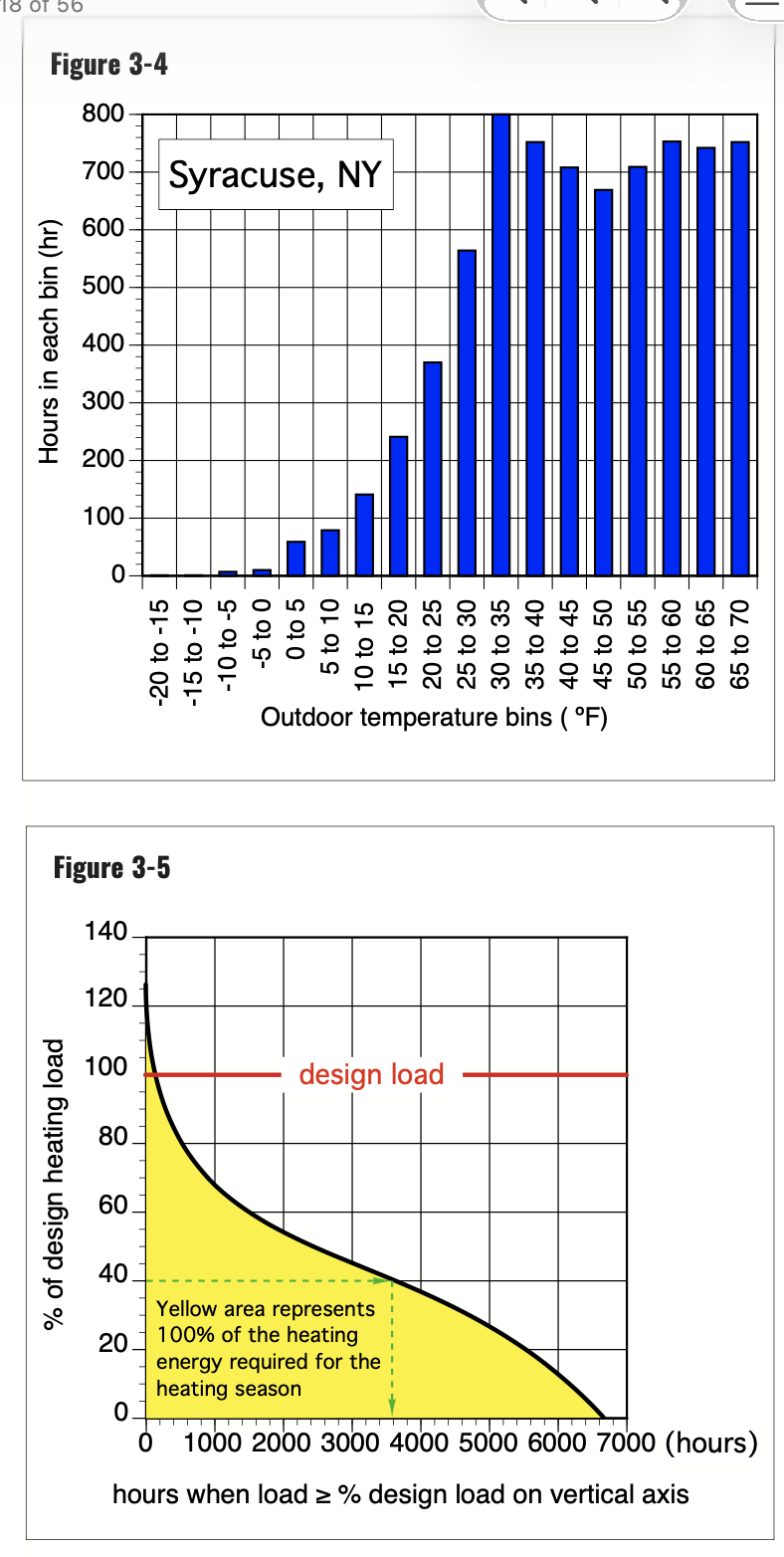
A graph like this helps show how often you ate at various temperatures., If Syracuse is a design of 5°, less than 100 hours a year is it at that temperature with 30- 35° the largest % of the year. Putting COP over 2.5.
The Idronics I link you to will help with economics also. If in fact you are unddr .20 per kwh, a HP may make sense if you can work within it's output tempeature range.
I've lived wit an air to air HP for 5 years now, I hate it in heating mode. As Jamie mentioned it blows luke warm air. I miss my hydronics dearly.
 Bob "hot rod" Rohr
trainer for Caleffi NA
Living the hydronic dream0 -
Wow, the feedback coming from you guys is compelling: a bit of BS being sold as far as air to air it seems.
The Petro oil person who stopped by recently mentioned a few people who wanted to go back to oil, I assumed she was just being a salesperson.
And by hydronics, are you referring to both oil and heat pump? I guess at the lower heat output of the heat pump it just needs more time to make more passes of water through the radiators, but the radiant heat aspect is a big plus over air-to-air?
FWIW, my rates from PSEG are .27 and I'm ~200 miles south of Syracuse (11789), but I'll have to see if I can make sense of what you provided. Thanks again.
0 -
make a list of priorities
The older I get the more important quiet and comfortable becomes
I have lived in hydronic homes most of my lift, the home I grew up in, Orchard Park, NY has copper fin tube
The 3 homes I built and several remodels were all radiant
The home we bought 5 years ago in Utah has a mediocre FA system. Well installed, sized correctly and a new top line Amana variable system.
As @Jamie Hall mentioned, every yesr I crank up the temperature to stay comfortable, running (74 past winter
Radiant systems ran in the 68-70 temperature range
Affordability both install and ongoing maintenance? Mini splits are probably the least expensive up front cost.
How long you plan on living there?
Resale value add of a hybrid system
Risk of using newer technology?
Finding qualified installers?
Can you do routine maintenance yourself ?
These are some of the questions to answer
Bob "hot rod" Rohr
trainer for Caleffi NA
Living the hydronic dream0 -
air to air can work if sale price isn't your only criteria. a conventional split system or mini duct system can be designed to not feel cold and drafty but most of the demand for mini split systems is driven by investors in property that don't have to actually live there so they are designed to be cheap, not to have face velocities that keep them from feeling drafty when heating.
0 -
For air-to-air: I've seen some videos on routine maintenance and in light of the fact that my boiler requires nothing from me, the maintenance struck me as a liability.
If I wanted to put a price on my labor plus actual costs it would probably eat up half the savings of running the heat pumps.
I've seen recommendations of monthly filter changes and then filter kits @ $130 per kit, and while I'm sure that I don't have to spend $400 per month on replacing filters on 3 heads, I do have some questions:
Can one typically clean and reinstall the same filter(s), maybe replace only when damaged or once per year?
Would this be every month or every 3 or YMMV?
How often would one need to take the head apart in order to clean the coils and blower wheel and possibly remove condensate and mold: every 6 months?
Do I need a tech to check out the system once or twice a year?
I assume that the tech could do the cleaning, but will probably charge a discouraging amount.
I'll look into air-to-water, I assume that the inside maintenance is simpler?
Retired last year, not sure if I'm here forever or will move west where my daughter is.
PS: met with a rep from an HVAC co, he took ~6 minutes to perform a manual-J and was not familiar with air-to-water (I don't think they're used much in this area). My guess is that in order to get the whole-house rebate from PSEG I'd have to install more heat pump capacity than I need, effectively eliminating any savings…just a guess. He also suggested the deep cleaning involving coils and blower wheel is only needed every couple of years.
0 -
@mattmia2: I was planning on using higher quality brands, hyper-heat varieties, individual zones for efficiency, and not oversized: I assume that having the unit actually work steadily would contribute to comfort, rather than cycling on and off. I'm not sure what else would need to be considered, any recommendations for dealers in central Suffolk County would be welcome!
0 -
Actually even oil or gas fired boilers should have yearly maintenance, according to the owners manual :)
Probably the vast majority only get a look when something goes wrong. Or if you are on a yearly maintenance program.
Not a lot to clean with an A2WHP, keep the outdoor unit's coils clean occasionally. I use glycol, that gets checked every few years.
The A2WHP is a fairly high entry fee. If you do plan to move it may not be worth the investment?
On the plus side, a mini split A-A give you heat and cooling from an relativity inexpensive component, and could size accurately to the load on that size home. Indoor air quality has a lot to do with how often the indoor unit needs a cleaning, I suppose.
Bob "hot rod" Rohr
trainer for Caleffi NA
Living the hydronic dream1 -
Supposedly the once-a-year tuneup/checkup by the oil co covers the boiler's needs, but when they're in and out in under 1/2 hour maybe there's more that could've been done.
It does look like A2WHP requires additional components and could be $$, and it was suggested that it was more appropriate for larger, more complex homes.
0 -
If the oil company is in and out in half an hour they are not doing anything but a nozzle and filter change…..if that.


 4
4




Categories
- All Categories
- 87.8K THE MAIN WALL
- 3.3K A-C, Heat Pumps & Refrigeration
- 60 Biomass
- 430 Carbon Monoxide Awareness
- 133 Chimneys & Flues
- 2.2K Domestic Hot Water
- 6K Gas Heating
- 124 Geothermal
- 170 Indoor-Air Quality
- 3.9K Oil Heating
- 79 Pipe Deterioration
- 1.1K Plumbing
- 6.7K Radiant Heating
- 397 Solar
- 16.1K Strictly Steam
- 3.5K Thermostats and Controls
- 56 Water Quality
- 51 Industry Classes
- 51 Job Opportunities
- 18 Recall Announcements