Pressure test with air?

Almost done with installing a new boiler. I was thinking it might be a good idea to pressure test the whole system with air before I fill it with water. In the process of trying to figure out how to do that. Any suggestions would be appreciated.

Comments
-
Use water.
Seriously. If you use air, at any significant pressure, and something lets go, you are going to have pieces flying all over, and I don't like shrapnel. Scares me. If you use water, all that will happen is you will get wet. Second reason: air pressure is very temperature sensitive, A rising temperature will hide a small leak. Dropping temperature will look like one.
Use water.
Br. Jamie, osb
Building superintendent/caretaker, 7200 sq. ft. historic house museum with dependencies in New England

 3
3 -
pretty much all the components with the exception of the boiler can handle 40-60 psi
Hydronic work done during freezing weather is often air tested first
Tiny air leaks can be tricky to find, leak detection bubble solutions work well
Bob "hot rod" Rohr
trainer for Caleffi NA
Living the hydronic dream2 -
I plan on useing a bicycle pump to bring the pressure up to the manufactures recommended max psi of 55. just not sure how to go about it. It would be a pain in the azz if I had to drain down the whole system if one threaded connection leaks.
 1
1 -
you need to cap off any auto air vents on the system, the purger at the boiler for one.
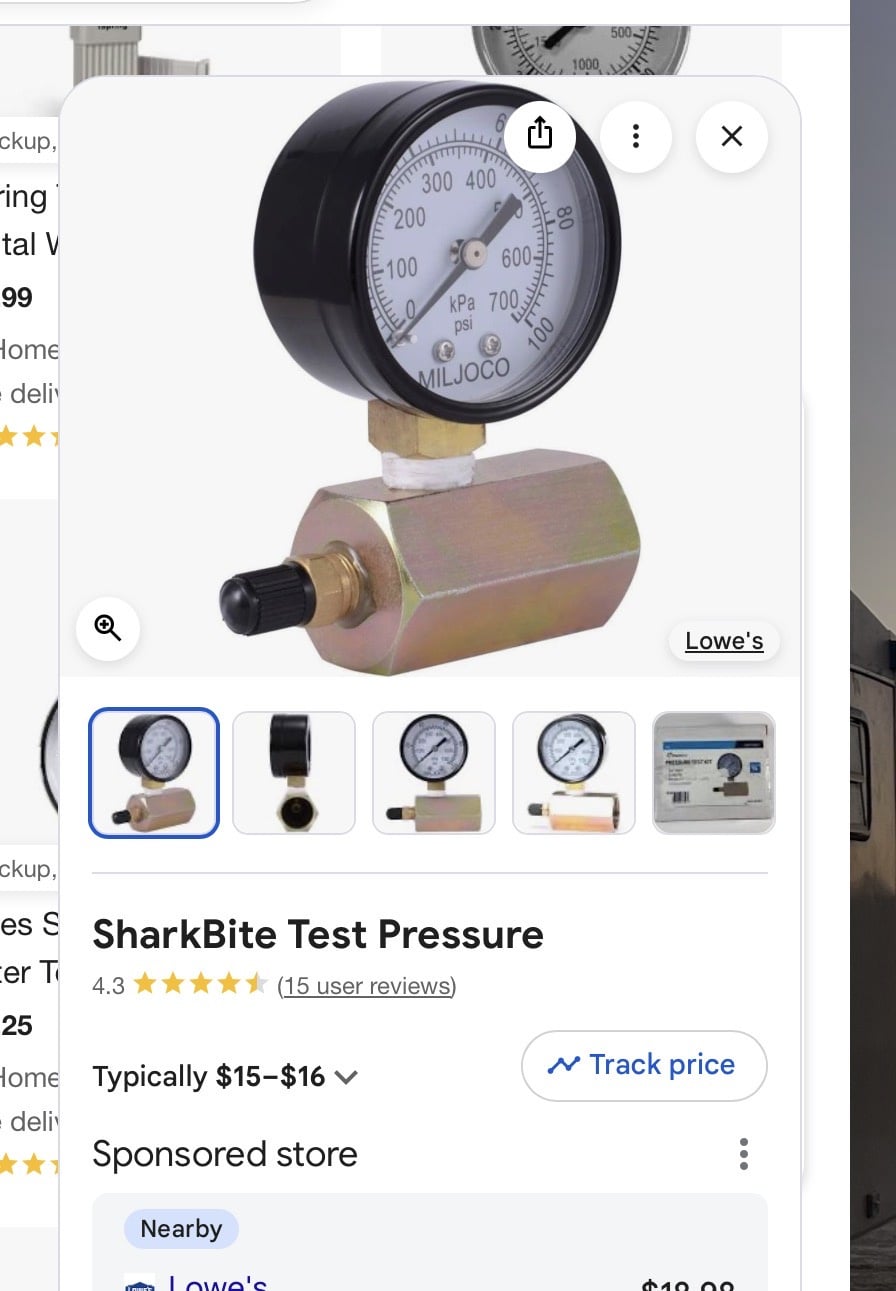
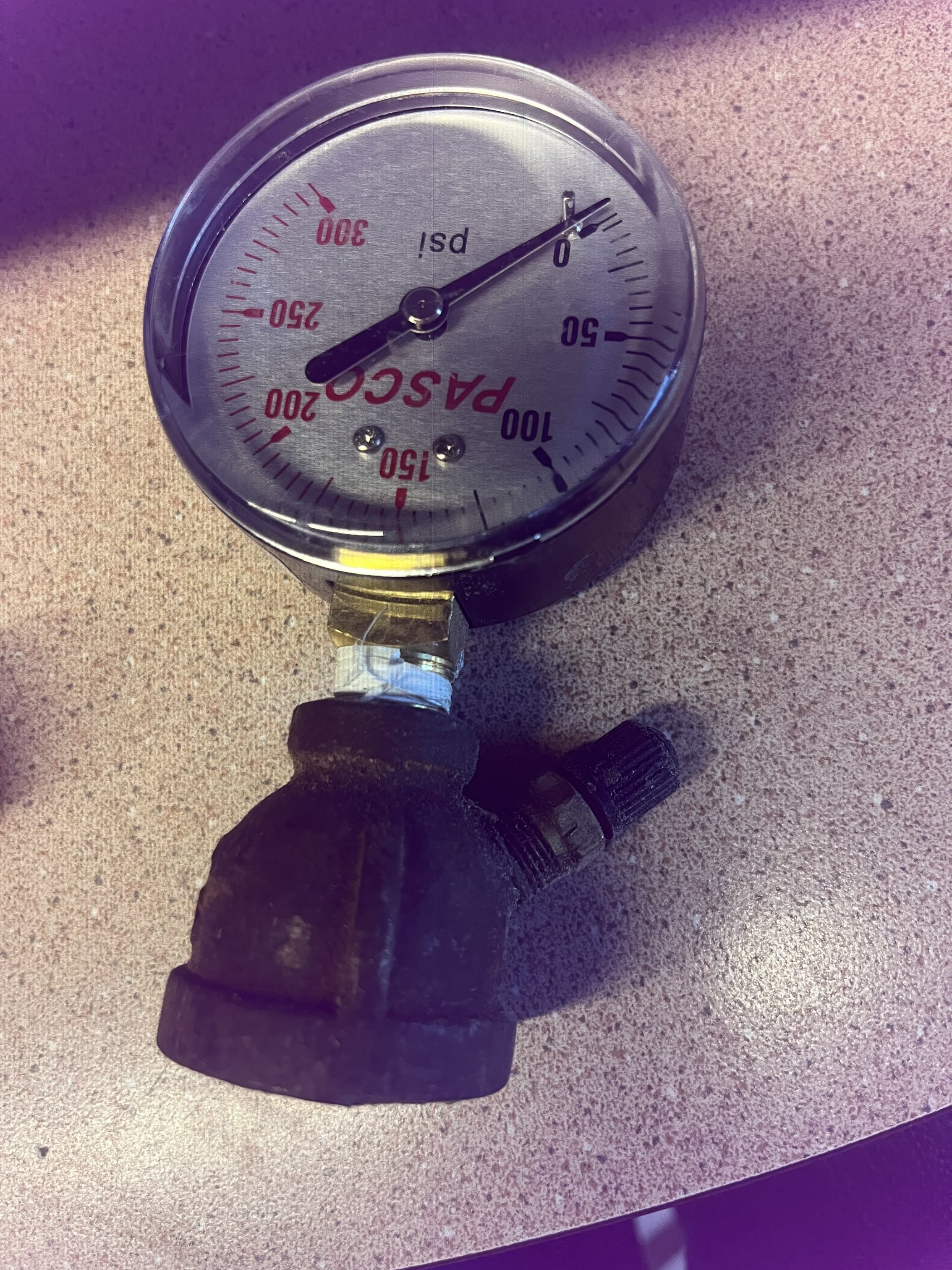
A test block like this may be the simplest, unscrew the expansion tank and install it there. If you can’t isolate the boiler get a 30 psi version of this and stay below that 30 psi relief setting.
 Bob "hot rod" Rohr
trainer for Caleffi NA
Living the hydronic dream0 -
" I plan on useing a bicycle pump to bring the pressure up to the manufactures recommended max psi of 55 "
Wow, ever fill up a flat (empty) truck tire with a bicycle pump ? You may be there a while, pumping and pumping and pumping…….. I'd at least fill the boiler with water. The more water in the system the less air needed to build the pressure up.
As @Jamie Hall stated Hydrostatic testing is safer.
 National - U.S. Gas Boiler 45+ Years Old
Steam 300 SQ. FT. - EDR 347
One Pipe System0 -
OK now you got me thinking. How about this. Take a cap and drill it. Put a valve stem in it. You can pick one up at any auto parts store. Place the cap on a nipple that will fit the pressure relief valve. Lift the lever on top of the relief valve and add some air. The aqua balance furnace has a pressure gauge on it. And i think I can just tighten the cap on the air separator to keep the air in the system. Bring it up to pressure and see if the pressure gauge on the furane drops after a few hours. Maybe let it be over night. No rush at the moment. And the expansion hasn't been installed yet so a cap on the nipple coming from the air separator.
0 -
you can get a test gauge that will screw on to hose thread that you can screw on to a boiler drain. you can also drill a hole in a plug and solder a schrader in to it, possibly one that you salvaged from an old innertube and stripped the rubber off of.
 0
0 -
" Take a cap and drill it. Put a valve stem in it. "
Interesting idea. 29/64" or 0.453" or 11.5 mm.
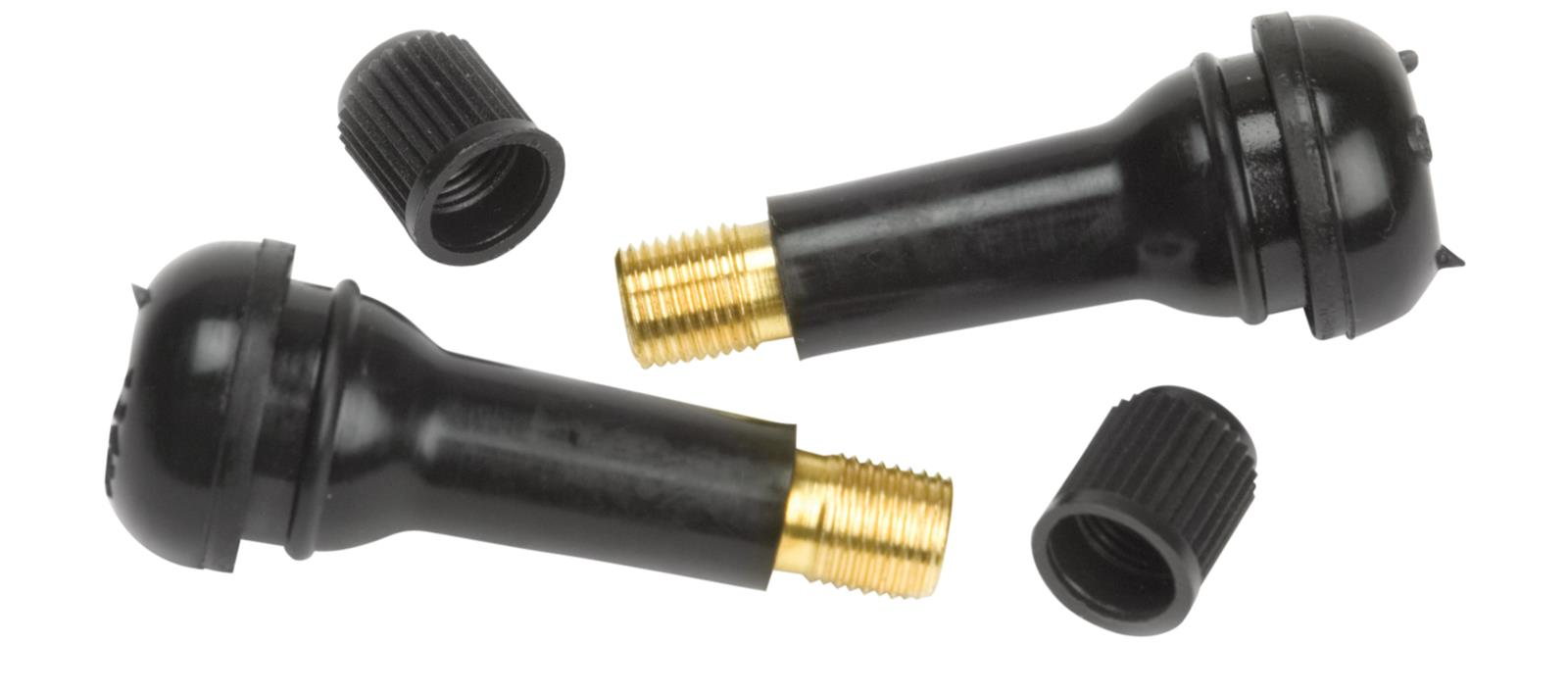
There is this style too, more sturdy used for LT tires / wheels
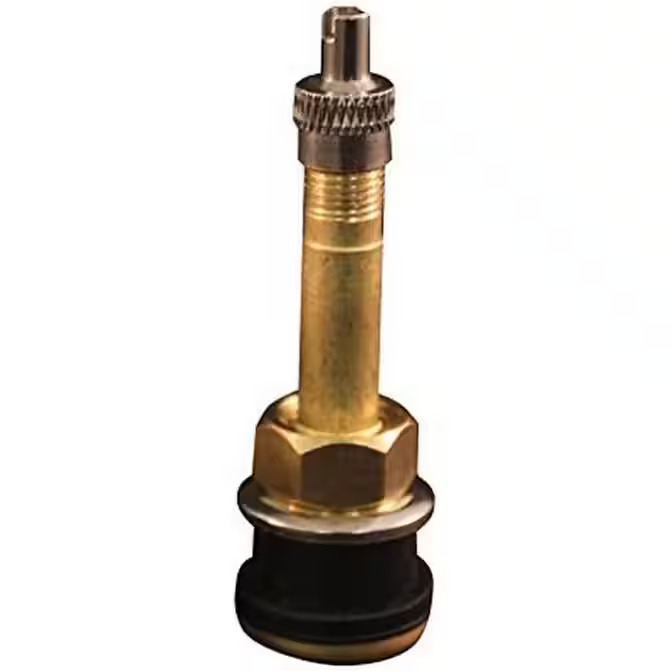

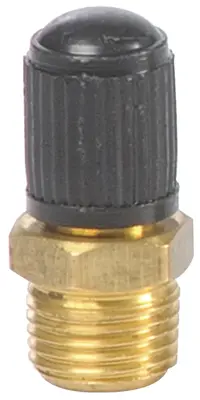
Also schrader valve to 1/8" NPT, at NAPA Autoparts stores and maybe also Harbor Freight.
1/8" NPT
 National - U.S. Gas Boiler 45+ Years Old
Steam 300 SQ. FT. - EDR 347
One Pipe System0 -
I really don't care whether you use water or air or LP or whatever. It's your bomb.
But whatever you do DO NOT EXCEED THE RATED PRESSURE OF THE LOWEST RATED ITEM IN THE SYSTEM.
If the boiler is rated at 30 psig, that's your maximum test pressure. Period.
Br. Jamie, osb
Building superintendent/caretaker, 7200 sq. ft. historic house museum with dependencies in New England1 -
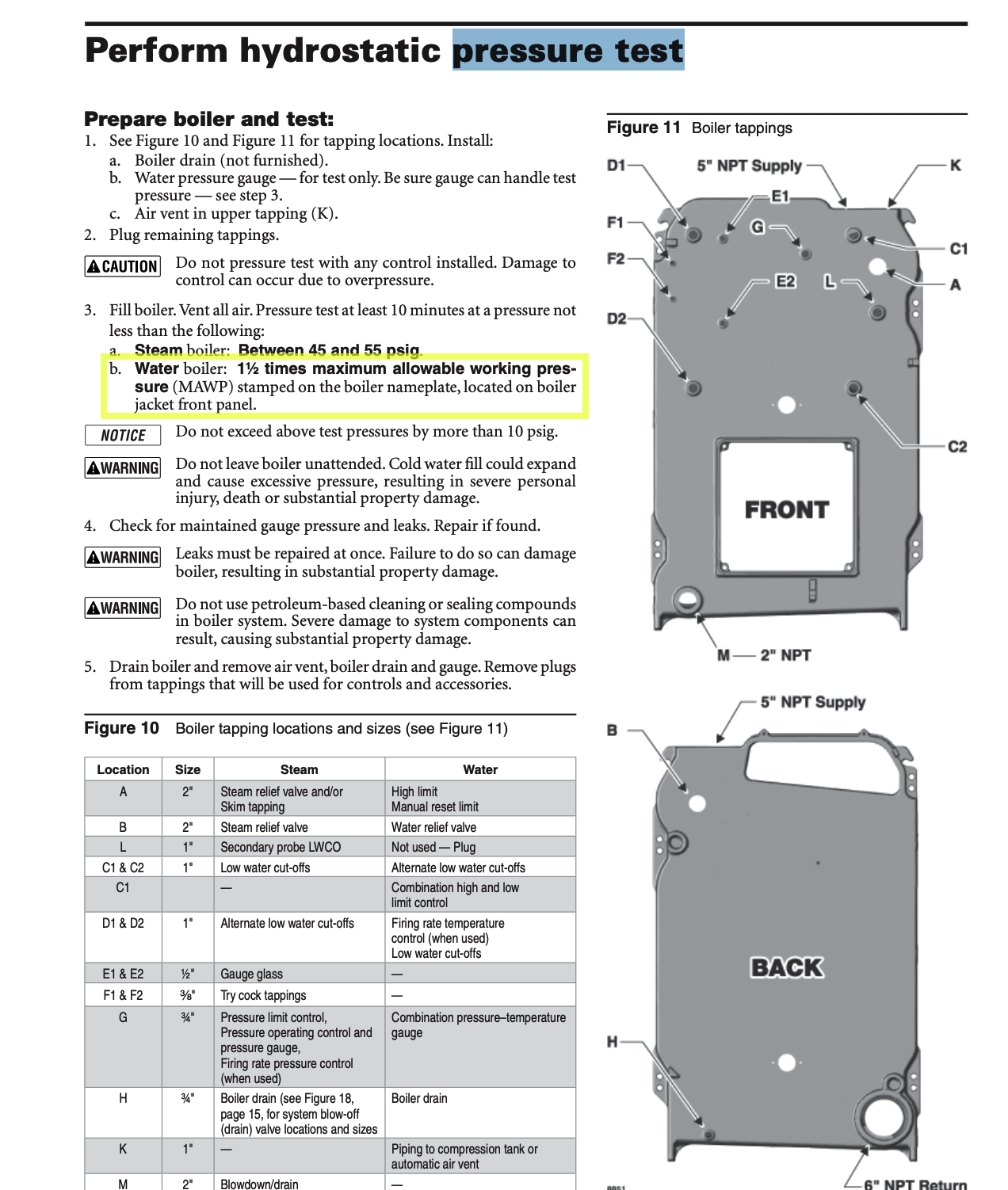
Thanks. I appreciate your concern and advice. The manual dose show how to test with a setup of pipes and gauges. They say 45 but no more than 55 psi. Probably go with 30 to 40. I will look into the rating of other parts such as the magnetic filter, air separator circulator pumps etc.
0 -
I’d also isolate the expansion tank
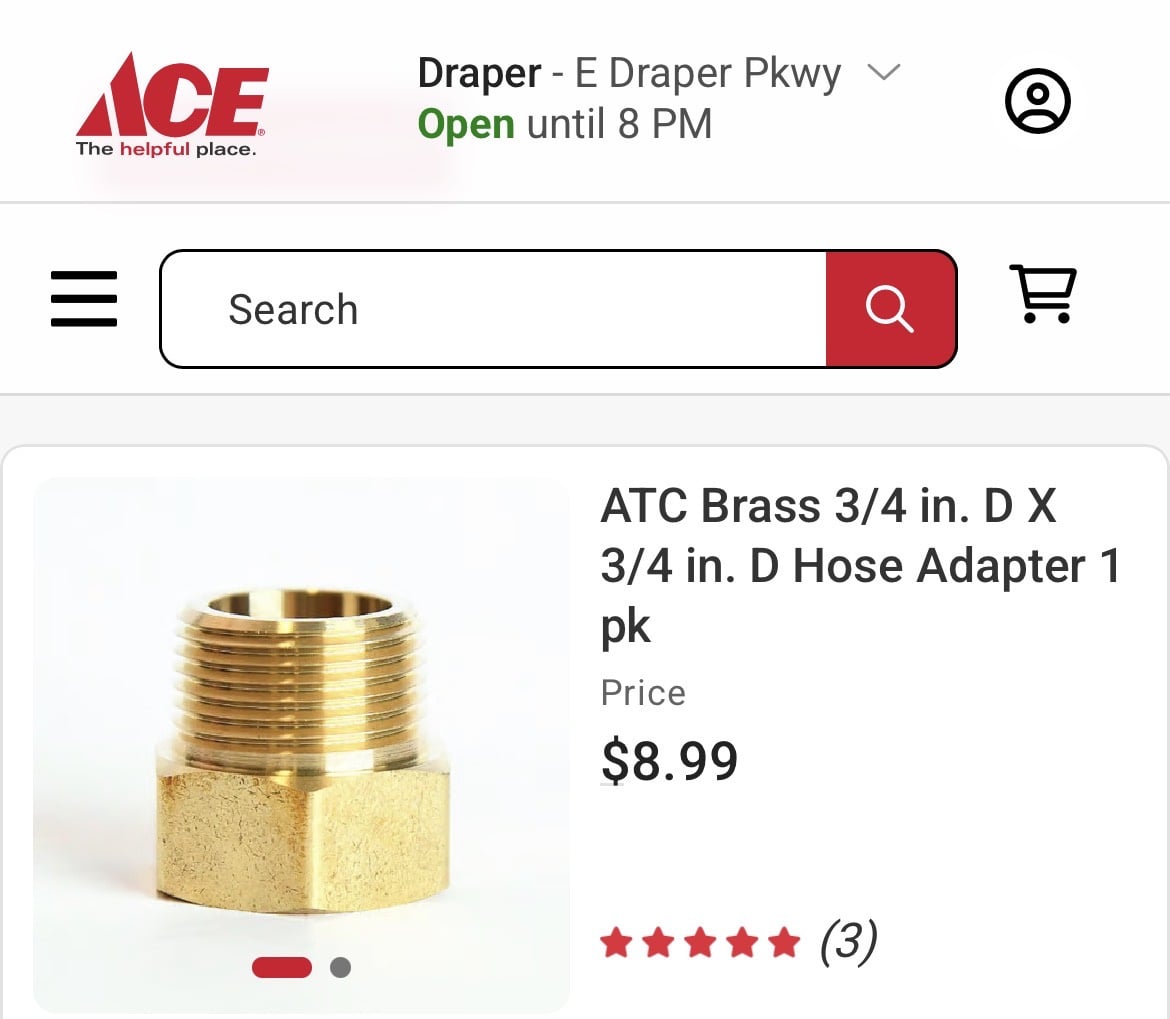
This is another common test block, just add a 3/4 female 3/4 hose female adapter
 Bob "hot rod" Rohr
trainer for Caleffi NA
Living the hydronic dream1 -
The discharge side of a pressure relief valve is not air tight.
Edward Young Retired
After you make that expensive repair and you still have the same problem, What will you check next?
1 -
Yea. There is a rod going up though the top to lever. Brain fart on my part. Thanks
0 -
I have heard of an engineering rule of thumb. The rule of three. If your system is supposed to operate safely at 30 PSI then you test the system to 90 PSI. Three times the safe limit of operation. This is a safety test, not a leak test. If all you are looking for is leak before you add water, then 20 PSI or less should be fine. I agree that sometimes on a large volume system, finding a leak in the boiler room after filling the last radiator on the third floor can be a real PIA. But if you valve the install properly, you can
- isolate sections as you fill the boiler / system
- repair those leaks before filling more of the system
- repair future leaks without emptying the entire system
I rarely used air pressure to test for leaks. When I did use air pressure, I made it easy on myself and did sections, not the entire system.
Edward Young Retired
After you make that expensive repair and you still have the same problem, What will you check next?
0 -
@EdTheHeaterMan — that rule of three is occasionally used, to my knowledge, for strict testing under very controlled conditions, and it is really only during testing to determine ultimate strengths and the validity of design safety factors. It is ASSUJMED that something will break; the question is what and when…
I could be wrong…
Br. Jamie, osb
Building superintendent/caretaker, 7200 sq. ft. historic house museum with dependencies in New England1 -
@Jamie Hall … You? Wrong? Saints preserve us!
I heard this while working in the theater, referring to support and safety cables for lamps, catwalks, and temporary set pieces that actors needed to come in contact with. Theater was a hobby, and I always thought that was a good engineering rule of thumb.
It seems that the boiler industry is a little less demanding, with a 1.5-times rule for boilers. And they don’t tell you to use air pressure. They recommend testing with water, as most of us here recommend.
Edward Young Retired
After you make that expensive repair and you still have the same problem, What will you check next?
0 -
Ah yes! Theatre. And overhead rigging. That's a different matter! The rule of three there is an absolute minimum, or at least it was in the hemp houses I have encountered. Some other types of overhead work require a safety factor of 5.
Not, if you believe some of the YouTube clips I've seen, that people always pay attention to it…
Br. Jamie, osb
Building superintendent/caretaker, 7200 sq. ft. historic house museum with dependencies in New England2 -
I haven’t heard “hemp houses” in some time. I remember working with some old hemp-rope backdrop flies that were counterweighted with sandbags to make them easier to operate at my kids’ high school. If we ran out of sand for the sandbags, we would use a random freshman as the counterweight.
With my limited experience in theater, I was voluntold to help out with the school play. That lasted for seven years while my children attended—even during the years when they weren’t in the play.
Our community theater used an old trolley barn, and it had no equipment that we didn’t supply ourselves. When we went on the road, though, we performed in some pretty nice performing arts centers that were a little more modern, with motorized overhead flies and lighting bars that could be lowered to the floor for servicing.
But this has absolutely nothing to do with pressure-testing a heating system.
I wonder how many “Off Topic” icons we’re going to get for this?
Edward Young Retired
After you make that expensive repair and you still have the same problem, What will you check next?
1 -
Lighting bars can be insanely heavy…
Off topic? Who us?
Br. Jamie, osb
Building superintendent/caretaker, 7200 sq. ft. historic house museum with dependencies in New England2 -
One of my colleagues was telling me about a leak test job he once did where hydrostatic testing would always fail, but all water would hold. He figured out that the air component of the hydrostatic test would be absorbed by the water and when that happened, the pressure dropped. Kind of like what happens when you carbonate water.
8.33 lbs./gal. x 60 min./hr. x 20°ΔT = 10,000 BTU's/hour
Two btu per sq ft for degree difference for a slab0 -
Speaking as the colleague in question 👆🏻 ( Hi Alan!)
Here’s a pressure-testing puzzle that stumped quite a few engineers, contractors, and other problem solvers I’ve shared it with.
Back in the early 2000s, California inspectors I worked with would accept a 100 psi air test held for at least 30 minutes on hydronic PEX tubing before concealment—whether in a slab or behind drywall.
I’d connect my compressor, bring the tubing up to 100 psi, and isolate it. If there were no leaks, the gauge would stay at 100.
Later, the inspectors began requiring a hydrostatic test. That’s when things got interesting.
I’d fill the tubing with water, pressurize it to 100 psi, and isolate it. An hour later, the gauge would read around 50 psi. I’d bring it back to 100, then return an hour later to find it around 75. After another top-up to 100, it might drop to 85.
That pattern would continue, with progressively smaller drops, until it finally held at 100 psi. Assuming there were no leaks, that’s where it would stay.
Same tubing. Same test pressure. Different behavior with air versus water.
I posed this question to plenty of people over the years without getting a satisfactory explanation, until I eventually figured it out.
What do you think was happening?
 1
1 -
The system had radiant manifolds with auto vents. Or any hydronic system with auto air vents.
In a closed system I don’t see how that much water goes into air.
Bob "hot rod" Rohr
trainer for Caleffi NA
Living the hydronic dream 1
1 -
Temperature? I usually spend 5 minutes or so topping off the N₂ when I pressure test my linesets. I'm pretty sure it's just the gas settling in to the temp of the copper.
1 -
water moving.
small pockets can move and change the reading. I see it in refrigeration1 -
Temperature and trapped air.
We installed a couple of chillers (maybe 2 40 ton chillers ID remember) with a 500 gallon buffer tank in a 30% glycol system. Brand new system. The floor mounted expansion tank was piped to the top of the vertical 500 gallon tank with an isolation valve at the expansion tank. There was no water MU because it was glycol.
It ran a month or so and a couple guys went over and the pressure in the system was always too high or too low. So they would fill or drain (screwing up the glycol mix of course). This went on a few times.
Finally they sent me there. The chillers were shut down (this was a process job) so the water was room temp the pressure was high. They had a hose connected to the drain on the buffer tank.
I put a gauge on the system by the drain and it was reading 40psi. I opened the hose and took 1 coffee cup full of fluid out and the system pressure dropped to 0. My first thought was "no expansion tank"
I climbed up on top of the buffer tank and found a 3/4 ball valve in the expansion tank line that had never been opened.
If you don't have air in the system or a connected expansion tank even a tiny loss or gain of water will change the pressure radically.
If the pressure drops and you can't find a leak there is probably some air in the system.
0 -
Talk to an old refrigeration guy. Vacuum testing. Pull a vacuum and guesstimate tightness from how rapidly system loses vacuum. Seconds mean bad; hours mean….
I have seen 100 year old HHW systems develop leaks.
1 -
This is what baffled me: if 100 psi pushes outward against the inside of PEX tubing just as hard whether it’s air or water, why does the gauge behave so differently?
I kept getting stuck on that point: same pressure, same tubing—why the different result?
My understanding now is that there are two possible contributors. If air remains trapped when the tubing is filled with water, some of that air—not just the oxygen—can gradually dissolve into the water under pressure. That can contribute to a pressure drop without a leak. Separately, the PEX can slowly stretch under pressure, increasing its internal volume.
What finally helped me understand the air-versus-water difference was this example: isolate a water-filled pipe under pressure and crack a valve. A small squirt of water can cause a large drop on the gauge. Crack the drain on an air compressor tank, and air keeps hissing out while the pressure gradually falls.
It’s easy to imagine that instead of releasing a little water, the tubing stretches enough to create that same amount of extra room inside. Nothing has leaked, but the pressure still drops.
Compressed air can expand into that additional space with relatively little pressure loss. Water has very little ability to expand, so a small increase in tubing volume can cause a much larger pressure drop.
The distinction I was missing is that the tubing can stretch with either test medium. The same amount of stretching simply produces a very different response at the gauge.
This is the best I could do with a GED and a life in the trades🤷♂️
0 -
Air is, water isn't, compressiable. At least under the pressures we work with.
I think if you warm the pex,it may expand a bit. With cold air or cold water maybe not?
Air usually comes out of a compressor warm or hot. So as it cools in a closed system I would expect some pressure drop.
In your truck tire I seen suggestions of a 1 psi drop for a 10°∆
Bob "hot rod" Rohr
trainer for Caleffi NA
Living the hydronic dream0 -
Talk to an old refrigeration guy. Vacuum testing. Pull a vacuum and guesstimate tightness from how rapidly system loses vacuum. Seconds mean bad; hours mean….
I have seen 100 year old HHW systems develop leaks.
0 -
I wouldn’t be able to pass inspection via a vacuum test and the tubing in question is brand new pex connected one-to-other and a pressure gauge ( so very few failure points)
0 -
the air, the water, the tubing all expand and contract at different rates as the temp changes. here the municipal water is close to saturated with as much air as it can hold at the supply temp and pressure. it may not be the case where you are getting your water from. as the pressure decreases and the temp increases it can hold less air. drastic temp changes in a lot of water with little air on top of it may cause it to absorb or evolve air in a measurable amount.
also many hydronic components are only rated for 40 psig or so.
0


Categories
- All Categories
- 87.8K THE MAIN WALL
- 3.3K A-C, Heat Pumps & Refrigeration
- 60 Biomass
- 430 Carbon Monoxide Awareness
- 133 Chimneys & Flues
- 2.2K Domestic Hot Water
- 6K Gas Heating
- 124 Geothermal
- 170 Indoor-Air Quality
- 3.9K Oil Heating
- 79 Pipe Deterioration
- 1.1K Plumbing
- 6.7K Radiant Heating
- 396 Solar
- 16.1K Strictly Steam
- 3.5K Thermostats and Controls
- 56 Water Quality
- 51 Industry Classes
- 51 Job Opportunities
- 18 Recall Announcements