How to pull wire over ceiling
Comments
-
Use cuts of THHN or XHHW, or something along those lines.
Really, this is the kind of stuff you should already know to do a job like this. I'm all for homeowners being able to do their own work, but this isn't the right place for questions this basic. There's a lot in the NEC, all of it is important. Maybe make a free account at up.codes & read up on it before you start.

 2
2 -
read the NEC, good luck understanding any of it. If you’re not an electrician you need to hire one for this job
0 -
You need a licensed electrician for this. This is NOT, emphatically NOT, DIY territory. You started off with how to pull a wire — but you are really looking at what is the capacity of the main panel? Is it feed-through or how does this sub panel tie in? Does the sub panel have a master breaker? Where? Why? Grounding? What gets bonded to what?
Br. Jamie, osb
Building superintendent/caretaker, 7200 sq. ft. historic house museum with dependencies in New England0 -
is it possible to keep the outside diameter of the tube or conduit under 1/2"?
1 -
for 80 Amps
yea
3 conduits
0 -
the main panel is 100amp. it has slots for a double pole breaker where the feeding wire terminates. I thought you already noted the bonding in subpanel earlier
the subpanel is the job for the sparky
but the wire needs to be there first
0 -
that would only be legal with nonmetallic conduit. with metallic enclosures all of the current carrying conductors need to be in the same conduit so that the magnetic fields cancel out and don't induce current in the enclosure.
0 -
you don't need an account, you just need to go there and find the code for your state.
i'd recommend "practical electrical wiring" if you want to learn how to do it.
0 -
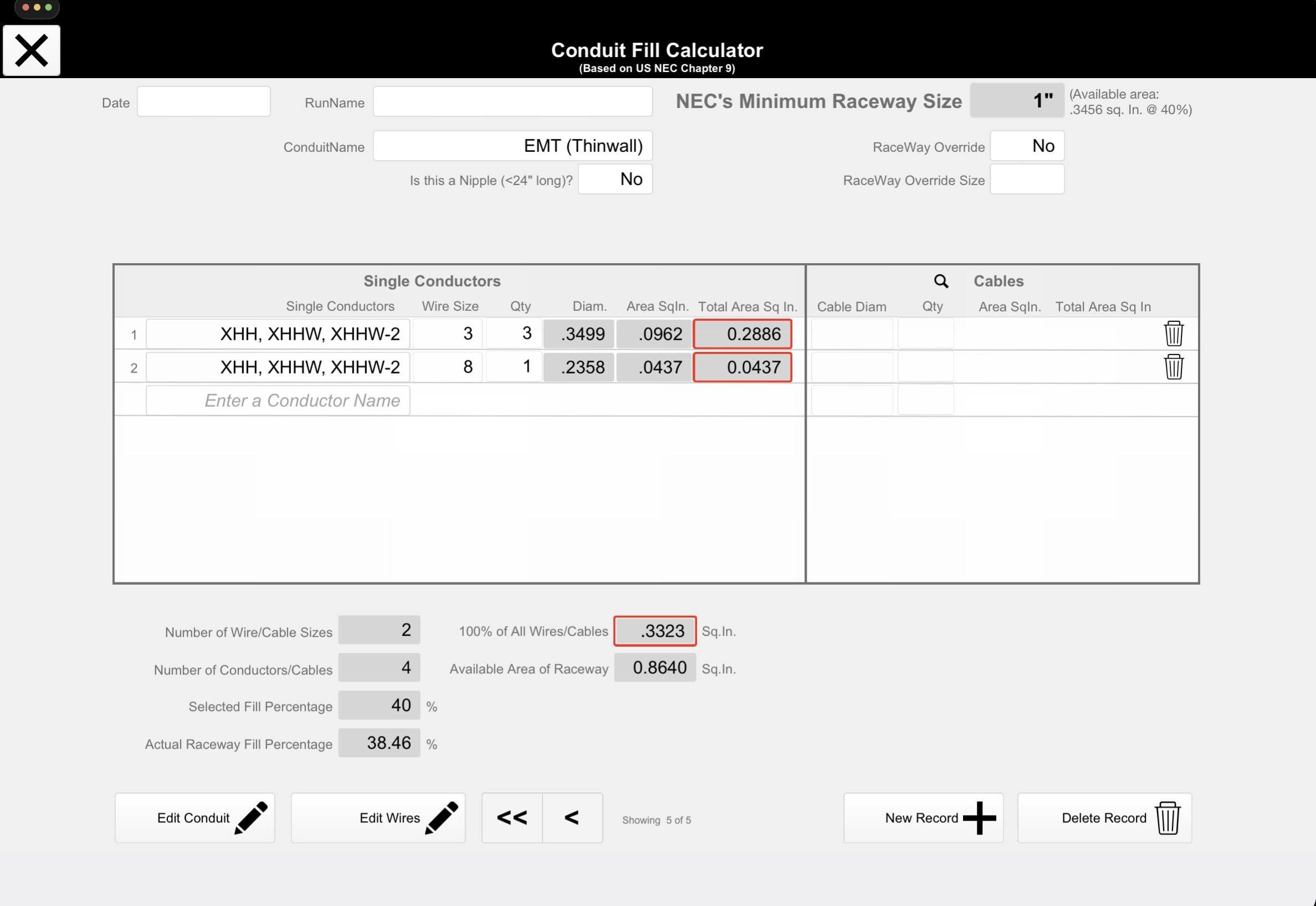
Assuming 60° terminations, table 310.16 says #3 is good for 85A, table 250.122 says #8 is good for a 100A (that covers 80A) breaker, so 3x #3 & 1x #8: Annex C table C.1 says 1¼ is good for 6 #3s, so about 1½ OD. You may be able to go smaller if you can use the 75°, you might be able to squeak the #8s the conductors into 1" EMT (1⅜ OD) (it's good for 3x #3s, but you'd have to do the full calcs to see if the #8 will fit) but it'd be tight.
NP: it's been about 15 years since I did this, DOUBLE CHECK. There's been several code revisions since then, & I was never the smartest guy I know.
0 -
The difference I think is that NM is always 60c (in insulation or not) (it shouldn't be and a lot of guy want this changed as NM has 90c conductors even though the individual conductors on not labeled THHN)
SE cable is usually XHHW-2
0 -
you can’t add an 80 amp sub panel to a 100 amp main.
please contract a licensed and insured contractor!0 -
southwire has an online conduit fill calculator and a bunch of other calculators.
0 -
I forgot I had an app on my phone. It says 3#3 & 1#8 THHN is 38% fill of 1" EMT, so doable but tight, like I guessed. You'd have to take your time feeding it in, to make sure it doesn't get crossed over itself, maybe use a little smurf juice.
0 -
Hi, Is there any chance of just running conduit over the roof to get this done? 🤔
Yours, Larry
0 -
That would be very tight I found that out the hard way years ago on a short run it wasn't worth the trouble. I should have run 1 1/4"
The code is the minimum standard. Certainly, when it comes to raceway sizing for wires if you at the max your usually in trouble unless it is a short straight run. Especially when you work by yourself as I usually did. Can't push and pull at the same time (although I have done that with a long rope and a pully) you need someone to keep the wire straight going in the pipe and taping the wires and leaving it taped inside the pipe is not allowed.
 1
1 -
that would be too long of a span
that would add at least 55' to the length: 30 ft up, 25ft down
0 -
I’d run pvc conduit or raceway and pull #4 THHN (2 hot + neutral plus ground)
Conduit can be run across the ceiling or is this a living space?
I don’t recall if conduit carrying power can be buried directly under drywall.
0 -
Ah folks… I think we need to start back at the service entrance.
Which appears to be a 100 amp 240 volt service?
And we already have a main panel with, presumably, some loads on it?
And we want to add an 80 amp sub panel, and at least one 50 amp 240 volt load on that?
Now I know that not everything will be on at once, but I think the problems here are more than what wire size and conduit are we using…
Br. Jamie, osb
Building superintendent/caretaker, 7200 sq. ft. historic house museum with dependencies in New England 1
1 -
The OP's question was, "I can open a series of openings to get the string through. But then how to repair these holes?"
1 -
if it were actually loaded at 80 a then it most likely is too much load for the service. if one actually does the load calculations it may be ok. the residential load calculation rules don't really give you a good way to account for the very small duty cycle of a welder in most usages.
0 -
the welder manufacturer recommended a 50amp outlet. i also planned a heater for the winter. that's 60a.
60/0.8=75a for continuous load
thats how i sized the subpanel
0 -
unless you're running a plasma table or some sort of production operation the welder isn't a continuous load.
0 -
@mattmia2 is right you need to check the welder's duty cycle and read the code book. You can get away with less than 80 amps but it doesn't change things much. Still have to get power over there.
0 -
then the 4/4 aluminum MC cable should work
the OD is 1.1", it requires a smaller hole on top plate and exterior wall
0 -
I dont think the OP has any clue on how to do this!
0 -
it has to start with load calculations…
hmm, i feel like i have said this over and over agian about heting too…
1 -
the loads are still being planned
a sketchy load letter includes a 50a outlet for welder, a roof light, a space heater for winter, window AC in summer, two gfci 15a outlets for running power tools here and there, and charging. An angle grinder is rated at 15a, that's the biggest. others are mostly battery tools
these stuff will not work at the same time, so I estimate it to be 65a so 4/4 Al
do you have a way to be more accurate?
0 -
yes. follow the procedure in the code. you have to start with the panelboard that you want to add more load to.
 1
1 -
-
I agree that the welder isn't a continuous load. Nor — if it is like most welders — does it draw the full 50 amps when operating.
The problem I'm looking at — with some dismay — isn't so much the wire to get there. That's been covered, with various comments, and really isn't a problem. It is the total momentary loads It is momentary loads which blow circuit breakers and fuses; unless you have tine delay main fuses (yeah, right) or special time/load integrating breakers, I regard it as very likely that that setup, as described, is either going to blow the sub-panel main breaker or, more likely the 100 amp main service breaker (which should be immediate trip in any case) at fairly frequent intervals.
Just to illustrate: I can easily see a situation where you have the space heater running (let's say 15 amps) and a couple of shop lights (LED — so negligible) but someone decides to run the kitchen range (40 amps) and the coffee pot is running (say 15 amp) and there are a few lights on in the house (say 5 amps) and the refrigerator is running (say 5 amps) and the freezer (another 5 amps). You flick on the welder and… you're still less than your estimated 65 amps in the shop. But on the main? 125 amps and that's all she wrote. Bam.
Br. Jamie, osb
Building superintendent/caretaker, 7200 sq. ft. historic house museum with dependencies in New England0 -
I might add — there's a reason most farms are 200 amp services, and often 400. — and 400 to 600 amp three phase connections aren't unheard of You've just found the reason.
Br. Jamie, osb
Building superintendent/caretaker, 7200 sq. ft. historic house museum with dependencies in New England0 -
NEC 2026 You get the amperage off the welder name plate. Then find the duty cycle. This should be on the nameplate or in the manual. Use the multiplier next to the appropriate duty cycle to size the wire. So a welder that draws 50 amps and has a 60% duty cycle you would need wire good for 50 x .78=39 amps
630-11
welder duty cycle
100%=1
90%=.95
80%=.89
70%=.84
60%=.78
50%=.71
40%=.63
30%=.55
20% and under=.45
1 -
If you overload the main breaker it trips. Next time, don't run the welder, the stove, the dryer and the ac at the same time. Turn off the AC and the dryer, reset the breaker and continue welding.
People tend to overestimate house loads. You can definitely turn on a bunch of devices at the same time and trip but it just doesn't happen in the real world under regular usage.
I have a power meter on my all electric home and I have seen about 15kW (~60A) peak use. That is with a 20a feed for a welder (surprising what you can weld with a 20A inverter one).
The main concern here is wiring this up properly and that is not something you can guess.
I would also recommend 20A GFCI plugs for power hand tools. Much harder to trip when you are going to town on something.
0 -
here is a trip curve for a qo breaker. at 125% load it essentially will hold indefinitely. even at 200% the trip time is about 40 seconds. the magnetic element takes over at about 1000% and shuts it off immediately in case of a short.
this is also why it is important to have the engineering right, the breaker is to protect against a fault, not against overload because of incorrect design.
the main reason for 3 phase is because induction motor run much better on it although with VFDs that is much less of an issue than it used to be.
0 -
There are other reasons for three phase… and yes, breakers will hold on an overload… unfortunately…
Trust me, @mattmia2 , we ag people may have s**t on our boots, grease on our hands and hay in our hair, but we do know what we are doing and why.
Br. Jamie, osb
Building superintendent/caretaker, 7200 sq. ft. historic house museum with dependencies in New England0 -
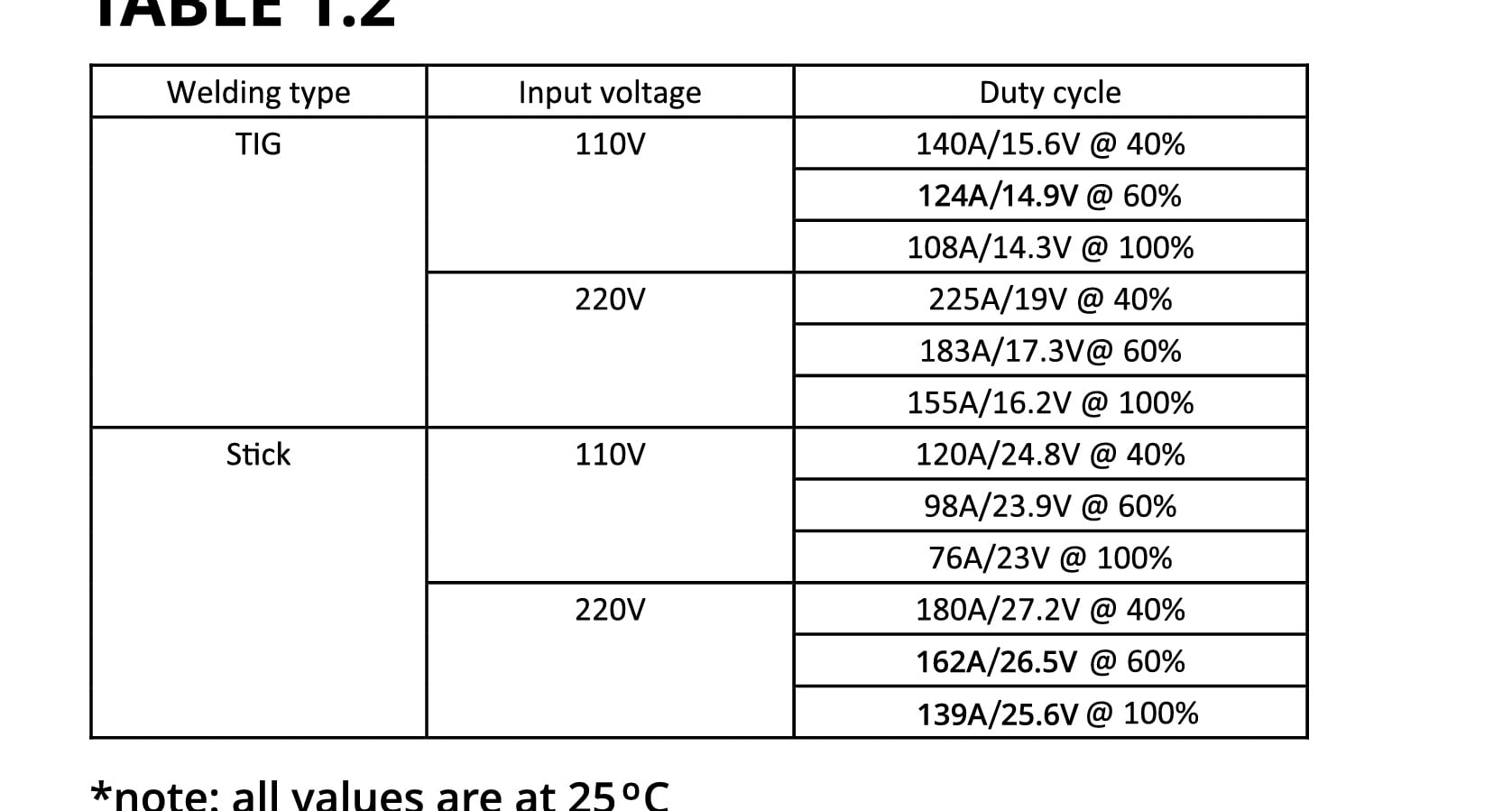
The max amp draw looks like 30. But the recommended nema14-50r branch circuit required 6g copper. This is also the min gauge of the feeder cable to the subpanel
 0
0 -
The big items are all gas. The microwave, fridge and toaster are electric, they will take 30 amp together. Other stuff are laptops, tv, network router, charger, lights, these load are constant and low
I had the sense of load from past experience when I lived through a winter on a 30a shore line power service. The input was fixed so I had to manage the load several times a day. I had to turn off all space heaters before doing microwave or air fryer, or water heater. After those are done, I would turn the heaters back on. After installing some wifi outlets and wifi circuit breakers, instead of paying multiple trips to and from the panel (for water heater), I started to command Alexa to turn devices on and off - a much better user experience
0 -
Good. You are about six jumps ahead of the average homeowner then! I still think that you should look into upgrading to a 200 amp service — if your utility will let you and the budget stretches that far.
Br. Jamie, osb
Building superintendent/caretaker, 7200 sq. ft. historic house museum with dependencies in New England 1
1 -
there is a procedure in the code to calculate the load. there will be lines in your calculation for general usage per square foot, major appliances, and small appliance circuits counted at if i remember 80% of the capacity of the circuit and further derating if there are over a certain number of small appliance circuits.
there should be a table that gives the input power to that welder but the table you have is showing the output power. depending on what the input power is, you could potentially use a lower current twistlock or conventional plug and receptacle instead of a range receptacle. does that welder require a neutral, is it 120/240v or is it 240v only? If it is 240v only you could use a 6 series plug and receptacle instead of a 14 series.
0 -
Dual voltage. It comes with an plug adapter to use the standard 120v outlet
0



Categories
- All Categories
- 87.8K THE MAIN WALL
- 3.3K A-C, Heat Pumps & Refrigeration
- 59 Biomass
- 430 Carbon Monoxide Awareness
- 133 Chimneys & Flues
- 2.2K Domestic Hot Water
- 6K Gas Heating
- 124 Geothermal
- 170 Indoor-Air Quality
- 3.9K Oil Heating
- 79 Pipe Deterioration
- 1.1K Plumbing
- 6.7K Radiant Heating
- 396 Solar
- 16.1K Strictly Steam
- 3.5K Thermostats and Controls
- 56 Water Quality
- 51 Industry Classes
- 51 Job Opportunities
- 18 Recall Announcements