How to pull wire over ceiling

I need to pull some wires from the main panel across a room for a subpanel. I want to pull the wires from above the ceiling. But the span is 20'.
I can open a series of openings to get the string through. But then how to repair these holes?
Comments
-
is the ceiling plaster or drywall? if there is no framing in the way you should only need to get to each end and can pull it with a fish tape or pull string or fiberglass rods. sometimes a tape measure works well to get a pull string through too.
0 -
- Are your running the wire parallel to the joists or across the joists? In other words are you going to have to drill the joists?
The best thing to get is to go to Harbor Freight and get a package of the fiberglass fishing rods use to fish wire. They come in a package for around $20. They are about 30" long. You can buy Klein or Milwaukee at HD or Lowes as well and they make fancy ones that glow but a lot more $$$$$. The HF ones have worked very well for me. There is plenty in the package to run 20'
If you are running with the joists and you make 2 holes you should be able to go 20' if no blocking or cross bracing bothers you.
If you perpendicular to the joists its much harder. You would have to drill every joist, or use wire mold etc.
Is this first floor or second floor do you have a basement or attic you can run it through and then fish up or down?
is the ceiling drywall or plaster?
Flat, swirled or spray on popcorn?
0 -
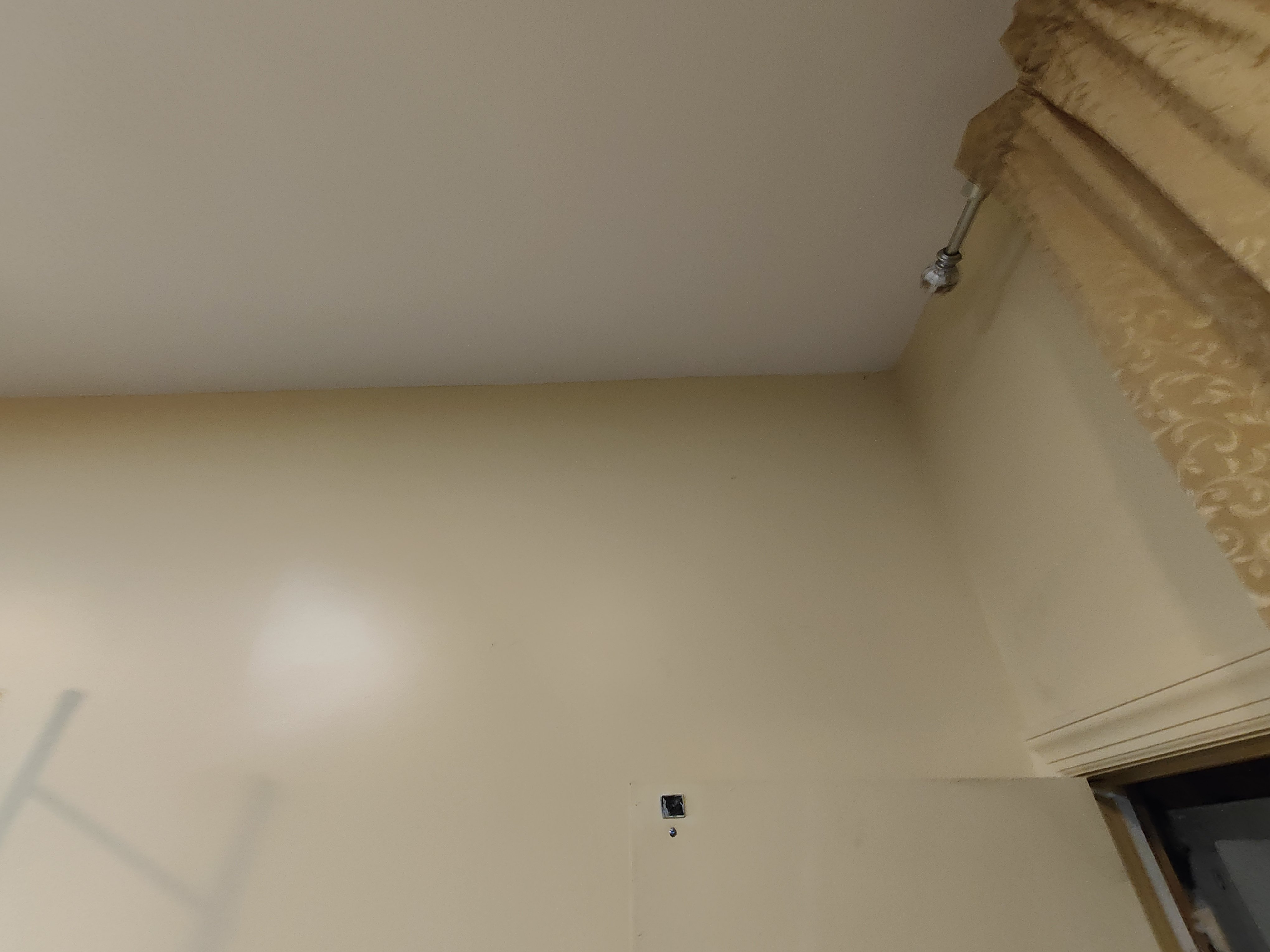
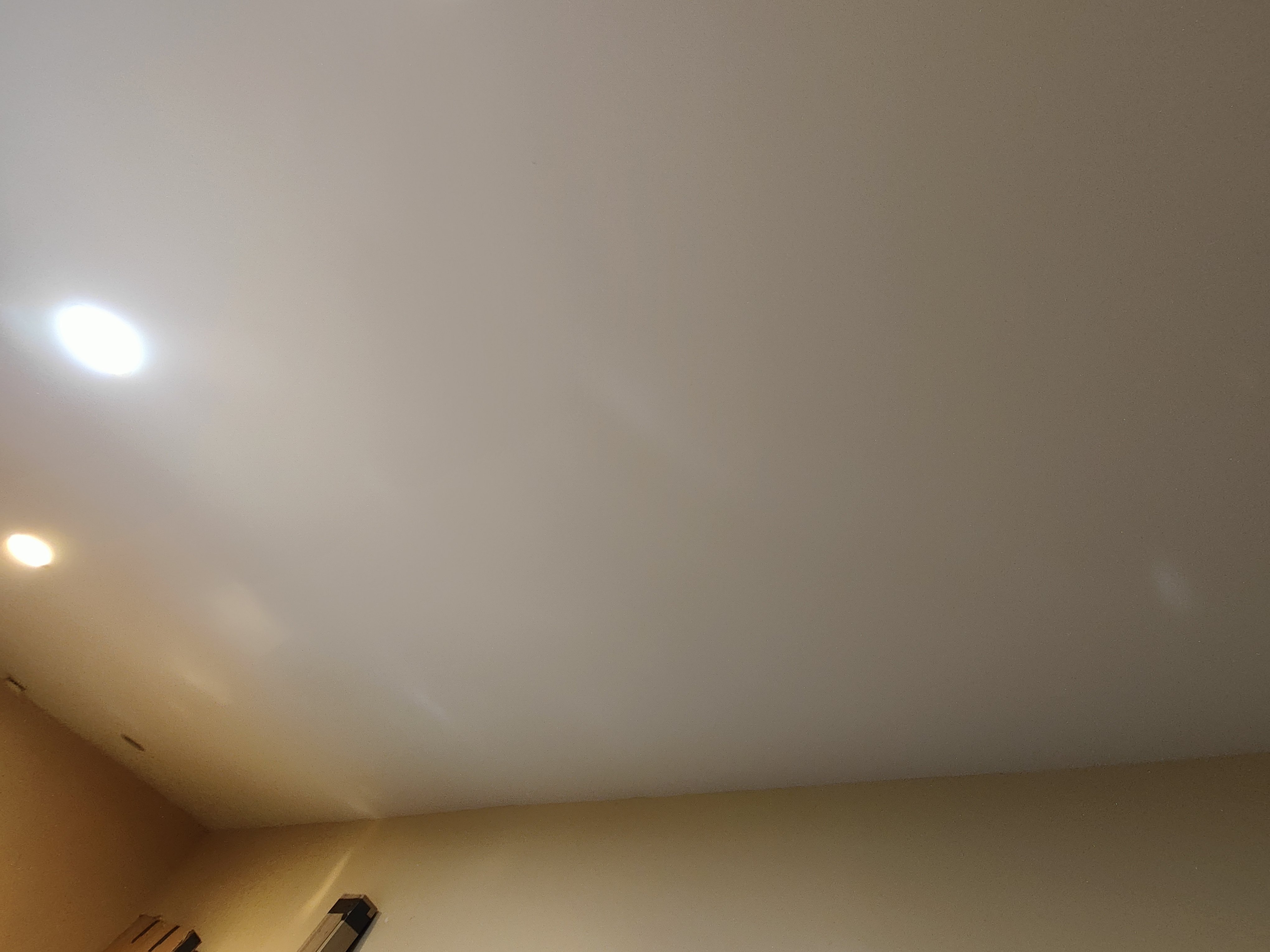
Its drywall ceiling, with recessed cup lights installed
Do you mean a plaster ceiling has some gap inside it to allow pulling wire?
0 -
This is basement.
Using wire mold, do you mean surface mount on the wall?
0 -
plaster vs drywall changes how you patch it. plaster is easier to patch. drywall you will have to cut out a piece that either lands on 2 joists or screw some blocking in to screw a piece of drywall to. then mud and tape the joints. in the ceiling probably taper it out at least 12" on each side of the tape.
if it is textured you will likely need a good plasterer to make a patch that blends in.
0 -
What size wire, what size sub panel?
 1
1 -
Both plaster and dry wall have the open space of the joists, so no real difference there.
If you are going in the same direction as the joists go, the fishing poles should do just fine. If you are going perpendicular to the joists… un, no. As noted, you are either going to have to open the overhead at every joist (typically 16 inches) and drill a hole, or cut a trench in the overhead — which may actually be easier to patch — and drill the holes in the joists.
Or use wiremold — surface mount conduit.
If this is within the house, I insist on using armored cable (BX). Never Romex. Mice like it too much…
And check the code for the required wire size. Depending on the panel capacity it may be as big as 3 or 4 gauge. And get the bonding and grounding correct (subpanels are NOT bonded to ground, but are grounded back to the main). Two biggest mistakes DIY electricians make…
Br. Jamie, osb
Building superintendent/caretaker, 7200 sq. ft. historic house museum with dependencies in New England0 -
Pop the recessed lights out. Use those holes and then put them back.
1 -
copper 4g, 80amp
0 -
I've done a lot of drywall repair work. You most likely have to drill a hole in the top plate or floor joist. I have a set of electrician's 4 foot drills. If you have to cut a hole in the drywall, this is how I do it.
I mark a 6" square and put 2 lines across one edge so I know how it came out so I can cement it back as it was removed. I make my cut at a 45 deg angle at all four sides so that it doesn't fall thru when it is put back. I will use a fine hacksaw blade to make the cuts. Sometimes, I will use a large 1/4" thick paint stick I get free from Home Depot and cut it at 9" and put it across the hole and use a drywall screw at each end to secure it to the hole so that the patch that you cut out rests against it when you replace the plug.
I use drywall mud straight from the container (not mixed with water) and smear it on the cut hole and on the 4 edges of the plug and place it in the hole. I use 2 drywall screws to secure the plug to the paint stick. Remove the excess mud and let dry. When dry sand with 80 grit sandpaper. Mud again for a perfect finish and paint.
They do make an ultra thin drywall tape if you want to tape over the four cuts on a smooth wall. I don't and not on a textured wall. I match the texture.
Pulling the wire and going around a corner. I use steel fish (wire) tape but sometimes I prefer fibreglass rods that I got from Harbor Freight for peanuts. I also use nylon cord that I got from Home Depot on a spool and try and catch that and pull the cord thru the holes and attach that to the wire and then pull the wire while pushing it from the other end. Trying to catch the wire with fish tape can be frustrating, especially in a wall with insulation.
Knowledge not shared is a sin.
 1
1 -
do you find if a drywall cutout tool works better at precision and dust control than a multitool?
0 -
A lot of interesting comments from people who've never done this before and/or even looked at the picture.
You don't say where the wire is coming from and where it's going after it passes thru.
Parallel run will be easier, IF there's no solid blocking. There will be some kind of blocking but it may be metal bridging.
I personally wouldn't pull a sub panel service cable thru, fish style and let it lay on the drywall. There's no protection for the wire.
Best/proper way. With a chalkbox, snap 2 parallel lines about 6" apart. Cut them with a razor knife or multi tool, remove the drywall to expose a channel.
With a right angle drill, drill each joist in the center. You still may have to drill a top plate or some other way to get the wire in the wall unless you're passing thru to an unfinished space.
Pull your wire, drywall patch, tape, paint the ceiling. You're going to need a good taper otherwise you'll see that joint forever.
Are you sure there's no other way to route the wire for the subpanel, including on the exterior?
To respond to the other commenters:
1. I wouldn't fish a sub panel wire that big and let it lay on the drywall.
2. Wire that big doesn't come in MC, nor can you put it wire mold, only properly sized conduit.
3. There aren't enough recess lights to use that idea/method. 2
2 -
which of these situations require a protection such as a conduit or PET braided sleeves:
1, wire running above ceiling, penetrating joists
2, wire penetrating a masonry wall
3. after wire exit the house, running outside before entering a wall
0 -
With regard to @HydronicMike 's item 2 above — quite correct. In restoration work I use flexible conduit for that size (for that matter, 8 gauge and up) and run the wire (THHN) in that. You can also use rigid (sort of) conduit, but in restoration work that can get difficult — to put it mildly.
Smaller wire I use armored cable ("BX"), same insulation class.
Not, mind you, that NM-B is bad cable. Great stuff. It's why arc fault interrupter circuit breakers were invented… Mice and other cute little critters just love to nibble on it.
Br. Jamie, osb
Building superintendent/caretaker, 7200 sq. ft. historic house museum with dependencies in New England0 -
@wayneb301, ya a multi tool works great and I do use it. I just want as thin a cut as possible. If you are concerned about dust wear a mask and use a vacuum.
Be aware that wire in a hot attic need to be one wire size larger than the current you are needing. Heat lessens the current carrying capacity of a wire.
1 -
There will be joists running one direction as illustrated below. Level of difficulty is based on if you are going in same direction as joists or having to drill holes in joists to pass wires through.
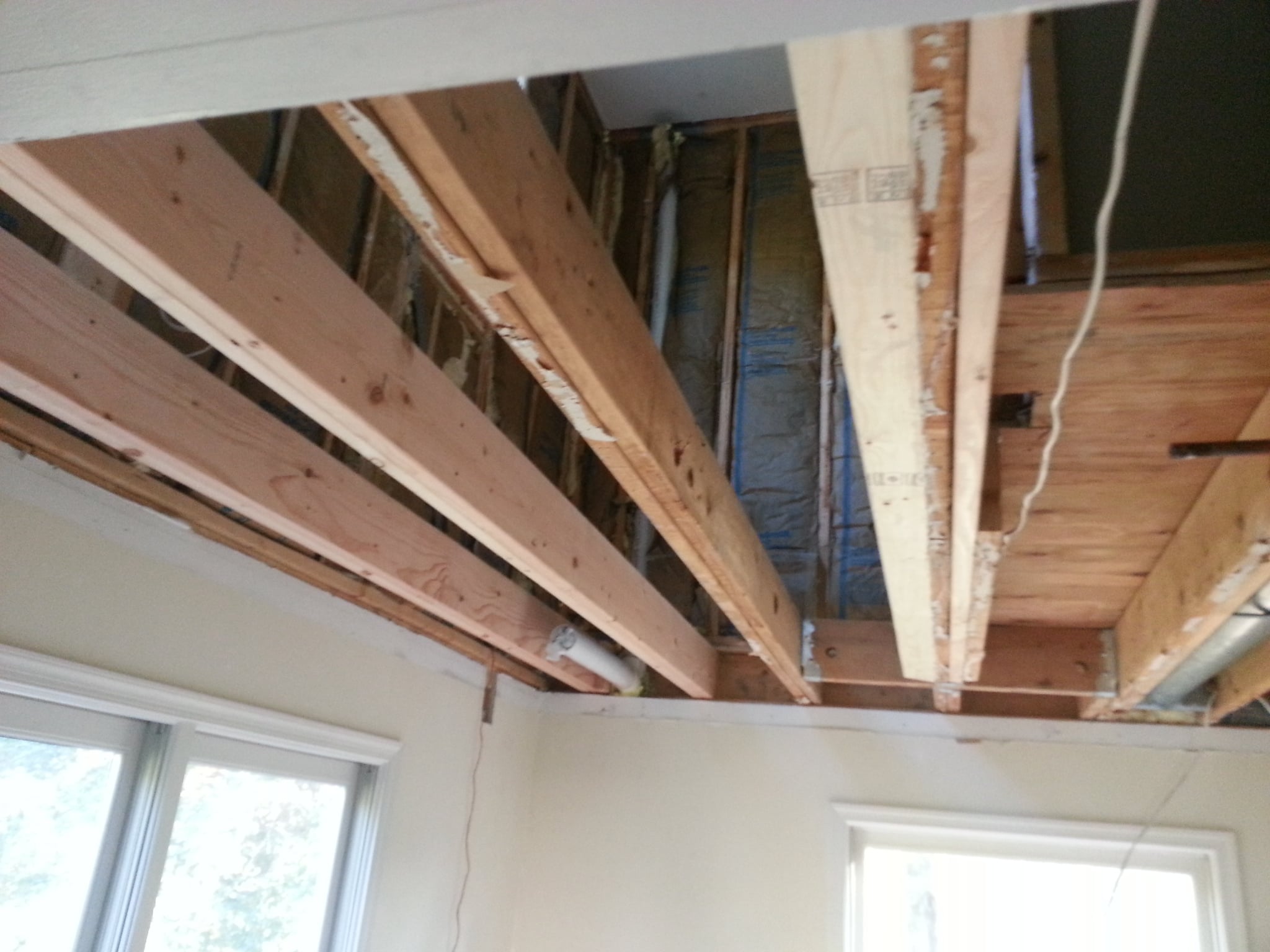
You may also be dealing with engineered 2X4 Truss joist which are simple to pass cables through; see below.
1 -
Are you an electrician? Subpanels are not trivial and typically require a permit / inspections.
Not trying to rain on your project but your question makes me think this is a new skill area for you.
 1
1 -
if you are running a subpanel you really need to read the code. it is online. it will tell you what protection what wiring methods need. tech flex won't do it for any line voltage wiring. larger cables have exceptions to some of the protection rules but I would try to get it at least somewhat protected. I wouldn't want to do it on the exterior both for aesthetics and protection of the wire from UV(it is supposed to be uv resistant, it is better not to test that). For #6 wire individual conductors in conduit may be easier to get in to a tight space than cable.
0 -
@Jamie Hall "It's why arc fault interrupter circuit breakers were invented… " No, it was invented to make a lot of money for manufacturers. We will make it and get it in the NEC and have a guaranteed revenue stream. 3 bedrooms on average at $40 a whack and 780,000 houses built a year, nice.
It's not tube & knob anymore. Not like GFCI or Smoke & CO detectors that really do save lives.
When Arc Fault first came out, I had a heated discussion with a county building inspector about how stupid it was to wire up a bedroom smoke detector on a Arc Fault Circuit till I was blue in the face to no avail. One year later, they rescinded that requirement. Arc Fault is safety where no safety is required with modern wiring. It's not like running an extension cord under carpet ( I have seen that). Sorry. That's my story and I'm sticking with it.
0 -
You can get type MC in just about any size you care to order, albeit maybe not at a big box store. 8/4 is a little over $5/ft, see for instance. Pay particular attention to the clamps, I've seen soooo many runs with clamps that can't be tightened down properly because they're not made for the cable type and/or they're the wrong size.
Around here, nearly everything can be done under a homeowners' permit, which includes X number of inspections. Presumably more inspections could be bought if necessary. Check with your building dept. if you haven't already.
& the best glow rods to use are the They're stiff enough to push across a ceiling (not like those limp large-diameter things that I see guys struggling to use all the time) and flexible enough to shove through a few ¾ EMT 90°s in a pinch. Tape a loop of pull string on the end & use a foot or two of ceiling grid wire with a tiny hook on one end & you'll see why they're called magic sticks around here.
(URLs are just the first google results I found, nothing special.)
 1
1 -
AFCI protectors made today are quite a bit different than the AFCI protectors made 25 years ago in much the same way that GFCI protectors are much different than those of 55 years ago. Nearly all of the GFCI exceptions have been removed now since after decades of field experience and with chap microcontroller technology modern GFCI protectors don't nuisance trip. if you have a GFCI tripping now you almost certainly have something going on that you haven't found yet. The only time the GFCIs in my house have tripped was when I had RF in the electrical system because of a poorly balanced antenna.
2 -
If you are DIY wiring, I would get the US equivalent (can also get the Canadian one as 95% same) of this:
Guessing the proper way to wire things up generally doesn't end well.
Around me typical outdoor subpanel feed is done with Teck ( PVC-jacketed MC) cable as it is flexible, armored and can be buried. With the current costs, almost all of it is aluminum.
0 -
these truss joists are 22" high. I'm almost certain the flooring is not that thick. should be
~10" joists against the direction that the wire will go through
1 -
Wire above the ceiling penetrating the joists needs no protection if the edge of the cable is at least 1 1/4" from the edge of the joist. They make wire protection plates you can use if you are less than 1 1/4".
Going through a masonry wall its good practice to sleeve the cable in PVC. If you need 80 amps I would run #2 SER cable aluminum.
You can go outside the house and back in with SER
1 -
I suggest the poster consult with a qualified electrician in his / her location.
0 -
Thanks. I bought this kleintools glow tape and have used it many times
https://www.lowes.com/pd/Klein-Tools-Glow-in-the-Dark-Fish-Tape-20-Foot/5015660249
0 -
4/4 MC copper cable 50 ft costs ~$400, with about 1" OD
are there alternative options?
0 -
As I mentioned above SER cable. You will go broke buying copper in larger sizes,.
You should look at the load because if you really need 80 ams it going to get pricy.
1 -
2/4 or whatever you need in aluminum will cost a lot less than 4/4 copper. if you use conduit and individual conductors you may be able to use the 75c ampacity instead of the 60c that is done by decree for cables.
0 -
60C is only for nm cable afaik
0 -
and se if insulation is involved:
E3705.4.5 Conductors of Type SE CableWhere used as a branch circuit or feeder wiring method within the interior of a building and installed in thermal insulation, the ampacity of the conductors in Type SE cable assemblies shall be in accordance with the 60°C (140°F) conductor temperature rating. The maximum conductor temperature rating shall be permitted to be used for ampacity adjustment and correction purposes, provided that the final derated ampacity does not exceed that for a 60°C (140°F) rated conductor. [338.10(B)(4)(a)]
0 -
I'm kind of wondering what the need for a subpanel 20 feet away is. Seems like an expensive way to get something done.
National - U.S. Gas Boiler 45+ Years Old
Steam 300 SQ. FT. - EDR 347
One Pipe System0 -
there is another 30' span, to a small room where a 50amp breaker is planned for a welder
0 -
one conduit per conductor? that will require 3 conduits taking too much space
outside of the house is not an option
the ceiling may have thick strapping like structures so I don't to drill through the joists
does SER cable require additional protection going through thick strappings above a ceiling board, or going through joists of an outside deck?
0 -
It's going to be less expensive to run that welder on a dedicated circuit off the main panel — if you have space in the main panel, that is.
Notice that I said "less expensive". No matter how you do it, it's not going to be cheap.
Br. Jamie, osb
Building superintendent/caretaker, 7200 sq. ft. historic house museum with dependencies in New England0 -
80 Amp sub panel and cheap 🤣
0 -
Individual conductors in one raceway (e.g. EMT, or flex). The NEC has all the info you need to size it properly.
1 -
the main panel has extra slots. however, other than the 50a outlet, there are a couple of switches, outlets and lights, window AC that needs to be powered, other than a sub panel or load center, what fits?
0 -
strip off the outer jacket and use the individual wires with the flex raceway?
and this make the 75c ampacity chart applicable?
with the outer jacket, then 60c chart applies?
0 -
both the cable and the terminals in the panels and on the breaker need to be rated at 75c to use the 75c column.
if i am reading the code right, ser cable can be used at the 75c if both of these are true:
- It does not pass through any insulation
AND - all of the current carrying terminals it will connect to on both panelboards and the breaker are rated 75c.(the ground probably does not need to be 75c. the minimum ground size will come from the table in the code)
if you used raceway, ent might be most cost effective, you would buy thhn or xhhw wire or something like that.
0 - It does not pass through any insulation


Categories
- All Categories
- 87.8K THE MAIN WALL
- 3.3K A-C, Heat Pumps & Refrigeration
- 59 Biomass
- 430 Carbon Monoxide Awareness
- 133 Chimneys & Flues
- 2.2K Domestic Hot Water
- 6K Gas Heating
- 124 Geothermal
- 170 Indoor-Air Quality
- 3.9K Oil Heating
- 79 Pipe Deterioration
- 1.1K Plumbing
- 6.7K Radiant Heating
- 396 Solar
- 16.1K Strictly Steam
- 3.5K Thermostats and Controls
- 56 Water Quality
- 51 Industry Classes
- 51 Job Opportunities
- 18 Recall Announcements