Air eliminator location

I am considering re-arranging the plumbing a bit in my setup. Every year in the fall or winter when i start using my heating system i need to purge the lines of air. Not a huge problem obviously but a bit of a pain since there is no drain in the basement near the boiler. The current configuration goes boiler supply —> circulator —> air eliminator —>zones—>return—> zone valves.
I am thinking of replumbing it and switching out the air eliminator to a spirovent air eliminator so the configuration would be boiler supply —> spirovent —> circulator (etc ).
I feel like the biggest issue is going to be supporting the circulator in the new location but i found threaded rod and floor supports that i think will do the job.
The big question to me, will this configuration make a differance? I keep hearing about "pumping away" and that a air eliminator should be close to the boiler yet before circulators and or pumps.
Comments
-
draw your proposed system. The best way to keep air eliminated permanently is to get rid of your leaks. air doesn't naturally form in the system, it gets in there from filling. On install the system is purged of air, then an inline air separator helps to remove the entrained air in the system, air vents appropriately located remove the trapped air that can be missed via purging. If air returns to the system it either was never fully removed, or has been introduced via makeup water (ie leaks)
0 -
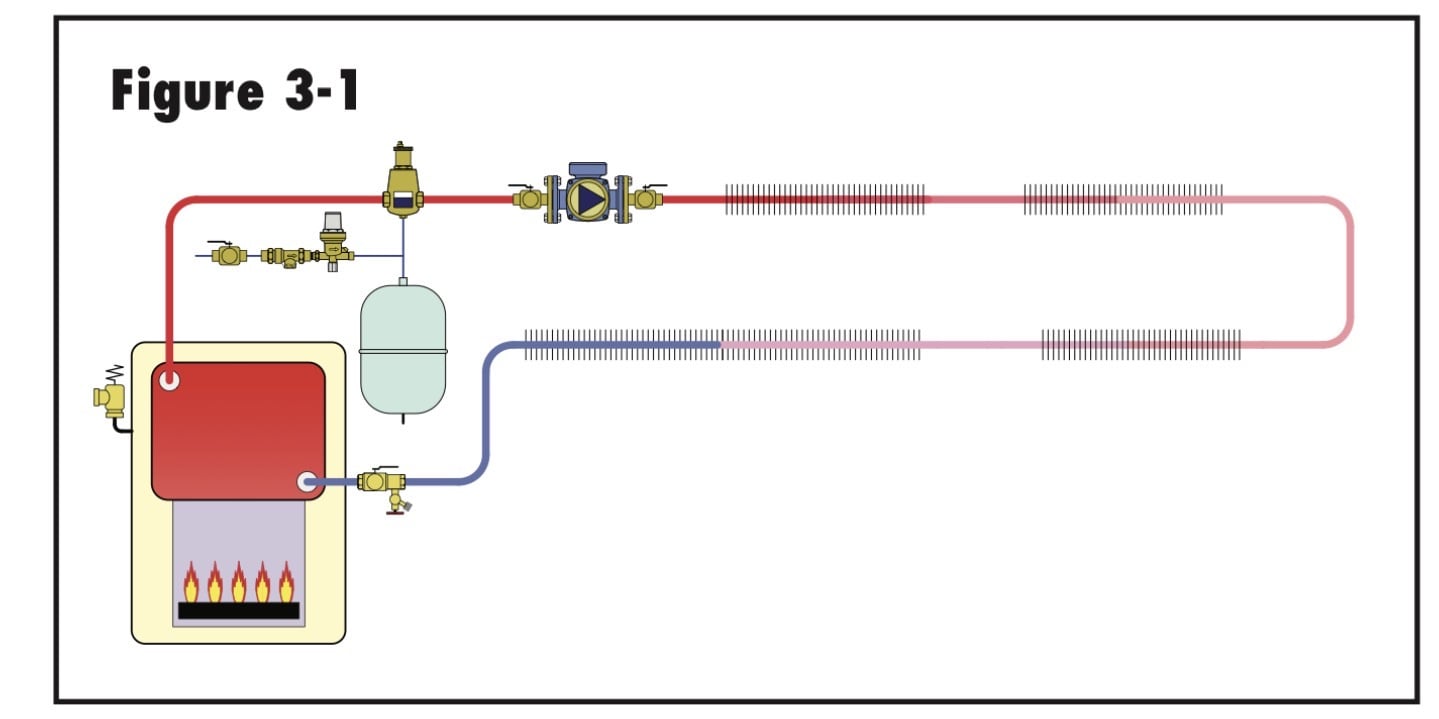
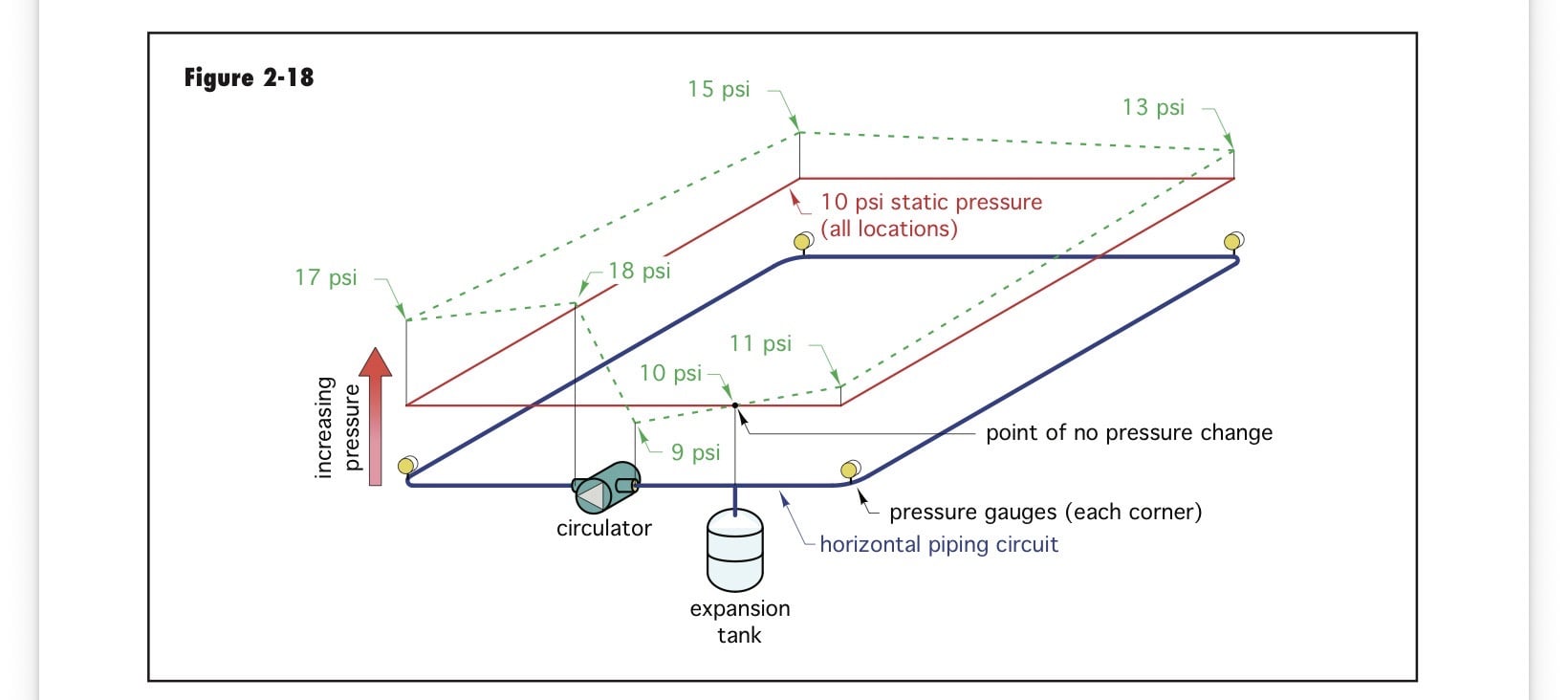
Any air purger works best when you are pumping away from the expansion tank. The graphic below shows how the pump adds the pressure differential to the system, when pumping away
So boiler, air sep, expansion tank, pump.
Typically the expansion tank connects under the air purger. The fill system connects at the expansion tank also.
 Bob "hot rod" Rohr
trainer for Caleffi NA
Living the hydronic dream0 -
So ya my current setup is wrong for sure, the air eliminator is right after the circulator. Looking at the mfg pdf for the boiler my expansion tank is connected to what is labeled as the relief valve outlet according tohttps://dunkirk.com/wp-content/uploads/2022/03/2304_0.pdf . Which seems odd to me.The more i look at my setup and compare it to the pdf the more i question what the installers did.
0 -
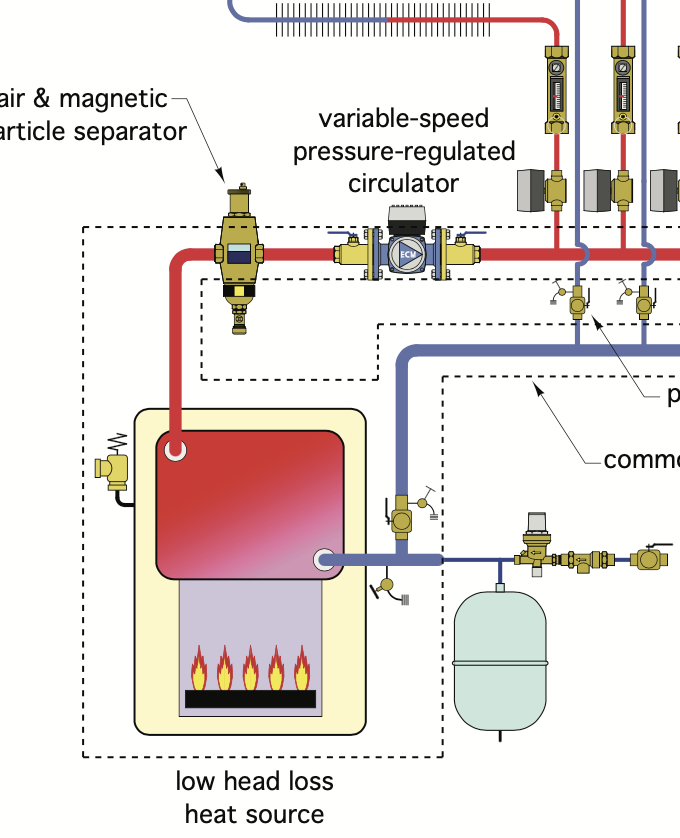
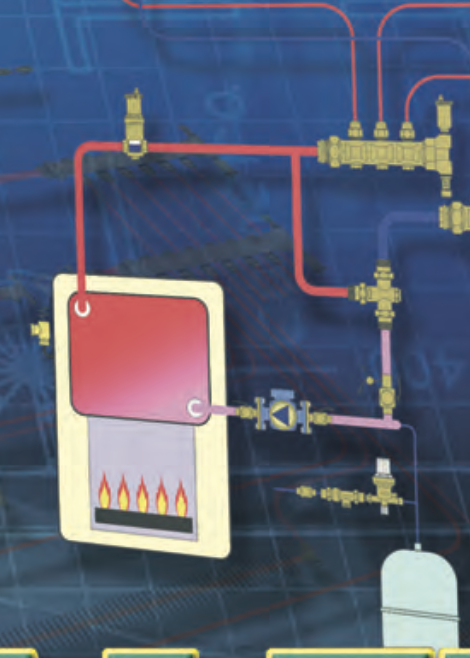
It is possible to have the expansion tank connected into a port on the boiler, with fiill and relief, pump on boiler supply and air purger after the pump.
IF you use a good air sep like a Caleffi Discal, it coulld be after the pump. You are still pumping away from the expansion tank.
Any of the microbubble type air seps can be on either side of the pump with no piping distance required.
Air comes out of solution best at the hottest point and the lowest pressure. So suction or inlet side of pump., is the ultimate
Additionally the expansion tank could be on the return piping, but air sep at the hottest point, supply out of the boiler.
Other options here.
 Bob "hot rod" Rohr
trainer for Caleffi NA
Living the hydronic dream0 -
Thank you, i think for what is currently there its a bad configuration since it seems like a relatively simple seperator its a 35$ part at home depot with that tiny connection. I think as much of a pain this will be to do its going to be better if i re-arrange things a bit. The biggest pita is probably going to be supporting the pump right now its just supported by the black iron pipe coming from the boiler.
Also, thank you very much for all the information on this. It think once i re-pipe some of this it will alleviate this annual headache since there are occasions where the pump gets air bound. having a air seperator before the pump i can only imagine helping that issue.
0 -
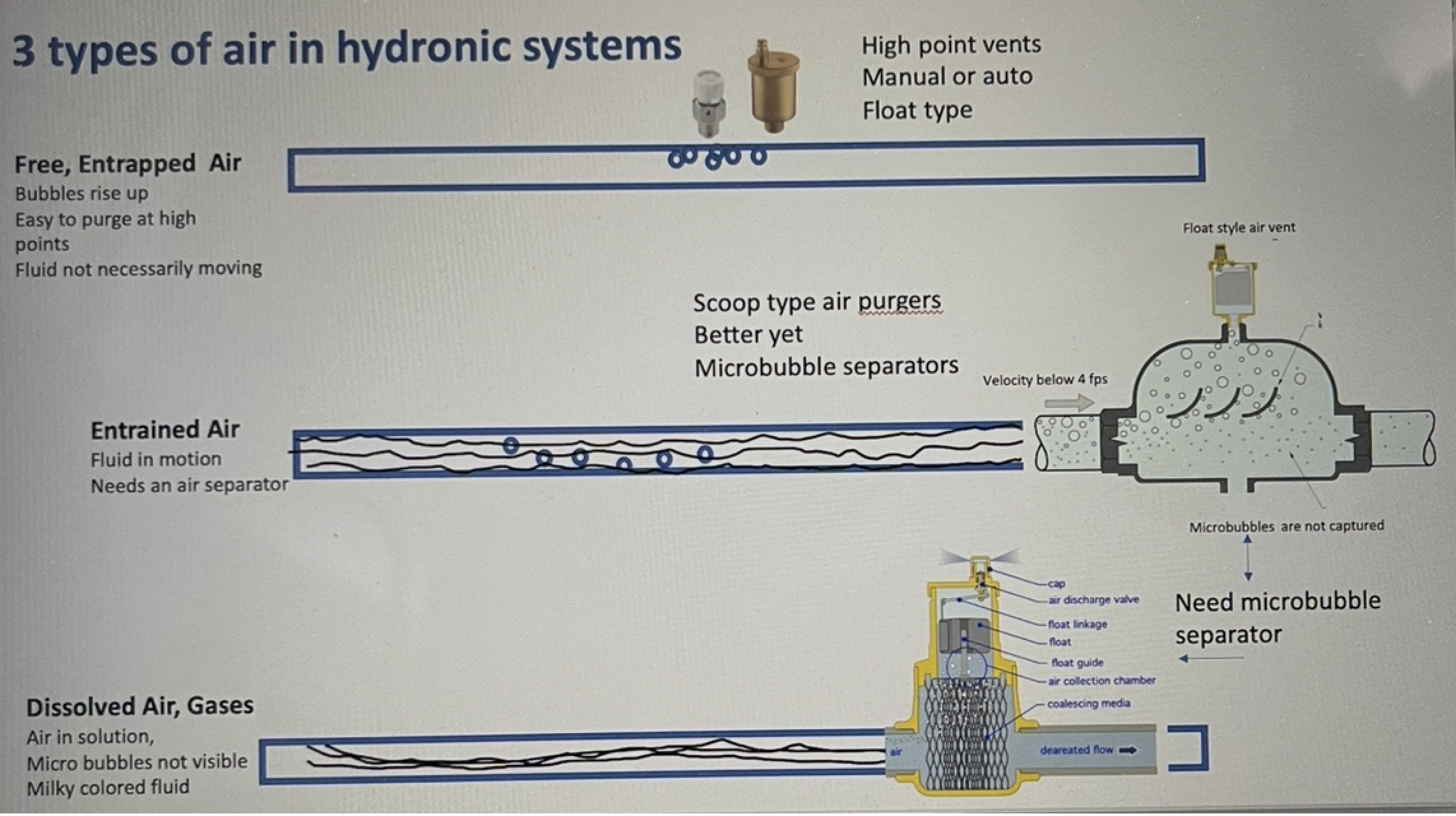
There are a number of different air removal sdevices.
A simple float type can often be fpound on top of boilers or indirect tanks.
Manual vents on fin tube base boardor hydro coils. Both are for high point air capture.
Back at the boiler use a good brand air separator. These are 95% efficient within a few passes of all the water through them. Within an hours running, up to boiler high temperature a system should be air free. Big bubbles and micro bubbles.
The ramp type are not as efficient as there is no media inside to capture the micro bubbles, and they need straight piping, about 18" upstream.
So the procedure could be.
A purge with hoses and fast fill
Open any manual high point vents.
Once you have circulation in all zones, the air separator takes over.
If the system has leaks and takes on fresh water occasionally air and dissolved minerals are entering. Find and eliminate any and all leaks.
 Bob "hot rod" Rohr
trainer for Caleffi NA
Living the hydronic dream0 -
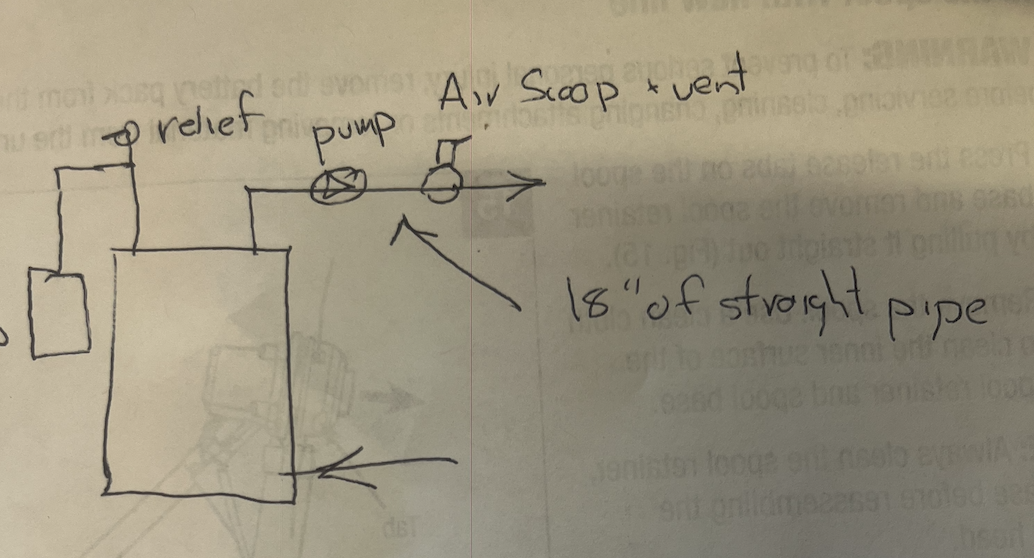
So, i have a high point auto float type with one of those scoops. But its directly after the circulator. Its also the only air eliminator in the system other than manually opening the drains on the returns.
0 -
I thik this is what you have? It can work ok, ideally you want 12-18" of straight pipe between the mpump and air scoop/ vent.
Also vents do plug or the floats can stick and not do any elimination.
A good air separator can make a difference with air noise, increase system efficiency. You want water with no air traveling through the boiler, pipes, and heat emitters. For top performance.
Bob "hot rod" Rohr
trainer for Caleffi NA
Living the hydronic dream0 -
Thats mostly what it looks like, except that the circulator is vertical ( shaft is horizontal ) and there is probably 6 inches of pipe after the 90 into the air scoop. It might be 18 inches from the outlet of the circulator but i would bet it should really be 18 inches with no fittings at all to let the water "settle" so to say. Knowing my dad ( the previous owner who had these systems installed ) he probably "knew a guy" who might have been kinda skilled, but maybe not really skilled if you know what i mean. Kinda funny saying that because here i am on the internet just gathering information and planning to diy this project. I just looked at my control board and i am thrilled that it has a spot on it to wire the circulator, the original installer did something where the circulator is wired off the burner. Wiring it off the control board will make more sense with the pumps new location. I feel like this will also help with the banging during the winter, almost everything i have read about that says its air in the pipes.
I think my biggest question at this point is, does it make sense to have both an air scoop with automatic air eliminator and a spirovent, or would just a spirovent work perfectly fine solo?
0 -
Is this a Dunkirk cast iron boiler?
Yes you just nerd s good air separator, not both.
I prefer the Caleff Discal, they are more serviceable than other brands.
Bob "hot rod" Rohr
trainer for Caleffi NA
Living the hydronic dream0 -
Yes, its a dunkirk with a tankless coil in it. Its a pretty straight forward system. Even the control board is pretty easy to understand. Only thing i fear with this unit is that it might not last terribly long, it seems to like to form leaks here and there where the coil bolts into the unit and its in the basement so its a long time before its noticed.
0 -
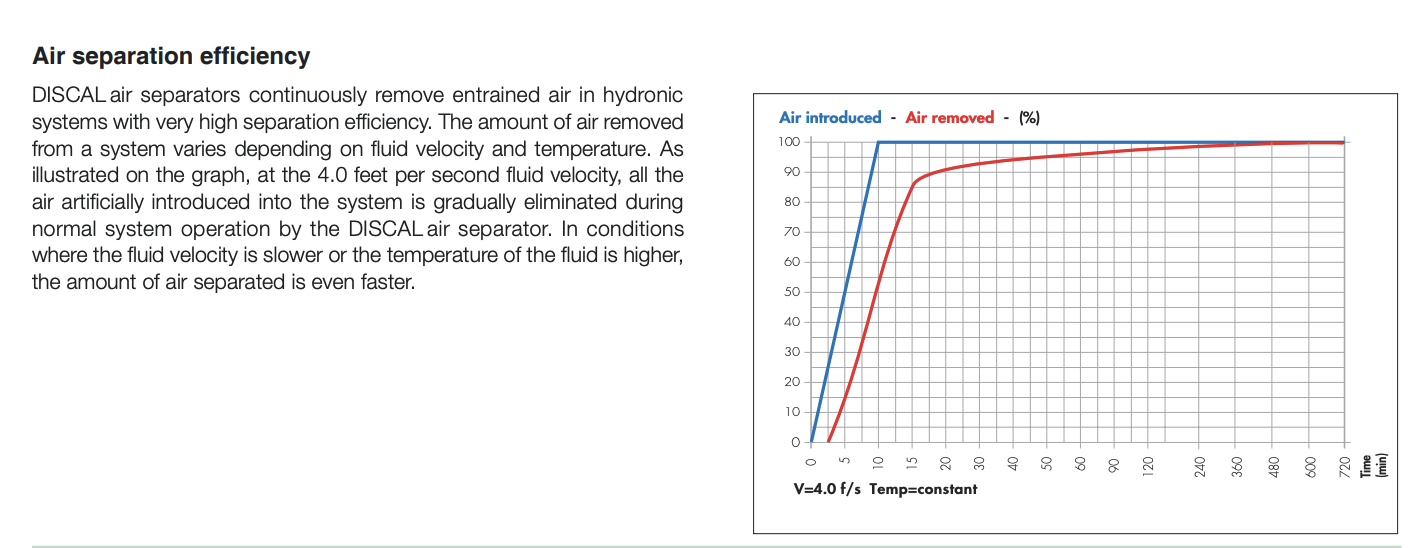
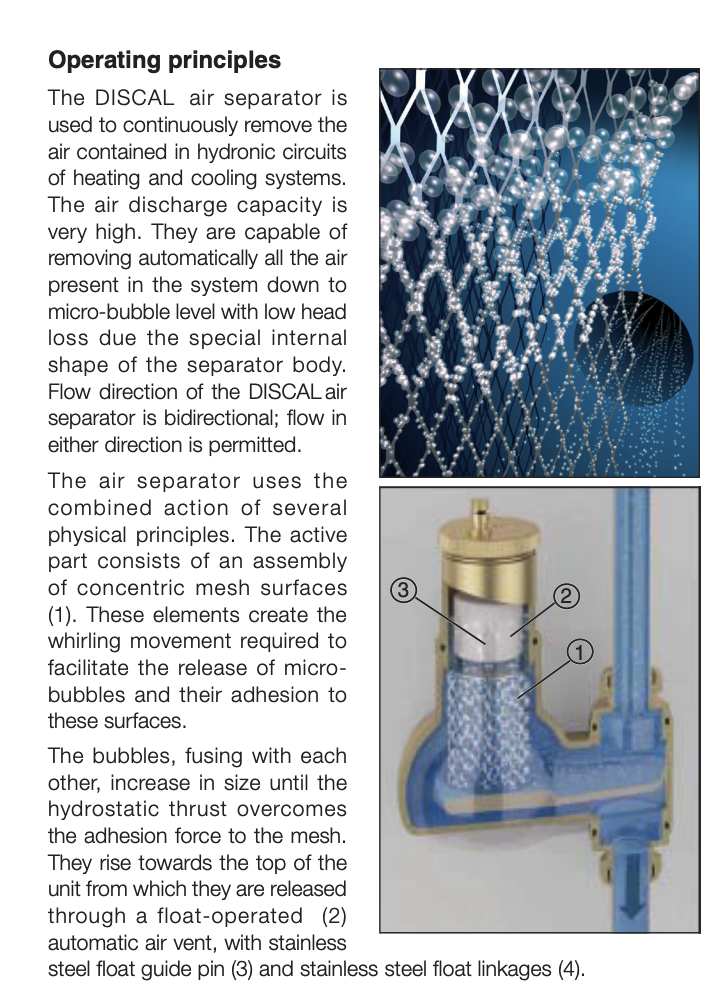
Most manufacturers flow test their air separators at different operating conditions. Results show better efficiency and faster removal with microbubble type seps.
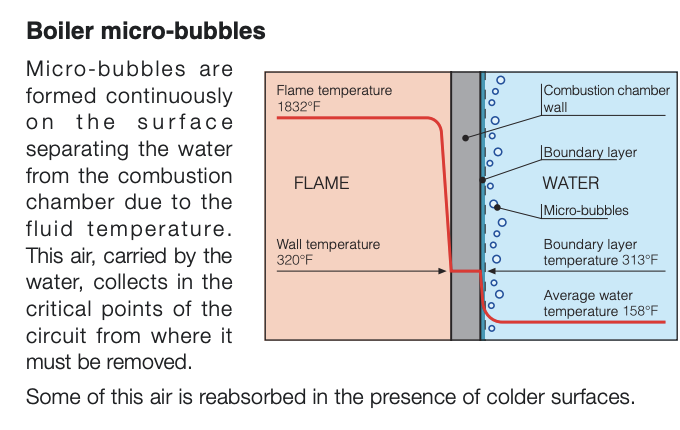
The tiny microbubbles that develop at the boiler wall need to combine it a large bubble before a scoop purger will grab and expel them.
Systems with chronic air problems do well with the microbubble removers. Withinan hour you should have complete air removal.
 Bob "hot rod" Rohr
trainer for Caleffi NA
Living the hydronic dream1 -
I just want to say thank you, honestly you have been an absolute wealth of knowledge here.
0 -
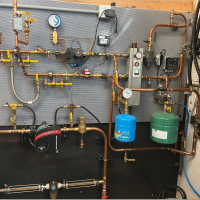
This was quite the experience re-plumbing this. Especially trying to ensure copper was not touching black iron and to a semi color blind person like me trying to figure out which fittings were brass and which were copper that was fun ( turns out there is a texture difference also which made it easier for me to tell ). The whole system is now back together so there is a nice flat horizontal part thats about a foot long before it goes into the spirovent and then it goes into the circulator now. That spirovent spit out a lot of air even after i manually purged all the zones. I guess i will see how this goes this winter and if i end up needing to purge again.
 1
1 -
Tried to add to your post about "oil fired combi" a few minutes ago and all of a sudden it vanished.
You said "Frankly i have wondered if i could get a 50 or 100 gallon tank to tow with the car since for some reason diesel at the pump is less than getting oil delivered and its a nearly identical product ( except heating oil isnt getting hit with road tax like diesel does so in theory it should be cheaper right? )"
I was wondering if this might due for you?
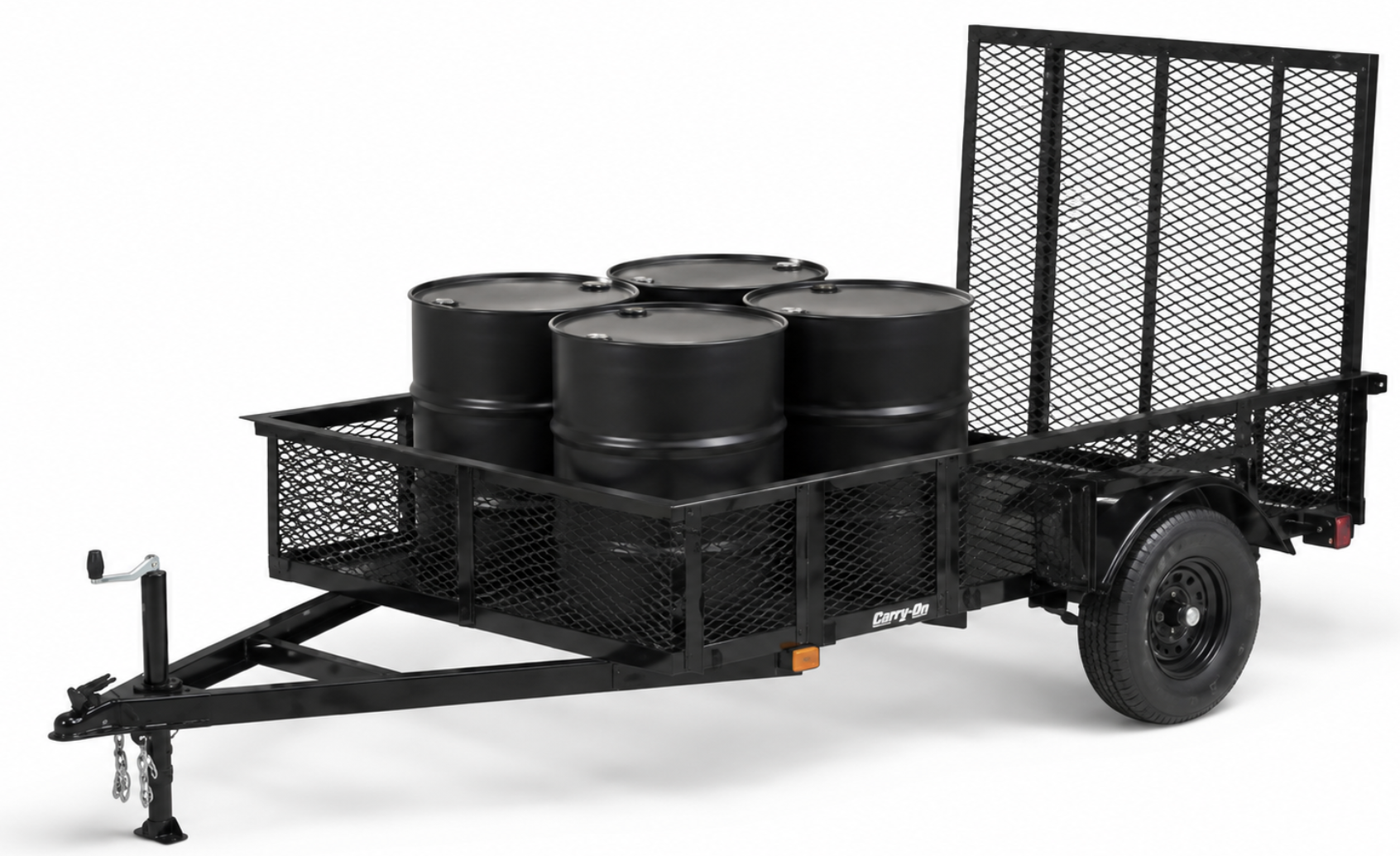
I did something similar with this setup to service and install new 275-gallon tanks so I could remove the oil from the old tank in order to install the new tank. I also had a toolbox on it with an electric-powered fuel pump to suck the oil out of the old tank and into the drums, about 100 feet of hose with an automatic nozzle on the end, and about 12 feet of reinforced suction hose so it would not collapse.
It worked out great for me.
Edward Young Retired
After you make that expensive repair and you still have the same problem, What will you check next?
0 -
Then I thought, if you were going to get fuel from a truck stop. yopu might be able to find a filling station that also sells OFF ROAD DIESEL for farm and construction equipment. That would save you on the road tax.
Then I thought if you were interested in this idea, would you let your friends use that trailer to do the same thing? …or would you just do it for them? …You could make a little extra scratch with this side hustle. Or would you just sell the fuel for the same price as you paid for it? Then who pays for the gas and wear on your tires?
Edward Young Retired
After you make that expensive repair and you still have the same problem, What will you check next?
0 -
Would you condsider purchasing fuel from a dealer that advertised:
FUEL OIL FOR SALE $3.249 PER GALLON
plus deliver and costs. (in fine print)
The the delivery ticket looked like this:
Meter reading: 100.0 gallons. @ $03.249
- NET delivery price sub-total…………………………………..$324.90
- Terminal/loading/credit costs…………………………………$08.80
- Delivery-truck fuel, maintenance, tires…………………..$06.13
- Driver wages, payroll taxes, benefits………………………$23.30
- Truck depreciation/lease/insurance………………….…..$34.17
- Office, dispatch, billing, phones, software……………..$09.99
- Liability/environmental insurance…………………………$29.50
- Bad debt, spills, shortages, miscellaneous…………….$14.25
- General overhead/profit allowance……………………….$33.96
Total for this delivery is ……………………………………… ……$485.00
And the driver asked you for $485.00 for 100 gallons. that is no where near $3.249/gal
Look at your gas or electric bill. This is an example of how they fool you into thinking you are getting lower utility rates that you are actually paying. they tell you the rate is near half ofd the actual rate then add on delivery charges, federal tax, state tax, and a few other charges that add up for every cubic foot of gas or every killowatt of electricity thru the meter.
Oil companies don't have that luxury of telling you a lower price per gallon then charging you a higher price when the driver gets there.
But you can save some $$$ with getting the fuel yourself if you consider your time and energy worth nothing.
Edward Young Retired
After you make that expensive repair and you still have the same problem, What will you check next?
0 -
Not sure it would be legal to haul oil around in barrels. It's usually considered hazardous waste even if it was new oil. Probably have to put placards on the trailer.
Somebody rearends the trailer and you have a spill, can't imagine what that would be like. And would a place that sells diesel even let you pump it into barrels?
I know, just being a jerk.
1 -
No, you are not being a jerk EBERATT-Ed, putting a bulk fuel tank ment to be placed under a pick up truck tool box is a common practice and can be done on a trailer as long as it is strapped down and properly labeled with a hazmat placard.
1 -
plenty of fuel tanks approved for the back of pick up trucks and trailers.
farmers and fishermen use them all the time1




Categories
- All Categories
- 87.9K THE MAIN WALL
- 3.3K A-C, Heat Pumps & Refrigeration
- 60 Biomass
- 430 Carbon Monoxide Awareness
- 133 Chimneys & Flues
- 2.2K Domestic Hot Water
- 6K Gas Heating
- 124 Geothermal
- 170 Indoor-Air Quality
- 3.9K Oil Heating
- 80 Pipe Deterioration
- 1.1K Plumbing
- 6.7K Radiant Heating
- 397 Solar
- 16.1K Strictly Steam
- 3.5K Thermostats and Controls
- 56 Water Quality
- 51 Industry Classes
- 51 Job Opportunities
- 18 Recall Announcements