Low return water temp protection methods
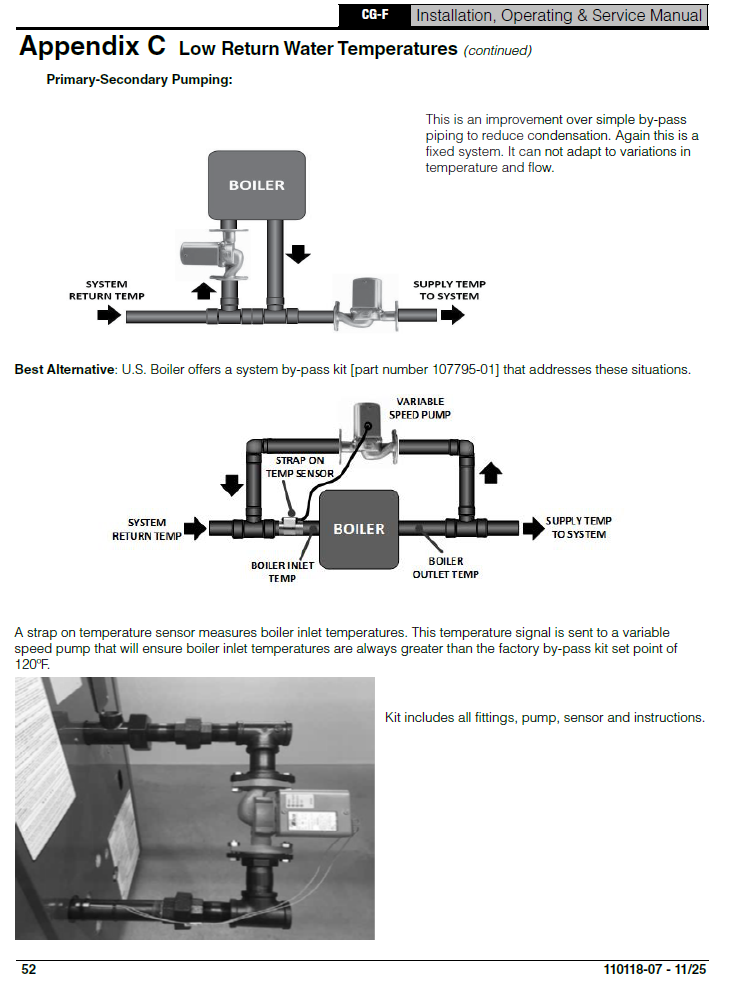
I dont really know how to properly ask this question - but what other equivalent methods are there to protect a cast iron boiler from low return temps? I’m on my 3rd contractor, getting a 2nd quote for a boiler replacement and it seems like none of them have ever heard of needing/wanting this before. And US Boiler makes it wonderfully easy for me to ask them to add their bypass kit to the quote, except that the kit is apparently out of stock or hard to get?
I’ve seen a few photos on here where you use thermostatic mixing valves instead of a speed controlled pump. That seems okay to me to.
To put it more succinctly, what the heck do I ask these guys to use if the kit I want is not available?
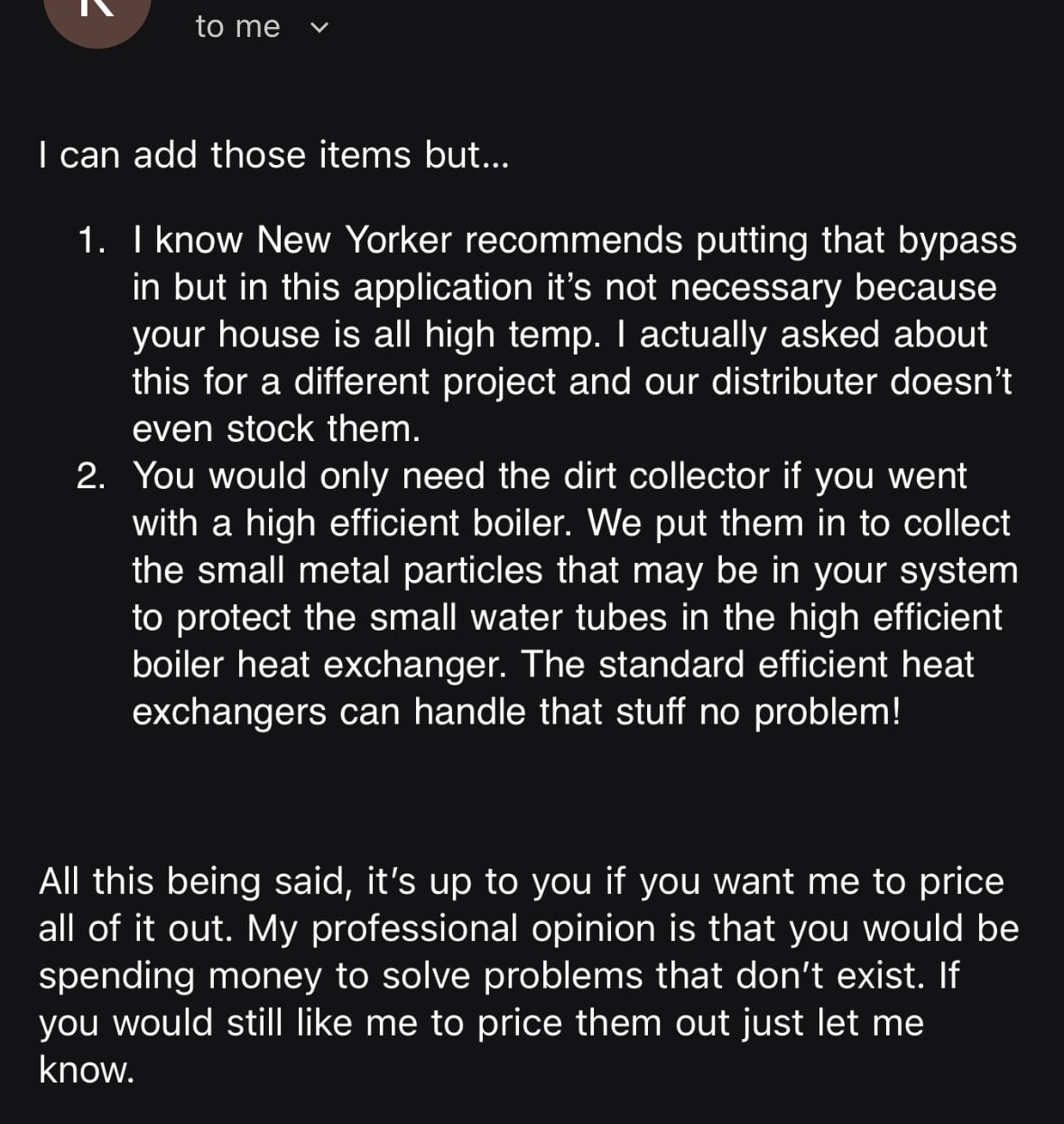
And just for laughs here was his response to me asking for the bypass kit and a magnetic separator:
Thanks

Comments
-
Where are you located? You need someone who understands hydronics, and can read a manual. Boiler protection is fairly easy, and can be done a number of ways.
1 -
The second picture is the better method. If the kit is unavailable, you can buy your own circ and sensor the rest is just standard pipe and fittings.
Most HW jobs with baseboard come up to temp quickly and don't require protection but there are always exceptions. If you have and older system with CI radiators or a gravity conversion job that holds a lot of water, then you may need protection
1 -
I have a question for @Erin3. What type of radiators are you connecting the replacement boiler to?
If you have a 1940s-era or older home with a large water-content cast-iron radiator system, you need to think about boiler protection. If you have a Monoflo single-pipe system with the wall convectors that were popular in the 1950s, you may not need boiler protection. If your home is equipped with fin-tube baseboard radiators, you definitely do not need boiler protection.
I can explain why if you need me to, but it is easier to tell us what type of radiators you have before we get into a lengthy discussion on the topic.
This is an unusually short answer from me… go figure.
Edward Young Retired
After you make that expensive repair and you still have the same problem, What will you check next?
 2
2 -
the type and number of heat emitters compared to the boiler output?
Light weight low mass copper fintube or fan coils should not need boiler return protection , for example
Large iron radiators , larger steel piping may however
Bob "hot rod" Rohr
trainer for Caleffi NA
Living the hydronic dream 3
3 -
House was built in 1910, we have large (3” or 4” OD) iron pipes in the basement that branch off to smaller iron pipes to feed the radiators. There’s also an old steel expansion tank leftover from who knows when in the ceiling between the floor joists. Based on what I’ve read here, I believe it is an old gravity conversion.
We currently have a Triangle Tube Prestige Excellence 110 combi that has had quite a few issues and has left us without heat and hot water numerous times, which is why I’m going with a separate direct power vented water heater and cast iron boiler.It’s about a 1800 sq ft house and my own heat loss study came out around 105k - 115k, depending on infiltration. My count of the radiators heat output was between 72k - 78k, depending on which EDR/s I used for a few of the more unique radiators we have.
0 -
25 btu/ sq ft is on the high side of what a heat load might be. I would guess the heatload be more like 45- 50,000 btu:hr
Maybe rerun your load calc
A system like yours does scream out for a condensing boiler. That low return drives efficiency and the array of control settings allows you to dial in a near constant circulation operation
A cast boiler should have protection and efficiency will be a bit lower
if you do go cast, size it closely to the load to lessen short cycling in low load conditionsI would not recommend that variable speed bypass method, it does not, can not offer 100% protection
A 3 way valve can or build your own bypass with a vs pump
Bob "hot rod" Rohr
trainer for Caleffi NA
Living the hydronic dream0 -
Is this to protect a cast iron hydronic boiler from cracking or something due to thermal shock?
Or is it to prevent condensation issues in the flue?
Or other?
NJ Steam Homeowner.
See my sight glass boiler videos: https://bit.ly/3sZW1el0 -
I've got pictures of the boiler and radiators, and a table for my heat loss calculations in my old post here:
I agree, my heat loss number seems high. Though, I do know after living through 4 (5?) winters here, the current system does not keep up when we have 2-3 days in a row of -10F weather. On those days we've had to supplement with electric heaters.
I've also calculated heat loss using the natural gas usage method, which came out at 79,300 Btuh on the coldest month since we've lived here. I have a hunch this number would be a bit higher if the radiators were able to put out more heat.
I believe the issue is the size of our radiation - not the size of the boiler (which is currently a 110 MBH @ 94% efficiency). I've got multiple planned improvements that should help (such as insulating the ceiling of the front porch (below the 2nd floor bedrooms), adding storm windows to handful that don't have them now, getting rid of the pot lights that are basically open to the attic, and maybe actually insulating the attic!). I'd also like to add a working fireplace to the mix, which can also help add some heat on those cold days. All that said, the size of the boiler is not my biggest concern right now.
I'm planning for a 105,000 btu cast iron boiler (88 MBH DOE, 77 MBH AHRI) that would still leave a little capacity for increased radiation if I find I need it. But like you're saying, it will be sized pretty close to my actual load.
0 -
When you say the "variable speed bypass method" are you referring to exactly how the US Boiler bypass kit works? Why can't it offer 100% protection? I'm not questioning your knowledge, I'm just genuinely trying to understand this for myself.
If I think this through on my own a bit, your answer is probably going to be that the pump can only ever take some capped % of the total GPM leaving the boiler. But the pump can never redirect 100% of the total GPM leaving the boiler back to the return. Whereas a 3-way valve (mixing valve?) will not allow any flow to leave until it hits the setpoint temp… NOW WE'RE GETTING SOMEWHERE.
So if I'm picking up what you're putting down - the preferred method here is to use a single 3-way valve? Is there a Heating Help concensus on that?
If I were to have this contractor just install it without a bypass piped in, would you guys say it's within the capability of a homeowner (me) to install a 3-way valve after the fact? My wife is really getting fed up with me "overthinking" this replacement, so I (she) was really hoping this company would be the last one… 😁😅
Just to prevent condensation issues in the flue (as far as I know).
 1
1 -
Maybe it's possible to do a few combustion analyses during startup without doing all this work to see what the stack temp actually gets to.
I love that your contractor suggested that this is a solution in search of a problem…he could have just installed all the stuff you asked for and sent you the invoice
NJ Steam Homeowner.
See my sight glass boiler videos: https://bit.ly/3sZW1el1 -
Just a homeowner with a similar system, so let me share my understanding (I think the experts here might have different views!).
If you get a cast iron boiler matched to your actual design day heating load, and if your existing radiators have the capacity to emit that much heat at reasonably high temperatures (160F? higher?) then you'll probably be fine without a boiler protection strategy. Boiler protection strategies, like the 3-way valve suggested above, come in handy when you have more radiation capacity than boiler output, because the way your system will equilibrate is that your radiators will deliver all that heat, but they'll do it at low temperatures. Note, this doesn't mean your house will be cold, it just means that you get the heat you need with radiators that are pleasantly warm instead of scalding hot.
If you want to play with some numbers, I think the formula given in one of the idronics issues for the BTU output of a cast iron radiator is something like btus/hr = 0.3748 * EDR * (avg water temp in radiators - inside air temp)^1.3, where EDR is a measure of how much cast iron radiator capacity you have. If we assume your existing radiator capacity estimate is based on relatively hot water (170F awt) and an inside temp of 70F, I think that might mean your 78,000 btu/hr radiator capacity estimate is about 520 sq ft EDR. If you get a boiler that delivers 88,000 btu/hr, this formula says that in equilibrium, your average water temperature will be (88000 / (0.3748 * 520))^(1/1.3) + 70 ~= 180F. That should be totally fine, and I expect that the experts here would agree with your installer that a protection system is unnecessary. If it turns out that you've got a lot more radiator capacity (lets just double it for example), you would be getting all that heat with 135F water, and things are perhaps dicier, especially since it does take time for the system to warm up, during which you'll definitely see low return water temperatures for a while…
0 -
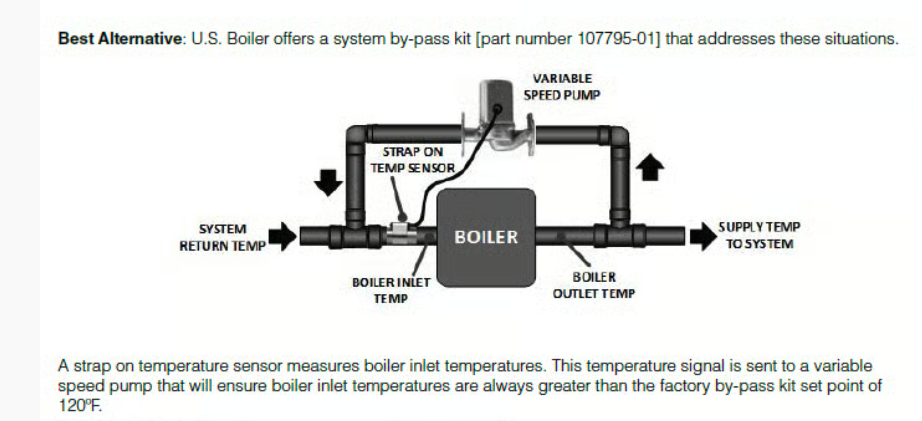
I'm not sure how this US Boiler solution works without a system pump?? They show system pumps on the other methods? A bit misleading for the inexperienced installer.
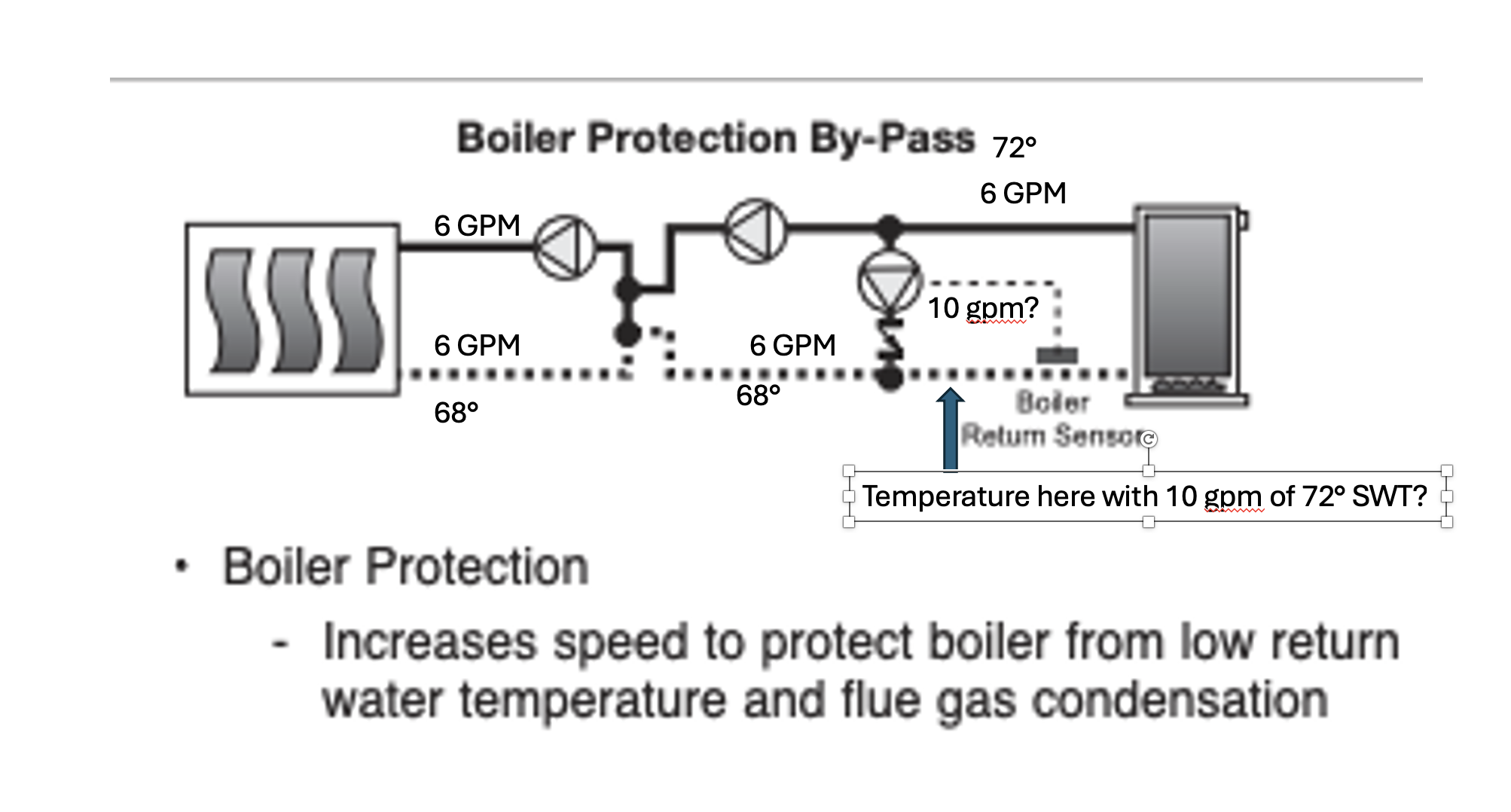
If you put some typical numbers to a system you will see the issue.
Assume a cold start boiler, not a tankless coil boiler?
On call for heat water returns at room temperature, or cooler depending on piping location.
So assume 68° is coming back from a 180 gallon high mass radiators, large steel pipe.
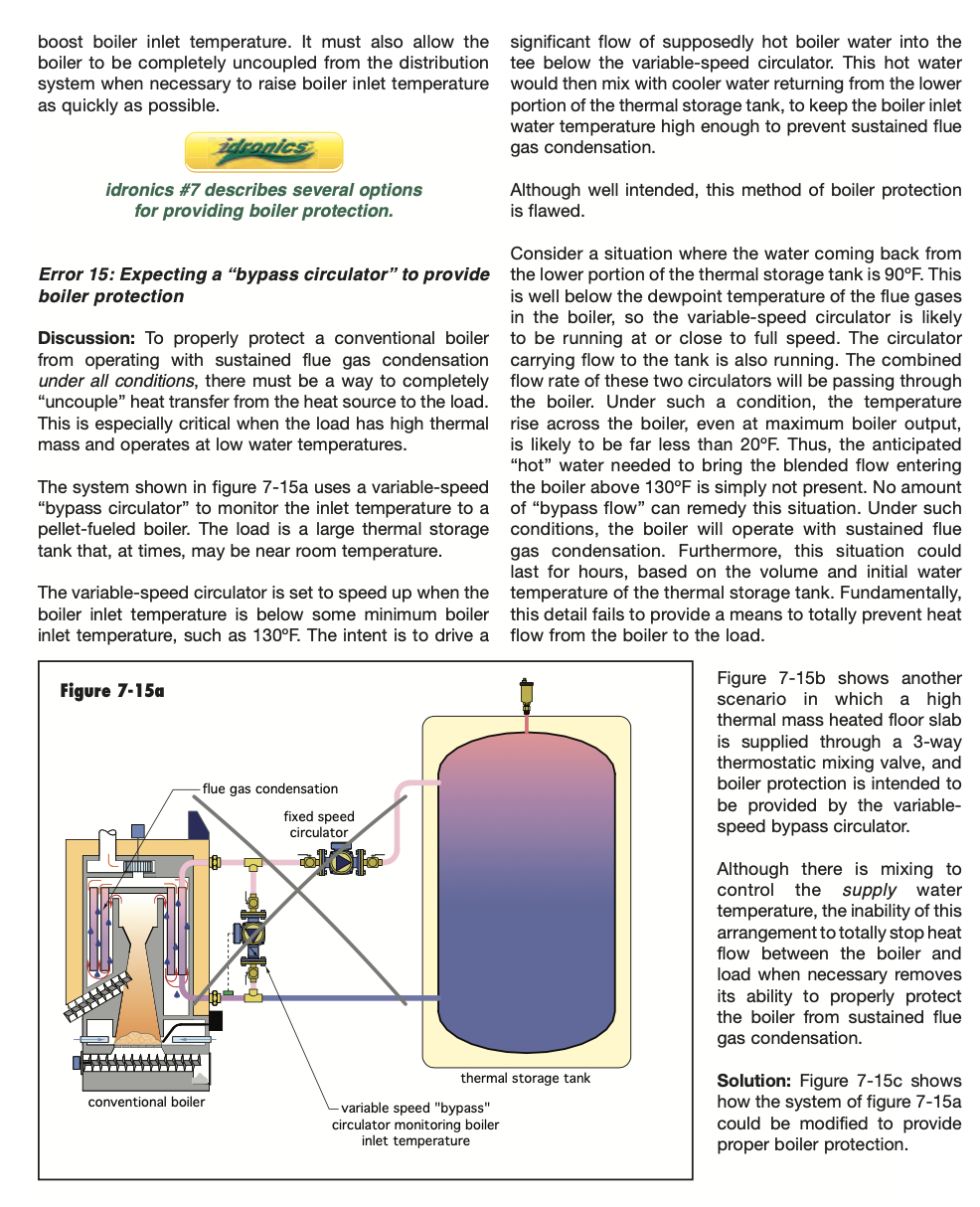
the boiler is sized close to the load and radiators connected expect at a design condition the boiler can "lift" the temperature a few degrees, call it 72°.
How does a variable speed pump increase the temperature to get the boiler to 130?
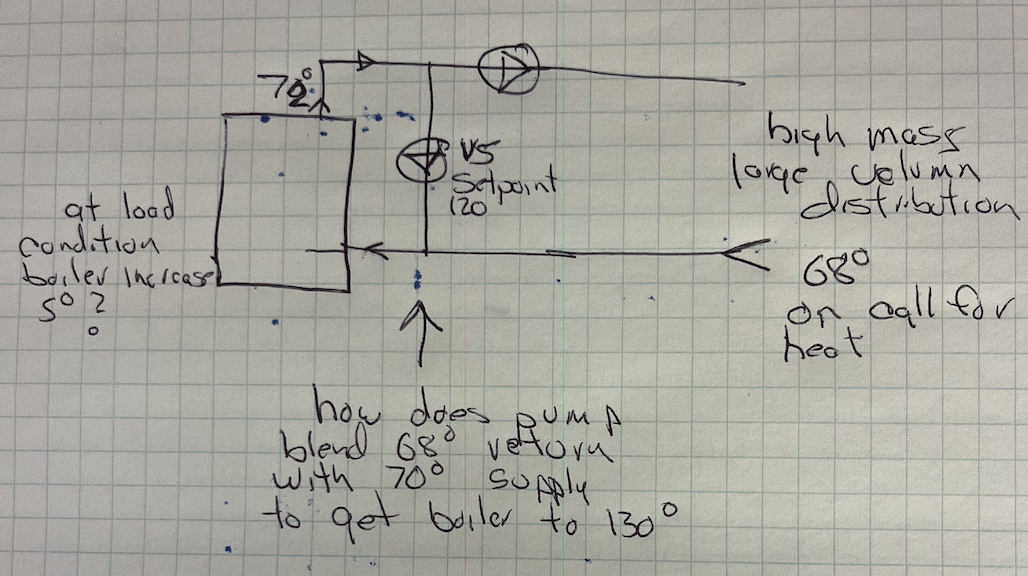
The only possibility would be to turn off the system pump to allow the boiler to catch up to120- 130. If so why have a bypass pump? Just bang bang the system pump on/off based on return temperature, saves an expensive pump.
A proper return method has a means to disconnect the load from the boiler, based on a temperature reading.
This is why a bypass valve or pump is only a guess and works at the condition you set it up at. When is that? Coldest day, full load on the system? Boiler hot or just starting? What happens on a low load, medium load condition? Too much bypass?
We talk about a "thermal clutch" a means to allow the flows to modulate at the exact rate the boiler can accomodate.
This is what a 3 way mix valve does, or a properly piped VS pump.
With a low head system, a single circ can work.
With multiple zone pumped systems, or high pressure drop distribution, closely spaced tees with a mix valve. Zone an boiler pump sized accordingly as you have hydraulic separation in this option.
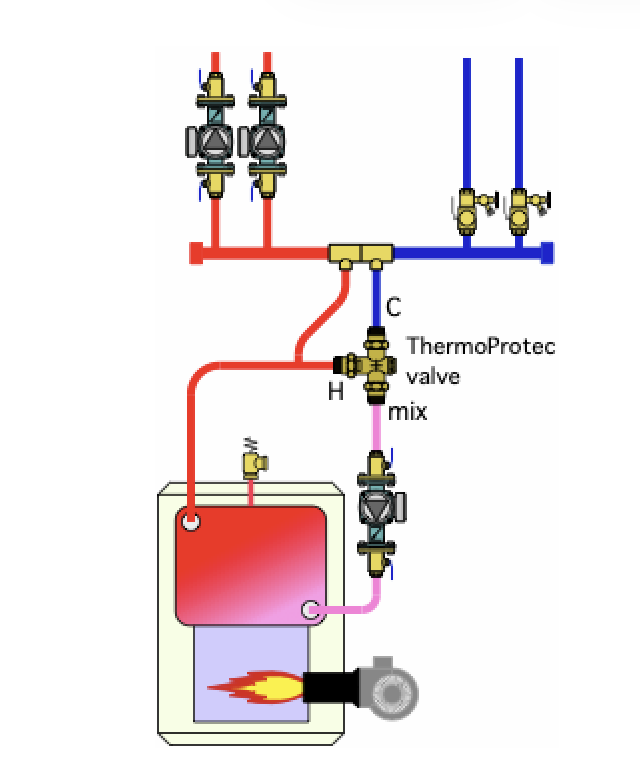
The small piping change in this next drawing allows the load to disconnect from the boiler. The VS pump, as a P/S close tee piping, injects energy into the system based on a return sensing, a motorized thermal clutch solution. With this solution all 3 pumps could, should be sized to their exact loads. The boiler pump as per the manufacturers spec choices. The injection pump, based on the injection formula, ususlly a very small circ.
The distribution pump may be a high flow low head version on a gravity conversion, could be a medium or high head on a radiant tube system.Thrin
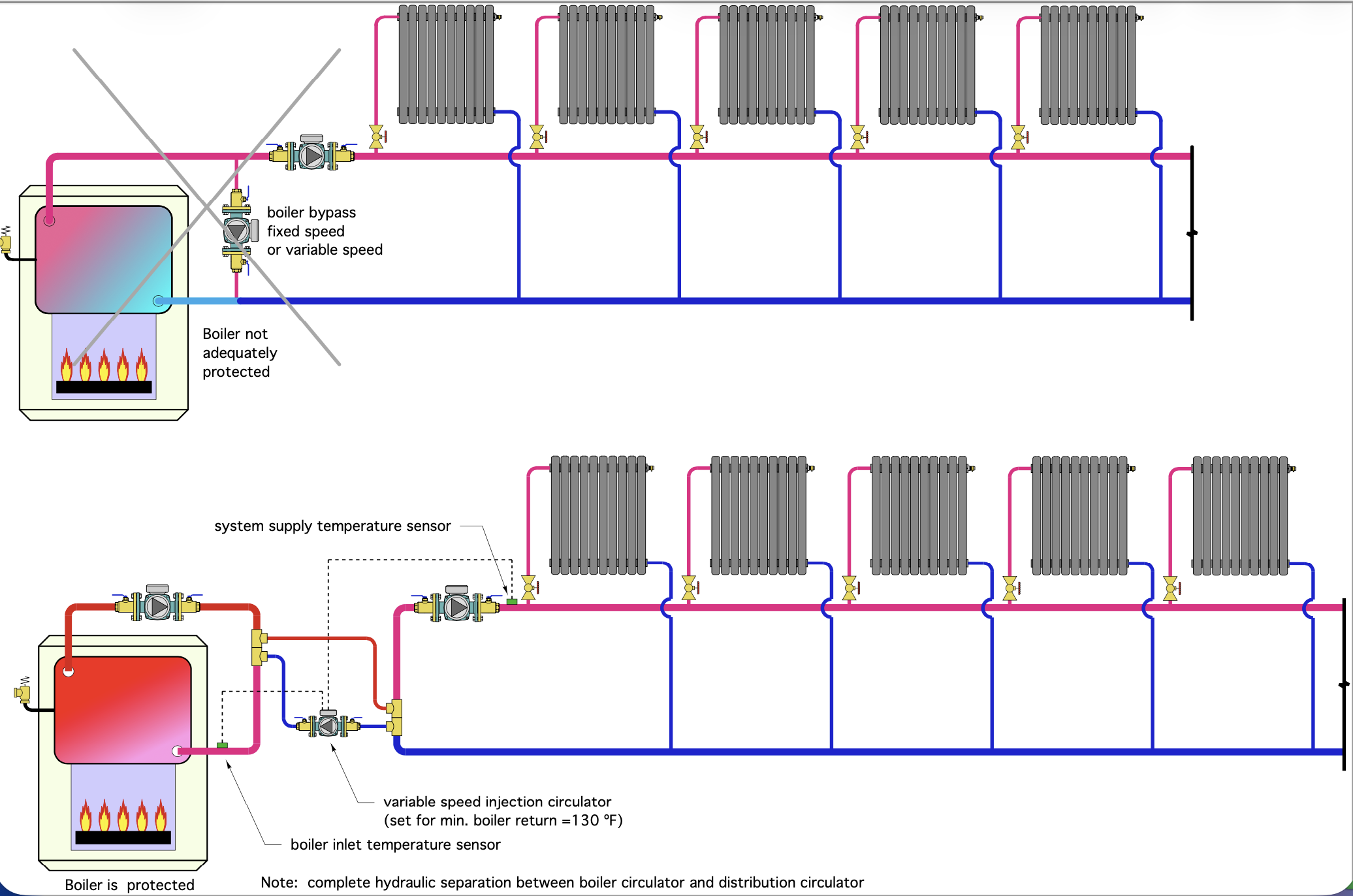
Explanation below
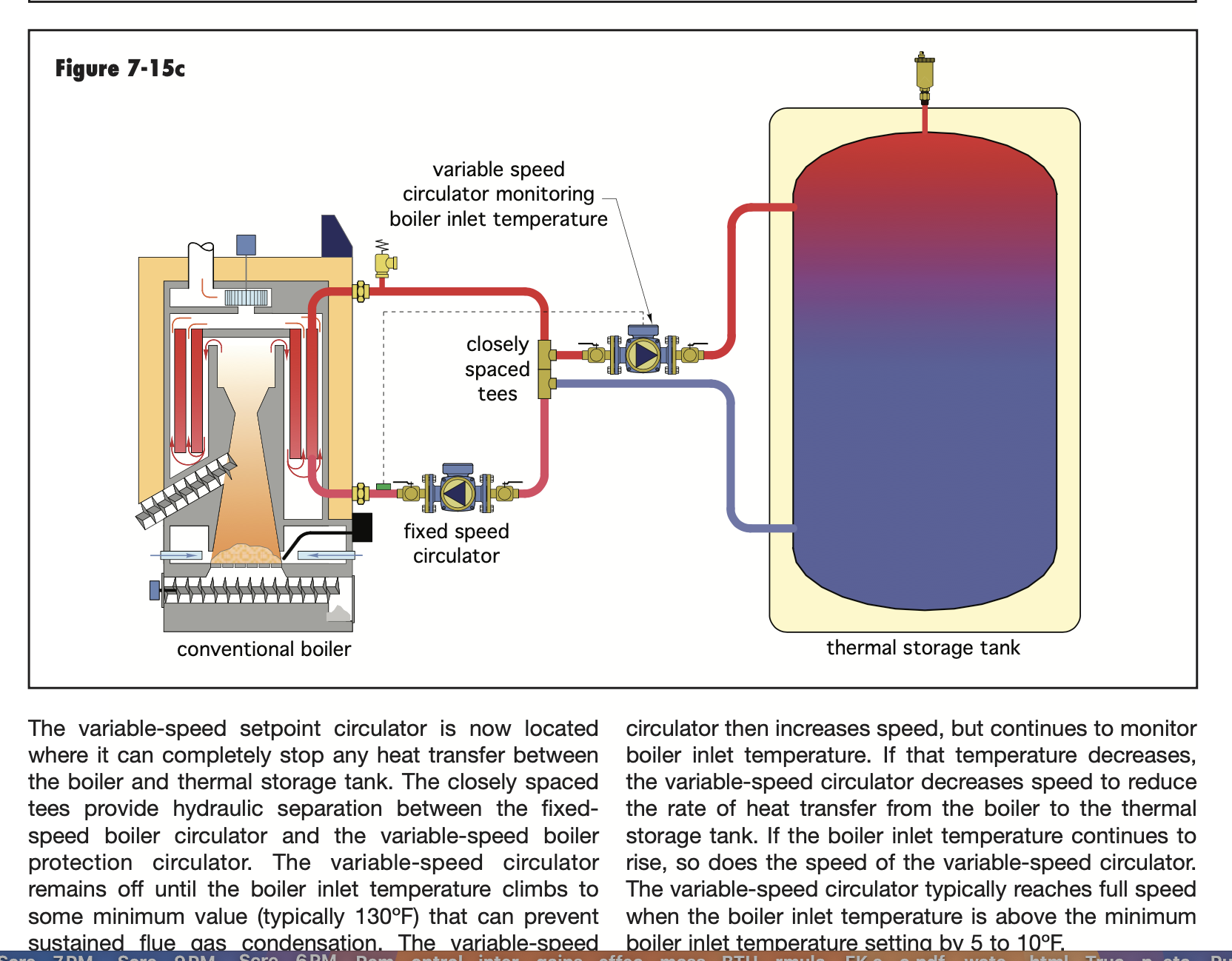
This is a lot like the Pumping Away concept and discussions. Plenty of installers claim pumping away is a waste of time, not needed, ,pumping into boilers and expansion tanks has worked fine for generations, why else would boiler manufacturers put pumps on boiler returns?
Bob "hot rod" Rohr
trainer for Caleffi NA
Living the hydronic dream2 -
I can't thank you enough for putting that all together - that was extremely helpful for me.
So, if I wanted to have this company use the US Boiler bypass kit or some other form of a variable speed circulator, it would need to be done as shown in figure 7-15C. Which provides separation from the load until the boiler is up to temp and can react to changing temps as the load side starts to warm up.
Now, in your expert opinion, is using a variable speed pump the best way to do it? I'm thinking in terms of upfront equipment cost AND long term maintenance costs? Does a 3-way mixing valve accomplish the same thing with less moving parts? And is one easier to replace than the other when it inevitably fails?
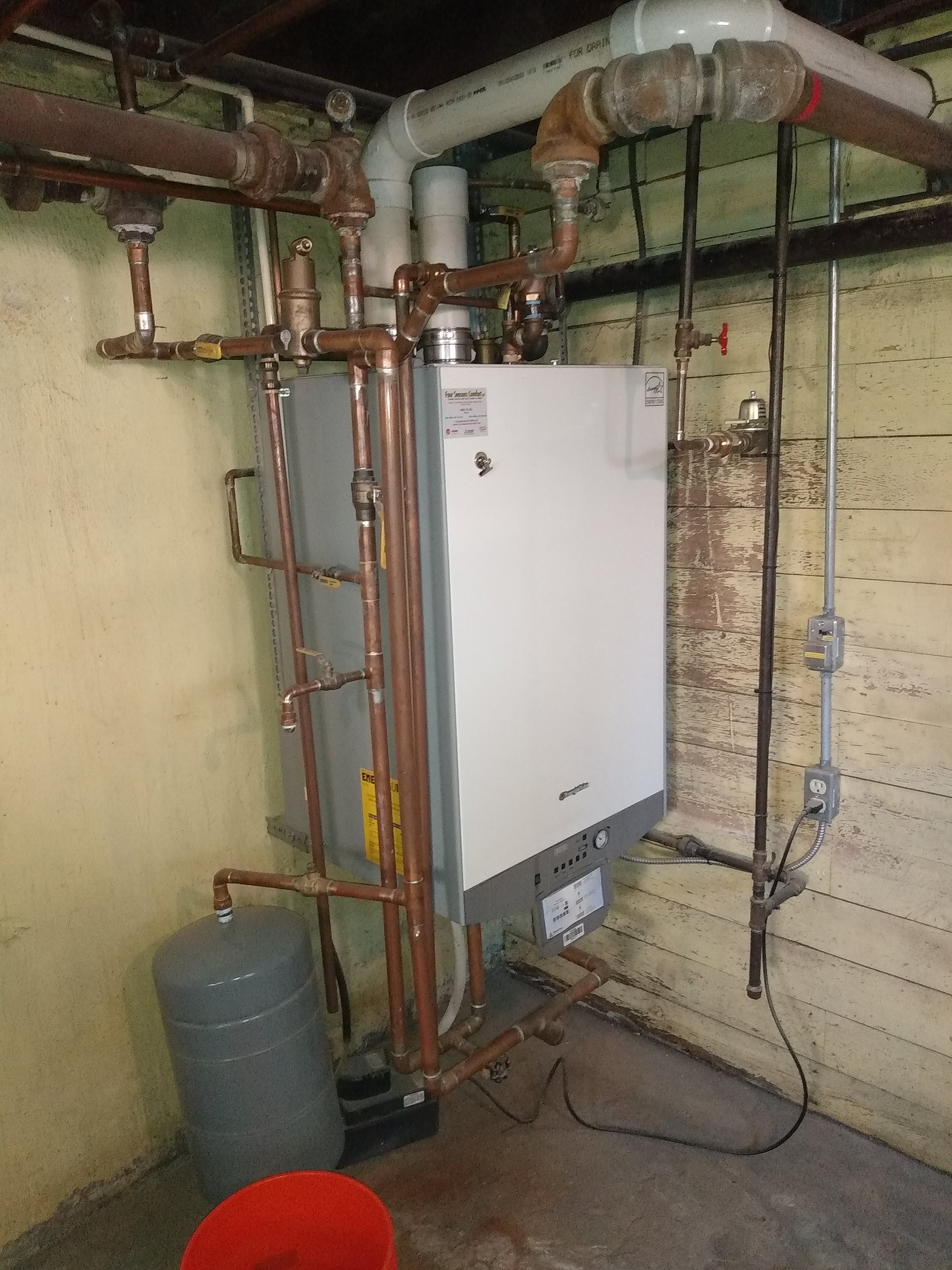
Here's my existing boiler:
 0
0 -
prevent condensation in the boiler block. with the mass of a gravity conversion system it is likely that the boiler may not be able to put enough heat in to the system to get the outlet to 140 until it has run for quite a while and other than on the coldest of days it is likely the thermostat will satisfy before that happens. it would also overshoot if the boiler was large enough to heat all that mass quickly.
1 -
consider replacing the oversized lines. That will help a lot.
0 -
Pardon my ignorance, but isn't that a condensing boiler?
NJ Steam Homeowner.
See my sight glass boiler videos: https://bit.ly/3sZW1el1 -
old one is but it is being replaced with a conventional ci boiler because of reliability issues with that particular combi.
2 -
with PVC venting it better be!
1 -
It's hard to beat the simplicity of a thermostatic return valve. Thermostatic bypass valves have been used in various boilers for many years. Most pool boilers have them built inside. The weil GV gold CI boiler had one built in.
With the large pipe, low head loss system you have a single pump would probably do the job. Check the boilers recommendation for pump.
The color schematic below happens to show the buffer as the load, same concept. Step 2, allowing a portion of the return to blend in may happen in minutes, it may take 1/2 hour, it is all based on the load and boilers delivered output. if the boiler is oversized to the attached radiation, the most common match, then the valve opens faster.
The largest market for these valves is the wood boiler industry. I spotted a handful of manufacturers with these valves at the Mostra show in Italy a few weeks back. So they talk more about solid fuel problems, like creasote formation same physics at work with fossil fueled boilers.
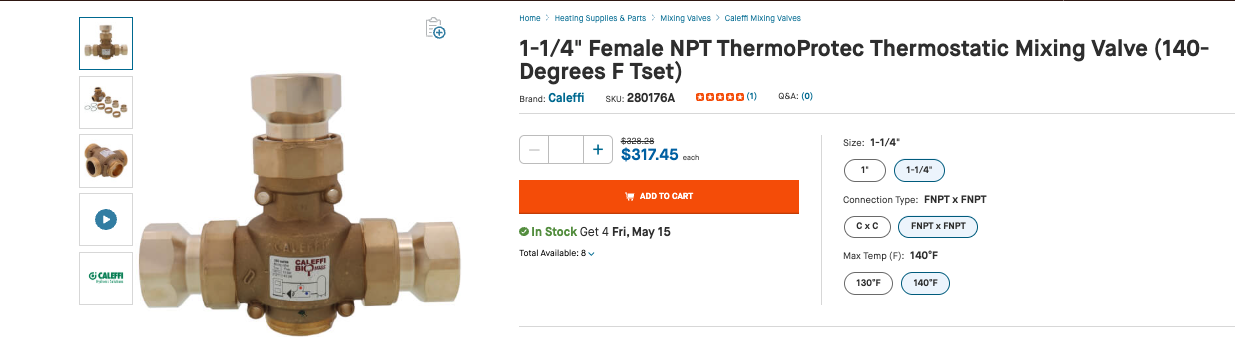
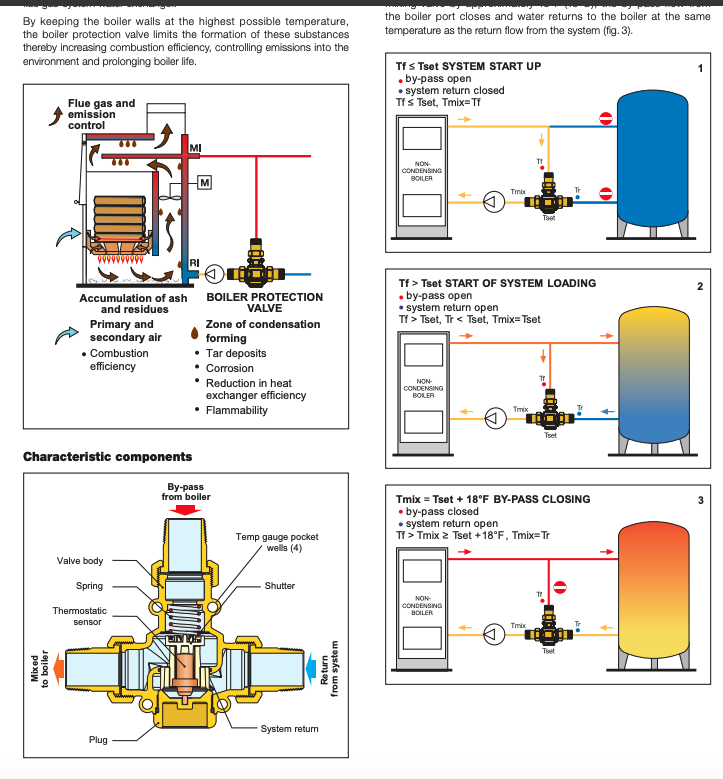
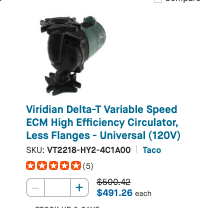
A pump and controller plus flange set. A bit more $$.
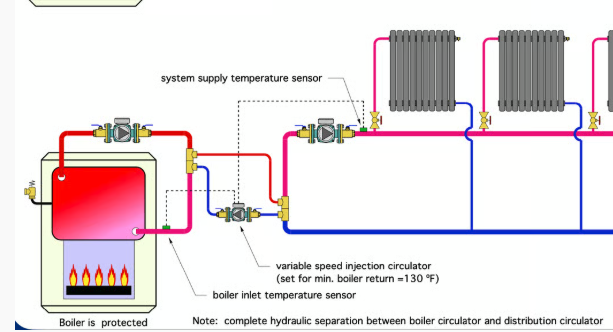
I think the VS pump like this color drawing makes sense. This piping concept has been used for years with CI boilers connected to low temperature radiant as it both mixes and protects the boiler, basically called "injection mixing" It's the concept and product that put tekmar on the map
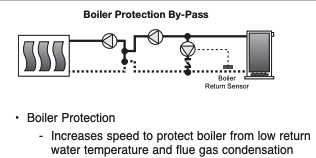
The Taco schematic below this schematic, see the difference??
It's all about the pump placement. Again how does the pump "speed up" to overcome the large thermal load? It's not adding any heat energy. Only if the distribution pump drops off could that happen, the thermal clutch would be the boiler pump. may as well just use a $50 aquastat to hold the pump off.
The ONLY reason to use any return protection method is the load /distribution is much larger that the boiler can keep up with, suppressing it's operating temperature condition. May as well pipe and control it with a appropriate fix as the goal, not a "maybe" That was the whole point of injection mixing!
 Bob "hot rod" Rohr
trainer for Caleffi NA
Living the hydronic dream1 -
someone seemed to have a lot of trouble getting flow through the system with a mixing valve. is that a function of the valve being too big for the flow involved or was the needed system water temp so low that they needed some sort of a primary secondary scheme or something like that?
0 -
These 3 port mix valves are fairly simplistic, never are all 3 ports closed. Think of it as a thermostatic tee. As one closes the opposite opens, so flow is always passing through in some direction.
Remember the Holohan parable, whatever goes into a tee must come out of a tee
You need to know the activation temperature and the differential designed into the changeable cartridge.
Or use a high Cv basic adjustable 3 way thermostat valve
Boiler valves are large port and don't need to have the 2-5 degree accuracy of a listed thermostatics mixer.
All valves, especially control valves get sized by their Cv number
Use a formula , spread sheet or online calculator to determine pressure drop through the valve if you exceed the Cv number
Bob "hot rod" Rohr
trainer for Caleffi NA
Living the hydronic dream0 -
@mattmia2 that would be me. you can read my story in these posts:
the tl;dr is that if you have a system which has big pipes, it probably works better with fairly high flow rates, and this will be challenging if you use a 3-way valve in a direct piping configuration instead of setting up primary/secondary…
I believe other HH users have had success with a 3-way valve and direct piping though. maybe @EricPeterson?
0 -
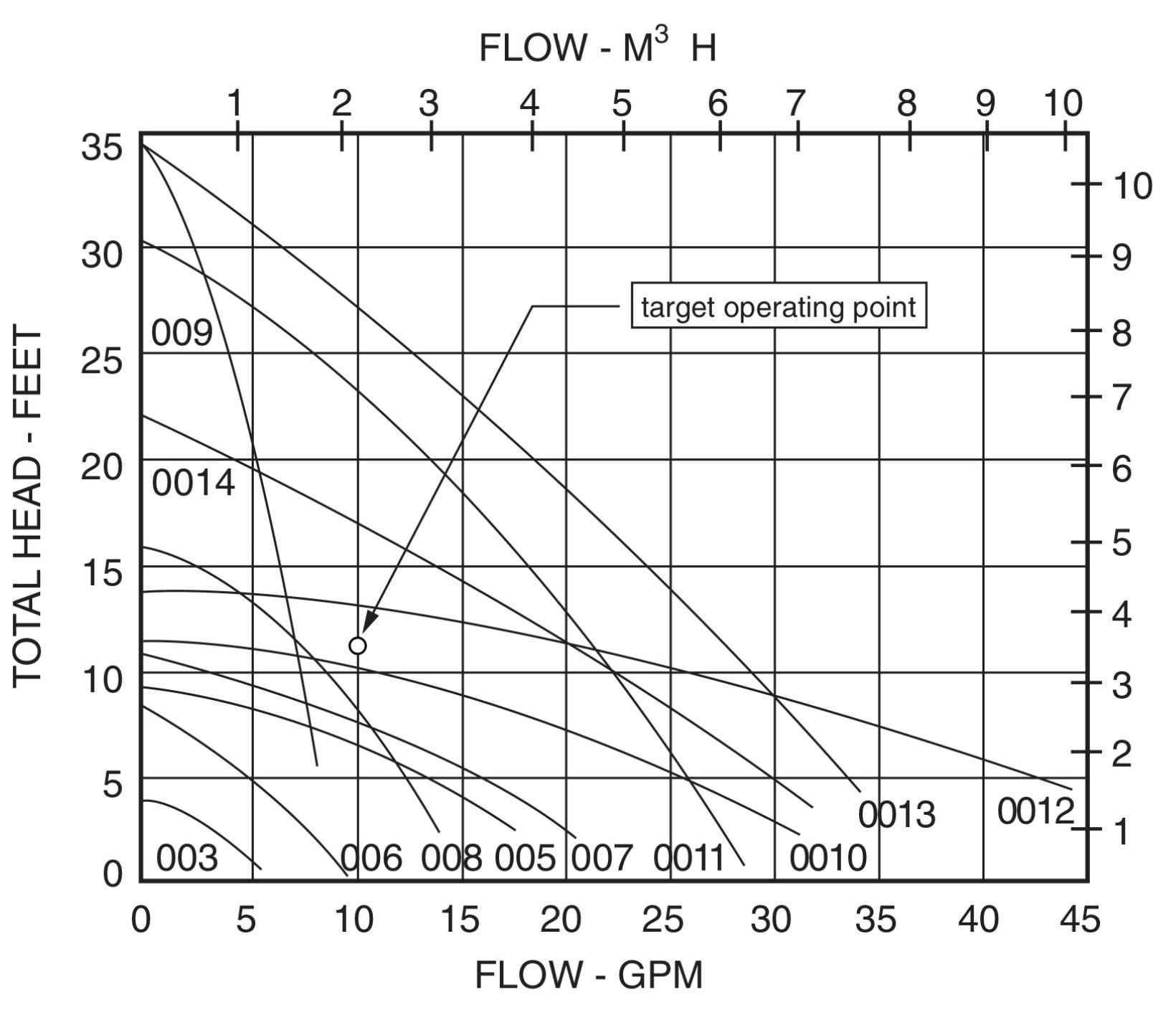
The quoted boiler is a New Yorker CG40FN which I believe comes with a Taco 007 circulator.
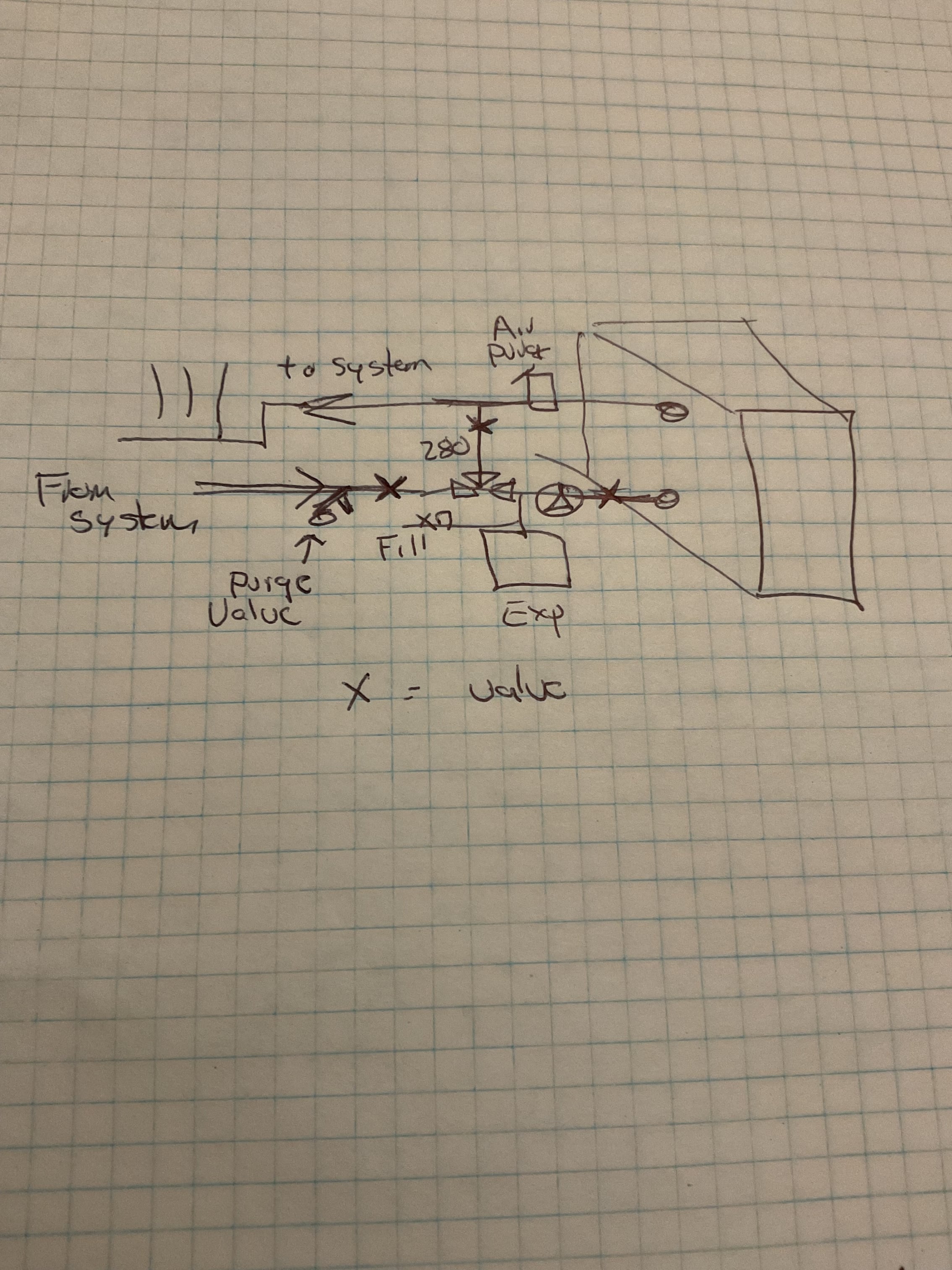
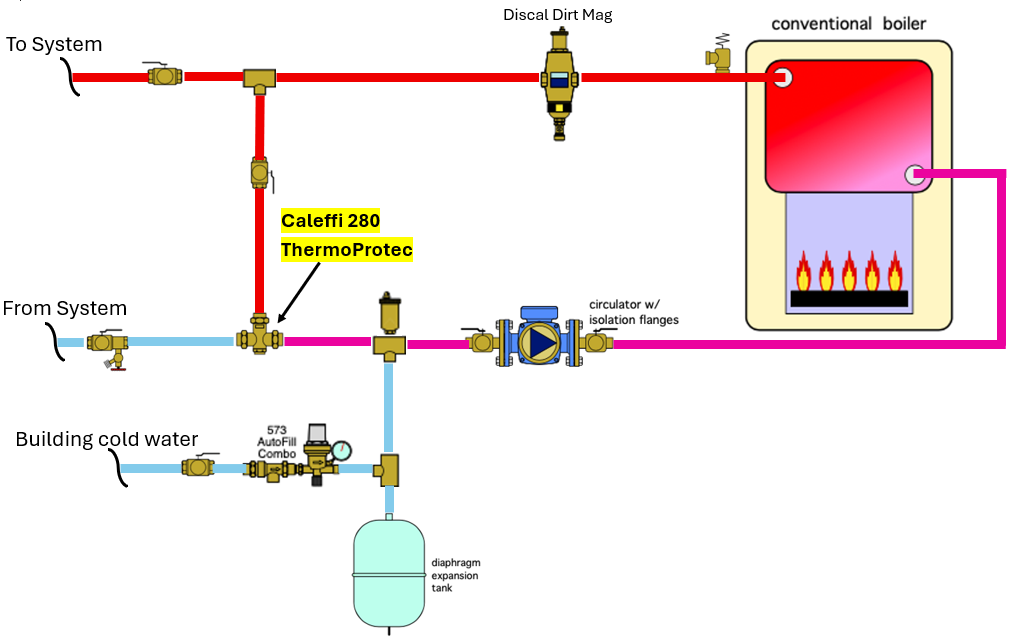
Where and how would you connect the 280 series mixing valve in the diagram below? It’s a single zone system, so the circulator will (hopefully) be to the left of the expansion tank, pumping away.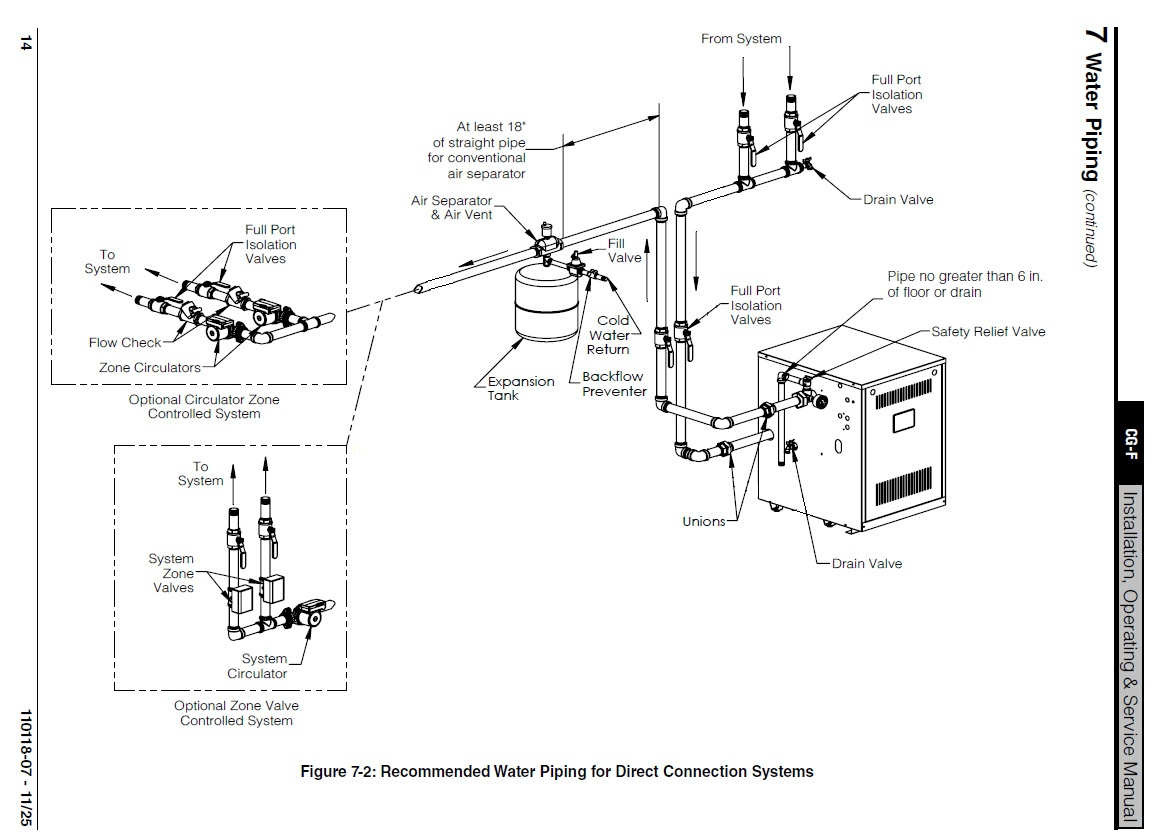
I’m just looking for a simple way to communicate what I want, and make sure that it doesn’t get installed on the water heater instead!
0 -
the 007 may not be the right circulator for that application. the gravity system will be low head but you may need more flow than the 007 provides(i don't know but someone needs to do the math or you will have a bad time). the 007 is probably fine for that boiler in to baseboard in a series loop or zoned but it might not have the volume for a high volume system at least as a direct piped system vs primary secondary with 2 circulators.
0 -
the pump sizes by the the gpm and the head, flow resistance of the circuit
The gpm tells the amount of heating btu you can move. A a common 20 delta, temperature drop around the circuit the math is simple.
To move 120,000 you need 12 gpm
The large piping will not present much flow resistance, nor will a three way valve
Estimate 4’ of head, so an 007 would move 12 gpm, 120,000 btu/ hr
choice for high flow low head applications, if you need more than 12 gpm or so.
The amount of water, the volume does not effect the pump selection.
if you place 3 shut off ball valves like this, you can isolate the pump and 280 valve for easy service. A purge valve before the bottom left shut off
Expansion tank and fill valve before the pump.The pump pulling away from the mix valve, pumping into the boiler
Air purger at boiler supply connection.
 Bob "hot rod" Rohr
trainer for Caleffi NA
Living the hydronic dream0 -
is a delta t of 20 f a reasonable assumption i this system or would that end up all near the outlet of the boiler and you need a much higher flow at a much lower delta t to make the system balance?
0 -
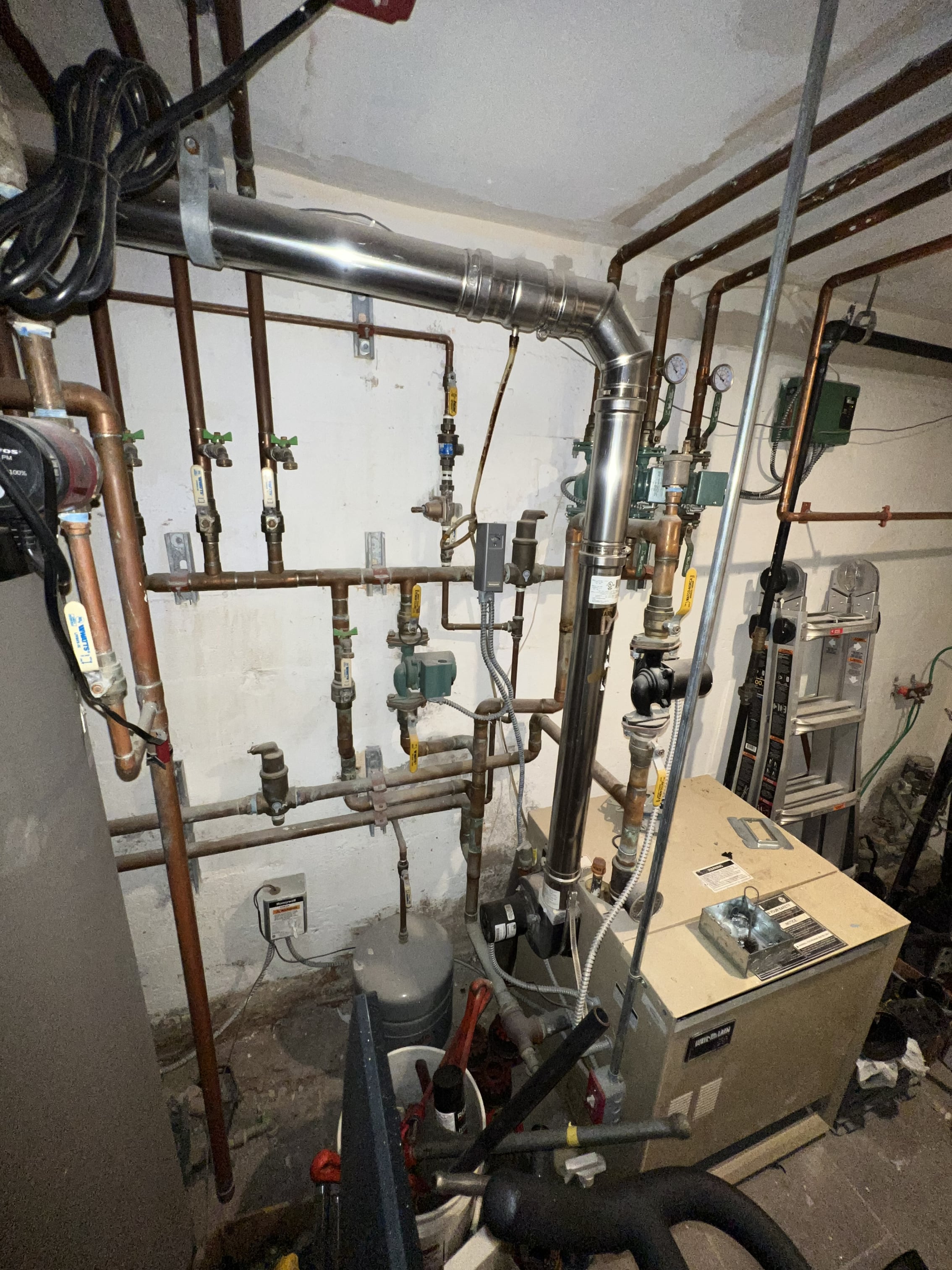
Here is another way to do it, this is my house, 100% radiant throughout.
First circulator, off the top on the feed is the primary loop. Keeps constant high temp feeding the boiler to prevent low temp return.
Second circulator operates off the a High Limit Aquastat preventing high temps from going through the system keeping it at 120.
So you low temp going through the radiant while maintaining a higher temp returning to the boiler
Don’t mind the mess it’s an older picture lol
0 -
At the end of the day you need to move the boiler btus to the room through the radiators. Whether you use slow flow, wide delta or faster flow tighter delta
Some opinions say slower is better, no harm in installing a multi speed circ and try different flow rates.
The hydronic formula as well as output charts show higher flow, tighter delta move more btus.
I have flow tested 4 different cast radiators in my shop from 1-8 gpm, the higher flows always speed up the overall radiator temperature. Regardless of the piping, bottom to bottom, bottom to top.
500x flow x delta t
If the radiators are piped in series running a wide delta, 30 or more would cause the output on the last in the string to drop quite a bit, adding a larger radiator would balance this.
Same as fin tube in series, the end of the loop may need longer sections as it sees lower SWT.
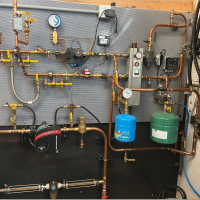
piped in parallel like this, a valve at each radiator could provide the fine tuning for balance.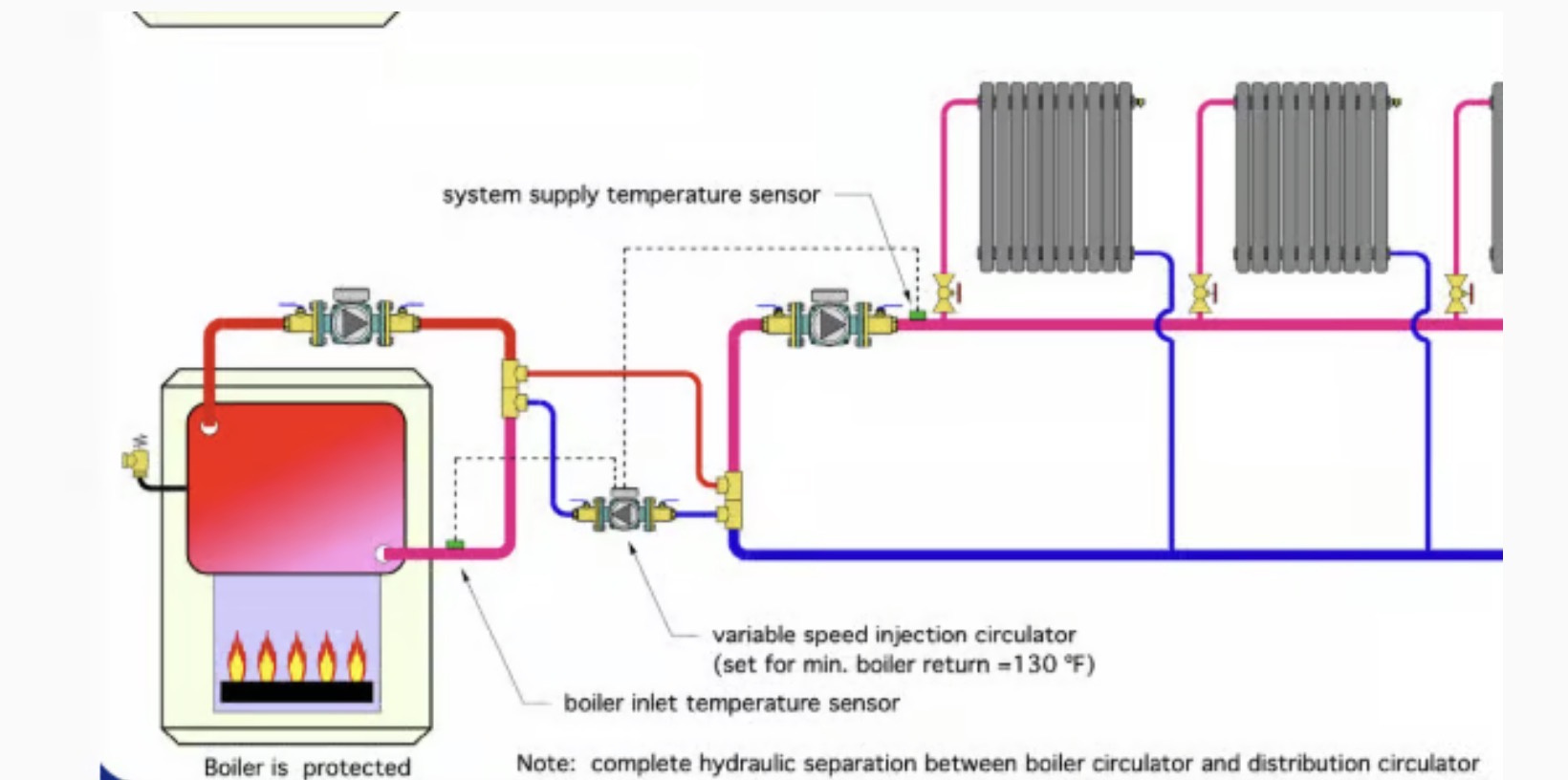 Bob "hot rod" Rohr
trainer for Caleffi NA
Living the hydronic dream0 -
Close, one of the pumps would need to turn off when boiler return is below 130. It could be the injection loop pump or the boiler pump.
The primary loop is always the loop that has the expansion tank connectd to it. I think the distribution loop, up top, with the zone pumps is the primary loop?
Bob "hot rod" Rohr
trainer for Caleffi NA
Living the hydronic dream 1
1 -
if you are doing it with an injection pump and an on/off control you need to be able to make that circulator's flow low enough that it doesn't immediately cool the boiler to the point the aquastat turns it off again as soon as it starts which probably is a combination of pump size and a throttling valve.
It would seem if you are going low flow high delta that you need to be able to throttle the flow through the close radiators most of the way off with the radiator valve to make the water find its way to the far end of the system. if you're dealing with 2" or 3" pipes and 3/4" or 1" radiator runnouts all the heat is going to want to get off at the first couple radiators without a way to throttle the flow.
 1
1 -
my wording was off, you’re correct in saying that’s technically the primary where the closely spaced tees are. But First pump(black) is looped up and right back through the return back into the boiler. 2nd turns off when it reaches temp, not when it’s below, it’s controlled by a High Limit
0 -
this diagram is perfect, thank you.
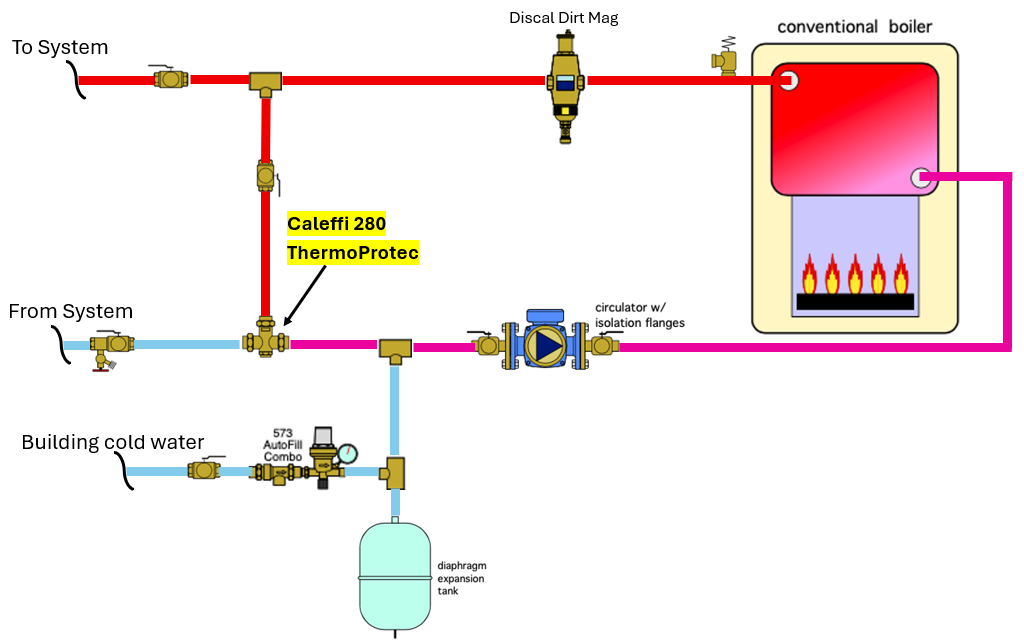
I feel like telling them that I want a 280 series valve, and it should be piped like so is about as simple as I can make it.
I think telling them what size pump to put in is probably crossing the (imaginary) line for me as a customer doing what should be their job (ignoring the part where I provided the spec for boiler protection). Idk. Honestly that would be approaching the point of just having them deliver the thing, hook up the gas, connect the vent to the chimney, and then let me do the near boiler piping myself and have them comeback for commissioning and combustion testing when I’m done.Also, telling my wife that I’m gonna do it myself might also lead to my inevitable death (“I don’t know what happened, a random brick fell off the house and killed him”). My wife reads a lotta murder mysteries so I gotta stay on my toes.
1 -
a lot of people here resort to installing their own boilers after what happened when they tried to hire someone to do it. not quite so bad with hot water but finding someone that understands steam in some places seems to be impossible
2 -
that works, you have good isolation, dirt and air separation.
I would delete the air vent above the expansion tank
The valve on the blue from system line needs to flip so the purge port is on the left of the ball., or use a Webstone version that can purge two directions
Bob "hot rod" Rohr
trainer for Caleffi NA
Living the hydronic dream0 -
pumping away from the boiler, expansion tank, and air separator
away from the expansion tank so the pressure the pump is producing goes to moving water through the system, not pushing water in to the expansion tank. if you pump in to the expansion tank it can accommodate less expansion because you are forcing more water in to the tank with the higher pressure on the discharge of the pump. on a cast iron boiler and converted gravity system where there isn't much resistance to flow this matters less but it is best to not find out your system is the exception.
away from the air separator so that the air separator is at the lowest pressure and on the outlet of the boiler so the water at the air separator is at the hottest point in the system. less air dissolves in hotter water and less air dissolves in lower pressure water so it encourages the air to come out of solution at the air separator.
0 -
The circulator should pump away from the expansion tank so it adds it's pressure differential to the system.
It does not need to be on the supply side of the boiler. In fact some high head mod cons prefer you pump into the boiler.
The air purger works best at the supply, the hottest water in the system.
But the expansion tank does not need to be below the purger either, as you show.w
it is also preferred to pump away from a 3 way mix valve, so it pulls the hot and cold through the valve.
The red and blue water to get to purple :)
It will work great as shown
The pump does not push water into the expansion tank! Where would that water come from? There would be less water somewhere in the piping if the pump was to push water into the tank.
The expansion tank connection into the system establishes the PONPC point of no pressure change, the pump cannot effect that.
Water enters an expansion tank from the expansion of the water as it is heats, volume increases, or comes out as the water cools.
Bob "hot rod" Rohr
trainer for Caleffi NA
Living the hydronic dream1 -
I only skimmed through the responses so forgive me if I’m off track. Using a properly sized cast iron boiler with only high temperature heat emitters would dictate a 180 degree water design temperature for the coldest day in your area based on industry standards. If you add a simple outdoor reset control, you can vary that supply water temperature based on the outdoor temperature with the lowest set point being 160 degrees, insuring that you return water temperatures stay above the condensing point. Am I missing something? Do you have low temperature radiant panels in the structure?
Steve Minnich0 -
it is a gravity conversion so it is a high mass system with radiators that are effectively sized for a much lower swt
 1
1




Categories
- All Categories
- 87.8K THE MAIN WALL
- 3.3K A-C, Heat Pumps & Refrigeration
- 60 Biomass
- 430 Carbon Monoxide Awareness
- 133 Chimneys & Flues
- 2.2K Domestic Hot Water
- 6K Gas Heating
- 124 Geothermal
- 170 Indoor-Air Quality
- 3.9K Oil Heating
- 79 Pipe Deterioration
- 1.1K Plumbing
- 6.7K Radiant Heating
- 397 Solar
- 16.1K Strictly Steam
- 3.5K Thermostats and Controls
- 56 Water Quality
- 51 Industry Classes
- 51 Job Opportunities
- 18 Recall Announcements