Replacing a Triangle Tube Prestige Excellence 110 with US Boiler X205
Hi - long time listener, first time caller…
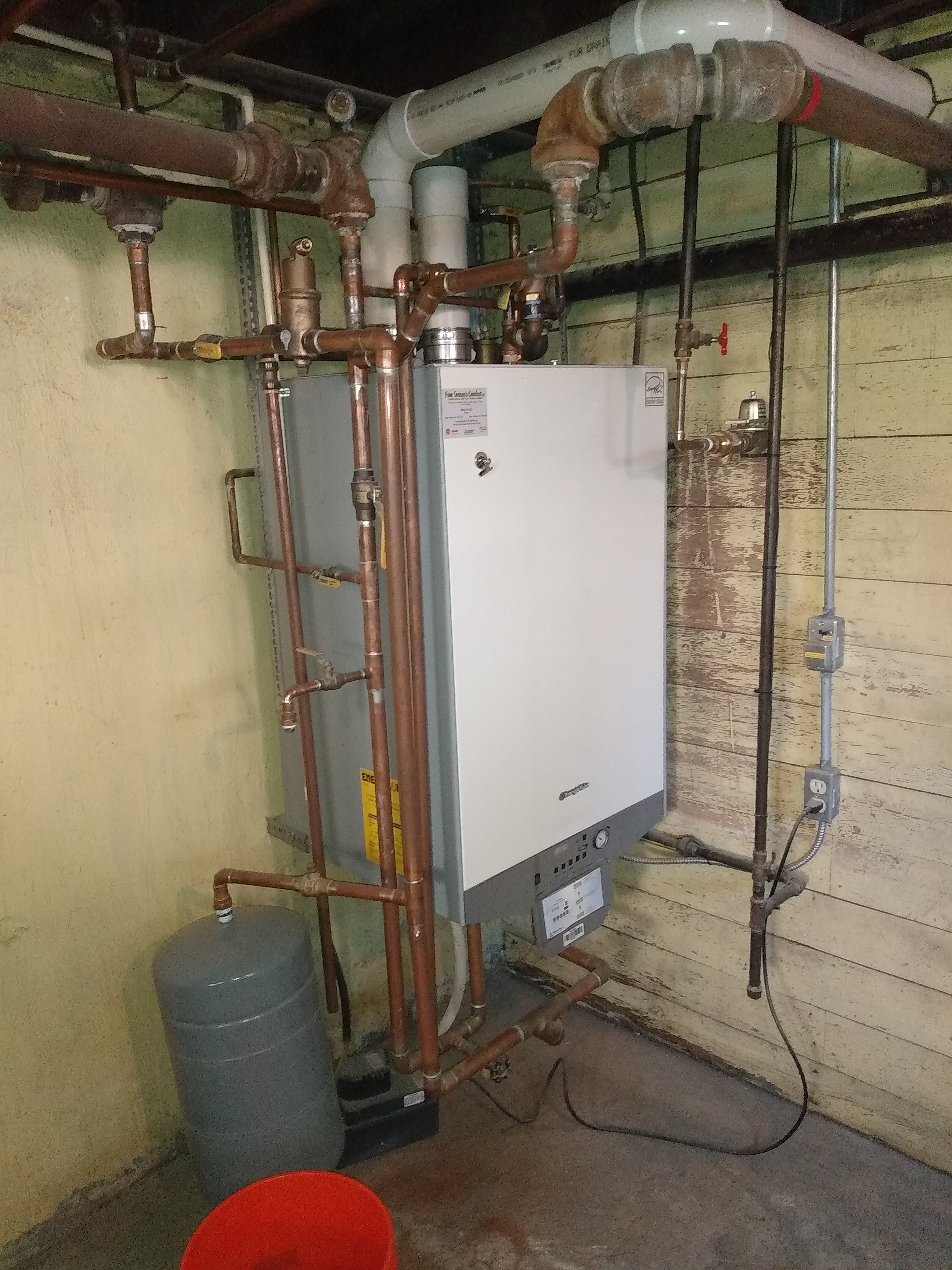
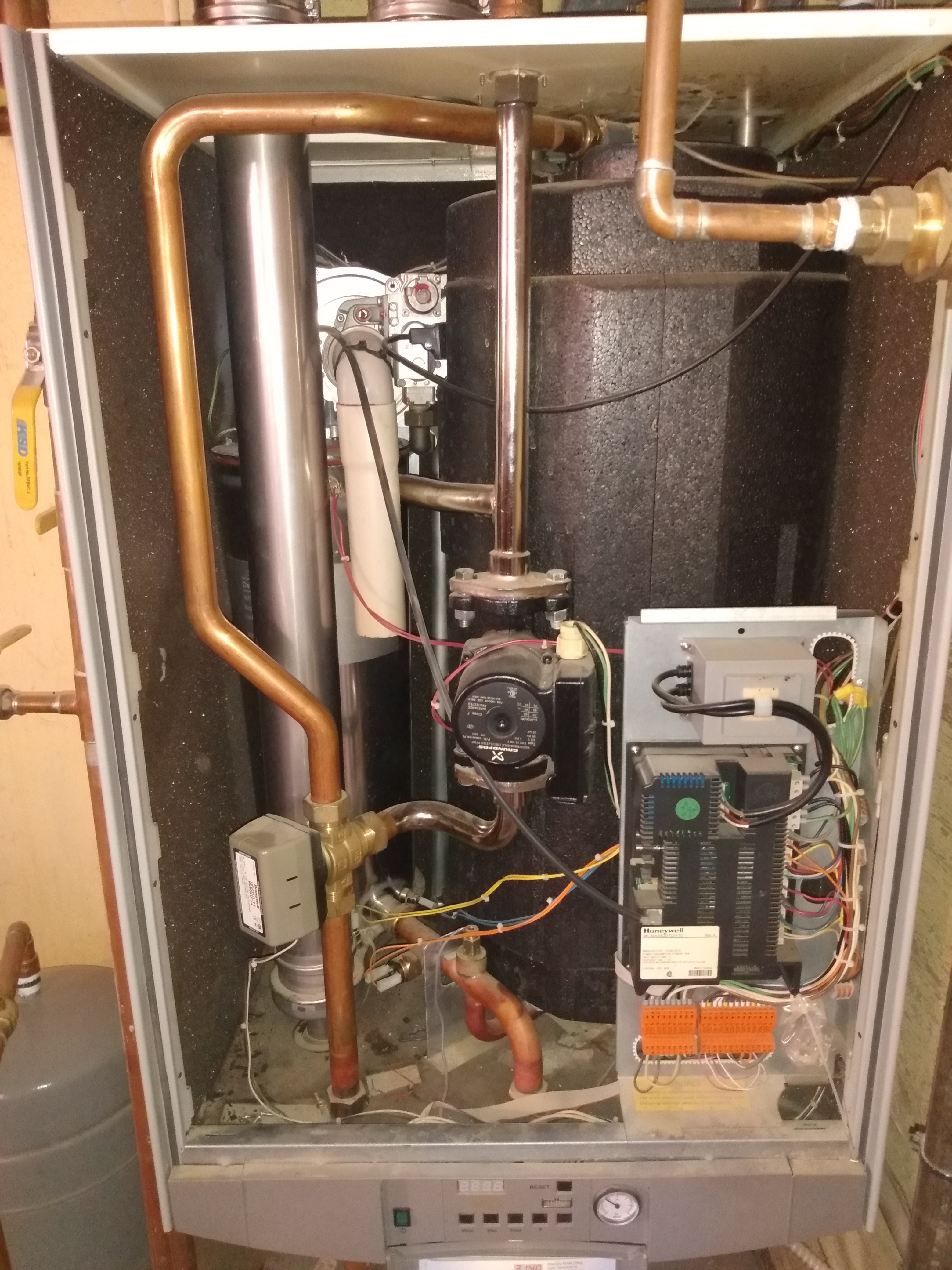
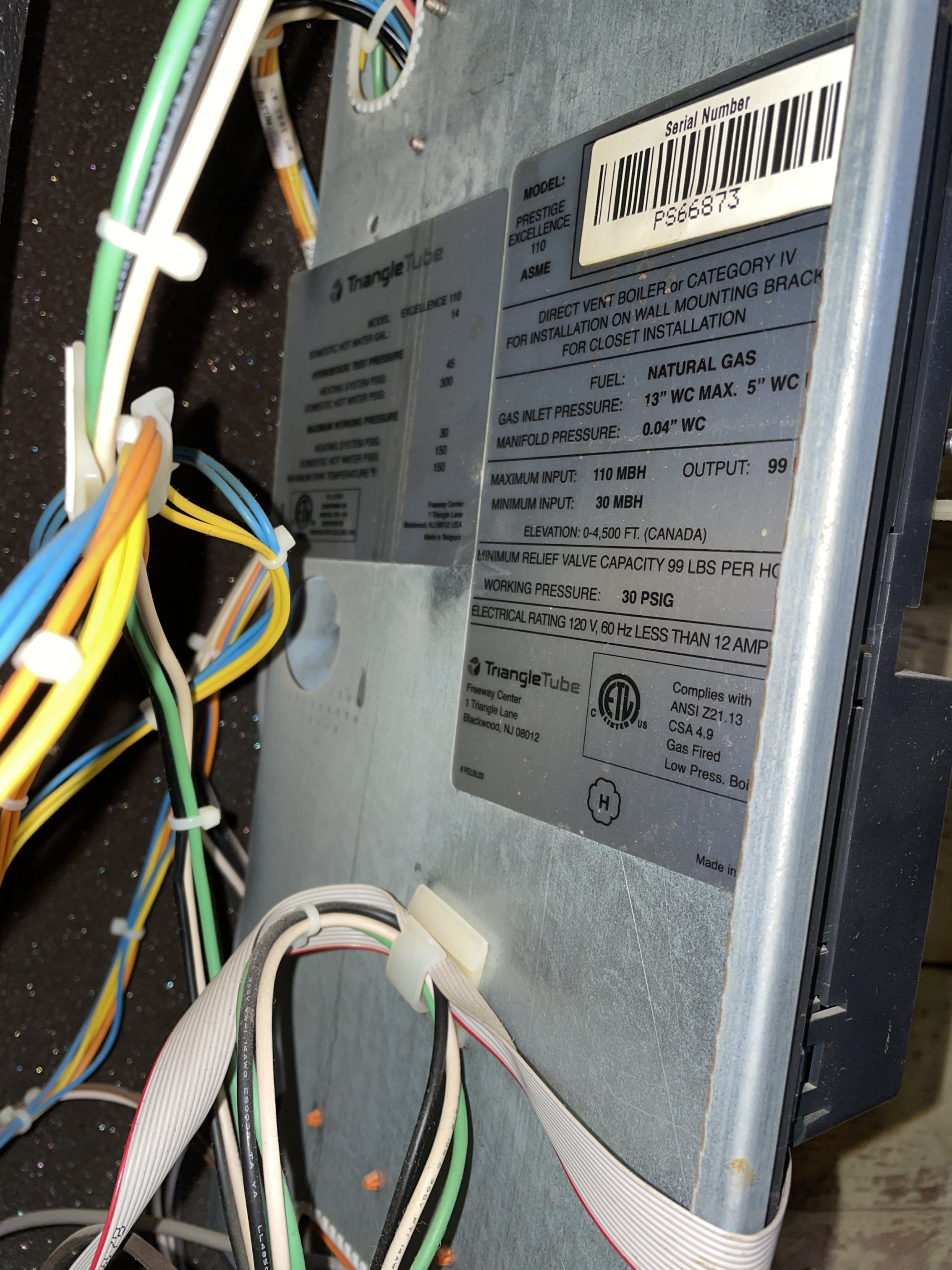
Long story short, our Triangle Tube combi boiler (Prestige Excellence 110 MBH) is on its last leg, and I just received a quote to replace it with a US Boiler X205 (140 MBH) from a local HVAC company.
I'm a little concerned that we're replacing a 110 MBH combi with a 140 MBH cast iron boiler AND separate 50 gallon direct water heater. I'm looking for some sane input on the situation, so I can be somewhat prepared when I ask them to change the quote to a x204 (105 MBH) instead.
Alright, so here's the longer, more rambly story.
We purchased our (Wisconsin) home in 2021. It's 110 years old, two stories and 1700 square feet. Balloon framing, no insulation in the exterior walls, original double-hung windows with removable storms on first floor, aluminum sliding storms on the second floor, and an unfinished and uninsulated attic (which we may someday finish.) In short - she's a drafty SOB, but our existing boiler only falls behind if we have multiple days at -10F in a row. That scenario did play out in January, and a few rooms in our house dropped down to 62F for 2-3 days while the boiler worked to catch up.
Moving in to the house, I had no experience with boilers. So, let me get this off my chest right away. I'm sorry to admit that I haven't had it serviced since we moved in. I've seen the error in my ways and here I am paying for my mistakes.
The boiler went out about a week and a half ago (when we had a few days at 50F!) Hard lockout for E02, failed ignition after 5 attempts. I called in a HVAC company to come look at it and they couldn't get it going either. They cleaned the igniter and the venturi and told me both looked pretty bad. They also said the heat exchanger needs to be replaced but the cost to do it may not be worth it, given that Triangle Tube is out of business and the outlook for parts in the future is not great. I called another company to come look at it and get a second opinion. He flipped the power button and it started right up. Of course it did. He spent some time looking at it though, and agreed that he heard popping (?) in the heat exchanger like it was full of buildup and that he'd also recommend replacing it. It ran just fine until last night where this whole thing started over. I finally got it started after wiping out the venturi and "choking" it until it was running on it's own.
They didn't have to twist my arm for me to agree to replace it - I hate this Triangle Tube boiler with a passion. I don't know anything about boilers, except what I've learned trying to get this thing running in emergency situations! Which happens about twice a year! WITH NO HOT WATER or HEAT!!!! AHHHH! I can't put into words how much grief this boiler has given me the last three years.
So that's the reason I'd love to actually "downgrade" to a slightly less efficient cast iron boiler. And the reason I want a completely separate water heater. The cast iron boiler just seems way simpler, more reliable, and it should have a longer useful life. And it's probably more appropriate for stubborn homeowners like myself who like to do things themselves.
ALRIGHT. Now that I've gotten all that out - let's wrap this up.
Am I crazy to ask for a smaller boiler? The x204 seems more appropriate than the x205 based on the few quick heat loss calculators I've used. And given that the existing 110 MBH boiler also provides our DHW and is fine most of the time.
Am I crazy to "downgrade" to a cast iron boiler from a high efficiency combi?
Let me know what you guys think… thanks!
Comments
-
When a boiler that has a 110,000 BTUh input at over 95% efficiency there will be an output rating of about 99,000 BTUh
When a cast iron boiler of say 80% efficiency has that same 110,000 BTUh input, the output is only going to be 88,000 BTUh. So a less efficient boiler will need a larger input to get the same output. So there may be some logic to the larger cast iron boiler size.
However there is some concern about selecting the proper size boiler. Chances are that your 110,000 BTU boiler had a modulating input and that you never really needed to have a 110,000 BTU boiler for space heating. You only needed that for the DHW side of the system.
To know what actual size heater you need, you should have a Load Calculation for your home completed. This may reveal that you only need 70,000 BTUh for your home and the 140 is too big. Try a different contractor that will at least do some measuring of your home and come up with a load number for your home. ACCA Manual J or AHRI form 1504WH for a heating system are acceptable calculations. Another way is to go by your historic fuel usage. There are calculations that will tell you your actual load based on accurate fuel usage data.
Once you know what size your home requires then use the AHRI NET output number (formerly I=B=R NET) in the boiler specifications sheet to select the proper size boiler. The input is for measuring the gas pipe the AHRI NET is for matching to your load calculation.
Your triangle tube boiler specifications:

The Burnham Specifications: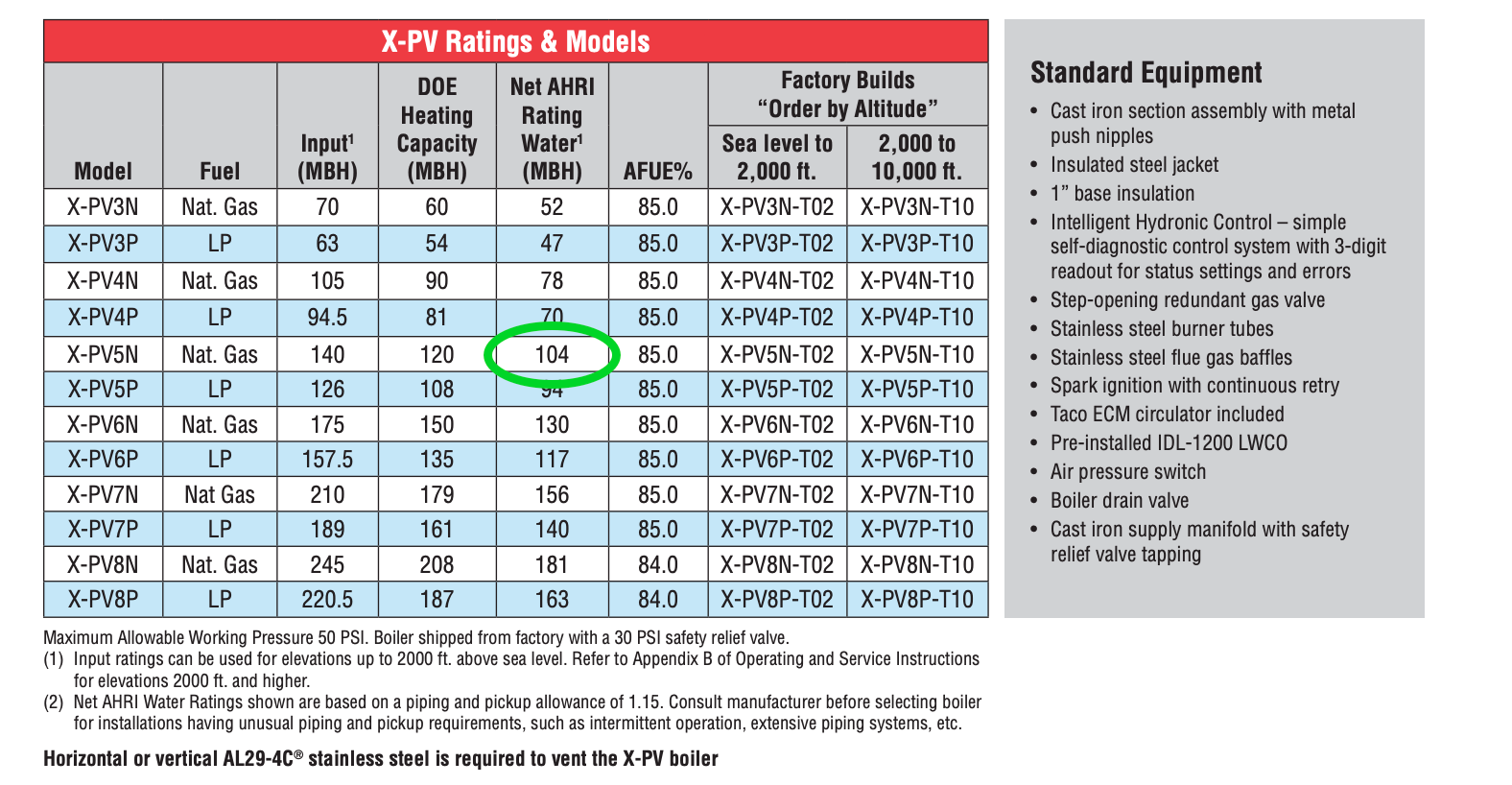
This is too close to call because the smaller 105 boiler will have a NET output of 78,000 compared to your existing 86,000 NET output. You really need to do the load calculation. Your contractor is playing it safe rather than doing the homework necessary to get you the best choice. If your home only needs 70,000 or less then the 140 is too big and the 105 is a better choice.
Edward Young Retired
After you make that expensive repair and you still have the same problem, What will you check next?
0 -
I doubt that TT was much over 85% if it has been running 160 f or higher. It will only get into the 90% when return is below 130f. So more like 90,000 output.
Any idea what temperatures the TT runs? Is it running on out door reset?
The best $$you can spend is tightening up the building.
Then a smaller boiler may work and you save fuel cost from now on.
How old is the TT?
Did the combi give you adequate DHW?
Do you have a flue and combustion air inlets to run a cast iron boiler?It is not too hard to service a mod con yourself if you watch some videos.
Looks like the TT is direct piped, no primary secondary. If so you need to make sure it was getting adequate flow.
It wise to have a dirt/ magnetic separator on those old iron pipe systems
Bob "hot rod" Rohr
trainer for Caleffi NA
Living the hydronic dream0 -
Judging by the piping, that is a converted gravity hot water system with a large water volume and cast-iron radiators. It can run at low temperatures much of the time and make the most of a condensing boiler like the TT; but if the TT at 110,000 BTU input could not maintain setpoint in severe weather, a less efficient 105,000 BTU cast iron boiler will do even worse.
Most people wouldn't buy a house with a heating system that doesn't keep up in severe weather.
Unless the TT boiler was incorrectly adjusted and not using all of its output in severe weather, if the OP wants a cast-iron boiler the 140,000 BTU input is the better choice.—
Bburd0 -
Two things you could, or should do. A room by room heat load, and measure all the current radiation.
No sense in putting in more boiler capacity then you have radiators. A CI boiler will just short cycle on even design days and really badly on mild days, if you over-size it..
The modulation is as, or more important then the condensing.
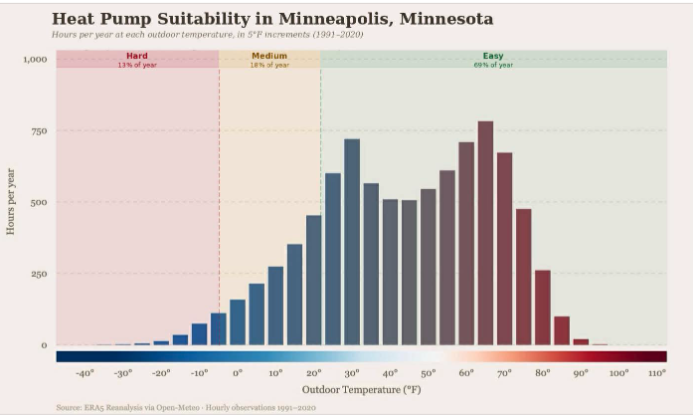
Data like this would show how many days a year you need full boiler BTU output. Probably less that 8-10% of the year. Find the data for your closest weather station.
 Bob "hot rod" Rohr
trainer for Caleffi NA
Living the hydronic dream0 -
Understood - I need to do (or have done) a proper heat loss study. And I'll look at a calculator for load based on historical gas usage (which I should be able to get).
I want to share a few additional variables that weren't included in the original post.
- The boiler was struggling to keep up during that cold snap we had in January, but it was not running well in the days leading up to the cold snap either. It would shut off at night on E02, and then we'd reset it in the morning and let it catch up 7-8 degrees during the day. That happened on a few days leading up to the cold snap, so the house did not start from a fully warm condition.
- There's a small chunk of exterior wall that isn't currently sided…. it's a long story, but it was like this when we moved in. I only realized it late last summer when we cleaned out the mountain of stone/rubble under the back deck. I plan to correct this this summer.
- Lastly, there's a weird chimney / vent system on the second floor that will get sealed up this summer too. The vents are currently covered, but it is not 100% air tight. If anyone has seen this before, I'd love to know more about it…
I'm hoping that correcting items 2 and 3 this summer will result in reduced heat losses next winter.
0 -
I'm not sure if it's return temp or supply temp that's given on the digital display, but most of the time that I've been down there, I've see a number between 130 and 140F. It does have an outdoor reset.
The TT is approximately 10 years old… I don't have an exact date or age on it. It did provide adequate DHW for showers, but NOT for baths. It would run out of hot water before filling our tub (not that big of a deal).
I intend to use the chimney to vent the cast iron boiler (it has a SS liner, and got the OKAY to use it by a chimney company). I do not intend to have a specific air inlet for it. (should I?)
The quote for the new boiler does include a dirt/mag separator.
I'll try to measure the radiators tonight and share with the class.
0 -
I would wager a bit more than 10 years on that unit. That was the early prestige model you have there
 1
1 -
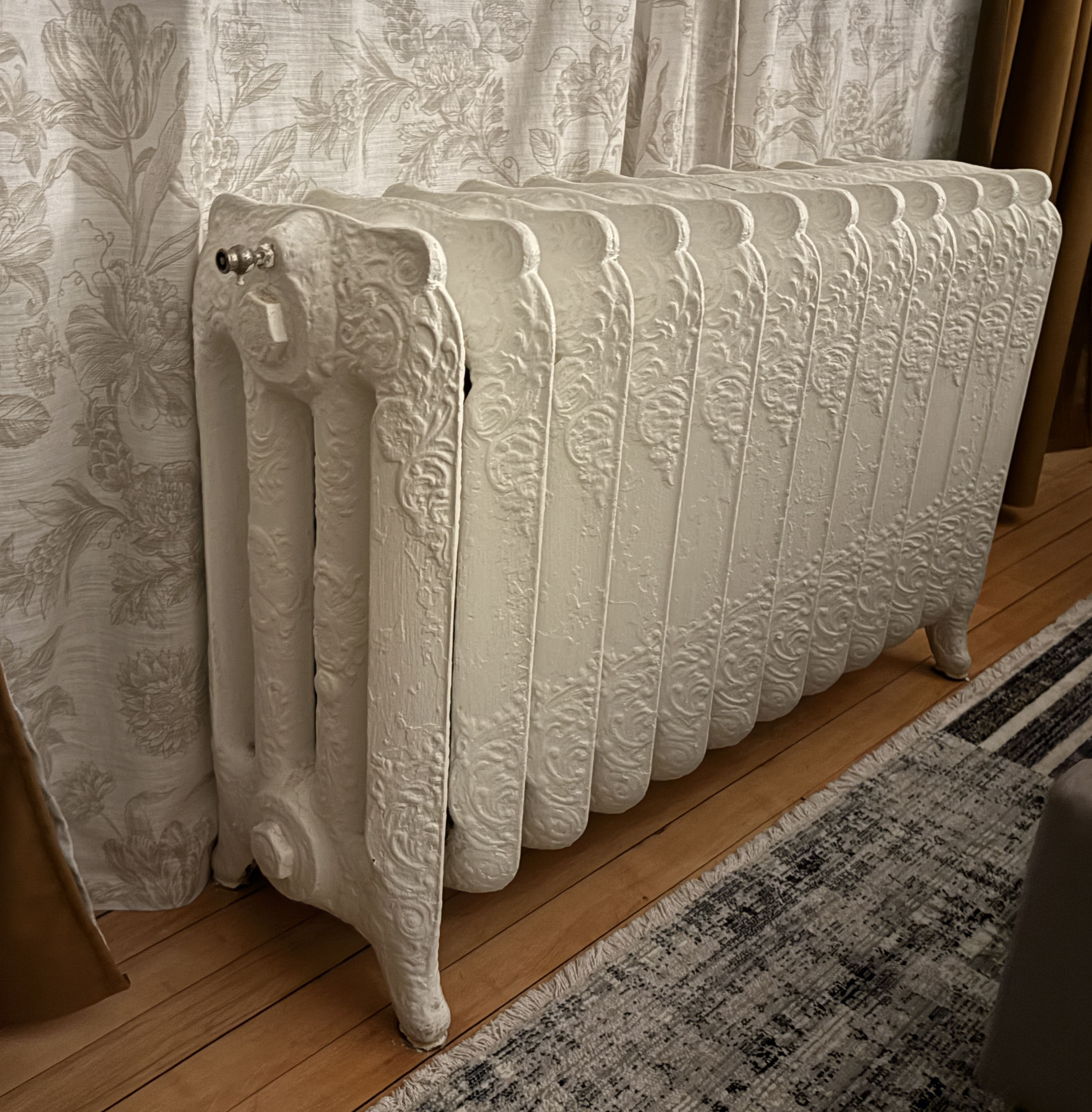
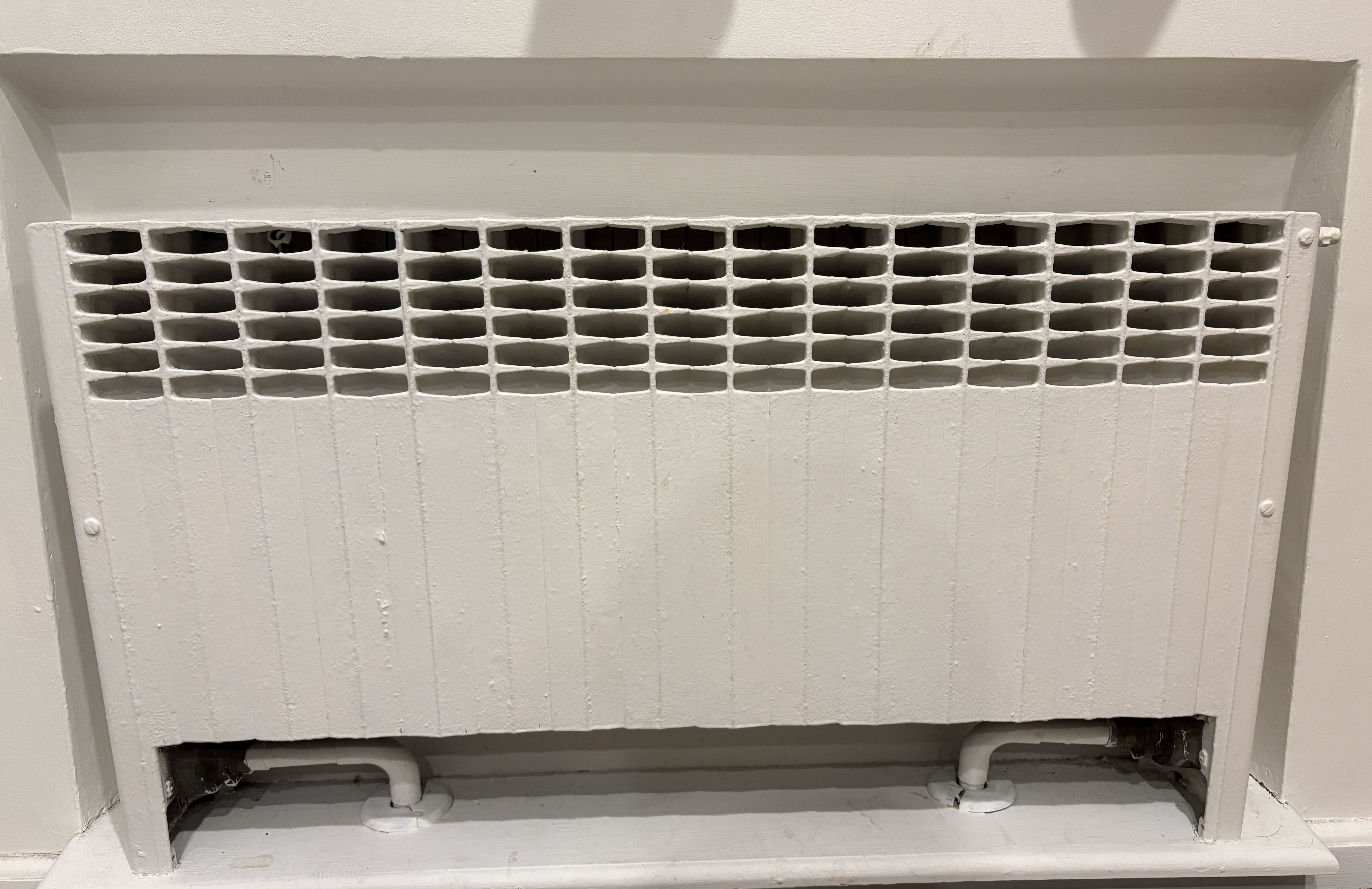
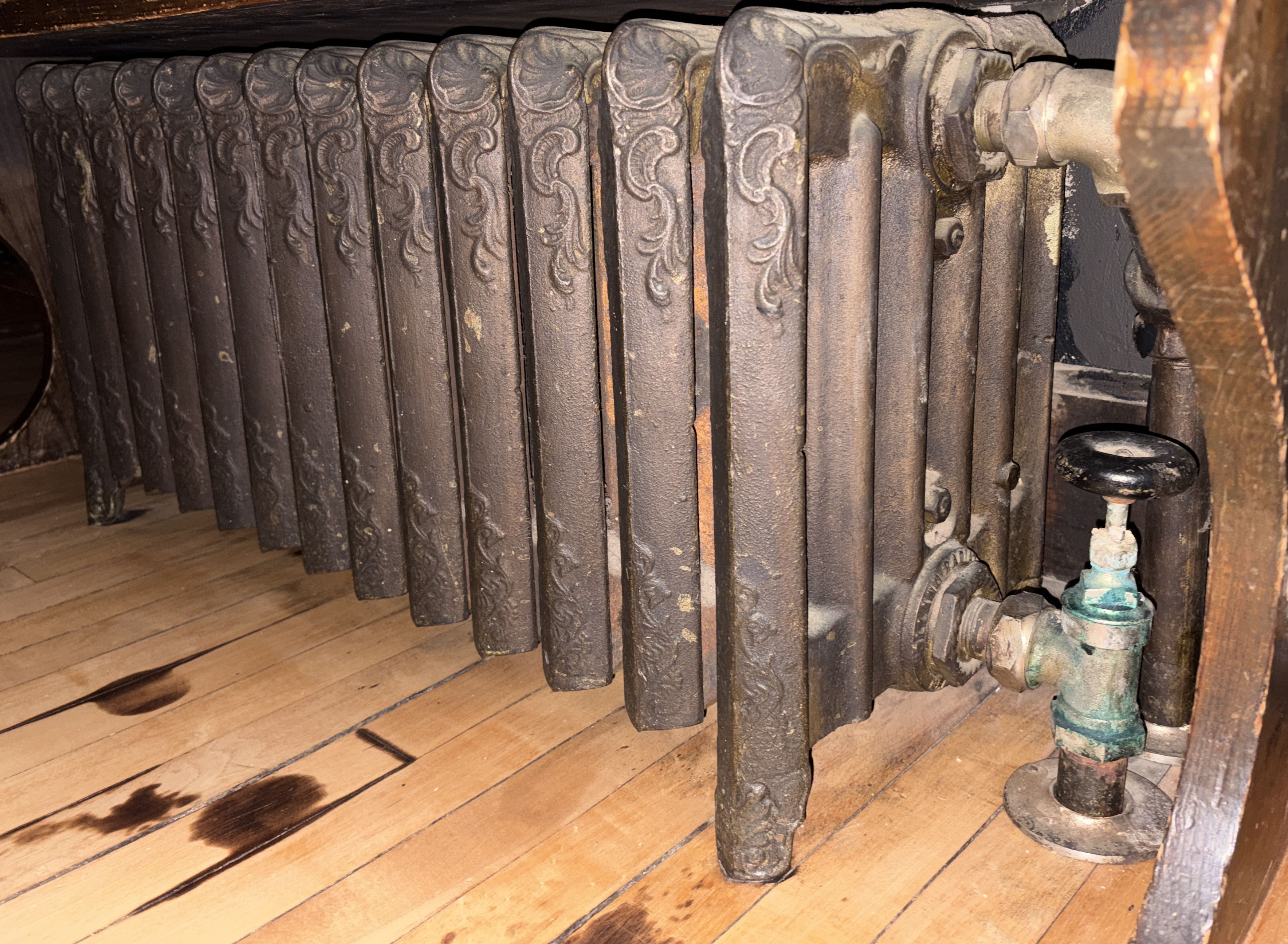
Radiators
Height
Columns
Sections
EDR/s
BTUh
20
20x36x5
16
1.98
5,392
26
3
18
3.75
11,475
16.5
6
13
3.5
7,735
38.5
3
14
5
11,900
37.5
2
13
4
8,840
38.5
3
6
5
5,100
38.5
3
8
5
6,800
22.5
4
12
4
8,160
38.5
3
5
5
4,250
38.5
3
3
5
2,550
Total
1st Floor
36,502
Total
2nd Floor
35,700
Total
72,202
Found estimated EDR per these documents, where my values for BTUh = EDR * sections * 170
https://s3-us-west-2.amazonaws.com/catsy.782/Radiation+Classic+Slenderized+Radiant.pdf
Example 1 (6 of 10 radiators are this style)
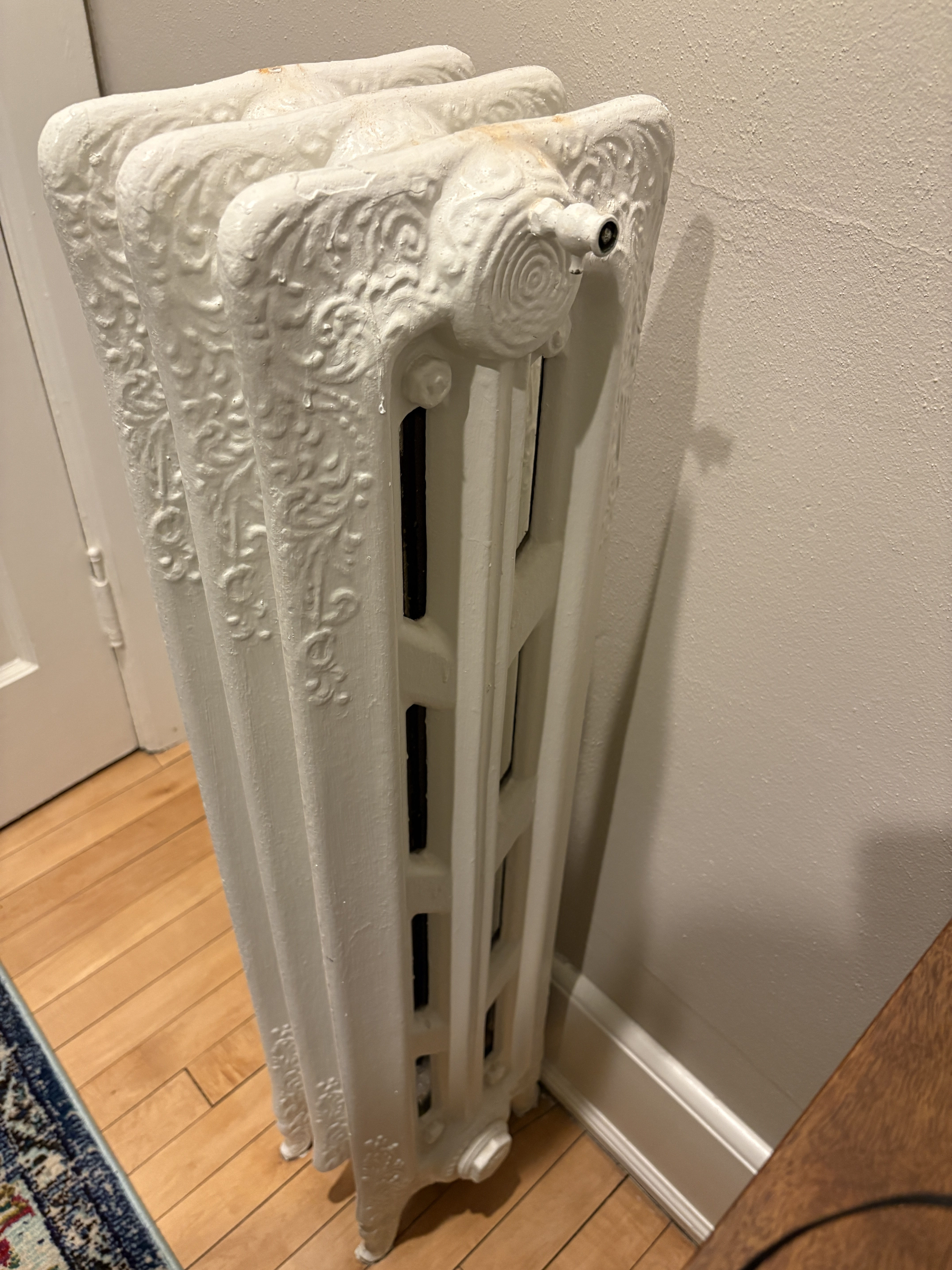
Example 2
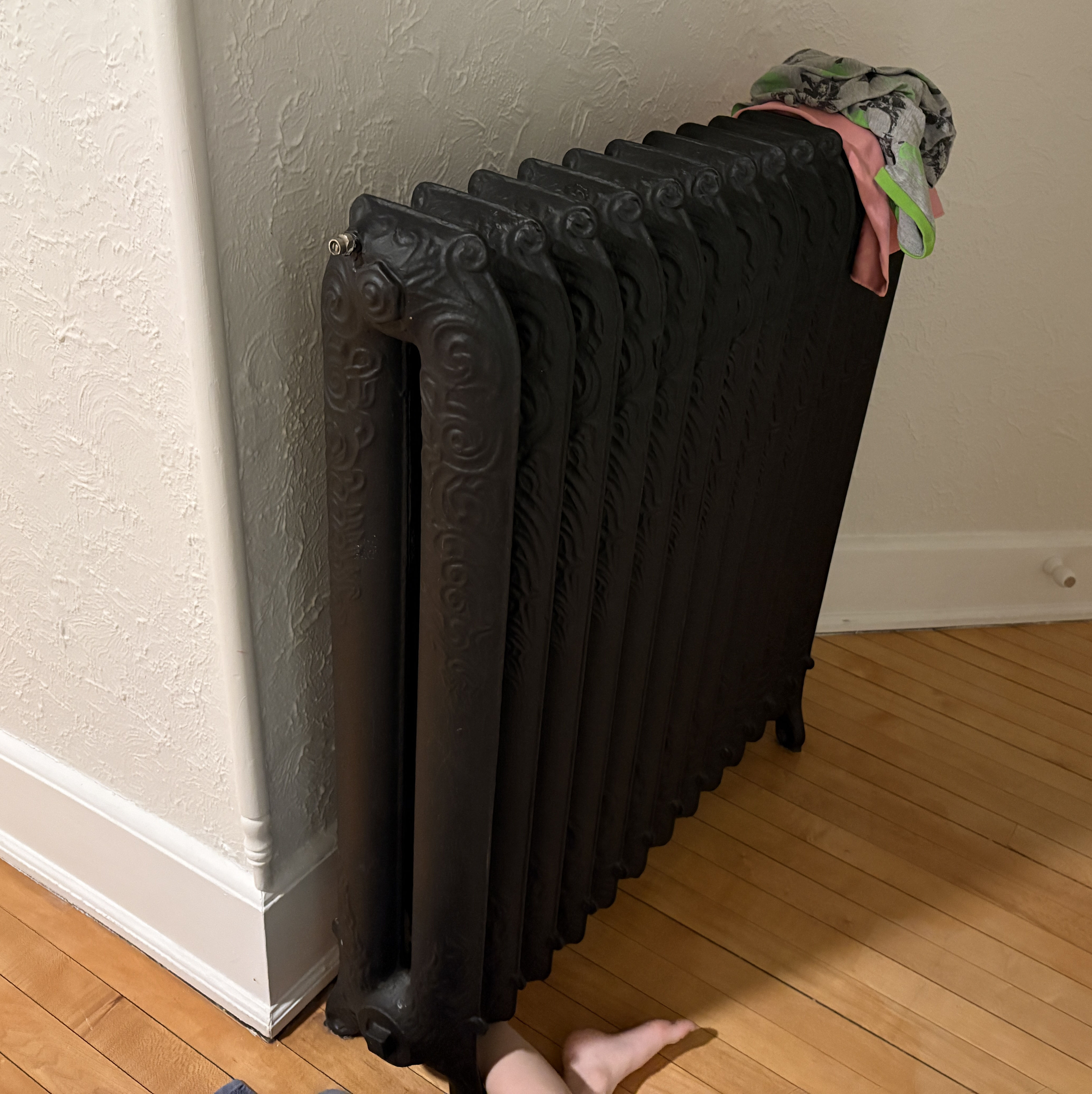
Example 3
Example 4
Example 5
 0
0 -
And here's my heat loss calculation, using Form 1504 from here:
Assuming a Temperature Difference (TD) of 76F, and one air change per hour for the infiltration.
Sq Ft
Factor
TD
BTU/h
Factor Description
Windows/Doors
417.3
0.56
76
17,761.1
Storm Windows
Net Wall
1,653.7
0.24
76
30,163.1
Wood frame not insulated
Cold Ceiling
1015.0
0.30
76
23,141.3
Uninsulated ceiling
Cold Floor 1
841.0
0.15
76
9,587.4
Over unheated basement
Cold Floor 2
174.0
0.36
76
4,760.6
Overhangs front porch
Infiltration
14,984.2
0.027
76
30,747.7
Older house, good condition
Total
116,161.2
Edit: I made major revisions to the table above. Went from approximately 87,000 BTU/h to 116,000 BTU/h due to corrected "air infiltration" number, and then tightened up the calculations for windows, doors, and cold floors.
0 -
Alright - sorry for triple commenting, but I've made some major edits/revisions to my tables above and want to get some feedback on a few more things.
- Obviously there's a really big mismatch between the output of my radiators (72,000 BTU/h) and the heat loss of my house (116,000 BTU/h). What do I do here?
- The X-204 has a net AHRI of 77 MBH, which matches my radiators pretty well.
- The X-205 has a net AHRI of 102 MBH, which matches my heat loss calculation pretty well.
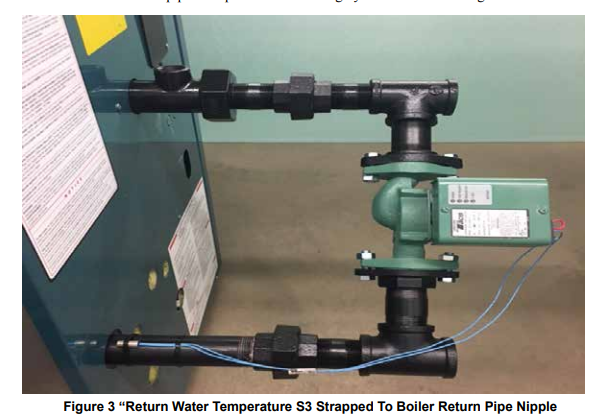
- Either way, does anyone have an opinion on whether I should ask them to include the "boiler by-pass kit" in the quote?
- https://s3-us-west-2.amazonaws.com/catsy.782/System+Bypass+Circulator+Kit+Instructions.pdf
Appreciate the help!
0 - Obviously there's a really big mismatch between the output of my radiators (72,000 BTU/h) and the heat loss of my house (116,000 BTU/h). What do I do here?



Categories
- All Categories
- 87.8K THE MAIN WALL
- 3.3K A-C, Heat Pumps & Refrigeration
- 59 Biomass
- 430 Carbon Monoxide Awareness
- 132 Chimneys & Flues
- 2.2K Domestic Hot Water
- 6K Gas Heating
- 124 Geothermal
- 170 Indoor-Air Quality
- 3.8K Oil Heating
- 79 Pipe Deterioration
- 1.1K Plumbing
- 6.7K Radiant Heating
- 396 Solar
- 16.1K Strictly Steam
- 3.5K Thermostats and Controls
- 56 Water Quality
- 51 Industry Classes
- 51 Job Opportunities
- 18 Recall Announcements