New Boiler Copper Piping/bad piping/incorrect install?

Hello all,
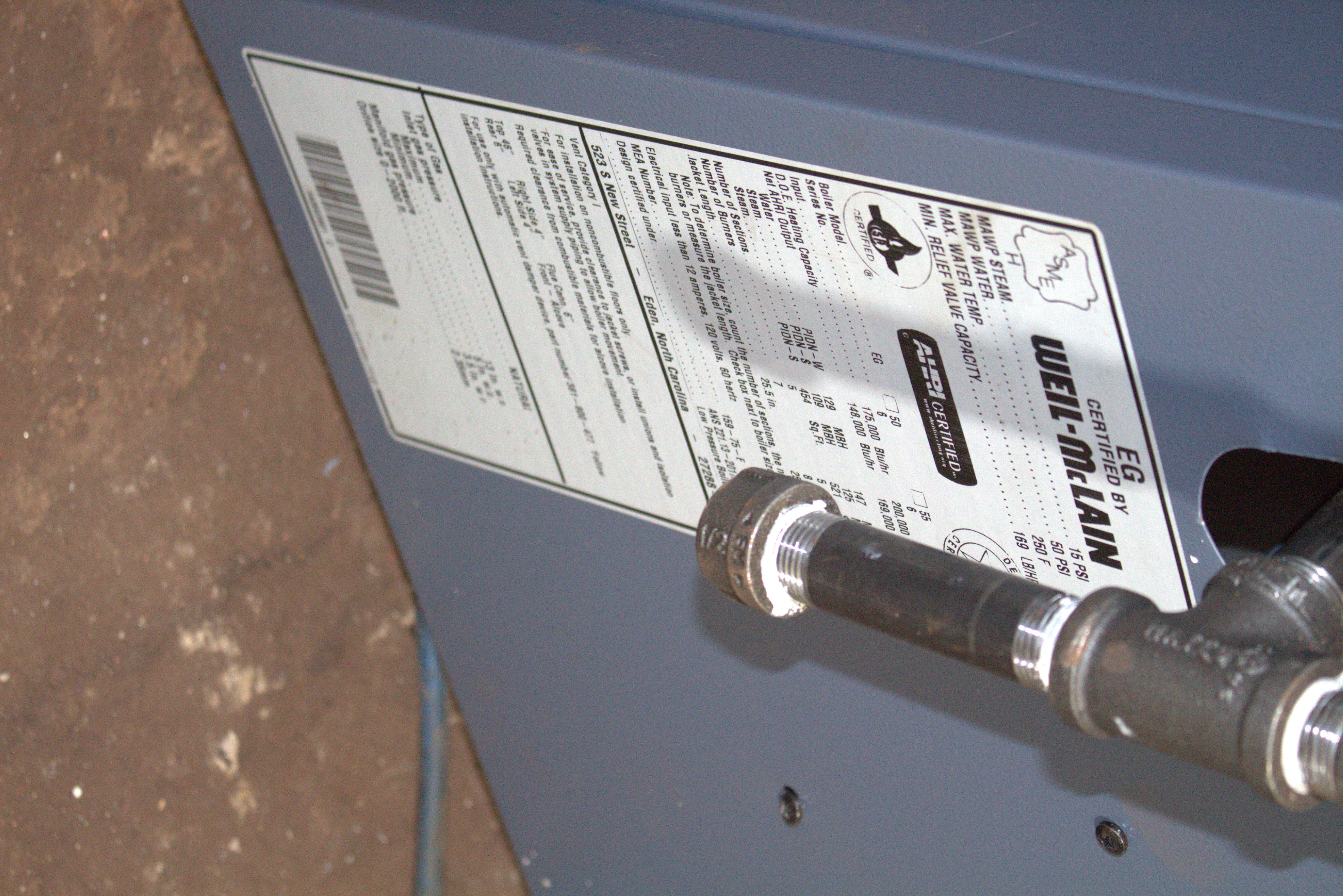
I just had a new Boiler put in, a Weil McLain Series 6 EG 50 or 55 box wasn’t checked don’t know which for sure.
I am in disagreement with the company/tech that installed the system as I brought up several concerns and I keep getting told things are fine as they are but…
I have hammer, of varying levels (loudness) and 4 radiators do not heat.
The system is a 1 pipe counterflow system with no mains (each run goes directly to one or two risers which lead directly to a radiator.) There are no main vents or riser vents. (keep being told dont need them)
The new near boiler piping is in copper…
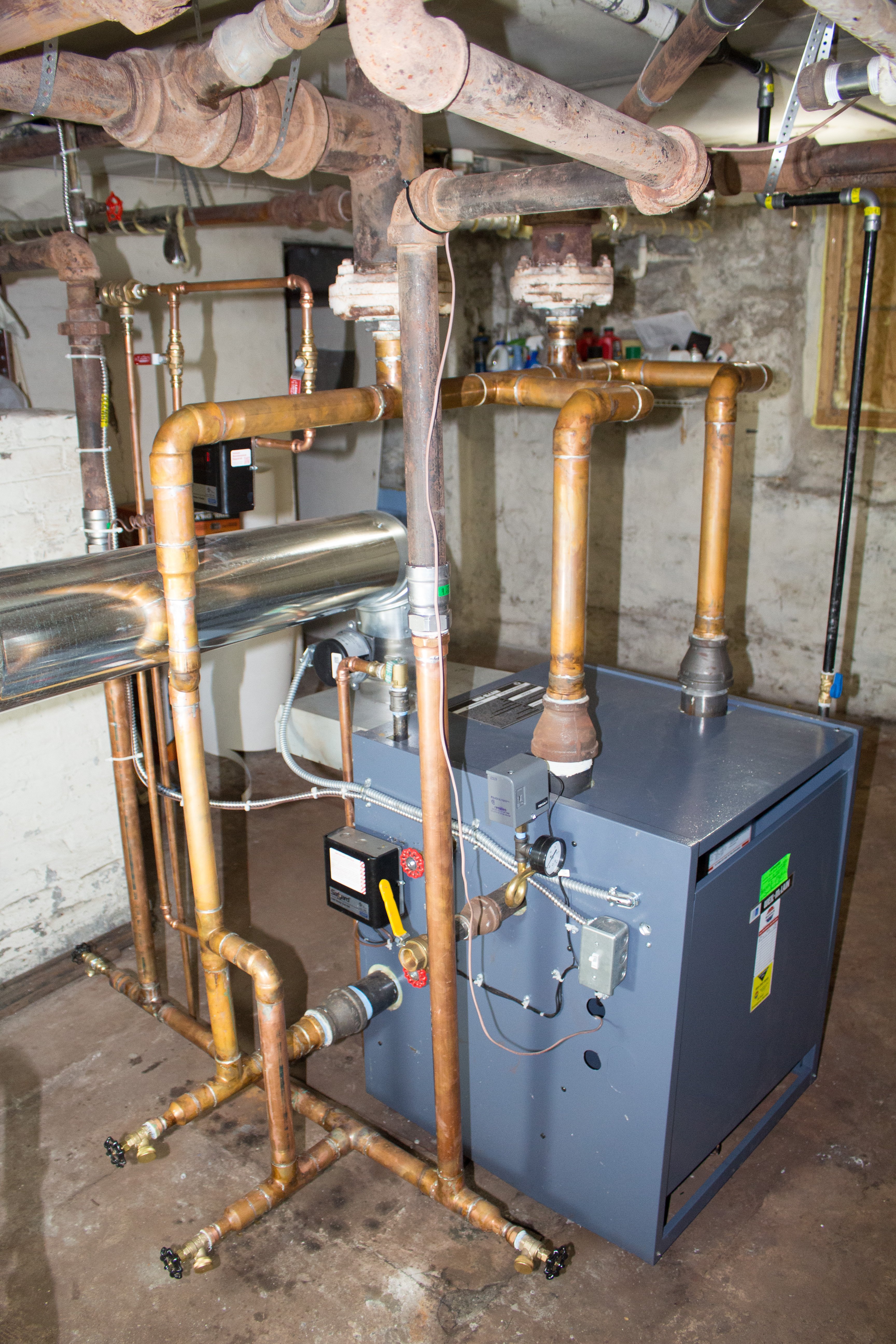
I have multiple concerns about the way it was piped and the slop of the piping as well as the size of piping used and that its copper, and that it was soldered not even braised.
I am including pictures, hoping to get some insight into if this system is okay or completely unacceptable.
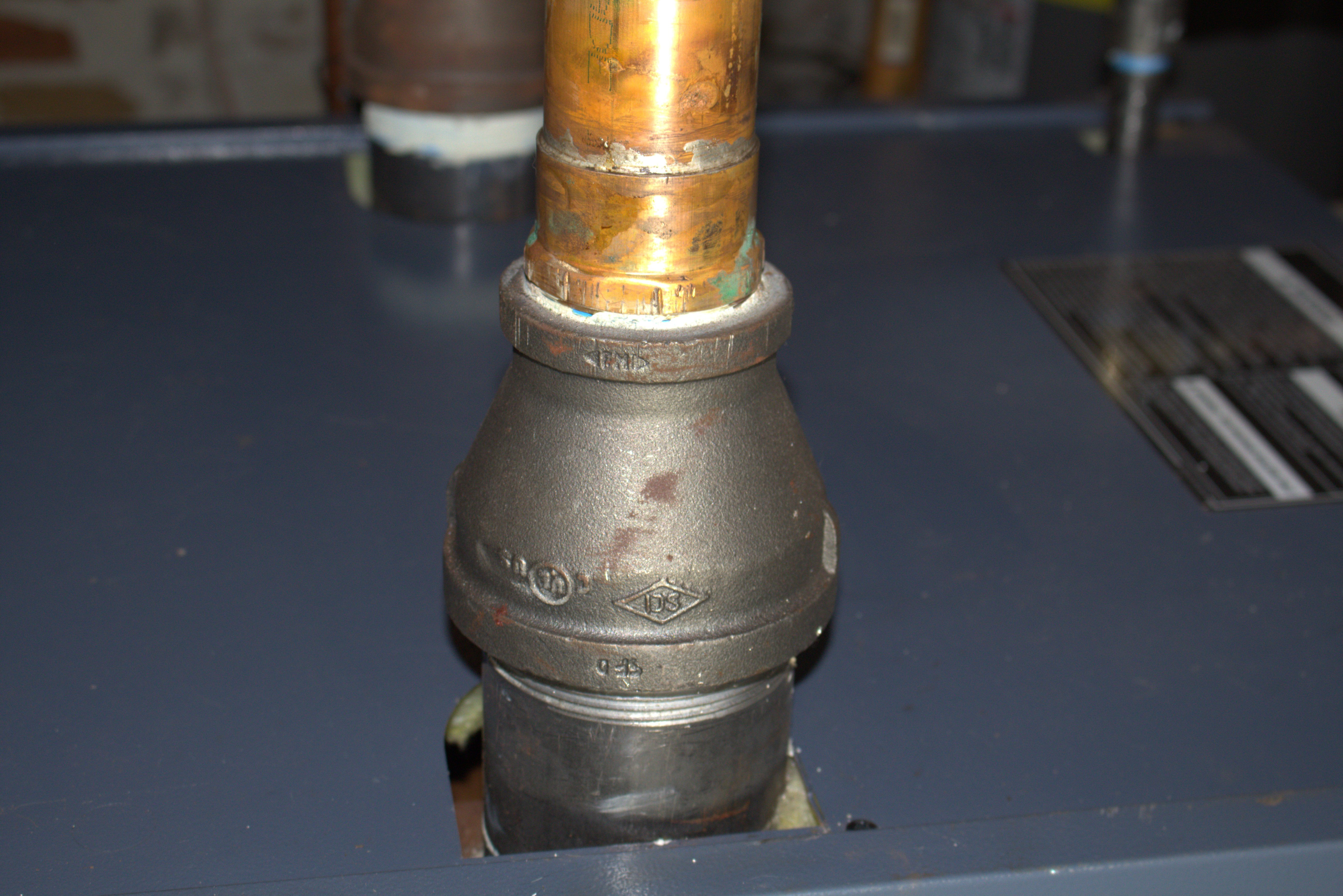
The header is 2 inch, when the Weil McLain Manuel says it needs to be 2-1/2” or 3” depending on if it is 50 or 55
Also says in the manual that when connecting to a counterflow system it should connect to the top and shows a picture will include also.
Any insight would be welcome.
1 tag
2 wide shot
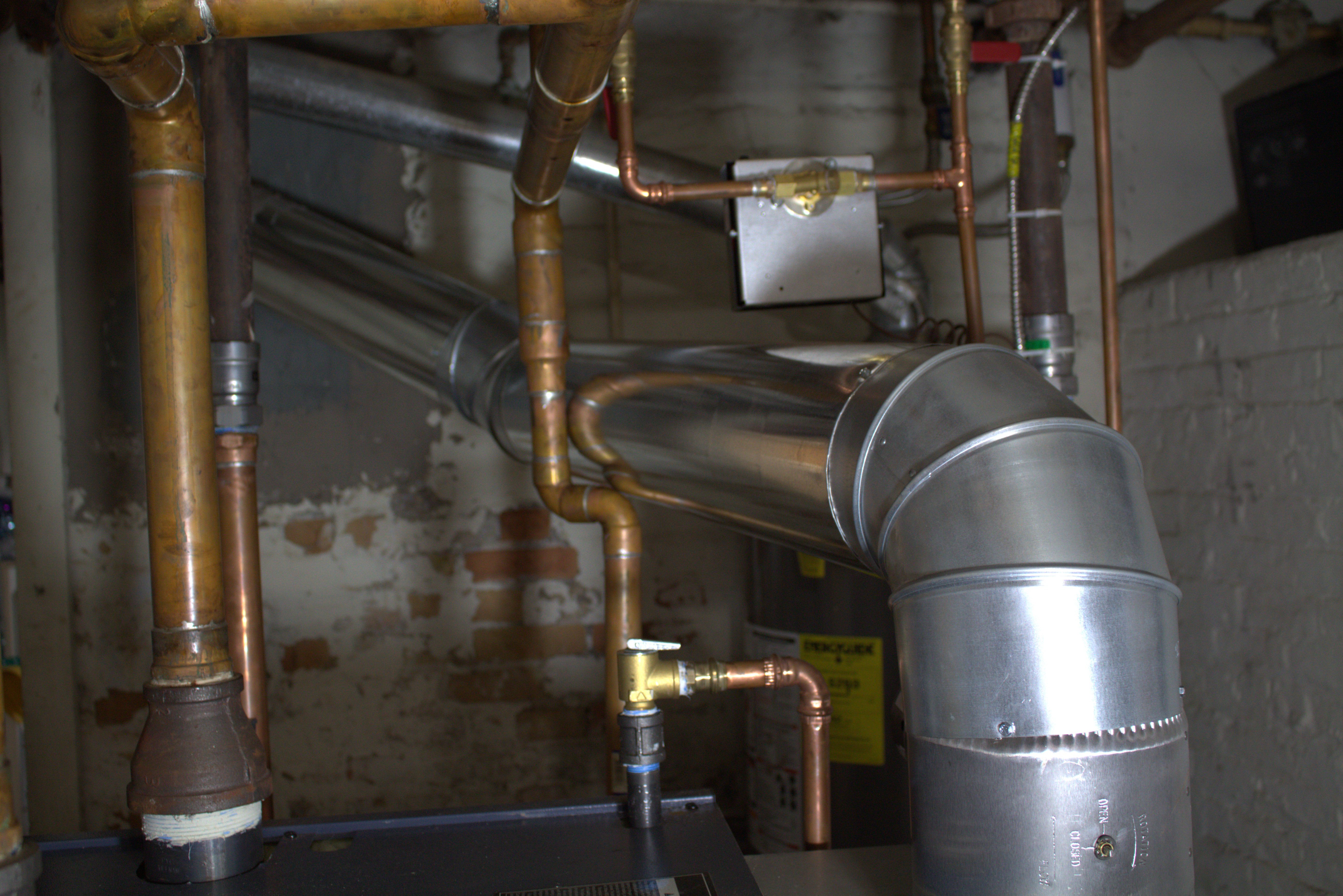
3 exhaust vent touching steam, is this okay?
4 is this dialectric second one already looks rusty like iron to me? but was told its a dialectric union.
5 is this slope correct and right way?
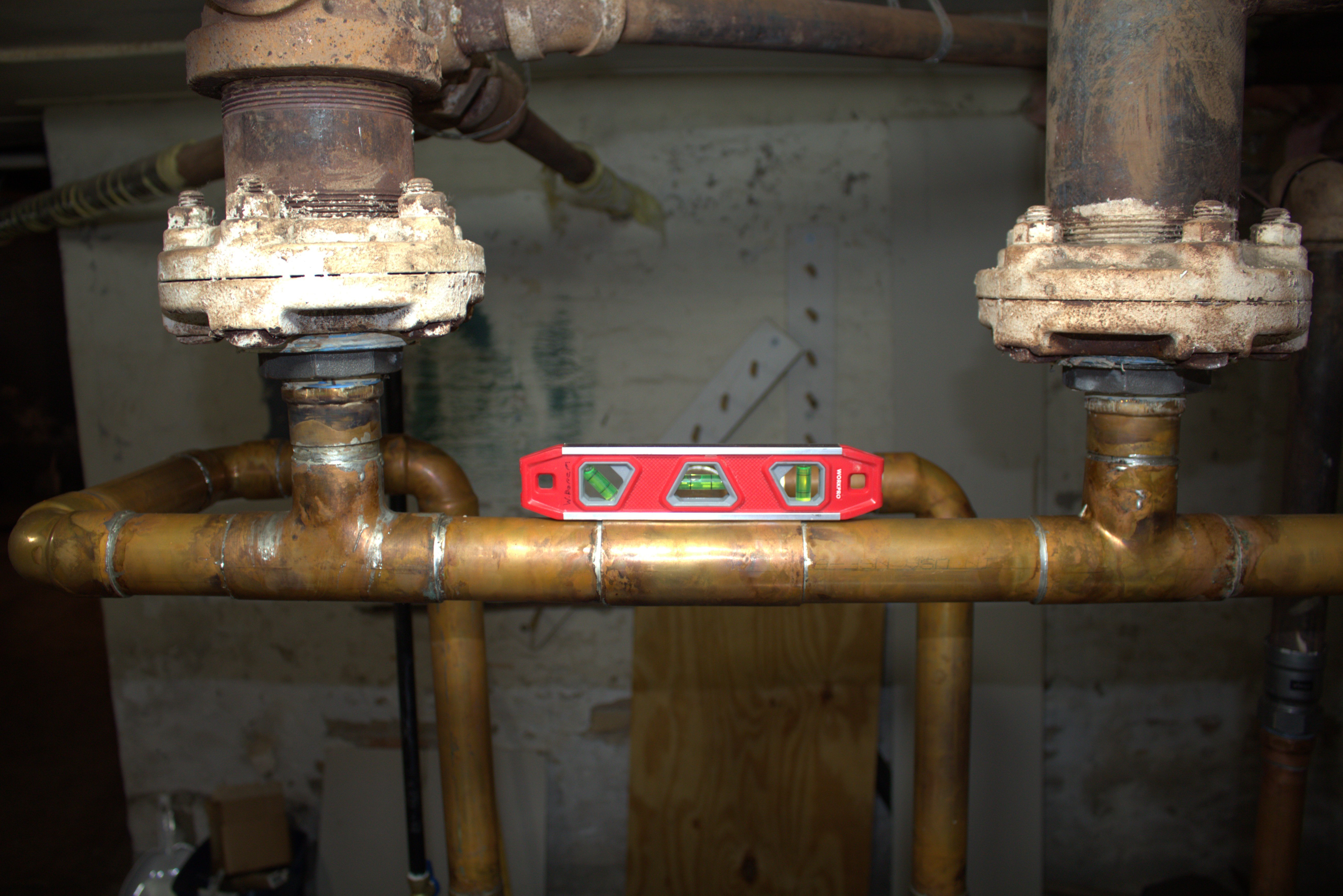
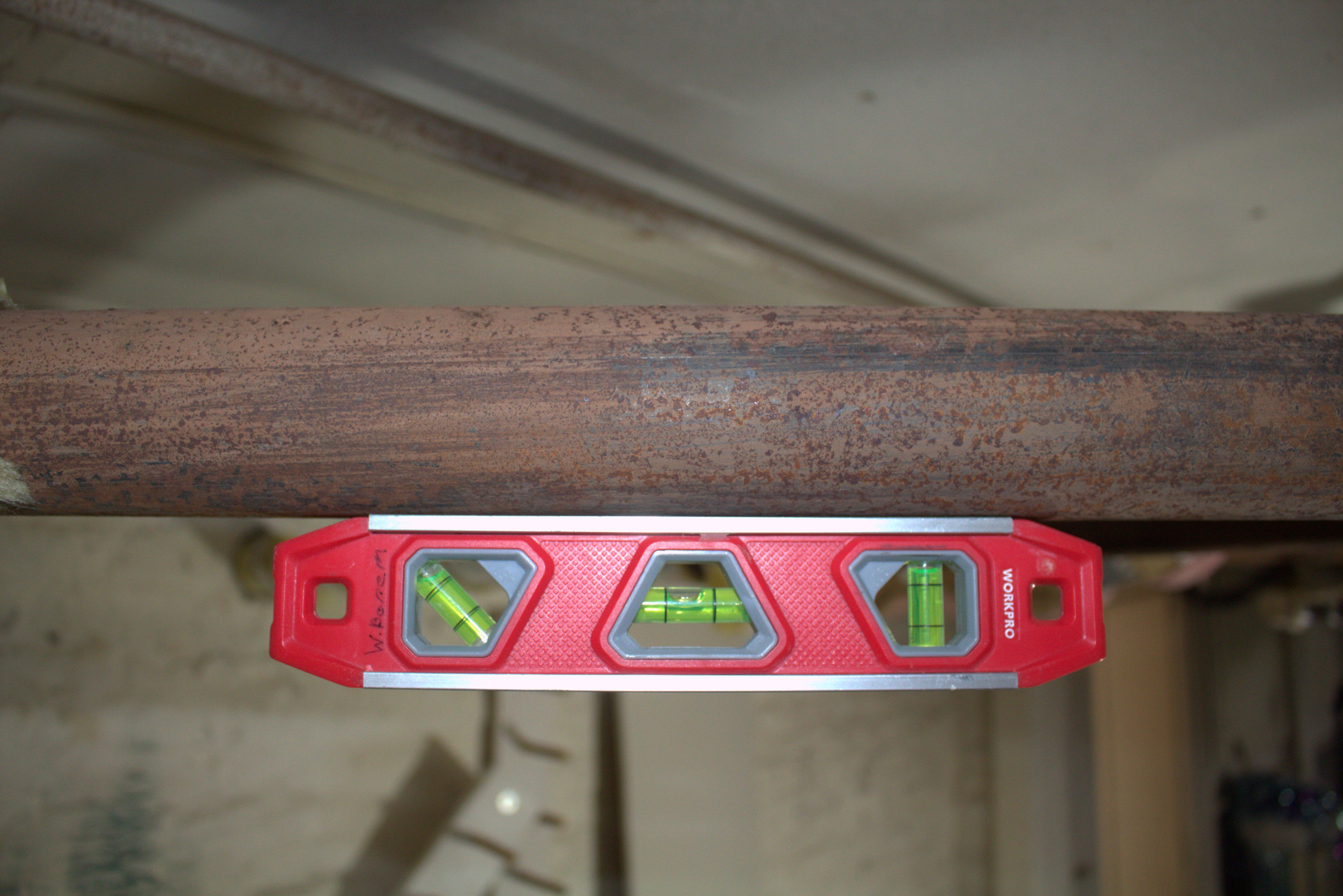
6 pipe going to two of the radiators that wont heat. no slope?
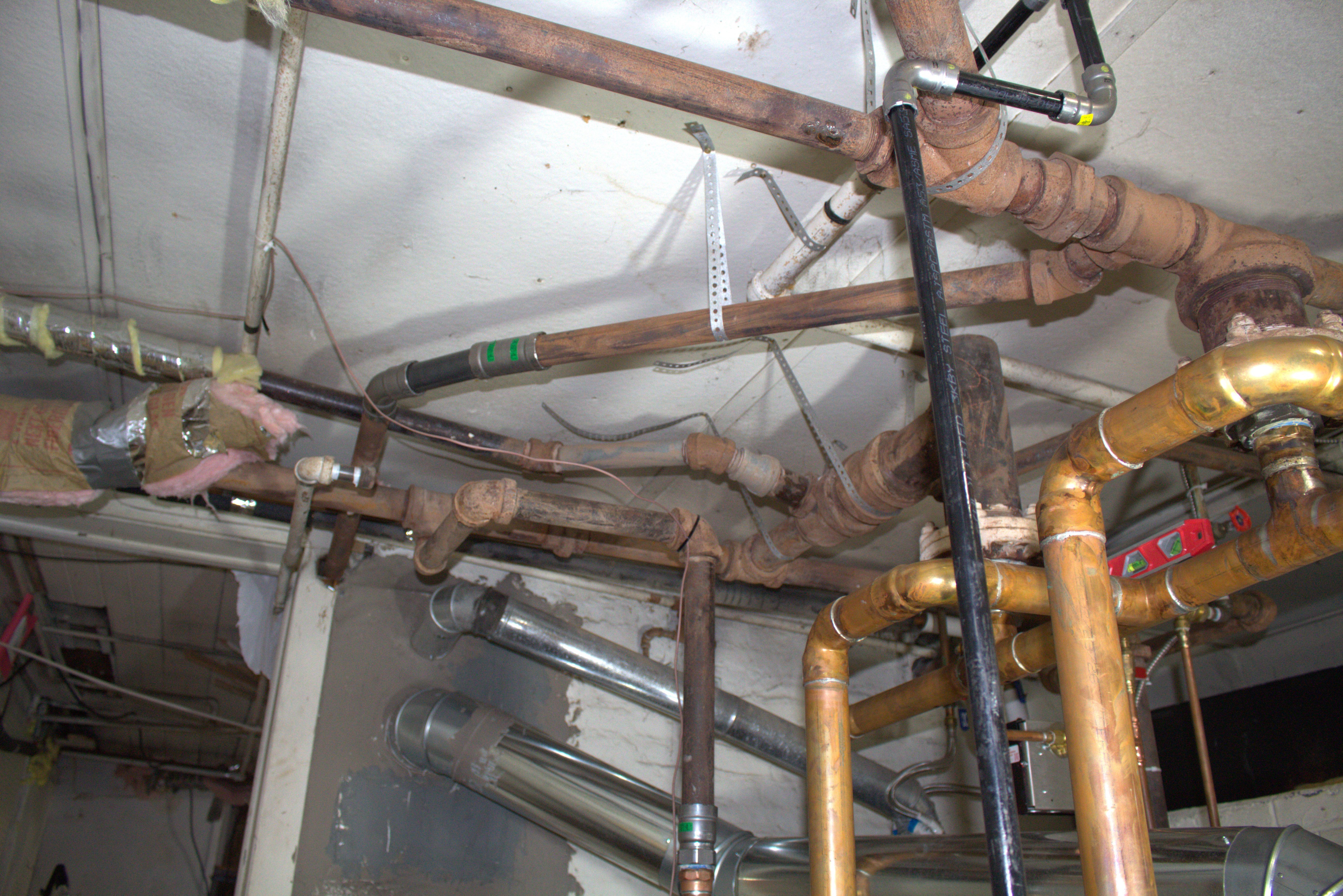
no slope steam, resting on / touching gas line is this safe / code / acceptable?
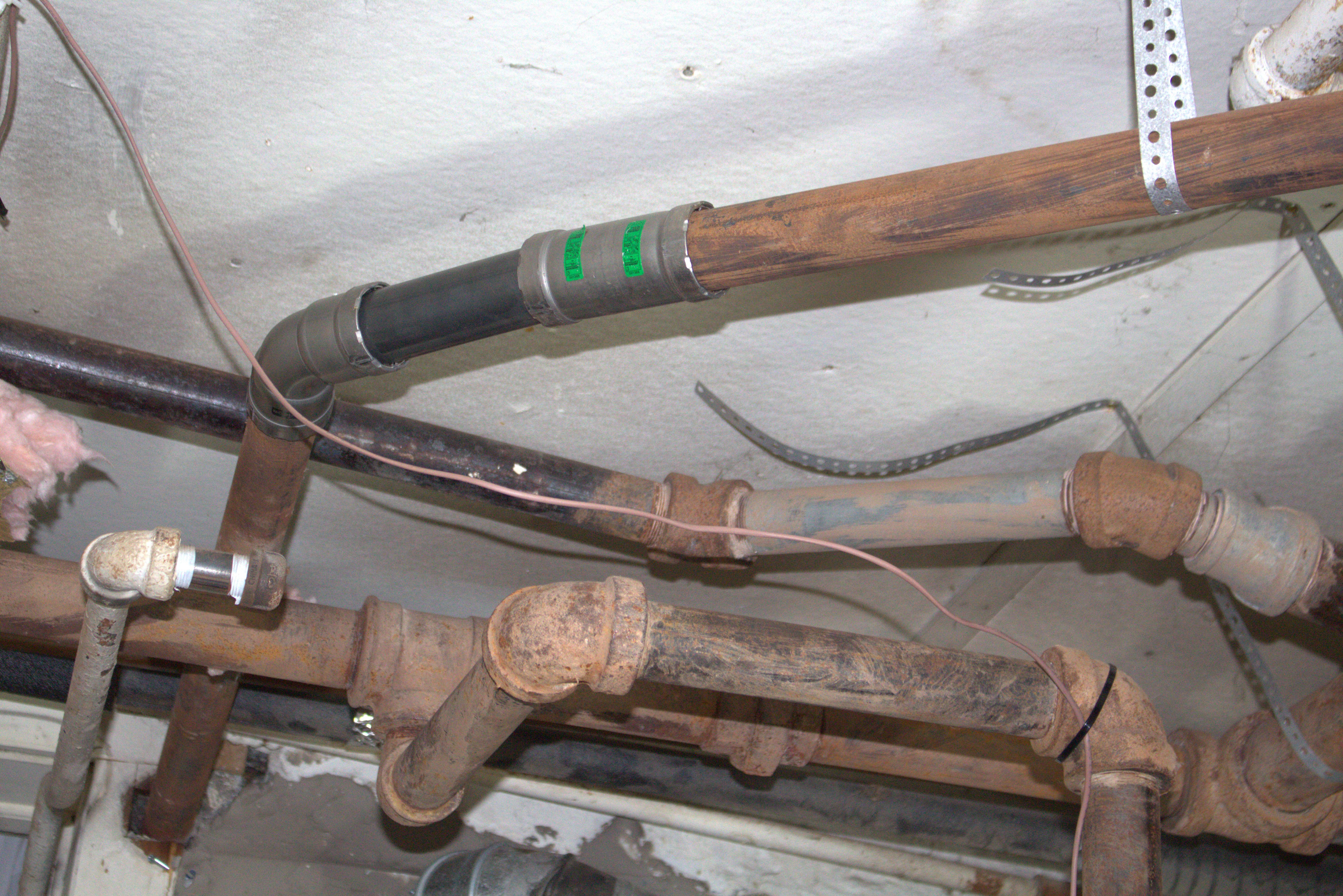
different unions? for patch
contractor says its all good to go, but i have serious doubts.
if more pictures / info is needed let me know thanks

Comments
-
different contractor.
is the boiler even the right size for the system?
copper above the water line is incorrect. it has to be black iron above the water line.
the header is too small, it has to be at least the minimum size specified in the installation instructions.
about 30 other things that are wrong.
it might work ok if your water quality is perfect but presumably you aren't paying them to spend as much effort as it would have taken to get it right to do it wrong.
2 -
Colliding steam header. Reductions galore. Installation stinks.




 7
7 -
Are you sure this is a counter flow system? Seems to be two dry returns, but hard to tell from the pictures
1 -
Did you have Hammer with the old boiler? Did all the radiators heat properly with the old boiler
 2
2 -
It's all wrong. I'd have the contractor read this thread where the experts point out everything they did wrong and give them the chance to correct it. It could be a good learning experience for them. They definitely didn't follow the instructions and use best practices.
5 -
Since they will be fighting with someone over a poor installation, they must go by the manufacturer's instructions and code.
WM does not say they cannot use copper, at least not that I've ever seen. It would be nice to see that corrected but………..However, it is piped incorrectly, so that they can dispute. I believe an EG-50/55 can work with two 2" risers, but does need a 3" header and obviously one of the mains is piped in between the risers which is bad.
Single pipe 392sqft system with an EG-40 rated for 325sqft and it's silent and balanced at all times.
1 -
-
Thank you for all the responses
Mattmia, I do not know if it is sized correctly. they supposedly used a the measurements of all my radiators but then didn't want to connect two of them, and didn't connect one that was specifically mentioned in contract, because “it would warm the room by the thermostat to much”, (there is already a large radiator in that room so maybe? but there is piping capped where a second one was or replaced)
Would you mind pointing out the 30 things I need to be able to take to task
Steam doctor, I am not sure but I think so, there are no loops back to the boiler, steam and return use same pips although some of them feed back towards the header and some feed back towards the ((cleanout pipe) returns? don’t know what they are actually called)
The old boiler occasionally hammered but it was more like a tiny ping once in a while.
Mad dog, East Central, MI
0 -
If banging started, after installation of new boiler, then obviously, the banging is connected to the new boiler.
1 -
@STEAM DOCTOR covered most of the ones we can see. We can't tell from those pictures how condensate is supposed to get back to the boiler so we don't know if that is even close. The way the power is run isn't really protected or supported. The nipple in the hartford loop is longer than it is supposed to be. Don't know what is up with the random capped pipes. The copper doesn't allow the piping and the boiler to expand at different rates so it will tend to pull the sections of the boiler apart. As @STEAM DOCTOR mentioned the order of the connections of the risers from the boiler and the risers to the system is wrong in addition to the copper pipe and the pipe size. The system needs vents in the mains to let the air out of the mains, they may have been in the old boiler piping if it is a parallel flow system. They also may be buried in a finished ceiling or millwork in the basement.
The bigger issue is that a lot of decisions need to be made as you are laying out the boiler and piping and you need to understand how steam behaves as you do that, if they don't know why you need main vents then you won't know how to make those decisions.
The old thermostat worked, right, why wouldn't a new thermostat with the proper anticipator also work?
I think @offdutytech is in michigan.
0 -
good point. That MC cable is rated for 90*C (197*F) That pipe can get hotter then that!
0 -
why all press fittings on the gas but solder on the copper?
0 -
There are two piping methods that cannot be used on near boiler steam piping: copper and welded iron piping. Both for the same reason: the piping won’t expand and contract at the same rate as the cast iron boiler block. This can cause the block to crack. Threaded iron fittings must be used to allow for the thermal movement of the block.
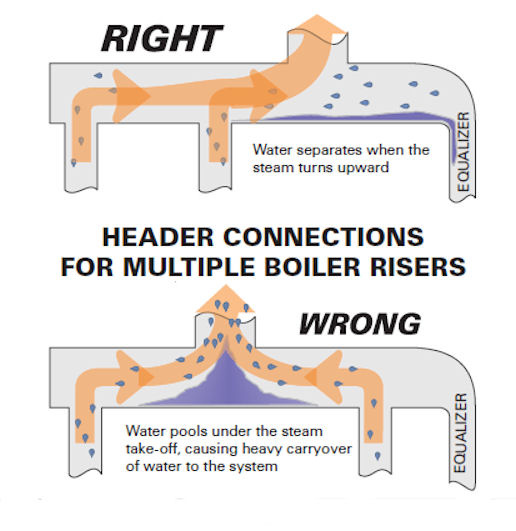
And among other things, the take offs from the header must be after the risers from the boiler.
 Bob Boan
You can choose to do what you want, but you cannot choose the consequences.1 -
Go to the Weil McLain website and download the manual for your boiler if you don't have one.
Your contractor really screwed up this install.
Read the manual specifically the piping diagram. It show how to pipe the boiler.
I don't think you have a counterflow system but if you do you need counterflow drips which I do not see.
You need to do a lot of homework before you call the contractor back. He is going to try and dance you around
 3
3 -
interestingly i see 1 drip when there should be 3 if it is all counterflow(along with a lot of other piping going in every direction imaginable that appears to be leftover from the previous 2 boilers or so).
0 -
Hello and welcome from a fellow Michigander. I'm in East Lansing (Go Green!) and I went on a major domestic steam adventure a couple years ago -- see my published works on this forum...
From your, ah, descriptive handle, I suspect you have more than one adventure with your dream house going on. But if steam heat is your only problem, you'll be golden, because this is all fixable, and you have a decent product in your boiler. You should have come to this forum before the job started, but you only learned that after your "professional" didn't do a good job. That's kind of standard in this forum.
As far using copper and colliding headers, that's normal for our area. I had a guy who told me "that's how it's done" when I showed him my system, which had both problems, and pointed out it wasn't in line with specs or with best practices. He put copper in the proposal, too, which I gladly declined.
All this just so you don't think you're special :)
If you just had this done, hat's off to you for doing it at the tail end of the heating season. You will at worst be uncomfortable as you sort through this, but nothing major will happen this late in the year.
I can help with some of your points:
I am including pictures, hoping to get some insight into if this system is okay or completely unacceptable.
Others have addressed this better than I can. I'd say it's unacceptable in a new installation -- how on earth did this pass inspection??? -- but if it were an existing installation, it might be OK if you're vigilant about water quality. It'll depend on what you can get this guy to do, and how aggressive you're willing to get with him.
I just had a new Boiler put in, a Weil McLain Series 6 EG 50 or 55 box wasn’t checked don’t know which for sure.
I don't either but you can figure this out in twenty seconds. In Weil Mclain speak, EG 50 and 55 are the same boiler. The "5" means five sections -- the end caps + three sections in the middle. As is standard across domestic boilers, every configuration has a low and a high burner configuration. An EG 50 will have seven burner tubes, a 55 will have eight. That's all. AND it's an easy matter to up- or downfire as needed.
I had an EG 50 for many years, and when it started leaking, I got interested in this business. Like I said, there's a couple threads about my situation, where you can see what your boiler looks like torn apart
The header is 2 inch, when the Weil McLain Manuel says it needs to be 2-1/2” or 3” depending on if it is 50 or 55
You're right about the header.
For the risers, you are good. The minimum piping requirements for the EG 50 are one 2-1/2-inch riser, OR two 2-inch risers, which is what you have. For the EG55, it's one 3" riser or, again, two 2" pipes.See Table 7 on page 24 of the installation manual:
https://www.weil-mclain.com/wp-content/uploads/EG-Series-7-Boiler-Manual-0425.pdfSince the guy who did your installation is clue-free, there's a really good chance he did not skim the boiler after installation. Your problems may be more related to water quality than the piping itself.
If this were my house, I'd try hard to get it corrected to spec by the installer.
If that somehow failed, I'd see how well it works with clean water first, before I went on a major rebuild. My copper piping outlasted the boiler, which failed after 32 years.
We don't see enough of the boiler to tell if there's a skim port. It's not difficult to do and it may immediately -- and temporarily -- cure your water hammer problem. You'll have to repeatedly skim to clear your system permanently, ask me how I know.
Not having main vents is unacceptable. That needs to be fixed.
I'd skim first, just to see the performance with clean water.
There's plenty of information about this here on the forum.Watch the waterline as the boiler goes through a heating cycle.
If most of the water disappears from the sight glass, you know you have a problem with water quality.Good luck, and you have come to the right place. I can't say enough about how this community helped me through my installation.
cheers -m
1 -
@mattmich good insight.
0 -
I didn't look carefully.. I believe there is a skim port in the second picture at the beginning of the thread.
Getting a bucket under the spigot will take a little planning but it'll work.» the piping won’t expand and contract at the same rate as the cast iron boiler block. This can cause the block to crack.
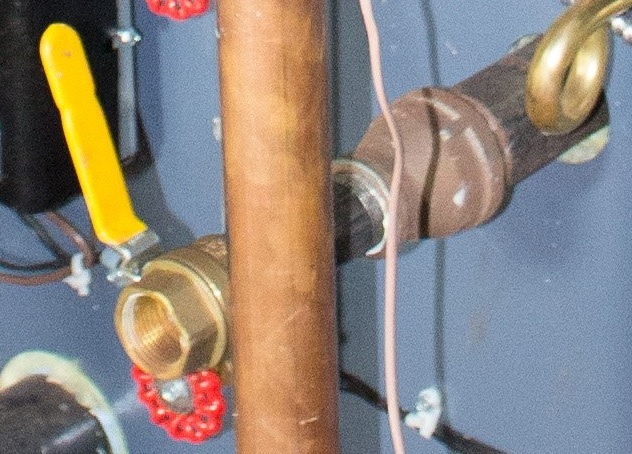
Not a fan of copper, but because of the swing joint design used here, there won't be undue force on the block.
 0
0 -
@adreamhousenightmare asked: "Would you mind pointing out the 30 things I need to be able to take to task"
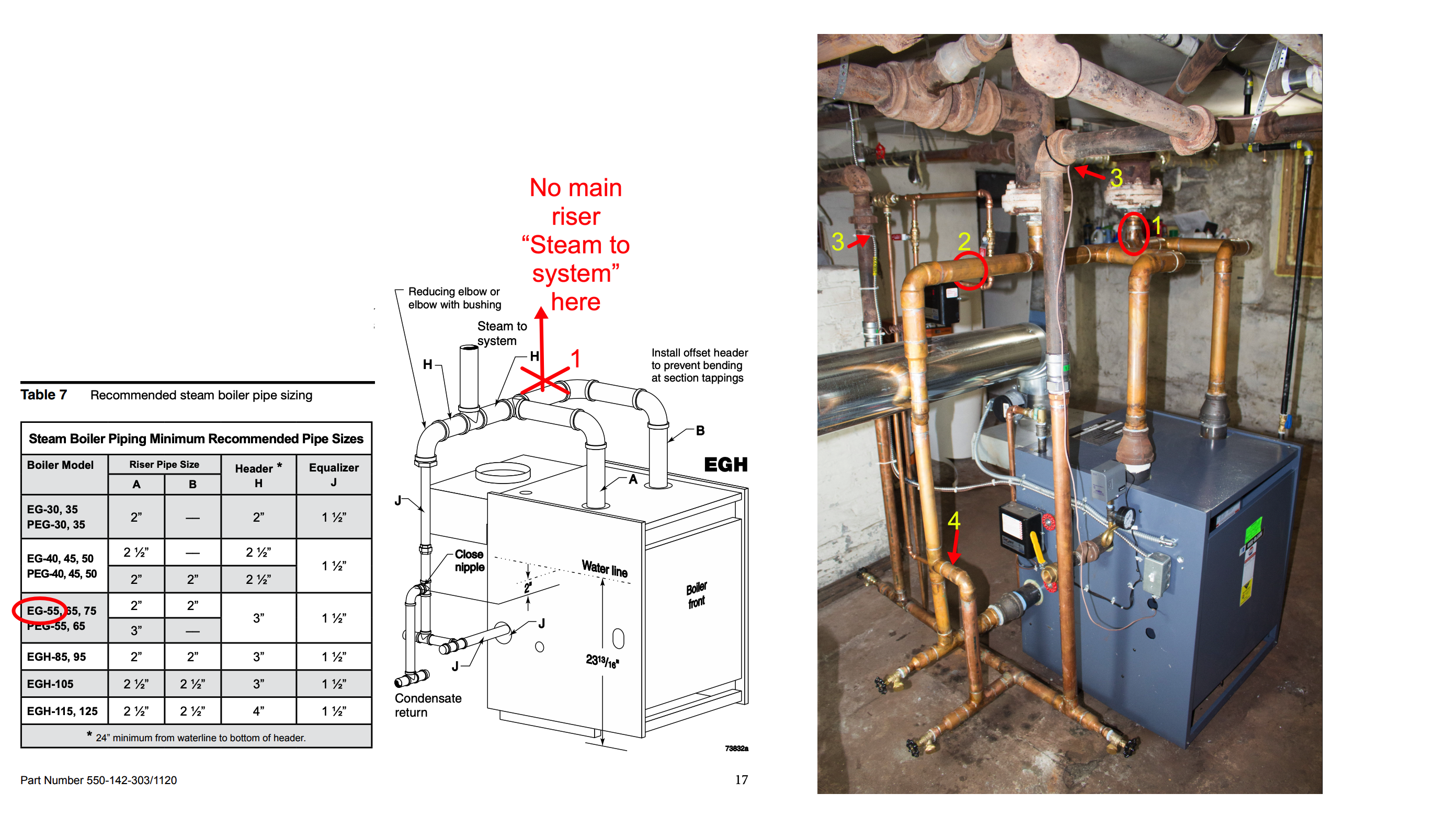
Here are 4 obvious ones that are wrong just from looking at the instructions:
- This main takeoff is between the boiler risers. That is clearly not in the piping diagram that comes with the boiler, on page 17
- This pipe (the header) must be 2-1/2" diameter or larger if you have the EG-50 and must be 3" if you have the EG-55. see page 17
- That wire is on a dry return with a fastener. The dry return can get to be over 200° and the insulation on that wire us not rated for that temperature. See the part in the manual on page 4 about wiring and following NEC or local electrical code.
- That 4" (or longer) piece of copper does not qualify as a close nipple on page 17
I can't be sure if the risers (A & B in the diagram and table 7 on page 17) are 2" pipe. That may be 2" copper from what I can see, but it must be at least 2". If it is not, that would be item #5 if those are smaller that 2" pipe.
Other issues that may not be specifically mentioned in the manual, but are considered normal trade practice:
- Best practice for a steam boiler installation is to use threaded steel pipe above the water line. This boiler, piped entirely in copper, shows a disregard for accepted steam-fitting practices.
- Swing joints are customary on dual-riser piping designs. I am not sure that a non-threaded 90° elbow qualifies as a proper swing joint, since soldered joints do not allow for the same movement and flexibility as threaded joints. Those solder joints will fail prematurely. I would insist on proper swing joints when the header is repiped to the correct size.
- Banging is not an acceptable result of a new boiler replacement. If there was no banging with the previous boiler and there is banging now, the replacement boiler installation is the most likely cause of the noise.
- Based on the sizing guide published by Weil-McLain, your boiler may actually be properly sized. However, that sizing assumes that all near-boiler piping and steam mains are insulated. This should have been addressed in the installation contract. Even if insulation was not specifically listed, if the contract states anything similar to “installed in accordance with the manufacturer’s instructions and industry standards,” you may have grounds to require that the repiping and insulation be included as part of the corrective work.
There may only be eight issues to point to instead of thirty, but those eight should be enforceable with proper representation.
Hope this helps.
Edward Young Retired
After you make that expensive repair and you still have the same problem, What will you check next?

 4
4 -
I agree.
Retired and loving it. 1
1 -
<adreamhousenightmare>, I hope you appreciate this antidote to AI. It's almost as if, there is a forum dedicated to your specific "nightmare."
0



Categories
- All Categories
- 87.8K THE MAIN WALL
- 3.3K A-C, Heat Pumps & Refrigeration
- 59 Biomass
- 430 Carbon Monoxide Awareness
- 132 Chimneys & Flues
- 2.2K Domestic Hot Water
- 6K Gas Heating
- 124 Geothermal
- 170 Indoor-Air Quality
- 3.8K Oil Heating
- 79 Pipe Deterioration
- 1.1K Plumbing
- 6.7K Radiant Heating
- 396 Solar
- 16.1K Strictly Steam
- 3.5K Thermostats and Controls
- 56 Water Quality
- 51 Industry Classes
- 51 Job Opportunities
- 18 Recall Announcements