No Header, No Equalizer, No Problem!
Comments
-
Net 305 sq.ft. of steam
IBR: 72,800 BTU/Hr Steam.
OK then I'd have to recalculate but even less than 12.6 fps then.
0 -
Love the videos and the empirical experimentation approach to answering questions. I'm still not sure how one tells the difference between say 3% vs 5% water content steam without expensive direct measurements of the steam or a very controlled measurement of total condensate return. Perhaps it doesn't matter but that is another question.
 1
1 -
Thanks. My hypothesis is that nothing in the piping can affect water content in our steam, we have no way to measure it anyway, and regardless all the BTUs generated in the boiler make their way to the radiators anyway (because where else would the BTUs be going??).
If someone can prove those assertions wrong then I'd be thrilled to see that evidence. But so far people just want to tell me I'm wrong without evidence so I ignore them.
NJ Steam Homeowner.
Free NJ and remote steam advice: https://heatinghelp.com/find-a-contractor/detail/new-jersey-steam-help/
See my sight glass boiler videos: https://bit.ly/3sZW1el 1
1 -
Just to throw a minor spanner in the works… from the thermodynamic point of view… it is worth remembering in all of this that we are dealing with saturated steam. Among other things, that means that if we consider a packet of steam wandering around in a pipe and look at it, anything — anything! — which removes energy from it will cause some of the vapour phase to condense to the liquid phase. This results in very small droplets of liquid phase water in the steam. This is not wet steam, just saturated. Does our friendly packet of steam have less ability to deliver heat now than it did when it started? Yes — since some of the heat energy has been lost to whatever removed the heat from the packet. Is this a problem? No, not really — althugh naturally one wants to reduce those losses.
Now if there are macro size water droplets in there, or enough condensation has occurred along the way so that the micro droplets have started to coalesce to the point where they drop out of the stream, that might be regarded as "wet" steam.. Will those macro droplets cause a problem? Again, not really unless they finally get big enough to fall out of suspension — and even then not really unless they make a puddle or otherwise obstruct flow (unless we are looking at steam turbines, where they cause blade erosion — but that's another matter)(or there is enough to cause hydrolocking in a piston engine!).
None of this is the same as carryover…
Not sure if any of it is relevant, either. Back to your cave, old man.
Br. Jamie, osb
Building superintendent/caretaker, 7200 sq. ft. historic house museum with dependencies in New England 3
3 -
Thanks Jamie, this is what I have been trying to communicate for some weeks now. I appreciate your wording of it—clearly I haven't been able to present my case well enough haha
NJ Steam Homeowner.
Free NJ and remote steam advice: https://heatinghelp.com/find-a-contractor/detail/new-jersey-steam-help/
See my sight glass boiler videos: https://bit.ly/3sZW1el1 -
I see something in that sight glass that cries out wet steam rather than normal condensation, especially at the high velocity of 39.4 fps (28 MPH), and a mixture of steam and liquid droplets is still defined as Saturated Steam so we have to differ there. There is an internal mistiness or fogginess that can only be entrained fine water droplets. What we see on the interior of the glass (much lower thermal conductivity than steel or iron in typical fittings neglecting thickness) is some of these micro droplets impinging on the surface and coalescing. The ones that are small enough will be propelled upwards along the surface due to the high velocity. The ones that manage to coalesce into a large enough droplet will succumb to gravity and fall downwards on the surface even with that high velocity. Condensation would be very minimal at this high velocity and with the lower thermal conductivity of glass and the low dwell time and the high internal temperature of the glass. If you want to see what that looks like, then look at ethicalpaul's other videos where the velocity is extremely low at 9.2 fps (6.3 MPH) with his Peerless 63-03L boiler (their smallest) and overbuilt double takeoff with drop header. That would have much lower dwell time and lower internal temperature of the glass, which would be even more condensation and you see very little. The velocity trumps the higher heating ability of, say 100% dryness fraction vs 95% dryness fraction, due to the effect of the convective heat transfer coefficient (h in Heat Transfer textbooks). Sorry, this started out simpler than this, and got excessively detailed. None of this is simple is it? As you say often…..oh well…..
0 -
You told me in messages that you were done discussing this topic with me and you accused me of purposely lying (which of course I disagree with). I'm looking forward to you following through on that because I don't know what you want as a response from that kind of post up there.
I'll let what I said before and my video stand on its own here, thank you.
Just as an update for those interested I'm still running that 1-1/4" S-curve pipe up to the main and it's been running as good as when it was a double drop header.
NJ Steam Homeowner.
Free NJ and remote steam advice: https://heatinghelp.com/find-a-contractor/detail/new-jersey-steam-help/
See my sight glass boiler videos: https://bit.ly/3sZW1el1 -
Lets keep the drama out of this ok? Just man to man polite discussion. PM's should be private. I'm not sure what the forum rules are on something like this. I actually said that I initially thought you must be yanking all of our chains but I'm almost 100% certain that isn't the case now but that I have been advised by others who have tried before me that I was wasting my time. I can respond to Jamie's post can't I?
By all means let what you have said stand and I will do the same. That's keeping things civil and we are just discussing the physics of steam and it isn't something to get upset about, right?
 1
1 -
Without looking at it, @Captain Who , I'd be inclined to say that the mistiness which you are seeing is, indeed, condensation from saturated steam.
There are two energy losses to be considered in a pipe at high velocity: the thermal conduction through the pipe walls, of course, but also the head loss in the moving fluid — which is an energy loss. Both will cause micordrop condensation in saturated steam. Remember that any adiabatic energy loss in a packet of saturated steam will be made up by energy released by phase change — condensation. It's interesting to note that exactly the same phenomenon can be observed in air which is saturated with water vapour — an energy loss will cause condensation. In air at saturation, one very observable loss is a drop in pressure — which leads to the fascinating observation of condensation over a wing at high angles or attack or in vortices from wing tips or edges of flaps and other control surfaces. Another, of course, is the cooling on pressure drop — which will, when saturation is reached, lead to condensation (clouds…). But also keep in mind that the air situation is somewhat different, as there you are dealing with a near ideal gas (air) mixed with a varying saturation of a non-ideal gas (water vapour at near phase change pressures) and so the adiabatic behaviour of the air, resulting in a temperature drop with reducing pressure, also plays a part.
In the case of the pipe, however, one also needs to deal with the coalescence of the microdops on contact with a surface — in this case the pipe wall — which will lead to visible droplets on the pipe wall. Coalescence can also occur in the free stream (think rain), but at the high velocities and turbulence found in the pipe is less likely.
Br. Jamie, osb
Building superintendent/caretaker, 7200 sq. ft. historic house museum with dependencies in New England2 -
Just curious
May I ask what you do for a living? I seem to recall Jamie being a mechanical engineer, and I think Paul is a programmer but I do not recall what type?
Single pipe 392sqft system with an EG-40 rated for 325sqft and it's silent and balanced at all times.
0 -
Without looking at it
@Jamie Hall you’re killing me here, please watch this one 😅
@ChrisJ I work on Mac and iOS apps
NJ Steam Homeowner.
Free NJ and remote steam advice: https://heatinghelp.com/find-a-contractor/detail/new-jersey-steam-help/
See my sight glass boiler videos: https://bit.ly/3sZW1el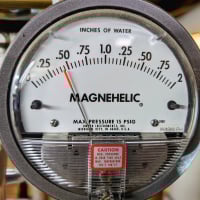 2
2 -
With his 1.25" (pretty sure that is what he said in the video) pipe wouldn't the riser velocity be 52ft/s with a 233sqft boiler rating? Still within manufacturers guidelines for some of the bigger boilers.
0 -
Hmm… at which point in my somewhat chequered career do you want to know what I did for a living? Or do now?
Now — a lay brother of the Order of Saint Benedict. Not cloistered as such, but I write sermons, help people with assorted concerns, general parish work, spend a lot of time on theologic and philosphic concerns… and try to maintain Cedric's home.
Earlier in life. Well, let's see.
Paying jobs? Civil Engineer (structural, sanitary, railway) and Agricultural Engineer. Also environmental remediation. Building inspector. Sometime college professor (engineering, surveying). Military intelligence. Also church choirmaster and organist.
Non-paying (academic). The usual BA, MS and PhD stuff. Extensive research on the interaction between climate, geography, and continental scale glaciation. Author or the original (now vastly improved!) glacial ice dynamics model of the European and Australian general circulation/climate models (oddly, the US GCM glacial dynamics model uses a model authored by an Australian friend of mine, now passed away).
Sometime lobster fisherman. Airplane pilot.
Daddy.
General nuisance…
Br. Jamie, osb
Building superintendent/caretaker, 7200 sq. ft. historic house museum with dependencies in New England

 9
9 -
OK so there appears to be a disconnect between engineering and field language on wet steam and dry steam. That is fair to want to finesse from a communication standpoint. But I think what @ethicalpaul is calling carryover is what I have, perhaps carelessly from a technical standpoint, referred to as wet steam.
now some of these sightglass experiments have demonstrated this slugging relative to water quality and this slugging is the single most significant problem I have faced over the years. and the one thing I will say about header design vs. water quality (limiting it to those two variables pro-tem) is that what we all would prefer is not a header that handles the slugging/carryover but no slugging/carryover.
So when I commissioned a Williamson GSA-125 this year, I skimmed multiple times. The thing purred along making a half pound, looked great after couple hours. I go home and in the morning get the call that the boiler went off on low water and they refilled and one of the air valves had bad threads and when he touched it it fell off and water was pouring out of the radiator and the gauge was showing 3 to 4 pounds. (pressuretrols seem basically useless to me, I had it set for 2 which was effectively its low end, i'm forever trying to find controls that work in vapor region but with the exception of the old mercury ones haven't been successful . . .). But what I realized is I don't really want the boiler to go up to 1 or 2 lbs or even 1/2 pound and then shutoff for a while and then do it again. And why was a boiler that I left humming happily at l/2 lbs. running up like that and then it would carry water.
This boiler had only one 3" tapping for outlet and although the system main was 2" I didn't bush down right away, trying to keep the velocity at the boiler exit lower. And after coming 2 feet up from the boiler i reduced to 2" and continued the rise higher than the main and then created a drop to an existing tee on the vertical under the main which is where the boiler piping from the previous boiler had been connected and the bottom of the vertical tee was a 1 and 1/4 drain/return/equalizer which i piped with two elbows to the low boiler connection (no hartford loop because there was no wet return). Think you can see this in the picture. In what is presented as ideal drop header design, the tee run would have been run on the flat and continued horizontally to the drop but otherwise I thought I pretty much conformed to the spirit of the drop header and the tee was existing and where I ended my new piping. But, as described, I was plagued by slugging no matter how much skimming, soaking with tsp draining and new water i did.In either scenario, this is principally a counterflow main and once the system is full of steam it does have to handle all the condensation from all rads and that will drop through the tee while steam is flowing the other way. This seems to me a no brainer case for a parallel flow main design which i tend to see in larger buildings or more well thought out smaller ones; but telling someone to redo all their feed piping is a lot different than suggesting improved near boiler piping. I'm always dealing, as most of us, with mains and rads installed by the deadmen–be they magicians or madmen–and so taking that part of the system as a given not subject to much change.
While I could imagine this counterflow being a bit of a problem creating a turbulent interface between steam and condensate, it still did not explain to me why pressure was increasing and slugging was transpiring. I would have loved for a good deal of the piping to be transparent so I could watch what was happening but one bit of the artistry of steam is you kind of have to infer that stuff although i have made experiments like @ethicalpaul adding transparent portions to steam systems; but i haven't figured out how to make a transparent piping system through the entirety of the relevant near boiler and main entries. maybe someone will make polycarbonate threaded fittings or something that could actually sustain this use, at least for a term of testing and design.
as others have noted, this seems to be especially problematic with new boilers and when i asked why the manufacturers can't just clean the oil out after tapping and threading, etc. the answer I got was a preference for some oil coating that kept rust down on the interior surfaces while the boiler was awaiting distribution and installation. forgetting that i'm not really sure that there is any careful universal dispersion of these oils in boiler to give uniform anticorrosive protection, I'm busy being careful not to get assembly fluids and pastes into the system but its going to come with its own built in headaches. I don't imagine that any relevant amount of rust other than aesthetic is at issue but maybe I'm wrong. wouldn't be the first time and won't be the last. and it does occur to me that rust loose in the water could have some impact on these water carrying phenomenon. maybe this is back to water treatments that can precipitate or dissolve or encapsulate whatever the various contaminants are and then they can be drained away?As those following this saga in my other novellas in various threads you'll find that my answer wasn't water quality beyond the TSP cleaning and skimming, it was firing rate. I lowered the firing rate to where it effectively balanced the condensing rate (slow pickup obviously) and the thing has been running perfectly. So that is another variable on operational stability and boiler water carryover that i would enter into the mix besides header design and water quality. to the extent that lower firing rate makes less steam in a given period of time I think that has to lower velocity.
finally, on the contentions that seem to be one predominate thread of debate here over where the btus go and thus efficiency implications of careful header construction that i thought was more aimed at preventing water carryover into the mains (which the test here leaves me unsure how much is actually being carried. certainly no apparent slugs rich in liquid water although enough moving w steam to knock it off on low water–not surprising with today's small boilers where the low water control almost becomes a regular operational control in addition to safety, and gets me very nervous about the idea of automatic feed for small boilers). I don't disagree with the basic premise that if the same btus are absorbed by the water in the boiler that they go into the house although there is the question of where in the house: near the boiler, boiler piping, rads? Also I would think you would need to monitor combustion efficiency, esp. thinking stack temperature, to the extent that any phenomenon associated with piping may limit btu transfer, e.g. lower boiler water line while operating or manner of boiling phenomenon may mean less heat transfer? Also there is some question in my mind of kinetic energy involved in pushing water and whether that phenomenon actually consumes btus in some manner although i would accept in general the logic that they went somewhere so maybe overthinking it.
1 -
Velocity is a red herring. Even in my video where I had a single 1/2" supply pipe there was no "sucking up of boiler water" into the supply. The issue became too high a pressure in the boiler due to the constriction not allowing the steam to travel out fast enough. Historically, I believe this issue was pondered about and hypothesized about but never tested. "High velocity bad" became the mantra with nothing to back it up.
If you think about it, it makes perfect sense that the velocity is a non-issue—as the velocity goes up (due to an undersized supply pipe), the steam is getting backed up in front of the pipe and so velocity in the steam chest actually is reduced.
NJ Steam Homeowner.
Free NJ and remote steam advice: https://heatinghelp.com/find-a-contractor/detail/new-jersey-steam-help/
See my sight glass boiler videos: https://bit.ly/3sZW1el1 -
Thanks for that cool story. Looking at your photo I can say with 100% confidence (for whatever that's worth haha) that your temporary carryover problem was due to oil making its way from your piping into the boiler. You did great cleaning and skimming on installation day, but another session is going to be required (unless you wash all your pipes in detergent prior to installation). And oil at the top of the steam chest isn't going to be cleaned out on installation day without wanding. The change in firing didn't hurt anything of course.
NJ Steam Homeowner.
Free NJ and remote steam advice: https://heatinghelp.com/find-a-contractor/detail/new-jersey-steam-help/
See my sight glass boiler videos: https://bit.ly/3sZW1el0 -
@ethicalpaul so we have continued skimming over the season if we see any of this water moving phenomenon sneak back in which it has to minor nonproblematic extent but I want minimal waterline change, nevermind threatening LWC and skimming is easy so why not.
we get minor cloudly rust but not recognizable oil at this point although it does seem to help so it's almost like if i was a glutton for punishment i'd keep some condensate and test its content. and maybe when the water got slugged up it introduced trace oil to these pipes that doesn't seem like it should still be enough to be returning water quality headache with the condensate but it is. I don't know if they used to clean oil from boilers after manufacture and then stopped but i'll admit I was unaware of skimming and mostly monkey see monkey do copying the deadmen's piping in my early replacements like 30 and 40 years ago and i never skimmed and never had a problem. maybe different section designs and comparative water levels. those boilers were a little taller. can't remember the brand/model but I still have access to one so i'm going to go look. and never altered the nameplate btus or anything on that atmospheric and it ran fine, steamed fine, didn't push water, from the day I put it in until today which is like 40 years. and i'm going to get a picture of the piping. no independent header IIRC. it went right into a late tee that fed the mains to one side and the drop to condensate return on the other.
now i note your experiment with the really small (1/2") constriction at the steam outlet and while I agree that if pressure builds there is some steam being held back over the water in the boiler, at least in the immediate area of the pipe outlet the velocity will increase and that outlet is over boiler water and the 1/2" is getting close to like a venturi almost so i do wonder if that can create a different almost vacuum like or lower pressure/suction type effect over a small portion of the boiler water. (unless the pressure measurement is taken like by the 1/2 outlet being a tee and measuring pressure at the outlet or even via a concentric smaller pipe inserted through a tee to the area of the boiler below the outlet i'm not convinced the pressure would be the same in that region the same as the pressure drops even when gas or fluid flow around a tight bend at the outlet (so measurements just above the constriction also obviously of use).1 -
if there is some Venturi effect or high velocity near the 1/2” supply, it didn’t “suck” any water up as seen in the video so it appears to not be a thing
NJ Steam Homeowner.
Free NJ and remote steam advice: https://heatinghelp.com/find-a-contractor/detail/new-jersey-steam-help/
See my sight glass boiler videos: https://bit.ly/3sZW1el0 -
I checked my math again and I got the same thing; about 39.4 fps.
Have you read Dan's 2023 article "Dry Steam Is The Goal"? Great article by the way and I appreciate the historical references. Copied and pasted from it @DanHolohan:
But what is that critical velocity that the steam should never exceed as it leaves the boiler? Alfred King doesn’t say. But Ara Marcus Daniels does. Mr. Daniels was a consultant to the U.S. Government on steam-heating systems during the 1920s. Here’s what he says in his 1928 book, “Steam and Hot Water Heating:”
“Steam heating boilers, unlike power boilers, are not provided with means for assuring dry steam entering the supply lines through the use of ‘dry pipes’ or ‘separators.’ Hence, velocity of flow through the outlets of such boilers should be relatively low – not over 15 feet per second – if the carrying over of water with the steam is to be avoided.”
I took a sampling of six boilers that were popular during that time. These boilers had an average load of 790 square feet EDR (189,600 Btu/h). They were much bigger than today’s boilers. Their sections were wide and could accommodate the steam as it rose through the water, without creating much turbulence at the surface. And the wider sections allowed for large steam exit holes. None of those holes were smaller than 3-inch. The steam exit velocities of those boilers stayed within that critical 15 feet per second mark that Mr. Daniels specified. That’s how they got dry steam.
AND:
During the late-1970s, there were residential steam boilers with holes as small as 1-1/4 inches. The velocity of steam leaving those boilers was high enough to suck the water right out of the boiler and send it up into the pipes and radiators.
This sounds a little more adverse than what ethicalpaul saw in his video where it was minimized to entrained water droplets that created a visible mist on the interior of his sight glass volumetric space along with coalescing water droplets on the interior glass surface, but he has super clean pristine baby'd from day one, smallest boiler that Peerless makes, with the most pristine water free of TSS and TDS (distilled water), with 8-Way treatment that you could hope for.
0 -
All you have to do is take your older, larger, less pristine boiler, throw a sight glass on it with a smaller supply pipe and show it “sucking” water into the supply.
I showed velocity doesn’t matter. Show me it does. That’s the scientific method—not quoting multiple people who apparently never tested their hypotheses.
NJ Steam Homeowner.
Free NJ and remote steam advice: https://heatinghelp.com/find-a-contractor/detail/new-jersey-steam-help/
See my sight glass boiler videos: https://bit.ly/3sZW1el0 -
I think there is no question in my mind that older larger, esp. taller boilers had less problems with carry water and i'm not absolutely convinced whether this was a matter of velocity or not.
I would say that I remain mystified as to the effect of velocity sucking the water out of the boiler. it does seem to me that @ethicalpaul demonstrated something short of that "great sucking sound" to quote ross perot in this 1" outlet experiment on his boiler. but i remain suspicious about the effects around the exits at higher velocity although obviously his velocity had to be higher in the 1" segment. i'd like to measure the pressures just upstream, i.e. physically down from the 1" constriction and just upstream. i generally agree with @Captain Who about the relative size of sections and this whole pushing or sucking water thing just never happened in those older boilers (maybe i never managed to contaminate one with oil) but I wouldn't advertise them as paragons of water quality if it came to suspended solids.
and again, i know this experiment was on a very small boiler but it seems that the boiler went off on water level so some water was being carried but not slugs. do you have a sense of how that related to your operation with the header/equalizer in place? or did I misread the experiment results.
while i remain in agreement that btus that don't go up the chimney must go into the house I do wonder about the kinetic energy devoted to moving water and to the extent it actually is liquid you aren't moving the same btus to the rads given the phase change heat. i'm not sure what kind of measurements in the steam column would reveal, moreso than visual evidence, how much was water although I do take the point from repeated experiments that you can see water droplets and surges in some of your experiments and if there are water droplets entrained in the steam here, they are small enough not to be readily visible to the naked eye.0 -
@ethicalpaul — I quite agree with what you are saying (or what I think you are saying) — high velocity doesn't "suck" water out of the boiler. However, we do find people complaining about steam velocity making a difference and creating "wet" steam. Ah… well… go back and lok around somewhere in the murk I wrote up there. To get the velocity — and move the steam at all — you need to reduce the pressure. But — when you reduce the pressure in saturated steam you get condensation to microdrops. Reduce it enough you get coalescence to macrodrops. Splurk…
Br. Jamie, osb
Building superintendent/caretaker, 7200 sq. ft. historic house museum with dependencies in New England1 -
@archibald tuttle said:
it seems that the boiler went off on water level so some water was being carried but not slugs. do you have a sense of how that related to your operation with the header/equalizer in place? or did I misread the experiment results.
How do you define "slugs of water" vs carryover? In all my sight glass experiments I don't think I've ever seen a "slug of water". I have seen the following in my short "career":
- On my old boiler it had a garbage non-header and I have a video of it carrying over really muddy water—it looks just like a lot of water getting shoveled into the main
- On my new boiler I was able to experience and document carryover in the following conditions. Sometimes it would carry over just to the header, and sometimes I could get it bad enough that it would reach the main:
- After purposely adding some cutting oil to the boiler
- After adding Surge-X boiler treatment
- After accidentally fouling my boiler water with some condensate from a newly-manufactured radiator
NJ Steam Homeowner.
Free NJ and remote steam advice: https://heatinghelp.com/find-a-contractor/detail/new-jersey-steam-help/
See my sight glass boiler videos: https://bit.ly/3sZW1el0 -
Paul's pressure was low as evidenced by his in. of H20 pressure gauge. What higher velocity does is it allows entrained water droplets that have coalesced in a range of sizes up to a larger size to be propelled from the close proximity of the exit and sustaining that movement up a vertical pipe without gravity being able to defeat that.
PS: And I should add that therefore the higher the velocity, the more visible and more foggy in appearance these potentially larger entrained droplets will be (and the wetter the steam) even through a narrower sight glass makes the width of the column of two phase mixture that you are "looking through" less.
0 -
Those larger drops just hit against the interior wall of the pipes and then, if the velocity is fast enough, the water does get pushed along with the steam, but it remains clinging against the pipe wall. I have never seen any droplets entrained even at my highest velocities in the 1/2" pipes.
If they are there, but too small to see, or if I just didn't see them, they can't remove heat energy from the steam that is traveling with them, they simply travel along and eventually join the condensate in the radiator (I am a broken record I know but the same things keep being brought up).
NJ Steam Homeowner.
Free NJ and remote steam advice: https://heatinghelp.com/find-a-contractor/detail/new-jersey-steam-help/
See my sight glass boiler videos: https://bit.ly/3sZW1el0 -
Ah — but the condensation which occurs and makes the microdrops form itself means that that much latent heat energy is no longer available to appear when the remaining water vapour condenses where you want it!
I should add that the droplets to which I refer are way too small to see with the naked eye — but they will appear as a slight increase in the opacity ("fogginess") of the steam — which with a path length of only a few inches you are not going to notice.
Go out to an airport on a very high humidity day. Very high. And watch something of size take off — a 777 or C-17, for instance. As soon as they rotate and the wings start to lift, you will see a definite cloud form on the top of the wing, and if yuo are really lucky you will see it in the vortices at the wingtips. That's from the condensation of the watervapour in the air with the velocity and pressure changes as the wing makes llift.
Br. Jamie, osb
Building superintendent/caretaker, 7200 sq. ft. historic house museum with dependencies in New England1 -
Ah — but the condensation which occurs and makes the microdrops form itself means that that much latent heat energy is no longer available to appear when the remaining water vapour condenses where you want it!
Well I know Jamie…that's why people insulate their pipes. But there is always going to be some condensation on every single square inch of the interior of the entire system—it's a non-issue for purposes of getting to the bottom of steam system problems since it's ever-present.
Some people think that uninsulated pipes can cause things like banging and all kinds of other problems. I have never seen any evidence of this either. But yes the loss of heat energy occurs everywhere—luckily most of those areas are within the house envelope. One of my "clients" regretted paying a lot of money to insulate their mains because after doing that, their kitchen floor was icy cold, so they are going to remove it.
NJ Steam Homeowner.
Free NJ and remote steam advice: https://heatinghelp.com/find-a-contractor/detail/new-jersey-steam-help/
See my sight glass boiler videos: https://bit.ly/3sZW1el0 -
Any steam leaving a boiler at 39 fps is too wet to be efficiently operating a low pressure steam heating system. If I specified government work like that, I wouldn't be paid — or licensed.
1 -
watch the cloud form on the top of the wing when this F-35 pulls up
Extreme Maneuvers of the F-35 Lightning: Pilot Skills or Pure Genius? #military #aviation #airshow
or this one of a Grippen (possibly the world's best fighter)
SAAB JAS 39 Gripen E – High-Agility Demo at RIAT 2025
note the cloud on top of the wing at about 1:00
Br. Jamie, osb
Building superintendent/caretaker, 7200 sq. ft. historic house museum with dependencies in New England0 -
What is it about the velocity that would affect the efficiency? Where do the lost BTUs go?
As I have described, when the velocity in an undersized supply pipe is high, the velocity in the steam chamber is by definition slowed (because the steam can’t get out as fast). It’s ironic but results in a lower chance of “wet steam”.
Is there a license that has a question about steam velocity on its test?
NJ Steam Homeowner.
Free NJ and remote steam advice: https://heatinghelp.com/find-a-contractor/detail/new-jersey-steam-help/
See my sight glass boiler videos: https://bit.ly/3sZW1el1 -
Where do the lost BTUs go?
No one is answering that for some reason.Energy cannot be created or destroyed, so it's not just beaming up to Mr Scott. If efficiency is dropping, that energy is going somewhere.
Single pipe 392sqft system with an EG-40 rated for 325sqft and it's silent and balanced at all times.
1 -
Short answer is that every extra minute that the boiler has to run to satisfy the thermostat in the living space, the more energy is lost up the flue and through the jacket and pipes to the basement (slab, walls, windows, etc.). Dan mentioned in his article that wetter steam has less energy due to less latent heat being available with the liquid water portion only having sensible heat, which is far far less than latent heat. I think people are just bored with this being questioned still to be honest with you, and no matter how many times it is answered there is still someone who will claim that no BTUs are lost. They can pay the gas or oil bill then.
0 -
The burner is producing X amount of output, why would the boiler run any longer than it would any other time? If you're getting less output from the boiler and it's going to run longer, something has to change because you're allegedly choking it's output. Where's that extra energy going if not to the radiators? In order for the boiler to get hotter the pressure must increase, no?
We can sit quoting books and people all day, it's not solving the problem.
I don't have a horse in this race, but I am curious.
https://en.wikipedia.org/wiki/First_law_of_thermodynamics
This reminds me of HBO's Chermobyl.
"How does an RBMK Reactor explode?"
"I don't know………………………….I don't see how it could have. But it did."
Single pipe 392sqft system with an EG-40 rated for 325sqft and it's silent and balanced at all times.
1 -
I didn't need to quote Dan, although I like to 🤣. It's known that "dry" steam has a higher enthalpy than "wet" steam and the more wet it is the less the enthalpy. Also, wet steam has a higher pressure drop across the main, which Dan mentioned in his article also. All this means that the heat transferred to the room through the radiator will be less per unit time. Boiler runs longer to satisfy thermostat.
-1 -
The BTUs aren't lost in the condensation to microdrops — they show up as a slightlly higher temperature (or if the steam is really saturated, pressure) of the system.
Br. Jamie, osb
Building superintendent/caretaker, 7200 sq. ft. historic house museum with dependencies in New England2 -
I meant lost from the steam and transferred to the pipe. I might should have said “used”
NJ Steam Homeowner.
Free NJ and remote steam advice: https://heatinghelp.com/find-a-contractor/detail/new-jersey-steam-help/
See my sight glass boiler videos: https://bit.ly/3sZW1el0 -
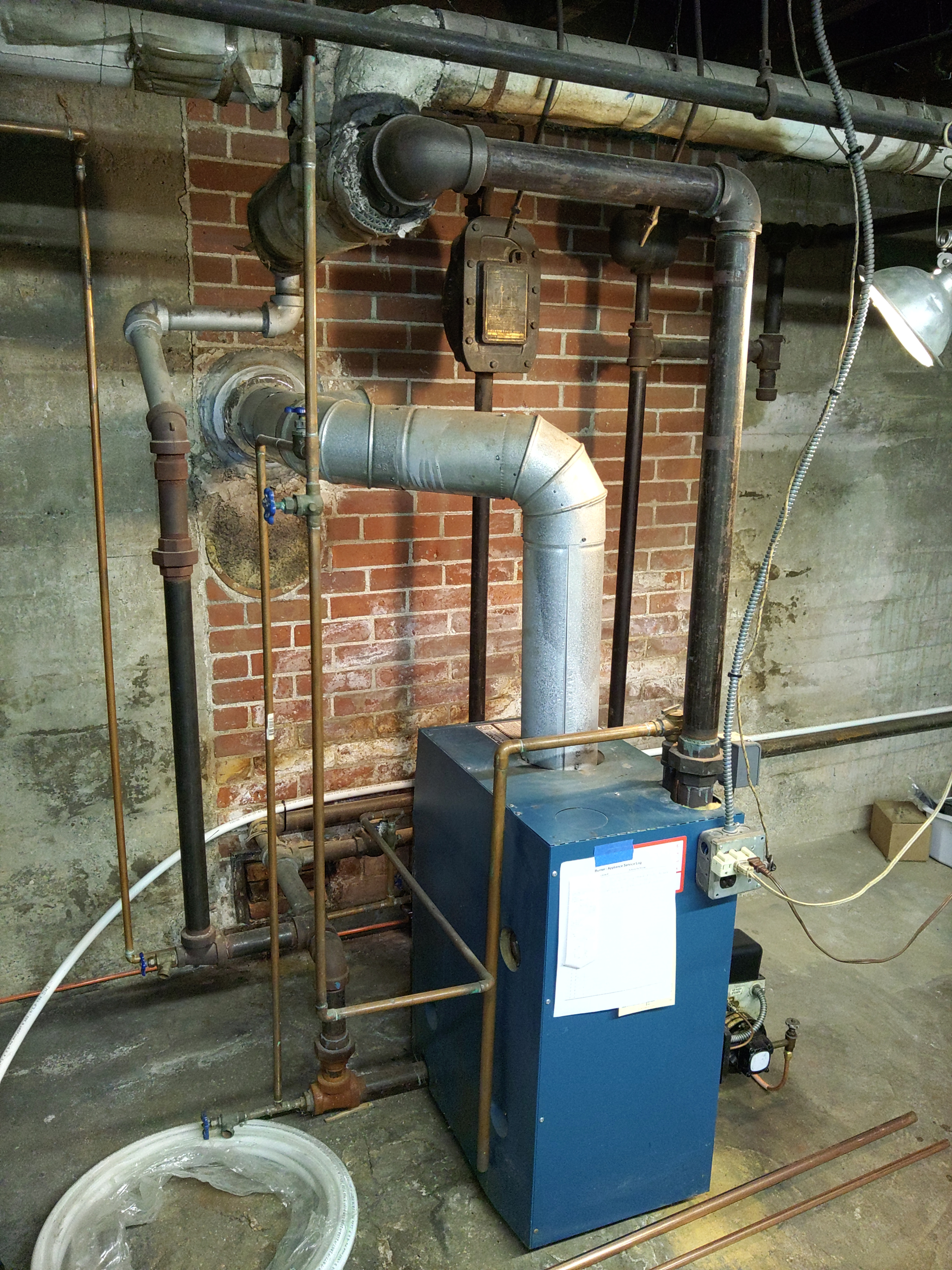
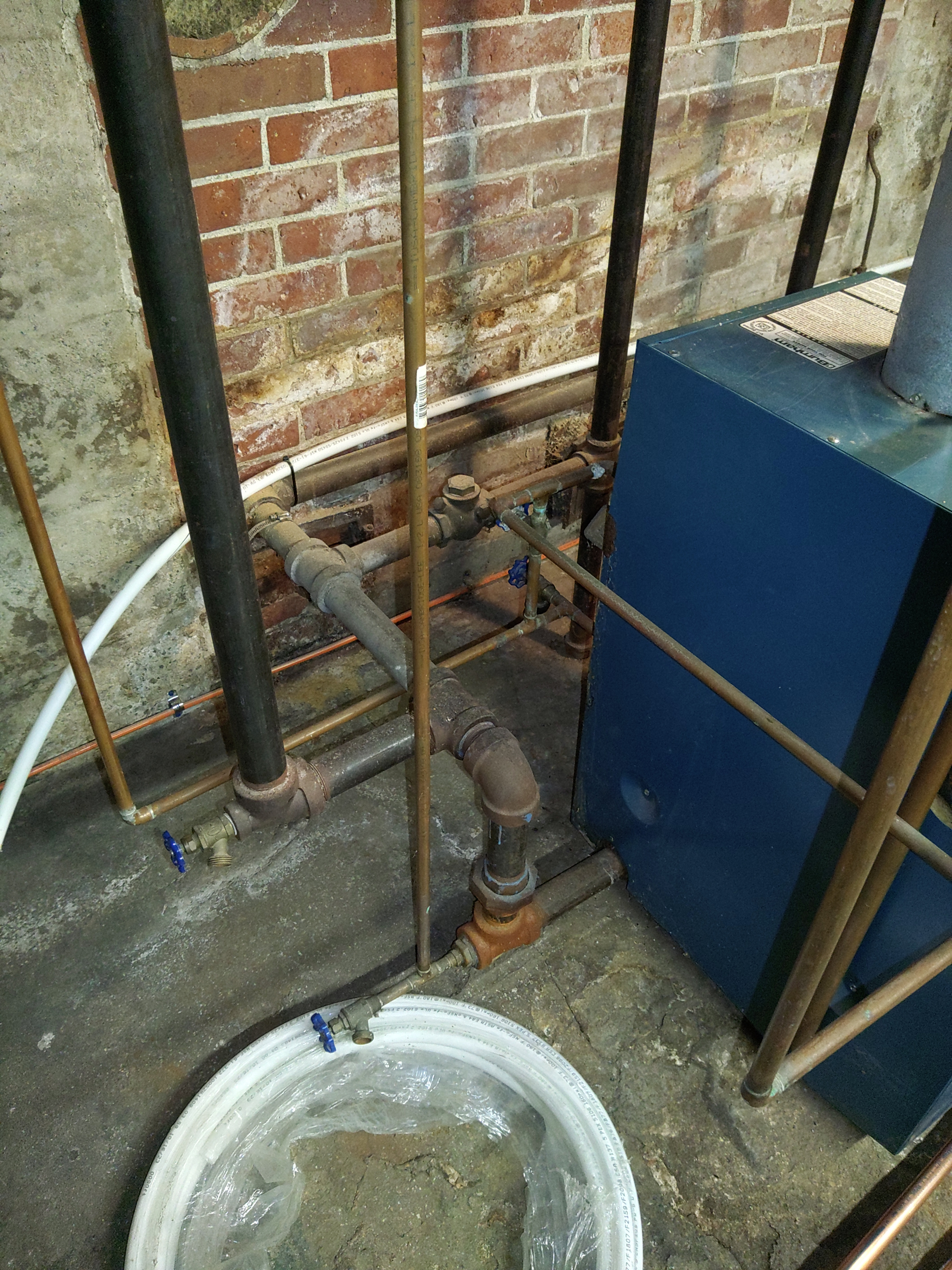
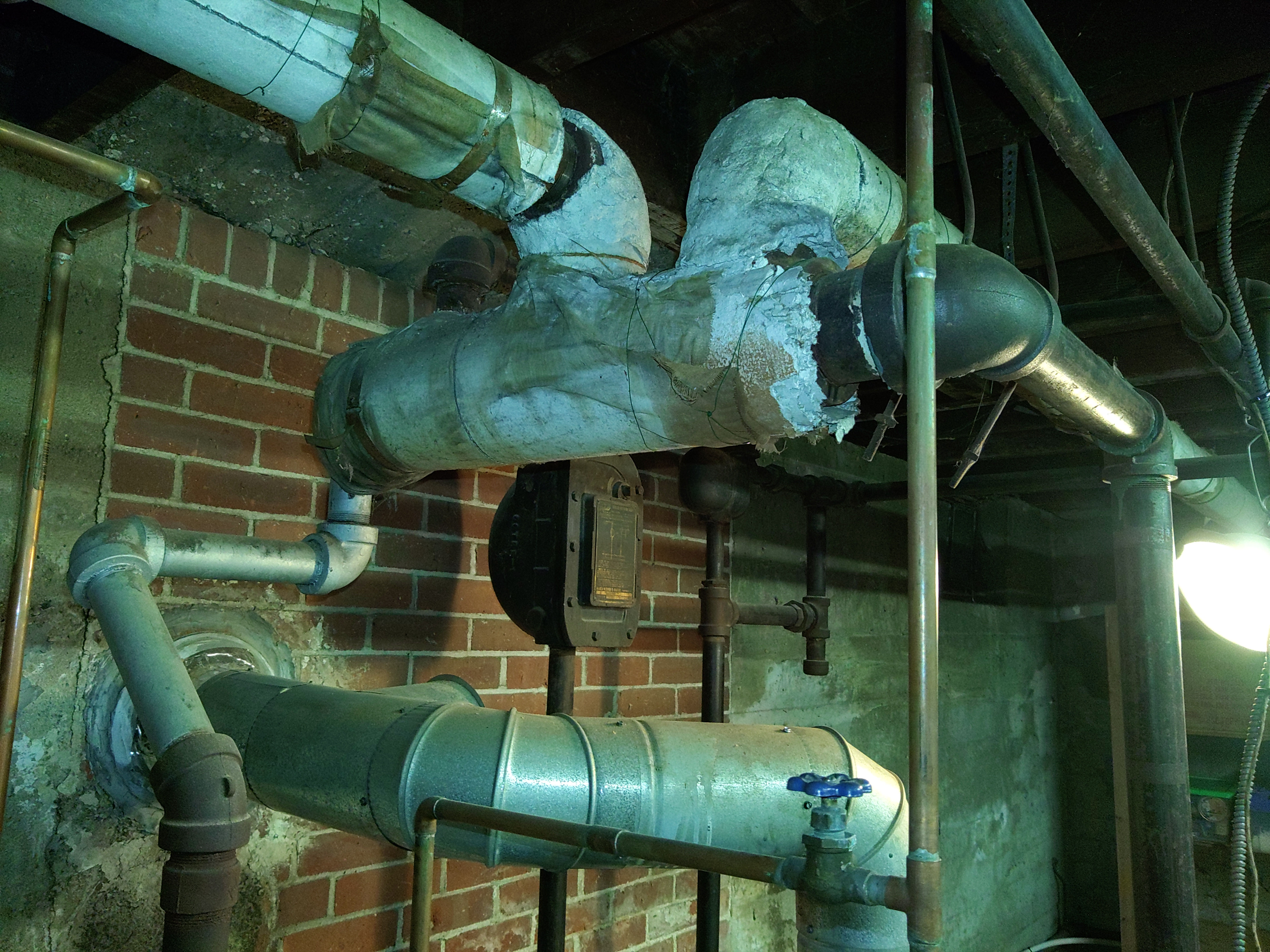
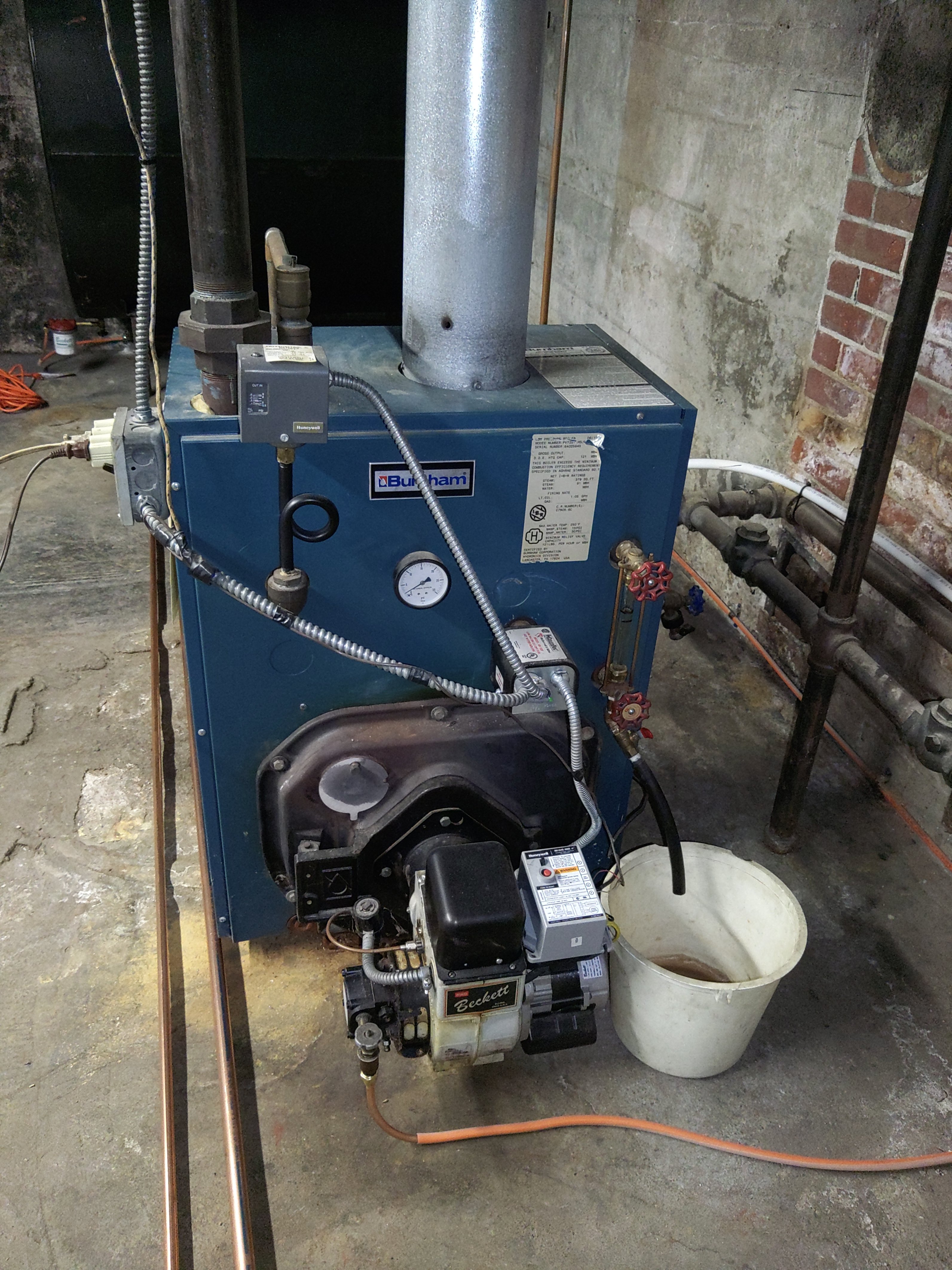
This setup has been working at my place for close to 30 years now, current boiler was installed October 1998. No Hartford loop, water line is probably way too low for the boiler return trap to work but it works. I have about 98% of the original insulation on the pipes which helps as well. System heats the house perfectly fine and evenly.
 1
1 -
Love that giant, high original header
NJ Steam Homeowner.
Free NJ and remote steam advice: https://heatinghelp.com/find-a-contractor/detail/new-jersey-steam-help/
See my sight glass boiler videos: https://bit.ly/3sZW1el 2
2 -
Thank you !! I would imagine that the steam leaving to go to the front of the house and the back of the house by the time it goes through that high riser coming off the boiler and the massive header is fairly dry!
0 -
As dry as any other steam created by a low-pressure residential boiler!
NJ Steam Homeowner.
Free NJ and remote steam advice: https://heatinghelp.com/find-a-contractor/detail/new-jersey-steam-help/
See my sight glass boiler videos: https://bit.ly/3sZW1el0


Categories
- All Categories
- 87.5K THE MAIN WALL
- 3.3K A-C, Heat Pumps & Refrigeration
- 59 Biomass
- 429 Carbon Monoxide Awareness
- 124 Chimneys & Flues
- 2.2K Domestic Hot Water
- 5.9K Gas Heating
- 119 Geothermal
- 168 Indoor-Air Quality
- 3.8K Oil Heating
- 78 Pipe Deterioration
- 1K Plumbing
- 6.6K Radiant Heating
- 394 Solar
- 15.9K Strictly Steam
- 3.5K Thermostats and Controls
- 56 Water Quality
- 50 Industry Classes
- 50 Job Opportunities
- 18 Recall Announcements