Condensation Tank Nightmares'

I’m a new homeowner and still learning how my steam heating system works. I recently started running into some issues with my steam boiler, and I wanted to explain the problem step by step to get advice and feedback.
How my system is supposed to work
My home has a steam boiler with a condensate return system. When the boiler runs, it produces steam that travels through the pipes to heat the radiators. As the steam gives off heat, it turns back into water (condensate). This condensate flows into a condensate tank.
Inside the condensate tank there is a float switch. When the water level in the tank rises to a certain point (I’m not exactly sure what level), the float switch turns on the condensate pump. The pump then pushes the collected water back into the boiler so it can be reused.
What actually happens during a heating cycle
When the boiler starts and the heating cycle is running, steam leaves the boiler and the water level inside the boiler naturally drops. This seems normal at first because some of the water is out in the system as steam and condensate.
However, before the condensate has time to fully return to the tank and get pumped back, the boiler water level drops too low. At that point, the Low Water Cut Off (LWCO) detects a low-water condition.
Once the LWCO senses low water, it shuts off the boiler for safety. The boiler stays off for a few minutes while it waits for water to return. During this waiting period, the thermostat is still calling for heat, but the boiler cannot run because the LWCO has stopped it.
If the condensate return is delayed, the LWCO then signals the automatic water feeder to add fresh water to the boiler. This happens even though condensate is still on its way back from the system.
As a result, the boiler ends up with too much water. This causes water to be carried into the steam piping, leading to loud water hammer noises and water spitting from radiator air vents.
Turning off the auto feeder
To stop the hammering and vent spitting, I turned off the automatic water feeder. Doing this immediately reduced the water hammer and improved system noise, which confirmed that overfilling was a major part of the problem.
New problem: long boiler shutdowns and lack of heat
However, with the auto feeder turned off, a new issue appeared. When the LWCO detects low water, it shuts the boiler down and keeps it off until enough condensate returns naturally. In some cases, I’ve observed the boiler staying shut off for a very long time sometimes more than an hour even though the thermostat is still calling for heat.
During these long shutdowns, the system does not produce enough steam, and the house does not heat properly.
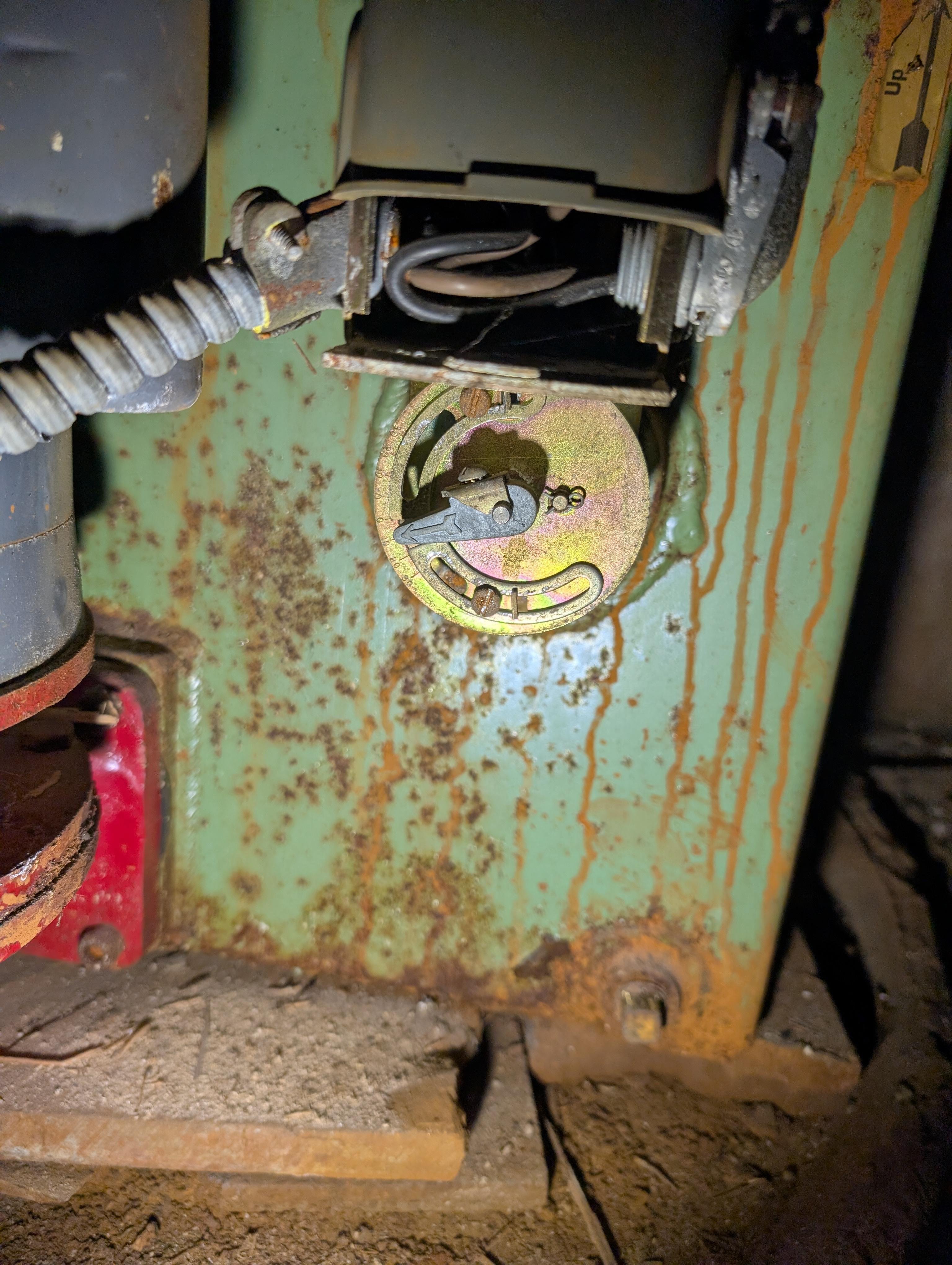
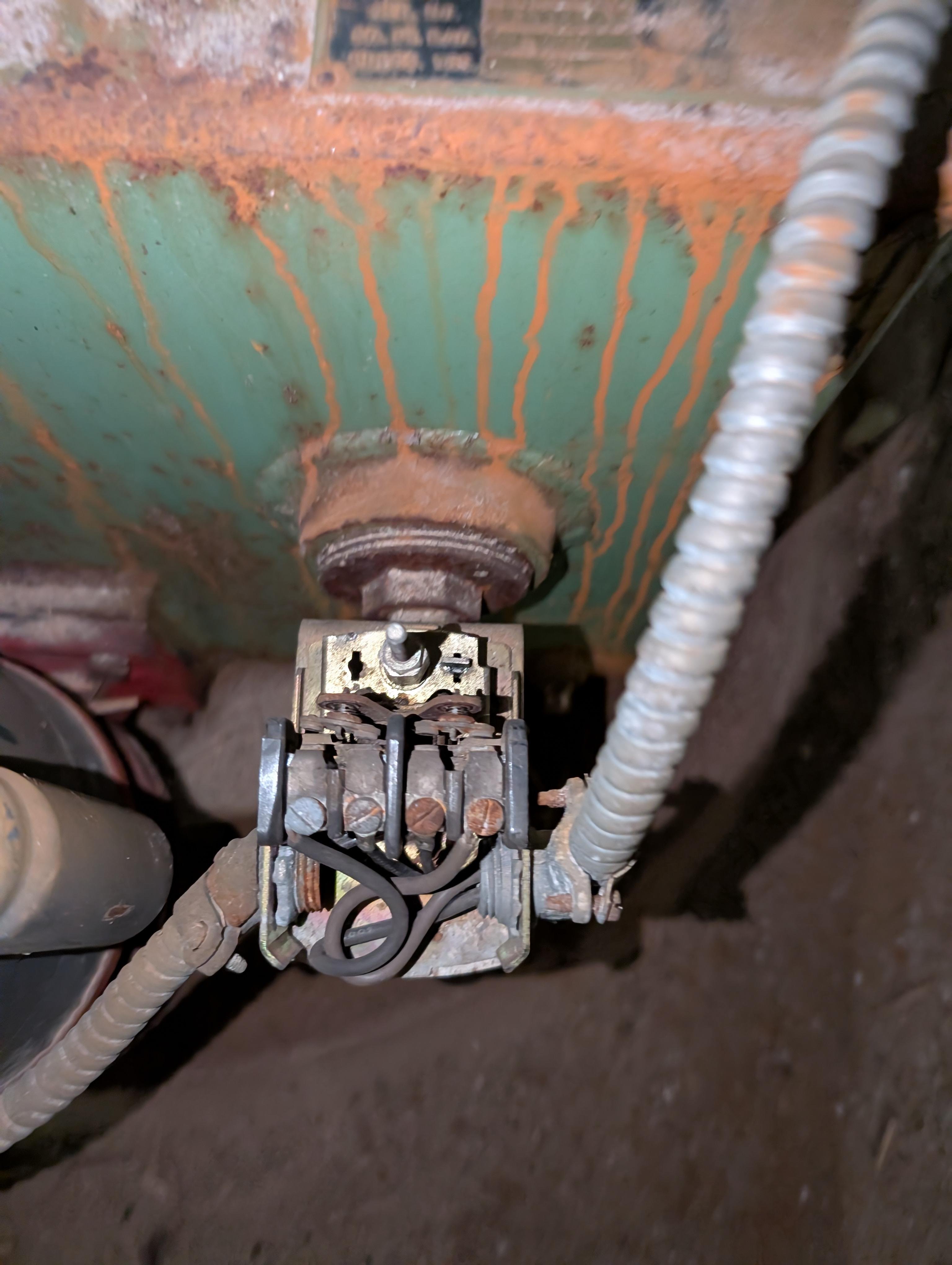
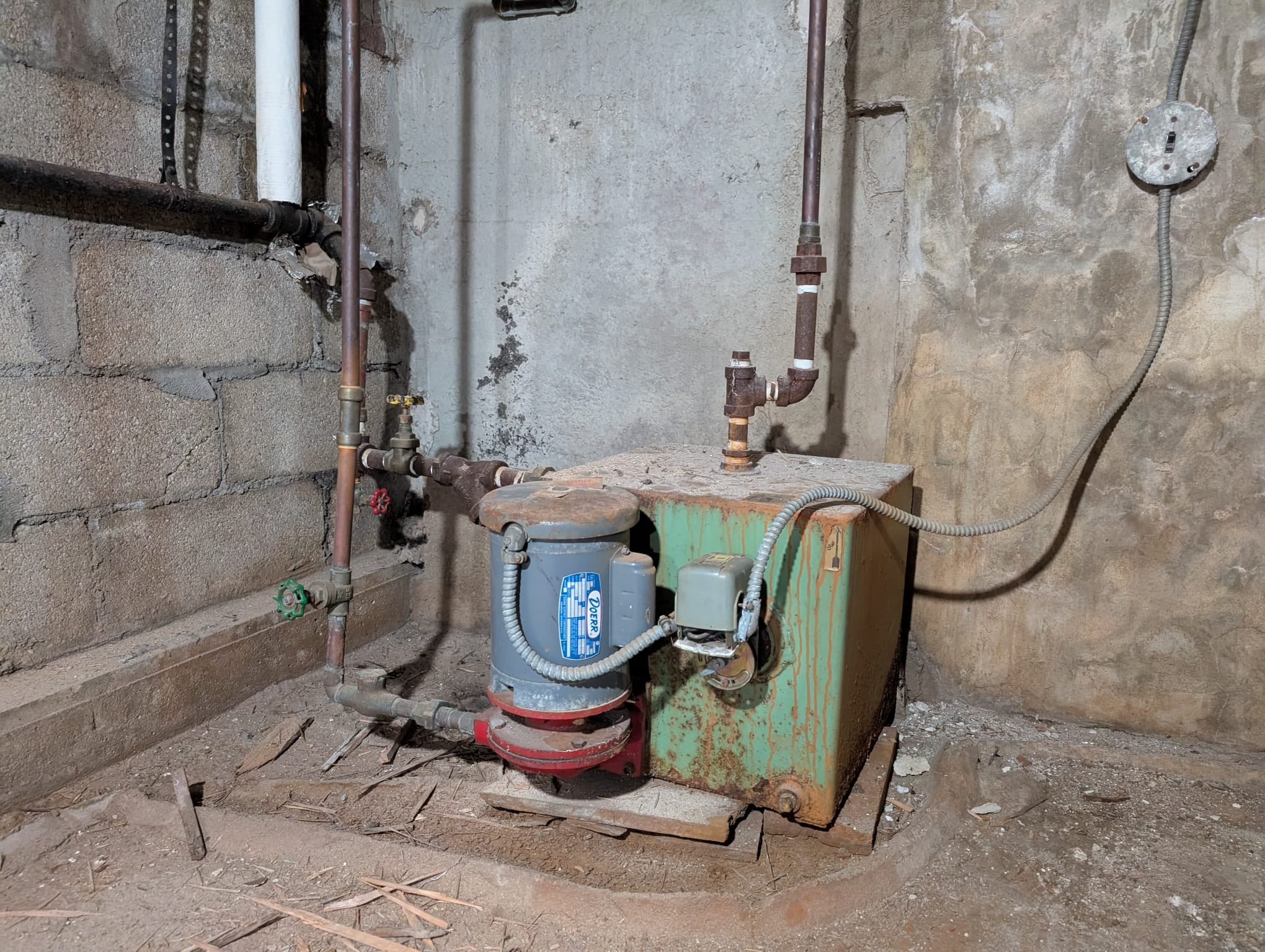
The main problem seems to be timing and coordination. The condensate pump, LWCO, and auto feeder are all working individually, but they are not coordinated properly. Condensate takes time to return, but the LWCO and auto feeder react faster, which leads to overfilling and water hammer.
I’m trying to understand whether this is a control issue, a design issue, or something that can be corrected with better settings or updated components.

Comments
-
It sounds like the condensate is having trouble getting back to the pump. Have you checked the wye-strainer on the inlet side of the pump housing?
 1
1 -
Is there any sight glass on that condensate tank to verify that it is full to nearly the point where the float switch should activate the pump? At that point even the slightest amount of condensate from the radiators should trip it.
What happens when you jumper out the float switch? Does the condensate pump get power and pump condensate into the boiler? How much does it add in height on the boiler sight glass before shutting off?
0 -
Condensate receiver tanks are OK, I guess, if your system really needs them. However condensate return pump arrangements are, in my humble opinion, a contrivance of the devil.
Is there any way , as @Captain Who asked, to check the level of the condensate in that tank when the condensate pump turns on? It should be at least two thirds full, maybe more.
Second, is there a check valve on the outlet from the condensate return pump and is it working?
Third, is the float switch in the condensate tank working reliably? The float is free?
The fundamental problem is, most likely, slow returns — if they can be flushed out in some way it may help. However, the real problem is the whole condensate return pump thing. It's just wrong — though common.
Fortunately, if you have a good technician, there is a work around, and it may even be "no parts required". What needs to happen is to rewire the system so that when the low water cutoff asks for water(which it should do at a slightly higher level than shutting off the boiler) it turns on the condensate return pump, not the automatic water feeder. Then rewire the float (you may need a relay here) in the condensate receiver to the automatic water feeder so that it turns on the water feeder when the water in the receiver is low. Now reroute the pipe from the water feeder so it goes into the condensate receiver, not the boiler.
This simple modification will eliminate the problem of overfilling the boiler.
Fundamentally this rewiring is rather simple, but needs to be done carefully and thoughtfully. Depending on the voltages of the LWCO and the feeder, you may need a relay in there. A good technician will know.
Now however… with the slow return problem, it will probably overfill the condensate receiver. You will need to provide an overflow from the receiver to a floor drain. This overflow must be below the boiler water line elevation!
Fixing the slow return problem should eliminate the overflow problem, but in the meantime the boiler will operate as it should and give you the heat you need.
Br. Jamie, osb
Building superintendent/caretaker, 7200 sq. ft. historic house museum with dependencies in New England 1
1 -
I would check that wye strainer and the gate valve for the inlet to the pump tank.
Also it looks like there is a drain down valve on the return line before the strainer.
That should be checked for free flow.
0 -
Is it possible that the issue is the boiler is carrying over/vomiting its water into the main resulting in a water level drop that no condensate tank would be able to recover from fast enough?
Out of curiosity, how large is this home? Is the condensate tank even necessary?
NJ Steam Homeowner.
Free NJ and remote steam advice: https://heatinghelp.com/find-a-contractor/detail/new-jersey-steam-help/
See my sight glass boiler videos: https://bit.ly/3sZW1el 1
1 -
The cond pump may have been added to try to correct the problem of slow cond water return.
The return looks high enough to be gravity return without a pump.
The pump tank makes more water available for the system but the return is still too slow for even that.
A boiler feeder pump would have been a better choice. It is controlled by the LWCO in the boiler and the water fill connection is at the pump/tank.
1 -
@4GenPlumber Yes I checked wye strainer and it's working fine. Water comes back to tank fine.
0 -
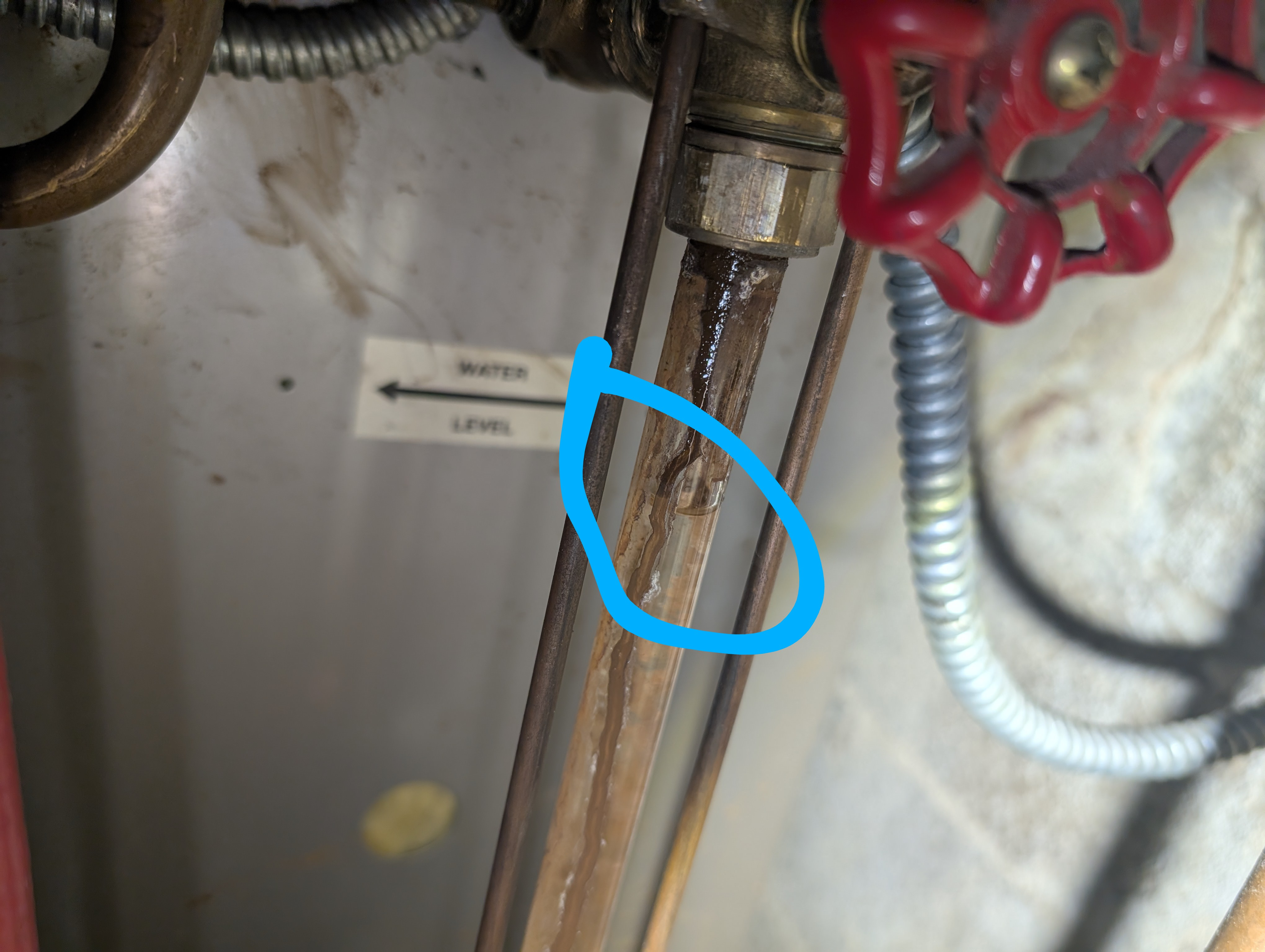
@Captain Who there is no sight glass on the tank. But when pump pushes water once it's full It goes all the way up.
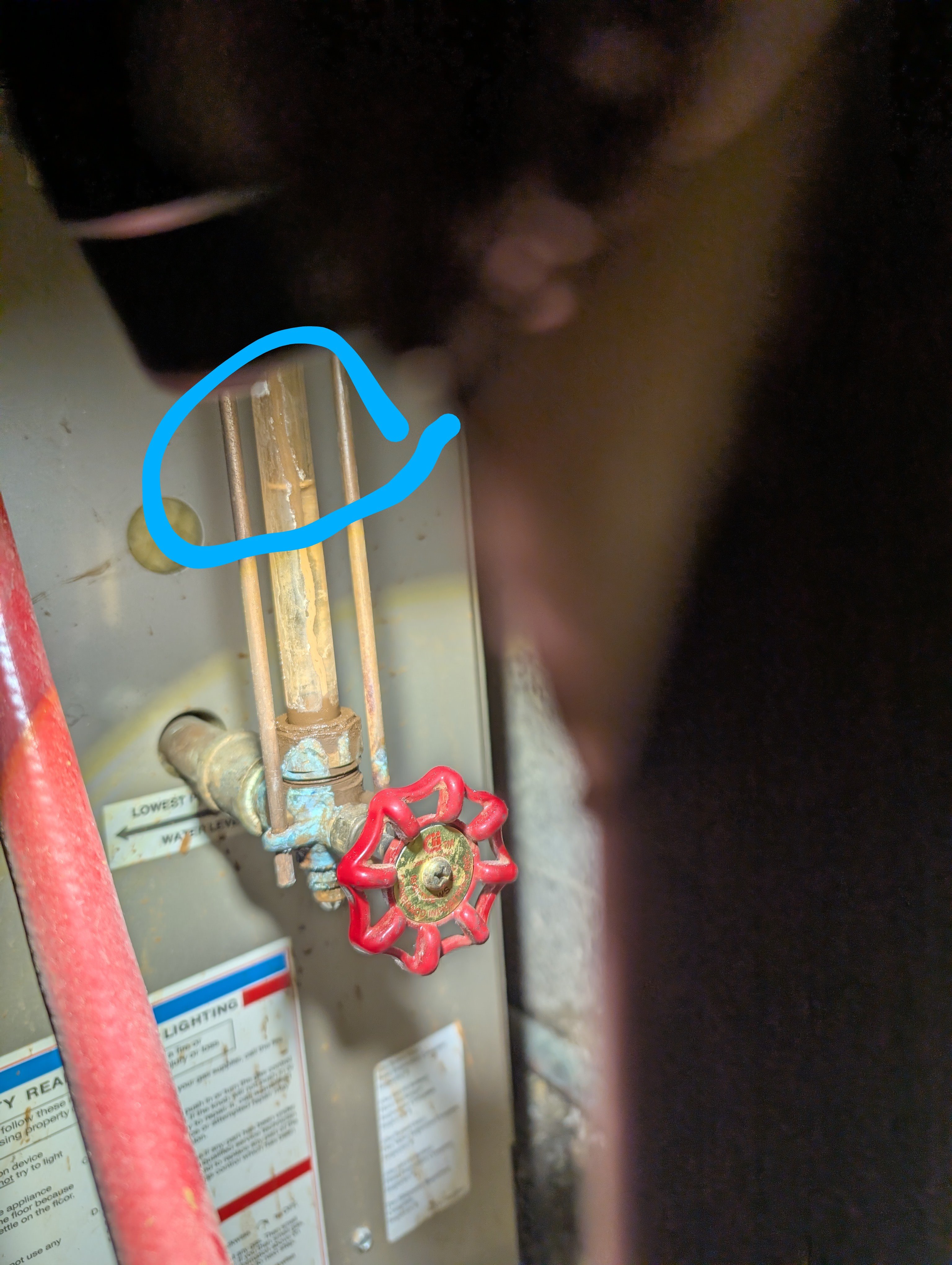
Typically in that level lwco shut off the boiler,which is strange. In most boiler I see this is enough water to operate.
And when pump pushes the water often its above blue cycle in the below picture
 0
0 -
@ethicalpaul what do you mean by carrying over/vomiting its water into the main?
0 -
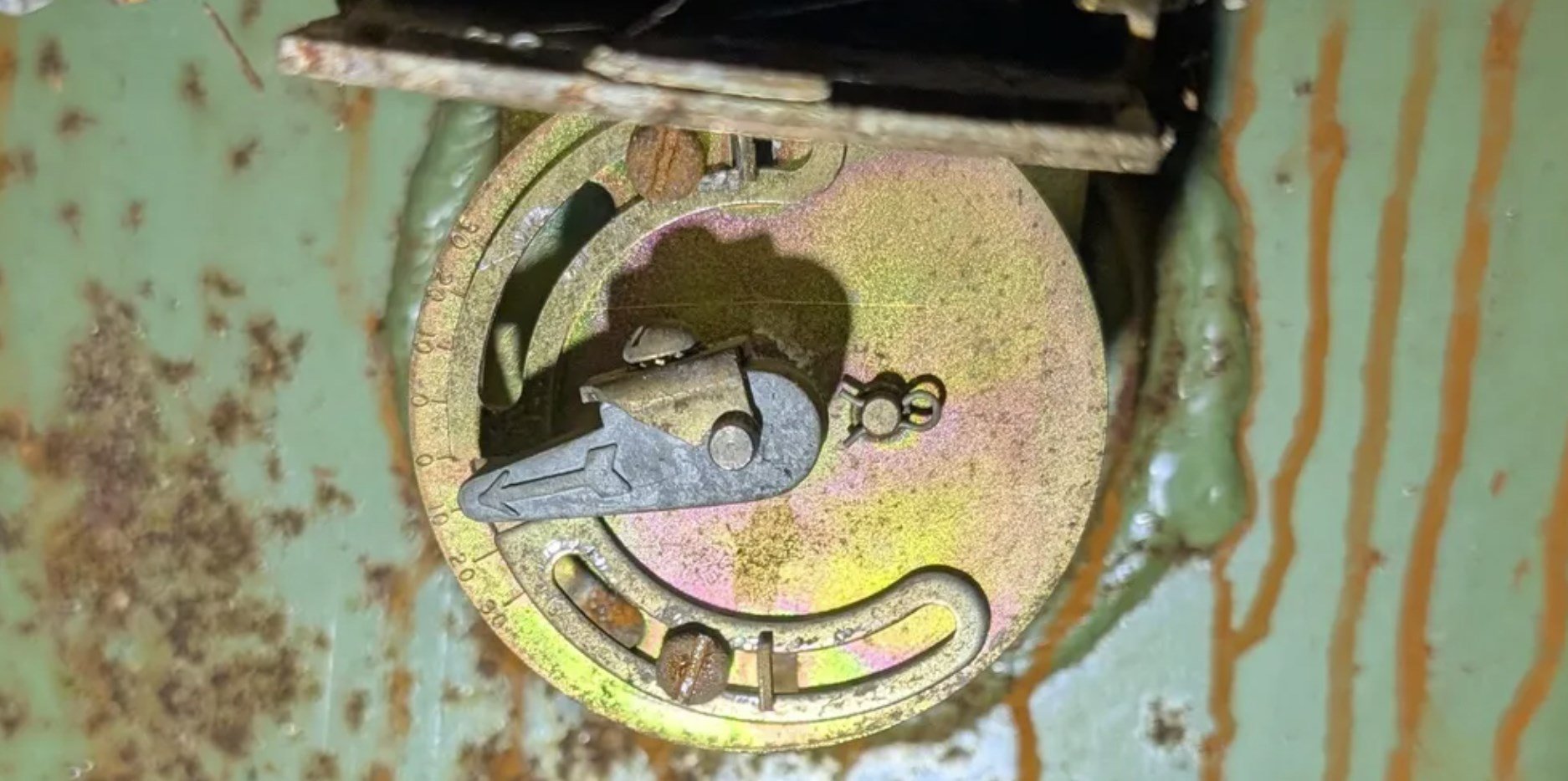
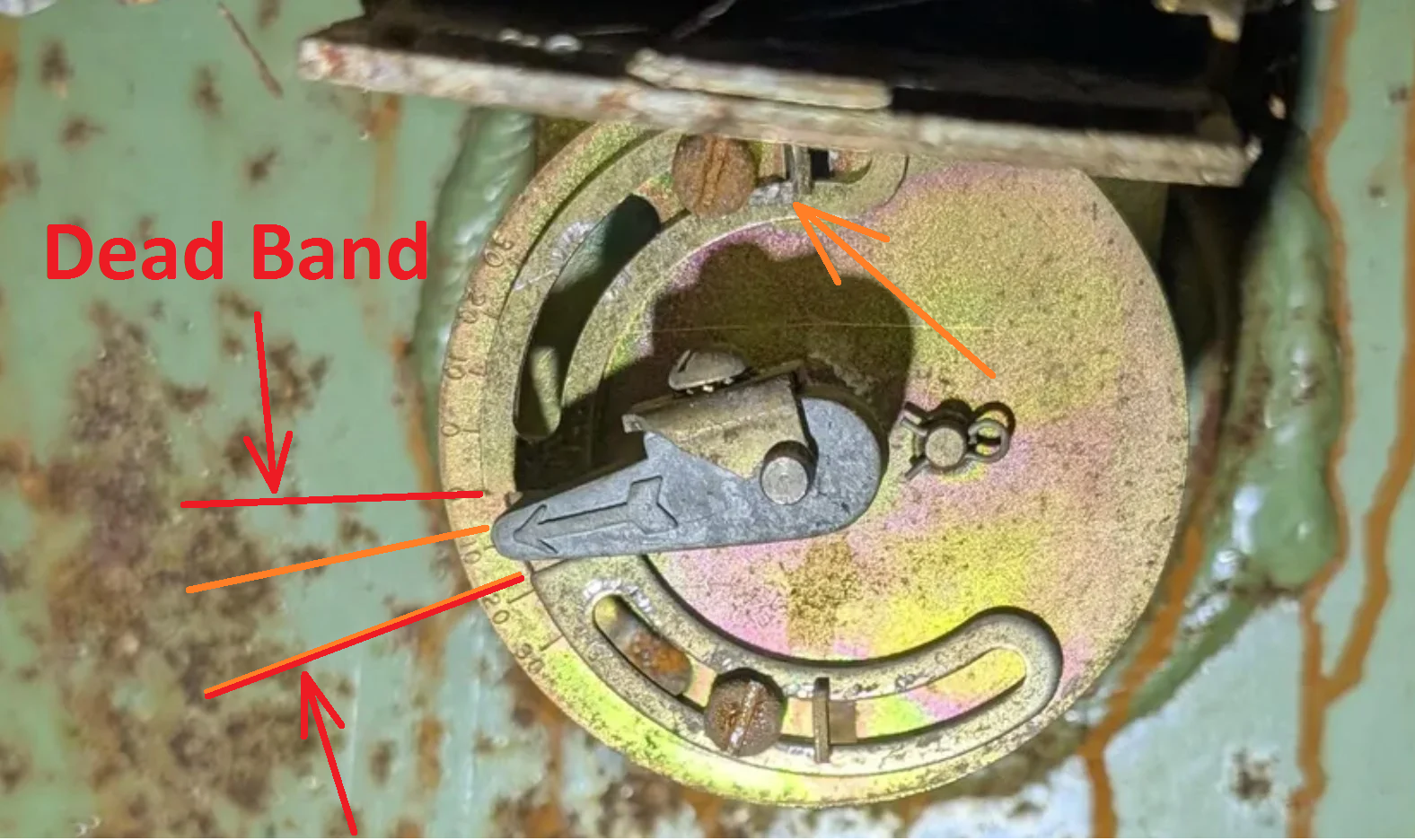
Have you played around with the adjustment of this? What is the position of the arrow when 1) the condensate pump starts pumping, and 2) when it finishes pumping
 0
0 -
Show us the LWCO device and it's location relative to the floor and sight glass.
0 -
When the water quality is bad due to oils or other junk in the water, the boiler water gets carried over into the main resulting in a low water condition. Here is a video that shows it occurring on a small residential boiler that used to be in my basement, coincidentally:
There is no actual loss of water, except temporarily where gallons of water get thrown into the main pipes.
Another thing to watch out for is if this is a two-pipe system, pressure in the system can push the water out the bottom of the boiler into the returns resulting in again, no actual permanent water loss, but a temporary low water condition that can trigger your LWCO.
These are just two possibilities to check for and eliminate if possible to avoid chasing ghosts
NJ Steam Homeowner.
Free NJ and remote steam advice: https://heatinghelp.com/find-a-contractor/detail/new-jersey-steam-help/
See my sight glass boiler videos: https://bit.ly/3sZW1el1 -
As @JUGHNE said, a boiler feed tank would have been a better choice — and as I outlined above, a boiler feed tank and a condensate receiver are almost the same, except for the control wiring, the routing of the makeup water, and an overflow on the tank.
Br. Jamie, osb
Building superintendent/caretaker, 7200 sq. ft. historic house museum with dependencies in New England 1
1 -
As stated above. Boiler feed tank.
0 -
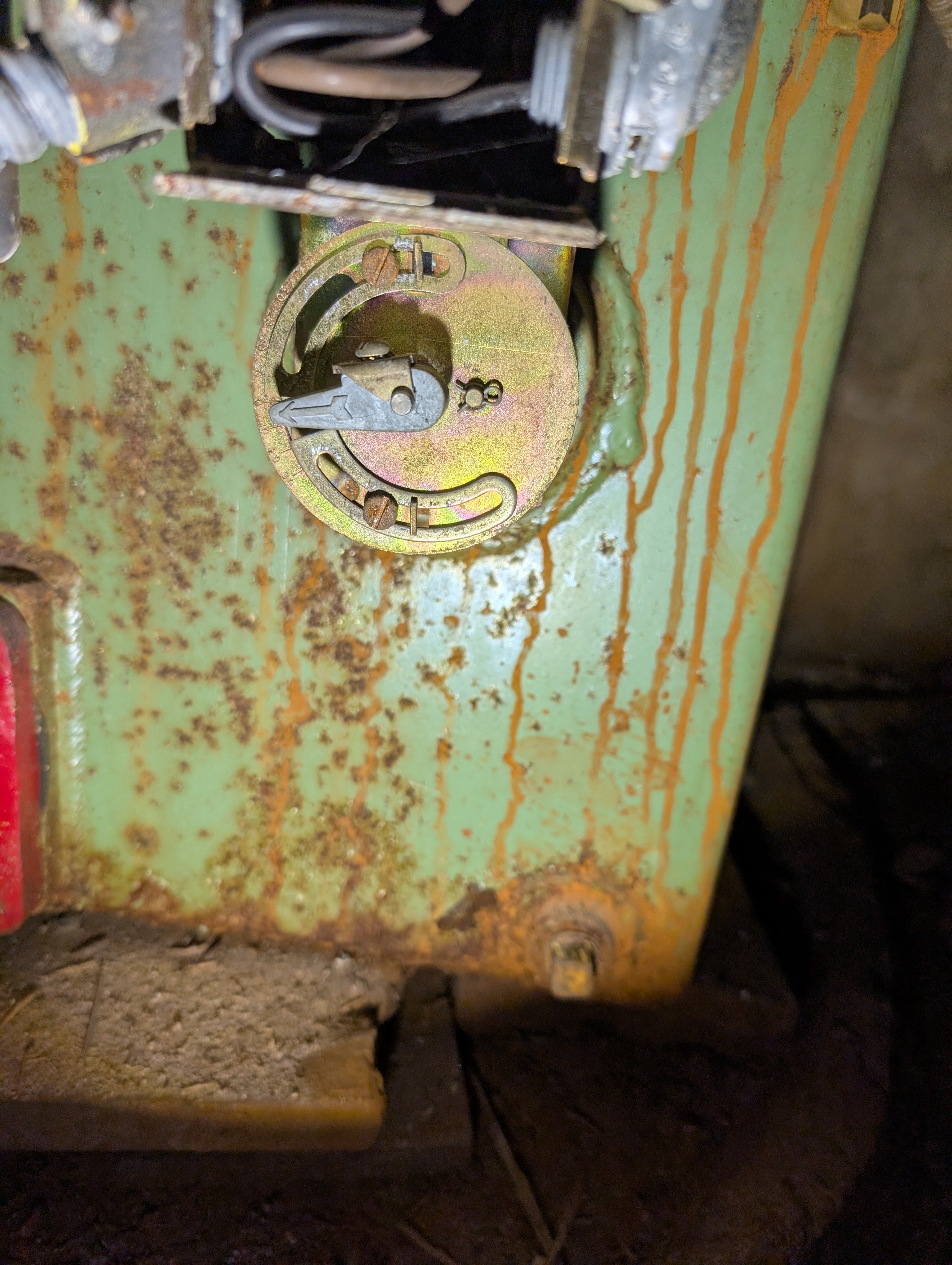
@Captain Who Below is picture of when condesate pump start
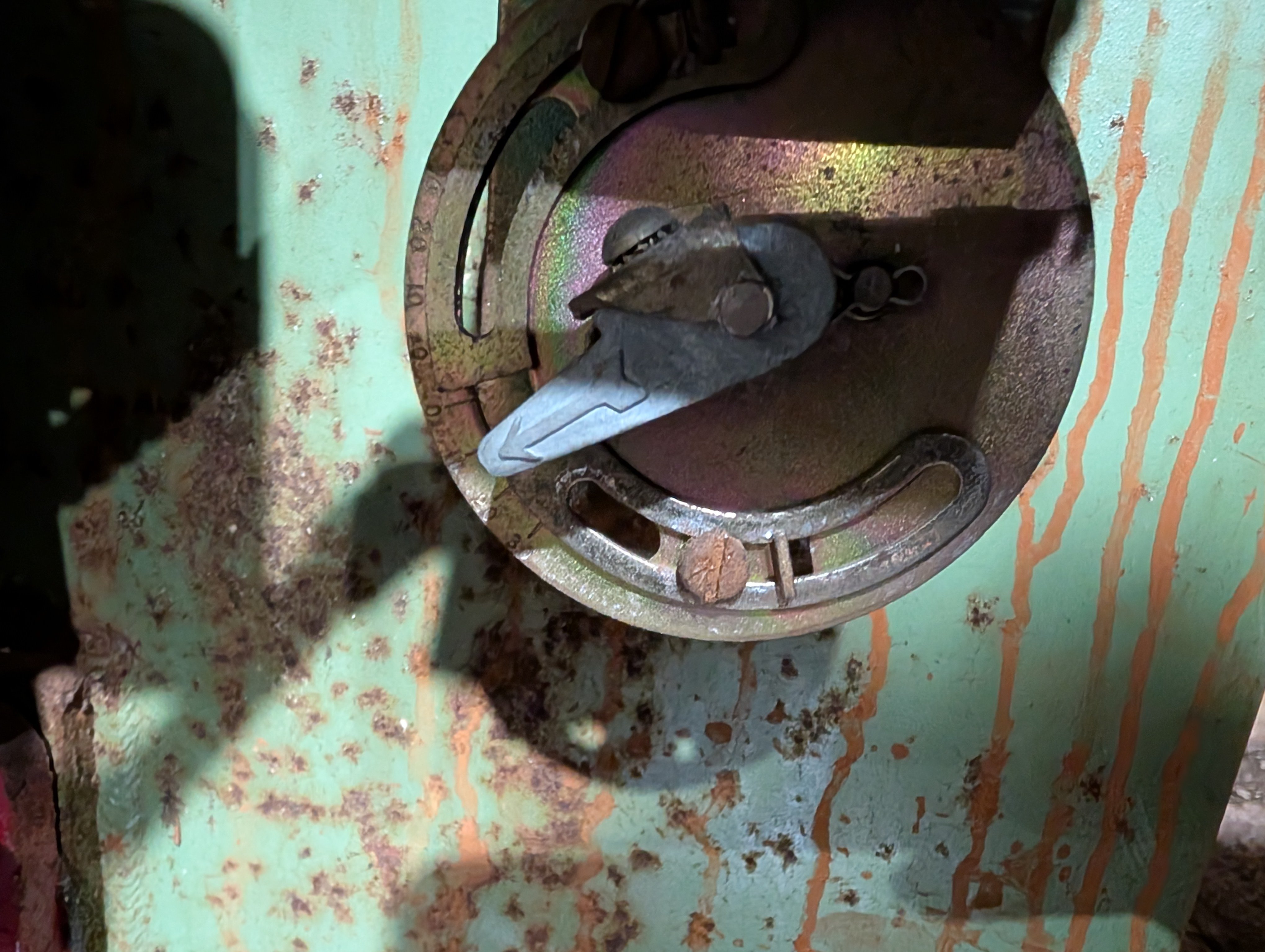
And here is the picture of after condesate pump finish pushing water to the boiler
 1
1 -
@ethicalpaul I am not sure if I understand what you said correctly but I have drained the water couple times and also drained the condestation tank. I saw nice clean water, and which makes sense what you just said. Maybe the bad water is getting pushed to main and remaining goes back to the condestation tank. But I have added fresh water multiple times and every time the results is same. It will run fine for few cycles and all the sudden will stop.
 1
1 -
@Jamie Hall I did some googling and found out about the boiler feeding tank. I need some directions that adding new boiler feed tank will work. My initial suspect was Floating Pressure Switch which might not functional. I found a similar Floating Pressure Switch which might work. Before I replace with new tank and pump.
https://www.supplyhouse.com/Telemecanique-9037HG32Z20-2-1-2-NPT-Liquid-Level-Float-Switch-Close-on-Rise-575V?utm_source=google_ad&utm_medium=Shopping_Plumbing&utm_campaign=Shopping_X_Plumbing_X_SSC_Hybrid&utm_campaignid=22376844123&utm_adgroupid=176639540066&utm_targetid=pla-2435661369999&utm_product_id=9037HG32Z20&utm_matchtype=&utm_keyword=&utm_adtype=pla&utm_category=Plumbing0 -
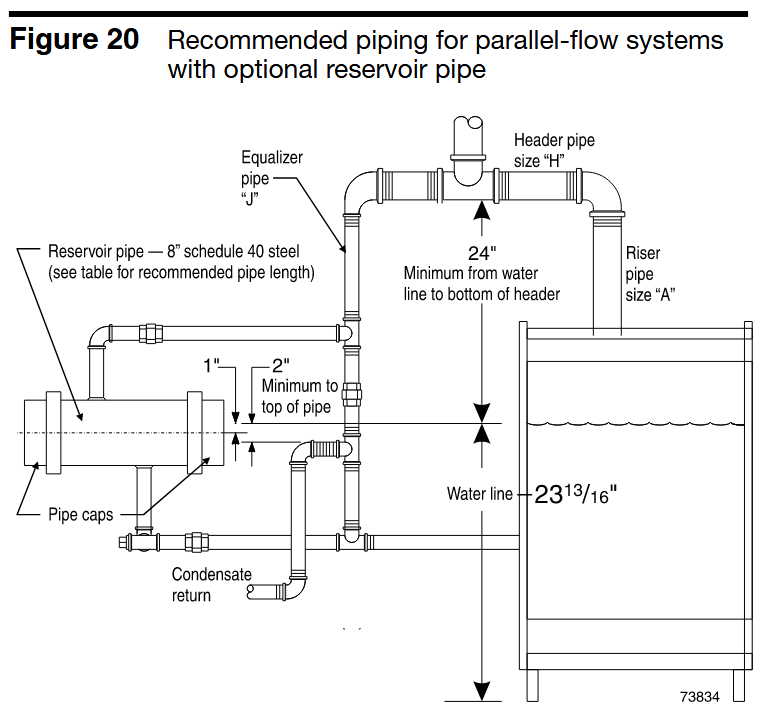
You need someone that knows steam to look at your system to find the problem. The fix could be a boiler feed tank
or a surge tank as shown in the Weil Mclain piping diagram.
A surge tank would be less $$ if that is the correct fix.
0 -
I found this pump not something like this will work.
0 -
Ah… with some ingenuity you don't need to replace either the tank — or the pump or the float switch you now have to activate the pump. Nor the low water cutoff which activates the automatic water feed.
That's a pretty good size pump, though, so you will need a relay — maybe two relays, depending on the voltage of your auto feeder and your low water cutoff.
Rewiring. Note: if wiring isn't your thing, find an electrician who understands controls and relays and get help!
Step 1. Take a relay with an appropriate coil voltage and connect its coil to the low water cutoff instead of the connection to the auto feeder. Connect the normally open contacts (of the correct voltage and current capacity) to the pump, disconnecting the pump from the float switch in the tank. Now when the low water cutoff calls for water it will start the pump.
Step 2. Now take the wiring from the float in the tank which you disconnected from the pump and connect it, with power, to the coil of a relay with the correct voltage. Take the normally CLOSED contacts of that relay and connect them to the auto feeder in place of the connection which used to go to the low water cutoff. Now when the tank float is low it will call for water from the feeder, just like the low water cutoff used to, and when the float rises it will turn off the auto feeder. Note that this is the reverse of what the float does now — now when the water is too high it turns on the pump. Using the normally closed relay contacts when the float rises it will turn off the auto feeder.
Now plumbing.
Step 1. Make sure there is a check valve on the output of the pump — which is now a boiler feed pump.
Step 2. Take the connection from the auto feeder to the boiler and disconnect it from the boiler and connect it to the condensate tank. This may take some ingenuity to find a good connection point!
Step 3. Add an overflow line from the tank to a handy floor drain. This also may take some ingenuity to do. This overflow must be below the water level in the boiler!
Commissioning
Step 1. Before you turn the power back on, make sure that the voltages are correct and that there are power supplies, if needed.
Step 2. Verify correct operation. When you lower the boiler water level to the low water cutoff, the pump should turn on and draw water from the tank into the boiler as needed and then turn off. When the water level in the condensate tank drops, the auto feeder should turn on and refill the tank as needed and then turn off.
If all is good at this point, you have just converted a condensate return tank into a boiler feed tank at the cost of two relays and some pipe… enjoy.
Br. Jamie, osb
Building superintendent/caretaker, 7200 sq. ft. historic house museum with dependencies in New England 1
1 -
Note: I goofed in the above. I have made a correction which is in italics to the contacts to be used on the relay connected to the tank float.
Br. Jamie, osb
Building superintendent/caretaker, 7200 sq. ft. historic house museum with dependencies in New England0 -
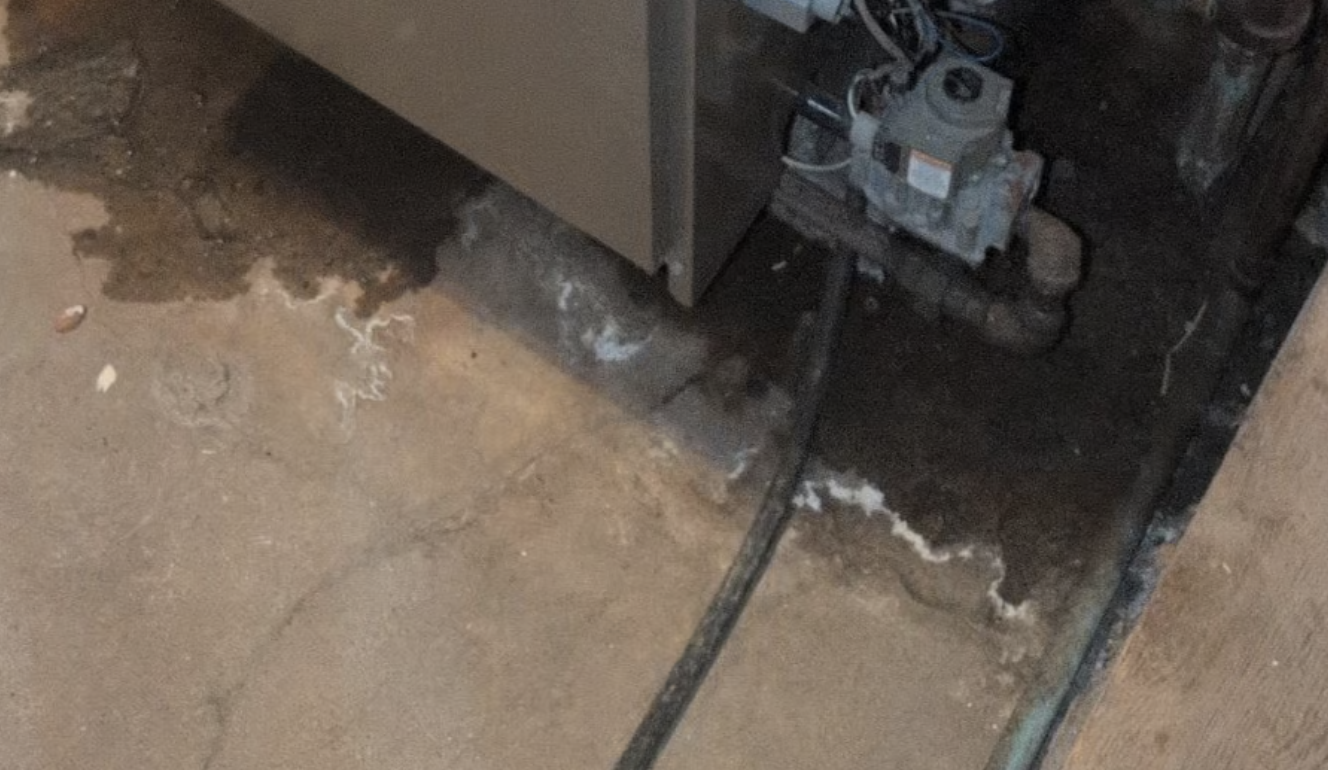
is there often water on the floor under the boiler?
NJ Steam Homeowner.
Free NJ and remote steam advice: https://heatinghelp.com/find-a-contractor/detail/new-jersey-steam-help/
See my sight glass boiler videos: https://bit.ly/3sZW1el0 -
Yes, what is the water on the floor from?
Your LWCO looks to have a probe into the boiler water.
That probe may need cleaning. Also the pigtail loop under the pressure control can plug over time.
You will benefit from the book "We have Steam Heat" from this website.
A picture showing the right hand side of the boiler…..full on full side will help.
0 -
Yes, the water is leaking from the site glass. I have cleaned the pig tail recently. Didn't solved the problem.
0 -
I spoke to Boiler technician and he thinks this is not doable, He said this pretty common in the large industrial system, but for the house he thinks it's bit expensive and complicated. He gave me 5k estimation for this. With some extra new equipment.
0 -
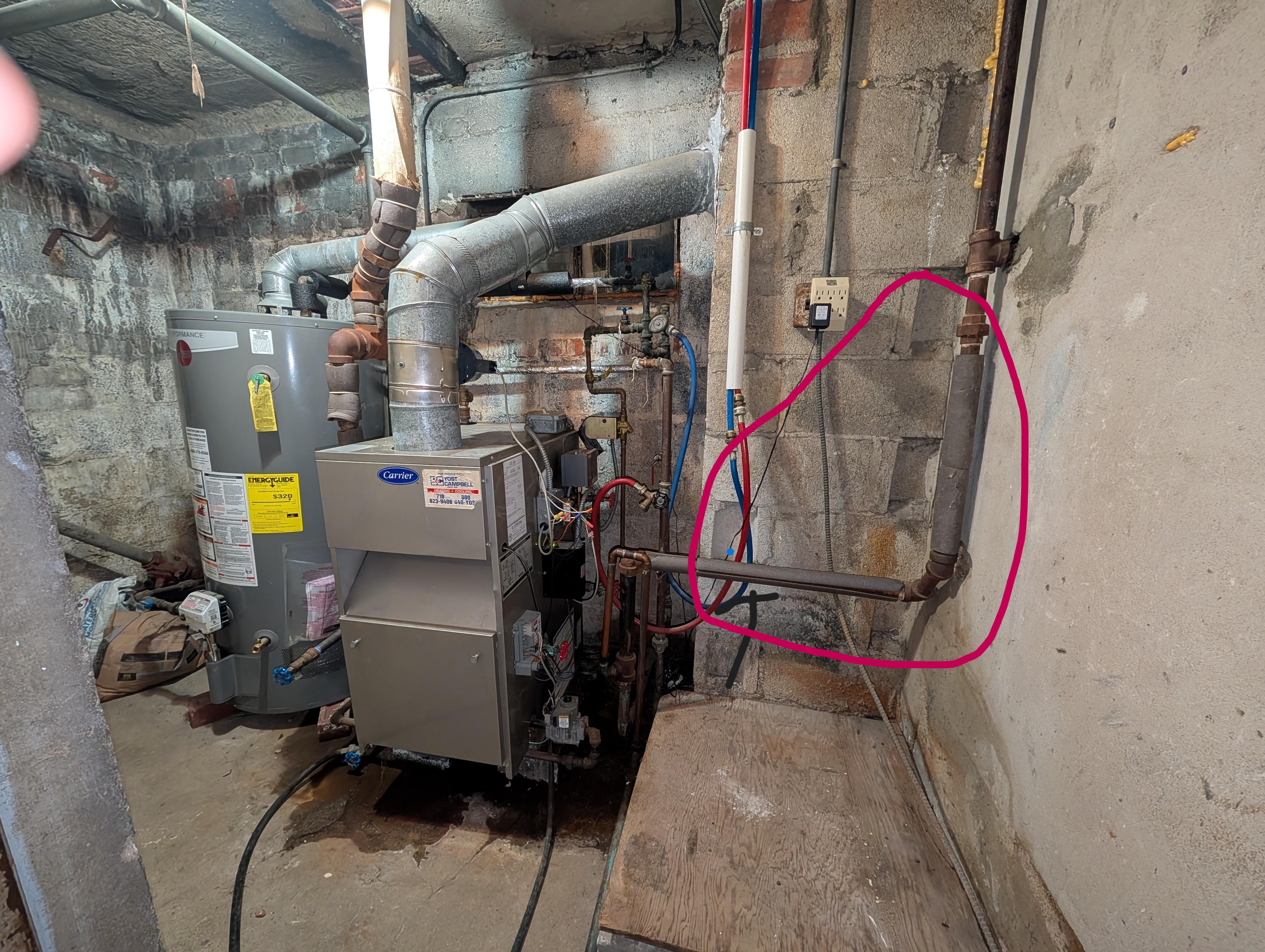
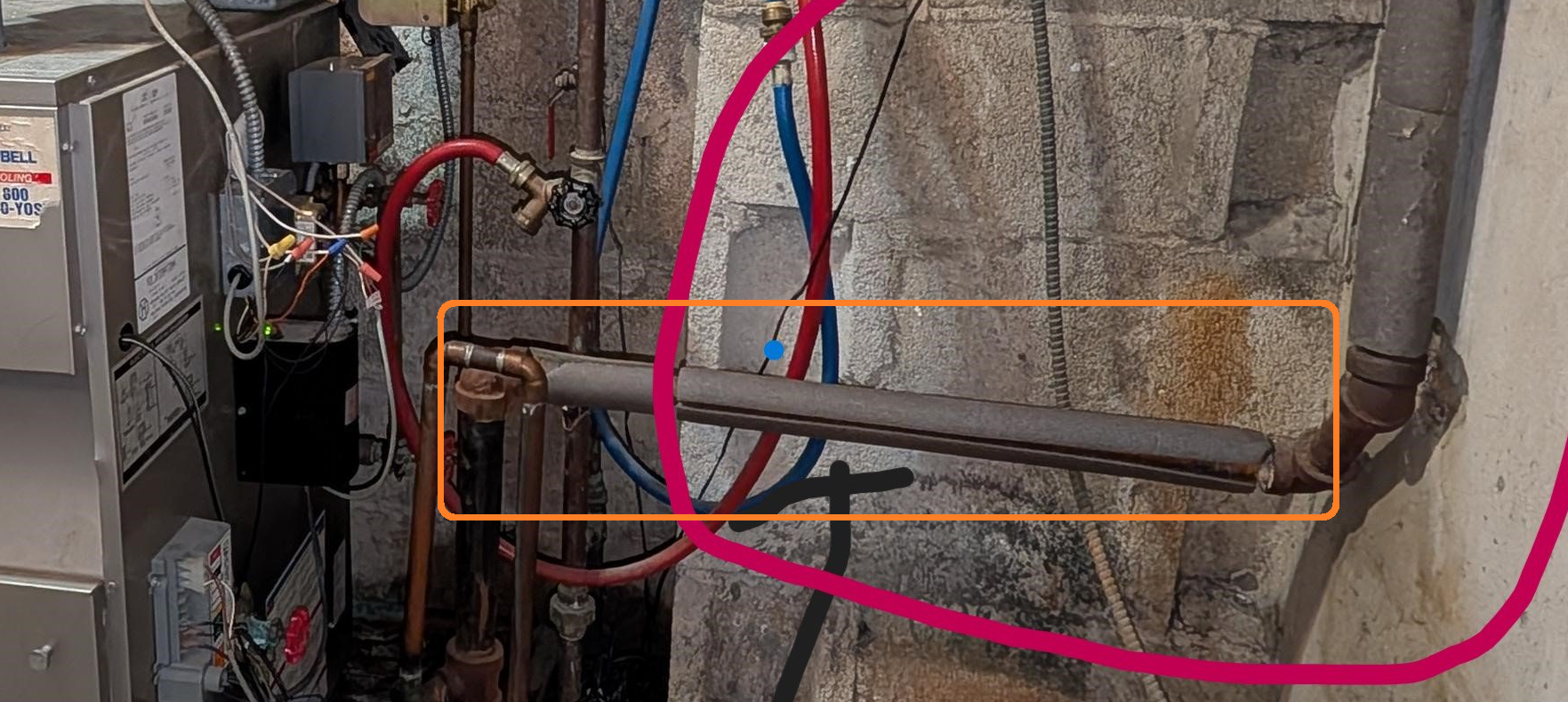
Most of the time I hear the Hammering sounds from this part of the Pipe, I don't know what is the purpose of this pipe. In this Picture where the "T" is one comes from the boiler main and one is connected to the radiator. The bottom part of this pipe is connected to the condensation Pipe. And often this pipe makes "tapping" noise. In the beginning it's not too loud, but more the boiler runs it becomes more aggressive.
0 -
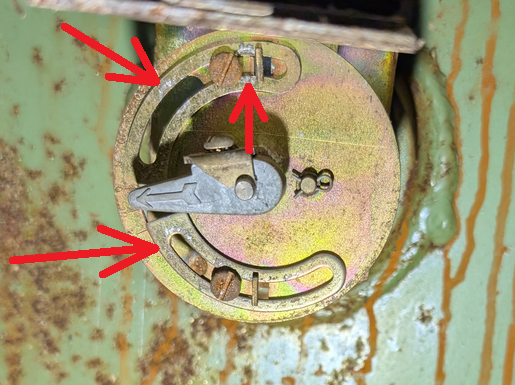
I agree with above there should be better ways to remedy the situation without breaking the bank. However I wonder if it actually worked at one point in time, what changed ? Has the pumps activity range been increased ? Float settings ?
Why does it look like these adjustments migrated or were changed ?
 National - U.S. Gas Boiler 45+ Years Old
Steam 300 SQ. FT. - EDR 347
One Pipe System0 -
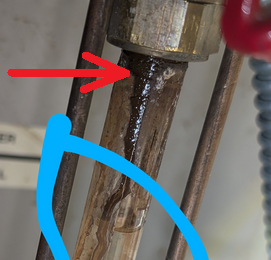
The boiler looks newer than the condensate tank, was the old boiler bigger, held more water ?
Oil or rust ? I don't see a skim port ?
 National - U.S. Gas Boiler 45+ Years Old
Steam 300 SQ. FT. - EDR 347
One Pipe System0 -
As mentioned above you want to cater to the needs of the boiler not the needs of the tank. However I kind of wonder if the Dead Band was narrower if it would help. Reducing the amount of water pumped with each cycle. I'd loosen the upper adjustment screw and move the sliding adjustment CCW to where it once was (Orange arrow). See if it helps.
 National - U.S. Gas Boiler 45+ Years Old
Steam 300 SQ. FT. - EDR 347
One Pipe System0 -
Since this horizontal pipe is very close to the boiler's normal water line it would not surprise me if there is water and steam in it causing the hammering, it probably should be placed well below the water line.
Additionally I would bet a former boiler had a higher water line. So that pipe was full of water by the original design.
 National - U.S. Gas Boiler 45+ Years Old
Steam 300 SQ. FT. - EDR 347
One Pipe System 2
2 -
You can see an information tag on the condensate tank. please show the tags information. Also, from the first pictures of that tank It looks to be way to big large for a home installation. The smallest tank available would be more suitable for your installation.. The Sterling 4028g would be a better size.
0 -
Well if your Boiler Tech can figure out what @Jamie Hall suggested maybe you should consult others.
Or if the system really does not need the pump but does need the extra water volume and since you have the tank, the tank can be placed like the example drawing below, maybe your Boiler Tech can do that for you.
 National - U.S. Gas Boiler 45+ Years Old
Steam 300 SQ. FT. - EDR 347
One Pipe System0 -
Yeah that be crazy! And what is the purpose of the other loop in the smaller copper piping towards the left side of your orange rectangle? How is that not a problem as well?
0 -
What is the elevation of the tank relative to the boiler in the house? Is the tank, higher, lower, or relatively the same elevation as the boiler?
I'm curious if you even need the tank. The pics you posted don't tell this part of the story.
Honestly I always feel this is the starting point when condensate tank discussions come up, as often they are not needed, especially in a residential application. If memory serves pumps didn't even exist for these applications when a lot of these systems were installed originally.
1 -
Can we take a step back for a second? What is the connected EDR to this boiler and what is the steam capacity in square feet of the boiler?
This boiler looks relatively new compared to all the other equipment (condensate tank, pump, etc.). I get the impression that a number of band-aids were added over the years and we are now trying to fix the band-aids, not the actual source of the problem. Perhaps it is best to step back and figure out why the band-aids are there and if they are no longer required?
I usually assume when I see a condensate tank that we are dealing with a very large system, usually with a significant EDR load and lots of long pipe runs. Think a small commercial building, a church, school, etc. These systems are physically large and the condensate, even when draining correctly, takes time to get back to the boiler. Some of the pipe runs in this example may be 100's of feet. The condensate tank makes sense as it acts as a buffer to keep the water in the boiler at the correct level.
Was a condensate/feed tank a decades long answer to slow condensate drains? Now the condensate is even slower and the band-aid is no longer working? On a relatively small system (i.e. residential) the condensate should make its way back to the boiler pretty quick.
It might be time remove the band-aids and address the original underlying problem….why does the water take so long to return to the boiler?
0 -
Get another tech. Sorry I can't come out and do it for you…
Br. Jamie, osb
Building superintendent/caretaker, 7200 sq. ft. historic house museum with dependencies in New England0 -
I have not made any changes in the floating switch. I have asked the previous owner he had no idea what condestation tank is. He was keep referring it to a boiler refresher, so I give up on him and started my own investigation. I called previous owner plumber he came and agreed with me with finding. I asked the technician if he knows why all this things are there. He is also not sure why it's there. But previous owner and technician both agreed they never face any issues like I have mentioned. Not sure if they are telling the truth but I am sceptical.
0 -
I was thinking of changing the condestation tank and get newer one with better response time. But before I made any decisions I was trying to get experts opinion is this. I have already contacted multiple boiler technician and they are giving me different opinions, like one said I have to relocate my boiler and he mentioned cost for this might be 30-35 Grand. Another one said installing circular pump, but when I asked does circular pump can handle the temperature he's answer wasn't convincing.
0





Categories
- All Categories
- 87.6K THE MAIN WALL
- 3.3K A-C, Heat Pumps & Refrigeration
- 59 Biomass
- 429 Carbon Monoxide Awareness
- 124 Chimneys & Flues
- 2.2K Domestic Hot Water
- 5.9K Gas Heating
- 119 Geothermal
- 168 Indoor-Air Quality
- 3.8K Oil Heating
- 78 Pipe Deterioration
- 1K Plumbing
- 6.6K Radiant Heating
- 394 Solar
- 16K Strictly Steam
- 3.5K Thermostats and Controls
- 56 Water Quality
- 51 Industry Classes
- 50 Job Opportunities
- 18 Recall Announcements