Natural gas pressure test

I have a customer that has an open permit and needs to be closed out. The Town wants a gas pressure test on ALL existing gas piping. Almost all of the gas piping is buried behind Sheetrock walls and ceilings ( some with designer paint work). The pressure test I did failed. I soaped all accessible fittings and found nothing. I am making an assumption that the leaks are behind the walls. Customer does not want me to open any walls to “maybe” find the leaks. The only way I know off to find gas leaks are pressurize the piping and use some type of leak detector solution on the fittings.
Does anyone have a different method to find leaks in gas piping without search and destroy?
Sorry about such a basic question.
Thank you and
Merry Christmas
Comments
-
Many hard to find leaks ended up being the testing setup. The valve, schrader, gauge, and fittings of your test setup tested?
There are creative ways to isolate potential areas depending on the gas piping layout using things like jet swet plugs. Inflatable plugs with extensions are available.. Then theres things like ultrasonic leak detectors.. https://superiorsignal.com/products/ultrasonic-instruments/accutrak-vpe-ultrasonic-leak-detector
no idea about how effective they are. just googled it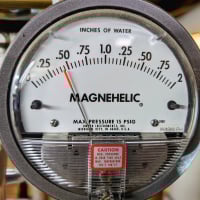 1
1 -
What pressure are you testing at?
Is the gas to all appliances shut off?
Like @dko said, check your setup first. Schrader valves cannot be trusted and should have a valve on them or at a minimal a sealed cap with an o ring.Single pipe 392sqft system with an EG-40 rated for 325sqft and it's silent and balanced at all times.
0 -
And detach all appliances and plug lines. Otherwise, the appliance itself might be leaking
 1
1 -
Unhook all the appliances and cap and plug the pipes there.
This will of course eliminate the exposed areas during the air test.
Purchase a new gas test setup supplied by a manufacturer to help satisfy any objections that might come up.
Soap test the exposed areas after the air test passes.
 1
1 -
Testing at 3 PSI. All appliances are capped, test set up has no leaks.
One section of piping is isolated, tested that section and pressure gauge dropped.
I think it's time to open walls?
Thank you for all the suggestions0 -
There are leak detection companies that can find hidden leaks. They may pressurize with a gas that can be "sniffed" with a detector. It may be cheaper than opening walls?Bob "hot rod" Rohr
trainer for Caleffi NA
Living the hydronic dream1 -
If it is all black iron, more pressure will make the leak more noticeable.
The other option is to cut it apart and isolate the concealed sections and test them separately to find which one is leaking. I had a leak in an area that was exposed that I could smell but was never able to find it with soap, ended up just replacing the oddball collection of fittings and valves that had evolved over the past half century.0 -
3psi for 5 min may be adequate. We test at 15psi for 24+hours. Pressure will vary based upon environment temperature changes. Follow the town's testing requirements as to pressure and time.
Test on your own with higher pressures over a longer period of time to see if you really have a leak.
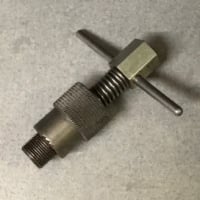
Use a gauge with a range that is close to the pressure you are going to use for the most accurate reading.1 -
You want to fix the leak, you don't want to fudge the test so it passes with the leak. Air pressure changes very little within the normal temps you'll find in a building. I suppose expansion and contraction of metal or plastic piping could change more but whenever I have seen pressure change a perceptible amount i had a leak.
 1
1 -
I work with a company that uses helium and a helium sniffer. I would try that before search and destroy...hot_rod said:There are leak detection companies that can find hidden leaks. They may pressurize with a gas that can be "sniffed" with a detector. It may be cheaper than opening walls?
"If you can't explain it simply, you don't understand it well enough"
Albert Einstein0 -
Calling a leak detection company sounds like a good idea.
Thanks for the help0 -
I’ve used Refrigerant in the past!0
-
What code are you under @347 ?0
-
The job is located in Town of Oyster Bay Long Island NY. To the best of my knowledge, the town wants a minimum of 3PSI for 15 minutes.
as of today , it is not holding at all.
i assume with refrigerant and the “sniffer” I need access to the joints. Trying to avoid that. I know it seems impossible but hoping someone has a different/better way.
isolating sections would be a very difficult option.0 -
A sniffer for helium, refrigerant, or nitrogen thru small holes drilled into the wall at low, mid and high points, is your least destructive test. But, I would crank up the pressure. We had gas company run a 3/4" line for my last employer. They pressurized to 60psi for 24hrs.

 3
3 -
If it is a piping system that can take it you can usually hear it at 50-100 psi.
 1
1 -
I agree with @SlamDunk & @pecmsg Refrigerant and a refrigerant leak detector. Drill some small holes that can be patched. I have had to use refrigerant when soap bubbles would not find the leak. I would test at around 20psi.
The homeowner is going to have to realize if they want gas there going to have to put up with some damage.
If it was me, I wouldn't let myself get talked into pulling Gastight in the walls. Can you abandon some gas lines and run the pipes up through a closet? 1
1 -
Dumb question, did you isolate meter?

 2
2 -
Did you test the system with a manometer at operating pressure?
It may leak at 3 psi, but not at 7" water column.
Why are they requiring a test on the entire system?
Also read the code section, see what the code requires.0 -
I've used this company in the past, see if they have a location nearby.
https://www.americanleakdetection.com/Bob "hot rod" Rohr
trainer for Caleffi NA
Living the hydronic dream0 -
check the gauge and test block, they are known to leak
Bob "hot rod" Rohr
trainer for Caleffi NA
Living the hydronic dream1 -
make sure your lines are capped and gas cocks are opened. if the gas cocks are leaking by it will fool you into thinking you have a leak. you need to pressurize up to the cap
0 -
Refrigerant for leak testing? The substance that is supposed to be captured and not vented to the atmosphere?
NJ Steam Homeowner.
See my sight glass boiler videos: https://bit.ly/3sZW1el 1
1 -
call the Freon police
0 -
I kind of thought all of you licensed refrigerant professionals were supposed to be self-policing as part of your licensing.
NJ Steam Homeowner.
See my sight glass boiler videos: https://bit.ly/3sZW1el0 -
and I don’t exceed 55 on the LIE!
for the record that was for a friend that couldn’t find the leak! 1
1 -
Asking for a friend! Gotcha my friend 😅
NJ Steam Homeowner.
See my sight glass boiler videos: https://bit.ly/3sZW1el0 -
To be honest the few times I've been on the LIE you were lucky to exceed 15.
Single pipe 392sqft system with an EG-40 rated for 325sqft and it's silent and balanced at all times.
0 -
F.B.I. Freon Board of Investigation, they also police Jaywalking, Tags ripped off mattresses and hurt feelings...ha ha. Mad Dog 🐕
0 -
L.I.E. stinks, but Montauk Hwy to The Hamptons is worse. Mad Dog 🐕
0 -
How about the Van Wyck?
Single pipe 392sqft system with an EG-40 rated for 325sqft and it's silent and balanced at all times.
1 -
The IRC/IFGC and NFPA 54 all use 3 psi x 10 minutes minimum for small residential. High volume pipe systems can require longer test durations.
The use of high pressures for leak detection is faulty. Consider the test gauge: the code allows for a maximum resolution of 5 times the test pressure. A 3 psi gauge can be 15 psi max. With the spacing between the graduations, you have a chance of detecting needle movement. Now, consider a 150 psi gauge for a common 30 psi test. If there is a low-level leak, it misleads you into thinking the needle is not moving. High pressure testing has been known to actually cause leaks. See the key valves below
Another big difference is gauge size. It is much easier to read needle deflection on a 4.5 or 6" lollly pop gauge than a little 2" typical one. You also have considerations such as lighting, parallax error, or a defective gauge. Our inspectors bleed our gauges just to prove the needle can move.
Everything leaks: spaceships, submarines, governmental agencies, bladders- they all leak. It, therefore, becomes a question of allowable leakage RATE. Gas appliance valves allow for 235cc/hr through the seals of a valve and 250 cc/hr through the main operator at 3/4 psi per ANSI. Yet, the gas codes, in their arrogance, simply stamp their feet and demand no detectable leakage. A gas piping system or component can be leaking, and the standard test miss it simply from the eyesight and patience of the inspector.
The test prescribed in the gas codes is considered a "pressure decay test". You pressurize then observe any detectable leakage from the equipment specified. An industry variation would be a differential decay test where the subject is tested against a reference piece known not to leak. The difference is the leakage rate. Again, gas is intolerant of any detectable decay. So, how to localize the problem? Well, you first need to consider what can cause needle drift on a 3 psi pressure decay test. You can have legitimate leaks- poorly formed threads, poorly sealed joints, faulty mating surfaces, improper types of valves and connections, a drop in temperature (even in one part of the grid), etc. The very test apparatus should periodically be bench tested for leaks. This may entail a submersion test for bubbles. This has limitations and is subjective. You may think you see micro bubbles leaking when, in fact, they were formed upon submersion and attached to the exterior of the device at a joint. It can be difficult to separate tiny bubbles continuing to stream out of a leak versus a growing thin film soap bubble. Soap bubble solutions notoriously have their own bubbles premixed from jostling around or hurried application.
The most common leak points are joints and devices. Sounds simple, right? Not so fast. It is too common to find a nail or screw piercing a CSST line. Water or oils in a sediment trap can absorb gas under pressure over time. This is why the old copper air chambers failed over time to provide water hammer buffering. They would fill with water as the air dissolved into solution. Poly gas lines used outside for in-ground trenching at pressures above 5 psi can expand under Hoop Stress causing vasodilation resulting in a drop in pressure from the increase in volume. Isolate plastic gas piping from hard pipes.
Pressure testing at greater than 1/2 psi/ 14 wci requires ALL appliances to be disconnected and the PIPING capped. Piping is within 6 LF of the appliance valve. Note that ground unions are notorious leakers. The mating surface is ground but not lapped in most cases. The brass ring inset was deformed and mated to that female coupling. Sometimes guys take them apart and mix mating pieces of used fittings. You want all new unions.
If anyone used unapproved fittings or made them up improperly, they can leak slowly. It is common to find compression joints on copper tubing as well as pipe dope or PTFE tape on flare joints or ground unions. These are metal to metal joints. Old ground key valves can leak. The 'Dante' floor/ wall key valves for gas fireplaces and log lighters are notorious leakers. These valves were typically rated at 3 psi only. High pressure testing ruined them causing leaks. We had to replace many. The newer ball valves are better. In fact, many current ANSI Z21.15 gas cocks and ball valves are tested only to 3 or 5 psi. Globe and gate valves are inappropriate. Swing joints are susceptible to leaks.
Some things may seem tight at test temperature but leak at operating temperature or vice versa. Static pressure decay testing is not representative of conditions of use. In a large building, I've seen a section exposed directly to the cold cause a pressure drop mimicking a leak even over a short test period. We separated the cold section in the unconditioned space from the heated space and both passed. Overnight testing is useless because of the temperature drop causing a false positive 'leak' when it's just Charles Law in effect.
You could try a variety of other leak detection methods including vacuum testing, static liquid pressure, electronic ion detection, ultrasonic detection, or tracer gas. Filling gas pipes with water may be the more effective but least practical, especially if the leak is in a wall. Oops. Tracing helium requires an expensive sniffer but comes with its own problems. Helium molecules are so tiny they can leak out of just about anything. You could find yourself chasing a ghost. Detection of refrigerant gases has been found to be rather reliable for very small leaks but not recommended for large leaks. You don't want the EPA mad at you.
For the OP's case, I'd strongly consider doing the refrigerant under low pressure with small holes poked into wall cavities and the sniffer inserted. Consider whether the test gas is lighter or heavier than air so you'll know where to test.



 5
5 -




Categories
- All Categories
- 87.6K THE MAIN WALL
- 3.3K A-C, Heat Pumps & Refrigeration
- 59 Biomass
- 430 Carbon Monoxide Awareness
- 124 Chimneys & Flues
- 2.2K Domestic Hot Water
- 5.9K Gas Heating
- 120 Geothermal
- 168 Indoor-Air Quality
- 3.8K Oil Heating
- 78 Pipe Deterioration
- 1K Plumbing
- 6.6K Radiant Heating
- 394 Solar
- 16K Strictly Steam
- 3.5K Thermostats and Controls
- 56 Water Quality
- 51 Industry Classes
- 50 Job Opportunities
- 18 Recall Announcements