Solving poorly pitched pipe

Comments
-
No way to rehang the whole thing so it pitches properly? Any handy wet returns to drip into? It's kind of hard to tell from the picture -- but you may have trouble getting enough pitch on your new pipe to help much. And that new pipe has to be threaded iron -- as you note, no copper -- and no plastic, either. It will have steam in it.Br. Jamie, osb
Building superintendent/caretaker, 7200 sq. ft. historic house museum with dependencies in New England0 -
Could you raise the last radiator, and therefore correct the slope?—NBC0
-
No way to rehang pipe, nearest wet return is at boiler which isn't practical. Radiator is at highest point.0
-
You may not need to rehang the whole pipe.
What is the size of the pipe that improperly pitched? And have you identified the low point in it where condensate is collecting?
Have you tried putting a hanger in that position and lifting the pipe up? You'd be surprised what a little push on a 1" pipe can do.0 -
@Fizz
so your saying that the pipe to the left of the small wire it the hammer pipe? And the steam supply is coming from the right? Just trying to figure this out.
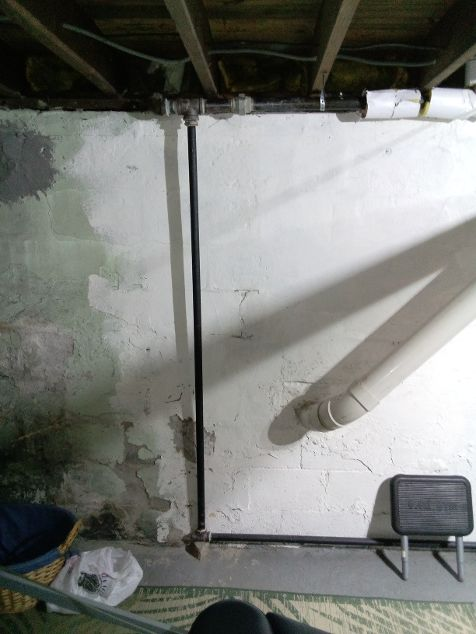
If I am looking at this right cut a tee into the pipe where it hammers with the branch of tee looking straight down. 3/4" would be the minimum size 1" would be better. Drop out of this tee do to a level below the boiler water line. 90 over at that level until your underneath the steam supply pipe. 90 up and put a tee into the steam supply looking down and tie into that. Check the pitch on that steam supply and make sure that section is pitched back toward the main. This is a loop seal.
But that is a lot of work.
My first choice would be to rework/rehang that steam supply to make it work. Looks to me like it could be done with a little creativity0 -
IIWM, I would remove the insulation and raise the pipe up.
If needed a little floor joist notching might be in order.
But for more than an inch of notching, I would make a "sister sandwich" on the floor joist. That is putting a 2' length of 1/2" plywood the height of the joist on each side of the joist, centered on the pipe. Glue and screw the hell out of it. Then you can cut more out of the bottom of the joist ….maybe 2-3", depending upon the height of the joists.
This is a guideline only....not scientific....but have done it and no problems. You are close to the end of the joists so it is not as if you are in the middle of the span.0 -
Pipe in question is an 11/2", and is a new pipe put-in last May. Tech said that's best he could do with-out major pipe work. The pipe replaced had a greater downward pitch and a leak, thus replaced. The radiator attached is 2nd floor and already raised several inches, there's no more space to play with.
PIpe is pard of a 20' run before it 90 degrees 11' to boiler where it drops below water line.
Most recent service guy told me he has pipe-guy that's creative, so I will contact him to get some feedback.0 -
Latest on piping: Pipe guy came yest, was very good and said best solution is to put a 11/4" tee, drop it down below water level and make it a wet return to boiler. That's what we agreed to. He considered a loop seal, and some other ideas, but he felt wet return is best. He wasn't pushy , very knowledgeble and reasonable. In the interim of the past month, also noticed a poorly pitced run of about 6' which he will correct again with some creative piping.0
-
If it's ok with him, post his name so we can make use of his talent - it's becoming a rarity.
BobSmith G8-3 with EZ Gas @ 90,000 BTU, Single pipe steam
Vaporstat with a 12oz cut-out and 4oz cut-in
3PSI gauge0 -
Will check.0
-
Actually a loop seal would probably work too and allow the pipe to remain up high except the loop seal. If you never run over 2psi, a 5’ loop will work at that point in the header. I just replaced a loop seal today on a 2 pipe Moline system with a lower basement ceiling without enough fall for gravity returns. So the “dry” return was wet at the ceiling most of the way until it dripped to the boiler. Kept the pipes off the floor.0
-
Piping done over week-end. Dropped 1" pipe from T installed at end of trouble pipe to floor and ran to boiler, tapping-into drip from return. Also re-piped poorly pitched run-out on short supply.
Will test tonite for any issues.0 -
Since above piping fix notice when t-stat calls for heat, boiler pressure runs between 1-2oz, and heat shuts-off by satisfying t-stat, prior to fix, the last few minutes pressure would rise to 15-20oz and shut-off on pressure at times.0
-
Re-visit to dropped return. What I've noticed is steam runs down dropped line from tee. Is this normal. All else is good. What has been a constant is with single pipe heat, the main must fill first before rads…this has never been the case. The main vents were at end of mains when we moved here, there is no room for putting vent 10-12" before end, so I added piping extending out and up. Current vents are MOM's. I tried BigMouth and Gorton#2 to no avail. The return of problem line rarely gets steam to vent, other line does. Is this concerning?
0 -
Couple more pictures from further back would be helpful.
0 -
hope these help
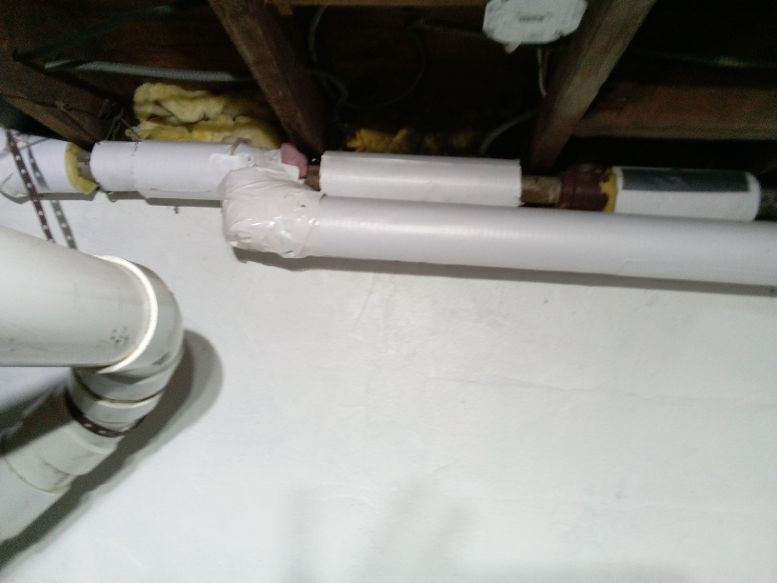 0
0 -
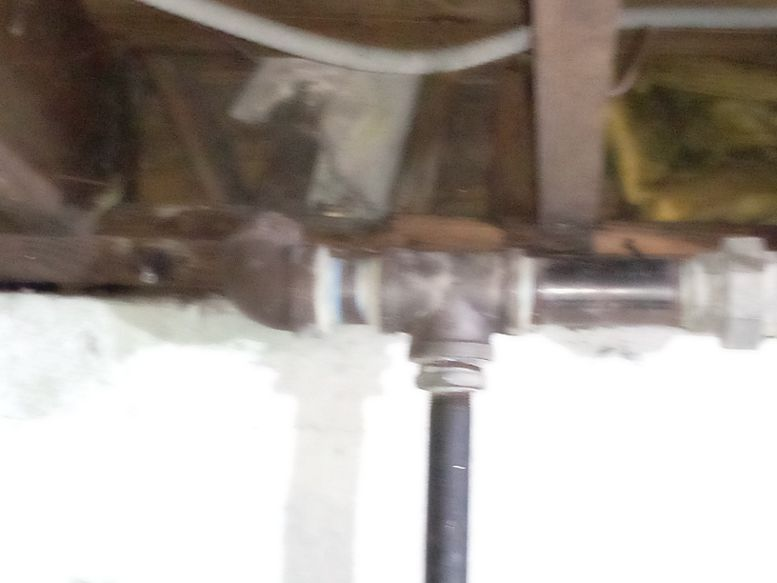 0
0 -
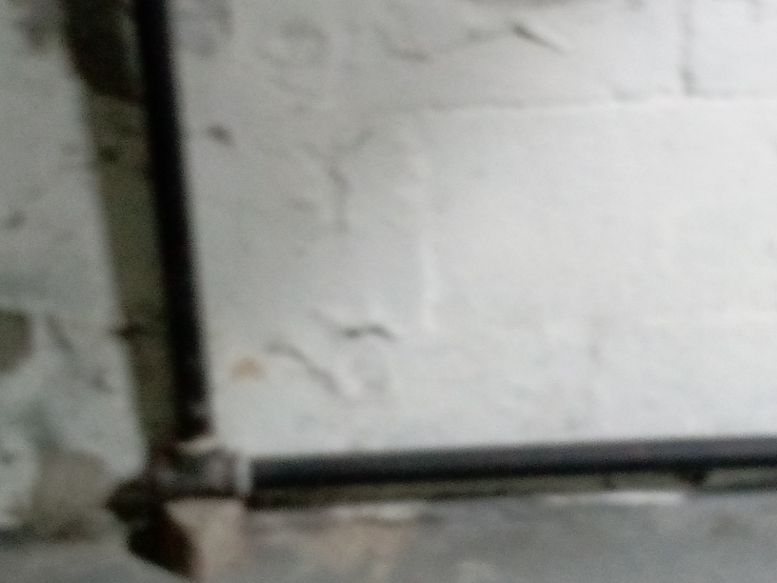 0
0 -
This wet return has been redacted for privacy reasons
NJ Steam Homeowner.
Free NJ and remote steam advice: https://heatinghelp.com/find-a-contractor/detail/new-jersey-steam-help/
See my sight glass boiler videos: https://bit.ly/3sZW1el

 3
3 -
I'm sorry…what are we looking at, and what is the actual problem?
0 -
I'm almost positive my 2005 Samsung A920 took better pictures than those.
Single pipe 392sqft system with an EG-40 rated for 325sqft and it's silent and balanced at all times.
0 -
Hi @Fizz we are just teasing a bit. It can sometimes be difficult for us to get a good handle on what is going on from a distance.
It sounds like you have a good understanding that there can be no areas in the system where water gets trapped, and it sounds like you have identified an area where water is getting trapped.Running a "drip" down from the trapped area via a copper pipe all the way down to the "wet return" would be a potential fix. Are you looking to do this work yourself, or are you looking for a contractor to do it for you?OK I carefully read everything again noting the dates of the posts…I can now see that you had someone add a "drip" for you and you are concerned that steam seems to travel down the drip. It shouldn't if it's going all the way down to the water level. Is it?
And it seems like you have some venting questions, but I can't quite figure out what you're asking. Do you know how to determine if a vent is operational?
NJ Steam Homeowner.
Free NJ and remote steam advice: https://heatinghelp.com/find-a-contractor/detail/new-jersey-steam-help/
See my sight glass boiler videos: https://bit.ly/3sZW1el0 -
We need more pictures and clearer pictures from further away and several angles.
Have tou actually put a level on the pipes?
0 -
Minored in photograp
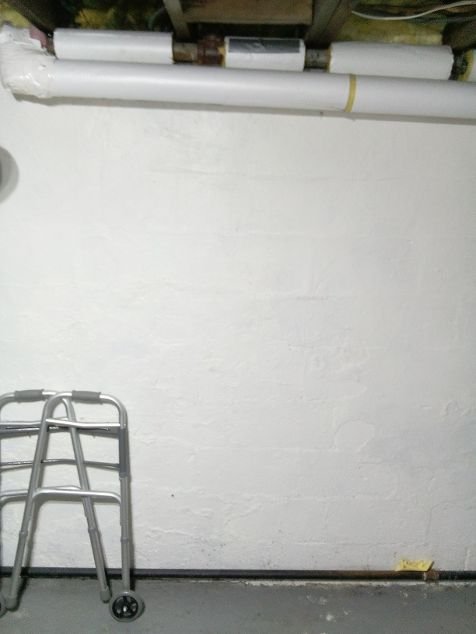
hy in college…
0 -
 0
0 -
how’s the pitch on the upper pipe?
0 -
The drip does run back to boiler below water line. As for the vent issue, it may not be a vent issue, possibly sludge not allowing steam to get to main line vent first prior to filling attached radiation.
0 -
Upper pipe pitched back up to end of insulation. Prior to drip, water would pool and result in swooshing and hammer. No longer a problem in that respect. just curious as to steam filtering down drip.
0 -
Steam shouldn't be able to travel through a trapped air section of pipe like in the picture above. The steam could heat the pipe via conduction and the steam could eventually heat some of the air in the pipe…
What makes you think the steam is traveling down the pipe? There is condensate running down that pipe that could be quite warm.
NJ Steam Homeowner.
Free NJ and remote steam advice: https://heatinghelp.com/find-a-contractor/detail/new-jersey-steam-help/
See my sight glass boiler videos: https://bit.ly/3sZW1el0 -
The only reason I have is the temperature on touch is equal to supply pipe. You're probably right, as the drips from main do same.
Thanks
0



Categories
- All Categories
- 87.5K THE MAIN WALL
- 3.3K A-C, Heat Pumps & Refrigeration
- 59 Biomass
- 429 Carbon Monoxide Awareness
- 124 Chimneys & Flues
- 2.2K Domestic Hot Water
- 5.9K Gas Heating
- 119 Geothermal
- 168 Indoor-Air Quality
- 3.8K Oil Heating
- 78 Pipe Deterioration
- 1K Plumbing
- 6.6K Radiant Heating
- 394 Solar
- 15.9K Strictly Steam
- 3.5K Thermostats and Controls
- 56 Water Quality
- 50 Industry Classes
- 50 Job Opportunities
- 18 Recall Announcements