Why do I have to keeping holding the pilot button in-order to keep the pilot lit?

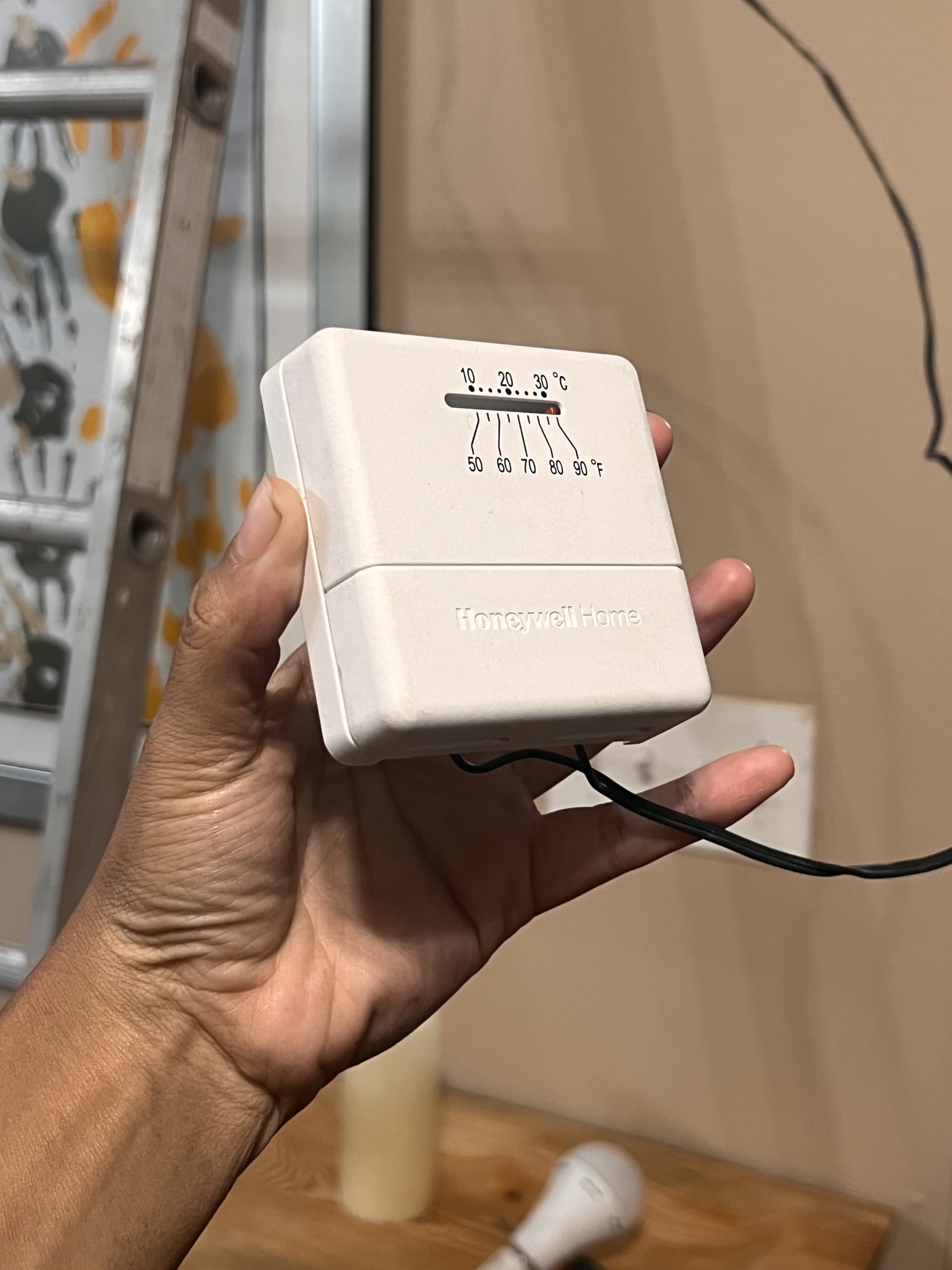
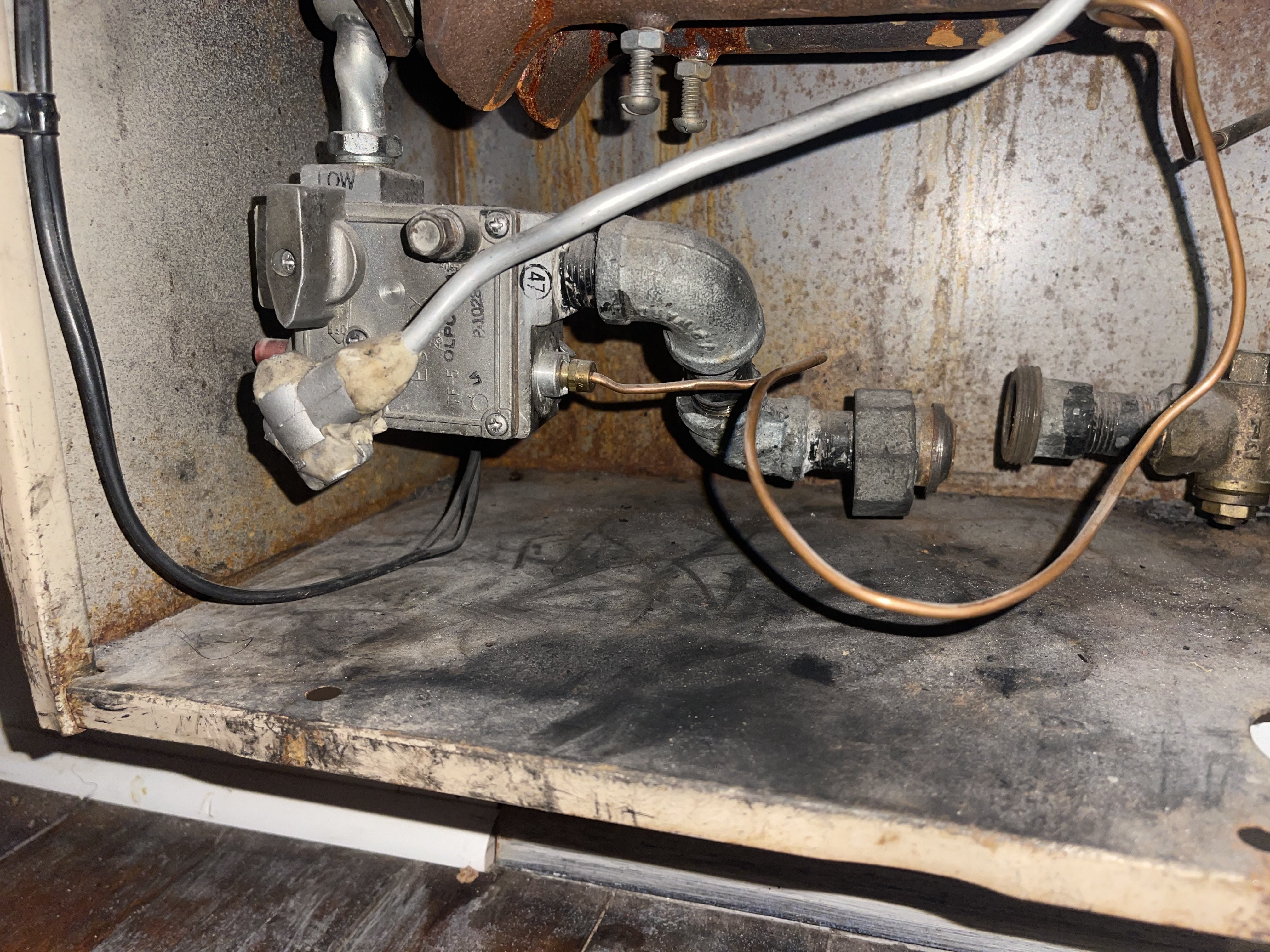
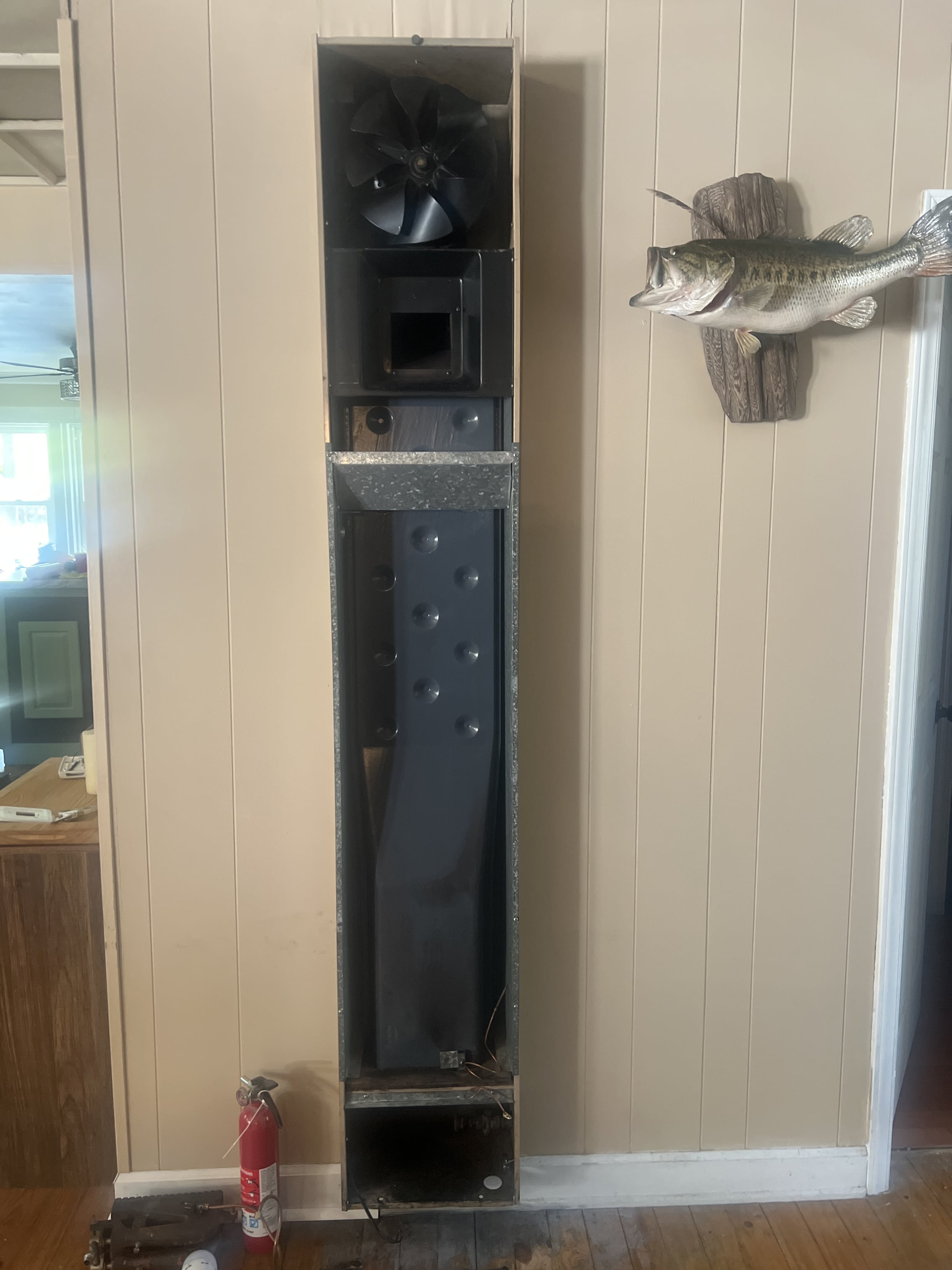
We believe we have a 1980s Williams propane wall heater. Three years ago we bought the house and turn it on for the first time.It worked fine but we haven’t use it since. Now we want to operate it. When pushing the pilot button to ignite it. It will light but won’t stay lit unless we hold the pilot button. As soon as the button is released to flame goes out. We changed the thermocouple and checked all lines for leaks. (Disregard the putty on the lines, leak has been fixed since that picture.)Also I should mention, due to the age of the house when we first bought it we had to fully update the electrical work. So there is a new Honeywell heat only CT30 thermostat. When we change the temperature on the thermostat the gas valve response to the correct heat. I really want to get this to work without buy a complete new unit.
Comments
-
It looks like a millivolt gas valve. After lighting the pilot, the pilot button typically needs to be held in for at least 30 seconds to allow the thermocouple to generate enough voltage to energize the safety magnet in the gas valve. Once energized, the magnet holds the pilot valve open and allows the pilot to remain lit.
If you’ve already replaced the thermocouple and the pilot still won’t stay lit, there may be an issue with the gas valve itself, which would likely require replacement.
Changing the thermostat shouldn’t have any effect on the pilot-lighting or pilot-safety circuit.
1 -
The gas line coming out of the valve and going to the burners looks pretty twisted up. I'd be fairly uncomfortable using it that way in someone else's house.
 1
-
Depress the pilot knob 1 min. Check the pilot flame's location on the thermocouple (thermopile?) & make sure the flame is not diminished because the pilot orifice is partially obscured & the flame is fully formed. It could be a defective thermocouple even if new. Make sure that the thermocouple is tightly screwed into the gas valve.
That black two conductor wire going up the cabinet side goes to a switch on the door front and that cuts the power to the gas valve from the thermostat when the door is off?
"When we change the temperature on the thermostat the gas valve response to the correct heat. " What does that mean?
0 -
yes the two black wires goes to thermostat. When thermostat is in the off position it shut off power, so it doesn’t call for any heat. But as far the doors being off, it doesn’t stop the heater from functioning.
“The thermostat and the gas valve responding to the temperature” for an example of if I switch the thermostat to 90• the gas valve gets very warm. If I switch it to 70• it cools down but is still warm. If I switch it to 50• or off, the gas valve gets cold.
Also there is not switch on the door just the metal grates.
0 -
-
Hmmm… I thought Millivolt systems had wires from the Power Pile / Thermopile unit, that looks like a thermocouple system to me. Is (was) the tip of the thermocouple sufficiently in the plot flame ? It may have just needed a thermpcouple. It looks like you have gone way too far too fast.
Wow you took the Gas valve apart, the real question here now is how many folks heads just exploded !!!
Anyway If the gas valve is actually defective the whole gas valve gets replaced, you can't get repair parts for them.
BTW the fire extinguisher IMO is too close to the work area situation. If something bad happened that you actually needed the fire extinguisher and you backed away from the fire by reaction you may not be able to get to the fire extinguisher.
What was going on here? Was something leaking ?
 National - U.S. Gas Boiler 45+ Years Old
Steam 300 SQ. FT. - EDR 347
One Pipe System0 -
stated in the original post. Yes the part with the putty on it was leaking but has been replaced. That picture was taken 3 yrs ago when we bought the house. There are no leaks in the system now.
Ok so even though we replace the thermal couple last Sunday. You think we should replace it again?
0 -
No guarantee the replacement thermocouple was actually good, the quality of replacement parts in this country are at an all time low, its a race to the bottom.
I suppose since it looks like you have the pilot valve solenoid removed from the gas valve assembly you could test the solenoid and the thermocouple as an assembly. With the thermocouple attached to the solenoid assembly, heat the thermocouple tip up with a propane torch or some like flame and see it the solenoid holds the valve in the open position when pushed into the coil body, like pushing the Red button. When letting it cool down after the test don't let the spring launch the parts across the room (never to be seen again) if they are not captive.
Sorry about missing the putty thing I was distracted when I read the original post
National - U.S. Gas Boiler 45+ Years Old
Steam 300 SQ. FT. - EDR 347
One Pipe System1 -
Now that you have taken that valve apart, I would not use it. This is the closest thing I can find for a replacement valve. Robertshaw 720-007
Edward Young Retired
After you make that expensive repair and you still have the same problem, What will you check next?
0 -
the only definitive way to verify thermocouple condition / function is to use a multimeter with mv readout capability i would expect 25-35 mv from a good thermocouple a (thermopile much higher) . just because you screw the t-couple into the magnet and test
it by depressing and heating the tip of the thermocouple with a torch is not fully conclusive the magnetic (solenoid) could be bad..to the guy questing if this is a millivolt setup or not. what voltage does a thermocouple output?
1 -
No load testing is often useless and misleading, if the power source can't source the current to energize the solenoid coil sufficiently the open circuit (multimeter test) voltage is irrelevant, electricity 101. What is commonly called a Millivolt system is 750 Millivolts nominal and uses a Power Pile / Thermopile unit. And is not what is commonly called thermocouple.
Functional testing is almost always best. Since to proves it actually works.
National - U.S. Gas Boiler 45+ Years Old
Steam 300 SQ. FT. - EDR 347
One Pipe System0 -
are we going to talk about the soot?
can you show us the old part that you replaced?
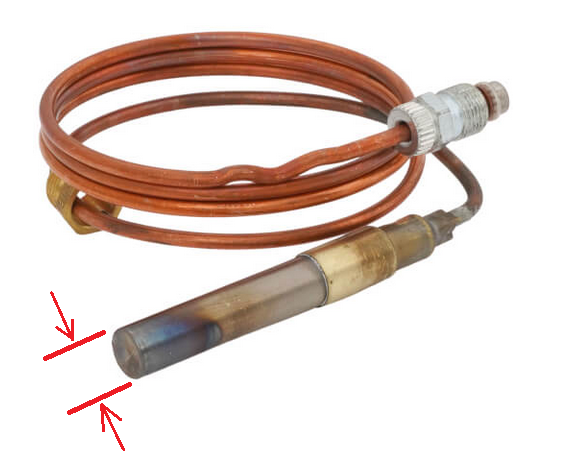
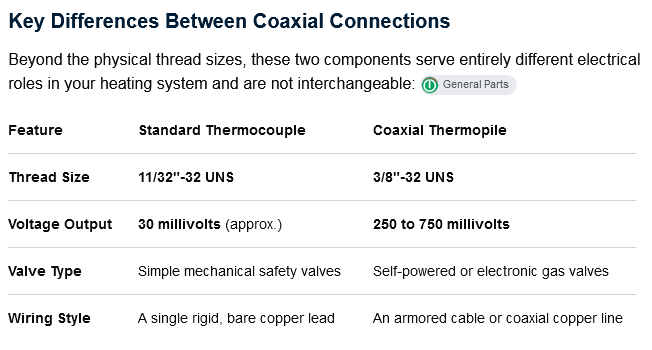
some thermopiles have a coaxial connection like a thermocouple instead of the typical 2 spade terminal connection that most thermopiles have. if you replaced a thermopile with a thermocouple it won't produce enough power to open the gas valve.
the gas valve should be replaced now that it has been disassembled
can you show us the label on the gas valve? it looks like it is millivolt but the valve wouldn't get hot as a result of a call for heat unless it is a 24vac system with a transformer somewhere. did it work after the electrician touched it?
are we going to talk about the soot?
1 -
that is only 1/32" difference in diameter and the same pitch. a thermocouple would thread in to a connector for a thermopile although it might strip if you tighten it enough.
 1
-
A thermocouple produces a millivolt DC output. A healthy standing-pilot thermocouple will typically produce somewhere around 25–35 mV open circuit, while a thermopile/ Powerpile produces substantially more as I previously stated —commonly around 500–750 mV. No disagreement there??
0 -
Check the diameter of the old part, if the diameter is obviously larger than your replacement it is a Power Pile / Thermopile unit.
Although having a Power Pile / Thermopile pilot and a 24 VAC main valve may be a bit odd. IMO it kind of defeats the benefit of the Power Pile / Thermopile use.
 National - U.S. Gas Boiler 45+ Years Old
Steam 300 SQ. FT. - EDR 347
One Pipe System0 -
i think the safety valve would have a coil for a thermocouple if it is a 24vac main valve and it woul be a coile for millivolt on the safety valve if it has a millivoilt main valve.
0 -
No disagreement there, they both produce a DC Voltage less than 1 Volt, so both are in the milliVolt range.
However you originally stated " It looks like a millivolt gas valve. ", to me and I would expect to many others this means both the Pilot valve solenoid AND the Main valve solenoid are both powered by a milliVolt power supply. As far as I know no Main valve solenoid is powered by a thermocouple.
National - U.S. Gas Boiler 45+ Years Old
Steam 300 SQ. FT. - EDR 347
One Pipe System0 -
So… with the whole electrician, gas valve heating up thing, it is most likely is a Thermocouple / 24 VAC gas valve.
Which means troubleshooting the Thermocouple / Pilot valve solenoid system, two parts, what's wrong ?
@Nola803 do you have a multimeter ?
National - U.S. Gas Boiler 45+ Years Old
Steam 300 SQ. FT. - EDR 347
One Pipe System1 -
or the electrician didn't know what a millivolt gas valve was and added a transformer and 24vac t-stat. the op needs to look at the labels on the valve and furnace.
0 -
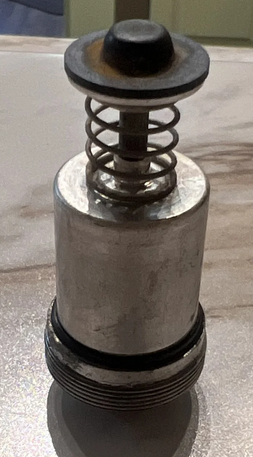
Let's say it is a Thermopile / Powerpile powered gas valve and the OP screwed in a thermocouple into this assembly pictured below so it won't work. How does the 750 milliVolt power supply get to the Main valve solenoid coil?
With 24 VAC @ 0.3 Amps or 7.2 VA (as an example) I would expect a gas valve to warm up. With a 750 milliVolt gas valve running on a Thermopile / Powerpile I would not expect it to warm up much.
Putting 24 VAC on a 750 milliVolt Main valve solenoid coil may destroy it, and even so would probably not cause the present issue.
 National - U.S. Gas Boiler 45+ Years Old
Steam 300 SQ. FT. - EDR 347
One Pipe System0 -
So the electrician simply added a transformer where none existed before, interesting theory.
National - U.S. Gas Boiler 45+ Years Old
Steam 300 SQ. FT. - EDR 347
One Pipe System0 -
I'm just so happy to see the fire extinguisher there.


 3
-
As I kick myself in the hip , no, I do not have the old thermocouple in order to compare the new to old .
I do have a multimeter, and we plan on testing it today .
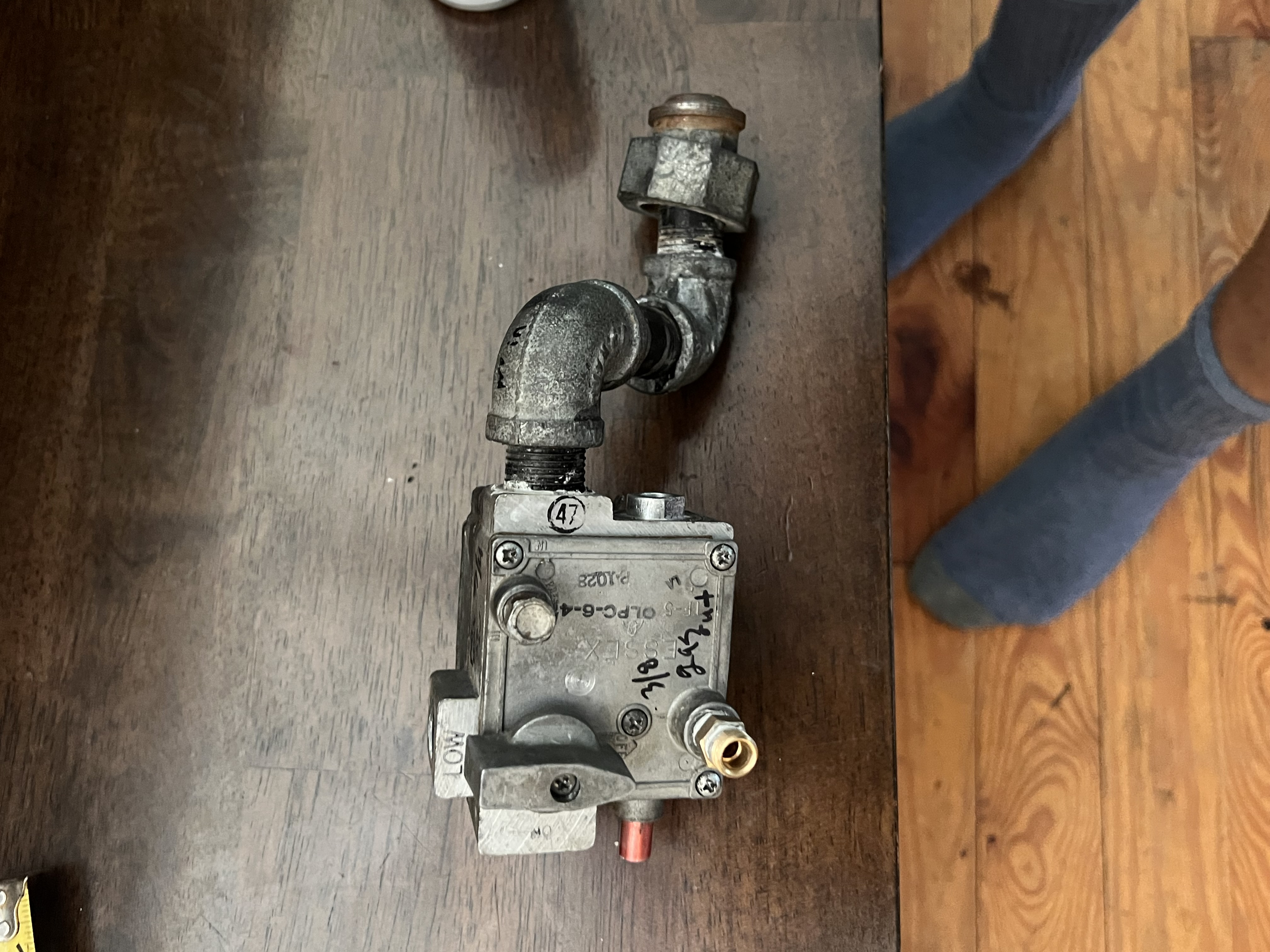
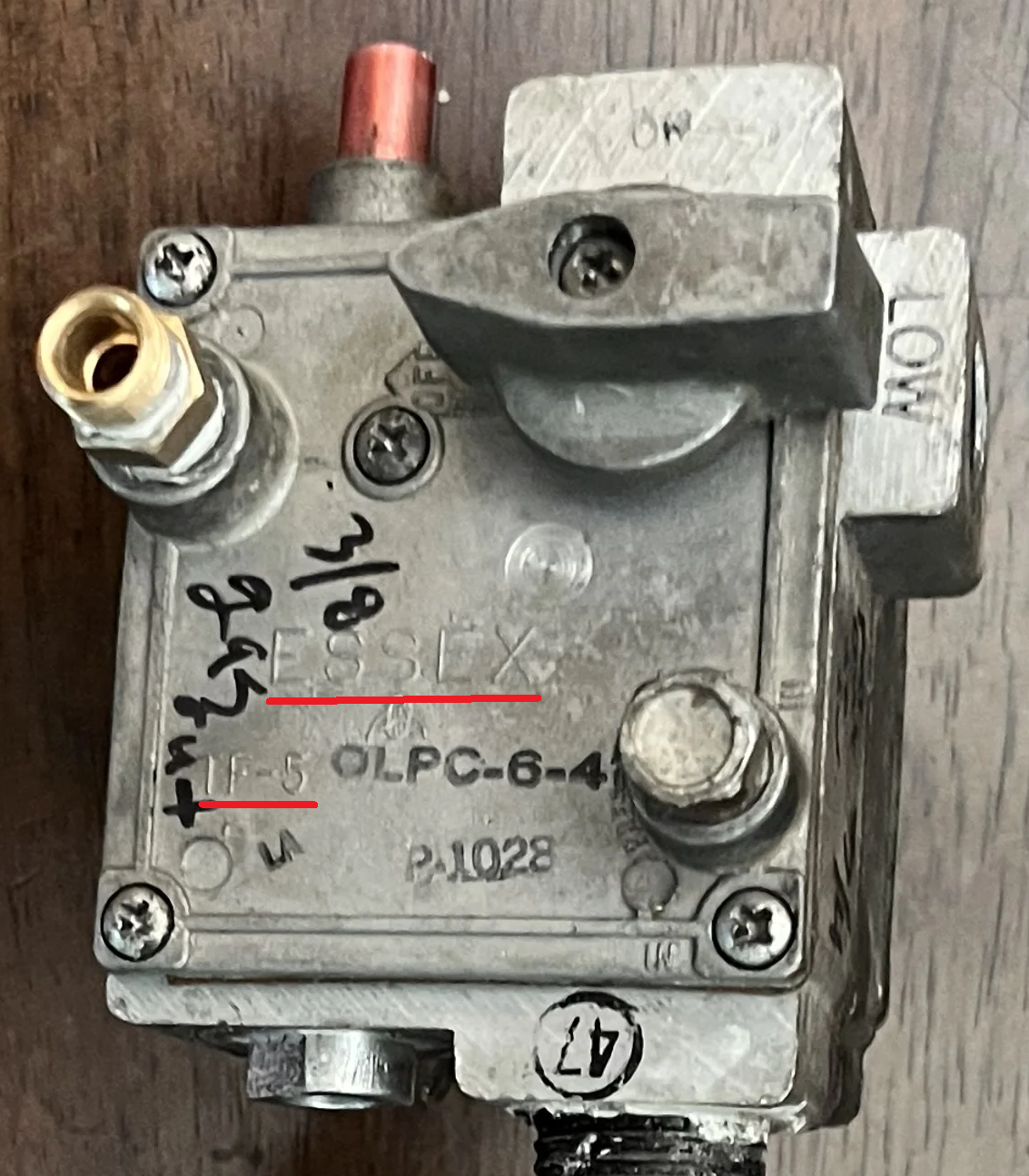
also, what is a recommended replacement gas valve? Unfortunately there are no tags or stickers to identify the part ,this is the most information I have from the part (see picture below)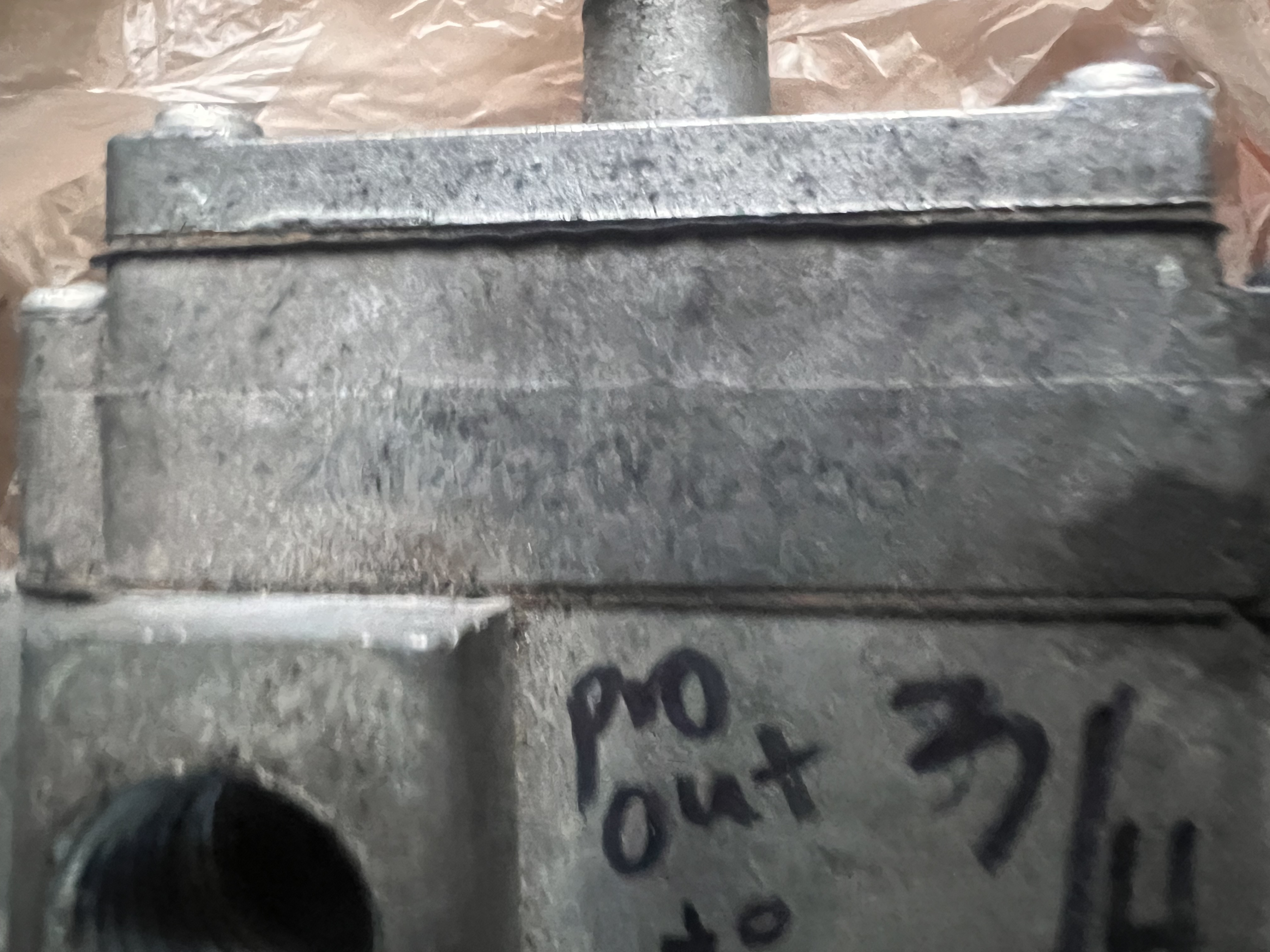
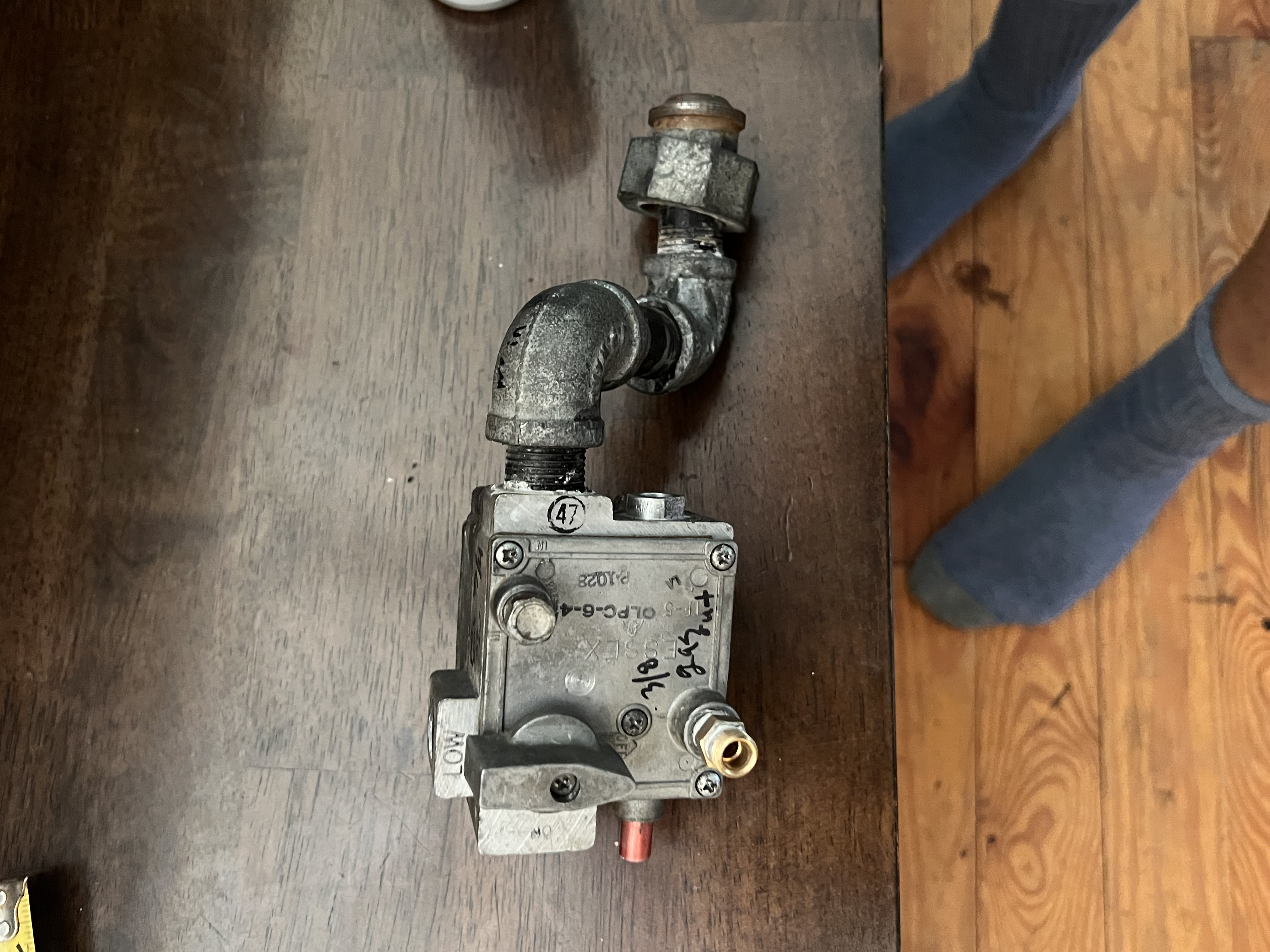 0
-
I have not seen any photo if a 24V. transformer. if there is in fact a 24V. transformer and it was connected to the millivolt thermostat terminals, then that valve is toast. That little solenopid coil that works on millivolts got a real charge out of the redesign. If your electrician did you this favor, thene he owes you a new gas valve. You need a new valve.
This is a chart of different Millivolt Pilot Generators that are available for that valve. Uni-Line Powerpile. The most common one is the two wire connection model but your valve may have needed the coaxial cable design.
Now that you have destroyed the gas valve, you might as well put it back to a millivolt design so it will work during a power failure as it was originally designed.
This is the gas valve you should purchase: Robertshaw 700-501 along with this Pilot Generator that matches the Robertshaw valve. During a power outage the burners will still operate but the fan at the top will not operate. That fan needs power top operate. The Gas valve has multi function acapability. it comes with 1/2" x 3/8" bushings and it can be used as a strait thru or an 90° orientation. Perfect for your application.
Here is a simple wiring diagram to follow when connecting the wires from the thermostat to the gas valve.
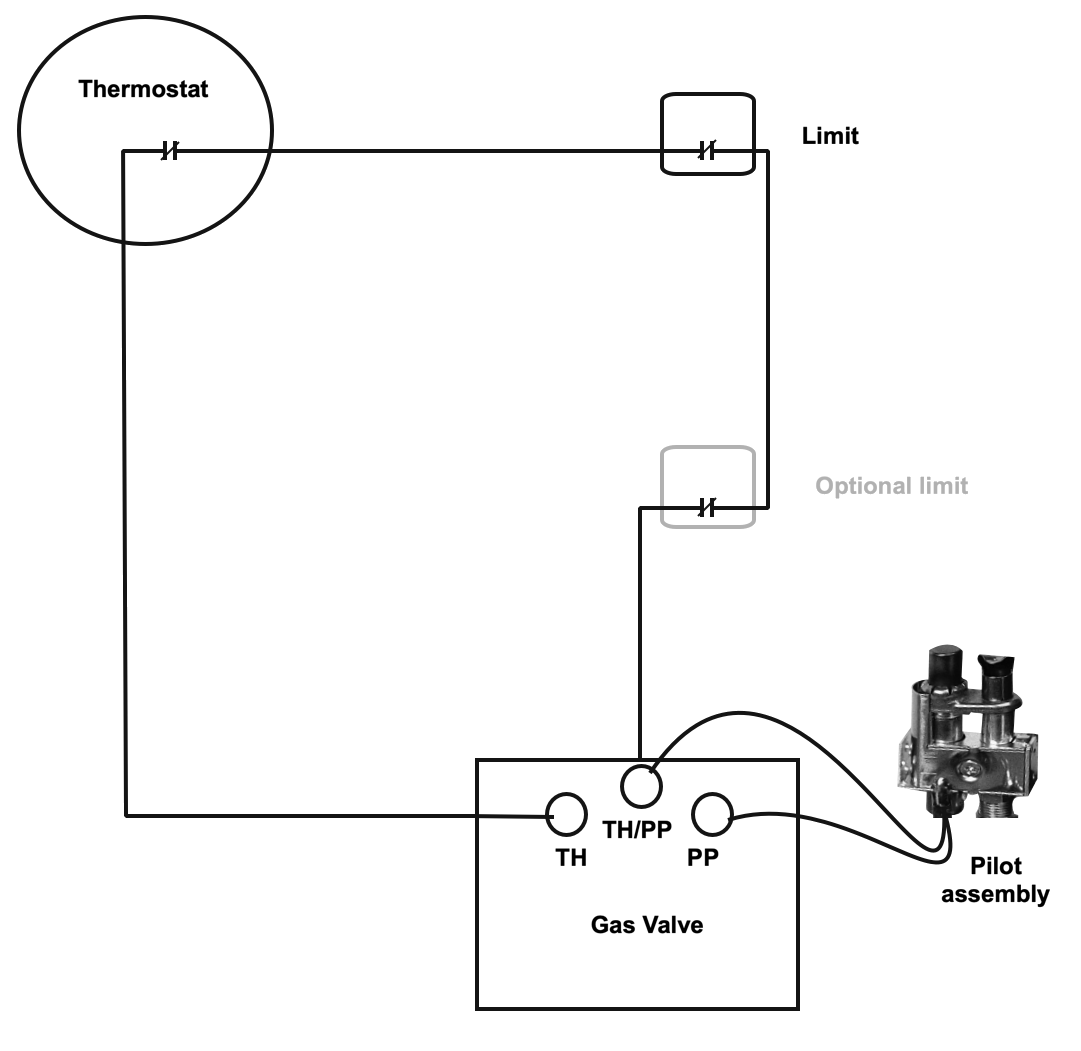
Edward Young Retired
After you make that expensive repair and you still have the same problem, What will you check next?
0 -
Just a side remark. There is another difference between a thermopile and a thermocouple, and it's not trivial. While both will produce an open circuit voltage which is, incidentally, proportional to the temperature, the POWER they can produce is radically different. A thermocouple will produce, at most a few milliamps — sufficient to operate certain sensitive relays, but that's it. A thermopile can produce several hundred milliamps or more, which is sufficient to operate a solenoid.
Br. Jamie, osb
Building superintendent/caretaker, 7200 sq. ft. historic house museum with dependencies in New England0 -
We had a similar wall heater where the pilot would not stay lit. It had a thermal switch up near the top that would shut it down if it got too hot. The wiring to that switch turned out to be the problem. When the thermal switch was bypassed at the valve everything worked fine. Soldering the wires onto the crimped connectors and wiggling them around a bit on the switch solved the problem.
1 -
Can you get the make, model and serial number of the furnace itself? There should be a tag on it somewhere.
Bob Boan
You can choose to do what you want, but you cannot choose the consequences.0 -
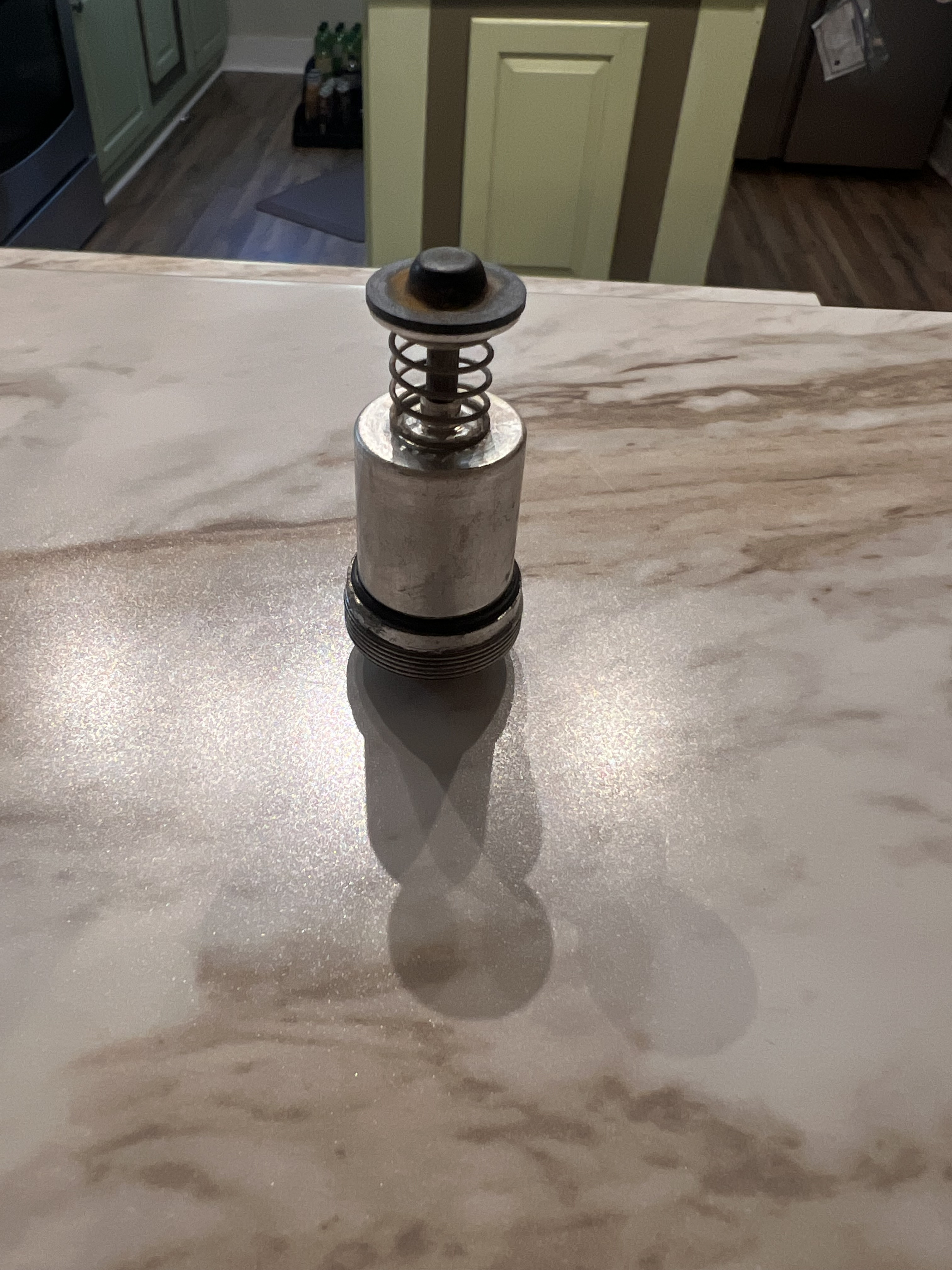
The second picture clearly shows a thermocouple, not a thermopile or pilot generator. It was removed from the pilot assembly. I see only two wires going to the gas valve. There's a fan next to Billy Bass so there's 115 vac there. Its a 24 volt gas valve.
For me @OffGridICF , the fact that you disassembled a part that's not meant to be disassembled, tells me that as much as I love the ambition, you're in over your head. You said the unit heater is likely from the 80's. You're in for a new gas valve, minimum. (Natural or LP?) That's at least a couple/three hundred dollars for the valve if it can be found. If you have a licensed contractor do it, you're looking at a lot more $$. Even with the extra $$, its highly advisable because its not just a gas valve replacement. Its that, plus checking static and manifold pressures. Making adjustments if needed. Test the pilot assembly. Checking the burners. Draft. And doing heat exchanger and combustion tests so you know you're safe. With actual proof.
But forget about that because we all know its time to replace it. Nobody WANTS to do it. But logic dictates that an 80's unit heater + costly repair = new unit.
Or you could go ductless. That's what we call a variable.
If you decide to DIY the gas valve, also pick up a low level CO detector. 👍
And if it is LP, not all pipe compound is acceptable.
Just thinking as I'm going. If it is LP, and the new valve needs a conversion kit, that's definitely not DIY. Please. Manometer.
0 -
For me@OffGridICF, the fact that you disassembled a part that's not meant to be disassembled, tells me that as much as I love the ambition, you're in over your head.@HVACNUT , it wasn't me :-) That was @Nola803, the OP. I've been in over my head plenty of times, but I've never disassembled a gas valve. Now that I've been suspected of it, I guess better get it on my to-do list ;-)
1 -
Terribly sorry. I thought I went to the top of the page to get the OP's name.
0





Categories
- All Categories
- 87.8K THE MAIN WALL
- 3.3K A-C, Heat Pumps & Refrigeration
- 60 Biomass
- 430 Carbon Monoxide Awareness
- 133 Chimneys & Flues
- 2.2K Domestic Hot Water
- 6K Gas Heating
- 124 Geothermal
- 170 Indoor-Air Quality
- 3.9K Oil Heating
- 79 Pipe Deterioration
- 1.1K Plumbing
- 6.7K Radiant Heating
- 397 Solar
- 16.1K Strictly Steam
- 3.5K Thermostats and Controls
- 56 Water Quality
- 51 Industry Classes
- 51 Job Opportunities
- 18 Recall Announcements