Nail Pullers

I am going to be working on a project where I need to remove some plywood panels and trim boards that are all attached with nails about twice the size of what is needed. I am thinking of buying a slide hammer type nail puller. Do any of you have experience with this or something else that you'd recommend? This seems both easier and less tendinitis inducing than a hammer and a cat's paw. Is there an air hammer version that works well?
Comments
-
Are the plywood panels and trim boards going to be reused ?
National - U.S. Gas Boiler 45+ Years Old
Steam 300 SQ. FT. - EDR 347
One Pipe System1 -
What type of nails…..how big are the heads?
How thick is the plywood?
1 -
some of it but it will get covered over.
they are around 7d common nails.
the plywood is probably 3/8" but there also some trim boards involved too.
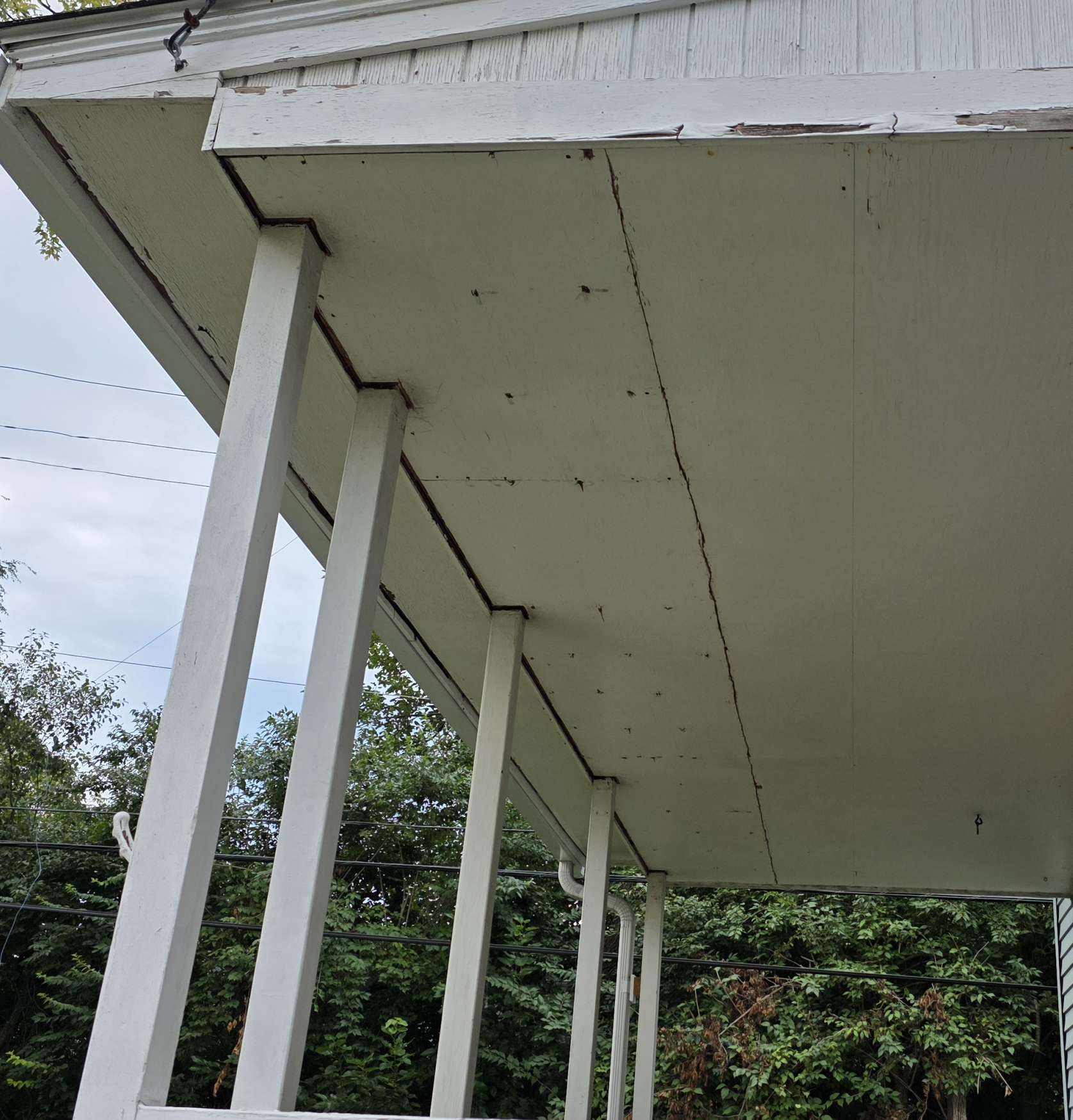
i need to remove some of my porch ceiling to move the posts a bit to give me room to pad them out with trim boards to make them look bigger. i also need to remove some rotting t-111 board to replace it with sheathing and fiber cement shingles. i want to essentially wrap/replace the 1969 "modern" style porch with fiber cement products in a way that is more appropriate to a 1924 house.
 1
1 -
I've always used a Japanese cat's paw or end cutting pliers, depending on the surface of the nail I'm pulling. If I needed to protect the surface, pry off a wood shim or a putty knife.
 2
2 -
it is also overhead which makes holding the cat's paw and swinging the hammer more challenging
0 -
I think that tool will work and unless the sheets are glued in some form you might be able to pull the nails out with the sheets avoiding pulling every last nail, which sounds like torture.
Miss Hall's School service mechanic, greenhouse teacher, dog walker and designated driver
1 -
a lot of nails are in awkward places were it is hard to pry the sheet down. the piece i pulled down to see how it was structured, one post went through a notch in the sheet and the other post was underneath the post. took me a while to figure that out. the post underneath isn't really structural, it is just there to support the railing.
0 -
If the work is overhead and you're by yourself, get a couple of Superbars and keep prying from a seam. Maybe a long wedge.
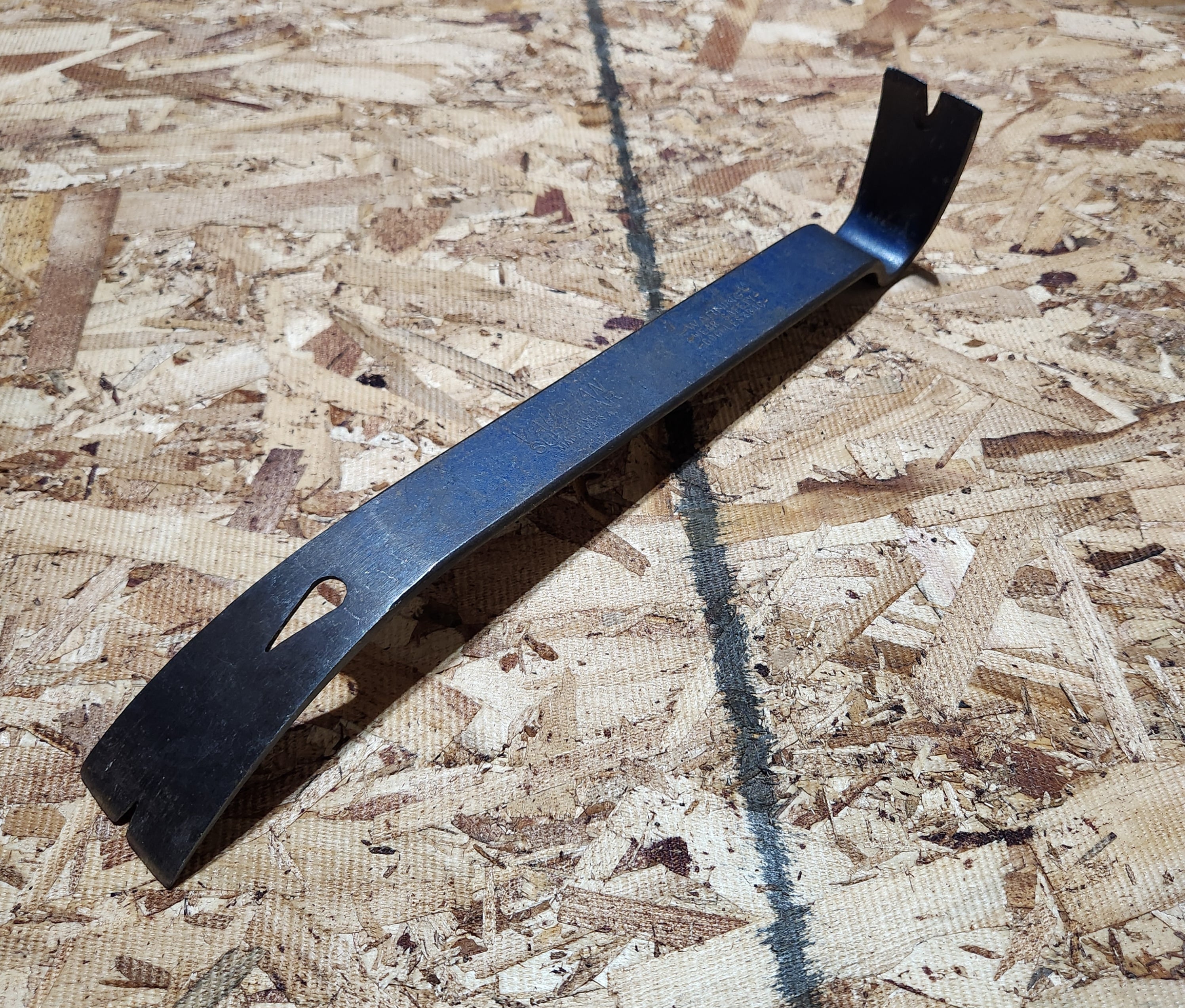
It might leave some nails behind, but they'll be easy to remove.
1 -
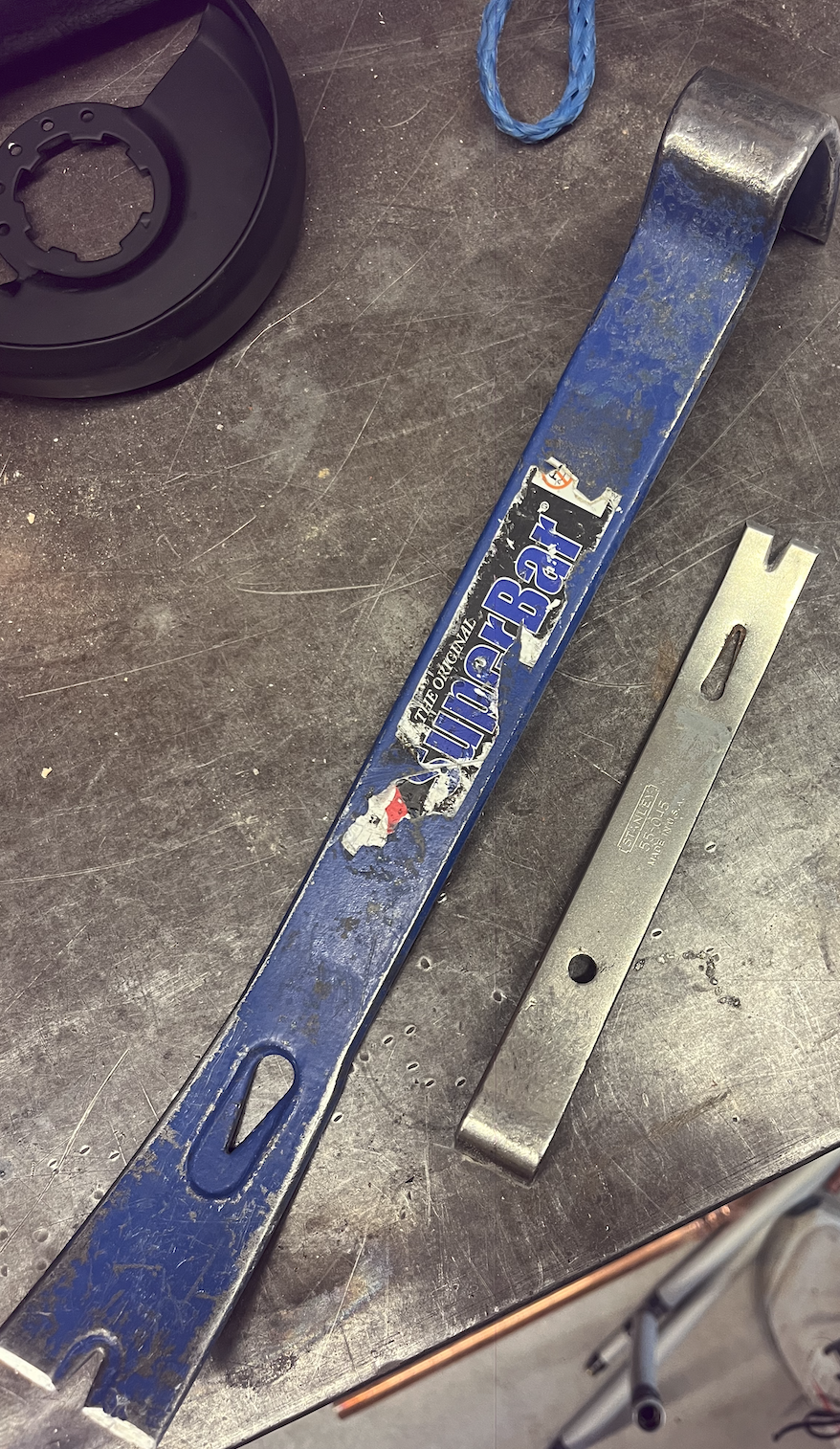
I use something like that tool — only about a hundred years old… and it works well. But if I'm just pulling something apart, my go to is the Superbar which @HVACNUT showed. Oddly enough — particularly on trim pieces which I might want to reuse — it actually does less damage to get it under the wood — between the wood and whatever it's attached to — and pulling that way, rather than trying to get under the nail head. Any mark left is on the back of the wood that way, and you can pound the nail out from the back once you get the whole mess off.
Br. Jamie, osb
Building superintendent/caretaker, 7200 sq. ft. historic house museum with dependencies in New England
 3
3 -
i'm not surprised that you can still buy one new but i am surprised that it comes from cooper rather than some obscure small manufacturer.
0 -
I have one that my dad bought 70 years ago when we were salvaging lumber from an undending supply of packing crates. It's all cast iron. I still break it out occasionally as it is sometimes the best tool for the job. I use it in combination with a cats claw, wonder bar, reciprocating saw, and oscillating saw. They all have their place, sometimes in the same project. One warning - they are famous for catching one's skin where the two parts of the handle slide together and will bite and give a nasty blister. I've done it many times over the years.
2 -
so then gloves…
0 -
It seems like a heavy tool to use overhead?
I agree with the SuperBar tool use, if you can get it behind or close to the nails.
The small one is a Stanley brand.
 Bob "hot rod" Rohr
trainer for Caleffi NA
Living the hydronic dream0 -
If its going to be covered up and its going to get chewed up trying to get the nails out and working overhead anyhow
You could use a small hole saw to core the plywood around the nail.
1 -
there are way too many nails and a lot of them are close to edged where they will just pulverize the wood if i do much prying on the wood. i have a wonderbar and a medium stanley pry bar and a 18" or so crowbar type bar. the 18" bar is really what it takes to easily pull those nails, they are pretty solidly in there. if i ever deal with my attic there is plywood over ceiling joists that are too small for a floor which also has a million nails in it which would have to come up to make a floor that could actually support living space. i'm more looking for if there is a nail extractor that is a better design than this. i suppose i could also blunt off an air punch and drive them all the way through.
i only need to open up an 18" or so strip to get to the beam that supports the front to notch and lag new posts in to it.
i wish they used as many nails laminating the 2 pieces of 2x that make the beam together as they did on the ceiling.
0 -
Sometimes it is easier to hammer the nails through the plywood. You can pick up a pallet de-nailer or grind the tip on an old framing nailer to drive the nails through the plywood.
0 -
Pull them out, drive them through or cut them off.
The best tool and the best method depend on the type of wood, the type of nail and the situation.
If I'm trying to save the piece I'm removing, cutting the fasteners is almost always the least damaging. Possible tools include a sawzall, an oscillating tool with a metal-cutting blade, a grinder, diagonal cutters or an 8" bolt-cutter style cutter.
For prying it apart the best bar depends on the situation. I like this one because you can adjust the angle of the head:
This one is good for opening up a gap in something you want to save:
https://www.amazon.com/dp/B017Z70Z0U
If you're taking material off of a joist, a bar with a fork design allows you to push on both sides. I use this one:
and this one:
Each has its uses with different angles of attack and adjustability.
Usually I just bang the nails back into the framing. If you actually have to get the nails out, this is my favorite tool:
0 -
Too many nails, I have longer pry bars, 3 foot and longer. If you are trying to remove and save a piece with too many nails, that gets more surgical and tedious.
Sometimes if you have the needed access you can pry or pound part of the wood away from the framing member an 1/8 to 1/4 inch and the nail(s) will come up with the wood, then pound the wood back against the framing member and the nail does not go back into the framing member so the heads can be easily grabbed and pried out, very situational dependent method.
National - U.S. Gas Boiler 45+ Years Old
Steam 300 SQ. FT. - EDR 347
One Pipe System0 -
that is more or less what i did once i got an edge up but i could only pull a nail or 2 at a time then i had to move the bar in and loosen one or 2 more and once i got in the middle of the sheet there wasn't any space to lift the bar. a longer crowbar would have helped. also if i can pull most of the nails while i'm planning then i should be able to do the posts a lot faster.
0 -
Oh, and if you're trying to save material, a shingle ripper allows you go get in behind and pull the nails out.
0 -
If trying to remove just a strip, especially overhead, try a 5-1/2" cordless circular saw, cutting down the middle of the joist where the cut needs to follow the joist line.
Set the depth so that it only cuts the plywood. The nails are rough on blades, but the carbide blades will take a lot of abuse. (Googles, if not a face shield, are madatory.) An oscillating saw with a bi-metal blade may be needed where you can't get in close with the circular saw. They make smaller circular saws that cut flush to the side but they are expensive it you only have one project to use them on.
Renail the edge of board that you didn't remove.
0 -
i will probably use a chalk line and a reciprocating saw. i have used a circular saw in a lot of ways but up side down seems a little dicey
0 -
A cat's paw, crowbar, flat bar, and the sliding nail puller. All of these. And if the plywood is glued to the studs, a circular saw and a sawzall.
0 -
watch out for wiring.
0 -
it is a porch, there is no wiring in it.
1 -
I built my own, tricked out, 3 car garage in the mid-90s, sheds, all kinds of woodworking.
If you have to reinstall both the baseboard and the paneling, pulling off the baseboard clean will require moving slow as you go. Good chance there’s a bead of caulk on the top and if Liquid Nails was used on any of it, none of it’s coming out clean.
If it’s just demo work, 22 ounce claw hammer and an assortment of pry bars you probably already have. Don’t overthink it. Attack.Steve Minnich
 2
2 -
@mattmia2 , the pics show a Wonder Bar, won't work, poor choice. Your pic of the slide tool will work, but leave two deep marks under the nail head in the plywood and I have snapped the heads off nails with it. I have done a lot of general construction and we use a Cats Paw to remove nails with the least damage. It is the most manageable tool especially working overhead. Many styles available.
 1
1 -
It worked great. working overhead is always a pain, but otherwise it took the ails out without switching tools 5 times per nail.
here's some bonus pictures of the lunar eclipse

 1
1 -
@mattmia2 , what tool did you use? Inquiring minds want to know.
0 -
i can see where it would make things like that awful job of removing a piece of subfloor in my attic from the middle of the floor where i had to pretty much pull all of the nails out before i could lift it much easier. if i didn't have to hold the whole thing overhead it would be pretty easy to use
0



Categories
- All Categories
- 87.8K THE MAIN WALL
- 3.3K A-C, Heat Pumps & Refrigeration
- 60 Biomass
- 430 Carbon Monoxide Awareness
- 133 Chimneys & Flues
- 2.2K Domestic Hot Water
- 6K Gas Heating
- 124 Geothermal
- 170 Indoor-Air Quality
- 3.9K Oil Heating
- 79 Pipe Deterioration
- 1.1K Plumbing
- 6.7K Radiant Heating
- 397 Solar
- 16.1K Strictly Steam
- 3.5K Thermostats and Controls
- 56 Water Quality
- 51 Industry Classes
- 51 Job Opportunities
- 18 Recall Announcements