Is this a steam trap?

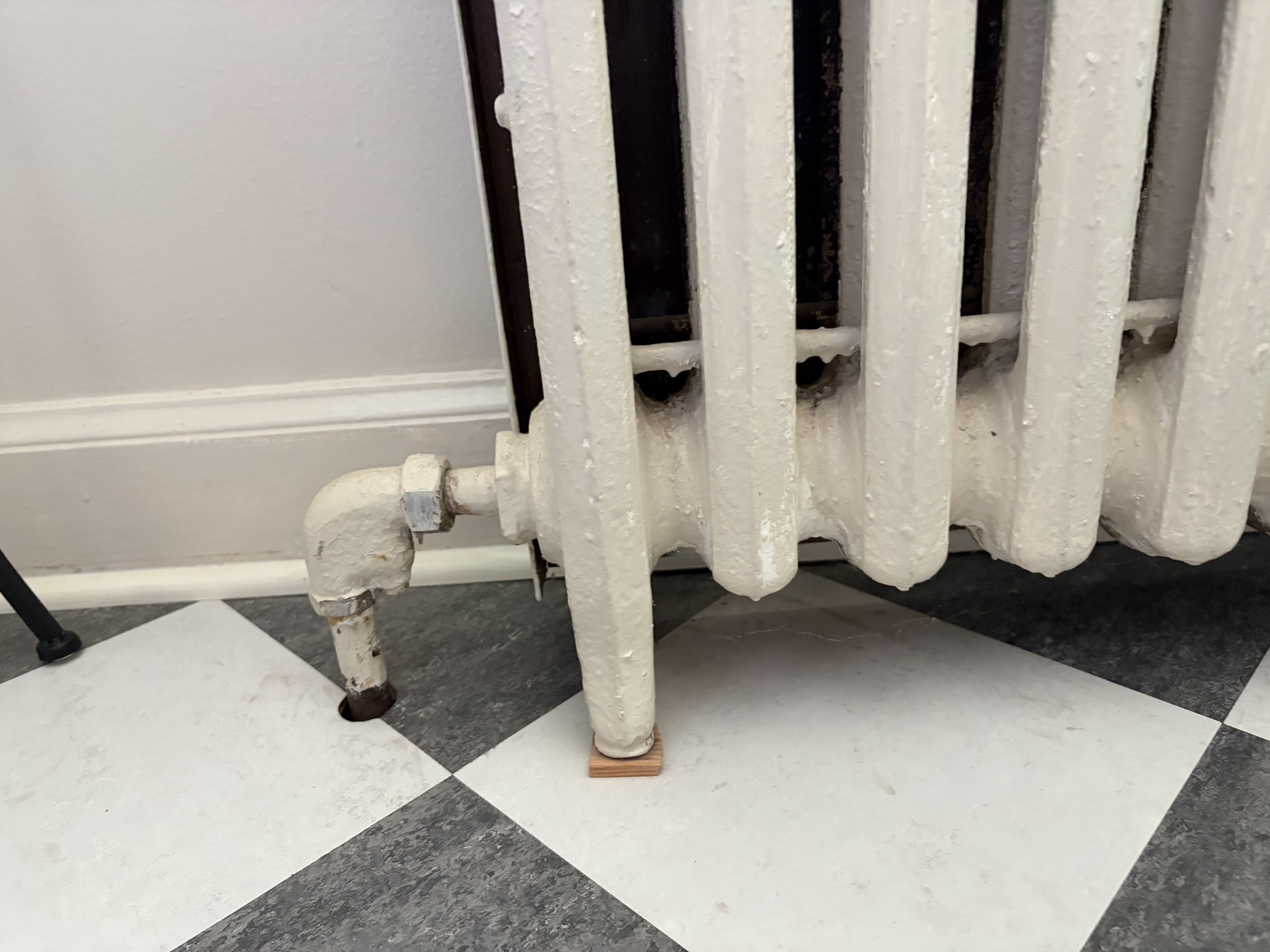
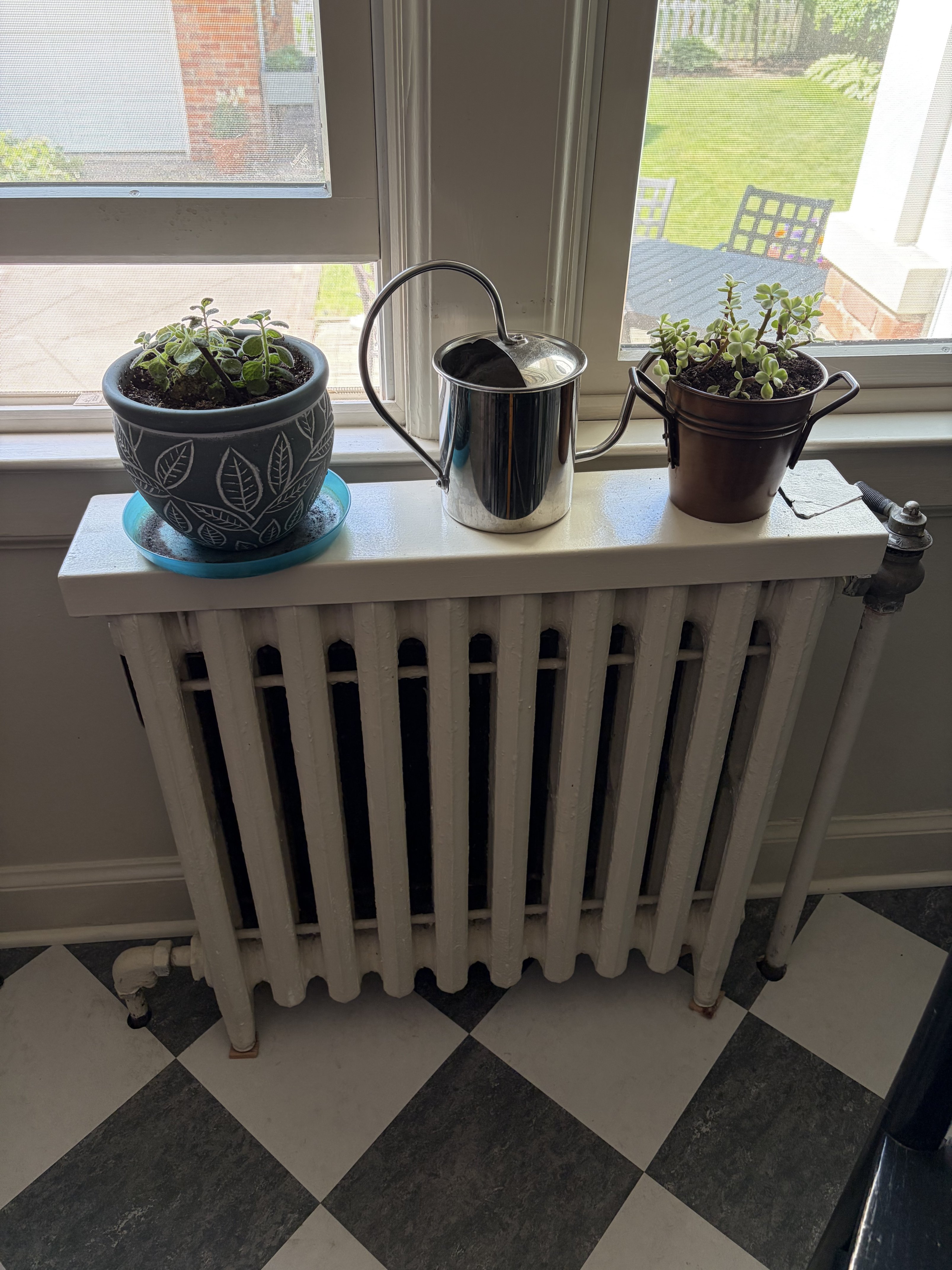
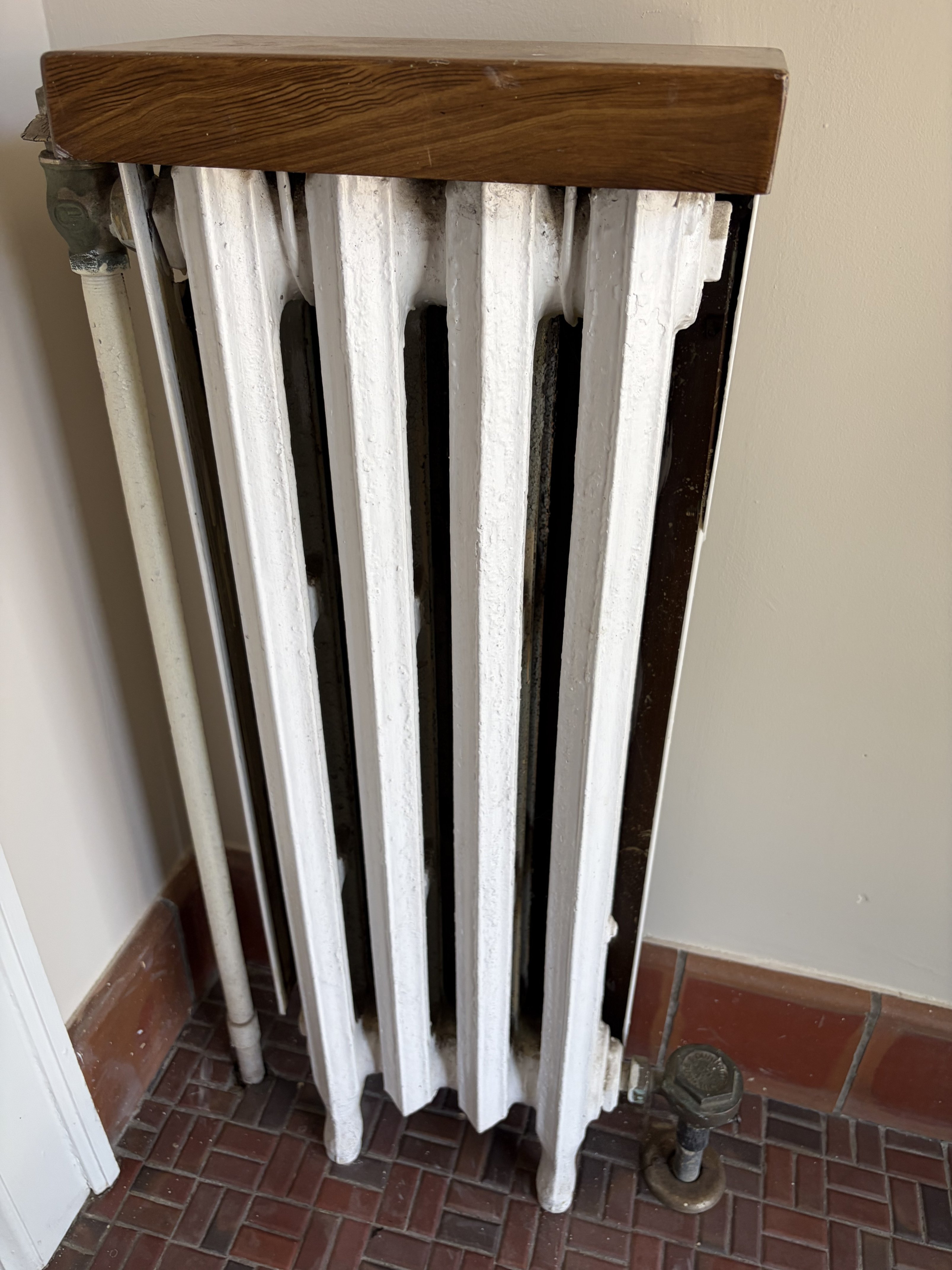
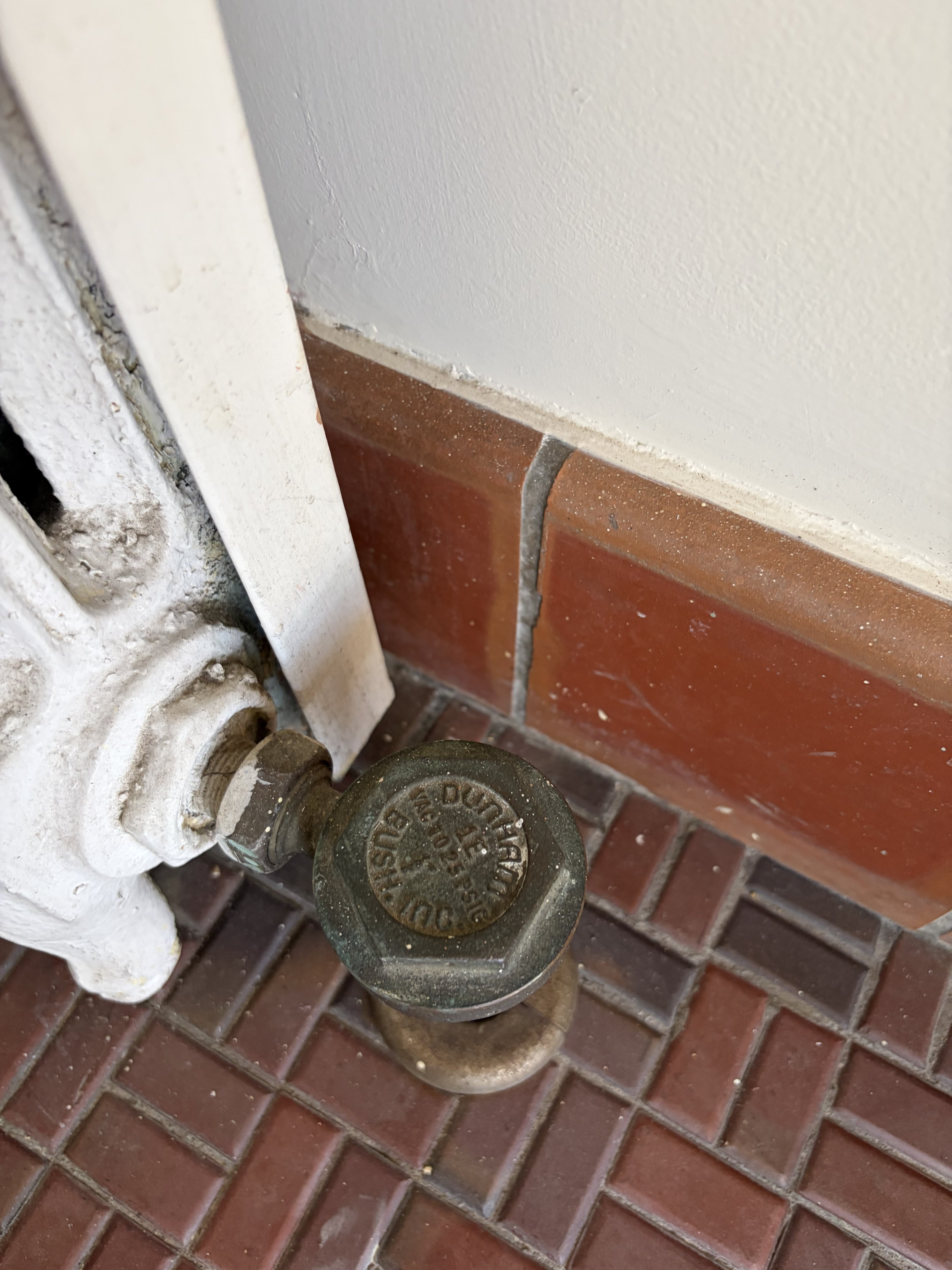
I have a house built in 1930 with two-pipe steam. A contractor said he didn't think this radiator (and a couple of other similar ones) had a steam trap. But I'm wondering if this elbow-shaped piece is actually a steam trap. Thanks in advance!
Comments
-
it is a vapor system, it doesn't have traps. that is i think a water seal, maybe it is a broomell system.
don't let them touch it unless they understand what a vapor system is.
the boiler through correct sizing and a vaprostat keeps the pressure low, under about 8 oz/in^2 and that vapor valve on the radiator meters the amount of steam that is let in to the radiator to less than what the radiator can condense so it is all condensed to water before it gets to the outlet of the radiator.
keeping the pressure very low, a few piping things and possibly some specialties at the boiler are critical to making that system function properly.


 4
4 -
where is this house located.
you do not want them working on that system. 2
2 -
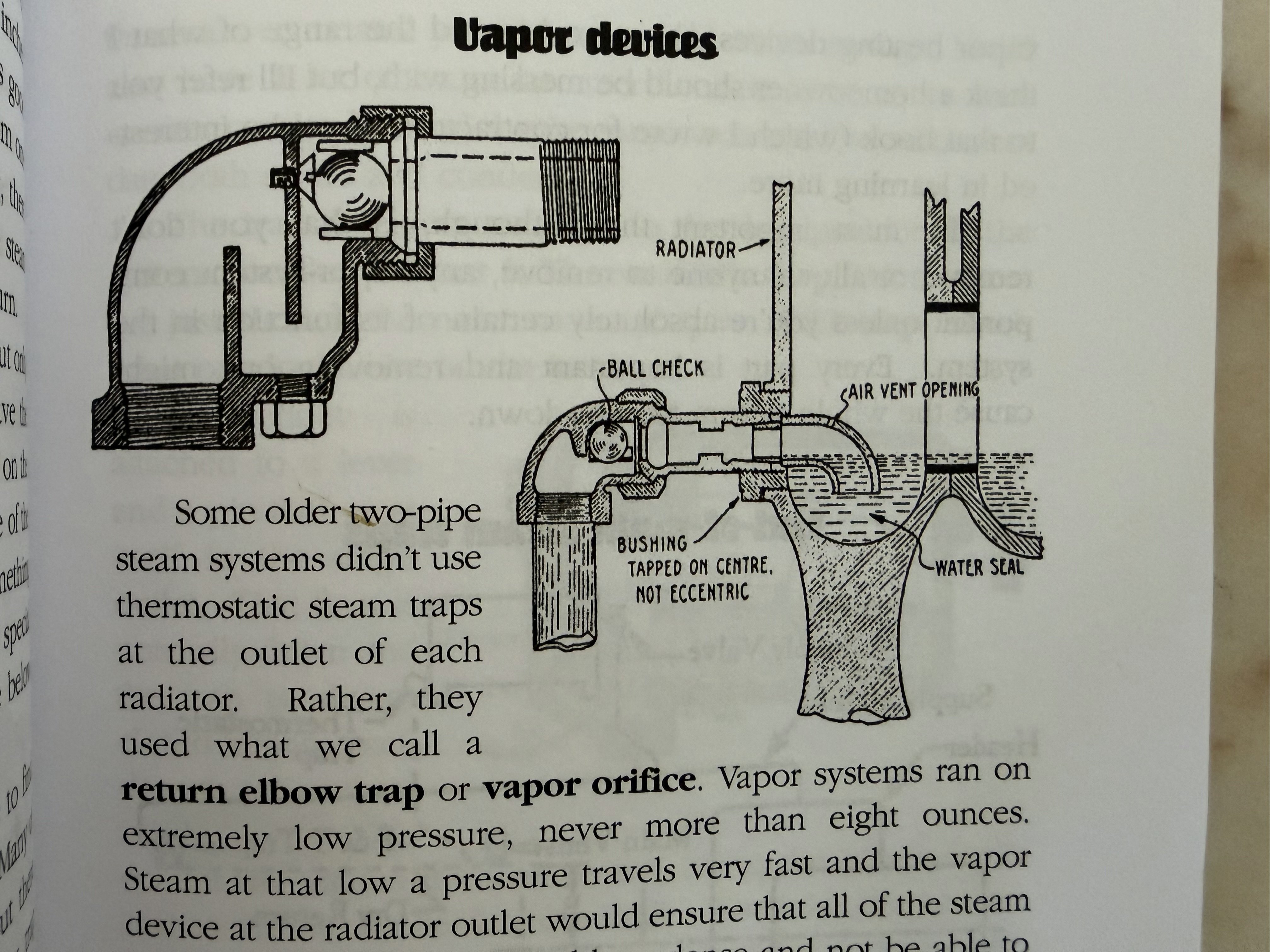
It's an O-E Vapor system. That return fitting is a water seal with a small hole in it to let air escape from the radiator. You can find it chapter 15 of @DanHolohan 's excellent book "The Lost Art of Steam Heating"- the latest version is here:
Baltimore, MD, USA
Steam, Vapor & Hot-Water Heating Specialists
Oil & Gas Burner Service
Consulting2 -
Wow! We've never known this was a vapor system, even after having two contractors who are supposed to be steam system experts. We are in Ferndale, Michigan, just north of Detroit. I found this in Holohan's book and it looks just like what we have on many radiators, although it doesn't seem consistent around the house. And apparently if we have a vapor system, we shouldn't have a pressuretrol (which we do) and should have a different, more sensitive control for the lower pressure?
 1
1 -
@Jamiedle , the book I linked to above goes into a lot more detail. How about some more radiator pics, including ones with different fittings, and some pics of the boiler and any devices in the piping near it?
Baltimore, MD, USA
Steam, Vapor & Hot-Water Heating Specialists
Oil & Gas Burner Service
Consulting0 -
try @offdutytech. I'm not sure he knows vapor systems but he at least knows enough to know when he needs to ask questions.
i live in ann arbor but grew up in clawson.
1 -
Thanks, @Steamhead! We do have both books. We got the layman's version because the big book was a little intimidating. But we're looking at Chapter 15 now. Here are some more photos. You'll notice that there's also a hot water pump coming off the boiler which is a whole other topic of conversation. We've had the house just over a year and are making lots of discoveries! Thanks to everyone who is chiming in to help - much appreciated.
First, here's another radiator with a different-looking trap. FWIW, this one has never gotten hot since we've been here. Followed by photos of the boiler.
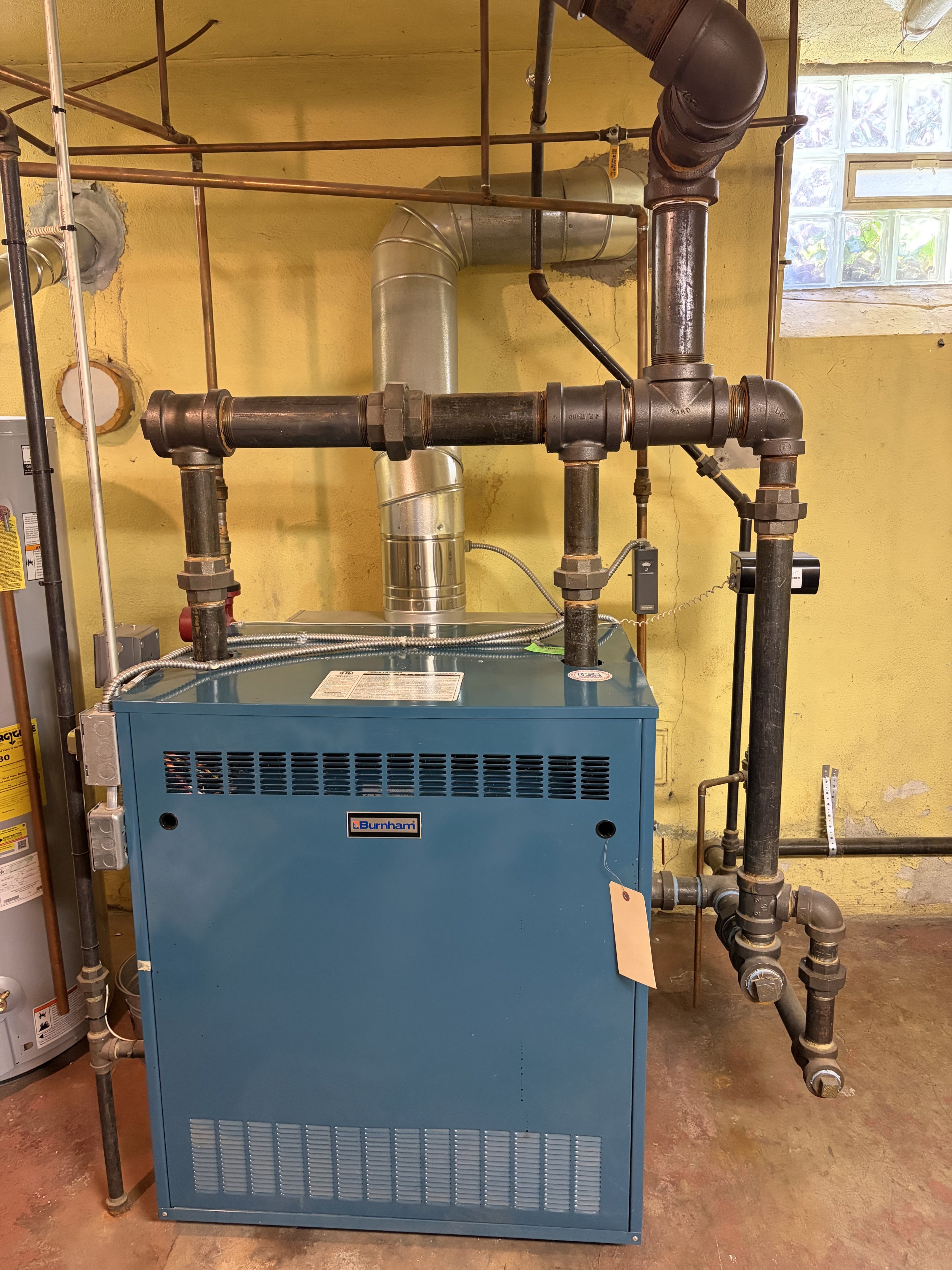
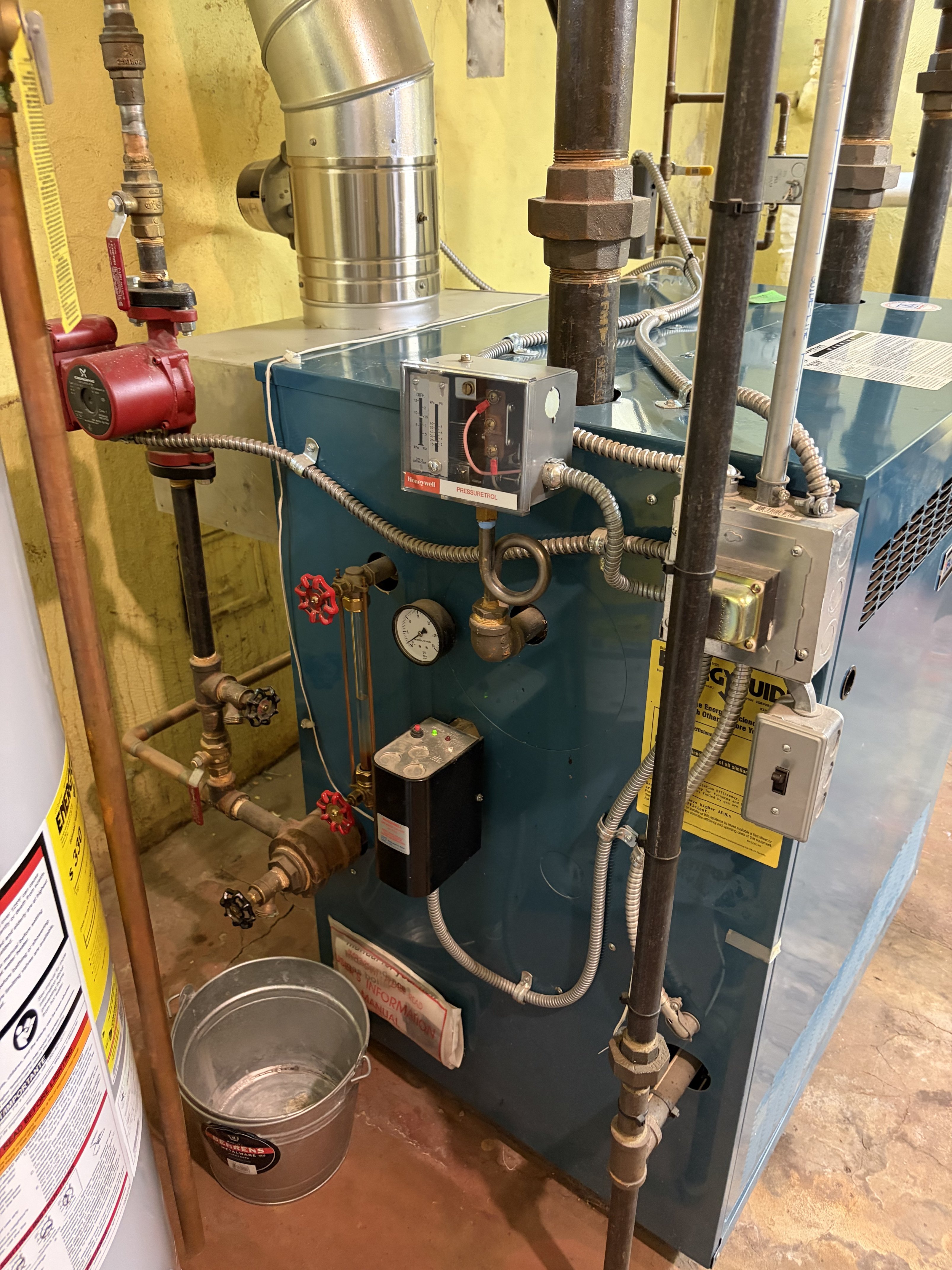
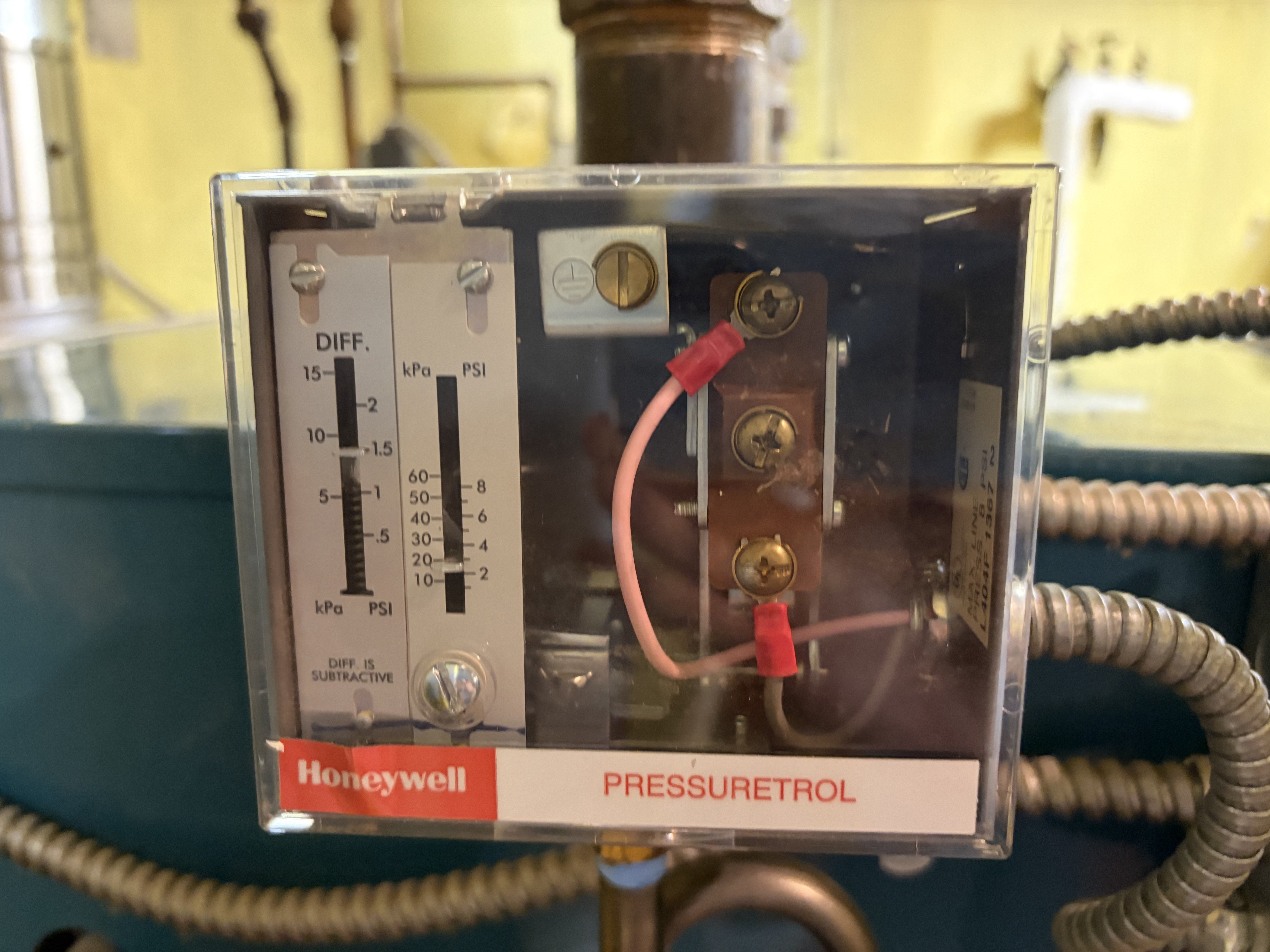
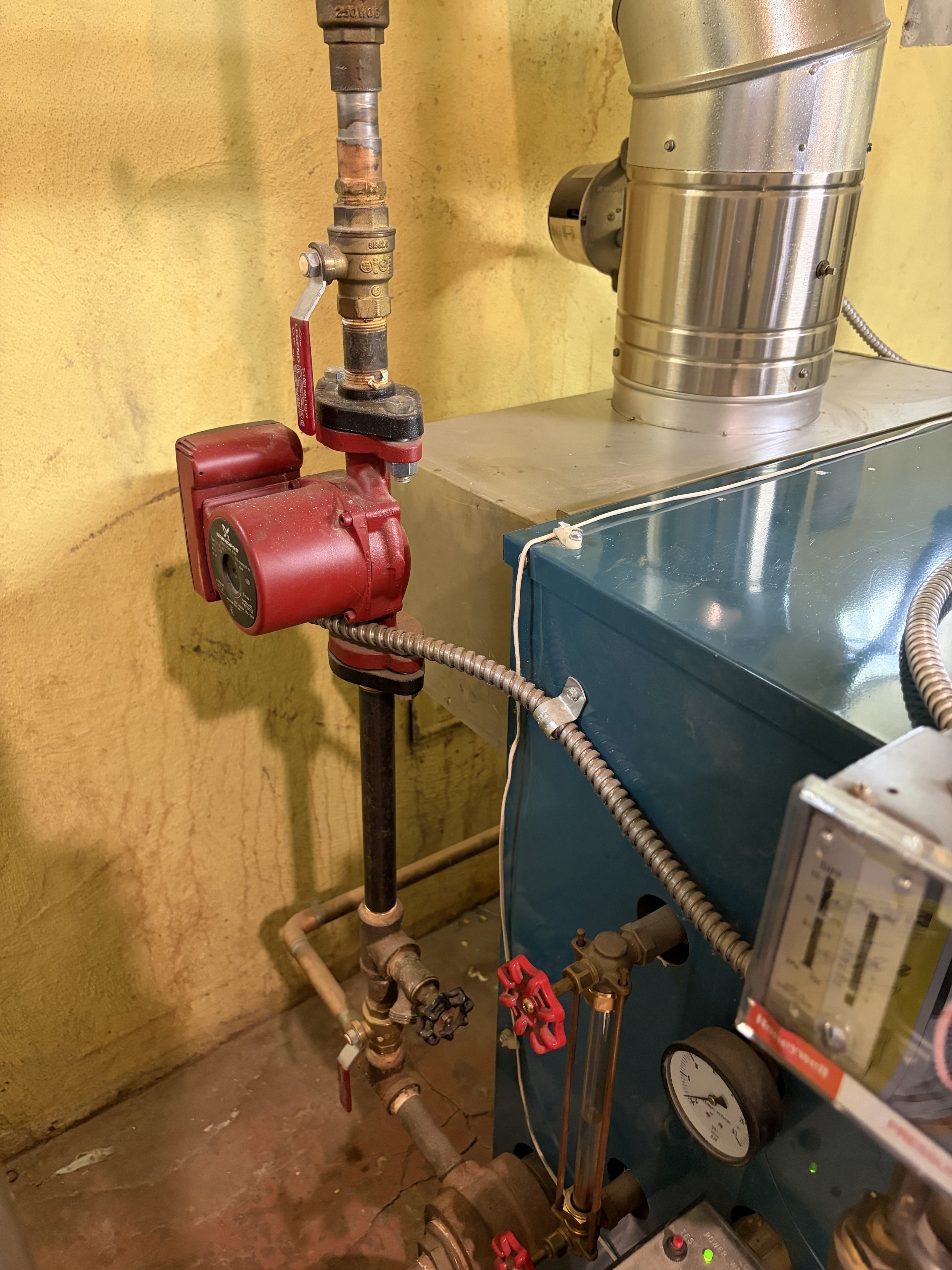
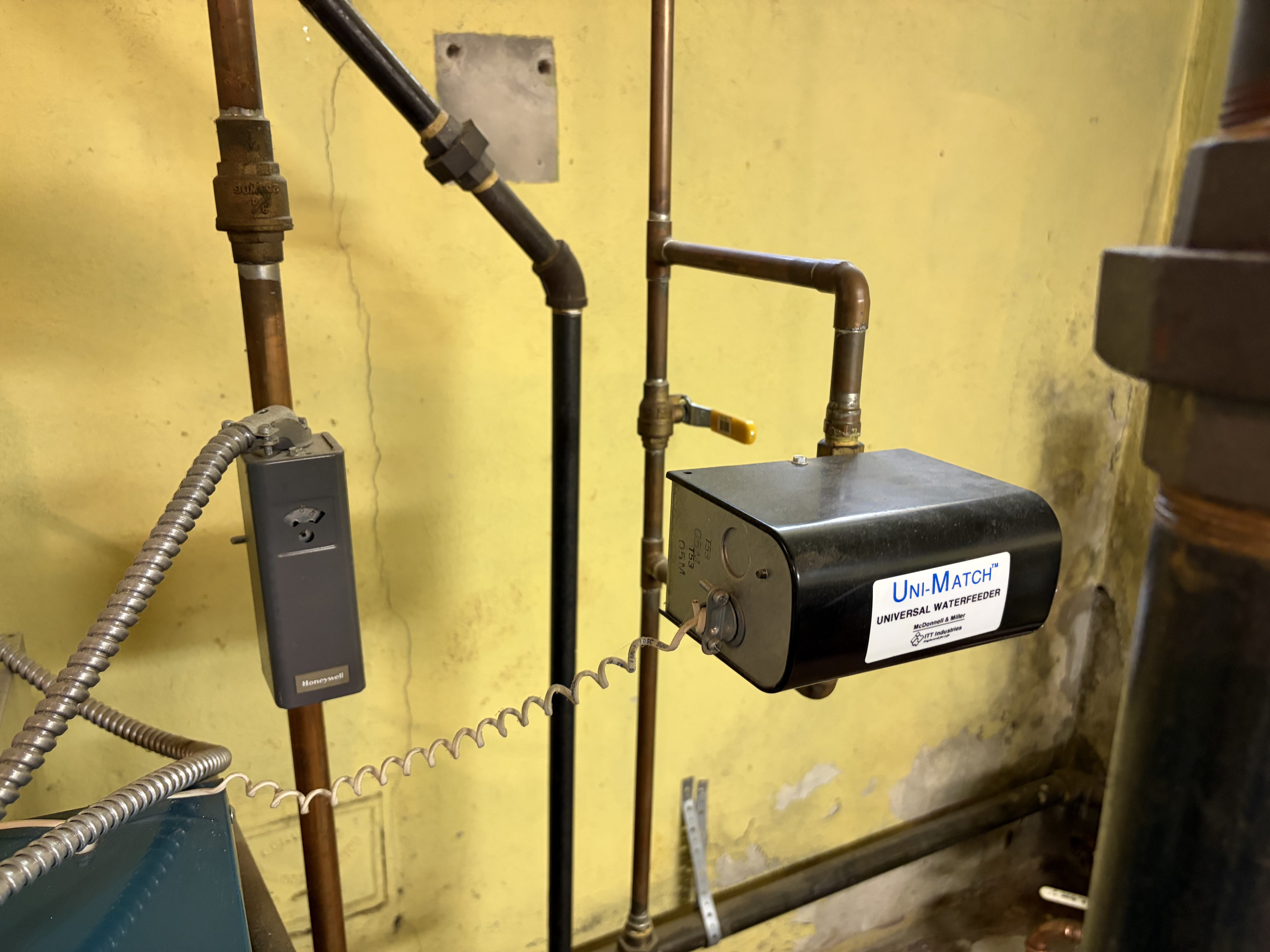
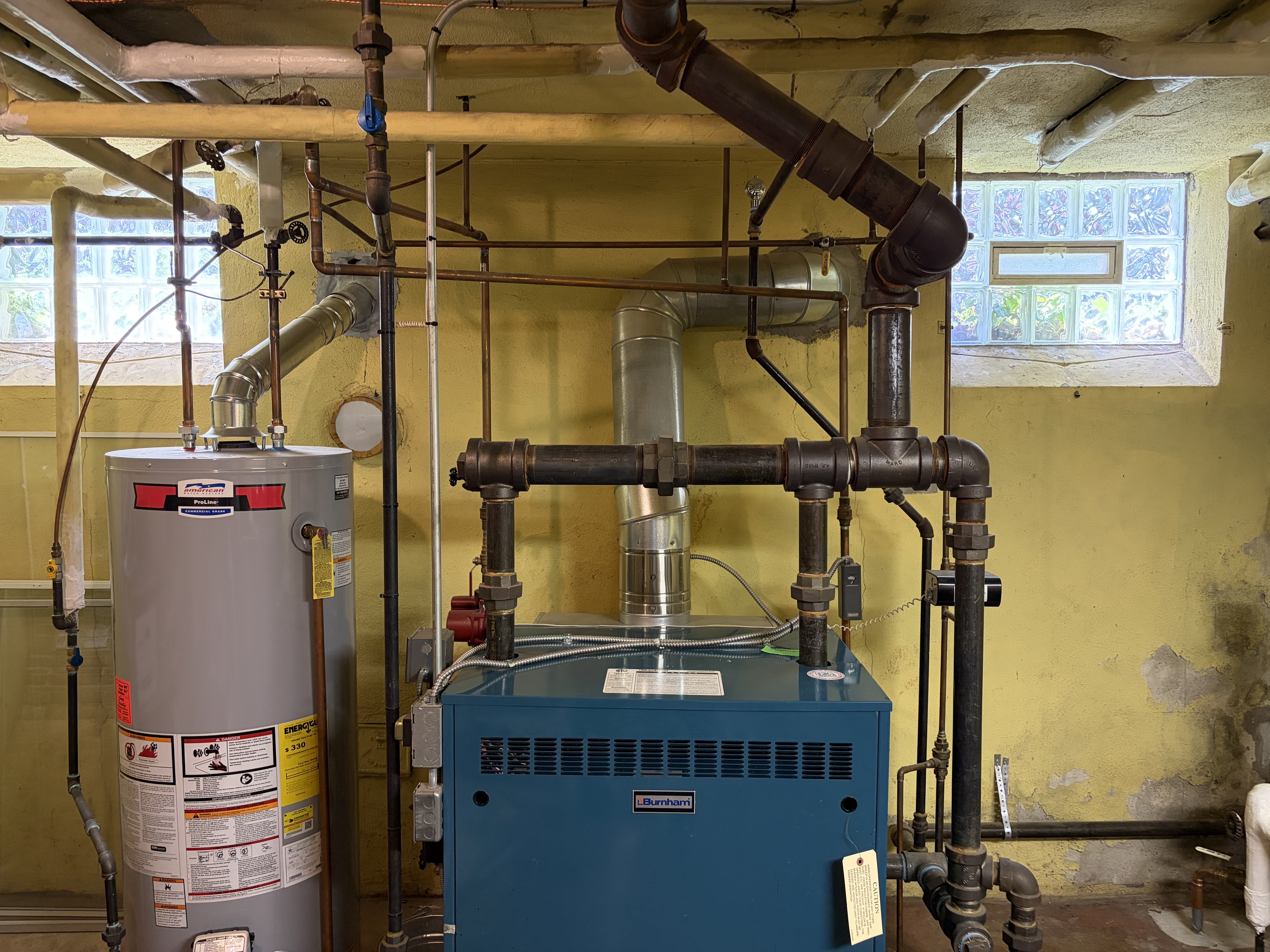 0
0 -
that is a big boiler, i bet it is very much oversized. the circulator i think is for a hot water loop somewhere, that is pretty common and fine if done correctly.
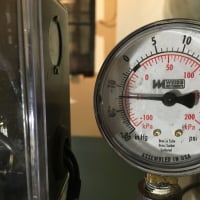
2.5psig is way too much for a vapor system.
does the radiator that won't heat that has the trap still have the vapor valve?
with the insanely high pressure it is very likely you have steam in the returns and that steam is closing the trap from the return side before the radiator can vent and heat. also possible the steam in the return itself is keeping the radiator form being able to vent.
feel the returns, they should not be steam hot. they may be hot but they shouldn't be as hot as the returns.
0 -
-
Yes, you do need a vaporstat for that system. The 0 to 16OUNCE per square inch variety, and set it to cutout at 7 ounces with a 4 ounce differential. That radiator that doesn't heat — it may be just fine, but that high pressure is blowing through the other radiators into the returns and will shut it off. The trap on it is a perfectly normal radiator trap. If it's not working, it can be repaired quite easily — but there's no point in seeing whether it's working or not until you get the pressure under control.
The control on the left is an aquastat —but where the wires go or what it's doing is quite impossible to say from the picture.
Br. Jamie, osb
Building superintendent/caretaker, 7200 sq. ft. historic house museum with dependencies in New England0 -
the aquastat is for the hot water loop, it is to fire the boiler up to say 180f when there is a hot water call but not a steam call so the boiler doesn't start steaming on a hot water call only.
0 -
I hope so.
that’s why I asked0 -
one problem at a time :)
0 -
@mattmia2 you are right - there is a hot water loop. We've traced the lines and it seems to be going to one radiator in the enclosed porch. Here are the photos tracing the wires from the aquastat, over to the water pump.
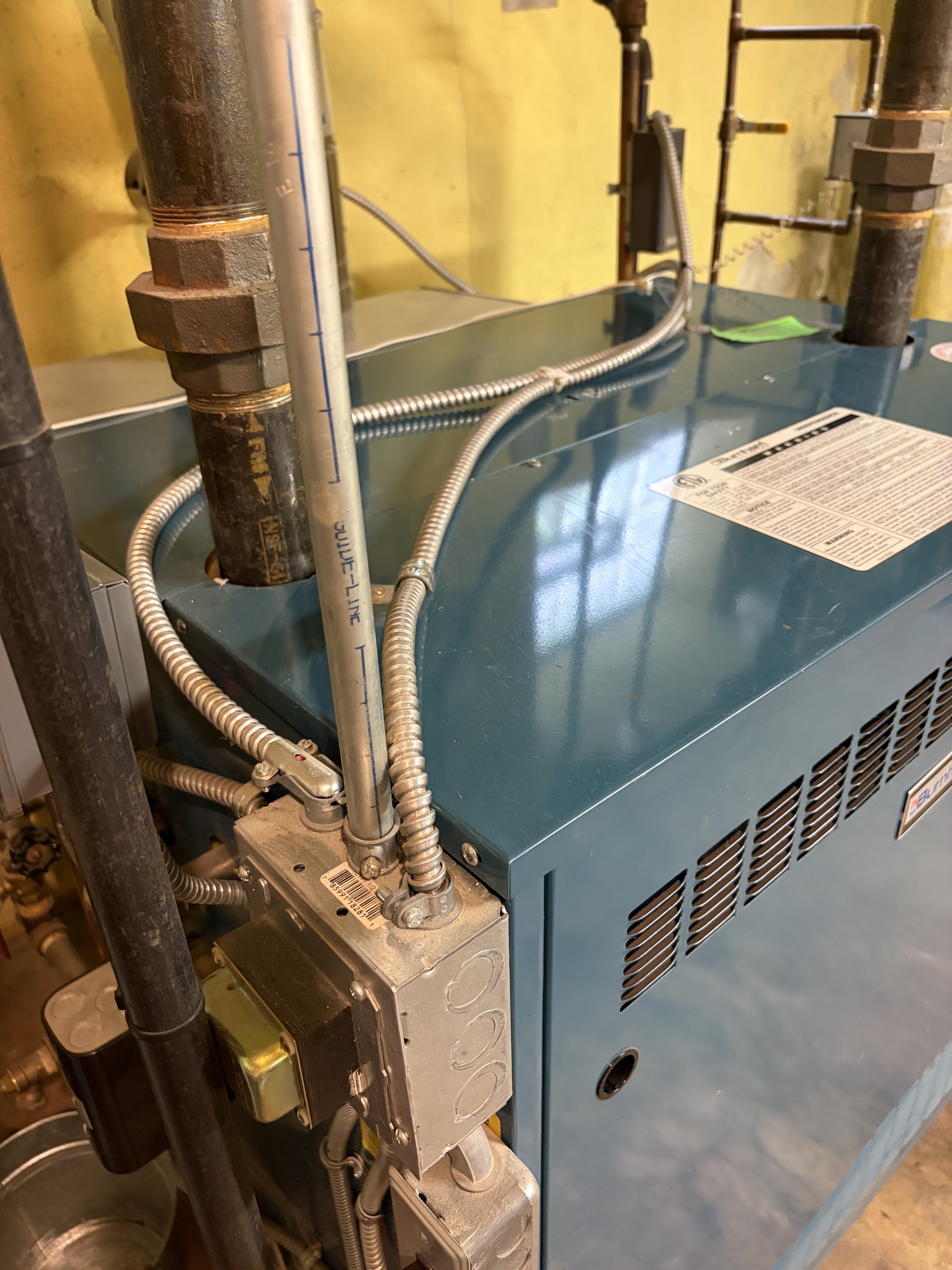
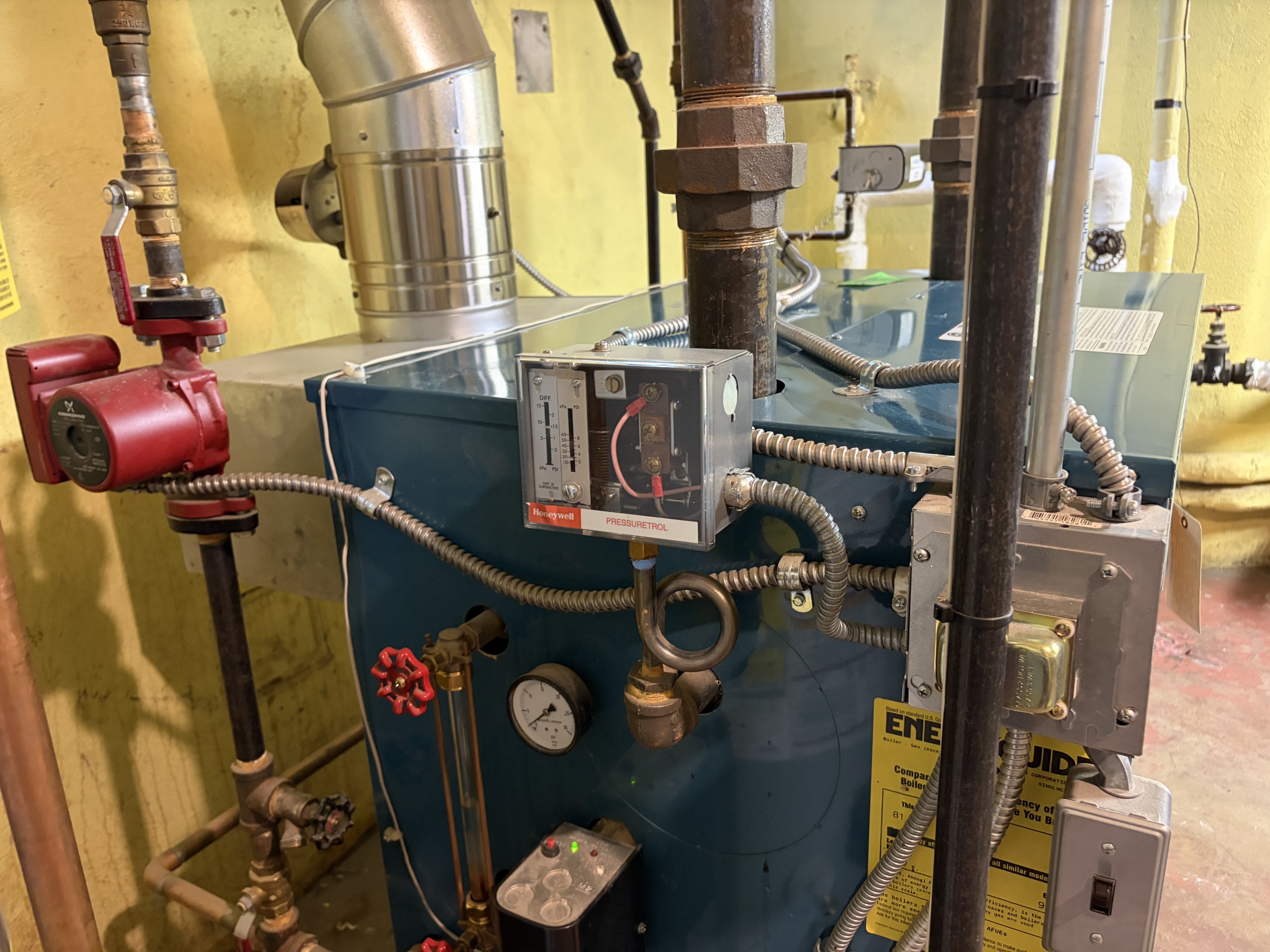 0
0 -
Also shouldn't we read the pressuretrol by subtracting the differential? That would put the pressure somewhere around 2.5 - 1.5 = 1 PSI. Which apparently is still too high for a vapor system. I understand that we need a vaporstat, and we'll look into that.
What started this whole thing is that last fall, we removed a radiator from a very small half bath a few steps down from the main floor, and have been trying to get someone to install a new radiator. We bought a small lightweight radiator from Runtal (the Steamview model, link below) in order to save a few precious inches of space. Both pipes are currently capped and we didn't notice any problems with radiator performance last winter - still the same not-that-bad level of water hammer, all other radiators performing as they had before. But now we need this new one installed and the one guy who finally came out after literally months is the one who didn't recognize the existing traps. I think the person who runs the operation probably would have.
Runtal steam radiators: https://runtalnorthamerica.com/steam/
0 -
the pressuretrol has a cut in and cut out point. the cut out point is 2.5 psig and the cut in point is the cut out minus the differential so 2.5 psig -1.5psig which is 1 psig. The boiler fires until the pressure reaches 2.5 psig and once it shuts off it stays off until it reaches 1 psig where it turns back on. At least unless the system is huge I assume that is what happens. If the boiler matches the EDR of the radiators in the system then it won't build pressure but I suspect it it likely twice the size of the connected radiation.
Probably the next 2 things to look at are the piping at the ends of the mains and to calculate the EDR of the radiators.
Typically vapor systems just have one big vent at the boiler so that they can equalize the mains and the returns without filling the returns with steam although your system looks like it is missing that device unless there is some large cast iron device near the boiler that you haven't shown us. If the boiler return trap is missing then it will be completely dependent on the vaporstat to work properly.
0 -
As mentioned, try @offdutytech. if he can't help you, he may be able to recommend someone in your area.
he posts on here occasionally and the pictures of his work are top notch.
1 -
The 1 psig cutin is still three times as high as your system is intended to run at…
You can put a regular radiator trap on that new radiator's return (like the "different" one you pictured) and it will work just fine.
There are no pictures of the return piping… so I can't comment on the presence of or placement of the main vent which the system needs.
Br. Jamie, osb
Building superintendent/caretaker, 7200 sq. ft. historic house museum with dependencies in New England0 -
Determine the system's EDR and the Boiler's Square Foot rating before you worry about a Vaporstat. You may want to actually measure the pressure the system runs at instead of guessing.
There should be no water hammer, there maybe puddled water in the system somewhere. Pipe pitch may need to be addressed. Missing or broken pipe supports.
Main vent here (there is at least one).
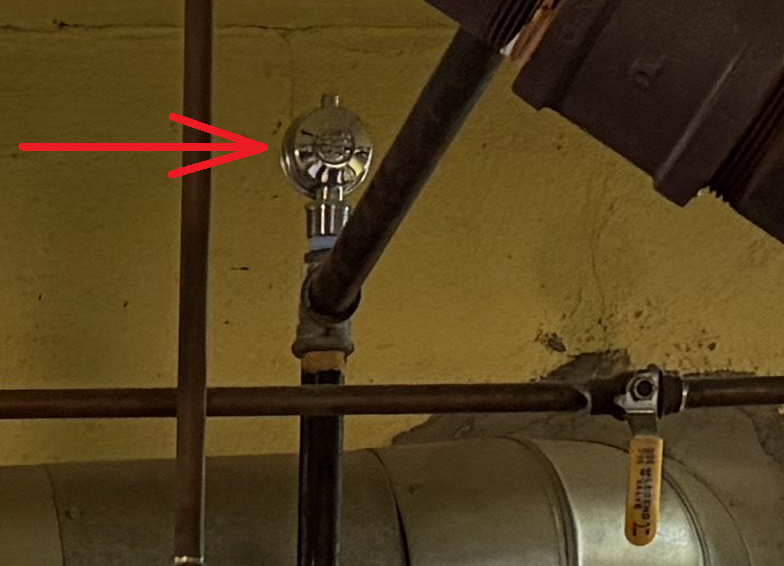 National - U.S. Gas Boiler 45+ Years Old
Steam 300 SQ. FT. - EDR 347
One Pipe System0 -
I suppose, @109A_5 . There is a chance that the boiler is so closely matched to the radiation that it never ever builds pressure over 6 ounces or so. It has happened…
However. With the type of system we have here, if the pressure does go over that, all that happens is that you burn more fuel — and get no additional heat for your dollars.
Br. Jamie, osb
Building superintendent/caretaker, 7200 sq. ft. historic house museum with dependencies in New England0 -
On the O-E system, there would have been a vent at the end of each dry (overhead) return. @Jamiedle , can you take pics of these?
It would also be a great idea to vent the main steam lines. Are there vents at the ends of the mains?
Baltimore, MD, USA
Steam, Vapor & Hot-Water Heating Specialists
Oil & Gas Burner Service
Consulting0 -
Agree, however, I would do the due diligence. And analyze the system usage, like do they shut off radiators in unused rooms ? For the cost, I'd want to know if it is really needed.
National - U.S. Gas Boiler 45+ Years Old
Steam 300 SQ. FT. - EDR 347
One Pipe System0 -
Functional illiteracy on the part of the installers?
Baltimore, MD, USA
Steam, Vapor & Hot-Water Heating Specialists
Oil & Gas Burner Service
Consulting0 -
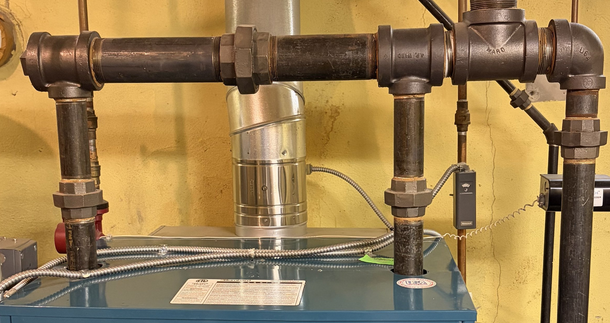
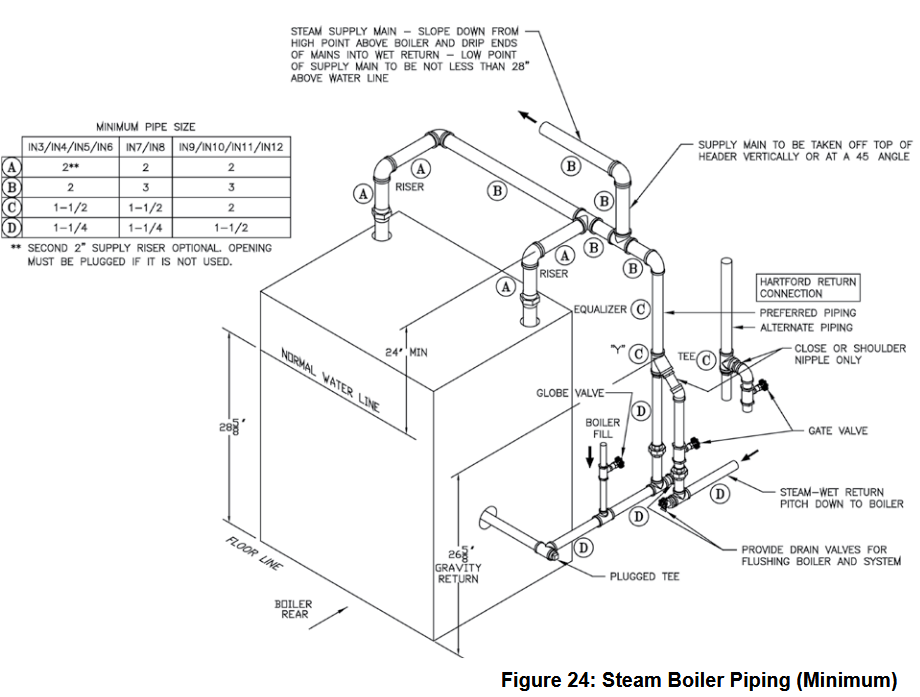
the risers should come in to the op or side of the header rather than the bottom, it might drop some condensate or carryover in to the second riser but unless there is some specific symptom of it causing a problem i wouldn't worry about it. i am more concerned that I don't see a skim port.
it also has no swing joints so it could cause the boiler to pull itself apart.
0 -
There is one vent above the boiler, and four vents (replaced this last fall) at the ends of the mains. See pictures below.
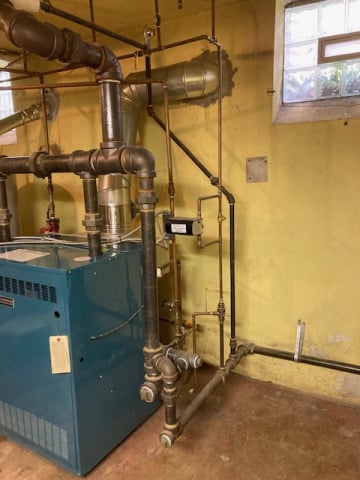
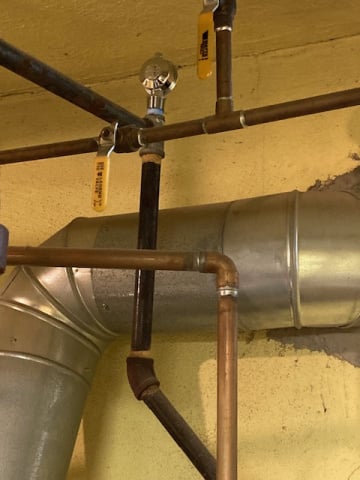
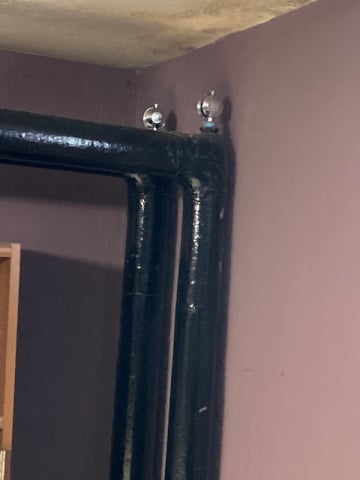
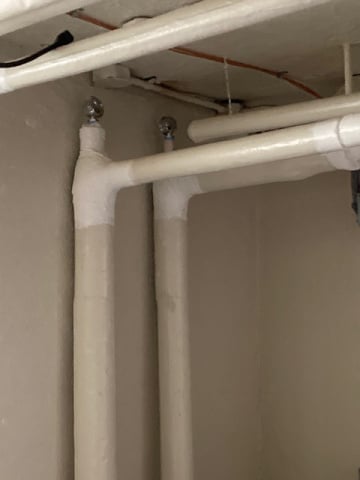 0
0 -
They look like Maid-o-Mist #1 vents (or one of their clones). I'd first measure the length and diameter of the steam mains, so we know how much air is involved.
Baltimore, MD, USA
Steam, Vapor & Hot-Water Heating Specialists
Oil & Gas Burner Service
Consulting0 -
With all the unions on the header you could cut the risers from the boiler and turn the header 180 degrees with the tees pointing up.
Come out of the boiler with a nipple then 2 45s and 2 90s and make it a half A—-d drop header .
1 -
We estimated the EDR for 17 of our 18 radiators. We didn't include the eighteenth (the one running from the hot water line) because we weren't sure how to account for that.
We got a total of 536, so multiplying by 1.33 gives 713. The boiler says it's rated for 725 square feet.
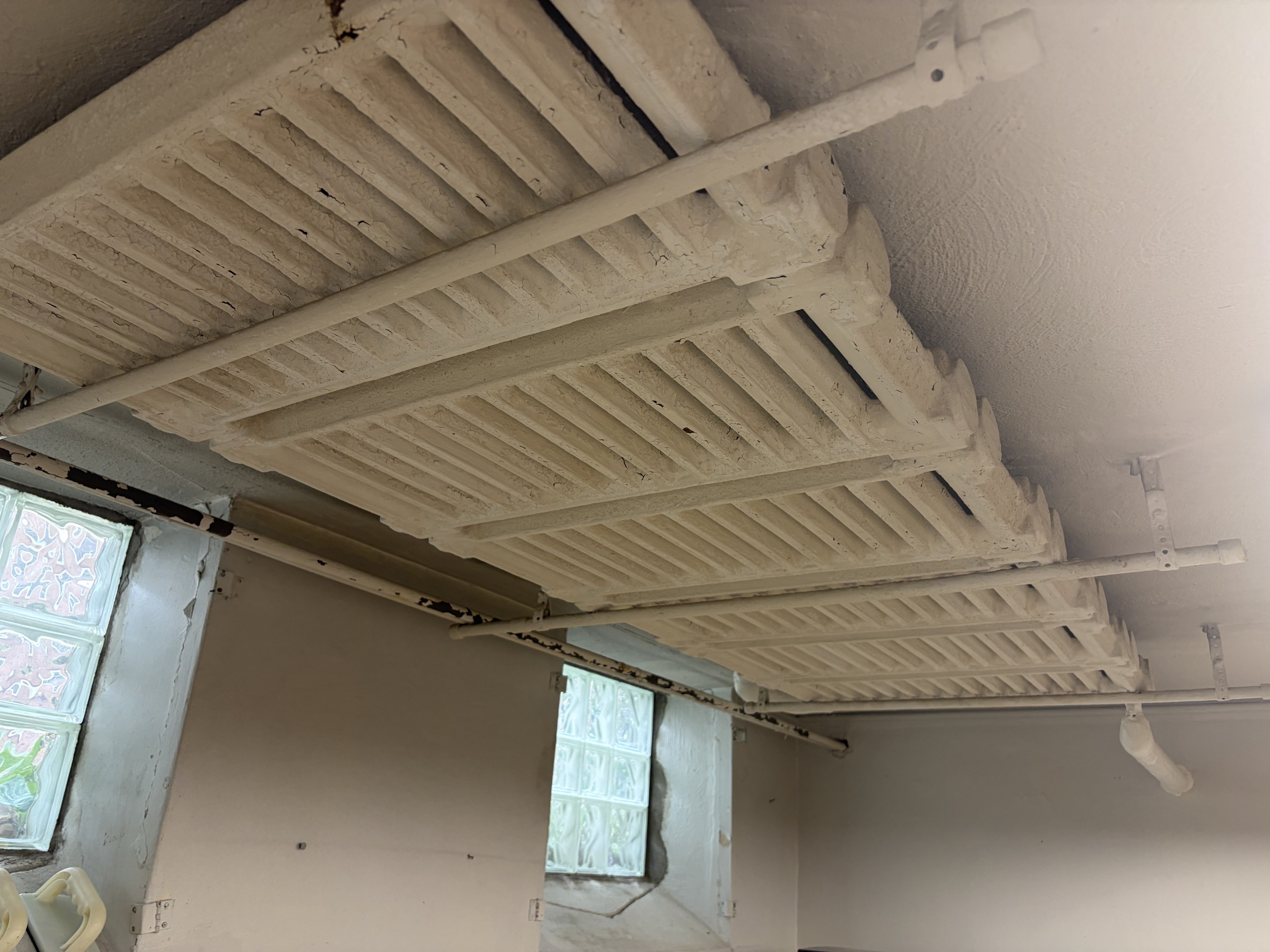
Most of the radiators are thin-tube so we used the Smithfield chart, but for the others we had to estimate using various methods. There is a kickspace fan heater running on the steam system that the previous owners put in the kitchen when they remodeled. We did the BTU conversion (dividing by 240) for that. There are two tube-and-fin baseboard-type radiators totaling a little over 10 feet in one of the bedrooms, and we estimated 4 EDR per linear foot for those, based on some things we read. And for the ceiling-mounted radiators in the basement (pictures below) we made what we think are reasonable guesses based on the wall-mounted unit information here. (We estimated 48 EDR for the big one and 24 for the smaller one.)
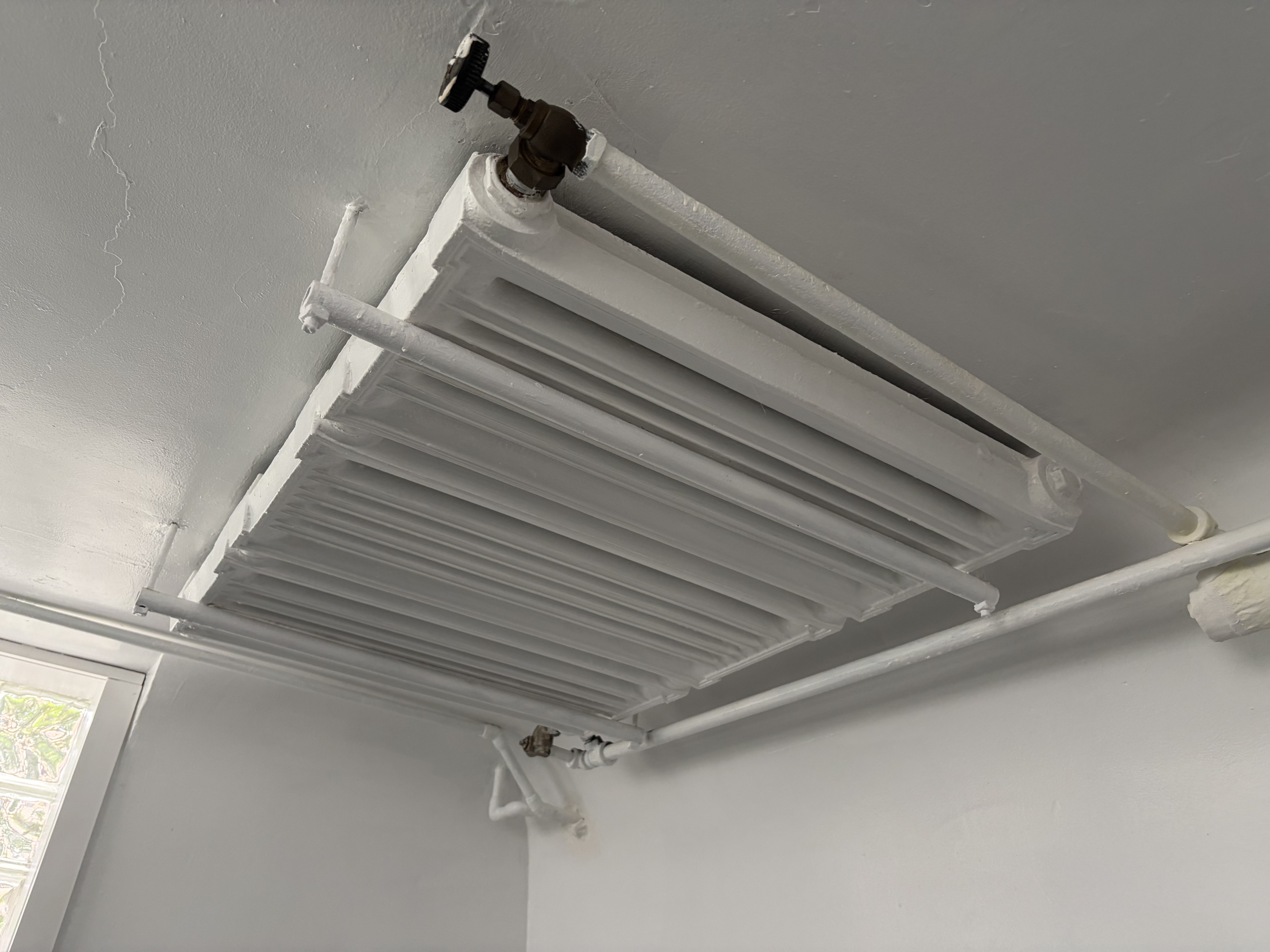 0
0 -
The boiler rating INCLUDES that 1.33 "pickup factor", so you should directly compare your actual EDR —563 — to the boiler rating in square feet. Which, in your case, works ut to almost half again as much boiler as you need.
There is no need to add for that extra hot water radiator. You might need to add a bit if there were a lot of them or they were large, but one or wo? No need.
Br. Jamie, osb
Building superintendent/caretaker, 7200 sq. ft. historic house museum with dependencies in New England1 -
When we get a vaporstat and get the pressure down where it belongs, will those fin-and-tube radiators still work? One is in our primary bedroom, so it's an important question!
0 -
They will still work just fine. In fact, probably better. The heat from a steam system has nothing to do with pressure in the ranges we work in — the temperature of the condensing steam is the same or substantially so at 4 ounces as at 4 pounds.
So the radiators will be at least as hot as they are now. No problem.
Br. Jamie, osb
Building superintendent/caretaker, 7200 sq. ft. historic house museum with dependencies in New England0 -
in fact with a 2 pipe system the boiler can be a bit smaller than the actual connected edr. some thing with an actual output of about 550 ft^2 of steam would be a lot happier on that system.
as long as the boiler covers the actual heat loss of the building you don't need to add anything for the hot water loop.
0 -
i'm a little confused, is the fin tube on steam or the hot water loop?
0 -
functionally those can both work on 2 pipe steam if they are piped right. i suppose they can coexist on the vapor system if they have steam traps.
the issue will be that they heat and cool at very different rates than the cast iron radiators so those areas may overheat when they boiler is on and be cold between boiler cycles because the cast iron heats slowly and continues to radiate heat after the het call ends, the fin tube and fan coil really don't.
0 -
I had a houseful of these to deal with a couple years ago. But different. And when I cleaned them out (using dental instruments) the house had balanced heating for the first time in 30 years. Or so said the customer.
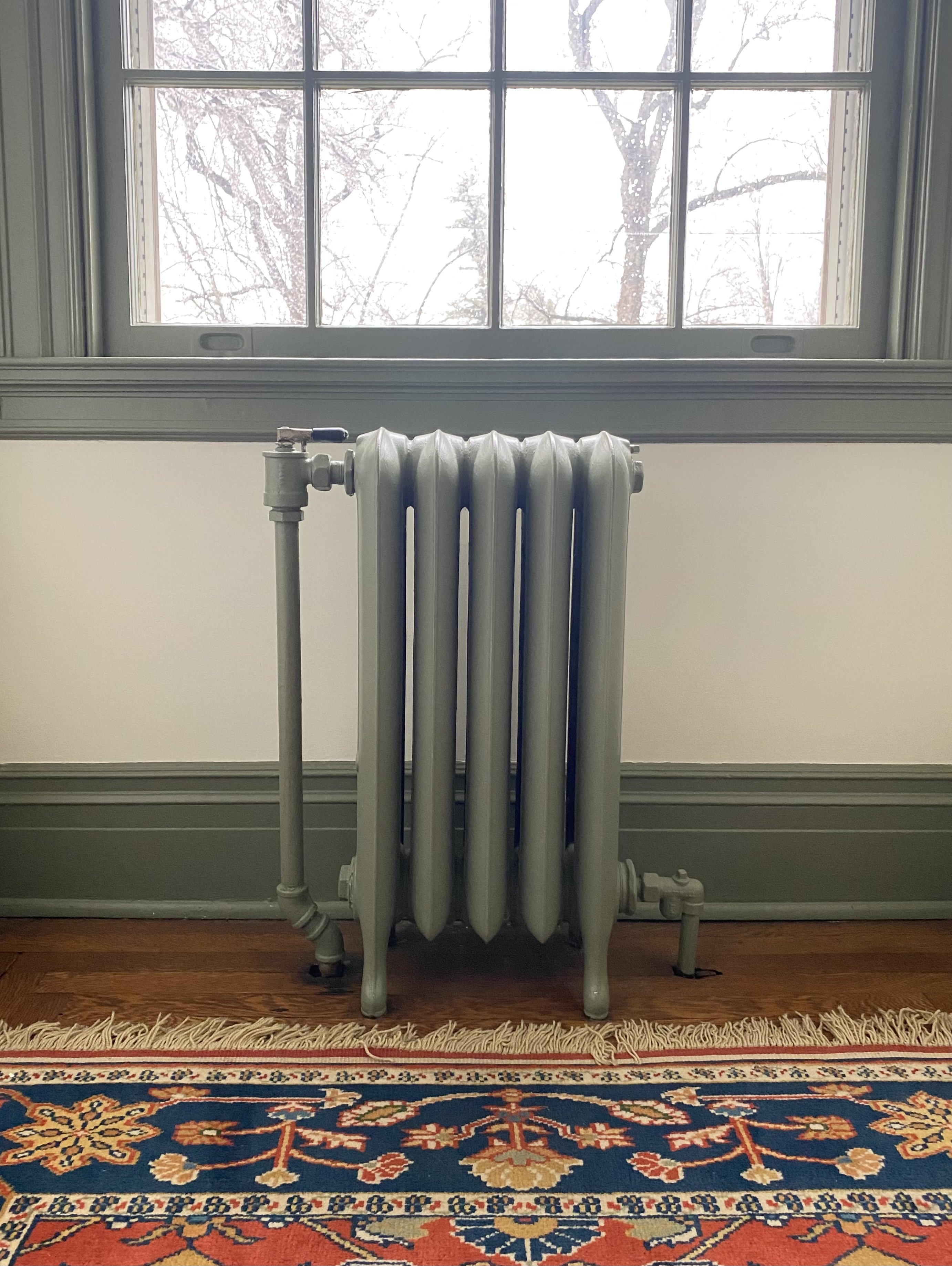
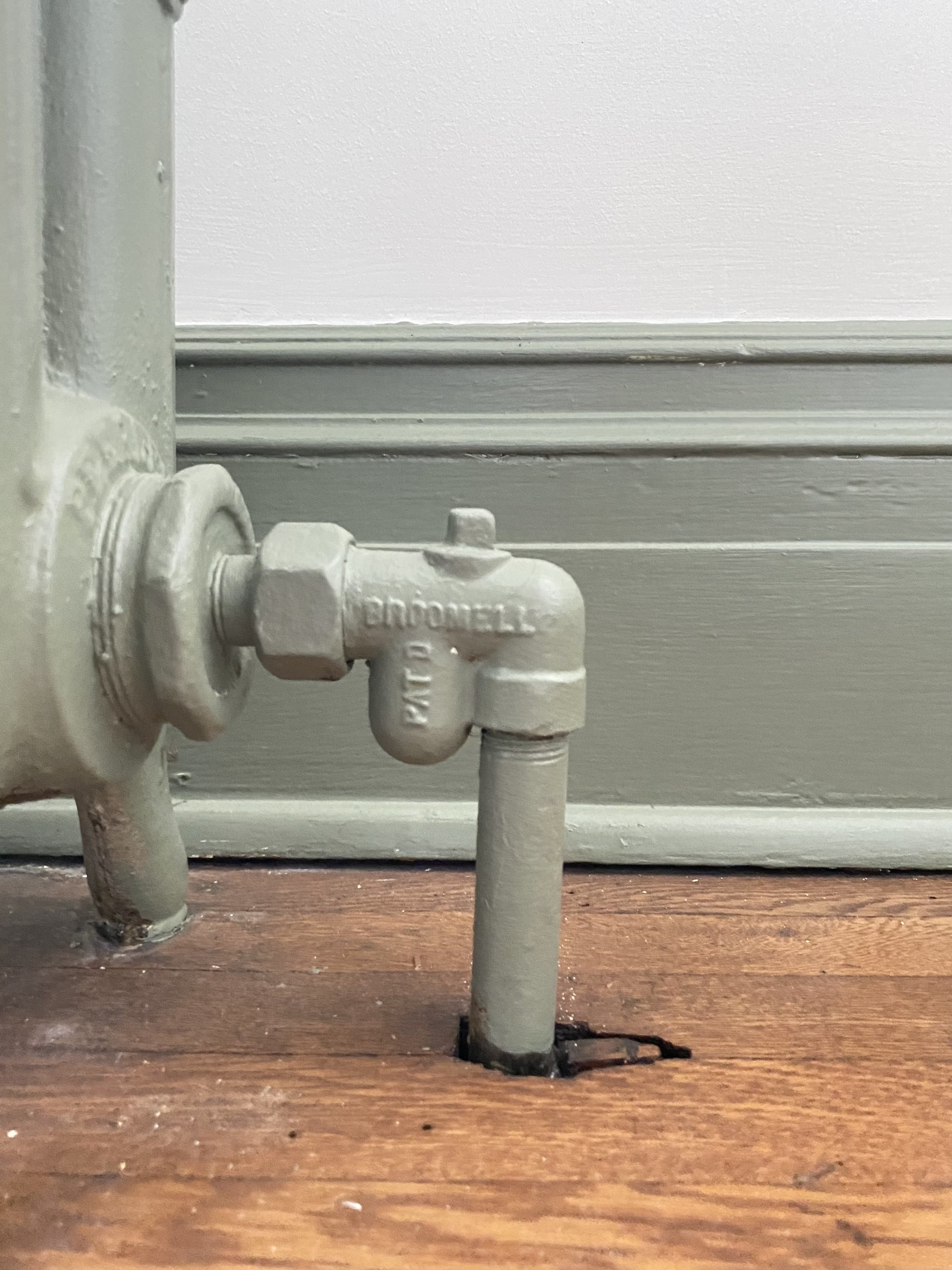 Contact John "JohnNY" Cataneo, NYC Master Plumber, Lic 1784
Consulting & Troubleshooting
Heating in NYC or NJ.
Classes 2
2 -
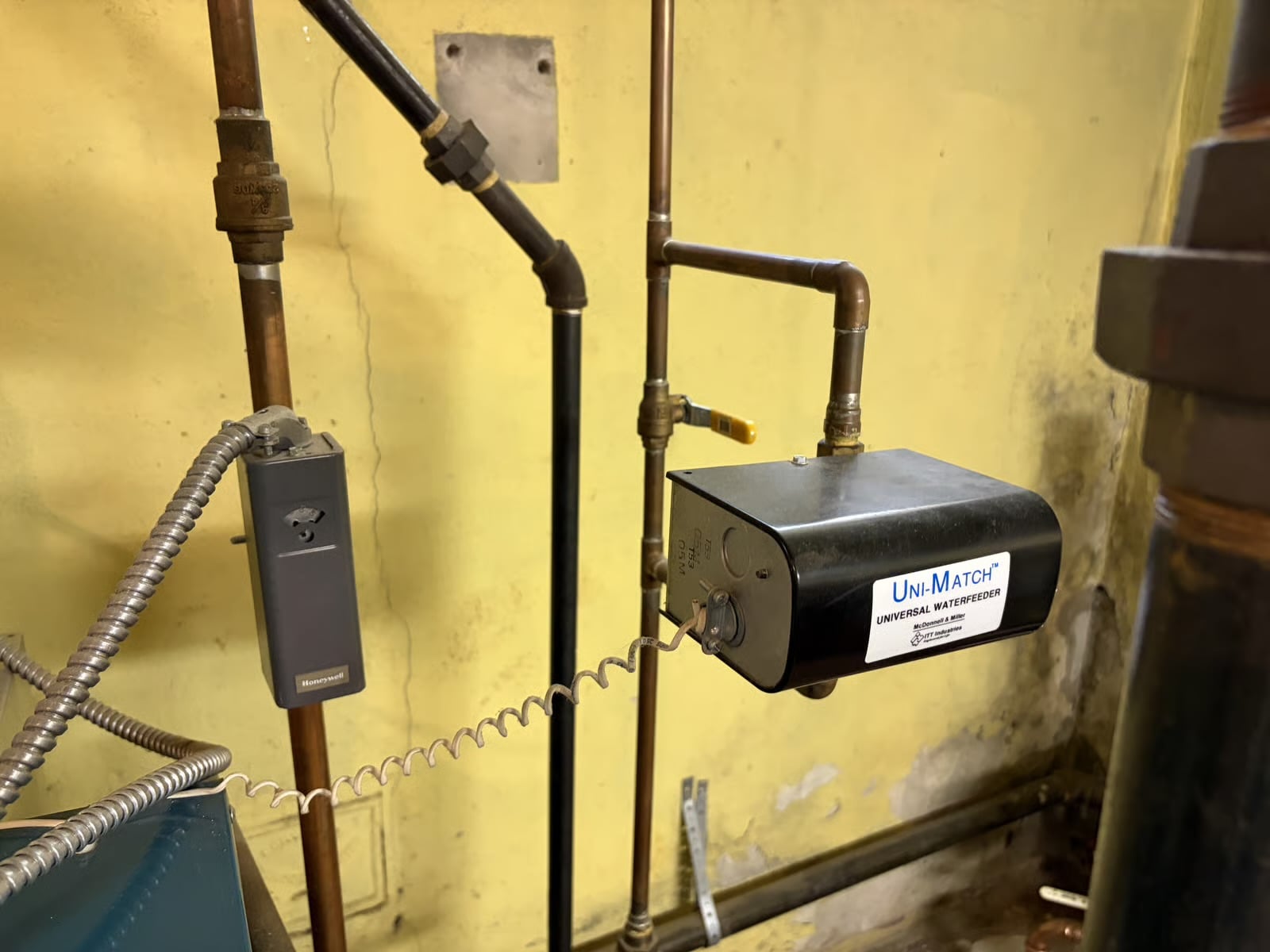
I just noticed the one on the ceiling is missing the vapor valve, you need to do something about that like put an orifice plate in the valve union or replace it with a vapor valve.
This is the new orifice valve that is still made. You can find some, especially Hoffman vapor valves on ebay
0




Categories
- All Categories
- 87.7K THE MAIN WALL
- 3.3K A-C, Heat Pumps & Refrigeration
- 59 Biomass
- 430 Carbon Monoxide Awareness
- 127 Chimneys & Flues
- 2.2K Domestic Hot Water
- 5.9K Gas Heating
- 121 Geothermal
- 170 Indoor-Air Quality
- 3.8K Oil Heating
- 79 Pipe Deterioration
- 1K Plumbing
- 6.6K Radiant Heating
- 396 Solar
- 16K Strictly Steam
- 3.5K Thermostats and Controls
- 56 Water Quality
- 51 Industry Classes
- 51 Job Opportunities
- 17 Recall Announcements