New Gas Boiler "short cycling"
Comments
-
Meet with the installer with your list of questions.
A fast purge would be a good idea to eliminate questionable flow.
This fill valve has a lever on top to enable fast fill/purge function.
Watch him purge the system, the lever on this valve pointed up. This confirms the system is mostly air free and should circulate 5, 6 gpm or more depending on the pump model.
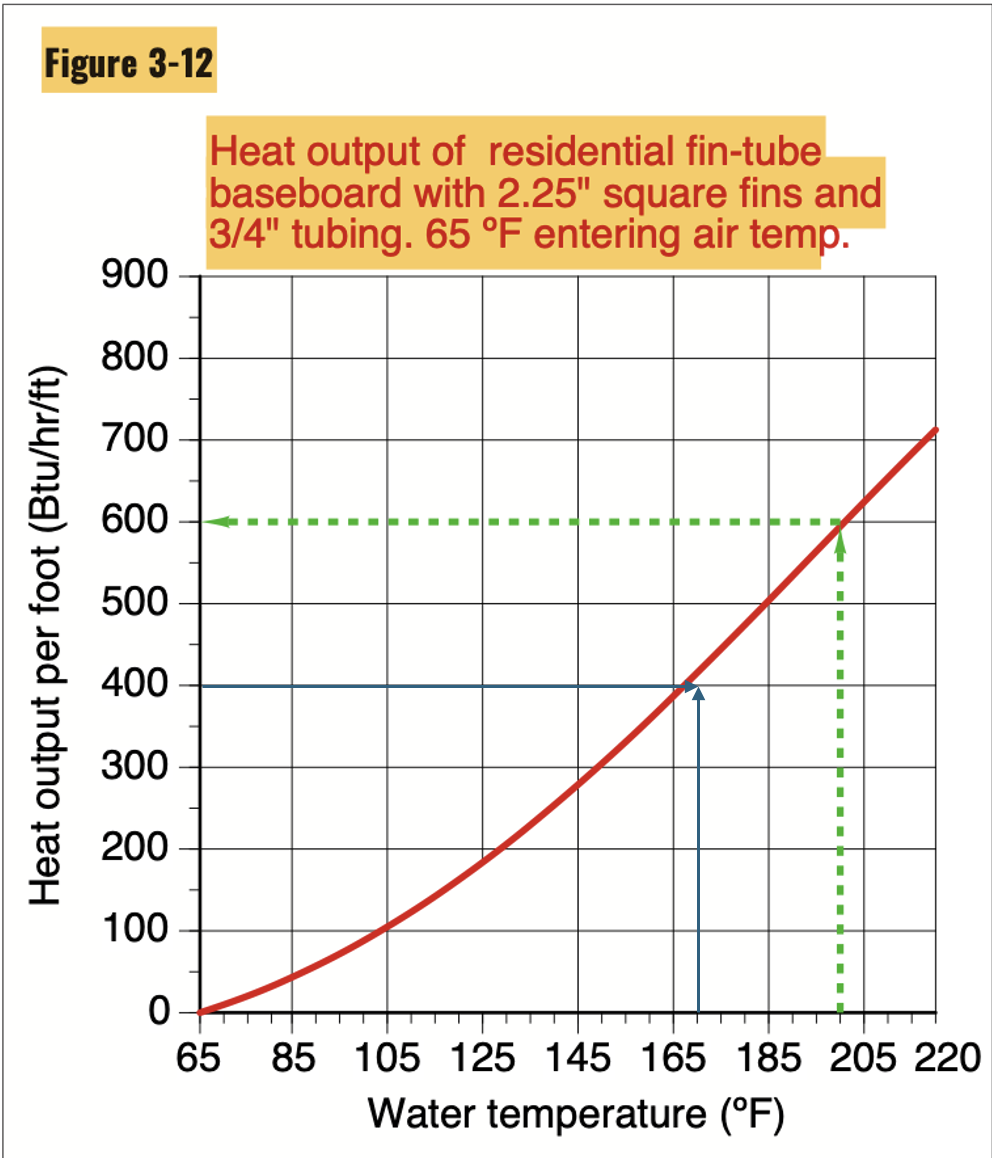
Show him your measurement of the entire fin tubed sections and this generic output chart.
If you know the fin tube brand you can zero in on an exact number. Most brands of 2-1/4" fin tube are similar output.
Get the boiler up to 180, start the pump, observe the supply and return.
If it leaves the boiler at 180, returns at 160 the average temperature in the fin is 170. Give it some time to reach equalibtrium. This condition is when neither the supply or return temperature is moving up or down.
On this chart, blue lines, with AWT of 170 a typical fin tube puts about 425 btu/ foot X 77= 32,725 btu. That is all that can realistically be pushed through the fin tube regardless if you have a million btu/hr boiler.
At 6 gpm through 3/4 copper you are right at 4 feet per second flow velocity. Beyond that flow velocity (speed) the system will become noisy from excessive flow, a hissing sound. No need to go there.
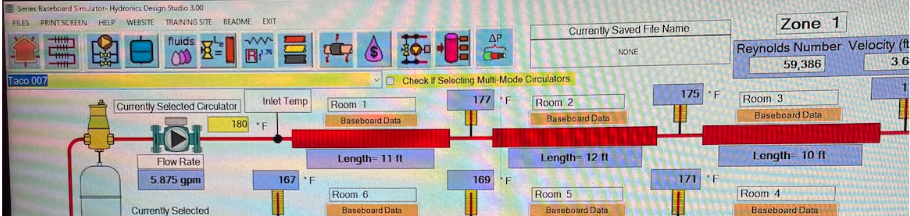
Adjust these numbers to the operating condition you can obtain at the time of the visit. The room temperature at time of testing for example. The chart a few posts up allows for the ambient air temperature correction.
With both of you there witnessing the actual operating conditions, temperatures mainly, the facts should be clear.
If you report back with some actual data I can plug it into the software and get more accurate. Pump model, temperature leaving and returning at the boiler. Confirm the fin tube lengths, a pic of the fin tube element with a tape measure on it.
Should be a fixable problem regarding a lack of flow problem. The purge hose will give you a good idea if there is a major blockage. It should fill a 5 gallon bucket in a minute or less if 5 gpm is flowing.
The oversizing is a bigger challenge.
Any pics of the before boiler and it's piping to see what may have changed?
I prefer the pump on the supply side of the boiler after the expansion tank, but not a dealbreaker, this system should work as shown.
 Bob "hot rod" Rohr
trainer for Caleffi NA
Living the hydronic dream0 -
Good suggestion for checking flow. I can try that tomorrow.
Being at the home now, I checked and there is no leak at the joint in the picture, or anywhere around the boiler. I measured supply/return, they averaged out to 154F supply, 143F return, a 11F difference. Do these readings indicate the circulator and flow is fine?
According to a search
- If the supply/return difference is too low (e.g., 10F) the water may be moving too fast or the boiler may be short-cycling.
So, it is short cycling.
More search info on fast flow
"To slow down the water flow in a baseboard heating system, you can adjust the flow control (balancing) valves on the system return lines, usually located near the boiler. These valves restrict the rate of water traveling through the pipes, allowing the water to stay in the radiators longer."
I don't see "balancing valves" on this system.
Is this flow calculation of any value? 76,000 BTU divided by 500 x 11 equals 13.8 GPM
Search info
"For a 76,000 BTU boiler used for space heating, the ideal flow rate is typically 7.6"
0 -
Thanks for the great info. Since the installer sees no problem, I won't be contacting him until cold weather arrives and the boiler doesn't reach thermostat set temp.
0 -
what size boiler?
0 -
Weil McLain CGi 4-PIN rated at 77 000 on the boiler tag or 76,000 BTU/hr google search.
0 -
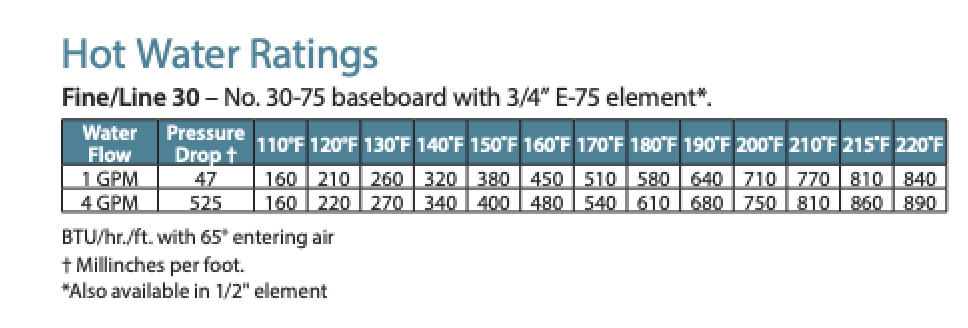
The flow rate is determined by what the distribution can handle or transfer. With a series loop of 3/4 fin tube, looking at one manufacturers suggestion of 1- 4 gpm. 4 gpm at the 20∆ design = 40,000 btu.
We keep revolving around that 35- 40,000 number. Which leads me to believe that is close to your actual design load.
In the SIM I ran earlier, it shows with a Taco 007 you may be flowing more like 5-6 gpm. Which is a bit high, but doable in 3/4 tube. At that higher flow rate notice the ∆ is 14.25, flow velocity is below 4 fps, acceptable, upper right of the lower slide..
Possibly your pump has multiple speeds? Show a pic of the end with the model number and info.
I don't see a minimum flow requirement in the boiler manual for your boiler. I think it could handle 4 gpm.
No harm in reducing the speed, but doing so will also reduce the heat output. So bottom line run it as low/ slow as possible while still being able to warm the home on the coldest days.
At this point the heating season is slipping away, hopefully, so final tweaking may need to wait.
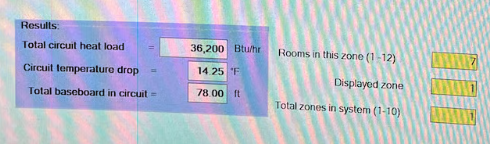

But none of this changes the fact you have a boiler with a 77K output on a system with maybe a 40K load and distribution system.
 Bob "hot rod" Rohr
trainer for Caleffi NA
Living the hydronic dream0 -
I can take a better picture tomorrow. It is actually a TACO 007e which apparently has multiple speeds and is supposed to maintain a delta of 20F?
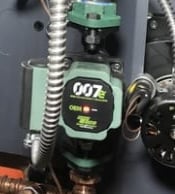
I also noticed something different today. Looking at the control module temp readings, once the boiler shut off at 190F and circulates, it dropped to 171F, then the temp rose to 175F, then back down to 170F and the boiler fired up again, this took 3 minutes. Which is longer than the cycle times I have measured previously.
0 -
It is billed as a high efficiency version of the 007. I don’t think you can manually change or fix the speed. It is not a delta t version capable of maintaining a fixed delta either
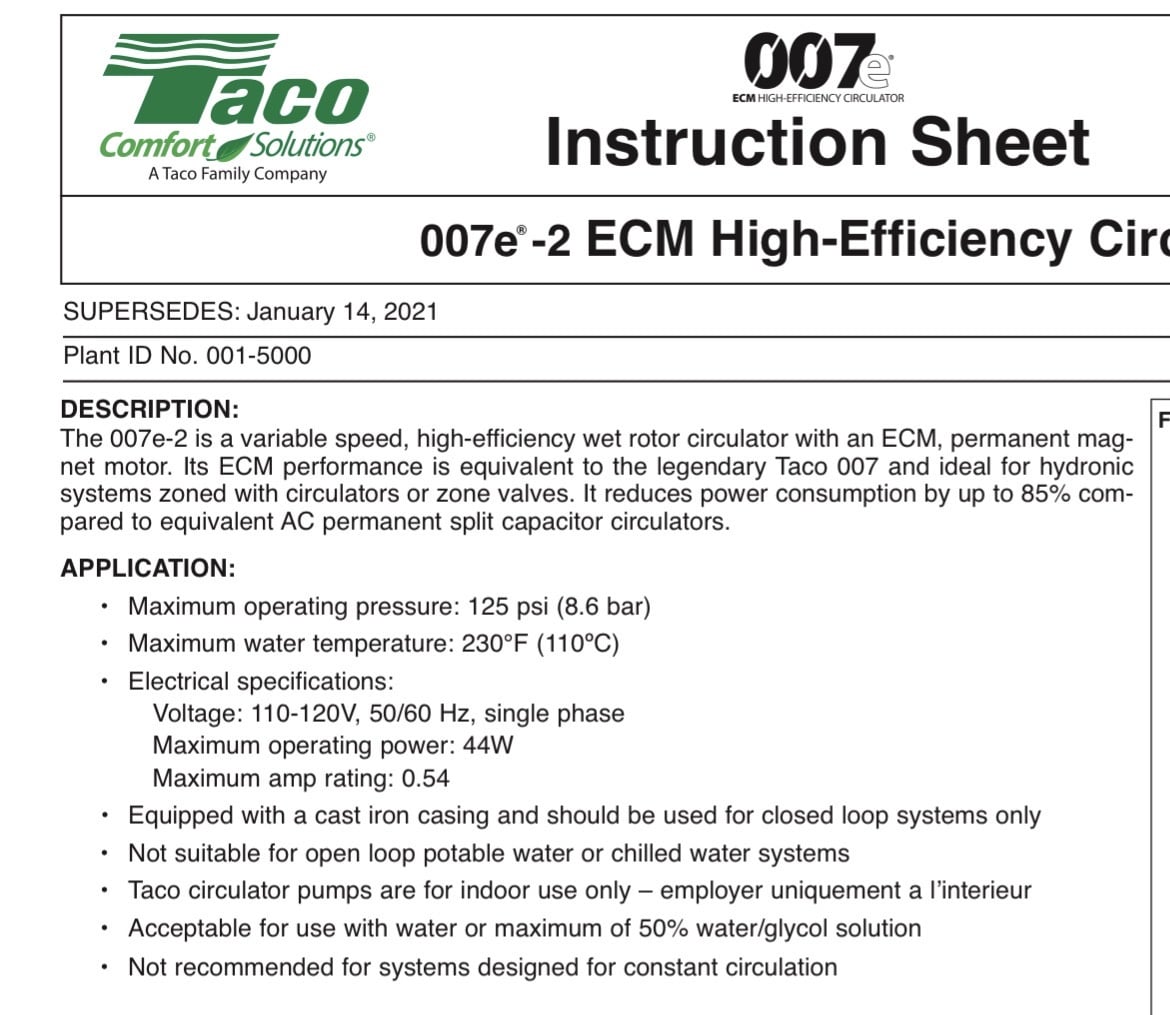
Hopefully a visit from the installer can confirm the boiler control is properly configured.
And check other concerns listed throughout this thread.
Bob "hot rod" Rohr
trainer for Caleffi NA
Living the hydronic dream0 -
There is this one.
0 -
that is not the pump you show on your system. I don’t think I would spend 400 bucks on a different pump until you do more troubleshooting
Your numbers on fin length and operating temperatures have been all over the board .
Maybe a second set of eyes would help to narrow down your actual system (load), operation, and needs?Bob "hot rod" Rohr
trainer for Caleffi NA
Living the hydronic dream0 -
I meant that pump as a a possible replacement.
Sorry if the my information appears all over the place. I am two hours away from the home and trying my best to be accurate. Two heating companies have looked at the system and provided conflicting information and did no tests that I am aware of. I feel I am on my own, or I just keep going through the list of heating companies and hoping for a different outcome.
Facts as of today
With a clamp on thermocoupler meter, supply/return is 154/143F.
The circulator is a Taco 007e.
The boiler short cycles in two minutes or less
The installer says the boiler is not over sized
The original boiler, slightly larger, did not short cycle.
Nothing is the house has been changed regarding heating but the boiler.
I have no pictures of original plumbed boiler, only noticeable difference is expansion tank location.
Baseboard fins total 57 feet.
Would achieving a delta of 20F, by slowing the water flow, on a "77K output on a system with maybe a 40K load and distribution system" make any sense?
Does a supply/return of 154/143F at least rule out circulation problems, blockages?
Thanks for any info
0 -
babe that shows up and doesn’t take any measurements show them the door!
you don’t think the installing contractor would admit to putting in the wrong boiler do you?
it’s a jungle out there you could go through three or four more contractors before you find somebody that actually knows doing and cares!
where is this house located?0 -
Don't get too hung up on the systems ∆T. It should and will change as the load on the home changes. It changes as the boiler temperature is changing. It is merely an indication at any point in time of how much heat is being transferfed into the space.
This is a good motto for hydronician to live by

Now in your case you have a fixed speed circulator so flow rate is pretty stable. Use the hydronic formula to determine how much heat is being moved, with accurate supply and return temperature known. I'm thinking that 007E is moving 5-6 gpm based on the info you provides with fin tube lengths and assumed piping and fittings.
500 X flow X (∆T)
When the home is cold you see a wide ∆, indicating the system is transferring a lot of heat. As the space warms the ∆ will close, less heat is being transfered.
Thermal Equalibrium is a point when supply and retrurn temperatures stablize, not going up or down. Defined like this:

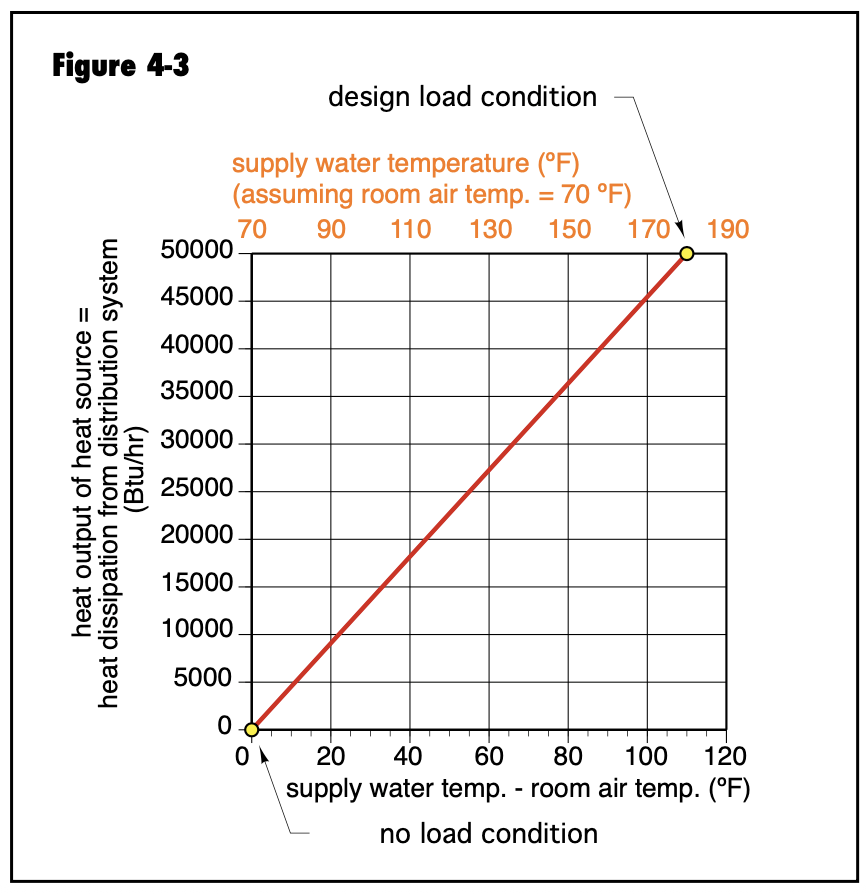
This graph is probably close to your system.
A 50,000 btu system with a 70°space temperature and the boiler operating at 180 SWT, another look at how the ∆ (bottom axis) the ∆ between air temperature and boiler supply, changes the amount of heat transferred
Could be there is nothing wrong other than the boiler not matched to the amount of distribiution?
Your comment about an even larger boiler connected to the amount of fin tube you have did not short cycle ever, just doesn't pencil out baed on the Laws of Thermodynamics, and all the formulas, graphs and math I presented?
Bob "hot rod" Rohr
trainer for Caleffi NA
Living the hydronic dream0 -
"Your comment about an even larger boiler connected to the amount of fin tube you have did not short cycle ever, just doesn't pencil out baed on the Laws of Thermodynamics, and all the formulas, graphs and math I presented?"
Yes I do see how the math works but the pesky fact that the original boiler did not short cycle remains.
"babe that shows up and doesn’t take any measurements show them the door!"
4 visits by two companies and no measurements or services reports of findings.
"where is this house located?"
West Yarmouth MA.
This is an area of an older retired population. It is difficult to find services down here.
An example:
I had the house winterized in Dec, 2024. The heating company showed up, took no tests, looked at the old boiler for less than 10 minutes and claimed I need a new boiler and gave an estimate of over $$K.
I told them to just winterize the home and I'd address the need of a new boiler in the spring.
Come spring I turn the house water back on and water was shooting out in the boiler area and upstairs from the water heater which ruined a laminate floor. The water in the boiler area resulted in this company having removed my water regulator, back flow valve, expansion tank, and two vents off the boiler. The water from the water heater was from a left open valve.
When I called the company to inquire why they removed so much plumbing, they said because I need a new boiler. I asked to have the plumbing returned to pre winterization condiditon so I could get a second opinion and they refused because the boiler is bad and should be "red tagged".
There is a trend here on the Cape where small heating companies are being bought by corporations. They see a profit in installing heat pumps and entire system replacements.
Finding someone willing to troubleshoot or do any actual old school practice of testing seems impossible to find.
I am so screwed lol.
0 -
Maybe something like this happened (one possible scenario):
The original (old) boiler was oversized for the house's heat loss and the radiation.
New boiler is a better fit for the house's heat loss but still a bit oversized and oversized for the for the attached radiation.
Assuming for a moment nothing has changed with the radiation (the flow is good) and the new boiler is a bit smaller. So why is it doing what it is doing, the short cycling ?
Maybe just maybe, the original boiler DID short cycle (when new). As a Band-Aid type fix to not replace the (then new) boiler they simply installed a delay timer in the burner circuit to eliminate the short cycling. Unknown to everyone involved with your old boiler's replacement the delay timer went away with the old boiler.
If this is a seasonal home maybe the radiation was never sized correctly for actual design day temperatures.
Was there any freezing damage from water not properly removed in the Winterizing process that caused some of the issues you mentioned in the last post ?
National - U.S. Gas Boiler 45+ Years Old
Steam 300 SQ. FT. - EDR 347
One Pipe System0 -
when the building is at design or colder days, holding the burner off for 10- 15 minute intervals will cause the temperature in the home to drop?
Assuming it needs X amount of btu and the fin tube can provide that.
At design conditions the fin tube flow, or boiler input cannot be paused.
Bob "hot rod" Rohr
trainer for Caleffi NA
Living the hydronic dream0 -
I think it's time to go back to square one here.
What is the heat loss of the building under design weather conditions? Manual J.
What is the actual capacity of the installed radiation? (feet of fin tube, type of fin tube, any enclosures on the fin tube.
Make and model of boiler
What is the net BTUh output capability of the boiler as installed?
What controls the system? (thermostat, type; aquastat, settings)
What is control logic? (thermostat controls pump? thermostat controls boiler? thermostat controls boiler? Aquastat controls boiler? both? Lots of options there)
All short answers… but without them we're all really just guessing.
Br. Jamie, osb
Building superintendent/caretaker, 7200 sq. ft. historic house museum with dependencies in New England0 -
@hot_rod when @Ismellelephant mentioned "winterized" to me that generates a whole new scenario. And I was not referring to pausing the whole boiler just the burner, the circulator would still run if the thermostat was still calling.
If this is a seasonal home maybe the heating system was just cobbled together and not properly designed. They procured a boiler, bigger than needed, but they did not care they had a boiler, they put radiation in every room, not enough but still in every room. There was never any intent for the system to keep the home at 70 degrees during design day temperatures. It was just built to add a bit of heat for colder days and the shoulder session use. Design day use may have never been intended.
Along the way someone may have noticed the short cycling and did not like it so they added delay timer or some other means was added to effectively better match the boiler to the attached radiation. Maybe the old boiler was down fired. That anti-short cycling means may have left the house when the old boiler left the house and was never noticed.
Just one possible explanation to get where @Ismellelephant is now.
National - U.S. Gas Boiler 45+ Years Old
Steam 300 SQ. FT. - EDR 347
One Pipe System0 -
With only 57' of fin tube almost any boiler that is not a condensing boiler is going to short cycle. Your baseboard is only good for 31,350 btu/hour.
0 -
early on he mentioned 1000 sq ft ranch.
31,000 btu/ hr of heat emitter with a 77K boiler ought to cover that load
If the old boiler did, and no fin tube was removed or compromised, he seems to have enough pump to move 5-6 gpm or more, he sees a delta across S&R, so he has flow. Pump could be backwards causing inadequate air removal, but heat would probably still come out of the boiler
the updated boiler replacement should cover his load
But without more details on the structure, who knows?
As I understand it he has two concerns, short cycles, and inadequate heat
The short cycling seems obvious with the boiler to fin tube mismatch
In adequate heat is a head scratcher if the boiler runs to 190 and he has flow
Bob "hot rod" Rohr
trainer for Caleffi NA
Living the hydronic dream 1
1 -
i haven't read much of the above posts but could it be an air bound monoflow system?
1 -
@EBEBRATT-Ed Funny, I was thinking about what are the pipe temperatures around the rest of the system with the boiler running. However I did not make the jump to a Monoflow type system.
If it is a Monoflo system the 007e may not be the appropriate circulator.
National - U.S. Gas Boiler 45+ Years Old
Steam 300 SQ. FT. - EDR 347
One Pipe System1 -
Here's a crazy idea. What if the old over sized boiler was a cold start. Depending on how over sized it was it would need a long run time, store a bunch of heat and potentially satisfy the thermostat without short cycling.
Miss Hall's School service mechanic, greenhouse manager, teacher, dog walker and designated driver
0 -
Not so crazy. Cast iron boiler, cold start… that might just do it, particularly in more shoulder type seasons. Good thought!
Br. Jamie, osb
Building superintendent/caretaker, 7200 sq. ft. historic house museum with dependencies in New England 1
1 -
Aren't they both cold start ? Or at least that is my assumption. I suppose if the system usage or the weather is different during use, but I would think @Ismellelephant may have noticed that.
National - U.S. Gas Boiler 45+ Years Old
Steam 300 SQ. FT. - EDR 347
One Pipe System0 -
I don't know the load/loss on the home. I contacted a company, listed on Weil McLain website as an "Advantage Pro". They sent a tech out, he seemed to not know what to do, did no tests or measurements, I requested a Manual J test be done. They sent a "Senior Comfort Advisor". He walked the home, looked in the attic and said he'd get back to me. He didn't. When I called the company said they couldn't help me. $300, and no invoice or service report nothing
There is 57 feet of fin tube, installed in 1960, not sure of type, but enclosed in standard looking white metal covering.
Make and model is a Weil McLain Cgi-4-PIN. The boiler replaced is the same model. Old one was gold colored, new grey colored.
New Boiler installed is 77,000/BTUhr old boiler 85,000/BTU/hr
Boiler controlled by a Honeywell Home Wifi thermostat.
Others mentioned "seasonal". This is a year round home. Typical 1000 sq ft Ranch build for 1960's, with R11 or R13 in walls and attic.
109A_5 I don't know if there was a Timer on the old boiler. I may have pictures of old boiler, need to search.
hot_rod provided qood questions and suggestions to ask the installer, but the installer, after 3 visits for short cycling, now says the boiler is operating as it should.
What is happening in this region is my real problem.
"Finding honest heating companies on Cape Cod is particularly challenging due to systemic labor shortages, inflated service area logistics, and the dominance of large, private equity-backed home service companies. The seasonal economy, complex older housing stock, and high demand allow predatory companies to capitalize on homeowner urgency."
"Because the Cape has a large number of seasonal homes and older historic properties, the demand for service vastly outnumbers available technicians. Companies can book up weeks in advance. This time crunch often leads to "ghosting" or companies prioritizing lucrative full-system overhauls rather than small, honest repairs."
"Many traditional, family-owned local HVAC and plumbing businesses on the Cape have been acquired by large, private equity or hedge fund-backed entities. These large operations often abandon honest troubleshooting in favor of aggressive, commission-based sales models for technicians—where upselling entire systems is prioritized over minor repairs."
"The physical layout of the Cape means technicians spend considerable time stuck in traffic over bridges or driving long distances between towns. Companies bake this lost time into their travel fees and inflated labor rates, which can easily trigger perceptions of price gouging"
I really appreciate the help here, but it seems finding a company to troubleshot a short cycling boiler isn't profitable enough.
So…I am so screwed lol
0 -
"Finding honest heating companies on Cape Cod is particularly challenging due to systemic labor
That’s nation wide
0 -
More or less, yeah. But the Cape is worse than most. Consider: you have an alarmingly large population of EXTREMELY wealthy people (one has to include Martha's Vineyard and Nantucket" as "The Cape", very few of whom have ever turned an honest hour of work. All of whom are very demanding, but unwilling to pay an honest wage. This distorts the whole economic structure of the Cape, and costs, so a working man has a tough time making ends meet. This has been going on for years. I used to do occasional Civil Engineering work on the Cape and Islands — and just getting there was so bad that it was cheaper for me to fly from central Mass. and rent a car than drive (also true, incidentally, of "The Hamptons" on Long Island) and I could, and di, charge double my normal hourly rate, door to door (not while on the job) — and still didn't make the margins I made inland.
Years ago I knew a number of commercial fishermen on the Cape. All gone now — priced out.
Don't get me going.
Br. Jamie, osb
Building superintendent/caretaker, 7200 sq. ft. historic house museum with dependencies in New England0 -
To some extent that contractor is correct, the boiler is operating correctly for the situation it was put into.
So no matter how many people you ask, or hire you boiler is way too big and will short cycle. Even on a design day.
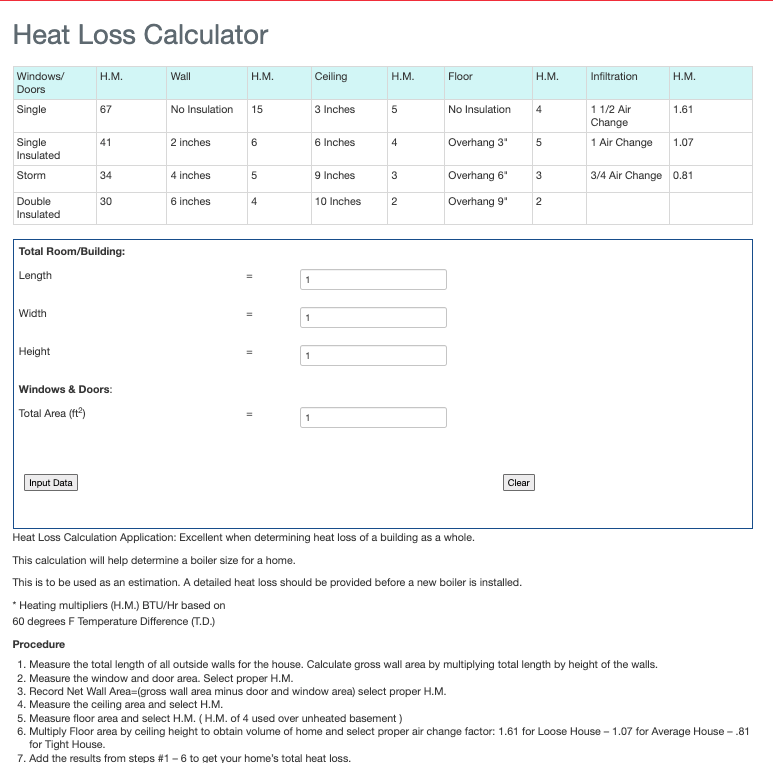
Here is a free load calc, fairly basic, but at least based on realistic numbers. Give it a try.
https://www.usboiler.net/heat-loss-calculator.html
Assuming the fin tube size, the average construction of the home, etc. that you supplied
It could be worse, the 1000 ft home could have a 77K heat load! Then you would have expensive problems keeping it warm :)
Suggestions have been made to time delay it, buffer tank it, tweak t stat cycles, etc. But you are treating a symptom, not the root problem.
I have a call in to a rep in the area that may have some contacts.
The small hydronic pros are often hard to find, most don't need to advertise. I'll PM you any suggestions he might have. But don't expect a much different answer.
Bob "hot rod" Rohr
trainer for Caleffi NA
Living the hydronic dream0 -
No different then East Hampton or South Hampton NY, Cape May NJ, Hilton Head SC and any other rich summer community!
0 -
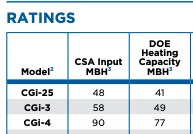
As far as the old boiler.
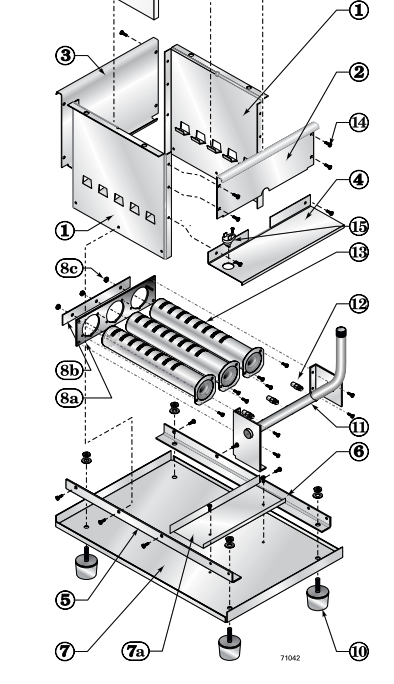
I have seen boilers in the wild with a burner removed. That turns your 90K boiler into a 60K, for example.
Or orifices could have been downsized.
I doubt any boiler manufacturer would sign off on those modification however.
 Bob "hot rod" Rohr
trainer for Caleffi NA
Living the hydronic dream0 -
"Suggestions have been made to time delay it, buffer tank it, tweak t stat cycles, etc. But you are treating a symptom, not the root problem.
I have a call in to a rep in the area that may have some contacts.
The small hydronic pros are often hard to find, most don't need to advertise. I'll PM you any suggestions he might have. But don't expect a much different answer."
Thanks for any contact you may have. I am not looking for a different answer, just hopefully the correct answer. I've been told oversized and not oversized by the installer.
The last company that visited wouldn't even give me a direct answer to the oversized question. I see a company offering Manual J tests, is it just another scam? I'll be giving them a call.
0 -
A tape measure is about all you need to do your own load calc. 7 simple steps shown below.
A calculator or slide rule.
Probably do this calculation with just a phone!
People tell me this calculator tends to calculate a bit on the high side.
There will be some assumptions as far insulation quality, air leaks (air change factor) , etc. But still better than all the guessing so far.
Take the load number and feet of fin tube to the person that sized and installed the boiler.
We should post a poll here, my guess is 28,296 btu/hr :) if it is 1000 sq feet of area.
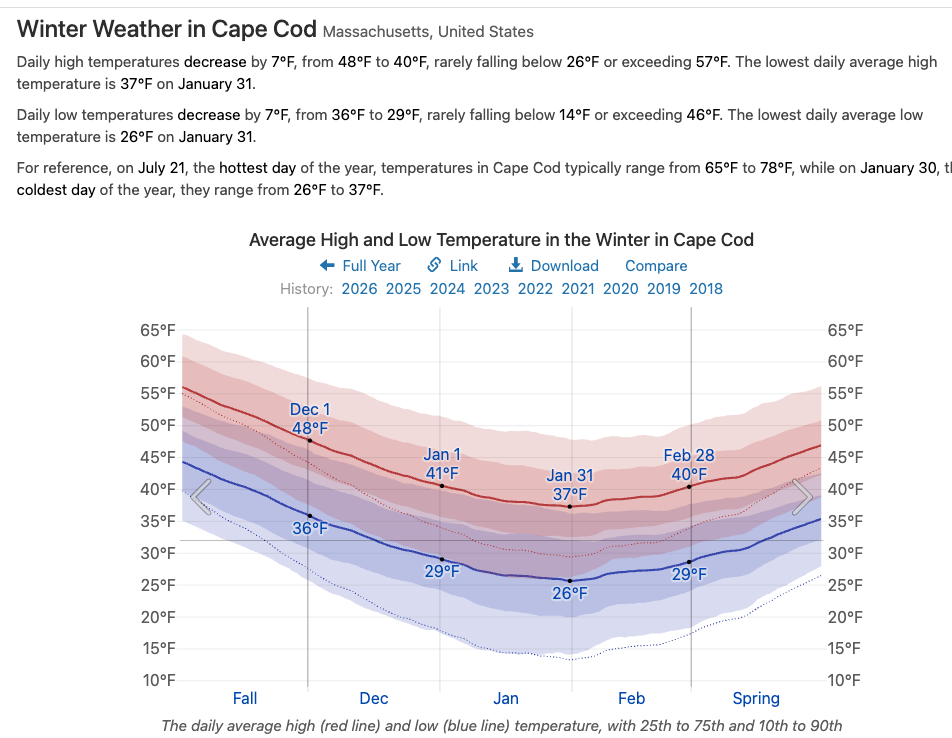
Rarely gets below 26°F in that area, ASHRAE design temperature is 15°
 Bob "hot rod" Rohr
trainer for Caleffi NA
Living the hydronic dream0 -
Hot Rod…….a slide rule?????
I still have a couple and probably you too.
But anyone under 40 are a deer in the headlights.
There were some in the "Apollo 13" movie….used to get to the moon in the sixties.
I am sure Jamie has a few also.
0 -
Yeah, I have a couple somewhere… what I DON'T have any more is the Friden desk calculating machine I had at one point… which could actually do square roots! Besides adding and subtracting and multiplying and dividing! It was quite the status symbol where I worked at the time. Of course, it took a while to do it…
Trivia… the computers on the Apollo command module and lunar modules each had a whole 16,000 bytes of memory… that's all.
And we got to the moon. And back. The right stuff!
Br. Jamie, osb
Building superintendent/caretaker, 7200 sq. ft. historic house museum with dependencies in New England 1
1



Categories
- All Categories
- 87.6K THE MAIN WALL
- 3.3K A-C, Heat Pumps & Refrigeration
- 59 Biomass
- 430 Carbon Monoxide Awareness
- 127 Chimneys & Flues
- 2.2K Domestic Hot Water
- 5.9K Gas Heating
- 121 Geothermal
- 170 Indoor-Air Quality
- 3.8K Oil Heating
- 79 Pipe Deterioration
- 1K Plumbing
- 6.6K Radiant Heating
- 396 Solar
- 16K Strictly Steam
- 3.5K Thermostats and Controls
- 56 Water Quality
- 51 Industry Classes
- 51 Job Opportunities
- 17 Recall Announcements