Heating a mountain restaurant – lessons learned from a harsh winter

I help manage a small mountain restaurant called Resto Les Ecrins ( ), located up in the French Alps near Briançon. Winters here are no joke – temperatures drop well below freezing, and keeping the place warm for guests while managing energy costs has been a real challenge.
We have about 90 indoor seats plus a terrace, and the building is an older chalet-style structure with thick walls but not the best insulation by modern standards. Last season, our boiler (an old oil-fired unit) started struggling during a cold snap – radiators on the far side of the dining room were barely lukewarm while the kitchen side was toasty.
A local heating contractor suggested we look into balancing the system and possibly adding a few panel radiators in the colder zones. We're also considering switching to a modern condensing boiler or even a wood-pellet system since we're surrounded by forest.
My questions for the community:
- Has anyone here successfully retrofitted an older commercial building with a new heating system without shutting down for weeks?
- Are wood-pellet boilers reliable in very cold, snowy climates (down to -15°C / 5°F)?
- Any tips for balancing a one-pipe steam system? (We suspect the original installation was never properly balanced.)
Thanks in advance – I want to keep both our guests and our budget comfortable this coming winter
Comments
-
If you are sure that you have a STEAM boiler and not a hot water boiler system, then there are no “modern condensing boiler” systems that produce steam. So that one is not an option.
There are hot water systems that are referred to as one-pipe systems that use diverter tees, where the supply and return for each radiator are connected to the same ONE PIPE.
There is also something called a one-pipe steam radiator that has only one pipe attached to the radiator. In that type of system, the steam enters the radiator and the condensate water returns to the system through the same pipe.
As far as replacing a commercial boiler without removing the existing boiler first, that would require a lot of room where the boiler is located in order to keep one boiler operating while the new boiler is installed, piped, and made ready for connection and commissioning. Do you have that much room available?
Solving the problem with some radiators not heating the same as others sounds more like a steam system issue where venting may be part of the problem.
I would like more information about your boiler, and perhaps a photo of the boiler and the piping surrounding it.
Edward Young Retired
After you make that expensive repair and you still have the same problem, What will you check next?
0 -
Are you sure it is a steam system? Those are not common in European buildings. Got some pictures?
Solid fueled boilers are still very common in Europe and Scandinavian countries.
This includes solid cord wood, straw bale burners and pellet boilers.
If you can gather wood yourself, dry and store it, that may make sense. Pellets store easily and are made from renewable sources also.
Panel radiators are easily retrofitted with small tube runs. I've seen old stone castles in Europe retrofitted with panel radiators. 11-15 mm copper or pex/ aluminum tube.
The first step is identifying the heat load with a calculation. Tighten the building as much as possible to lower the heat load.
Use the lowest possible supply temperature for best efficiencies.
Solar thermal integrates with boilers that have thermal storage capacity.
A solid fueled boiler with a propane mod con back up would be sweet, if the budget allows.
A2whp are outselling boilers these days, but that is a severe climate to make that type of appliance pencil out.
Bob "hot rod" Rohr
trainer for Caleffi NA
Living the hydronic dream0 -
To wander back a step or two, from you description it apppears that the problem is, as others have said, a balancing problem rather than an overall heating problem.
That's not the fault of the boiler. That's various things associated with the system as a whole — all of which are fixable, although some are easier to address than others.
That said, the first thing we need to know is whether this is really a steam system, and, if so, a one pipe or two pipe steam system. Or, it is a hot water system, how it might be piped.
And the easiest way to handle that is for yoo to take a few pictures and post them. Particularly a typical radiator, showing the inlet and, if there is one, outlet connections — but also the whole radiator. Then a couple of pictures showing how the pipes to (and from?) the radiators connect to any main line piping.
And then a picture or tow of the boiler, showing the piping.
With regard to timing, a skilled team of craftsmen can remove and install even a fairly large boiler in two days, and sometimes less.
Br. Jamie, osb
Building superintendent/caretaker, 7200 sq. ft. historic house museum with dependencies in New England 1
1 -
Speaking as a novice,
I agree with Brother Jamie, we need to see pictures of the heating system starting with the boiler and all the piping from the boiler to the radiators and pictures of the radiators.
The possibility of installing a double drop header to feed dry steam faster to the entire system but it would require the boiler to be shut down to install the new piping for a double drop header and a Hartford loop and a low water cut of switch if the steam boiler is not equipped with a low water cut off switch.
A heat loss study would be one of the first things to do either before or after insulating all the steam header pipes to the radiators.
It would be best to start with the simple things first like insulating the steam header pipes leading to all the radiators and using a bubble level to assure the steam header pipes drain back to the boiler. and if the system has no main vents you should have them installed as your steam may not be moving fast enough to reach the furthest radiator.
A steam heating boiler needs to be taken care of properly by draining the mud leg of any mud in the boiler sump and adding steam boiler treatment. Your boiler may have a great deal of sludge in the sump and will require using a wand to wash all the mud out of the boiler as mud in the boiler sump can and will affect the production of steam
I look forward to seeing more pictures of your restaurants steam heating system.
0 -
Looking at this photograph from the website:
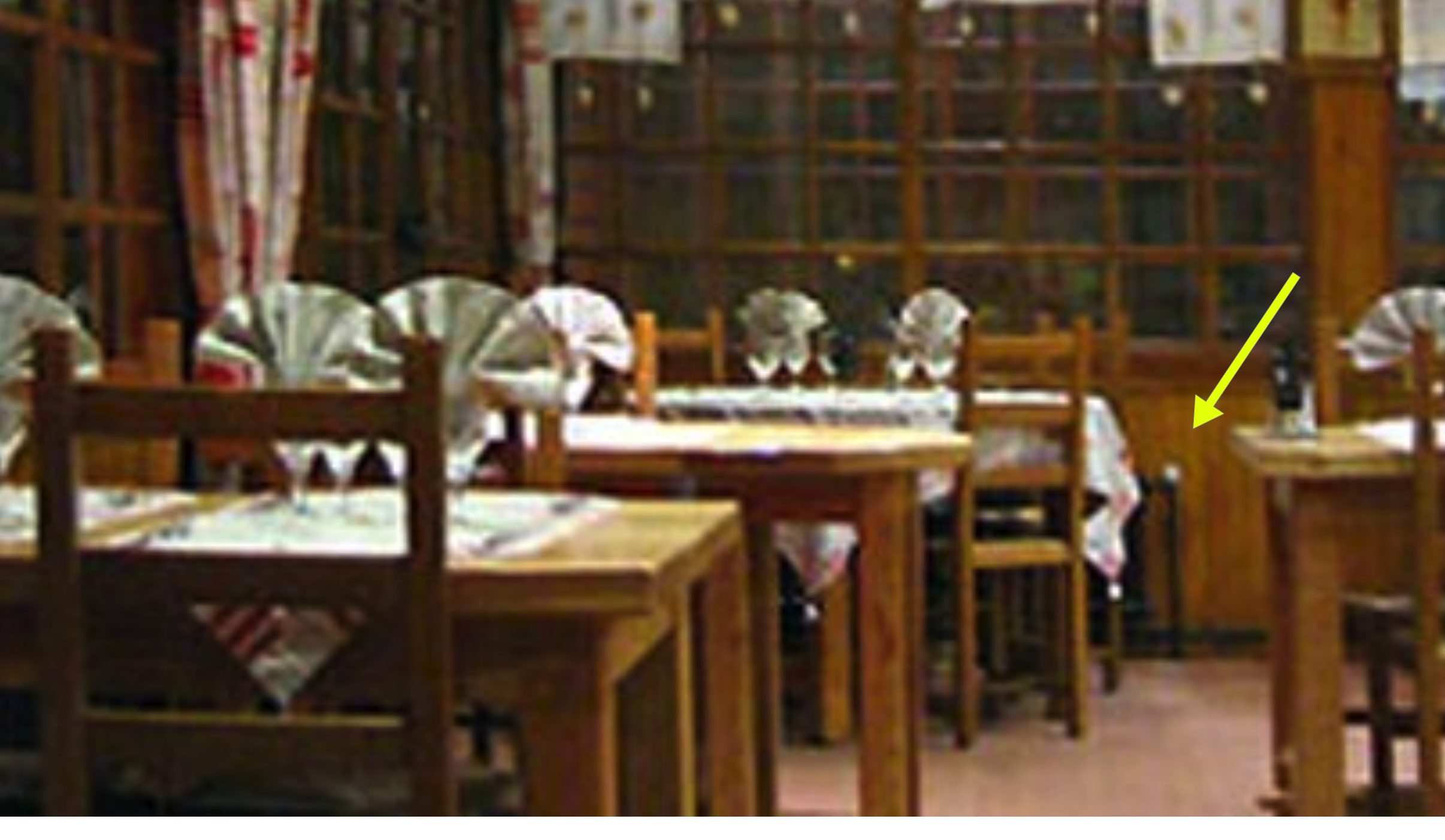
That looks like a TRV on the feed of a cast iron radiator. the hot water is entering the top of the radiator and therefore the return must be on the bottom of the radiator somewhere. If it is steam, then that may not be a TRV but just a white handle on the steam radiator valve and there must be a steam trap on the other side. in either case this is not a "ONE PIPE STEAM" system as we understand it.
Edward Young Retired
After you make that expensive repair and you still have the same problem, What will you check next?
0 -
The 1st thing is to Keep the heat in. Blower door test to determine where the cold air is coming in and where the heat is getting out.
Kitchen, does it have a heated makeup air system for the exhaust hood?
Bathroom exhausts same thing.
 1
1 -
The weather there looks like it's very similar to much of the US. Highs around 30 in the winter.
The record low is around 0F which isn't very extreme.I was under the impression restaurants had to deal with humidity in the winter months and often ran AC with reheat? @pecmsg Is this true during actual cold months like January -Feb when the outdoor dewpoint is very low, or is that only when it's mild out?
@HeatingHelp.com Should this be under recall announcements? I assume the OP's primary language isn't English.
Single pipe 392sqft system with an EG-40 rated for 325sqft and it's silent and balanced at all times.
0 -
Lots of glass?
Bob "hot rod" Rohr
trainer for Caleffi NA
Living the hydronic dream0 -
The possibility of installing a double drop header to feed dry steam faster to the entire system but it would require the boiler to be shut down to install the new piping for a double drop header and a Hartford loop and a low water cut of switch if the steam boiler is not equipped with a low water cut off switch.
I apologize Leon, and I won't go into it further here to prevent hijacking this thread, but this is not correct. None of these proposed changes would have any effect on the amount or speed of steam getting delivered to the building.In addition to balance, there may be issues with pipe pitch that are hindering steam flow to these cold radiators.
If Europe sized heating systems anything like we do here in the states, then I can't believe the boiler is the issue.
NJ Steam Homeowner.
See my sight glass boiler videos: https://bit.ly/3sZW1el0 -
-
Winter RH when below freezing is usually low 20 maybe 25%.
Makeup air needs to be heated. The last thing the executive chef wants is cold air blowing on the food.
0 -
I still don’t believe that is a steam boiler. It is a hot water system.
however @ethicalpaul should make a courtesy visit at no charge to review the system and report back with a video . Maybe we can catch them on the slopes as part of the video!
Edward Young Retired
After you make that expensive repair and you still have the same problem, What will you check next?


 4
4 -
I wouldn't be at all surprised if he actually went there.
But I suspect it'll be a few months, and with the cost of fuel right now, maybe longer.
@albert22 Can we have some good clear pictures of a few radiators, and the boiler and it's piping?
Single pipe 392sqft system with an EG-40 rated for 325sqft and it's silent and balanced at all times.
0 -
I'll bet you can find a pro somewhere in your area. Hydronics is a big industry in all of Europe.
Bob "hot rod" Rohr
trainer for Caleffi NA
Living the hydronic dream0 -
to the OP
ILL FLY Coach!
0 -
If, in fact, Albert does have a steam heating system, his EDR/[] will be less because of his elevation and his radiators that much larger if they were sized properly.
And then there are his fuel costs. Just how much foie gras does he have to sell to pay his heating bill?
8.33 lbs./gal. x 60 min./hr. x 20°ΔT = 10,000 BTU's/hour
Two btu per sq ft for degree difference for a slab 1
1



Categories
- All Categories
- 87.8K THE MAIN WALL
- 3.3K A-C, Heat Pumps & Refrigeration
- 60 Biomass
- 430 Carbon Monoxide Awareness
- 133 Chimneys & Flues
- 2.2K Domestic Hot Water
- 6K Gas Heating
- 124 Geothermal
- 170 Indoor-Air Quality
- 3.9K Oil Heating
- 79 Pipe Deterioration
- 1.1K Plumbing
- 6.7K Radiant Heating
- 397 Solar
- 16.1K Strictly Steam
- 3.5K Thermostats and Controls
- 56 Water Quality
- 51 Industry Classes
- 51 Job Opportunities
- 18 Recall Announcements