Question about Erie zone valve
Comments
-
Charge money for more pipe and fittings.
I still remember my uncle saying "no matter how many times I cut this piece of copper, it' still too short." The he gets another length of copper out of the truck and the bill goes up.
Actually a pro would get the piping to line up eventually by cutting back as far as it takes to get past the problem then finish the piping as needed with a pro press. The torch is a thing of. the past. Your insurance rates go down when you demonstrate you don't use a torch in the house anymore.
Edward Young Retired
After you make that expensive repair and you still have the same problem, What will you check next?
0 -
avoid over-heating the valve when trying to unsolder it, which is generally what causes a sweat fitting to seize.
I prefer to use a channel lock or vise grip and tap the fitting off instead of twisting.
Bob "hot rod" Rohr
trainer for Caleffi NA
Living the hydronic dream0 -
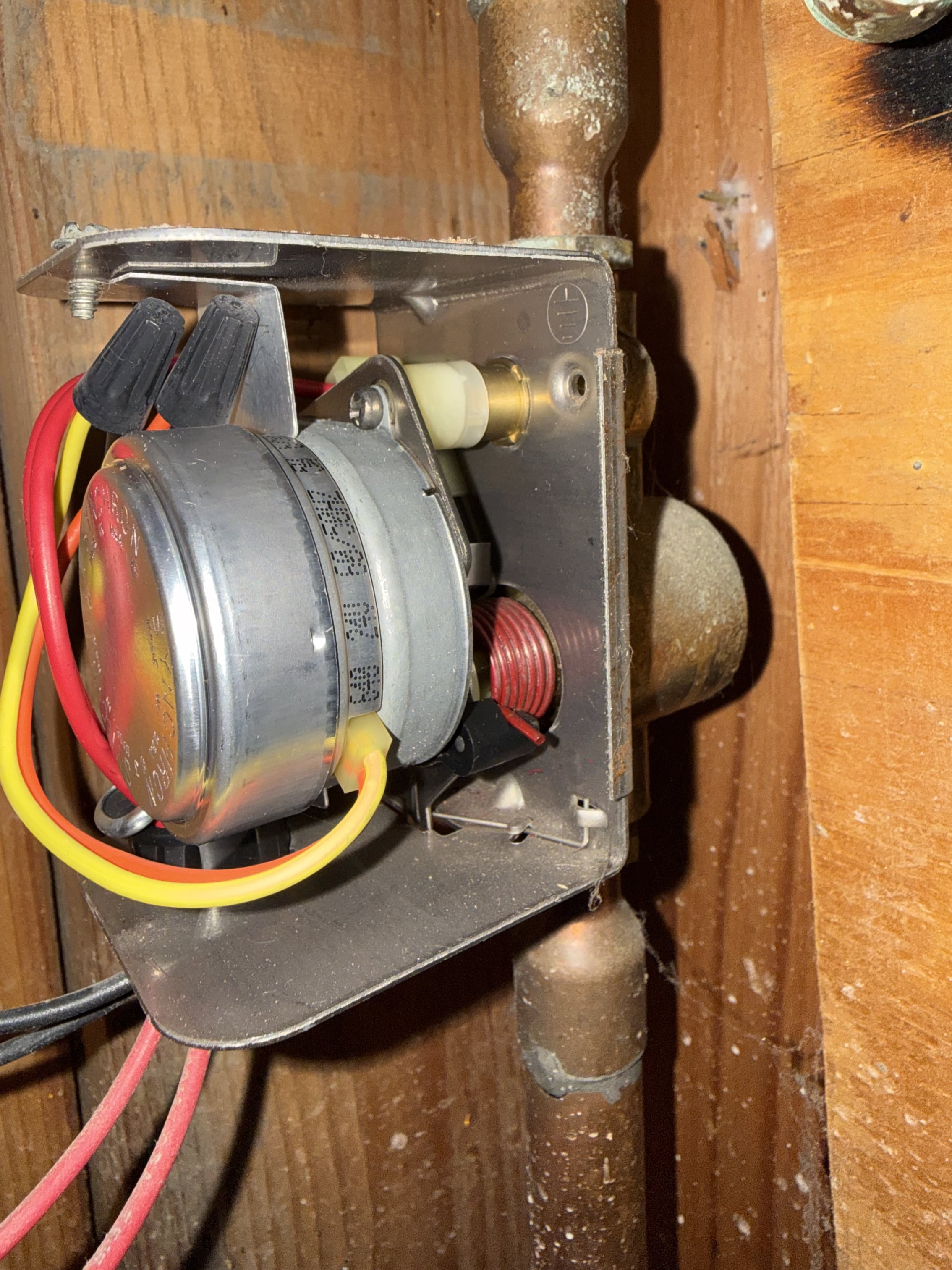
"There was a time years ago when all the ZV manufacturers were having end switch issues."
I just had an Erie zone valve (non-pop-top) that we installed 30 years ago lose its end switch. I'm lazy and just added a RIB.
8.33 lbs./gal. x 60 min./hr. x 20°ΔT = 10,000 BTU's/hour
Two btu per sq ft for degree difference for a slab0 -
the rib loses the sequencing
0 -
that looks like an inverted flare model
If so it has two flare nuts to allow removal
Bob "hot rod" Rohr
trainer for Caleffi NA
Living the hydronic dream 1
1 -
Looks easy to change if you can get the same inverted flare model.
A RIB does not provide the same 'Fail Safe' functionality. Can just the End Switch (not pictured) be changed ?
National - U.S. Gas Boiler 45+ Years Old
Steam 300 SQ. FT. - EDR 347
One Pipe System0 -
oh, wow it is….
0 -
Disagree about a torch being a thing of the past.
I don't like PP for 3 reasons:
The fittings cost a fortune
If you have a leak or want to change something and the fittings are close together you end up trashing a lot of stuff.
Sometimes you can't physically get the PP gun where you need to. An example of that is a building with 30 fan coil units we replaced.
All the fan coils came with 1/2" copper stubs inside the unit. No way to pro press inside the cabinet we had to get a strainer, control valve and isolation valves and a drain into a 9" wide cabinet.
This was a problem but is a common one.
This was in a town hall, and we had to pay the FD for a fire watch a 1.5 x there rate if we used a torch. My first idea was to carry the fan coils out into the parking lot and sweat most of it outside. This didn't work because it was January.
So I bought a REMs "Hot Dawg" electric soldering tool that did 1/2 or 3/4" copper. No open flame so no fire watch.
Plus to do it in PP the fittings take more room and you would never get all the components in the cabinet.
0 -
you could always sweat a subassembly outside or in the shop then use a couple flare fittings to hook it up
 1
1 -
I happen to agree with you on PP fittings. I never purchased a ProPress tool because all of the reasons you stated. But the company that purchased my business when I retired had 5 PP tools and 2 of the MegaPress for gas piping. I never liked that idea either. Especially for a steamer that requires swing joints.
I just know that the insurance rates were lower because the amount of torch work inside the home was drastically reduced if you used ProPress for all that boiler work, …and you don't need the FD for fire watch as you mentioned if you used a torch on that job.
I prefer using a torch because I'm good at it , as you must be. but. the new kids are not going to learn how to do that stuff, just like leading drain pipe is a forgotten skill since PVC drains can be connected with a Fernco.
Edward Young Retired
After you make that expensive repair and you still have the same problem, What will you check next?
0 -
If you haven't used propress then your making an ill informed decision. My feelings about propress mirrored exactly what @EBEBRATT-Ed has stated. but after using propress to replace a 4" water main epoxy coated shutoff i was converted and haven't looked back. i did that changeout in 15 minutes. No waiting to make sure every drop off water was out. It was ridiculously easy. What would have taking us most of the day only had the hotel shutdown for an hour.
Although the fittings are more expensive the amount of time saved in labor is more than enough to offset the cost of the fittings. You just have to plan ahead on how your gonna pipe it to get the press tool in the tight locations. They also sell close quarter rings to help press in tight locations. I will not take my torch off of my truck. I refuse to even look at it lol
0 -
I am not saying PP is not useful. In some cases as the one @pedmec mentioned its the only way to go.
I just remember a job we did with 200' of 4" water main in a huge insurance building. This pipe was run parallel with the existing 4" main that was beginning to leak. We had to have a shutdown on a Saturday to tie it in. One of the PP joints leaked.
To fix it we had to chop out 1 4" 90 and 2 4" 45s. This was probably 14 years ago and at that time the elbows were like $150 each.
Small potatoes now I guess
0 -
Yes, the sequencing is lost with an external end switch; so that’s 10 seconds of the pump dead heading which I can live with. The customer was very satisfied that he got heat with only one trip from me.
And yes, inverted flare connections. Easy peasy.8.33 lbs./gal. x 60 min./hr. x 20°ΔT = 10,000 BTU's/hour
Two btu per sq ft for degree difference for a slab1 -
Not so much worried about the actual sequencing. What if the zone valve fails closed for some reason. Now the boiler and the circulator are running until some safety limit hopefully stops the boiler at least.
National - U.S. Gas Boiler 45+ Years Old
Steam 300 SQ. FT. - EDR 347
One Pipe System0 -
that is why the safety exists. deadheading the circulator before the valve opens is more of a concern especially for noise and condition of the seat, deadheading the circulator if the valve fails is certainly a possibility but that jut potentially damages the circulator
1 -
Almost Done! Didn’t have to cut even one pipe!
Sweat out sweat in. The exact replacement was the right choice. I will have 5 new valves and actuators.1 -
Alan, consider an ECM delta P circ on the next upgrade. They all deadhead when all zone valves close, at a low rpm/ no flow codition.
Bob "hot rod" Rohr
trainer for Caleffi NA
Living the hydronic dream
 2
2 -
5 new zone valves and the original actuators and everything is working fine…so far. I inspected all 5 old valve bodies. if there was a reason that #5 zone was failing I couldn’t see it.
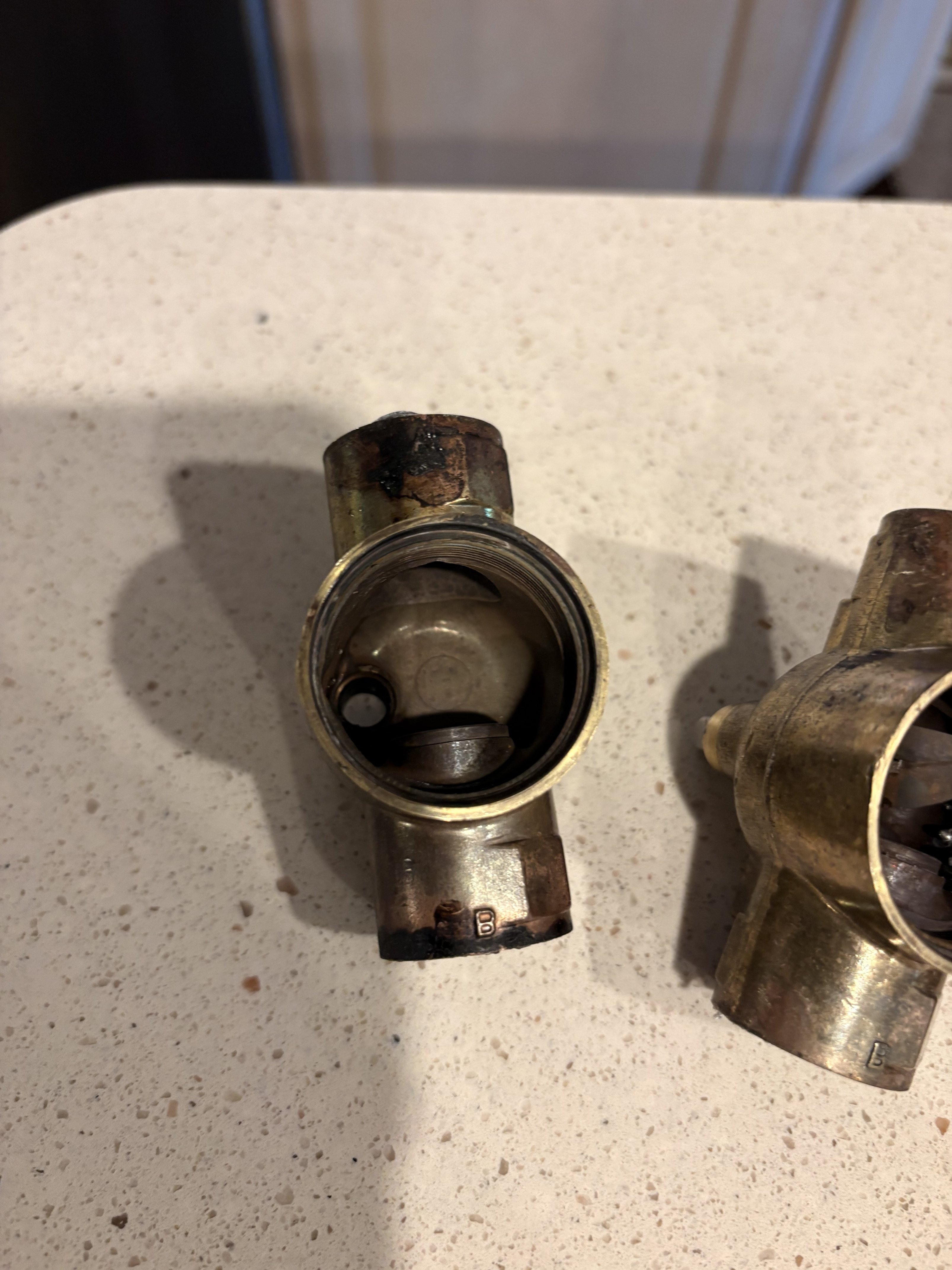
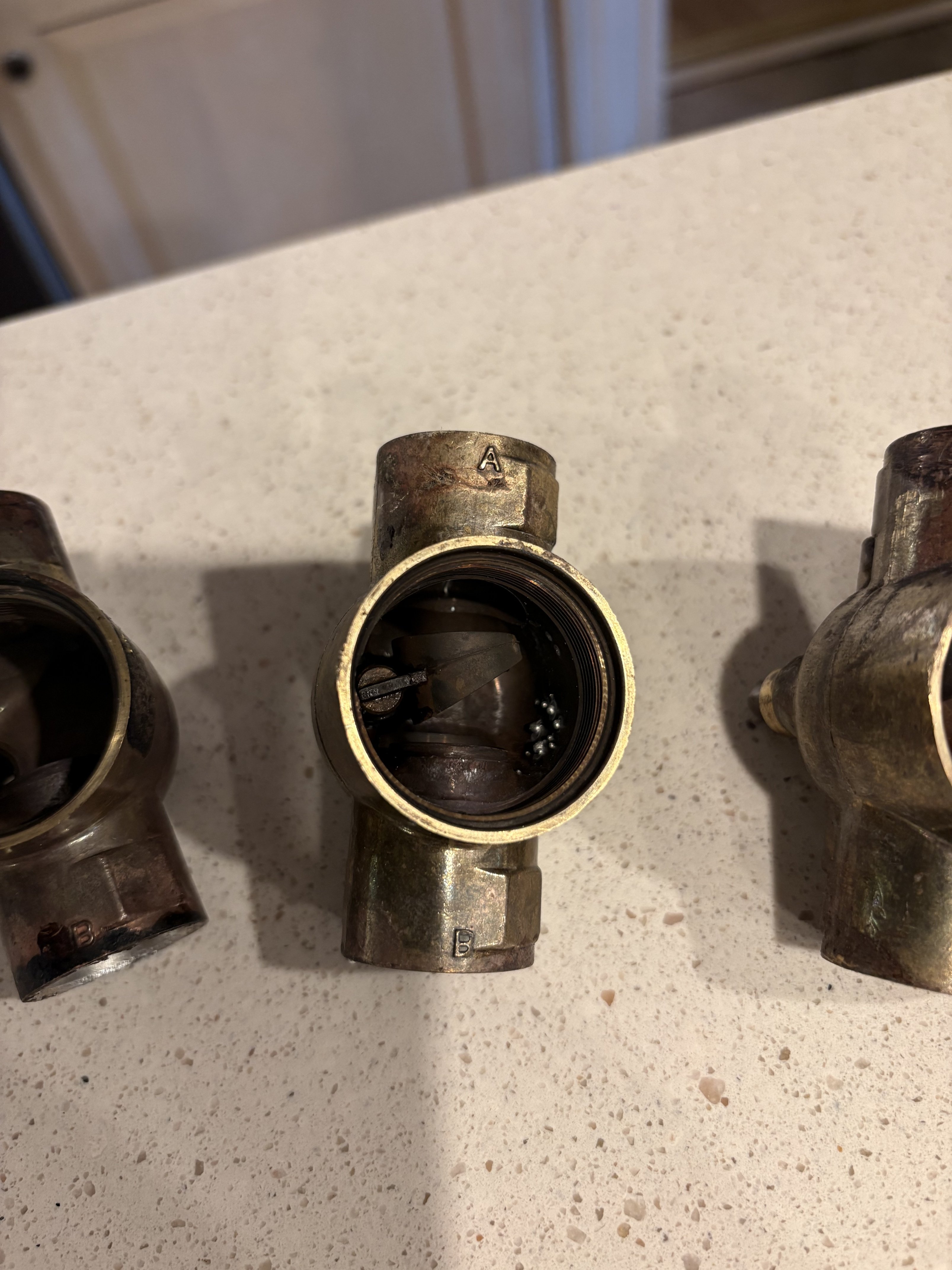
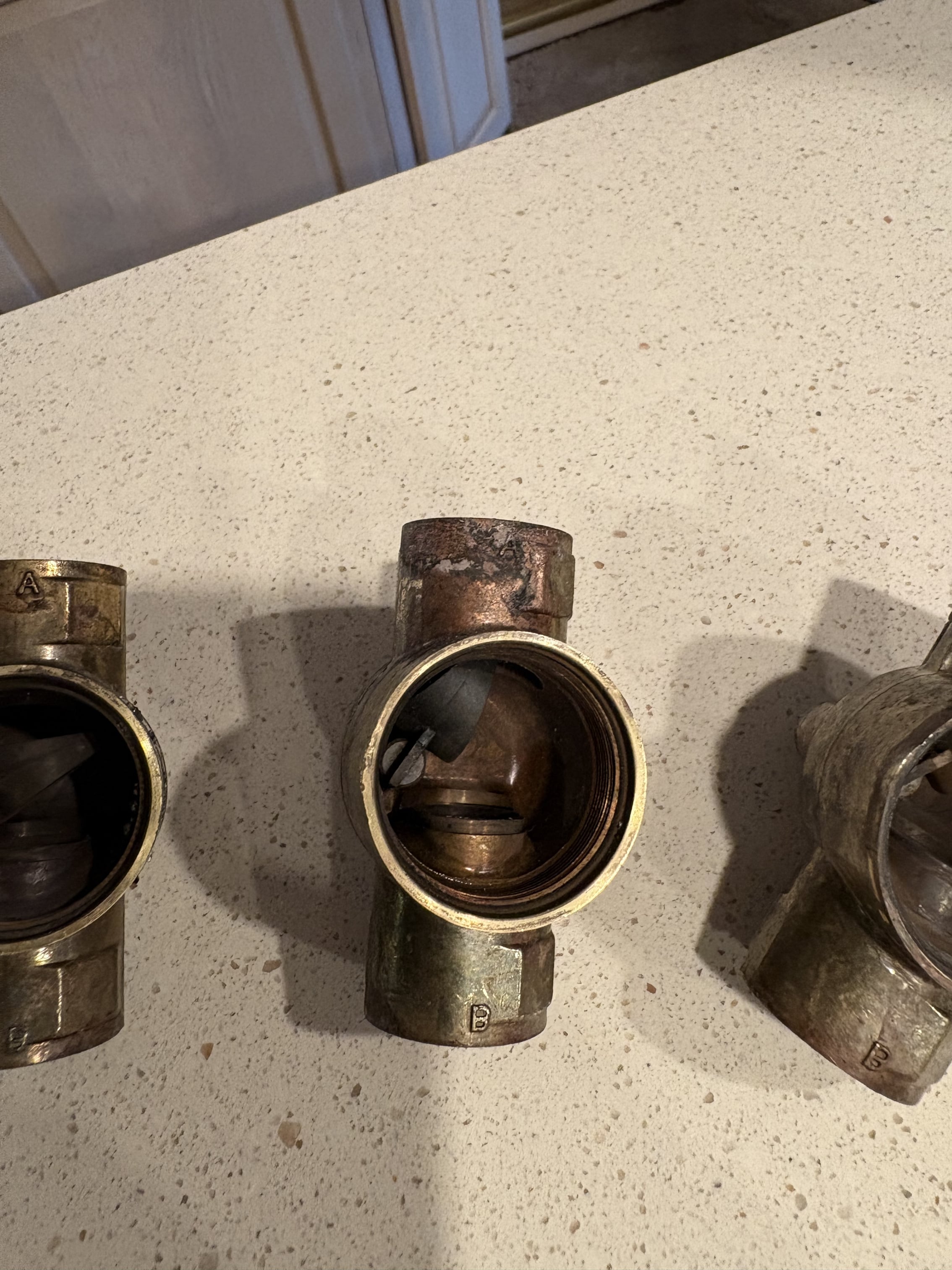
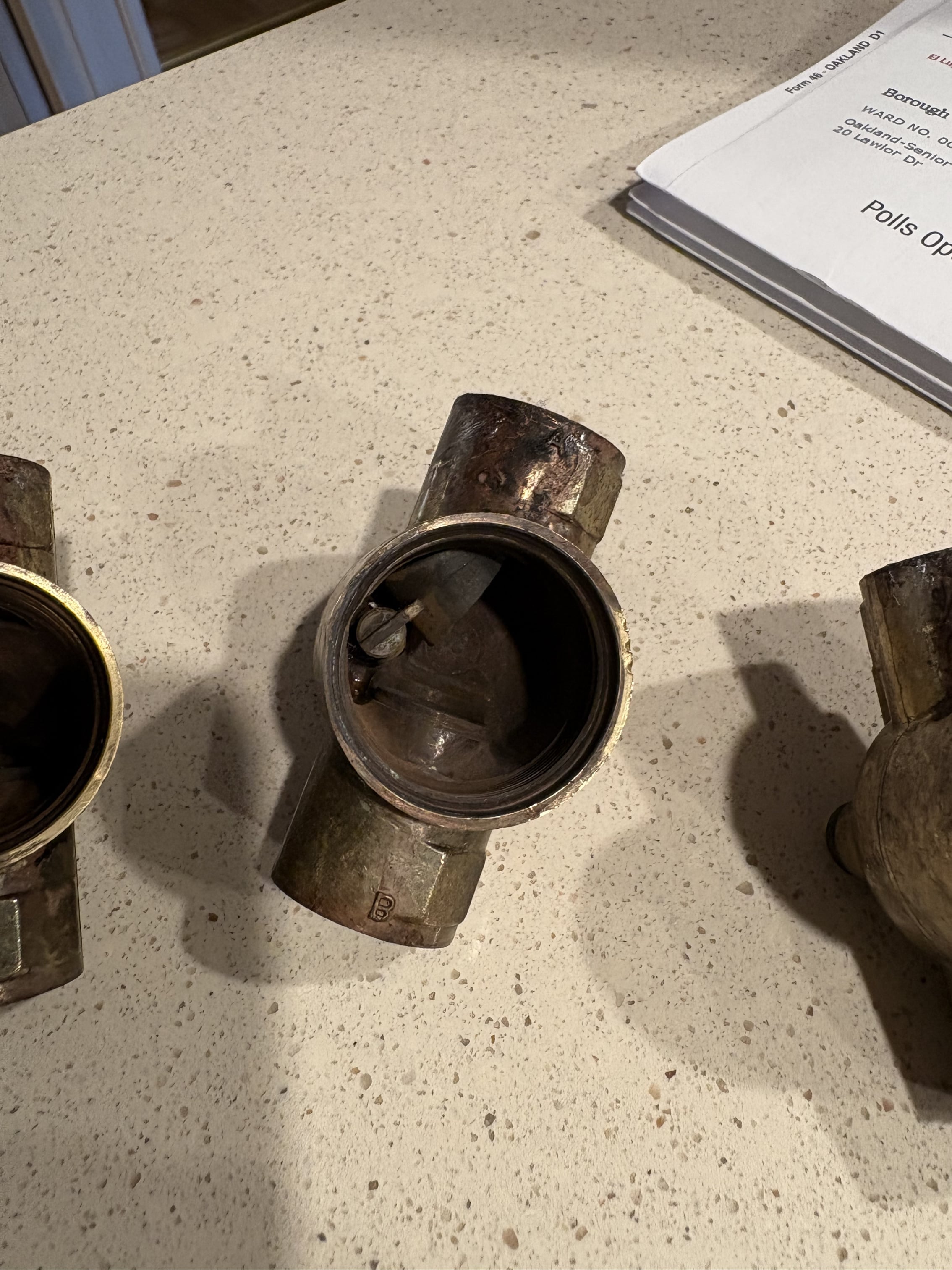
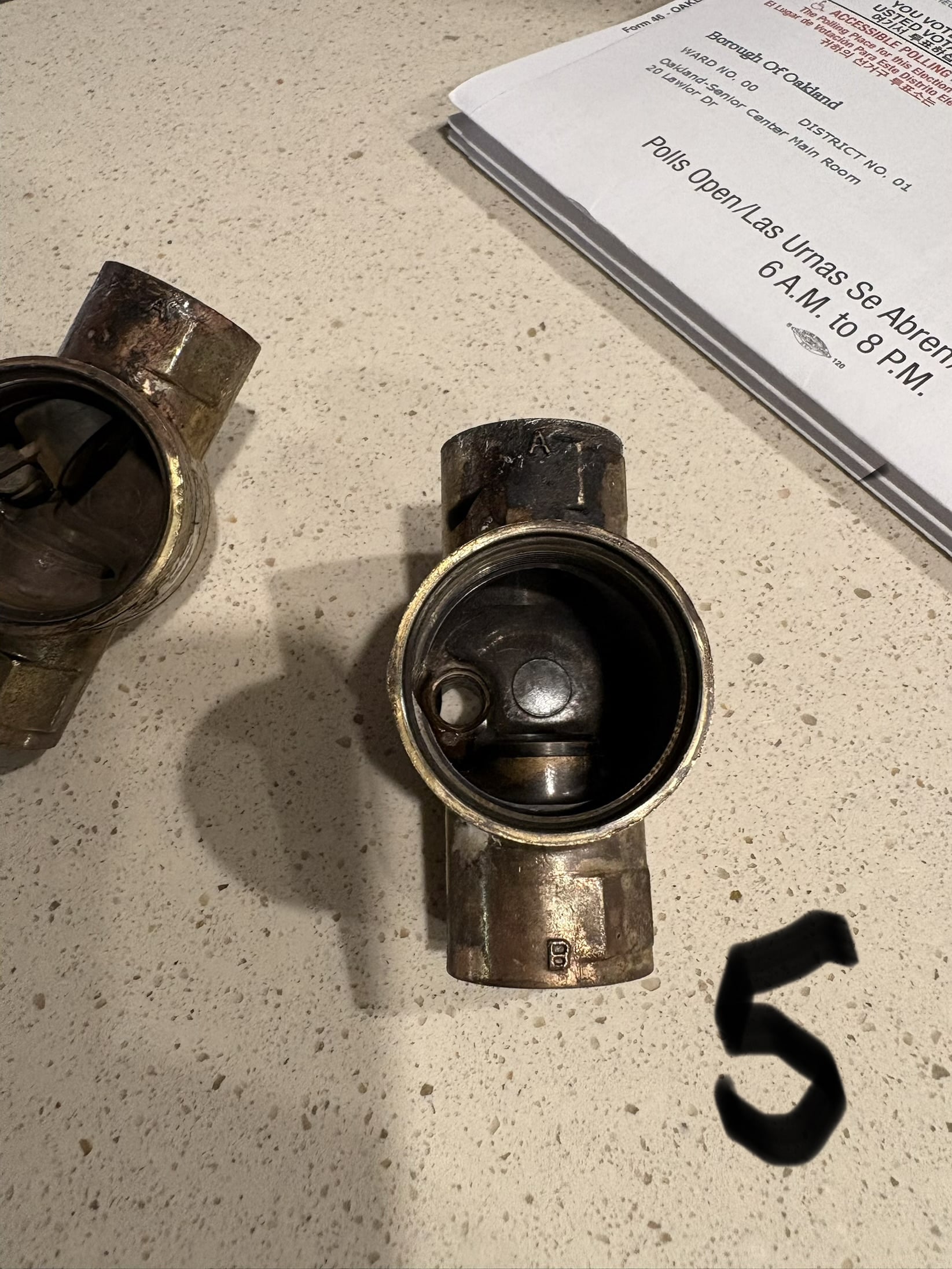
There were no cracks, wear, corrosion or any damage to any of the valve bodies or paddles. At this point I’m still not sure what was going on with zone 5. All actuators were working including #5. I didn’t touch the wiring. Valves were replaced, system refilled actuators popped back on and it’s working. There’s only one moving part in those valves so I can’t figure why 5 was leaking even after installing a new paddle and actuator.
0 -
maybe the new gate isn't clocked to the shaft the same way as the older valves to so it didn't close all the way.
0 -
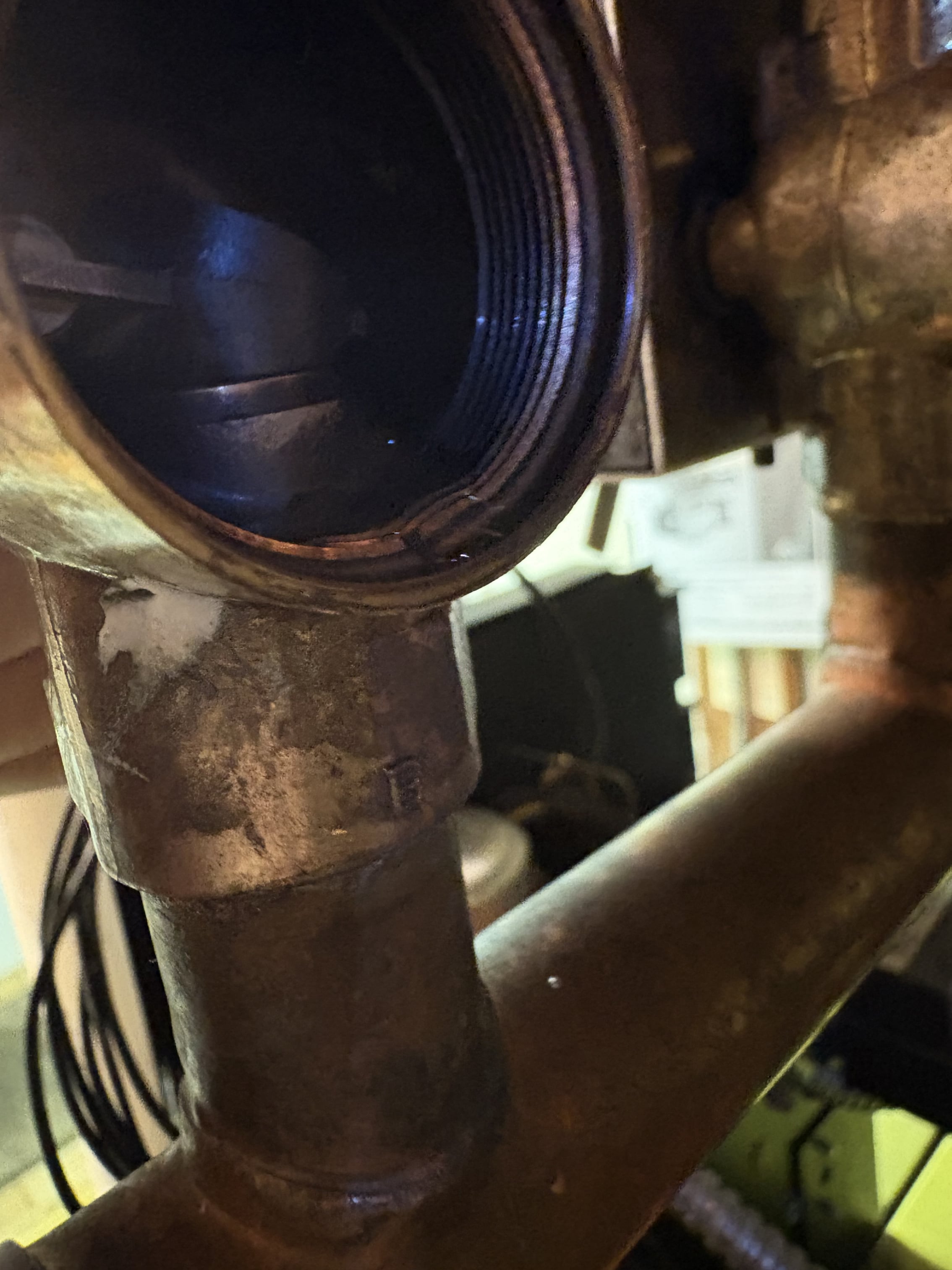
I checked the gate/paddle for the correct operation. I had the back off and opened and closed the gate. It operated exactly like in the new valve body I took it from. I would’ve bet on that working but it didn’t.
 0
0 -
I wouldn’t think Erie redesigned that paddle from the original design, if do there would be different part numbers to match different vintage valves
What did that small crack in the one body look like when you got it out?
Bob "hot rod" Rohr
trainer for Caleffi NA
Living the hydronic dream0 -
The valve body had no damage what had appeared to be a crack was just a black mark. Side by side comparison of the paddles was identical.
0 -
there is a chance that the swap may not fix the problem, if all the calves close and seal tightly?
Bob "hot rod" Rohr
trainer for Caleffi NA
Living the hydronic dream0 -
you could put it together and close it and turn it so the inlet is up and pour water in it and see where it comes out.
0 -
My guess is the paddle itself is weak and flexing open when there is circulator pressure against it. You can see where it ties into the hinge pin it just a very thin piece of plastic. my guess, it's flexing or cracked. if the valve is normally closed you can bench it, buy some poly tubing and test it. We would all encourage you. That its how we all got to where we are. seriously.
1 -
the way it is leaking just filling the back side of the seat may be enough
0 -
The valve 5 leaked at any call for heat from any of 5 zones or hot water. The valve leaked with old actuator or new . The valve leaked with old paddle or (identical) new paddle. Any call for heat from zones 1-4 or hot water caused #5 valve to act as if open but lever on actuator was in the closed position. If zone 5 called for heat the actuator lever and valve worked properly. The new actuator on new valve body is not leaking and only open when it should be when #5 thermostat calls for heat. I have a toe kick heater on zone five or I may have never noticed it. It’s not really that much of a problem in the winter just extra heat. When there’s a call for hot water in warm weather zone 5 would heat the room (toe kick heater fan on) with the central AC system running. I will spend some more time carefully investigating that valve body.
0 -
I forgot in my last post to say that I manually closed the valve #5 with vise grips with a bungee holding it closed tightly and it leaked as if open.
0 -
I looked the #5 valve over carefully there’s nothing wrong with the valve body. I believe I have found the reason for that valve leaking/opening whenever the furnace turned on. According to some information I have found that the problem could be due to excessive pressure in the system. If there is excessive pressure in the system the spring mechanism in the actuator will back off to relieve the pressure. The position of zone 5 was at the end of the manifold probably having pressure build there first and causing that valve to open. Since zone 5 released the pressure the others were
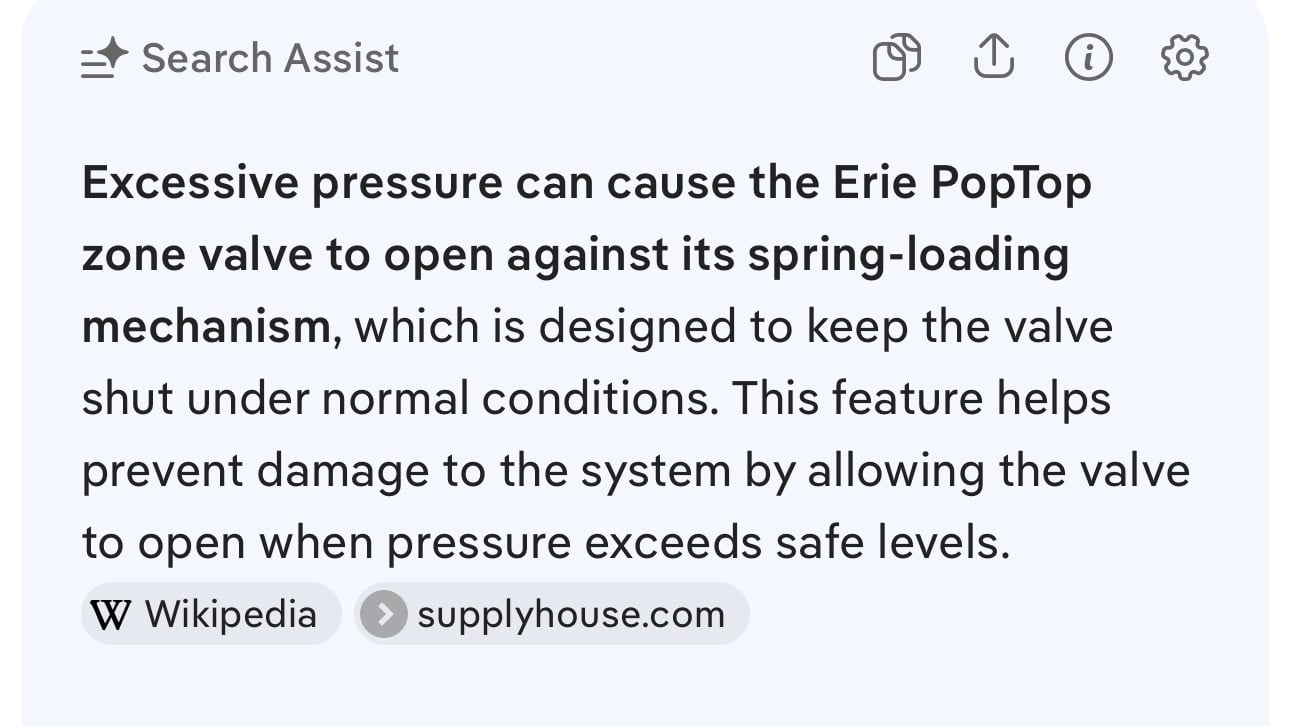
operating normally. I sure I’m not explaining this totally correctly but that’s the extent of my knowledge.
0 -
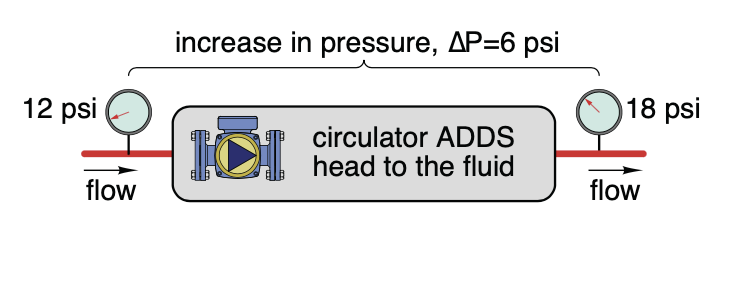
This is talking about the pressure the pump adds to the system not the fill pressure. This added pressure is call pressure differential, and that valve should be able to take 15 psi or more delta P.
It would take a fairly high head circulator to push past that valve.
 Bob "hot rod" Rohr
trainer for Caleffi NA
Living the hydronic dream0 -
Whatever was causing it, opening the pipes to install the new zone valves and refilling the system has solved the problem… so far. It’s only been a few days of spring weather here, not much call for heat.
 2
2 -
@skyline137 If you are as curious as I am, since the offending valve is out of the system, and when the valve is closed you can view it with the access cover off. I'd build a simple or crude way to pressure test it to see exactly where it is leaking at.
National - U.S. Gas Boiler 45+ Years Old
Steam 300 SQ. FT. - EDR 347
One Pipe System0 -
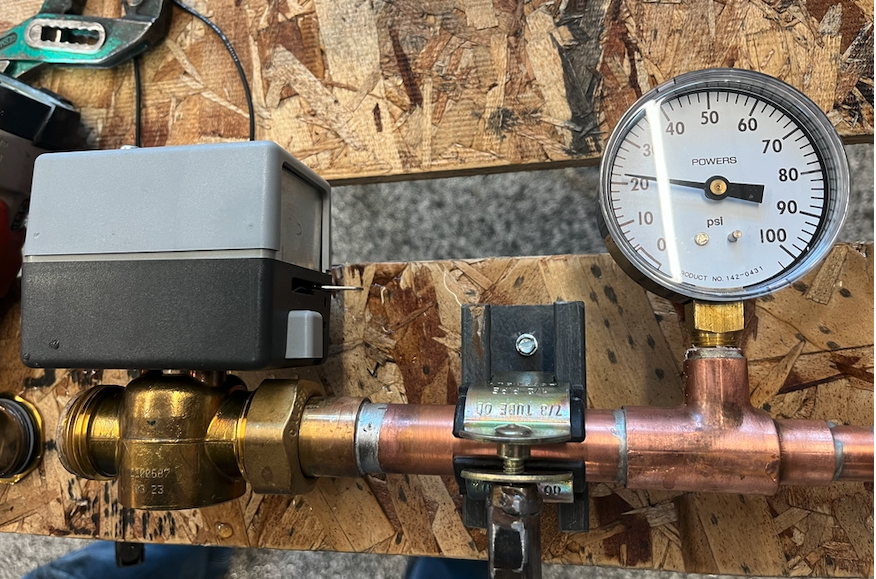
First simple test is set it upright on a bench and pour water into it. Does it holdi
The best way is to power the valve open, start flowing water, then remove power, in this example it closed against 20 psi and held bubblefree.
This tests it at actual working condition, with the exception of 180° water
 Bob "hot rod" Rohr
trainer for Caleffi NA
Living the hydronic dream1 -
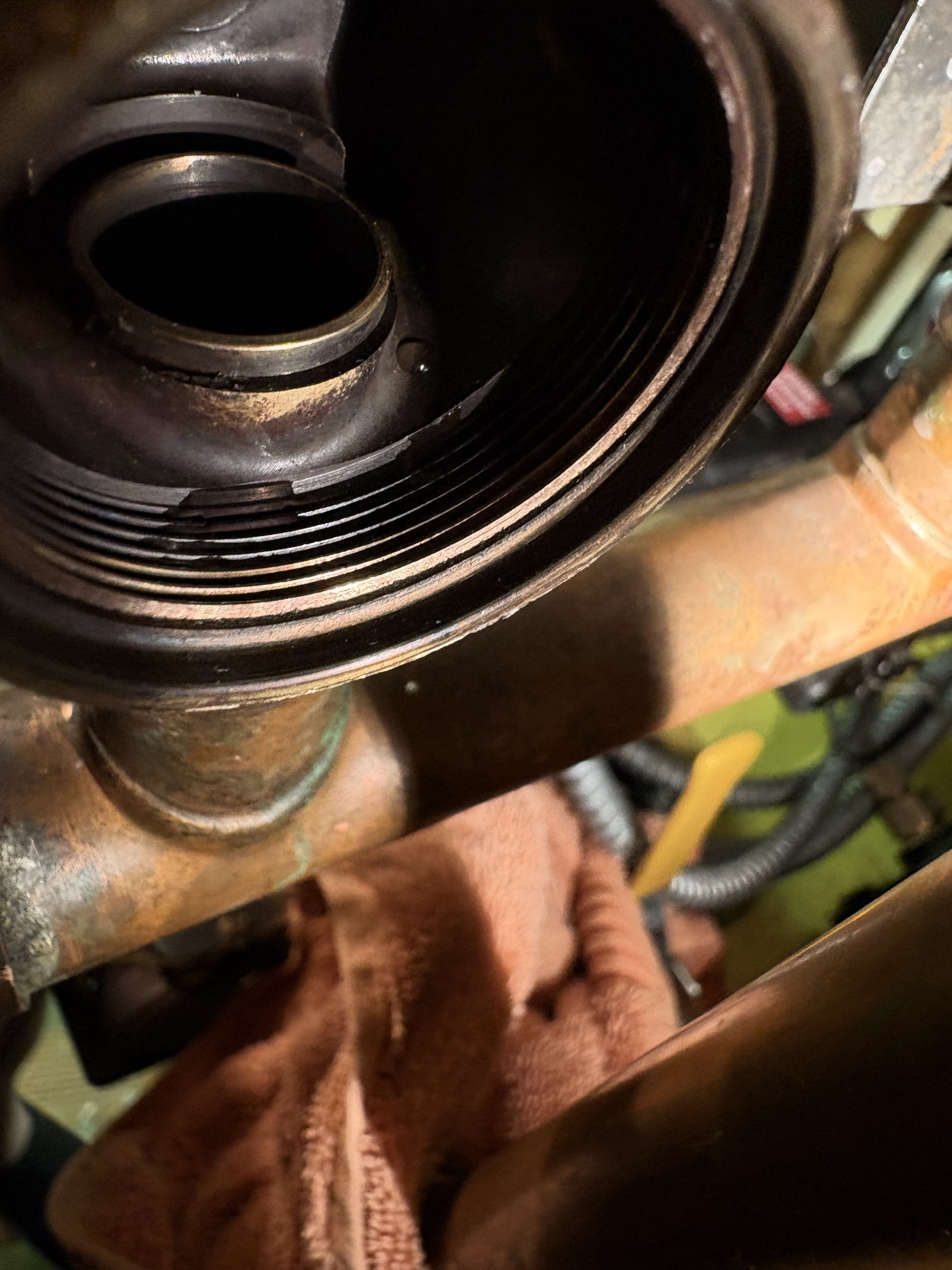
I don’t think the valve body was leaking at all. I think pressure was causing the paddle to lift off the seat. The spring in the actuator applies pressure to the paddle. The valve is normally closed due to the pressure of the spring. When the actuator is energized the motor and gears compress the spring lifting the paddle and opening the valve. Enough pressure on the paddle will cause the same effect as the motor opening jt. I put a short piece of pipe into the valve body and put my thumb over the seat I blew as hard as I could in the pipe and there was no leaking of air. Pipe seat being sealed by my thumb and no pressure leak. Really not complicated how the paddle or my thumb closes the flow.
 0
0 -
The most common 3/4 sweat Erie is the 7.5 Cv. It has a 17 psi shutoff. You do not have a pump in your system capable of 17 psid. If you did all the valves would be blowing by, all the time.
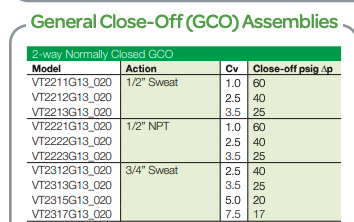
The static pressure in your system, no pumps running would have the same pressure on both sides of the paddle. The spring tension has the ability to hold 17 psi regardless.
Bob "hot rod" Rohr
trainer for Caleffi NA
Living the hydronic dream1 -
I’m going to try the same test with the paddle in and actuator on the body. Actuator holding the paddle closed and air pressure in the pipe to see if the valve leaks.
0 -
use the gate and the actuator. either the bore for the shaft is worn so it isn't square to the seat or the actuator jumped a tooth or has a gear loose on the shaft so it isn't closing it all the way
0 -
The first thing I did was put on a new actuator, it wasn’t that. The problem persisted so I opened the valve checked the seat and installed a new paddle. I would have bet that was the problem. It wasn’t. There is no wear or damage to the valve body so with a new paddle and actuator it should have worked as new. It’s possible there was some play between the paddle shaft and the bore on the valve body and the paddle lifted slightly I will check that. The seal at that point was not leaking.
0


Categories
- All Categories
- 87.6K THE MAIN WALL
- 3.3K A-C, Heat Pumps & Refrigeration
- 59 Biomass
- 430 Carbon Monoxide Awareness
- 125 Chimneys & Flues
- 2.2K Domestic Hot Water
- 5.9K Gas Heating
- 121 Geothermal
- 169 Indoor-Air Quality
- 3.8K Oil Heating
- 78 Pipe Deterioration
- 1K Plumbing
- 6.6K Radiant Heating
- 396 Solar
- 16K Strictly Steam
- 3.5K Thermostats and Controls
- 56 Water Quality
- 51 Industry Classes
- 51 Job Opportunities
- 18 Recall Announcements