near toilet floor constantly wet
Comments
-
Likely light effects.
I need to take a closer look.
0 -
Any answer to picture of "screw in pipe"?
 1
1 -
Need to take a closer look.
Could be due to the perspective. It's not easy to drive a screw into a round tubing surface. If the screw did nail into the tubing, the leak should be much faster.
0 -
I’ve seen plenty of screws and nails in pipes with only minor leaking after a period of time due to the iron corrosion closing the hole


 4
4 -
the sharp point if the screw makes it pretty easy to bite in to the pipe. looks like they were going for the steel stud next to it.
1 -
The screw didn't puncture into the tube. It was close, but the tube has held up for decades..
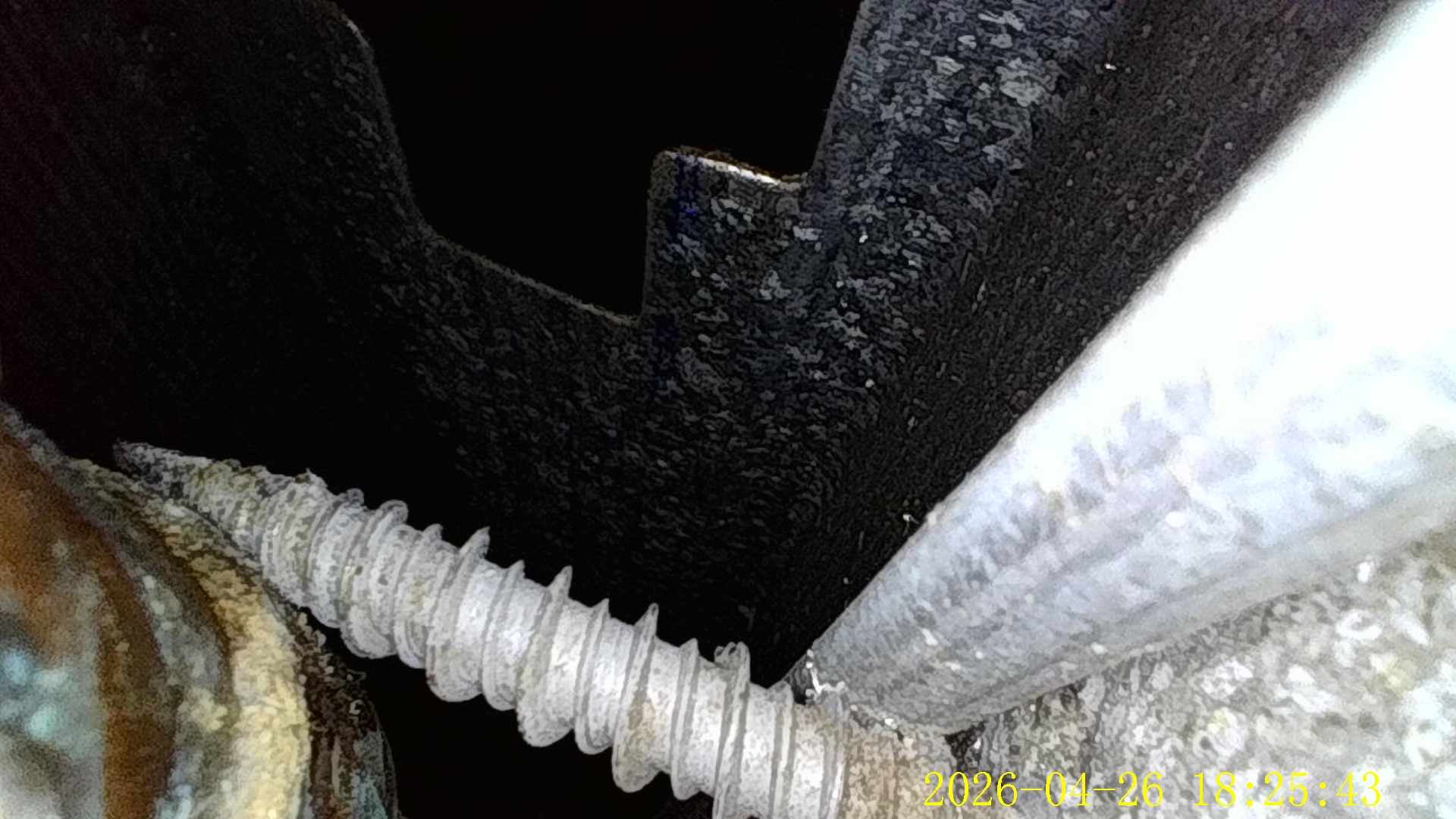
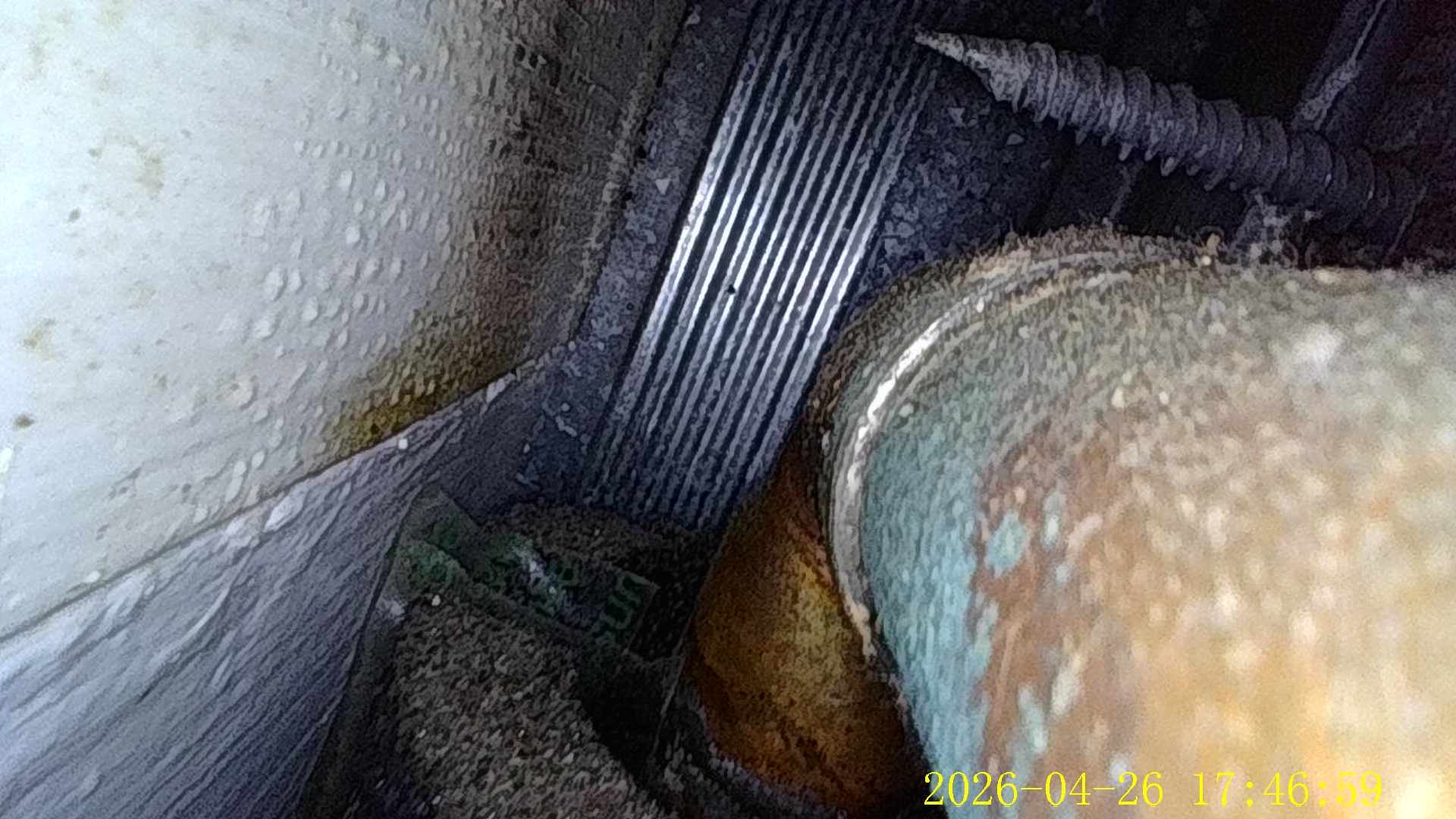
Above is another example of a close call.
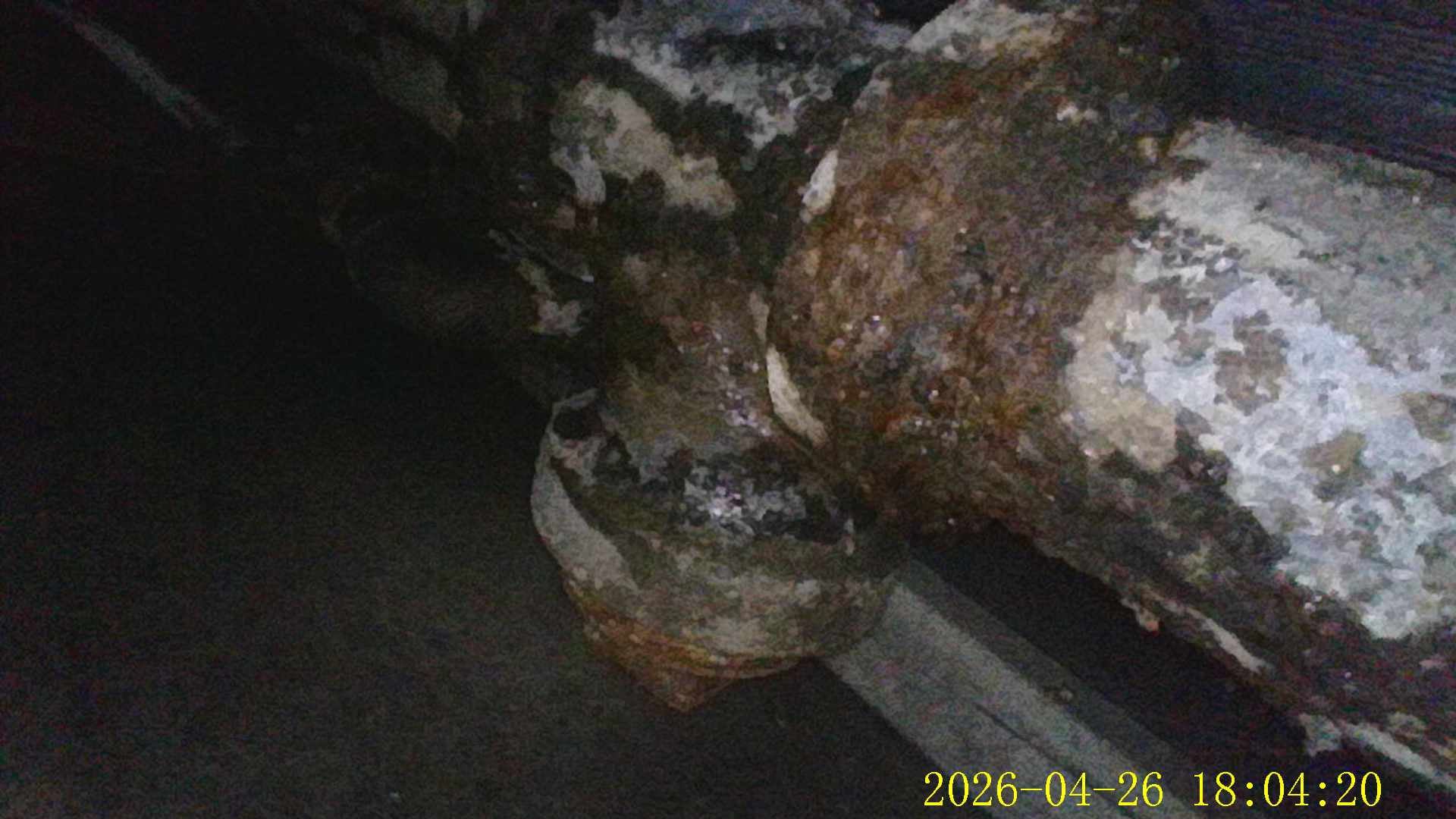
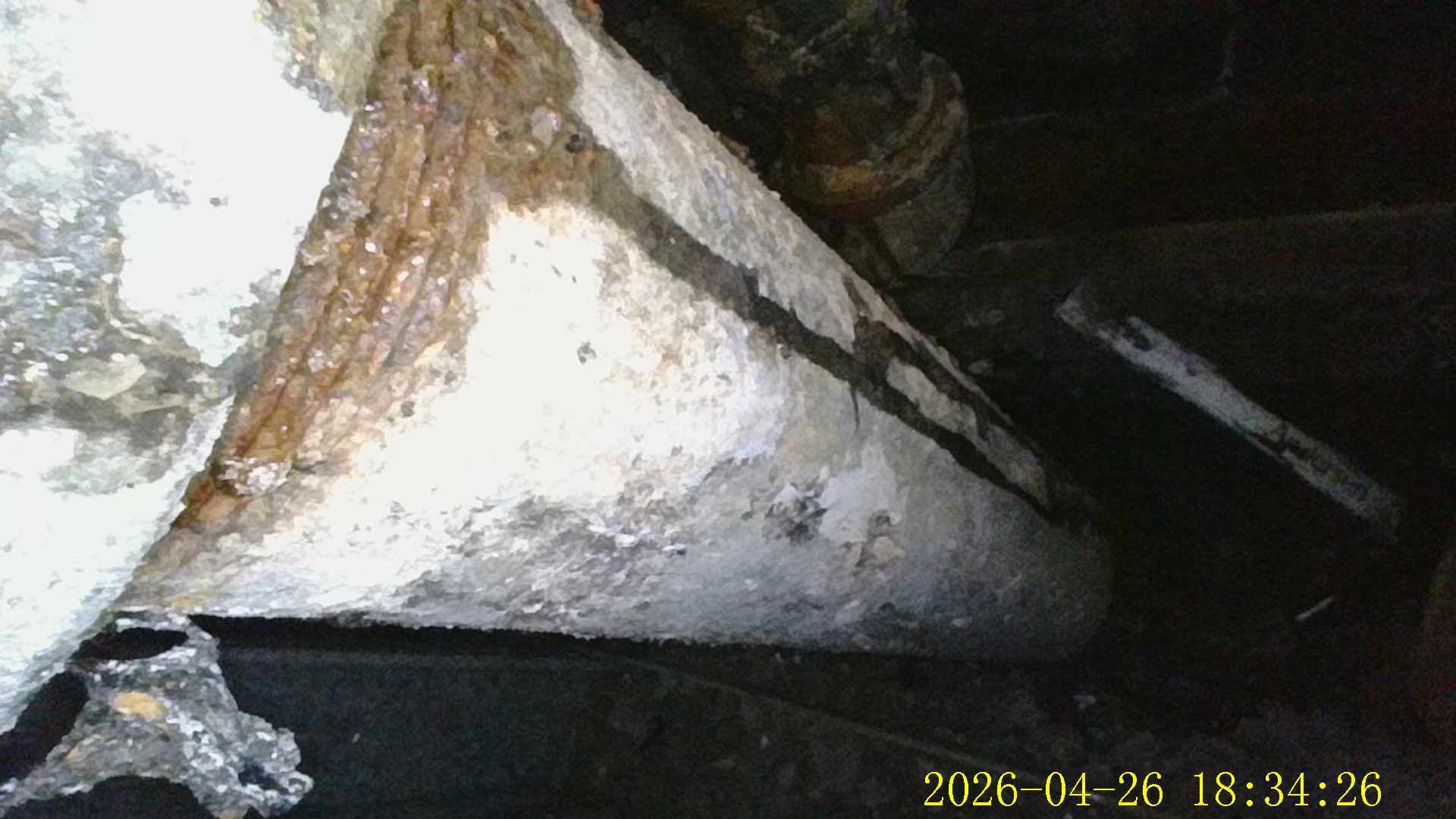
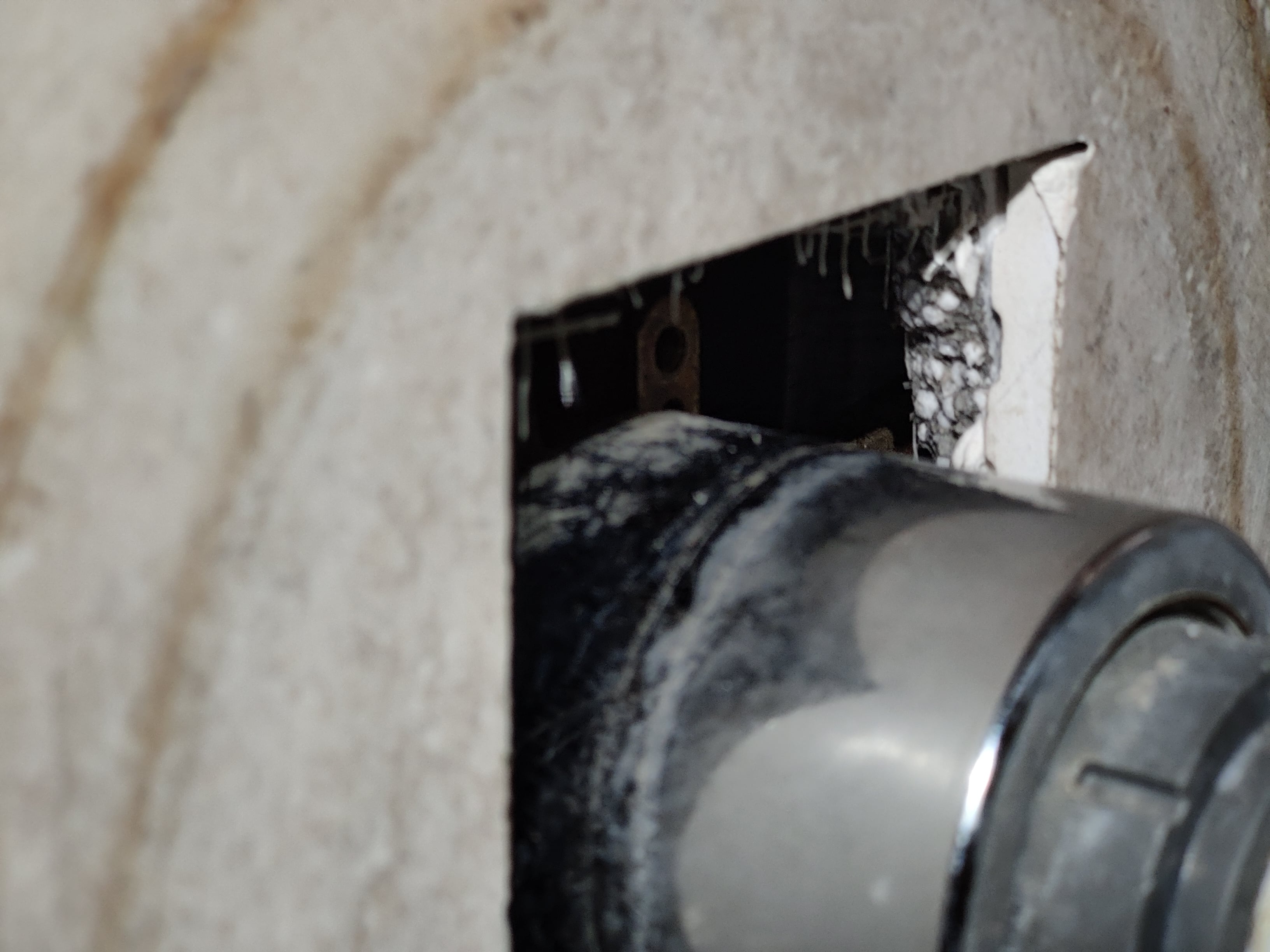
I did found one leaking rusty fitting due to corrosion.
It will be terriblely difficult to remove this type of fitting. What's the common approach to replace the corroded section, after opening the wall?
 1
1 -
you can sometimes cut a fitting off a nipple or a nipple out of a fitting and screw a pcv adapter on to it. i think certain types of ferncos are permitted inside a wall. i would replace as much as i can because galvanized waste has about a 60-70 year lifespan and they stopped using it about 60 years ago. anything that is a vent should be ok but anything that gets wet is likely near the end of its life.
0 -
or is that supply pipe? supply pipe is usually a little easier to get to unscrew. i can't tell the size from the pictures.
0 -
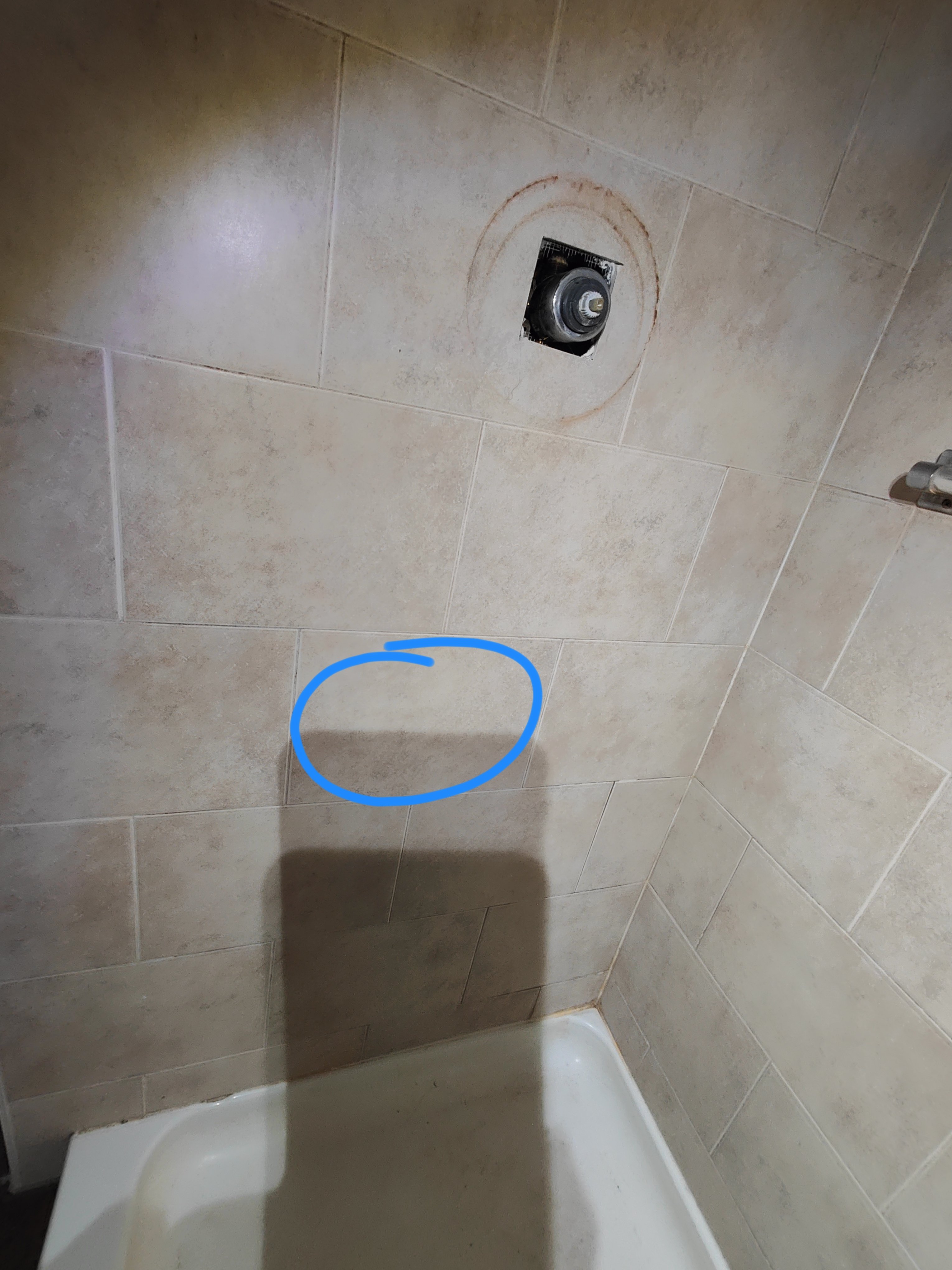
It's roughly this area
There is a cement board behind the tiles
What approach do you follow for cutting and restoration after the repair?
 0
0 -
unless you have ore tile i would go from the other side of the wall
 1
1 -
this is the ground floor so I prefer cutting from the front side
from the otherside, i don't know what i'm cutting into, questions like, are the laths i'm cutting partially structural? etc.
0 -
wood lath under lath and plaster is not structural although you need to be careful how you cut it so you don't break the rest of the plaster off of it
0 -
any practical steps to replace a rusty frozen T in a steam wet return (both pipes and T are black iron)?
0 -
cast fittings can be cracked by backing up the fitting with one hammer and hitting it with another hammer.
fittings can be cut off of nipples by cutting almost to the threads and splitting them. nipples can be cut out of fittings by cutting almost to the threads in 2 places then using a small chisel or punch to break out the piece in between. if you get lucky you can unscrew it with a pair of pipe wrenches, possibly with pieces of pipe or tubing over the handles to increase the force, make sure you seat the back of the wrench on the pipe to reduce the chance of crushing. wet return piping can be replaced with copper.
0 -
I have never tried a hammer on a fitting.
I see the cut point can be chosen to preserve the threads on either the pipe or the fitting.
but after cutting off the T (preserving the pipe threads), how to get a new stainless steel or black iron T in? I need a new T there to provide a branch
0 -
I made two openings on the wall
The higher opening shows the pipe has mostly corroded away
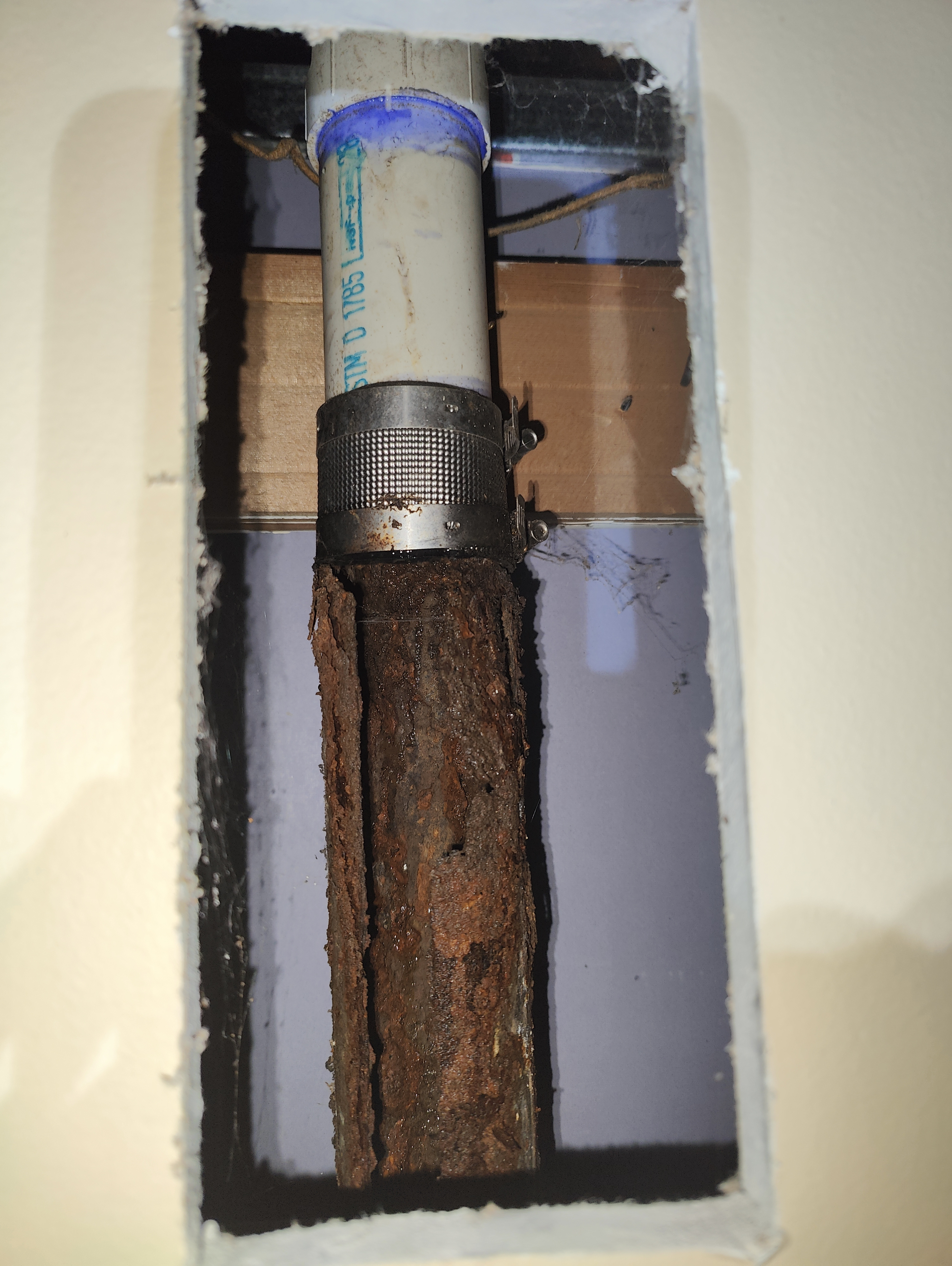
The lower part of the pipe seems in a better condition. But a closer shot at the bottom shows a large hole where the pipe enters the soil.
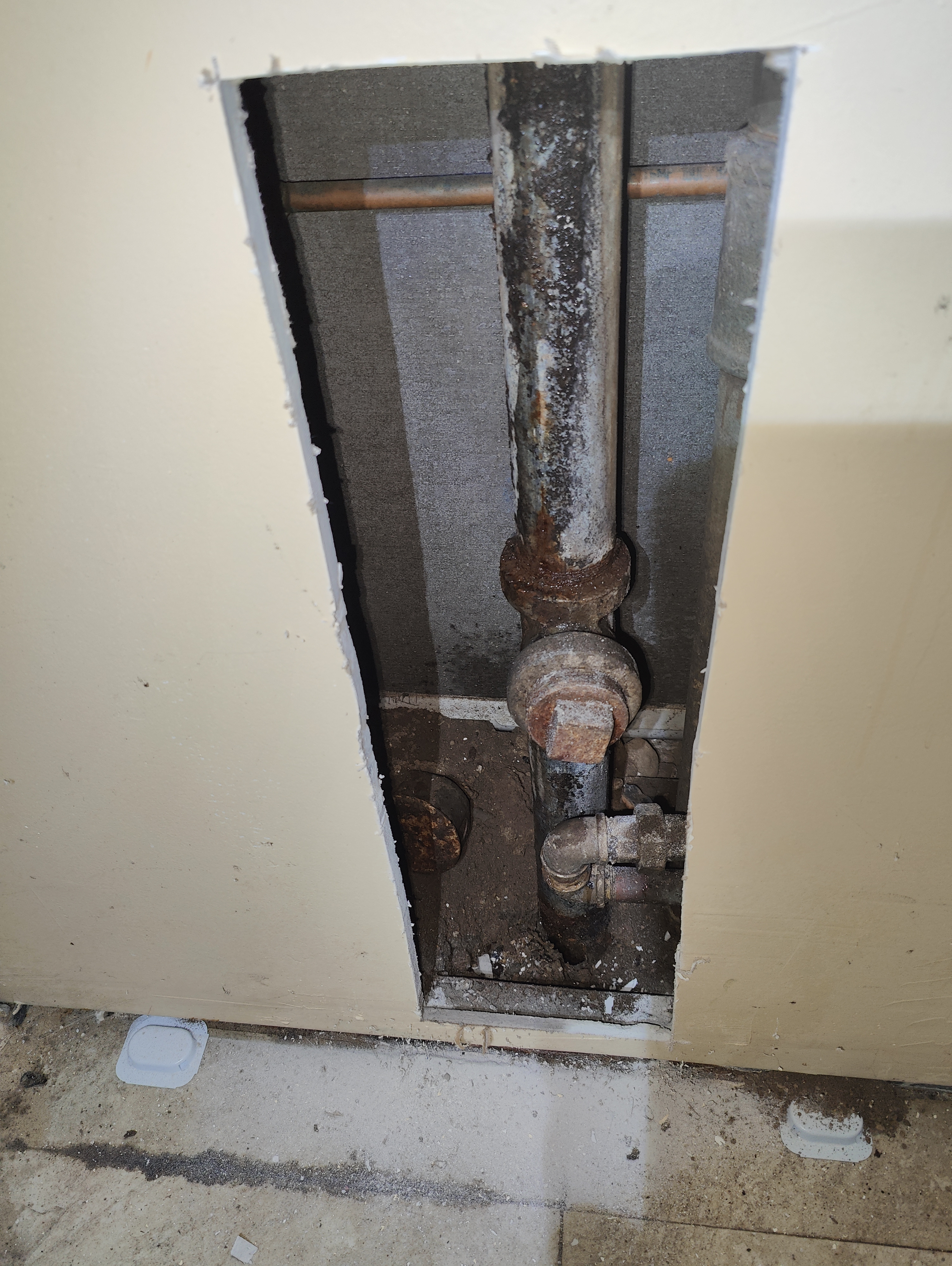
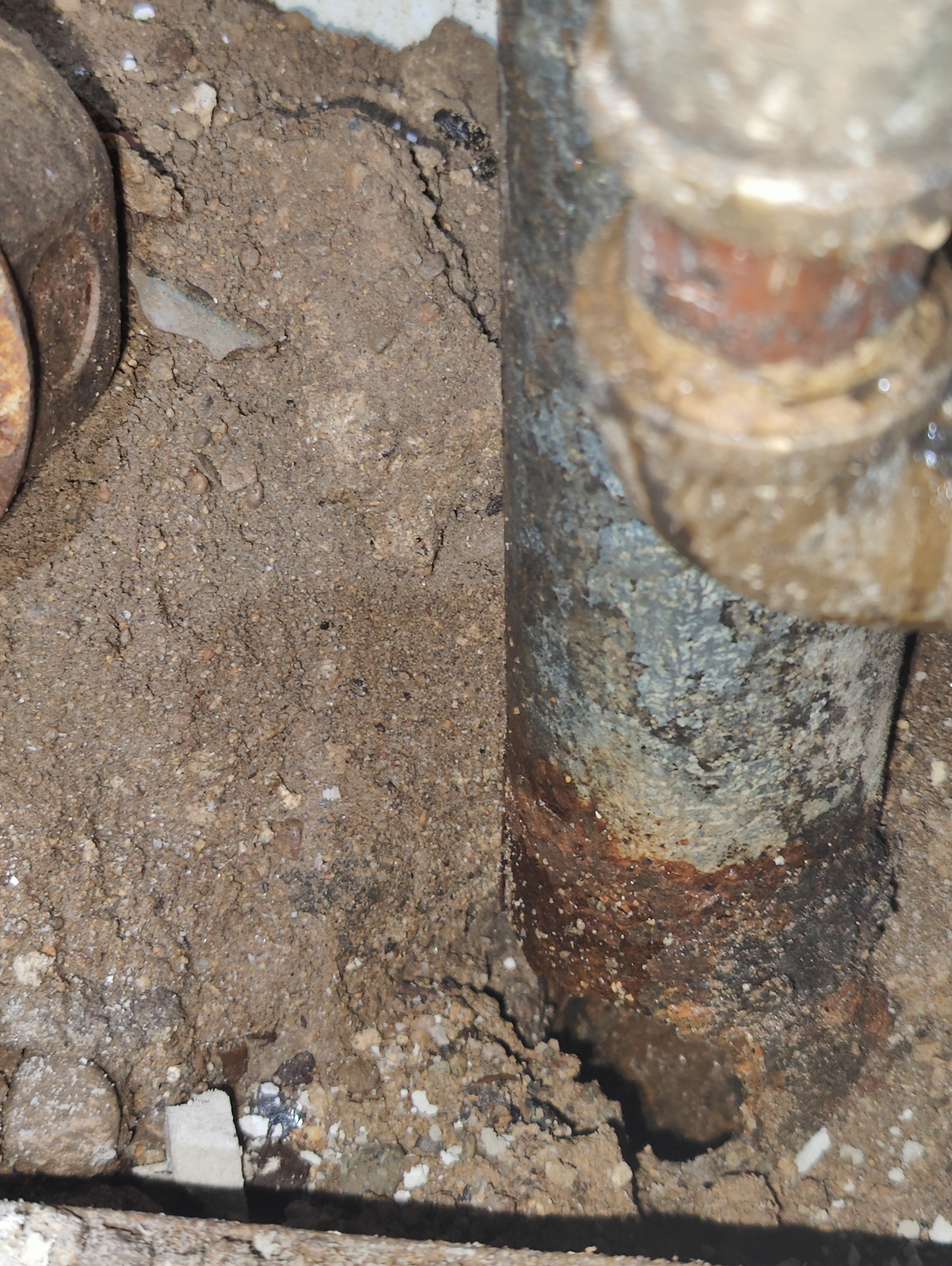
This is the drain pipe, every time the kitchen sink drains, water flush from the broken pipe into the soil.
I think I need to strip off the entire drywall and start digging until the pipe is good again, correct? Then cut away and replace with PVC?
 1
1 -
Yes. Unfortunately there is no other fix
2 -
there are a lot worse places it could be. you can probably fish pieces between a couple holes without opening all of it up.
0 -
The underground part is challenging. I haven't seen how deep the pipe goes and where it joins the big sewer pipe.
Those soil must be low in pH. I'll remove all those soil. The base was said to be a concrete slab. Where did the soil come from?
0 -
-
oh, i didn't see the hole where it goes through the slab, just the higher up hole. you'll have to break out the slab until you get to something solid. the dirt could be dirt that got shoved there when they cut the slab to rework something or it could be from the leaking sewage or it could be dirt or vermiculite insulation that fell from someplace higher up in the building.
0 -
That pipe goes into poured concrete, and the big sewer pipe is sealed inside poured concrete?
I have a rotary hammer drill and chisel bits. do you mean digging around that pipe using these tools until seeing the pipe becomes good again?
0 -
you will probably have to trench the floor. if t is rotting in those 2 places it probably will be rotten under the floor where it goes horizontal to get out of the building too
1 -
the basement is finished. it has laminate flooring and partition drywalls.
possible to just make a trench in the flooring without having to remove all the tiles?
0 -
Hi, There are businesses which line existing pipes. It might be worth calling around to see if that approach could work in your situation.
Yours, Larry
0 -
This is a townhome, so I don't need to do more than what my neighbors would do.
if I call a sewer company, they will be sure to find some leaks in the underground sewer lines by running a cam and then recommend trenchless sewer line.
I assume the sewer pipe that this corroded pipe connects to is a straight section that runs to the big P trap near the water meter. There is also the outdoor section from the big P trap to the street, this one mostly likely needs to be repaired too. Then the P trap is already rusty. of the three things, which is the most imperative to fix?
0 -
Hi, I'd start where the leakage causes damage to your place. You don't want mold, rot, or foundation settlement to be going on. The best thing of course is to fix all leaks, which will probably require working with your neighbor, maybe the utility, and possibly the insurance company. I think I'd start with a survey, so you know where the leaks are and the available options for dealing with them.
Yours, Larry
0 -
I removed some soils.
this picture is before scooping the soil. The existing pit near the hole could be someone finding this leak earlier.
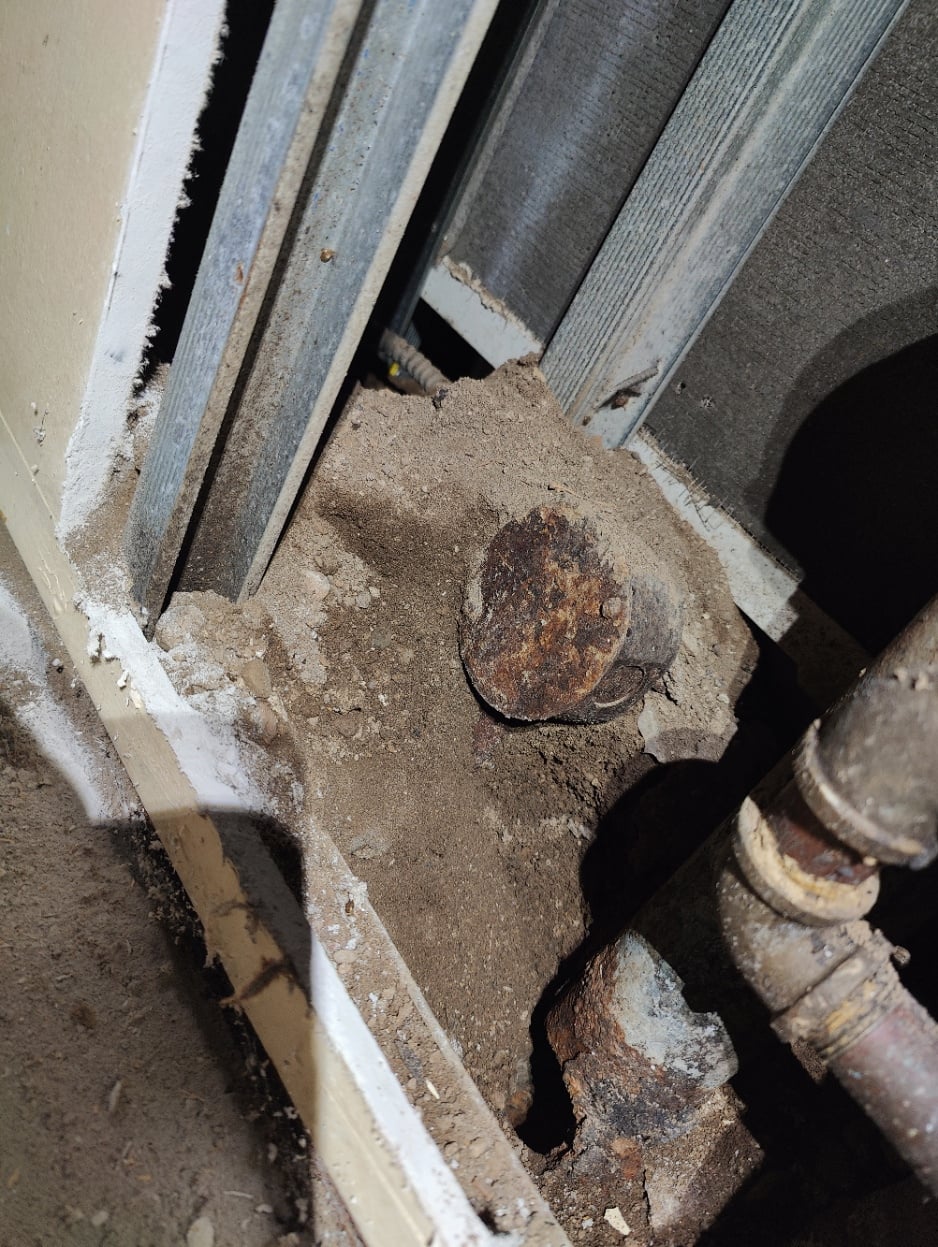
as more soil is removed, the deeper soil seems to be mixed with white power. This might be crushed limestone that was added many years ago to protect the pipes.
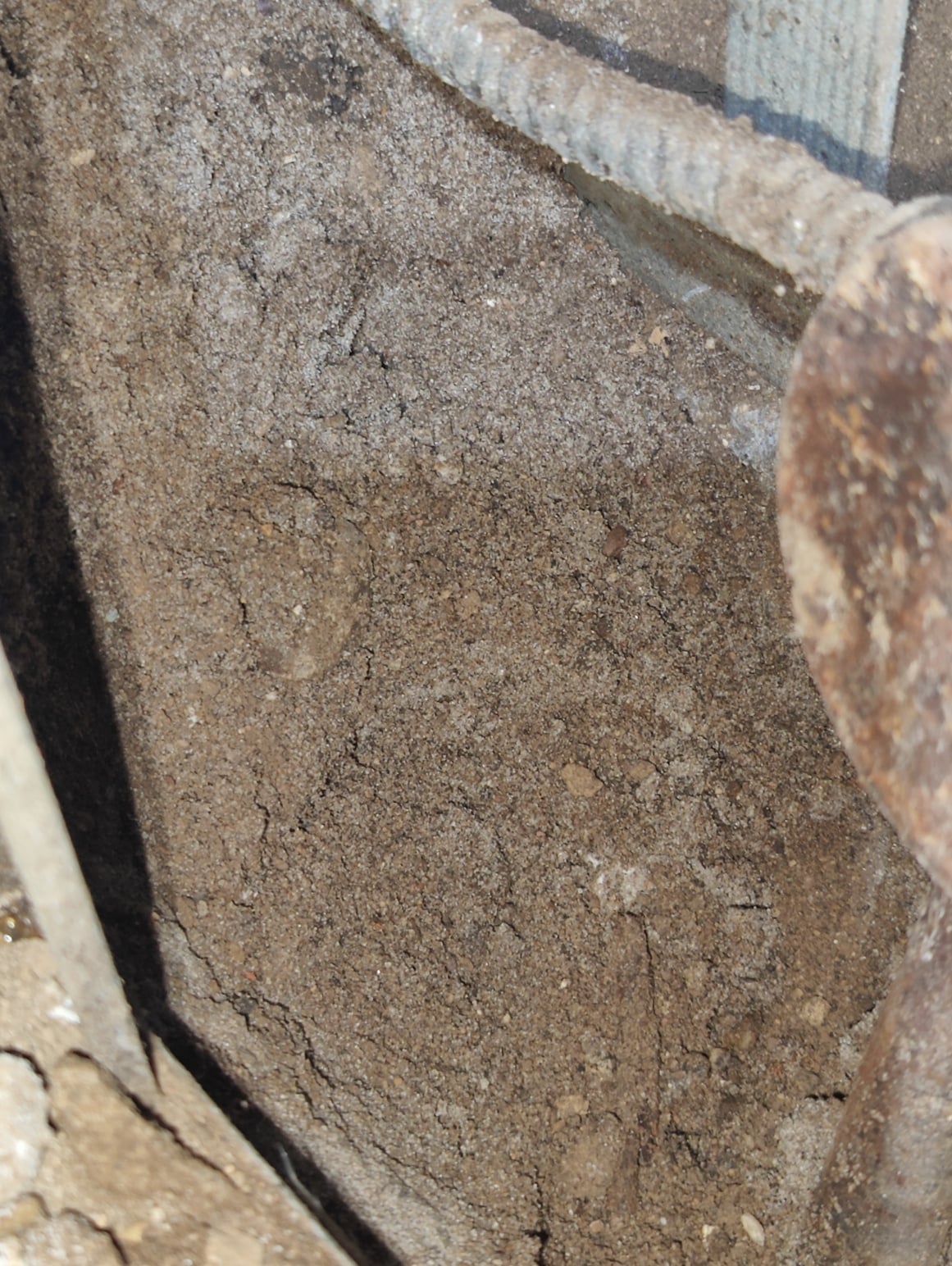
this is as much soil removed as possible. to get deeper, the drywall track framework and some tiles need to be removed first.
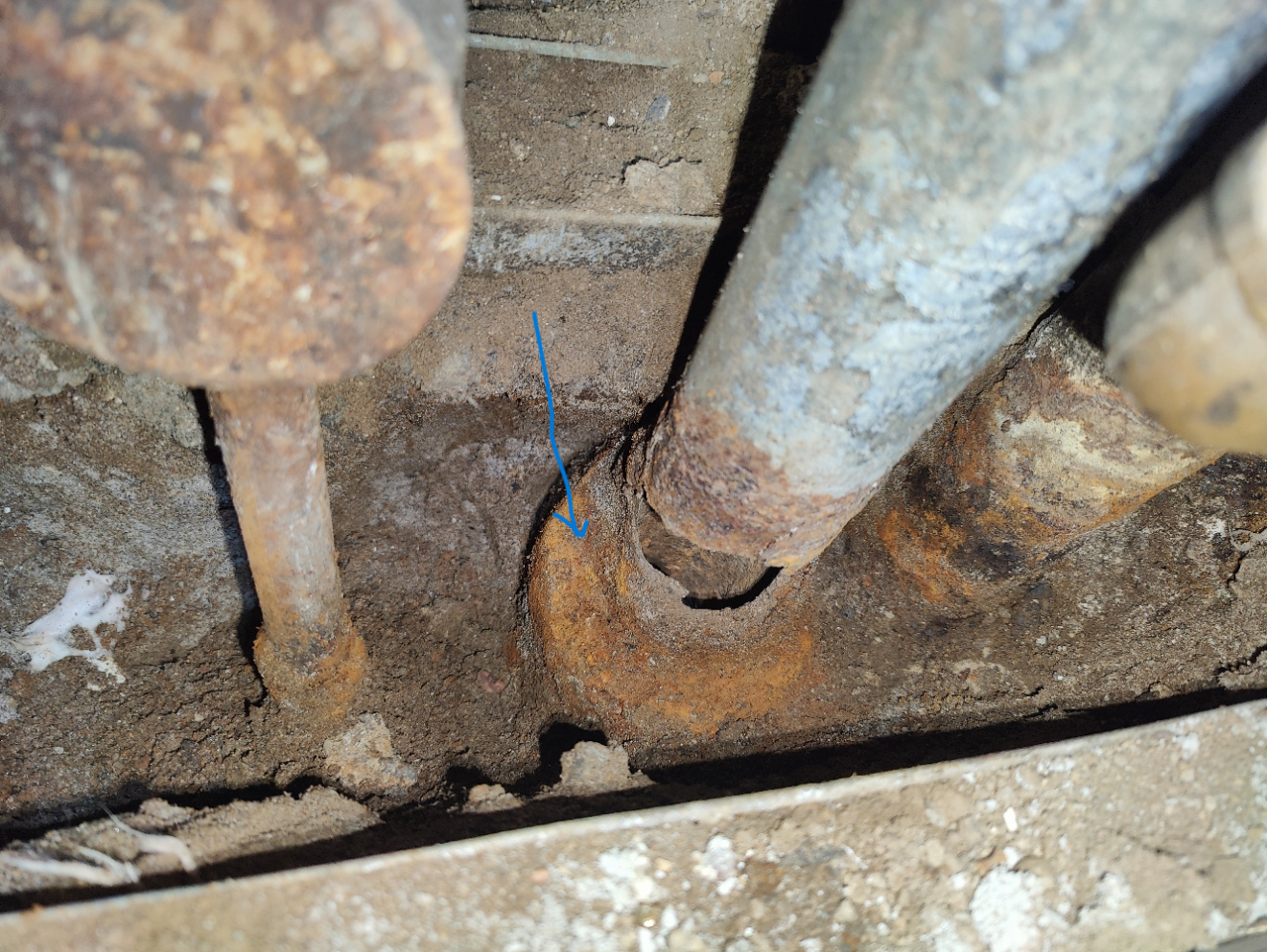
what's the name of this fitting at the bottom of the broken pipe?
 0
0 -
That looks like it could just be the hub end of hubbed cast iron pipe. If that's intact you might be able to leave that as is and do all your work above
2 -
is the hub part of the pipe?
0 -
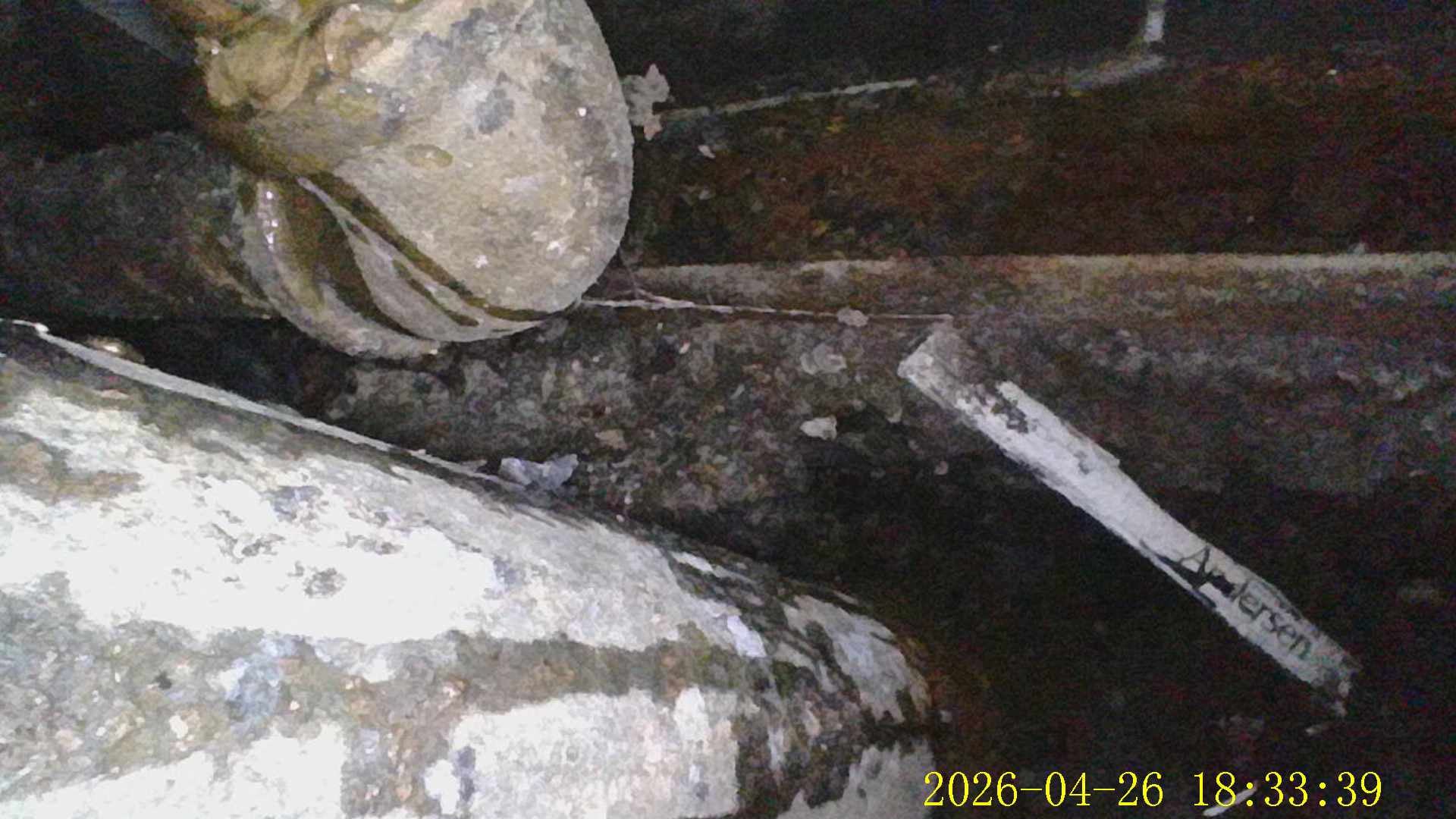
the sewer pipe that is underground looks ok. this is a photo of the pipe inside using a endocamera to snake into that hole
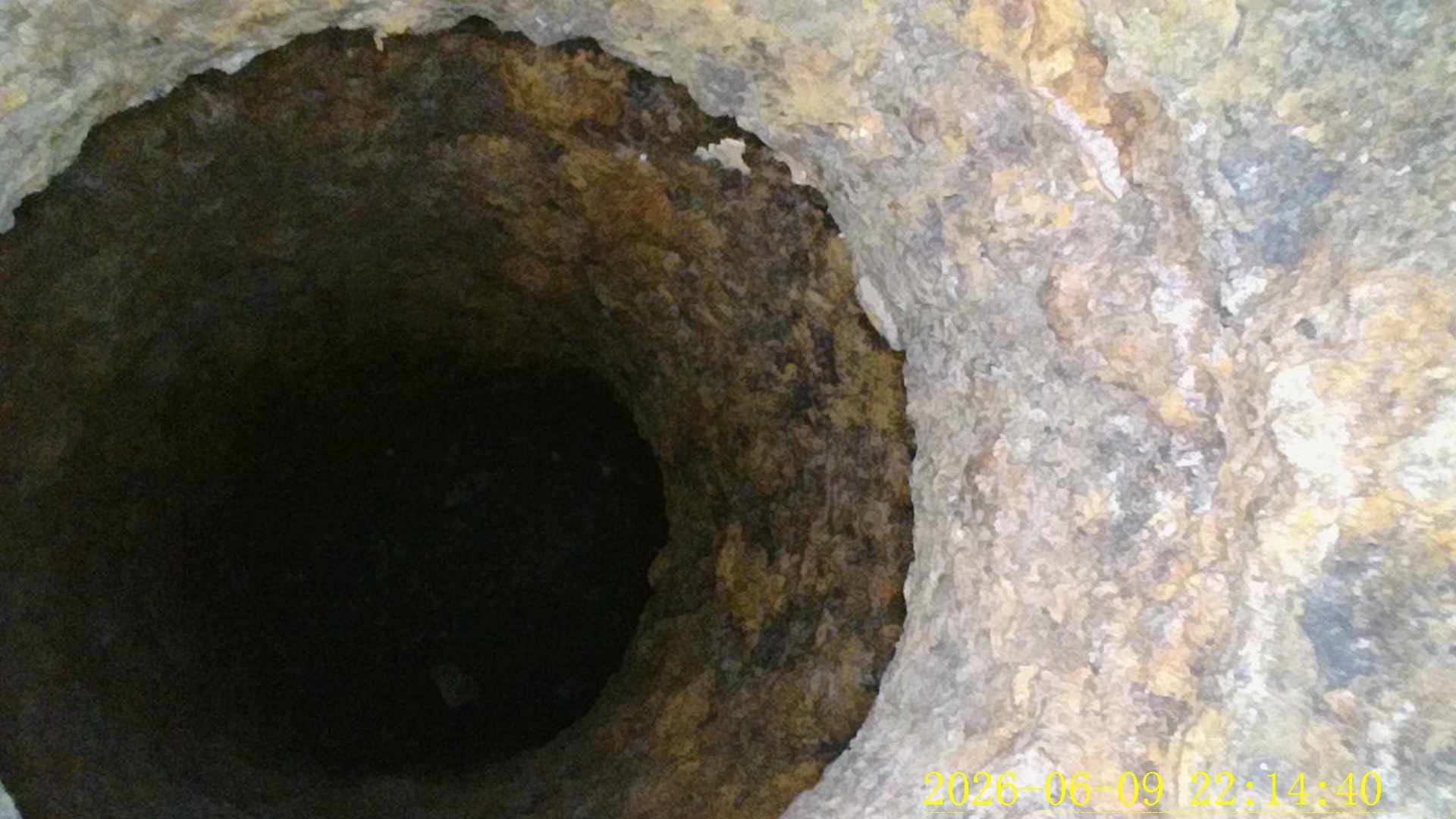
the pipe then bends toward the right, but I was not able to follow the bend, so cannot see further
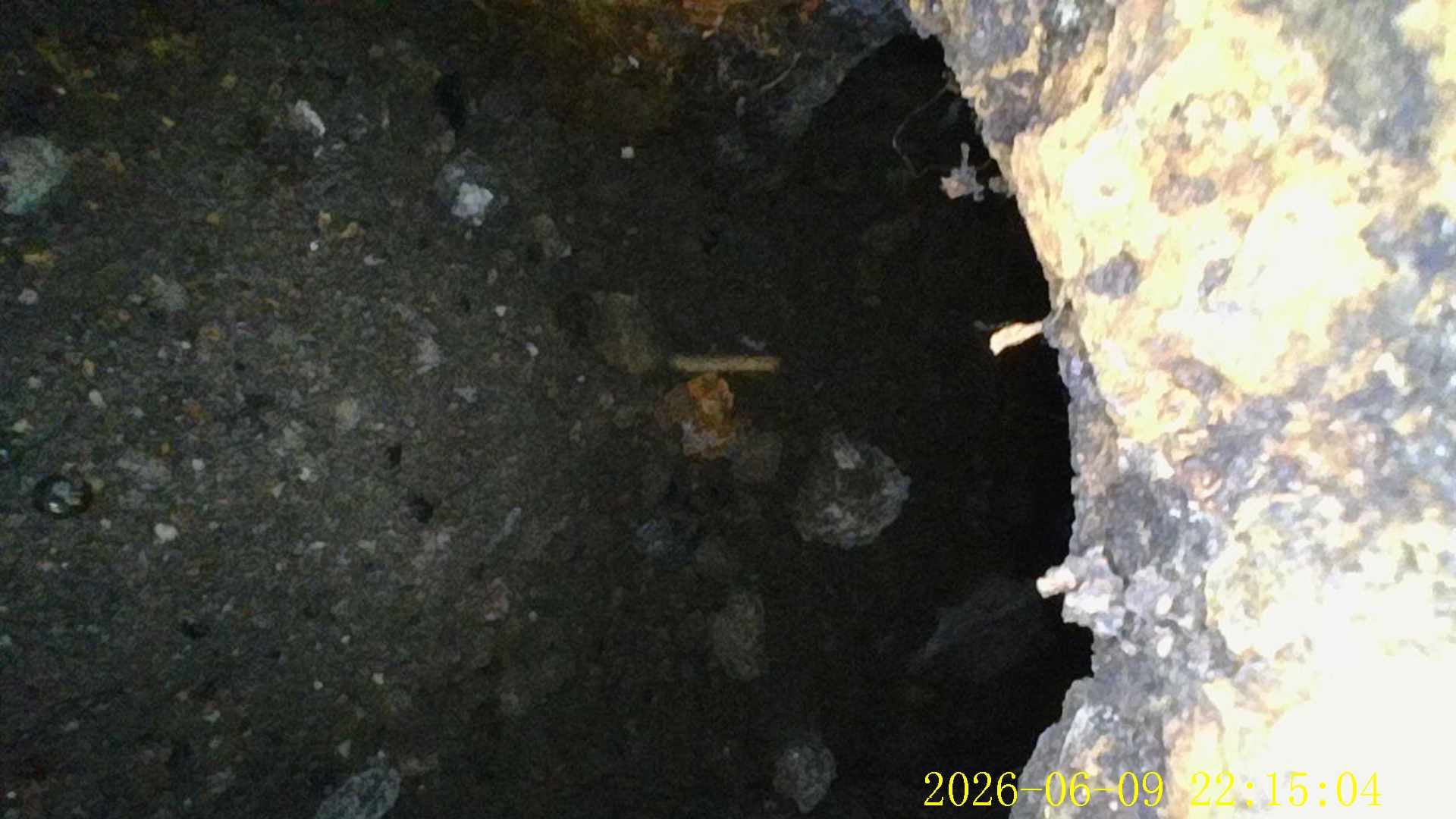 0
0 -
what do you mean "do all work above"?
the hole is near the hub, so there is not enough length to clamp a no hub Fernco fitting
0 -
the fitting you show is a hub that is cast in to the next section of pipe or in that case maybe an elbow with a piece of pipe caulked in to it. you can probably dig the lead and oakum out and put a new section of pipe in there and either caulk it in with new lead and oakum or a fernco doughnut gasket. you can caulk in pvc pipe if you are careful and let the lead cool before you pack it.
0 -
after digging out the lead and removing that pipe, the hub will be a cup for a fernco donut?
to access the pipe, I'll need a straight die grinder with metal cutting disc to cut the the pipe off of the hub, then a bi metal hole saw and drill bits/spade bits to remove the packing, a hammer to grip the last stub out of the hub.
are there major things I haven't included?
0 -
should just be able to dig the lead and oakum out with a small chisel or old screwdriver or something like that. the donut packs in between the pipe and the hub the same way the packing does. there are different sizes of hubs with different manufactures and weights of pipe so measure the hub to find the right donut.
0 -
There only allowed when they can be accessed! That one is burried.
1 -
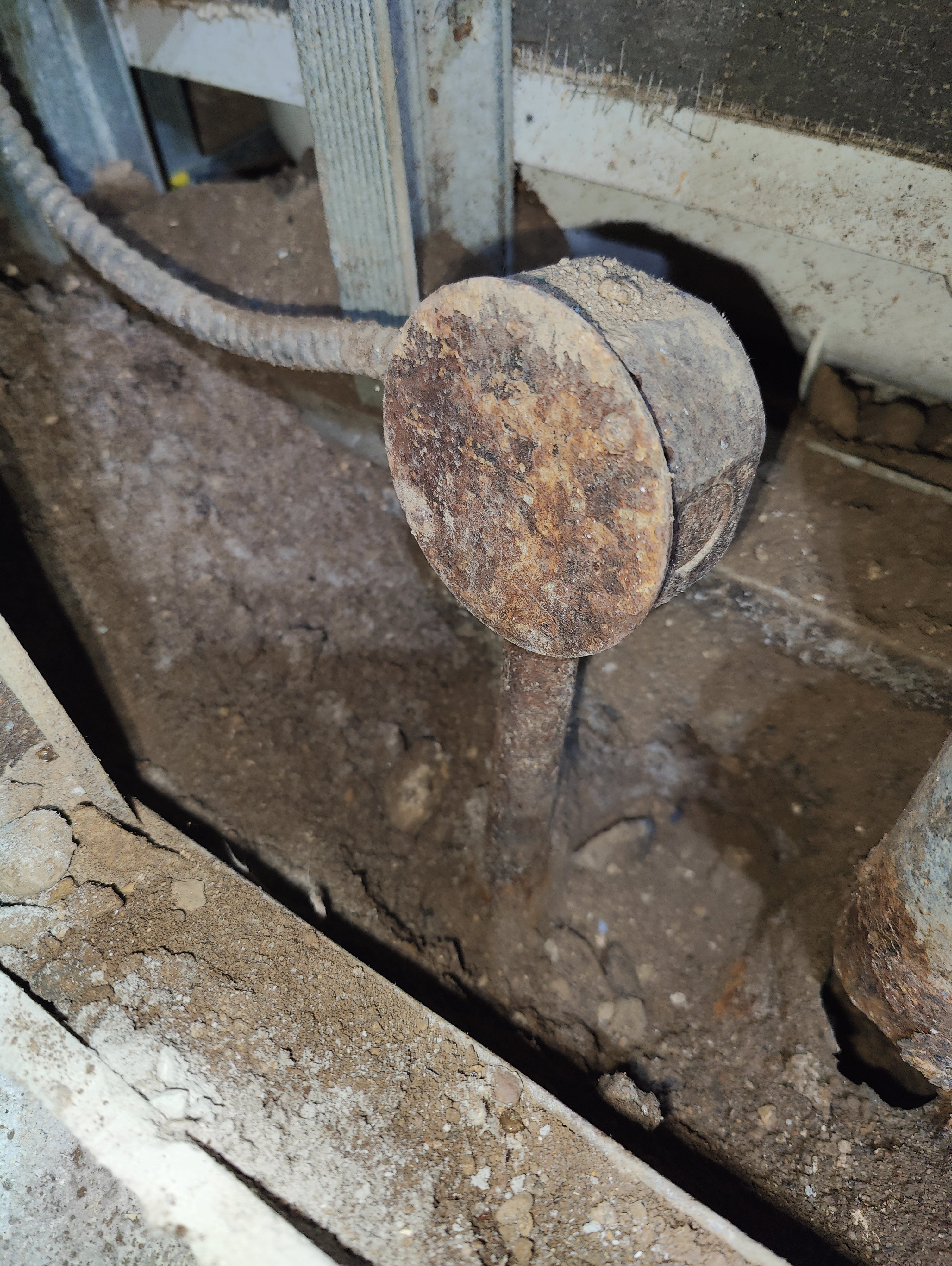
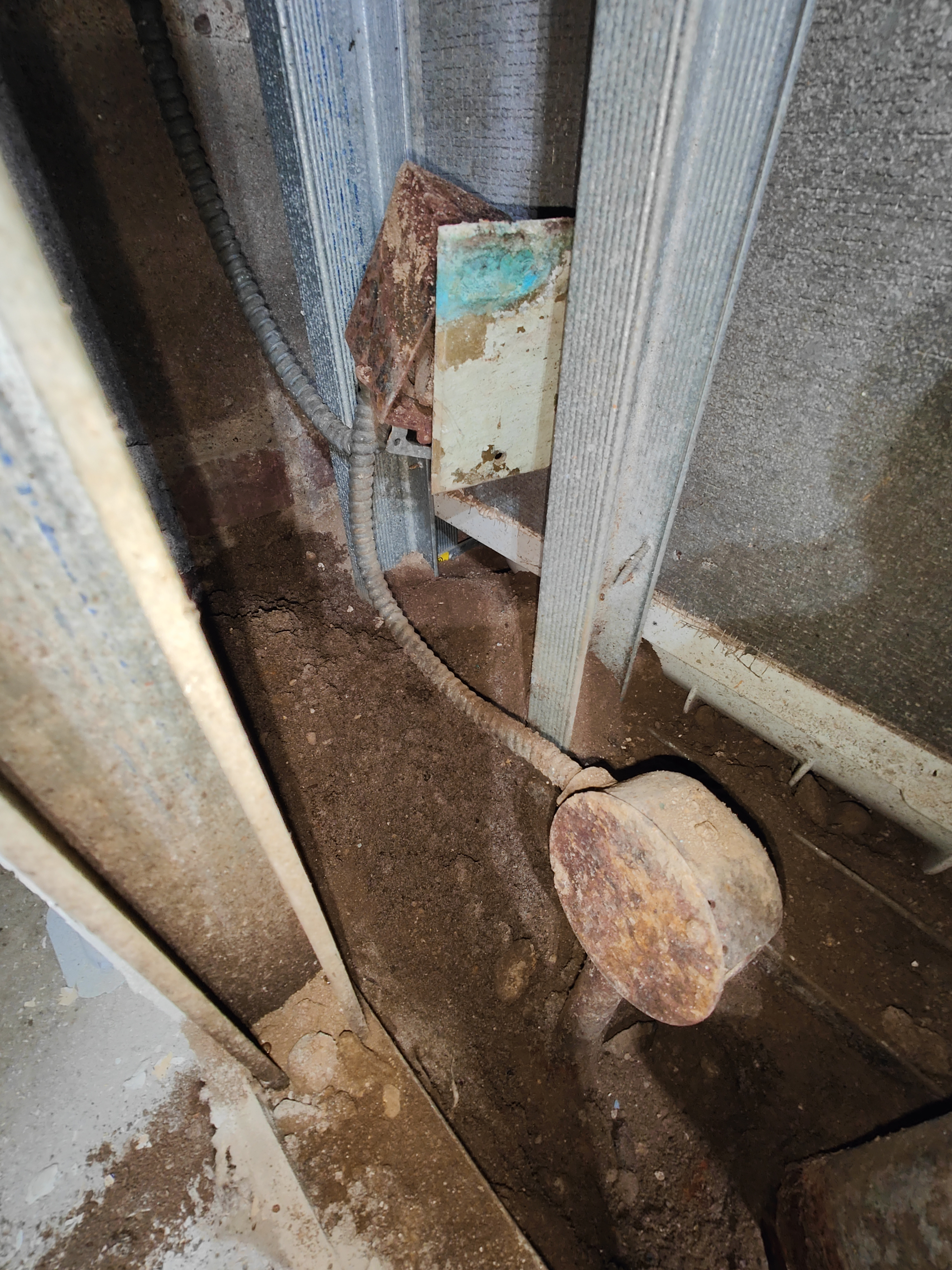
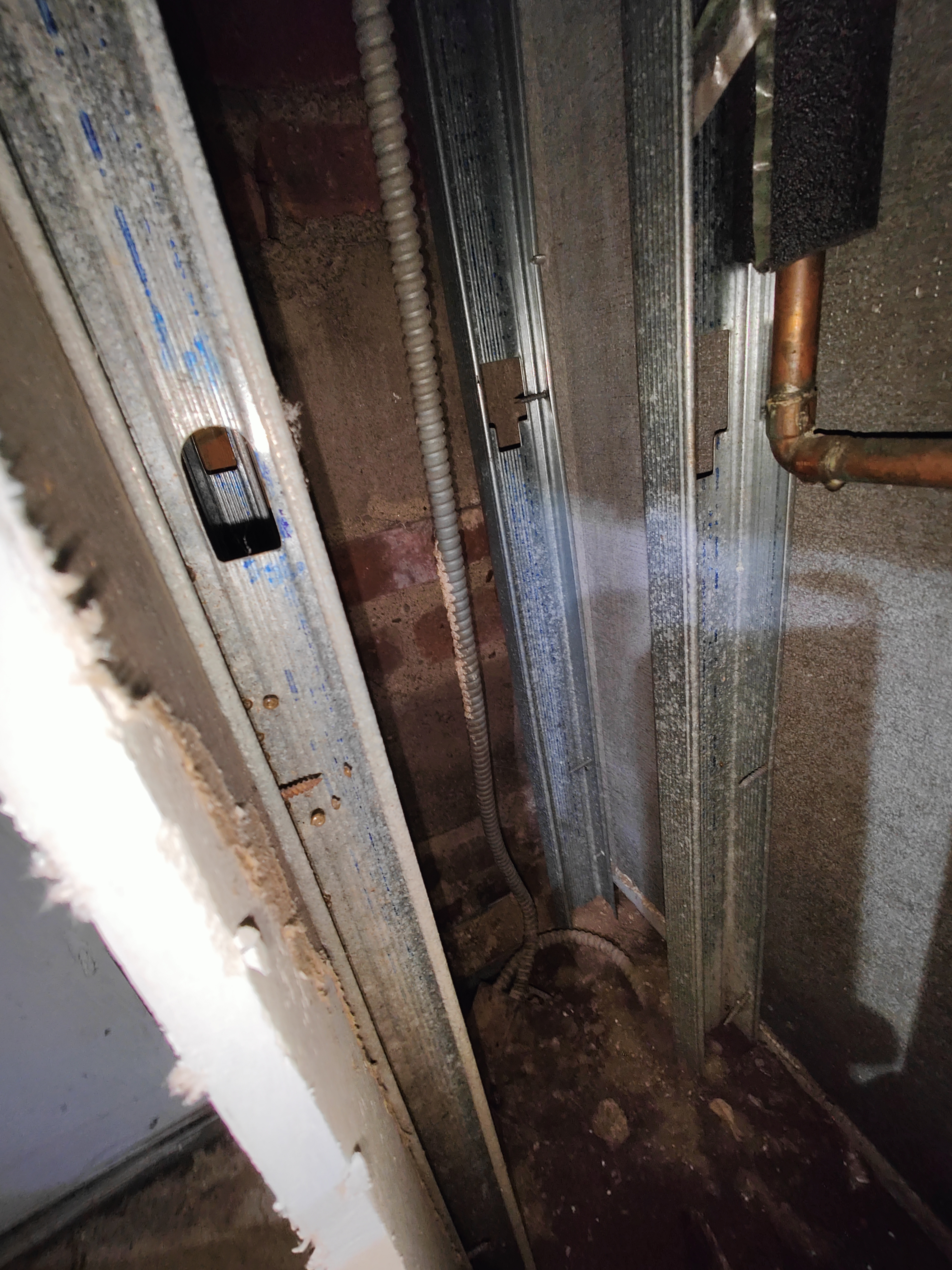
A bit off topic, this is an electric fitting as old as the house. It's rooted into the soil deeply. What was its function?
I think it was decommissioned some decade ago. Can this be used as the grounding bar of the whole house?
 0
0 -
you'd have to see where it goes, it could be abandoned, it could feed a circuit elsewhere in the house or basement. Most likely the power comes from the basement ceiling somewhere, serves that receptacle that was improperly buried in the wall then goes down in the floor to come back up and serve some area in the basement that couldn't be fed down from the ceiling.
that type of wiring wasn't common until about the 1930's so it probably isn't older than that but it could be as new as about the 1980's. all that moisture will make it look like it is 75 years old in a couple years. If that is a 3 prong receptacle it is probably after around 1960.
be very careful with it, if it is live the metal could become live and either electrocute you or start a fire if you start moving it around since it is so deteriorated. If it is thermoplastic wiring inside it is after wwii, if it is thhn type wire it is 80's or later.
0 -
After you dig out the lead and oakum you can use a push gasket on the hub side and just push your new pipe into the gasket. Gasket is used to replace the lead and oakum.
0





Categories
- All Categories
- 87.8K THE MAIN WALL
- 3.3K A-C, Heat Pumps & Refrigeration
- 60 Biomass
- 430 Carbon Monoxide Awareness
- 133 Chimneys & Flues
- 2.2K Domestic Hot Water
- 6K Gas Heating
- 124 Geothermal
- 170 Indoor-Air Quality
- 3.9K Oil Heating
- 79 Pipe Deterioration
- 1.1K Plumbing
- 6.7K Radiant Heating
- 397 Solar
- 16.1K Strictly Steam
- 3.5K Thermostats and Controls
- 56 Water Quality
- 51 Industry Classes
- 51 Job Opportunities
- 18 Recall Announcements