Gorton vents is there a way to test them?
Comments
-
That should read "intermittent" level test. You can wire it up so that it doesn't test so annoyingly often, and only 20m or so into a burn. Most of my burns are less than that. It is called "Smart Cycle" or something like that.
1 -
What I actually have done in one of my mains (not the other one), is I removed a radiator at the farthest end of it, removed the supply valve, and installed a nipple with a garden hose fitting on the end of it and then connected a garden hose up to it and flushed the return line with the return drain valve open. It is best if you have a no return flush ball valve installed on the Hartford Loop. I didn't have that so I had to first drain the boiler down as far as I cold with the return drain valve and then just flush in short bursts so that none of it actually went into the boiler.
0 -
How is that done? Inside the LWCO or elsewhere?
0 -
I found the installation manual. Now to study how to change things to get the smart cycle. My boiler is shutting off due to the random sampling feature of this LWCO! I didn't see any pattern related to the firing for this. Now I understand what's going on (some).
0 -
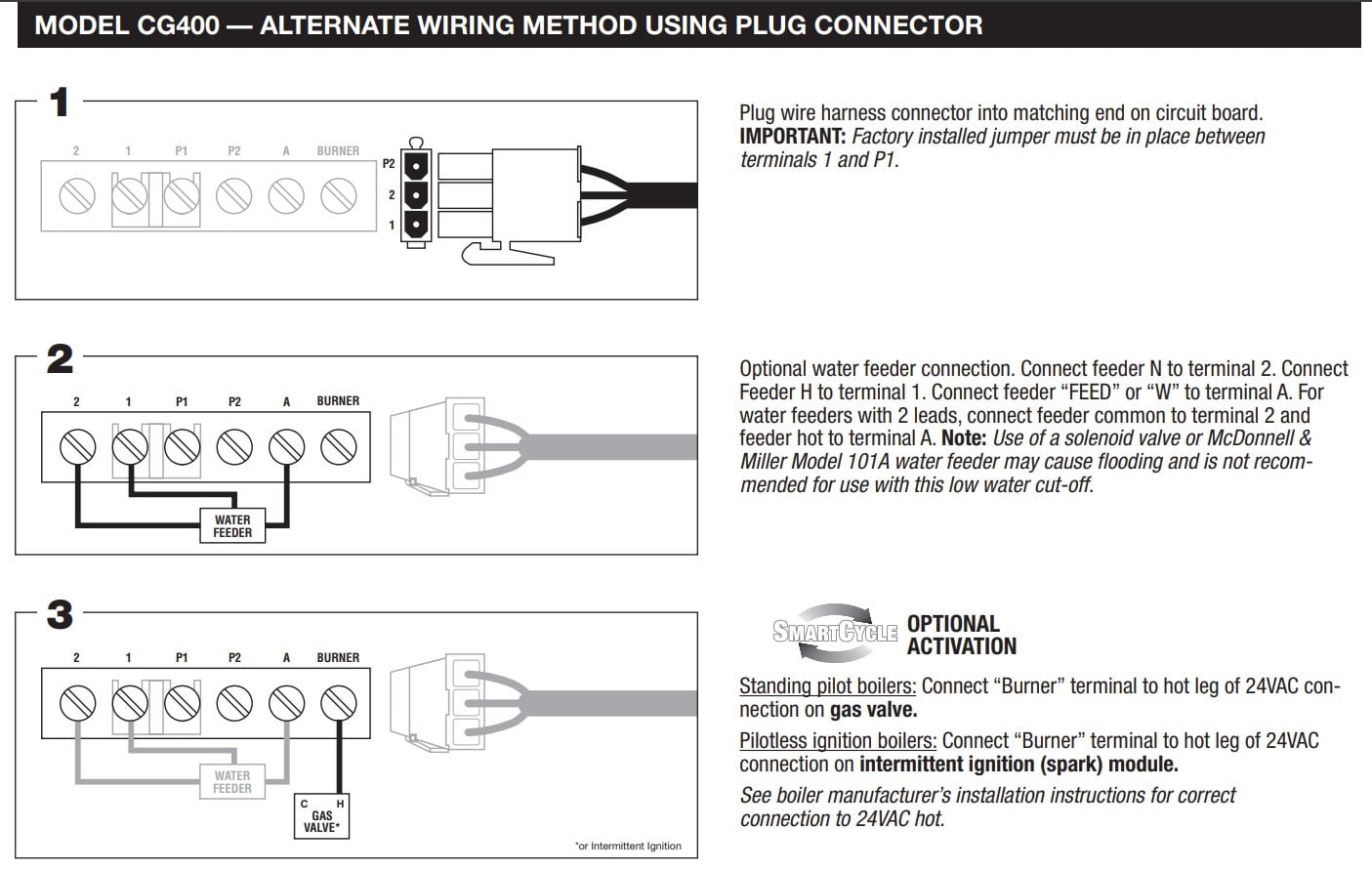
SmartCycle Activation instructions are in this above.
I have the CG400 2090, so mine will always wait to test 20m into a firing, and not before. If you have the
10901060, yours will do it only 10 m into the firing.It was ridiculous until I enabled this feature and made me wish I had gone with the SafGuard model. If you turn off the power to your boiler, on the very first firing afterwards, I believe it tests 10m into the burn. Just a bit of a quirk.
1 -
Its a cycle guard. Thats its job. It shuts down after 10 min I think. Then restarts. Its not going off on LOW WATER, its doing its check.
 1
1 -
Oh then don't worry about that. The intermittent test is good.
Isn't it interesting the way we humans make connections that aren't really there? It's nothing to do with the water being 3/4" above the probe.
NJ Steam Homeowner.
Free NJ and remote steam advice: https://heatinghelp.com/find-a-contractor/detail/new-jersey-steam-help/
See my sight glass boiler videos: https://bit.ly/3sZW1el0 -
It depends on the model
NJ Steam Homeowner.
Free NJ and remote steam advice: https://heatinghelp.com/find-a-contractor/detail/new-jersey-steam-help/
See my sight glass boiler videos: https://bit.ly/3sZW1el 1
1 -
My CG400 has no markings on it for any dash number, that I can find. It is also not wired for smart anything, as the terminal screw under the cover has no wire or connection. So this thing periodically shuts off whether there's a burn or not. It's only noticed during a burn. I don't have sufficient knowledge of how everything is wired on my boiler, so I'm going to leave it alone.
That being said, it's annoying to be calling for heat and it shuts it off for a minute or two. Dunno, it is doubling the number of actuations of the relays. Can't be great long term. Hope the benefit outweighs the annoyance.
0 -
Oh I didn't say it was easy 😀 The one I did was a small radiator 10 sections and 4 columns, that I wanted to carry outside and flush out anyways. While I was doing that I flushed the sediment out of the dry return and near radiator piping, and the wet return. For oil I suppose time will eventually take care of that, in normal operation, presuming you don't get any more carry over events.
0 -
You usually only see it do its thing on an initial burn after a set back. Once the system is hot it shouldnt really make a difference, except on extremely cold days when your rads are condensing as fast as your boiler is boiling.
0 -
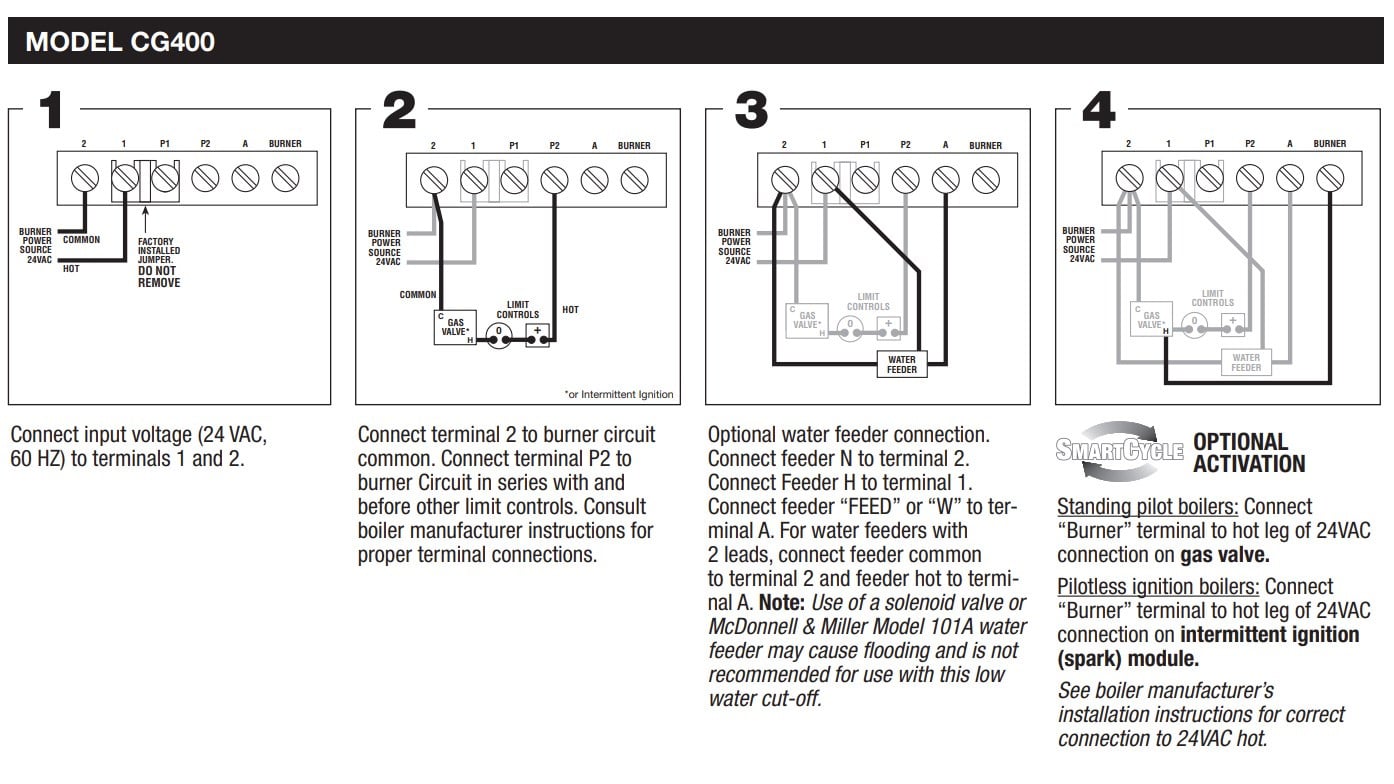
Nah you can do it. I'm no electrician and it was easy. This shows how your wiring is currently. You just add one wire, shown in diagram 4, from the "Burner" terminal in the CG400 to the hot (+24V) on your gas valve. I think there was a quick disconnect or something and I switched to one with a piggyback terminal for another quick disconnect. I can take a look inside my boiler if you need more help.
 0
0 -
I prefer it to be a random shutoff. If it shuts off in the first 5 minutes, I probably haven't started making steam yet so it's really just a 1 minute delay before steam starts.
If it resets always at time zero, then it is likely to shut off the system in the middle of making steam anyway so you don't really save any cycles on the gas valve. That feature is meant for oil burners I believe.
By the way, gas valves are rated for like 100K cycles which could be 10-20 years. They can of course last much longer than 100K cycles.
A typical steam system will shut down on pressure quite a bit too but no one is saying to put pressuretrols up to 8psi to minimize that…well some people might LOL
For those installers who are discarding brand new Cyclegards and putting in Safgards, I think you're wasting your time and your customers' money and you are making their boilers less safe. I have seen with my own eyes my old boiler would not activate the probe LWCO at low water condition, due to priming/splashing water.
Trust me, when you aren't standing next to the boiler you'll never notice a cyclegard. I think installers hate it because they are trying to test a new boiler install to go home and it shuts off the boiler enraging them.
NJ Steam Homeowner.
Free NJ and remote steam advice: https://heatinghelp.com/find-a-contractor/detail/new-jersey-steam-help/
See my sight glass boiler videos: https://bit.ly/3sZW1el0 -
I don't want something shutting my boiler off if I can avoid it, this is the entire reason I removed a burner.
The longer it runs to put the required heat into the building the better. I'll switch to a float LWCO before I'll use a CG.Single pipe 392sqft system with an EG-40 rated for 325sqft and it's silent and balanced at all times.
 1
1 -
SafGard doesn't do the intermittent level test, which is entirely for detecting a foaming condition and that is desired by lots of people. CycleGard has the base function of the SafGard built in of course. But what's the point of allowing your CycleGard to test for foaming, perhaps 2 or 3 minutes into a burn, when it can't possibly be foaming very much if at all before a rigorous boil? I think maybe that's why they call it Smart Cycle 😆. Now, if you have an overpowered boiler it is possible that your gas burner on time is often less than 20m when heat loss of the building is less, and maybe you should choose the 1060 version. That is often the case with me because I don't really want to have my burn interrupted by anything but the pressuretrol and I have to maintain my boiler water in non foaming condition anyways due to bad piping reasons. As it happens, when my burn is longer than 20m it is usually the case that my pressure is climbing and is around 1 psi or less, so it works to my advantage because my pressuretrol won't allow that low of a cut out. Then it usually is the case that my tstat becomes satisfied before the intermittent test of 90 sec is completed.
0 -
Of those diagrams, mine is #4, except I have the 3? pin connector also plugged in. I just don't really know my way around boilers, and it would take me a while to figure out. Not sure the effort that I'd put into it would really generate much noticeable positive change.
0 -
I've had a float type fail on a boiler, resulting in burnt out o-rings. That was the end of that boiler. So I think some smarts can be helpful. The bellows (on the boiler water side) would get crudded up, and it would fail to drop, as it should. This falsely let the boiler to keep on firing and the boiler went dry. I woke up to a smoky house, and a crispy boiler. So not a fan of this style. Most LWCO have some situations that defy them.
0 -
Hmm, save for the connector, it's just a single wire. That's not hard. But can that molex connector be left in place?
0 -
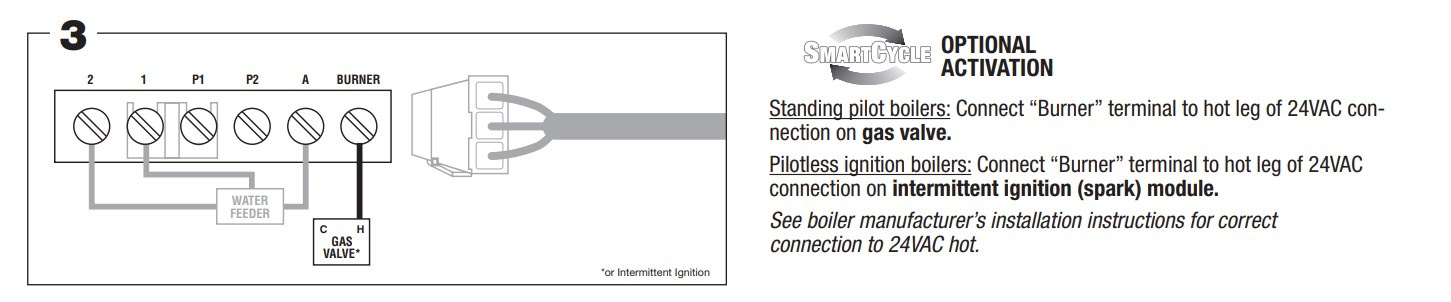
Your choice of course. I believe it hurts efficiency a bit to have my boiler come off the boil or preboil at a foolish time. One wire is all it takes! Anyone with a little electrical proficiency to identify the +24V connection on your gas valve (or ignition module) can do this for you. There should be a circuit diagram for your ignition module that would show the +24V or you can just use a meter when the boiler is about to fire up to find it if it is clearly marked or diagrammed. This is the one you would have with the 3 pin connector:
 0
0 -
Was that LWCO being dumped weekly with the burner running to ensure it would turn the burner off?I repaired a float type years ago for a friend that wasn't shutting off. He had been dumping it weekly, but never actually tested it, so the float was still hung up.
Single pipe 392sqft system with an EG-40 rated for 325sqft and it's silent and balanced at all times.
0 -
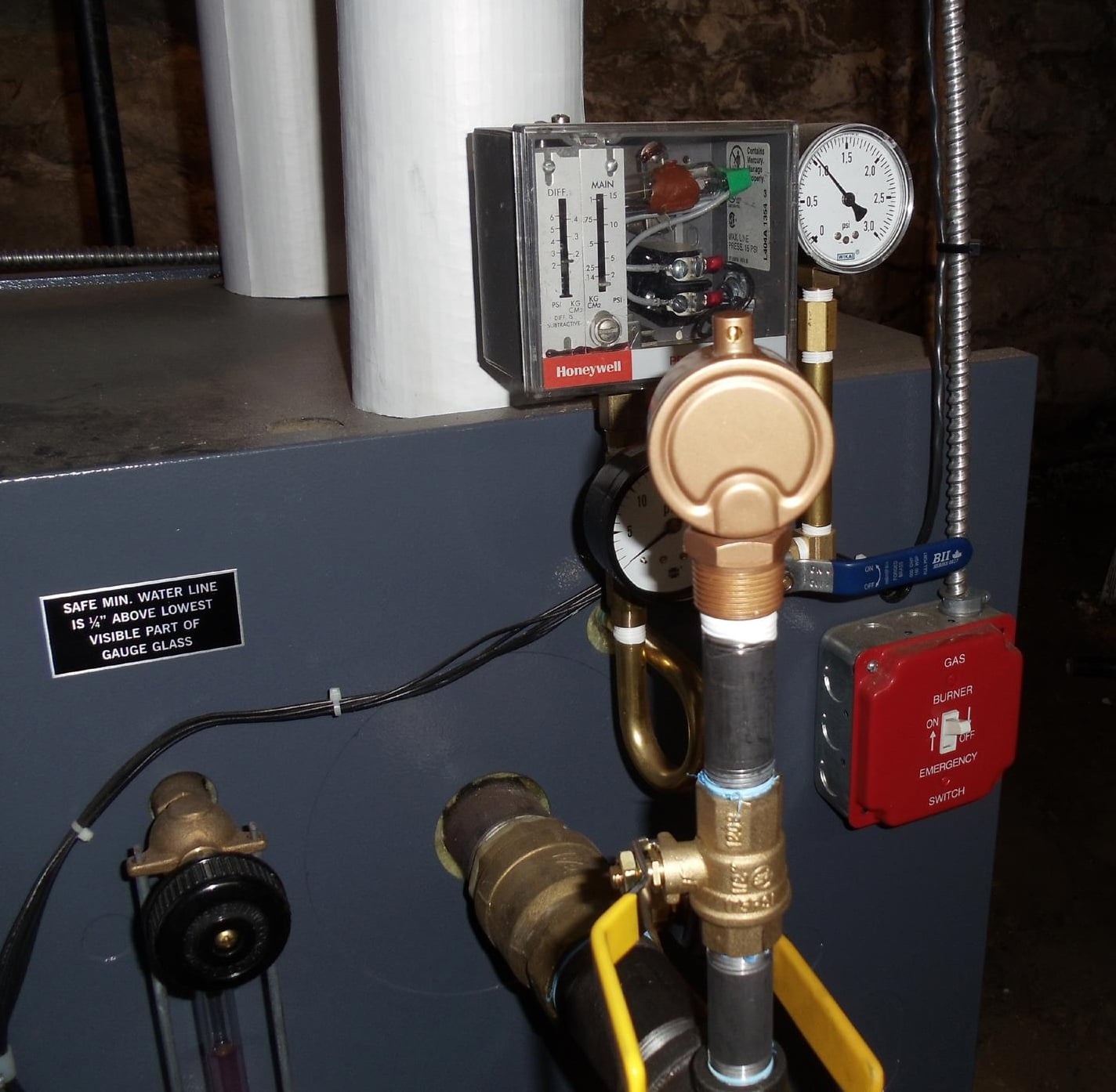
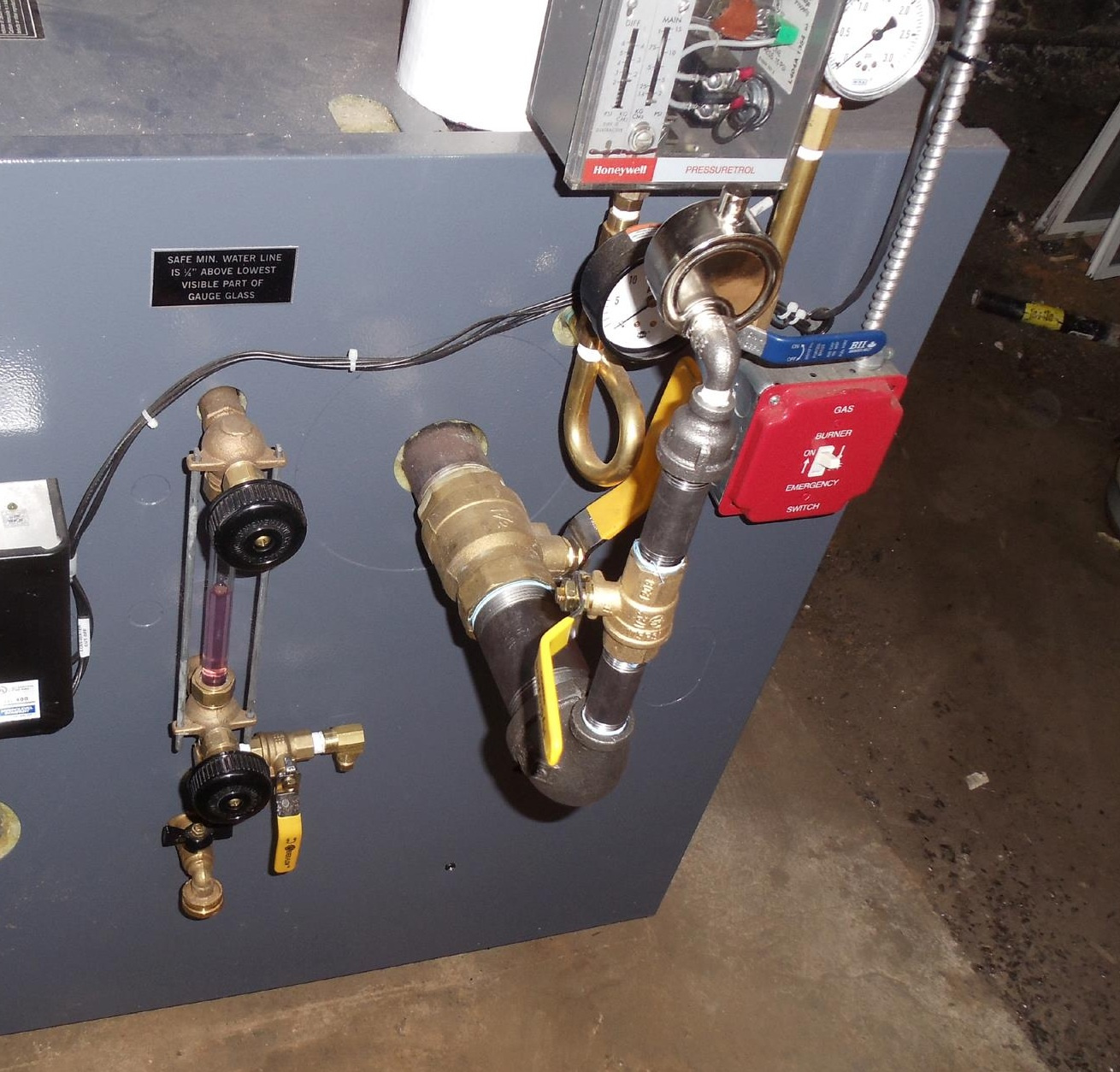
For what it's worth, this is how I was testing my vents years back.
I'd close my king valves and return valve and let the boiler build up to some reasonable pressure until the Pressuretrol tripped.
Single pipe 392sqft system with an EG-40 rated for 325sqft and it's silent and balanced at all times.
2 -
Yes you leave the molex in place that is supplying power to the unit and to your gas valve through the limit controls (1,2,and P2).
 0
0 -
That's even easier, just one wire. What if there's a wire on the H terminal on the gas valve now? Remove it? Leave it?
0 -
It was a long time ago, I don't remember how much testing there was, only when it began to stick a little, then I'd free it up. Don't recall going inside the boiler, maybe once, when I replaced it.
0 -
Do you have a standing pilot (pilot flame burning continuously) gas burner or do you have the intermittent ignition module type?
You wire it differently depending upon which you have.
0 -
I believe it's intermittent, I've never seen a pilot flame. Guess I need to pull the panel and take a picture!
0 -
Can't edit a post… Definitely a spark unit. Not obvious how to wire, at least to me. Spark unit powers the valve via a connector. Spark unit has 24 V input, that seems to come from a sensor, not sure where it is fed from. I think there's no spark allowed if the power vent isn't on. Beyond that, I don't know. I don't have a good picture, there's tiny stuff and large separations between units, hard to get it all in the picture.
0 -
I would have to look at the module and gas valve and probe with a DVM for a point that is +24VAC only when the burner is firing.
The circuit diagram and maybe the installation manual for your boiler might be helpful as well.
0 -
I haven't done any mods to the gas valve. At the moment, that's over my head.
Getting back to Gortons, I decided to return the one's I bought from SupplyHouse. They looked old, or possibly used in their interior. They looked older and more corroded than the 15 year old one's that were damaged. And a couple of the new ones didn't even seal on steam.
I'm replacing the Gorton's with MoM units. They are nearly 3x cheaper than a Gorton. I got a very good run out of my Gortons, but this new batch of 6 were not what I'd call worth the money. However, the main vent is great and looked brand new, and works flawlessly. The advantage with the MoM's over the Gortons is I can easily change the orifice. Had the Gortons looked nice, and actually worked, I might have modified them. However, on some of the Gortons, the orifice holes weren't even installed straight. Tough to drill one out if the hole is cockeyed, since we are talking about a 0.052" drill bit. And you only get one shot to do it right…
I have made some custom orifices for the MoM's that are between a #4 and a #5 which worked well on the stinky big box MoM ripoffs. So I think I can reuse the orifices. Or I can machine some more. (They are not hard to make with my lathe. Kind of fun really.) My custom orifices are about a #4.5, flowing about twice as much as a #4. I get a nice radiator fill without any drama. I should receive the MoM's tomorrow.
Things aren't perfect, but they are ok. Hopefully the real MoM's won't leak. I have a couple of leaker vents, which need to be replaced.
 2
2 -
Some systems do require a higher static (cold) water level, and drop to a stable lower level when they are running. That may be the case here, and if so there's no harm to running the cold water level higher (but always within the sight glass!) to avoid nuisance trips while running.
Br. Jamie, osb
Building superintendent/caretaker, 7200 sq. ft. historic house museum with dependencies in New England1 -
Where are the pictures? worth a thousnad words.
John Cockerill Exquisite Heat www.exqheat.com Precisions boiler control from indoor reset.0



Categories
- All Categories
- 87.5K THE MAIN WALL
- 3.3K A-C, Heat Pumps & Refrigeration
- 59 Biomass
- 429 Carbon Monoxide Awareness
- 124 Chimneys & Flues
- 2.2K Domestic Hot Water
- 5.9K Gas Heating
- 119 Geothermal
- 168 Indoor-Air Quality
- 3.8K Oil Heating
- 78 Pipe Deterioration
- 1K Plumbing
- 6.6K Radiant Heating
- 394 Solar
- 15.9K Strictly Steam
- 3.5K Thermostats and Controls
- 56 Water Quality
- 50 Industry Classes
- 50 Job Opportunities
- 18 Recall Announcements