Is pulling these radiator spuds going to be a nightmare?

My house has been very unevenly heated in this cold winter. The third floor has been 5 degrees hotter than first floor (where the thermostat lives) on the very cold days. Some of the radiator valves feel like the mechanism is loose and others are such that closing them that little bit more will shut off the steam supply completely.
The situation made me think about replacing the valves, possibly with TRVs over the summer, Not sure what hornets nest I might be hitting with this project but I know that changing the radiator spud looks challenging.
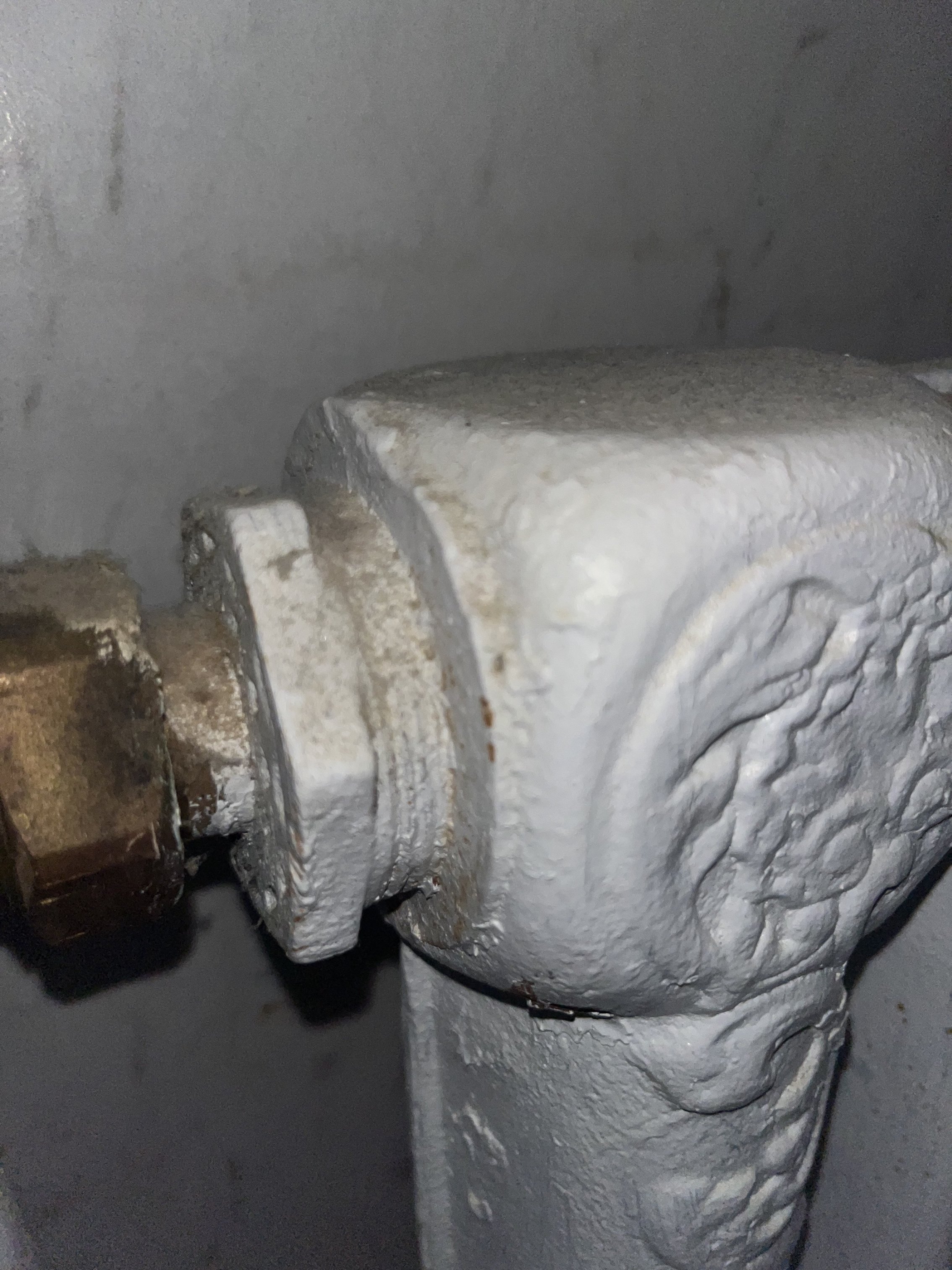
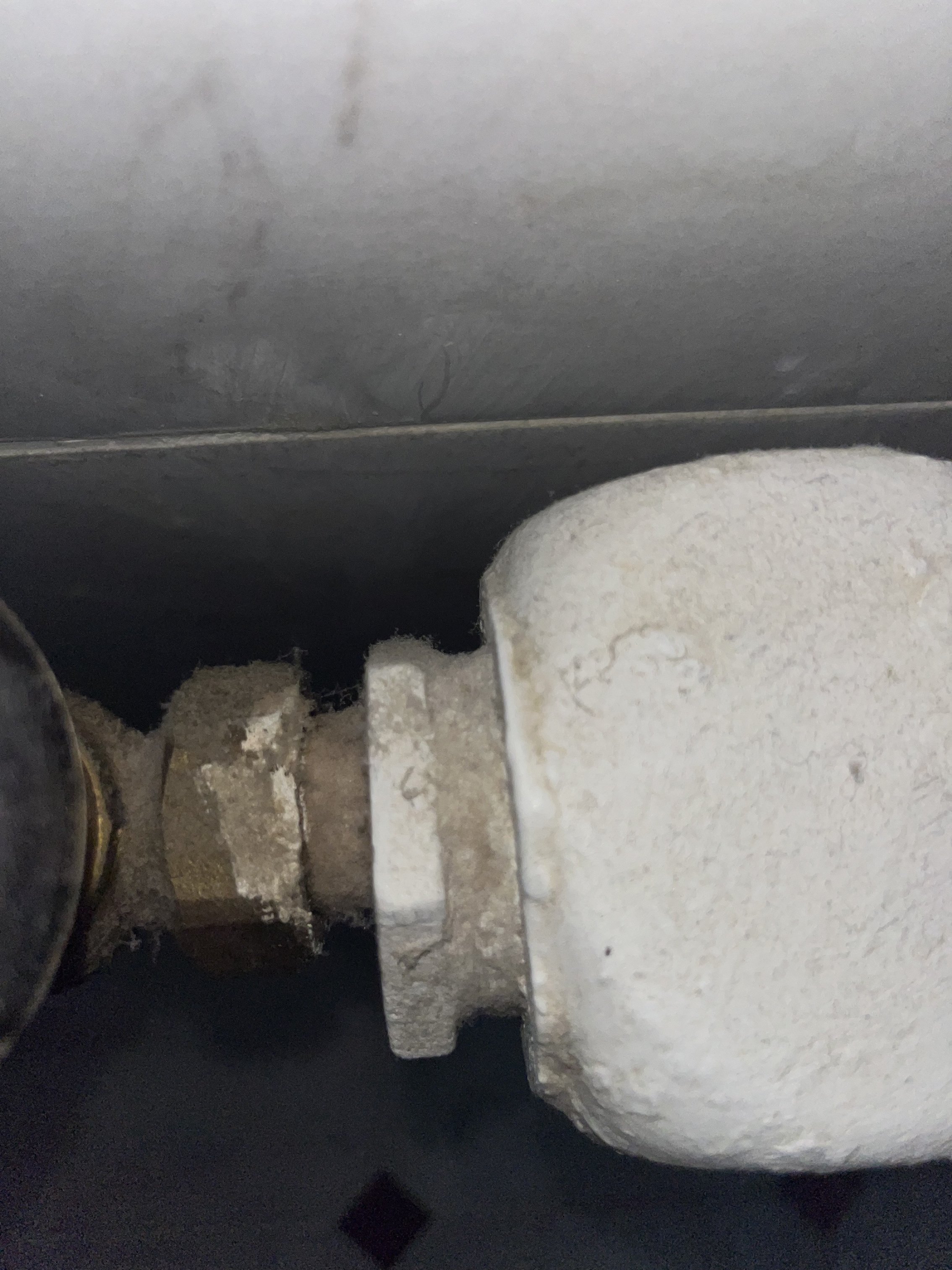
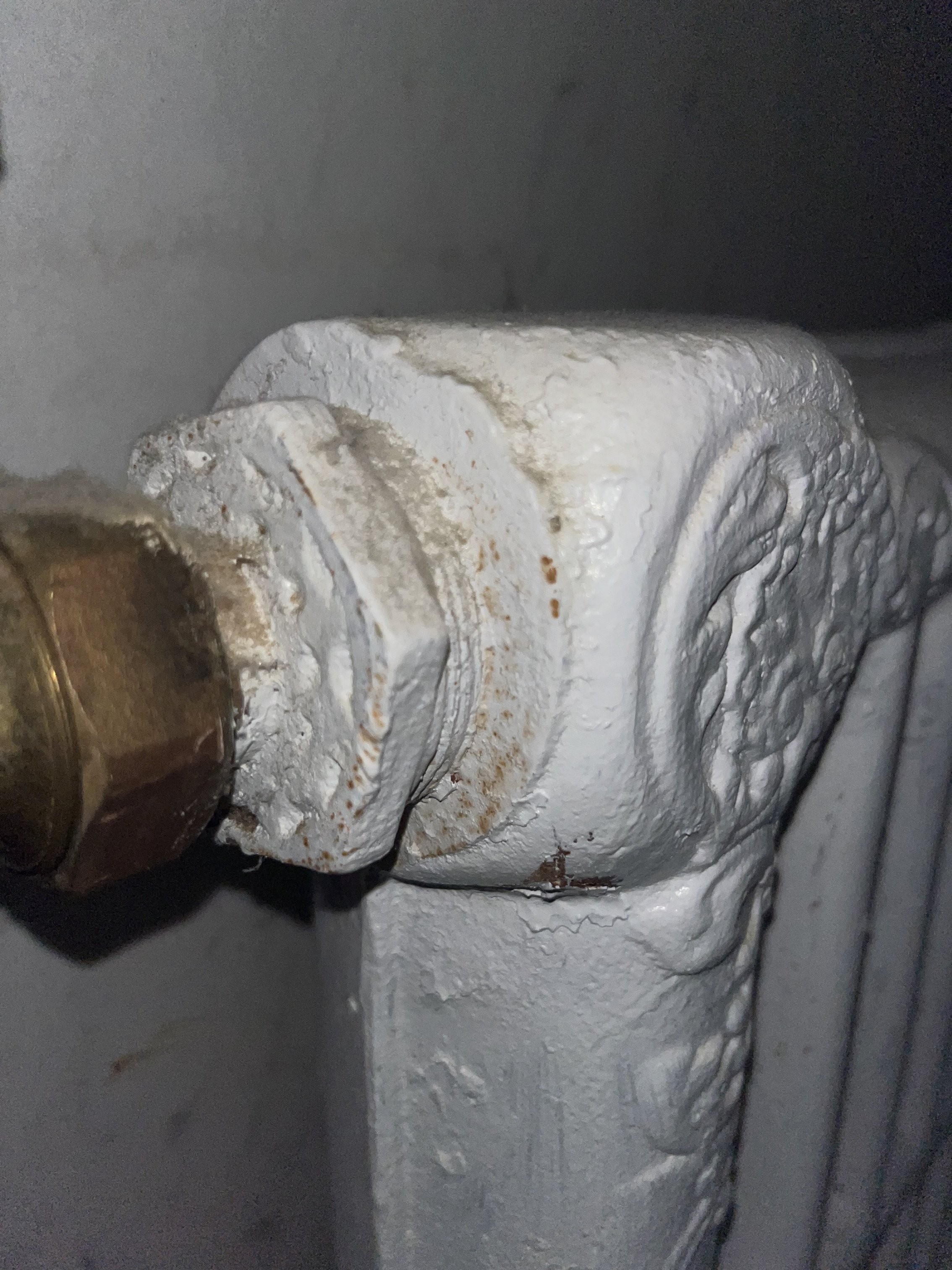
Heres a picture of one of my spuds. It looks like it is ‘cemented into’ the larger bushing which is threaded into the radiator. Notice the top view shows it is off-center so I don’t think it could be threaded in. Is this unusual?Thoughts?
Thanks.
FYI - system is low pressure two pipe (believed to be originally a Kriebel system based on my radiator elbows). Boiled is piped and sized correctly and does not build more than a few oz of pressure.
Comments
-
Taking the bushing, or the painted part out could be a nightmare as you suggest. If you try to unscrew from the brass only you might be able to get them out in one piece. If not, cutting them out from the brass, is lesser of a problem and can be done with the right tools.
Why change the entire valve? Have you looked into rebuilding them or changing the internal washer?
Have you ever done something like this before?
I like your idea about using TRV's
0 -
You also should look into possibly rebuilding the steam traps.
0 -
what do you mean by ‘unscrew from the brass’? It looks to me like the brass part of the spud is cemented, not screwed into the large white bushing. That is really the problem I am seeing and was the meat of the question.
My initial thought is to use TRV’s, which as far as I can tell means replacing the valve. Rebuilding the valve internals would probably be a lot easier and may help the situation but I am just assessing options right now.My system doesn’t have any steam traps, so don’t have to rebuild them! If I start to do work on the valves I will look to put some orifice plates in. Right now I am restricting the steam flow from going through the rads into the returns just using the valve mechanism.
0 -
Its screwed in just years and years of paint.
Find 2 BIG pipe wrenches. 36" or larger.
Will probably have to carefully cut and chisel out.
 1
1 -
The brass spud is turned(screwed) into the bushing which is screwed into the radiator. The bushing in an eccentric bushing. The whole is off center. Normally one of those would be used at the bottom of the radiator to allow draining of condensate. In you case it isn't needed. Normally the opening would be at the 6 o'clock position yours looks like it's at 7? either case it's not important here.
Miss Hall's School service mechanic, greenhouse manager, teacher, dog walker and designated driver
0 -
ahhhh…if its an eccentric bushing that explains it.
so just unthread the brass spud from the eccentric bushing and hope it comes out easy.Ive read that spud wrenches often break. Would a 3/4 internal pipe wrench be the right tool?
Otherwise its hacksaw and chisel, right?
0 -
It's probably not coming out with out a fight. They rarely do. A spud wrench won't or shouldn't break but the tabs in the spud will snap off. Try it though.
Miss Hall's School service mechanic, greenhouse manager, teacher, dog walker and designated driver
0 -
ok. Thanks. Anything I do isn’t until the summer. Thanks for pointing out it was an eccentric bushing. The off-center position was really throwing me off
0 -
You have — or had — one of the better vapour systems. Before you spend a lot of time and effort and money on "upgrading" it, why not try repairing it?
For a start. Do NOT run the boiler at more than 8 OUNCES of pressure (0.5 psig). Anything more than that and you will get serious balance problems if nothing else. That will require a vapourstat as the pressure control device.
Second that system was designed to control inlet flow with the valves. If you have the original valves, they can be made to work with patience and, in some cases, some repair — new packing or seats, that sort of thing.
Third, if the valves are so damaged as to be not repairable, or conventional valves have been added, you can add orifices without taking ether valve off the pipe or the spud out of the radiator. Separate the union and insert the orifice in, then close the union back up. Takes a few minutes..
Br. Jamie, osb
Building superintendent/caretaker, 7200 sq. ft. historic house museum with dependencies in New England 1
1 -
thanks @Jamie Hall . A lot of what you suggest had already been done - and it was often your suggestions that got me there. One of the first things I did to this system was put in a vaporstat. The valves are not original (originals are long gone) but I did use them as throttles to keep steam out of the returns. Orifice plates will be a next step - maybe thats worth doing before going the route and expense of trv’s. I didn’t realize those could go in the union btw valve and spud. That does make the install easy.
When I replaced the boiler 4 years ago we went 100k btu less than what we had. Properly sized now and never builds more than 3-4 oz pressure. Vaporstat is still installed but never triggers.
The system works well (though a bit noisy as ive got pipe pitch issues which I don’t think can be fixed without major repiping), but getting the heat distributed correctly through the house is the next challenge. 1
1 -
The orifice plate in the union trick is… a little tiny bit tricky. You have to figure out a plate outer diameter which will stay put — but which won't interfere with the seating of the union. A bit of fiddling though and you should be OK.
I hadn't realised that we'd been working on this one before. Sorry!
Br. Jamie, osb
Building superintendent/caretaker, 7200 sq. ft. historic house museum with dependencies in New England0 -
those valves are likely valves where half a turn goes from full on to full of so turning it a few degrees might make a big difference in steam flow. Putting an orifice plate in the union is another option to slow the steam flow without replacing the valve.
0 -
You owe me no apologies for all the help you’ve given over the years!! Every couple years I think of something new to tinker with on the system and start posting!
it might be time to start looking into the orifice plates. It sees a much simpler solution than replacing a dozen radiator valves with trvs and dealing with replacing spuds, especially if they fit in the valve union.
I know ive heard Tunstall named as a go-to supplier. They’ll do business with a homeowner?0 -
@trivetman Tunstall? They should do business with homeowners. Give them a call.
0 -
The only way to get those reducers out would be to cut them out and there is a small chance that the threads may be very damaged after they are removed. The brass spuds, however will come out if you can grab them to turn.
0 -
"Is pulling these radiator spuds going to be a nightmare?" More like the Twilight Zone. A little bit of heat helps the medicine go down, the medicine go down. Heating the boss expands the metal and then use your wrenches. Even heat all around is best.
 1
1 -
3/4" spud is usually not a big deal. Try a spud wrench and the tabs may break off or it may work. If that fails cut the nut off so you can get a pipe wrench on the spud. Before you try find a piece of steel rod, or threaded rod or or the handle of a cold chisel anything you can put snugly into the spud so it won't collapse.
90% of the time they come out
 4
4 -
what make of valves are they? I bought a bunch of valve rebuild kits from Tunstalls for a 54 unit apt building. New guts & stem and top. They also take their thermostatic operator also. Took me all of 7 min to dismantle, insert new guts and spring plus cap each. Good as new. Really slick. Tunstall are great people.
 3
3 -
“Legend” is printed on the valve body and size looks like 3/4. Thats all i can tell you
0 -
Most radiators old enough for a new valve are probably going to stubborn enough to have frozen spuds. Maybe you can get lucky with a spud wrench….but you'll more than likely have to do it the hard way.
Flip the radiator upside down so you can use a small hand saw and cut through the spud on the top-side of the radiator (now facing the floor). If this is a two-pipe radiator and this spud is on the top-side of the radiator you don't need to flip it upside down.
Make two cuts, about 0.5-1" apart being careful not to nick the threads of the radiator. Punch the small section you just cut out. The spud should now turn easily.
If you nick the threads it isn't the end of the world. There are a number of easy ways to fix that. Generally run an NPT tap through there to clean up the threads and remove any burrs. Use extra HD teflon tape and some pipe dope. If the nick is really bad you can use pipe-thread-wick or even some high temp RTV.
0



Categories
- All Categories
- 87.6K THE MAIN WALL
- 3.3K A-C, Heat Pumps & Refrigeration
- 59 Biomass
- 429 Carbon Monoxide Awareness
- 124 Chimneys & Flues
- 2.2K Domestic Hot Water
- 5.9K Gas Heating
- 119 Geothermal
- 168 Indoor-Air Quality
- 3.8K Oil Heating
- 78 Pipe Deterioration
- 1K Plumbing
- 6.6K Radiant Heating
- 394 Solar
- 16K Strictly Steam
- 3.5K Thermostats and Controls
- 56 Water Quality
- 51 Industry Classes
- 50 Job Opportunities
- 18 Recall Announcements