Too Hot Upstairs When Cold Outside

Hi there, we have a 1 pipe steam system and when it's especially cold weather e.g. -15C/5F, upstairs gets really hot. We are trying to mitigate using our central fan but it's not a good solution.
I currently have 5s on the rads downstairs and 6s upstairs although I think the overriding problem is that we don't have a vent on the main.
Hoping someone could confirm thatand let me know where the vent should go. Is it a DIY job?
Comments
-
That is a common problem in older multistory homes with single zone heat in very cold weather. It is caused by the stack effect; cold air enters low in the house, which acts like a chimney; warm air leaves through the upper stories, so the incoming cold air chills the ground floor—where the thermostat is usually located.
You could consider thermostatic radiator valves on the second floor, but they are fairly expensive. Anything else you do to mitigate the problem in extreme cold will have the opposite effect in milder conditions: the second floor will be too cold compared to the first.
When zoning became more common, this problem was solved by zoning the first and upper floors separately.
—
Bburd
 2
2 -
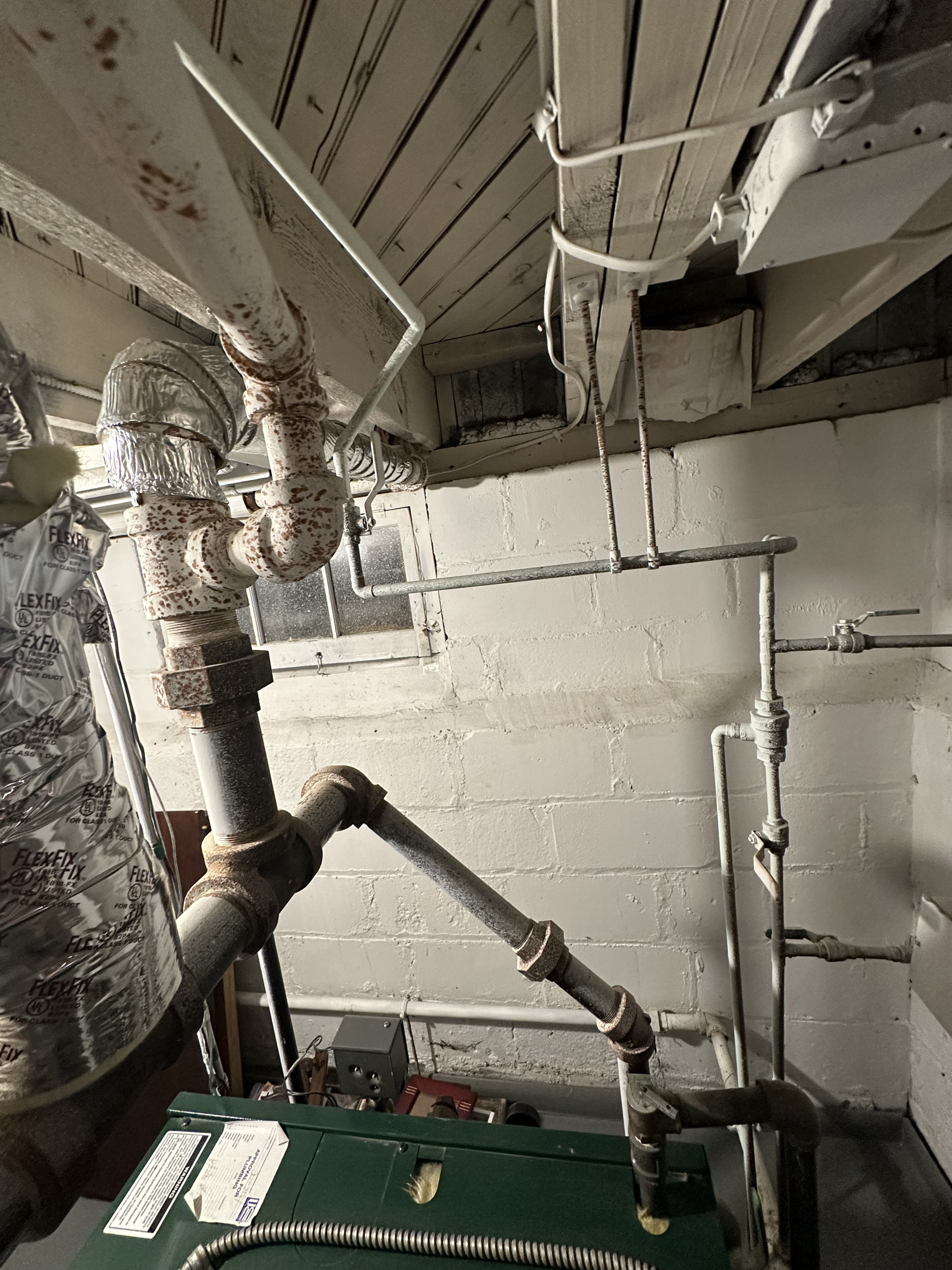
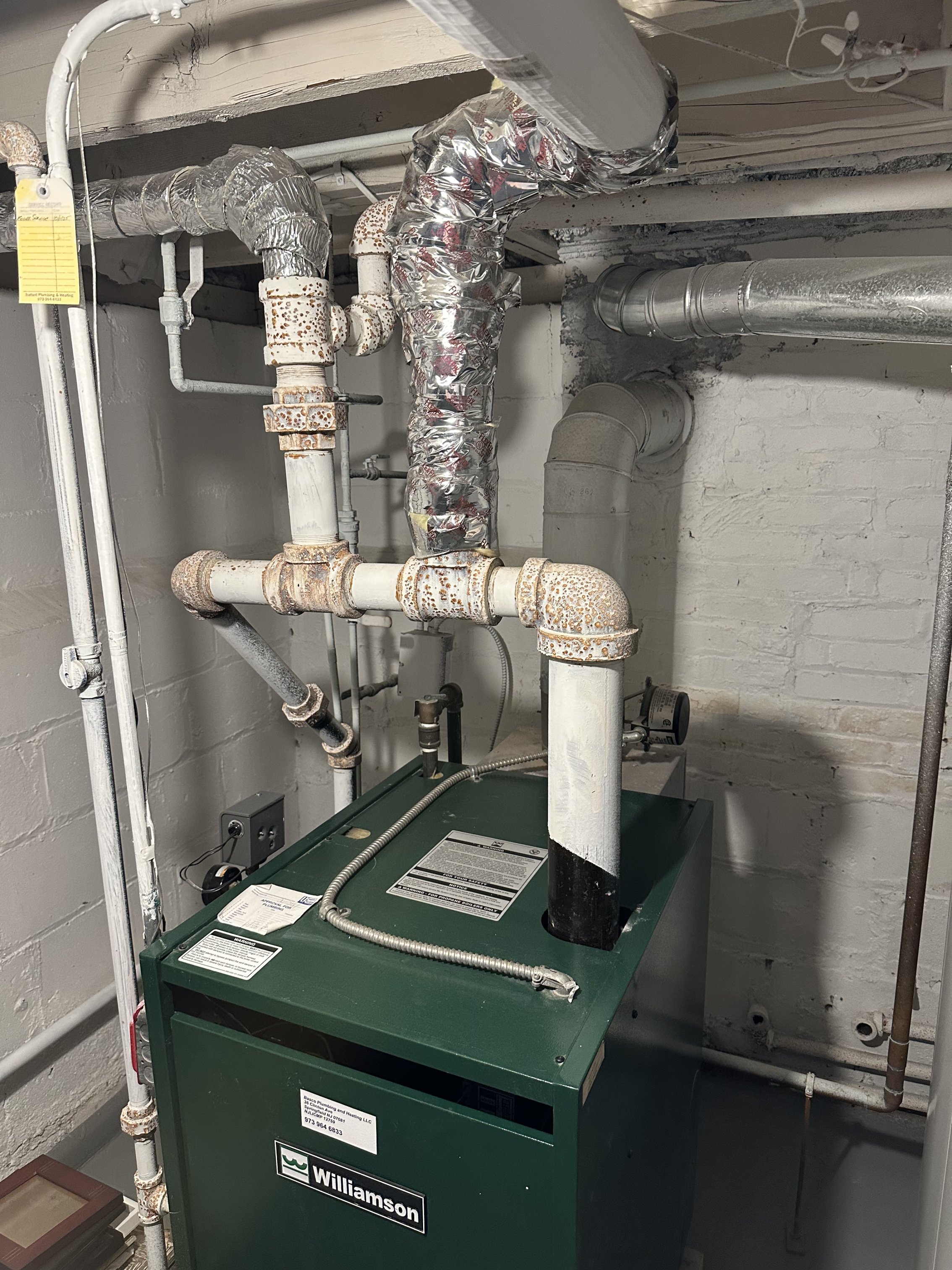
The main vents should go at or near the ends of the mains — it looks as though you have two of them.
Now. You have run into a quirk of one pipe steam systems which we don't normally run into — in fact which is rather rare. Remember what the radiator vents do — and do NOT do. They regulate how fast a radiator will fill with steam. They do NOT regulate how much steam will eventually fill a radiator when the boiler keeps running.
The reason we don't normally see this as a problem is that in almost all installations the boiler is big enough so that it will eventually cycle off on pressure, at which point the radiator fill process — remember the rate of fill is controlled by the vent — starts over from square one, unless the boiler shutdown is so short that the system never drops to atmospheric.
If you are running very long runs without a boiler shutdown, eventually all the radiators will fill, regardless of the venting rate, and rooms which were normal may become overheated.
Is there a solution to this? Yes, and in most cases with modern digital thermostats its actually built in: it's the cycles per hour setting. For steam we normally say set it to one — but you may find that you get much more even heat with two or even three cycles per hour. Give it a shot.
Br. Jamie, osb
Building superintendent/caretaker, 7200 sq. ft. historic house museum with dependencies in New England 2
2 -
- Here are some things you can try:
- Please post a picture of the "end" of your two mains (the part just where it turns vertical to the floor). This is likely where the main vent would be
- Put a smaller vent on the upstairs radiators to make them heat up slower. This may not give the desired result during less cold times however so…
- You can try putting an adjustable vent on those radiators and adjust them as desired. I have a small valve that closes the connection to my bedroom vent that my wife can close when she is too hot
- Or you can try a TRV device on the radiator in question so that it doesn't open the vent if it's already a certain temperature there
- Or my favorite solution is you can put a blanket over the radiator when it is too hot, covering part or all of the radiator as desired. By putting a blanket on part of it you make the radiator "smaller" and less able to deliver heat to the room.
NJ Steam Homeowner.
Free NJ and remote steam advice: https://heatinghelp.com/find-a-contractor/detail/new-jersey-steam-help/
See my sight glass boiler videos: https://bit.ly/3sZW1el 2
2 -
We're having the same problem in our old 2-story house, for the reason @bburd explained above. The first floor is over an unheated basement, so the floor is cold. Meanwhile the second floor is being heated by warm air rising from the first floor, and its ceiling is insulated (blown cellulose in the attic). So we have a differential of about 3 degrees between first and second floors, despite having a smart thermostat on the first floor with a remote sensor on the second floor. The thermostat averages the temperature on the first and second floor and uses the average to control the temperature. But it can't correct the differential, it can only control the average.
So as other people have said, you have to make your own adjustments to radiate less heat into the second floor.
0 -
Thanks for the first responses. Switching to variable valves upstairs seems a cheap and easy thing to try which I will do this weekend.
It getting main vents installed likely to help?
Another option - we have Ecobee thermostat and could get an extra sensor to put upstairs and use that as the thermostat overnight.
Interestingly even when it's this cold the boiler is typically running 15-17 mins per hr and 5-6hrs per day. (It's an old house but at some point a previous owner added insulation under the siding and double glazed windows).
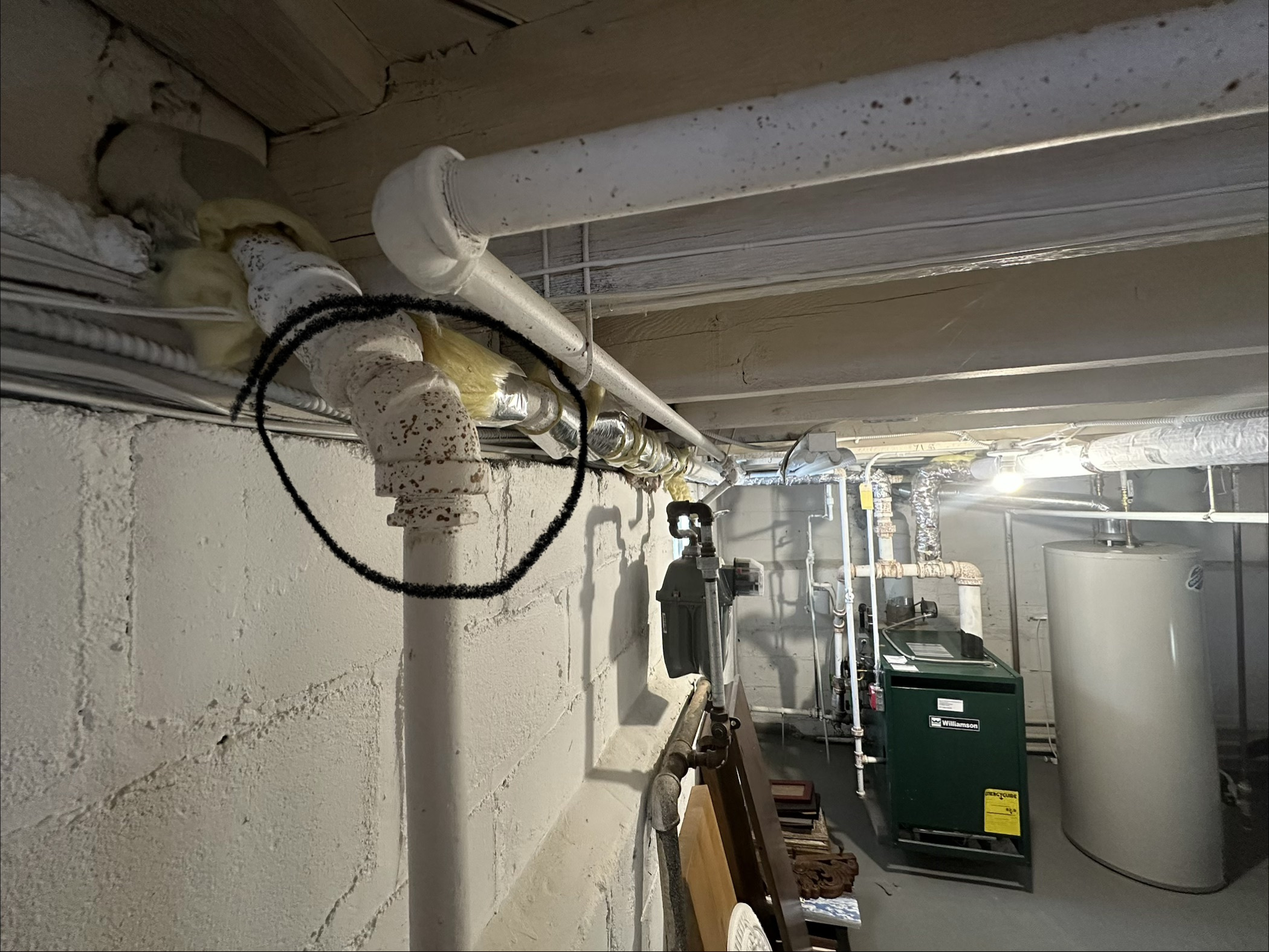
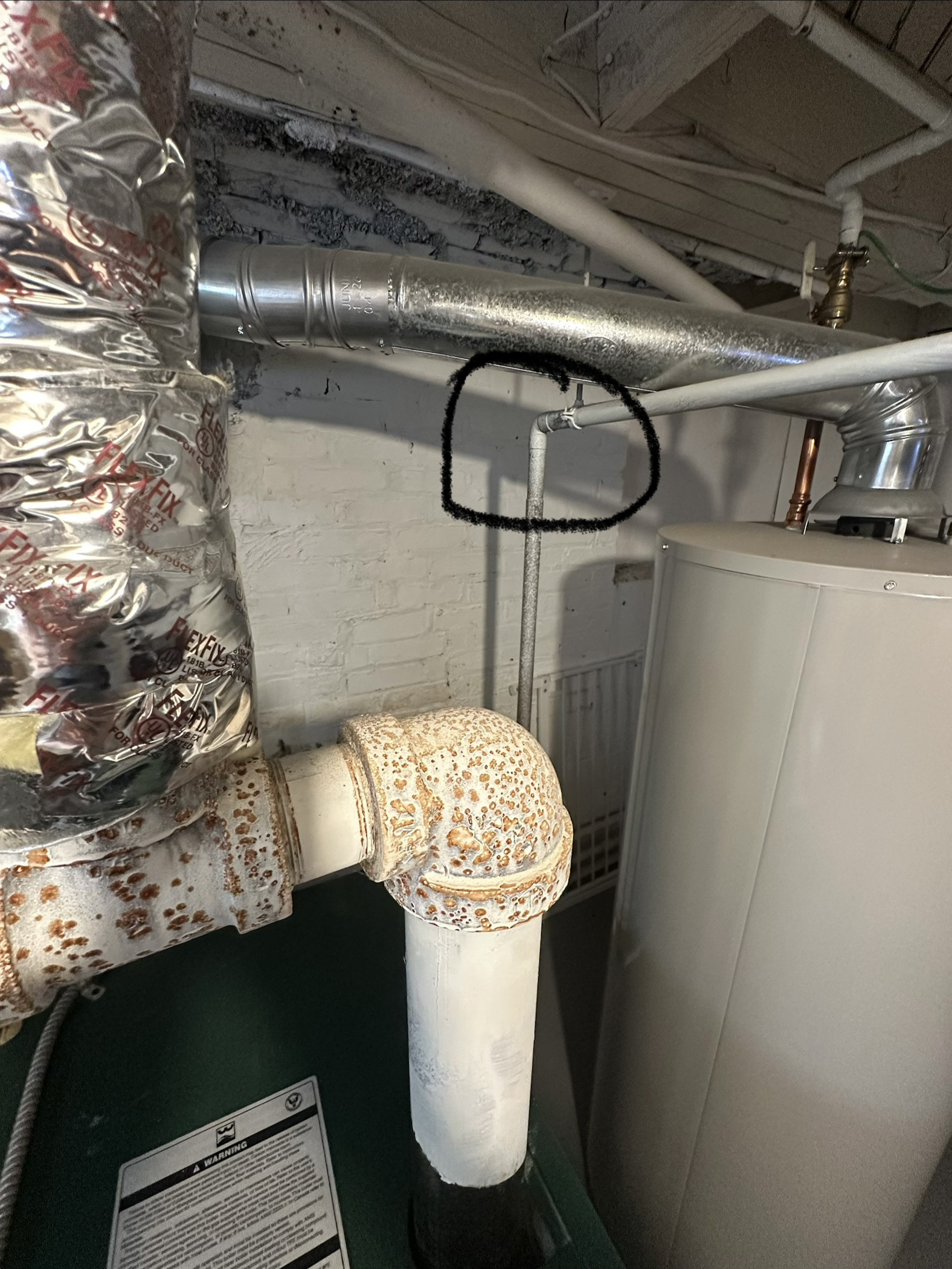
I am still struggling to understand where the "end" of the main is and where the main vent would go. It seems we don't have one so maybe I just need to call a pro to get one installed. Should they go in the two circled locations?
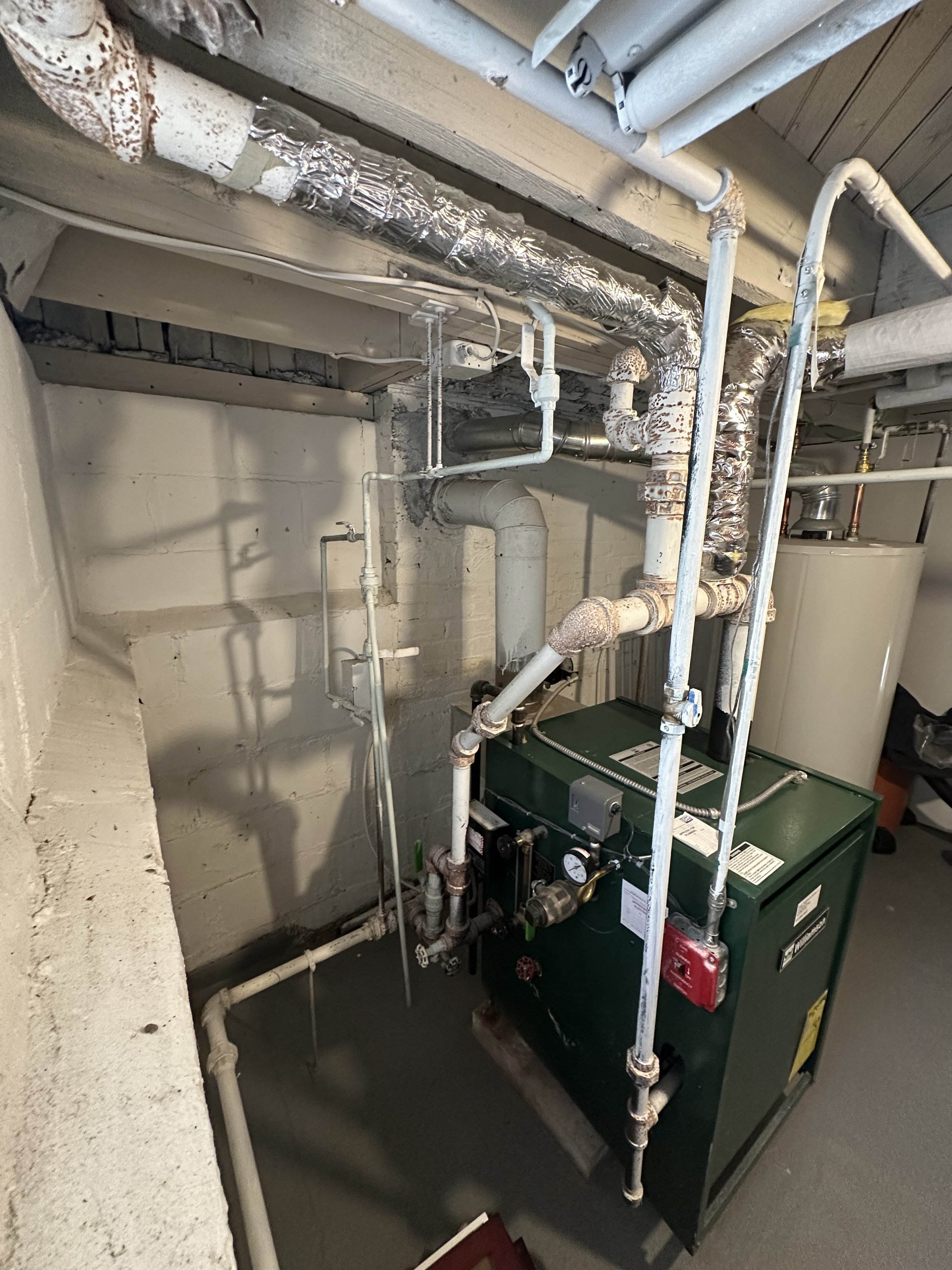
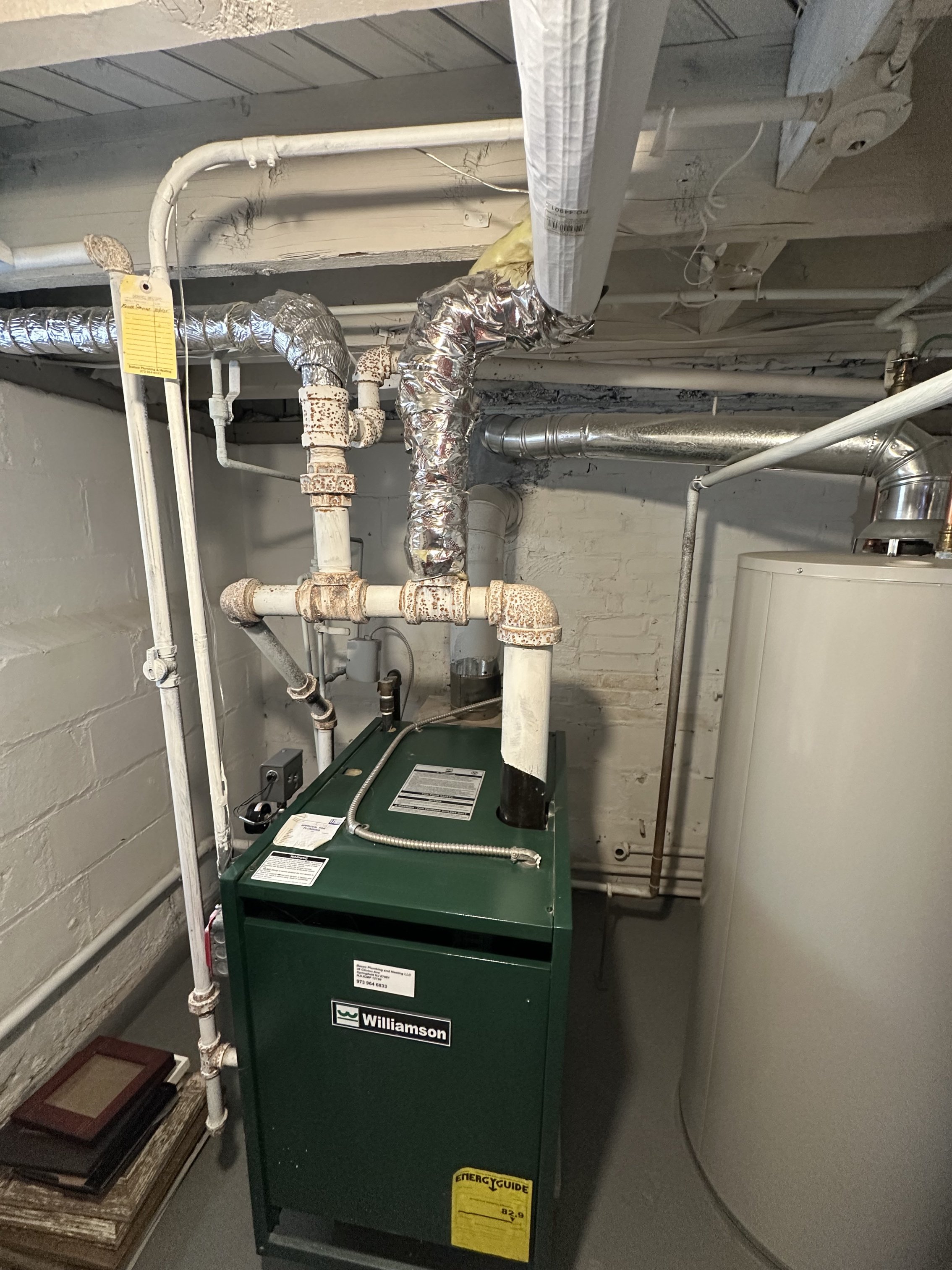 0
0 -
Change the vents
or
Cover the radiators
0 -
@PrevailPuzzle said "Another option - we have Ecobee thermostat and could get an extra sensor to put upstairs and use that as the thermostat overnight."
Yes. We have an ecobee installed in the first floor dining room downstairs, with a remote sensor on the second floor. You can choose which devices (thermostat, remote sensor, or both) "participate" in regulating the temperature during the different periods of the day (away, home, sleep). In our case, we keep both devices "participating" 24/7. But in your case, you could set it up with only the remote sensor "participating" during the sleep period. Then the ecobee will regulate based only on the remote sensor temp.
 2
2 -
The Ecobee also has choice of either a +/-1deg or +/-0.5deg swing. As @Jamie was saying you can go to the smaller swing if you are currently using the larger one and this will shorten cycles and make the % radiator fill balance more like it is during more temperate weather. These are assignable to individual programmed comfort settings in your daily program.
I have adjustable vents on virtually all of my radiators and this is one of the many reasons.
 1
1 -
I have changed the vents and put varis upstairs currently set to 3 (of 8) and put the Gorton 6's downstairs. So I will see how things go and adjust as needed.
I am surprised there wasn't a resounding call to get a main vent installed based on what I'd read.
0 -
One problem at a time, @PrevailPuzzle !
Br. Jamie, osb
Building superintendent/caretaker, 7200 sq. ft. historic house museum with dependencies in New England0 -
It partially worked. Most rooms upstairs are now a reasonable temp. One room, our bedroom, is now too cold, even with the vari set to max (8). It's on a long pipe from the boiler.
I tried a heat timer varivalve but it sounds like an aircraft taking off and caused some kind of instability, the pipes were banging, there was liquid glugging, it didn't sound good!
So I have put the ventrite 1 back on, set to 8 and live with the cold.0 -
Check the pitch of that long runout, and then make sure it is insulated. Some say 1/2" per foot, some say 1/4" per foot. Make sure there are no puddles in the main or the near radiator supply piping, and that the supply valve is fully open and not broken.
0 -
That is probably your main vent issue. The main is trying to mostly vent through that one radiator since the other radiators are now venting more slowly and it all rushing toward that radiator is enough velocity to pull some of the condensate with it in addition to not getting the air out at the same time as the other radiators.
you also seem to have 3 mains at the boiler but 2 of them are teed together just above the boiler, that can cause balance issues between those 2 mains.
1 -
Now its time for main venting. Follow the wet return. When it 90s to the ceiling, you found the end of your steam mains.
0 -
I used to have the same issue.
The problem is you can use slow vents to hold radiators back but the longer the system runs, the less of an effect that has. Eventually, all of the radiators are practically full and that balancing trick disappears. That's why your problem showed up when it was really cold out.Sizing vents to get steam to radiators on time equally is very important, but to try and hold oversized radiators back, no dice.
The only solution I found is to use TRVs in the rooms that tend to overheat. This isn't perfect, but compared to what you're dealing with now you'll think you died and went to heaven. They do throttle vents to an extent which helps some, but the primary thing they will do is stop the radiator from venting if the room is warm so the radiator stay cold during that heating cycle. That keeps the room far more comfortable, and sends that steam where you actually want it to go.
I haven't tried these yet, but they are much more affordable than other options and I believe work very well. They have several different finishes available also.
Please make sure your main venting is proper, but even with that, you're still going to find the 2nd floor overheating.
Single pipe 392sqft system with an EG-40 rated for 325sqft and it's silent and balanced at all times.
0





Categories
- All Categories
- 87.6K THE MAIN WALL
- 3.3K A-C, Heat Pumps & Refrigeration
- 59 Biomass
- 429 Carbon Monoxide Awareness
- 124 Chimneys & Flues
- 2.2K Domestic Hot Water
- 5.9K Gas Heating
- 119 Geothermal
- 168 Indoor-Air Quality
- 3.8K Oil Heating
- 78 Pipe Deterioration
- 1K Plumbing
- 6.6K Radiant Heating
- 394 Solar
- 16K Strictly Steam
- 3.5K Thermostats and Controls
- 56 Water Quality
- 51 Industry Classes
- 50 Job Opportunities
- 18 Recall Announcements