Something Just Doesn't sound right about this

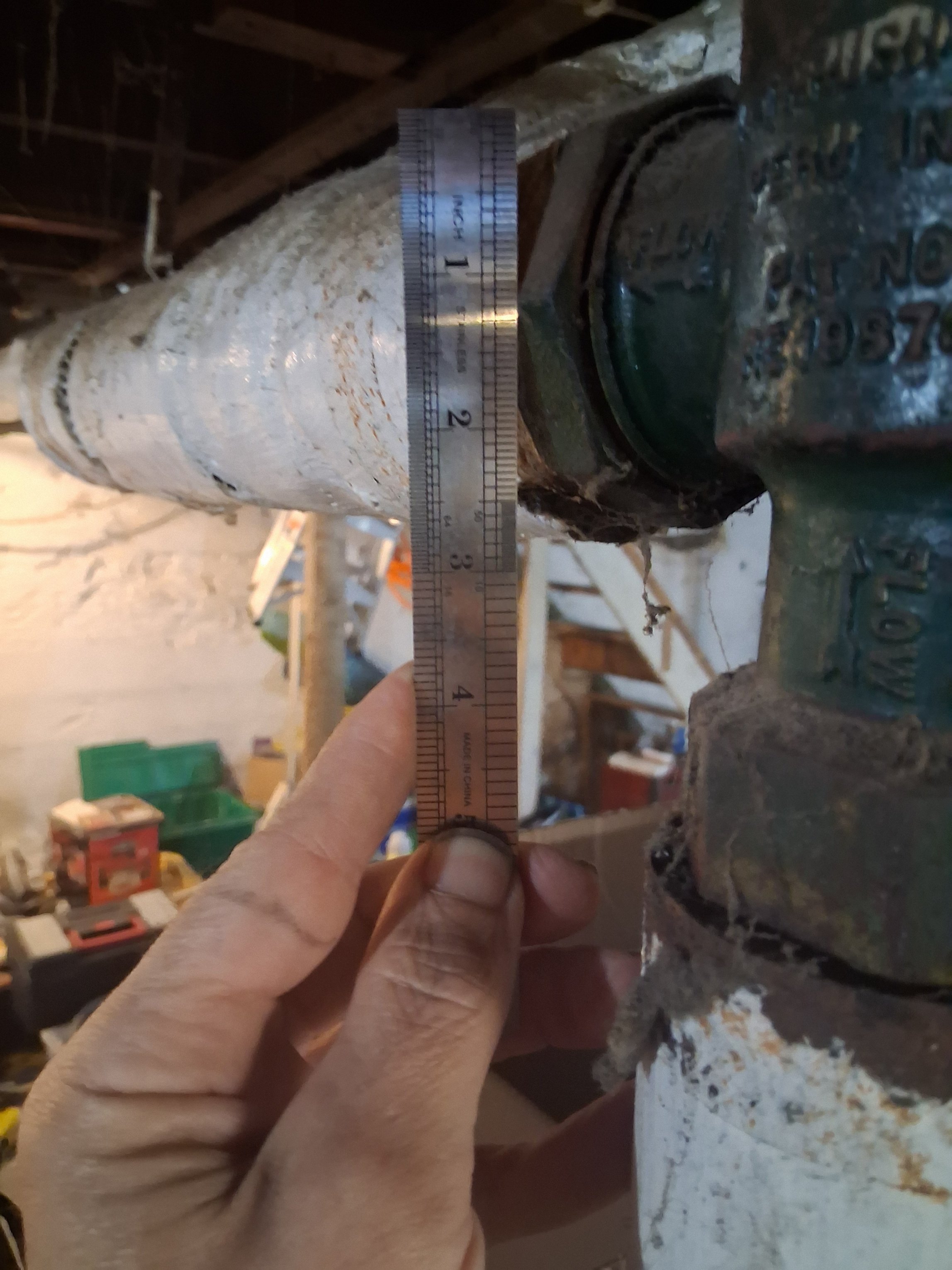
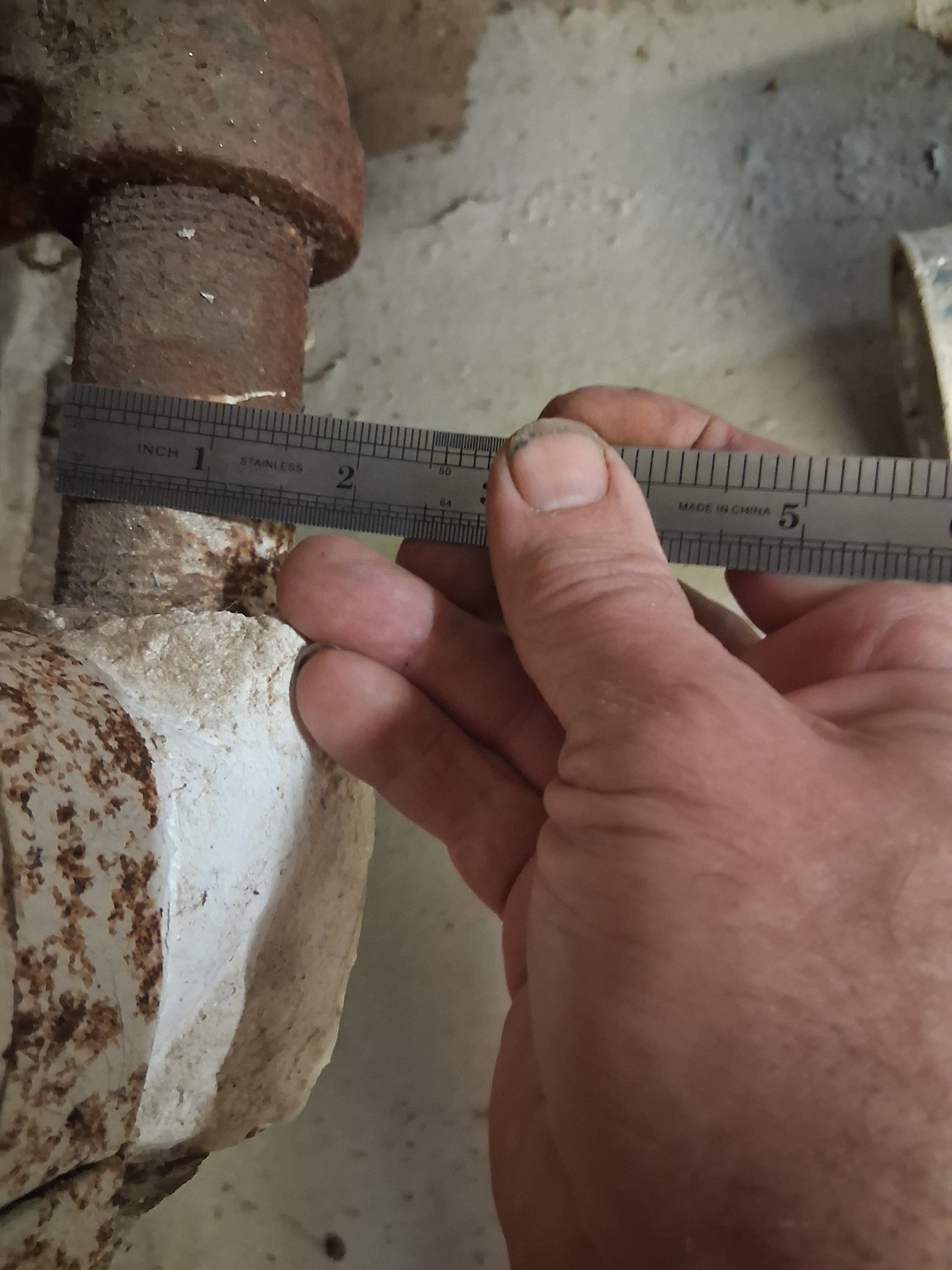
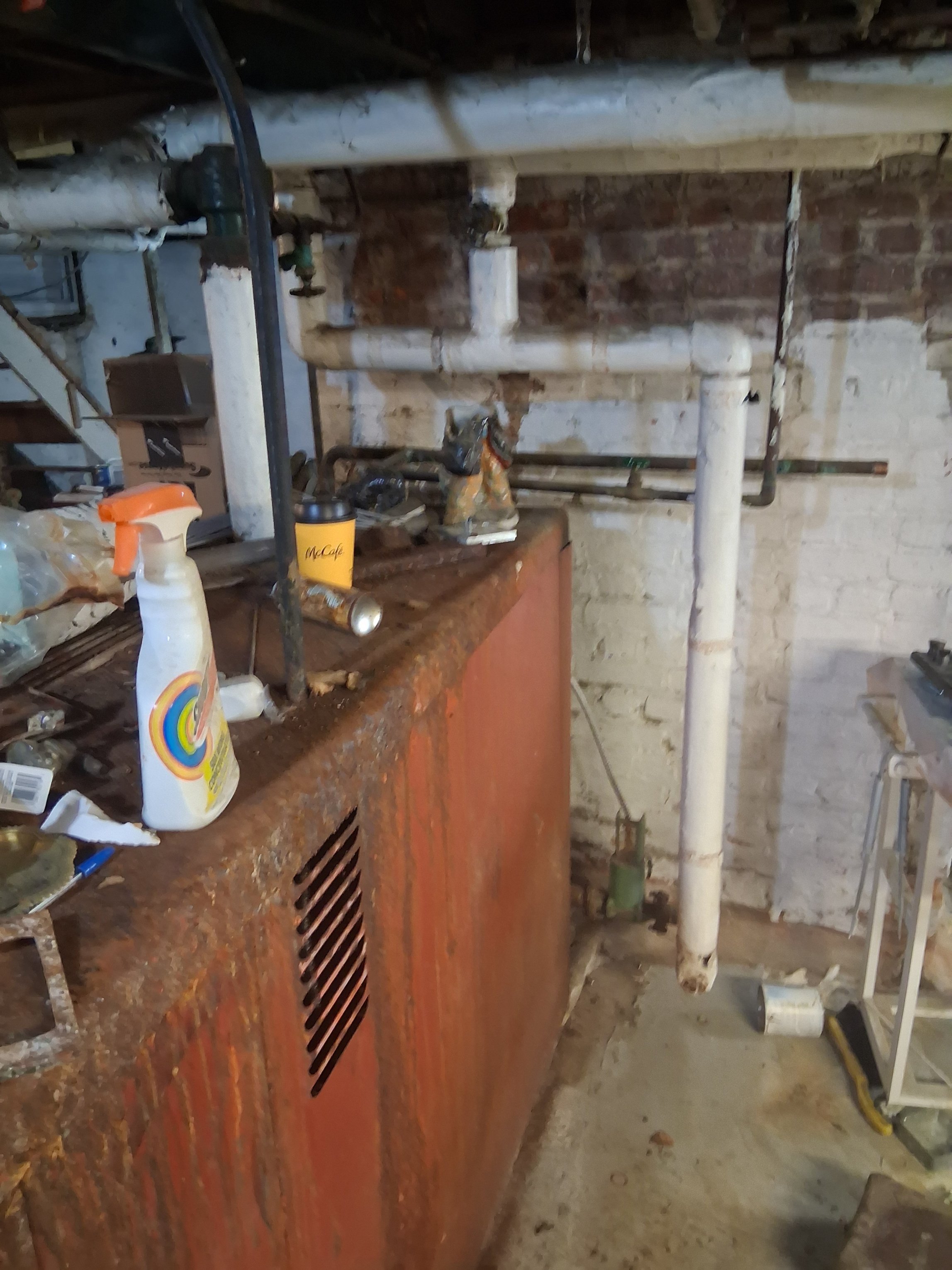
I am going to install a weil mclain aqua balance 120 heat only condensing burner. I got the manifold for the unit that has a 1 inch supply and return pipe. The plumbing on my 90 year old furnace has a return pipe of about 1 and a half inch. The supply pipe looks like it is as big as 3 inches. To jump from 1 to 3 inch on the supply doesn't sound right. Will this cause problems?
Comments
-
I wonder if the original system was gravity hot water and later converted to pumped?
No, the change in pipe size by itself won't cause any problems. But… if it was originally gravity and is now pumped, by may have some balancing problems.
Br. Jamie, osb
Building superintendent/caretaker, 7200 sq. ft. historic house museum with dependencies in New England
 4
4 -
I have seen many systems with 1.5" on up to 3" old iron piping going down to 1"or 1.25 at a new boiler and it heats well. As mentioned, some of these may have been gravity flow originally, but another thing is that some of these old buildings have much less heat loss than they did originally due to improvements.
2 -
your heat loss calculations will tell you. you need about 1 gpm for each 10,000 btu/hr of load. once you know the flow you can use this table to get the pipe size:
if that was a converted gravity system the pipes will be much larger than needed for pumped circulation
0 -
Good to see the McDonalds Coffee. That's the most important thing before starting work No coffee I go home.

 6
6 -
That boiler with about a 100,000 BTU output needs about 10 gpm at 20∆. Probably connected through a hydraulic sep into the system.
If the secondary side is also designed around 10 gpm, in a 3" pipe that is around .5 fps velocity.
So flow under 2 fps sometimes is tough to get air removed from. The slow fluid speed prevents the air from being carried along with the fluid.
The downfall of old gravity systems was the horizontal branches could not be too long as the gravity driven, slow flow, would not carry heat out. So B&G developed the "booster pump" concept to aid those type of challenges.
It will be interesting to hear what capacity circulator will assure all the rads heat.
Bob "hot rod" Rohr
trainer for Caleffi NA
Living the hydronic dream1 -
@hot_rod said "It will be interesting to hear what capacity circulator will assure all the rads heat."
Try this:
All Steamed Up, Inc.
Towson, MD, USA
Steam, Vapor & Hot-Water Heating Specialists
Oil & Gas Burner Service
Consulting0 -
LOL. If someone should ask me how long do I think it will take to get a job done ill say about three coffees and a pack of smokes.
1 -
That looks like an old gravity flow system that’s been/being converted to forced flow. We do a lot of these and the basic rule of thumb that Dan taught us has always worked: divide the size of the gravity piping by half, then go one size smaller for your new, near boiler piping.
One thing that’s very important and that you must address: the old piping and radiators can contain a lot of sludge and rust. You must get it out because it can destroy modern circulators and clog water tube heat exchangers and other components.
We start by flushing the system with water until it returns clear. Expect to use a lot, maybe hundreds of gallons.
Install a Dirt Mag or Sep4 LLH. Add a cleaner like Fernox and check the system after a couple of weeks of running. Repeat flushing as needed.
A standing cast iron radiator is the best natural air separation device. Caleffi has a small air vent that will replace the coin vent on each radiator and can manually and automatically vent the radiator which is where the air in the system will naturally go to and remain until vented.
Bob Boan
You can choose to do what you want, but you cannot choose the consequences.
 5
5 -
I do have a gallon of Sentinel X400 System Restorer and a dirt mag on order. Any opinions on the Sentinel X400 System Restorer would be appreciated. The one gallon set me back 150 bucks and I might need to use two gallons.
0 -
So the bottom line is the only problem I am more than likely to run into is having a circulator pump that has to low of GPM flow?
0 -
Can you give me more detail on what you mean by balancing problems
0 -
If you add a circulator to an old gravity system, and the circ is too big, the water can short-circuit through the rads and they won't heat well. Check this out:
and here's an example of one that was over-pumped:
All Steamed Up, Inc.
Towson, MD, USA
Steam, Vapor & Hot-Water Heating Specialists
Oil & Gas Burner Service
Consulting2 -
The hydraulics driving a gravity system are completely different. The usual problem is that the pumped system tends to preferentially flow through the lower radiators, and the upper floors get little or no heat, whereas in a gravity system the hot water preferentially migrated to the upper floors.
Some balancing valves to persuade the water to go where wanted solve the problem.
Br. Jamie, osb
Building superintendent/caretaker, 7200 sq. ft. historic house museum with dependencies in New England1 -
And FYI… from here, the first picture above, that pipe looks like it's 2" inside diameter (ID), and the second pipe appears to be 1-1/2" (ID)
1 -
Thanks. I just hit the basement and took a closer look. It was the huge nuts on the union that is on both ends of the flow control valve that threw me off. First chance I get I am going to remove some of the insulation so I can get a more accurate measurement. And the circulator pump that is on there now is a taco 007-f3. The specs on it are 23 GPM and everything is keeping me toasty warm. Its possible that things might even get a little better once I dump a couple of gallons of Sentinel X400 System Restorer in the present setup. The only reason I am dealing with this whole situation is because the last couple of winters I got gas bills that were 500+ bucks for at least 4 months during the heating season and not much lower than that for the rest of the winter. That's not going to jive with my retirement plans and is somewhat kicking my azz right now. While we are on the subject of plumbing PB blaster has always worked great for me on automotive situations but i did notice when you spray it on a hot pipe int tends to evaporate kind of fast. I do plan on spraying everything I am going to have to touch at least once a day for about a week or two, but I never had to deal with 98 year old iron pipes. am I heading for a major nightmare when I try to patch into the old pipes?
0 -
big wrenches will usually unscrew it if you put the wrench on such that it doesn't crush the pipe. if you can't unscrew it, you can cut or shatter the fitting depending on type or cut the nipple out of a fitting and build back from there.
that insulation looks like it is aircell asbestos.
1 -
Along with this: the old radiators that were upstairs often had field fabricated orifice plates inside the radiator valves to force flow to downstairs radiators. These plates should have been moved to the downstairs radiators when the system was converted to forced flow.
Bob Boan
You can choose to do what you want, but you cannot choose the consequences. 1
1 -
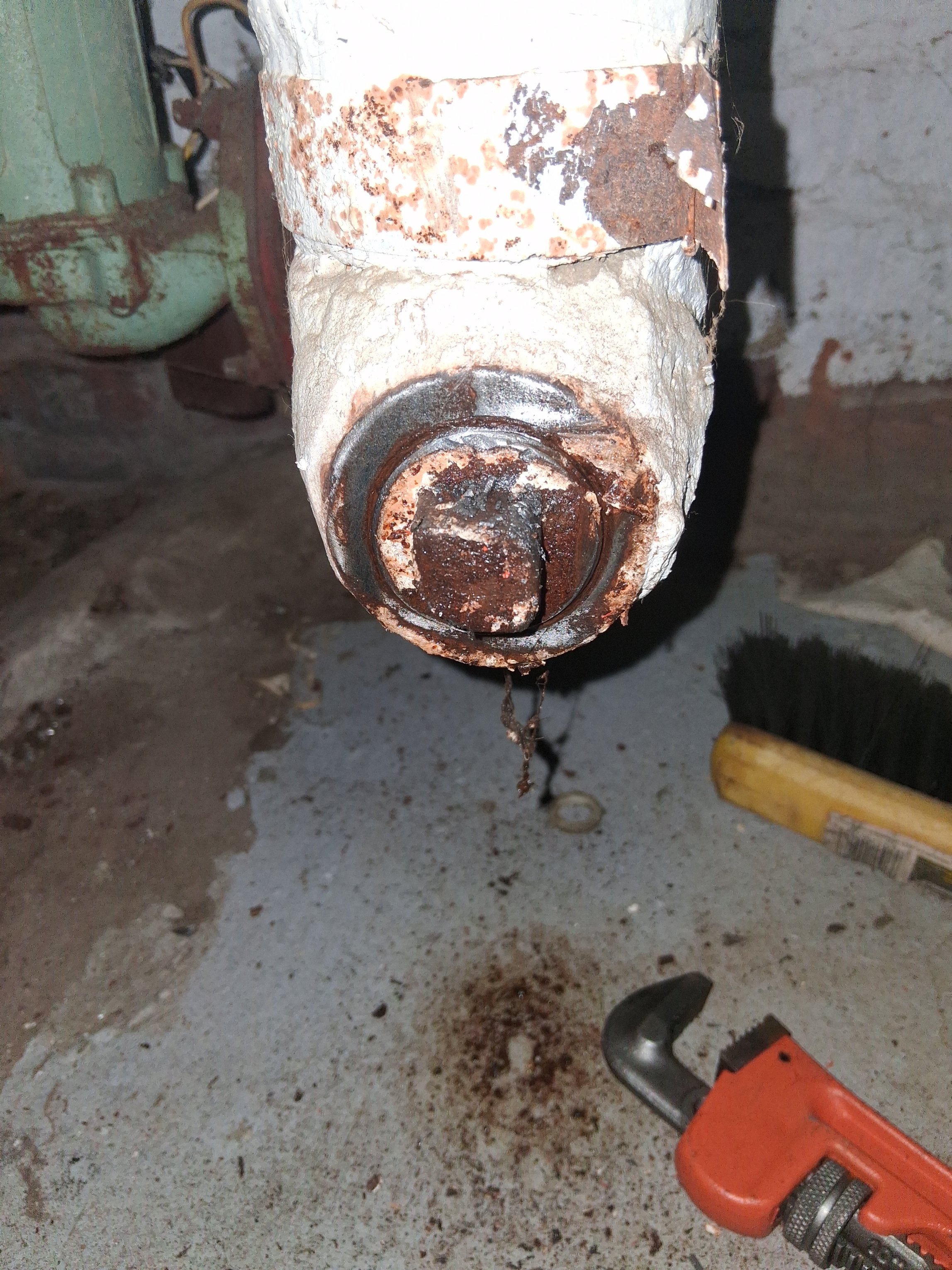
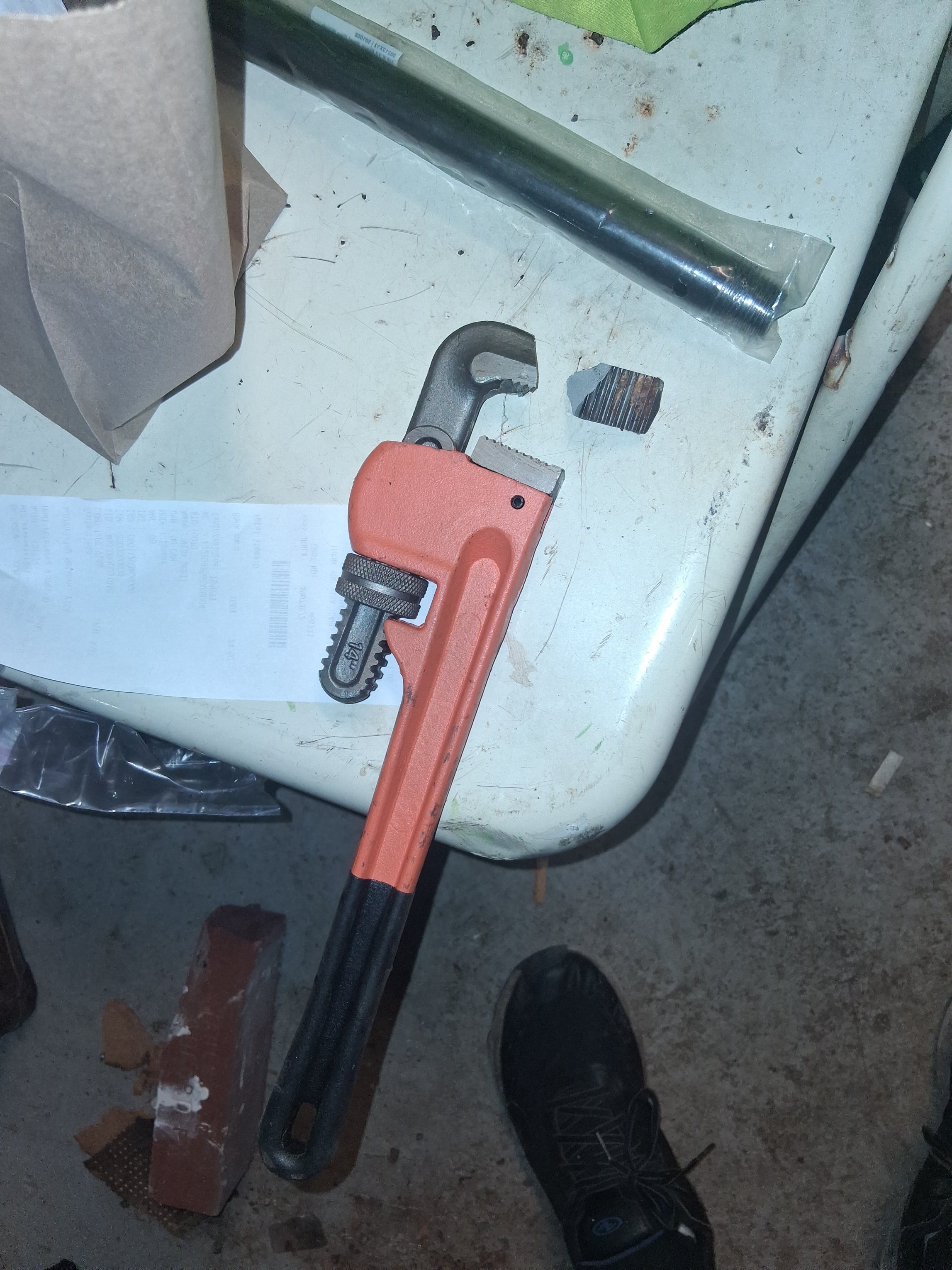
So much for the big wrench theory! LOL I soaked that plug with PB blaster for a while and broke two wrenches and a finger trying to get that sucker out. Now that was just a test to see how much of a nightmare, I am looking at when the time comes to go from the new pipes to the old. Plan B is a saws all and a 2 inch and 1 and a half inch NPT cutting die and a couple of unions to patch in the old to the new. Unfortunately, I came across some information that suggested attempting to cut threads on what "MIGHT" be cast iron pipe is a bad idea. Plan C is to cut the pipe where i want the old to meet the new and use a dresser coupling. Now I am not an experienced plumber when it comes to dealing with 100-year-old heating systems, but I am going to guess that using dressers couplings is not a standard practice when it comes to dealing with these situations so any opinions on this subject would be greatly appreciated. Thank you.
 0
0 -
One word: Ridgid.
All Steamed Up, Inc.
Towson, MD, USA
Steam, Vapor & Hot-Water Heating Specialists
Oil & Gas Burner Service
Consulting
 4
4 -
i also don't think that is where the most stress is if the bite is such that the back of the jaw is bearing on the pipe. usually you bend or break the handle before the jaw
0 -
" So much for the big wrench theory! "
I don't see any big wrenches !!!
National - U.S. Gas Boiler 45+ Years Old
Steam 300 SQ. FT. - EDR 347
One Pipe System1 -
I wouldn't even try a wrench on that, it's been there too long and looks happy where it is. I would cut off the square drill a hole large enough to fit a sawzall blade and cut out a pie piece. Break the rest. Don't cut too deep.
Miss Hall's School service mechanic, greenhouse manager, teacher, dog walker and designated driver
2 -
Drill and cut and it will come out. But it would be easier to remove the insulation and cut the 90 off.
1 -
has that insulation been tested for asbestos?
2 -
I’m not sure why you’re trying to remove that plug, but I would get back to where you can remove the entire fitting if necessary.
And I’ve seen the handle of a 5’ Rigid pipe wrench bend from four men with a cheater pipe on it, but I’ve never seen a Rigid jaw break. You get what you pay for and that’s why quality contractors buy quality tools, not Chinese junk.
Bob Boan
You can choose to do what you want, but you cannot choose the consequences.1 -
What's the purpose of removing the plug? Is the AquaBalance in yet?
1 -
Hi, One more possible approach is to remove the insulation, then evenly heat the fitting around the plug. You might get it to expand enough so the plug will finally come loose… with the right wrench of course 😎
Yours, Larry
1 -
heat doesn't just work because things expand, it also drives the water out of the iron oxide crystal which is what holds the crustal structure together. it turns the rust in to a soft powder.
being slathered in what appears to be asbestos furnace cement complicates this
 1
1 -
@heathead it is the same process as how you make portland cement or plaster of paris. portland cement or plaster of paris are powders until you add water. they become a solid that is a hydrate with the addition of water (and over time the water is replaced with carbon dioxide from the air). if you heat the cement or plaster it will drive the hydrate or carbonate off and turn back in to a powder.
0 -
looks like useful info for those who have to deal with these situations on a regular basis.
0 -
Yes, it is. This is a project I have been planning for a long time. I came across a sale that I jumped on to get the furnace. Right now, I am debating as to whether or not to do this now. As i have mentioned before I have plenty of experience with plumbing but not with what is more than likely cast-iron pipe. the weather around here is freezing at times. Obviously a not heat situation because of a plumbing problem would be horror. I just might have to bite the bullet and deal with the insane heating bills that just might have me eating at the local soupe kitchen this winter and do this next year. Thanks everybody for the great advice. Merry Christmas and have a happy new year.
Peace
0




Categories
- All Categories
- 87.6K THE MAIN WALL
- 3.3K A-C, Heat Pumps & Refrigeration
- 59 Biomass
- 429 Carbon Monoxide Awareness
- 124 Chimneys & Flues
- 2.2K Domestic Hot Water
- 5.9K Gas Heating
- 119 Geothermal
- 168 Indoor-Air Quality
- 3.8K Oil Heating
- 78 Pipe Deterioration
- 1K Plumbing
- 6.6K Radiant Heating
- 394 Solar
- 15.9K Strictly Steam
- 3.5K Thermostats and Controls
- 56 Water Quality
- 50 Industry Classes
- 50 Job Opportunities
- 18 Recall Announcements