Dry Steam Is The Goal

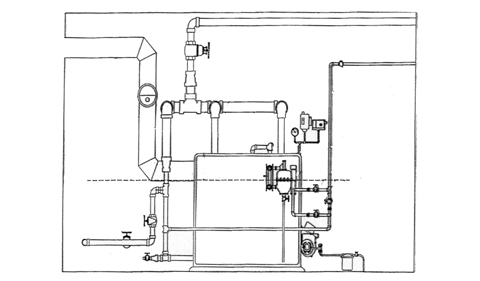 Dry Steam Is The Goal
Steam quality is a measurement of the steam’s dryness. That means the steam should contain no more than 2% liquid water as it leaves the boiler because wet steam can’t hold much latent heat.

Comments
-
My old steam boiler is leaking I am adding water twice a day so I’m guessing that it’s venting steam out the chimney. Of course it’s thanksgiving weekend so I’m not going to get any answers until Monday or Tuesday.
How do I find a contractor who understands Dan’s work with steam heating? I have read lost art of steam heating. I have read articles about steam heating near boiler piping venting.
How do you tell the contractor what you need without making him feel resentful?
Everyone has been doing the work day in and day out so of course who wants to take on another know it all ahole customer?
My previous contractor did the best job he could. I’m a homeowner and I have done some reading and went to see Dan’s presentation two or three times so the steam is wet and the fuel
bills are high and that’s what I keep trying to learn about to prevent making the same mistakes this time. I know that I have 800 square feet of EDR I know that the system used to be coal because the pipes are around the perimeter of the basement. The asbestos is good in some areas and not good in other areas.
Probably have to remove everything first then install the new boiler then replace the insulation0 -
Either tell us where you are or check "Find a Contractor" at the top of the page here. We may well know someone in your area we can trust...Br. Jamie, osb
Building superintendent/caretaker, 7200 sq. ft. historic house museum with dependencies in New England0 -
@everybodyduck
Post your location if you can't find anyone. Even if a contractor is not listed on this site someone may have a recommendation.0 -
There's probably an easy answer to this question but I'm still pretty ignorant about steam. Why can't steam heating boilers use a superheater, as are found in steam power boilers, to dry the steam? Is it just a matter of making the boiler too complex?0
-
Money. why would you install another device that adds cost to a job when if piped correctly you can get the dry steam you so desire
 1
1 -
I think the term "wet steam" is not really helpful for residential steam. Did it come from commercial steam? Like as compared to superheated dry steam?
Residential steam doesn't carry water droplets suspended in it--it's too slow moving. They fall out of the steam almost immediately and hit the pipe and stick to it. I have watched it.
I think what we see in residential systems is either "dry enough steam" or "full-on surging of gallons of water". We know that residential systems of reasonable pressure are pushing steam that is at the edge of condensation at all times (212-220ish degrees).
I think that "dribbling vents" and other minor issues cannot be blamed on wet steam. By the time the steam gets to a radiator vent, it is by definition very wet--it has been condensing to heat the radiator for many minutes before the steam gets to the vent--there's going to be a lot of water. This is regardless of the "wetness" of the steam as it leaves the boiler.
Here's information about what "wet steam" really is. All residential steam is wet steam.
https://kadant.com/en/blog/steam/saturated-wet-and-superheated-steam-in-paper-dryingNJ Steam Homeowner.
Free NJ and remote steam advice: https://heatinghelp.com/find-a-contractor/detail/new-jersey-steam-help/
See my sight glass boiler videos: https://bit.ly/3sZW1el 1
1 -
If it's that old, I guess it's probably time to replace the system. The good news is that even with it venting steam through the chimney, it should get you through the winter.everybodyduck said:
I know that the system used to be coal because the pipes are around the perimeter of the basement.
0 -
You mean replace the boiler, I assume, Max
NJ Steam Homeowner.
Free NJ and remote steam advice: https://heatinghelp.com/find-a-contractor/detail/new-jersey-steam-help/
See my sight glass boiler videos: https://bit.ly/3sZW1el0 -
ethicalpaul said:
You mean replace the boiler, I assume, Max
Mostly, yes, but a steam system that old would need new near boiler piping, pressuretrol, insulation, etc. as well - not advocating moving to a hydronic or split, no.
0 -
Wet steam is steam with more than 2% liquid water. Testing for that ended in the ‘80s for residential boilers. Prior to that, a residential steam boiler couldn’t go to market if it failed that test. Manufacturers stopped testing in the ‘80s because none of them could pass that test.Retired and loving it.0
-
I have read that, thanks! I would love to know more about those tests and what that steam looked like both before and after the 80s. Does anyone know what mechanism was used to test this?
My boiler presents zero visible water at a few inches above the boiler so it seems like it would easily pass. There is no mist, no cloudiness, no droplets. It's perfectly clear, like air.
From my reading, the industry definition of wet steam is steam as it is produced directly above the boiling water, so all steam produced by every residential boiler is "wet steam". Then it becomes "dry steam" when the droplets separate.
This reference is a little dodgy looking, does someone have better?Dry steam is steam that is at the temperature of saturation, but does not contain water particles in suspension.
From https://www.corrosionpedia.com/definition/420/dry-steam
And then this from wiki:Water vapor that includes water droplets is described as wet steam. As wet steam is heated further, the droplets evaporate, and at a high enough temperature (which depends on the pressure) all of the water evaporates and the system is in vapor–liquid equilibrium.[5]
When steam has reached this equilibrium point, it is referred to as saturated steam.
Superheated steam or live steam is steam at a temperature higher than its boiling point for the pressure, which only occurs when all liquid water has evaporated or has been removed from the system.[6]
(from https://en.wikipedia.org/wiki/Steam#Types_of_steam_and_conversions )NJ Steam Homeowner.
Free NJ and remote steam advice: https://heatinghelp.com/find-a-contractor/detail/new-jersey-steam-help/
See my sight glass boiler videos: https://bit.ly/3sZW1el0 -
Manufacturers used instruments to test at their land. I haven’t seen them in action. Too young back then. Dry steam is invisible.Retired and loving it.1
-
Thanks again Dan. I wonder if there is some wet steam that is also invisible, or if (in residential systems) wet steam is always noticeable by eye.
I'm leaning toward the idea that if you can see it, it's wet and if it's invisible it's dry (enough), but I'd love to know what was the standard. It may be the standard (visibly speaking) wasn't well known because all the steam was behind iron and steel.NJ Steam Homeowner.
Free NJ and remote steam advice: https://heatinghelp.com/find-a-contractor/detail/new-jersey-steam-help/
See my sight glass boiler videos: https://bit.ly/3sZW1el0 -
The space above the waterlines in the gauge should appear totally dry.Retired and loving it.
 2
2 -
Oh OK, that one is easy

NJ Steam Homeowner.
Free NJ and remote steam advice: https://heatinghelp.com/find-a-contractor/detail/new-jersey-steam-help/
See my sight glass boiler videos: https://bit.ly/3sZW1el0 -
Exellent article and often overlooked. Mechanical separation is also an excellent way to assure dry steam
 1
1 -
Thanks!Retired and loving it.0
-
I am still constantly frustrated when I arrive to service a steam boiler that was piped in copper above the steam line. So many big companies do this and it’s terribly frustrating. No logic to their piping strategies besides quick and profit. Boilers left surging and bringing over their life in favor of a quick buck. They don’t seem to care about customers complaints and they are far too big to worry about reputations.
0 -
So I threw this question into grok this morning:
Dryness Fraction of a Steam Boiler. How did or do boiler manufacturers measure it? Do they use an optical sensor with a laser in a transparent sight glass or do they use some sort of dynamic calorimeter to measure the enthalpy and calculate dryness fraction from the known quantities for steam and water?
FWIW here is what it says: https://grok.com/share/c2hhcmQtNA_527e6ee4-22a3-4988-a483-d57226f1e653
End summary for those afraid to click:
In summary, the reliable, code-accepted approach has always been (and largely still is) calorimeter-based enthalpy or separation measurement, not optical laser systems in sight glasses. Manufacturers recommend regular calorimeter testing (or modern monitor equivalents) plus upstream separators to maintain high dryness fraction for efficiency and equipment protection. If you need details on a specific boiler model, test rig, or modern sensor datasheet, more context would help refine this.
Beginning statement:
Boiler manufacturers (and industrial testing labs) have historically measured and still primarily measure steam dryness fraction (also called steam quality or dryness fraction, denoted as x ) using calorimeters. This is the established standard method during boiler performance testing, type approval, efficiency verification, and commissioning (e.g., per guidelines like ASME PTC standards or equivalent codes). It directly aligns with your second suggested approach: a dynamic (continuous-flow) calorimeter that determines enthalpy and back-calculates x from known saturated liquid and vapor properties.
@ethicalpaul Don't feel bad. I doubt any youtubers or forum denizens have the ability to measure dryness fraction either.
-1 -
That's all for high pressure super heated steam driving turbines and similar equipment.
Single pipe 392sqft system with an EG-40 rated for 325sqft and it's silent and balanced at all times.
 2
2 -
It is more important in those cases that the expense of dynamically measuring it would be considered cost effective. But you know you are sidestepping the point I was making which is this is how difficult it is to measure, whether it is in low pressure situations or high pressure. And it goes towards @ethicalpaul questions of @DanHolohan earlier in this thread as to how it would be measured by the boiler manufacturers.
"I have read that, thanks! I would love to know more about those tests and what that steam looked like both before and after the 80s. Does anyone know what mechanism was used to test this?"
0 -
You haven't answered that question. As Chris said, the AI slop that you quoted is related to high pressure superheated steam and has nothing to do with residential steam, which is all wet steam.
I was asking if anyone knew how the residential boiler manufactures tested the water content of their steam, but I believe they never did. They certainly never tested the A dimension.
NJ Steam Homeowner.
Free NJ and remote steam advice: https://heatinghelp.com/find-a-contractor/detail/new-jersey-steam-help/
See my sight glass boiler videos: https://bit.ly/3sZW1el0 -
Then how did the commercial and residential steam heating boiler manufacturers do it if not through separation plus dynamic calorimetry? This doesn't just apply to "high pressure superheated steam" (superheated equals by definition no moisture by the way) which needs to have no moisture; not at all. You are now claiming that there is no need to measure the dryness fraction of wet steam and that calorimetry wouldn't do it? We are all ears and eyes. Illuminate us please. I don't question what Dan has written without evidence. We only have your question in this thread. We do not have your evidence that backs up your disbelief. Do you want to take the time to disprove the "AI slop"? You might want to look into it since you are so interested in steam.
0 -
There is also a manual method which may have been the way the boiler manufacturers did it and would be tedious but (arguably) more cost effective (copied and pasted of course)
A sample of the steam is condensed during a limited time frame. Temperature and mass measurements allow calculation of the steam dryness.
Disadvantages
- Time Consuming: Typically manual steam quality measurement requires two people, and can take up to one hour per measurement point. This does not include additional time required to complete necessary reports.
- Trending: Unable to trend steam dryness over a period of time.
- Unsafe: There are inherent safety risks involved in sampling live steam and condensate in a water receiver.
- Unreliable: Measurement results depend on the skill of the technician conducting the test.
0 -
I think the manufacturers knew about carryover. I think they designed piping that was pretty good at sending a lot of that carryover back into the boiler and letting the steam separate from it as it went to the mains.
At some point someone started calling steam without carryover "dry steam", which I consider a careless mistake that has caused much confusion since.
It is obvious that all you need to prevent carryover is decent water quality (even boilers without a header can make it), but the header piping pattern lets the water quality get pretty bad and still work OK so the manufacturers liked it and specified that piping. It kept systems working and kept customers happy because I'm sure customers tended to blame the manufacturers for everything bad that happened in their systems.
Of course even perfect installation of the manufacturers' piping diagrams doesn't prevent all carryover from getting to the main.
But none of this has to do with wet steam vs dry steam.
All the steam was in contact with splashing water in the boiler, then it goes past a couple fittings and you think it's suddenly dry? It has no water droplets in it that matter (as you can see in my videos with no visible droplets) and that's good enough.
That's my position, and no one has shown otherwise. All that stuff you wrote in the above two messages is not comprehendible by me. Whether that's some failure on my part, or some statement on the sense of the writing I will leave to everyone to judge for themselves.
NJ Steam Homeowner.
Free NJ and remote steam advice: https://heatinghelp.com/find-a-contractor/detail/new-jersey-steam-help/
See my sight glass boiler videos: https://bit.ly/3sZW1el0 -
@Captain Who You copy and pasted stuff from AI, and then tagged Paul trying to start an argument followed by tagging Dan at least 3 times.
Why?
The main rule of this forum is always be kind.
Single pipe 392sqft system with an EG-40 rated for 325sqft and it's silent and balanced at all times.
0 -
I said it was AI upfront. The only thing I said I wrote was the question, over a cup of coffee. I have not been unkind. It is a simple discussion, not an argument and disagreement is not unkind. Also not off topic. I made the point I wanted to make which SOME people might even find interesting and that was the primary reason for posting. Were you or Paul arguing with me or being unkind when you refuted what I (slop) posted?
0 -
When industry used steam junior engineer task was to measure quality. Feed a small quantity into container of water; measure weight gain and temperature increase. Calculate btu per pound of steam; read steam tables. For residential steam heating it seems to me that low enough water line plus low enough velocity improves quality? Perhaps a separator can help?
 1
1









Categories
- All Categories
- 87.6K THE MAIN WALL
- 3.3K A-C, Heat Pumps & Refrigeration
- 59 Biomass
- 429 Carbon Monoxide Awareness
- 124 Chimneys & Flues
- 2.2K Domestic Hot Water
- 5.9K Gas Heating
- 119 Geothermal
- 168 Indoor-Air Quality
- 3.8K Oil Heating
- 78 Pipe Deterioration
- 1K Plumbing
- 6.6K Radiant Heating
- 394 Solar
- 16K Strictly Steam
- 3.5K Thermostats and Controls
- 56 Water Quality
- 51 Industry Classes
- 50 Job Opportunities
- 18 Recall Announcements