Welcome! Here are the website rules, as well as some tips for using this forum.
Click here to Find a Contractor in your area.
If our community has helped you, please consider making a contribution to support this website. Thanks!
1950s Boiler

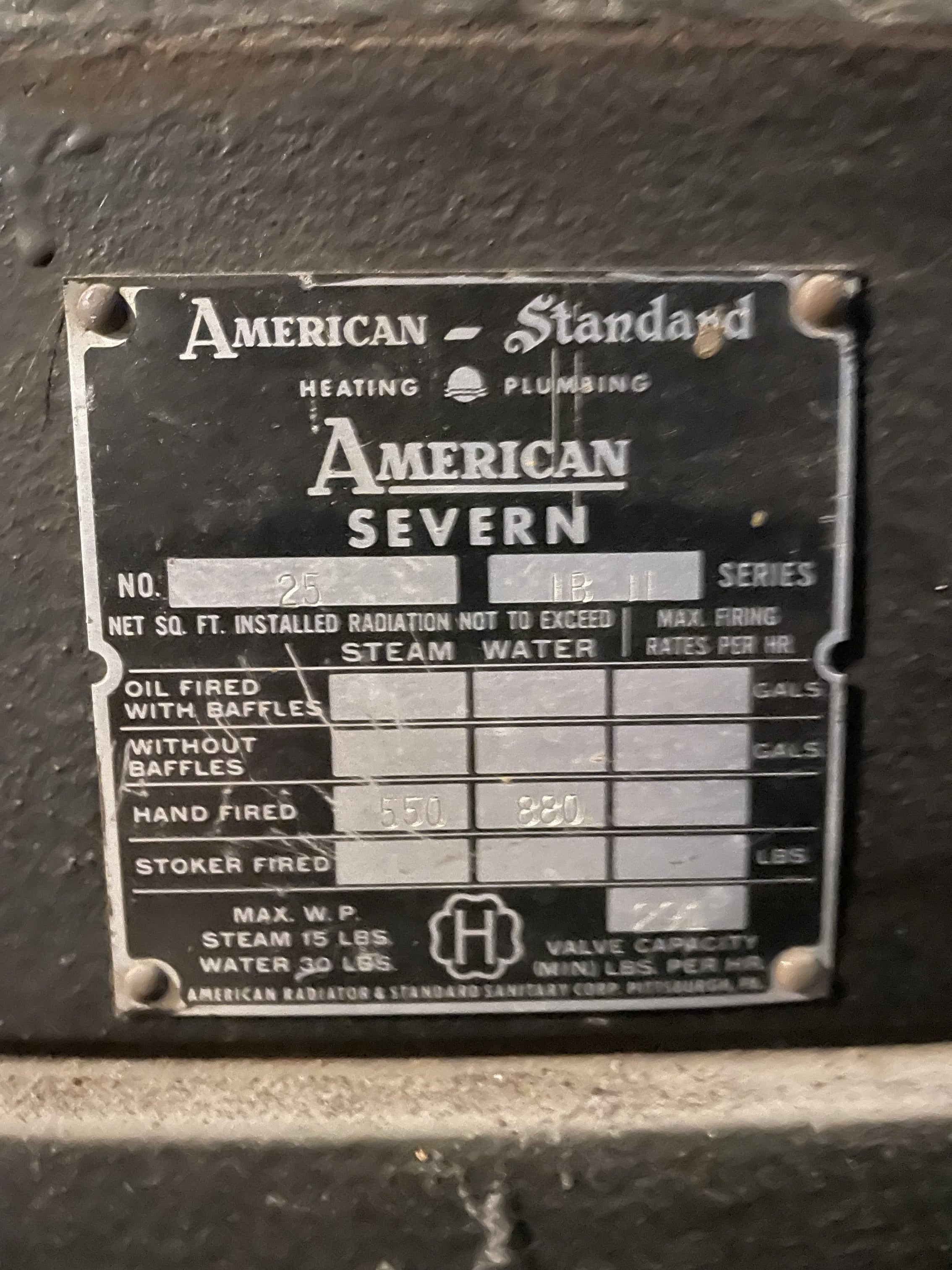
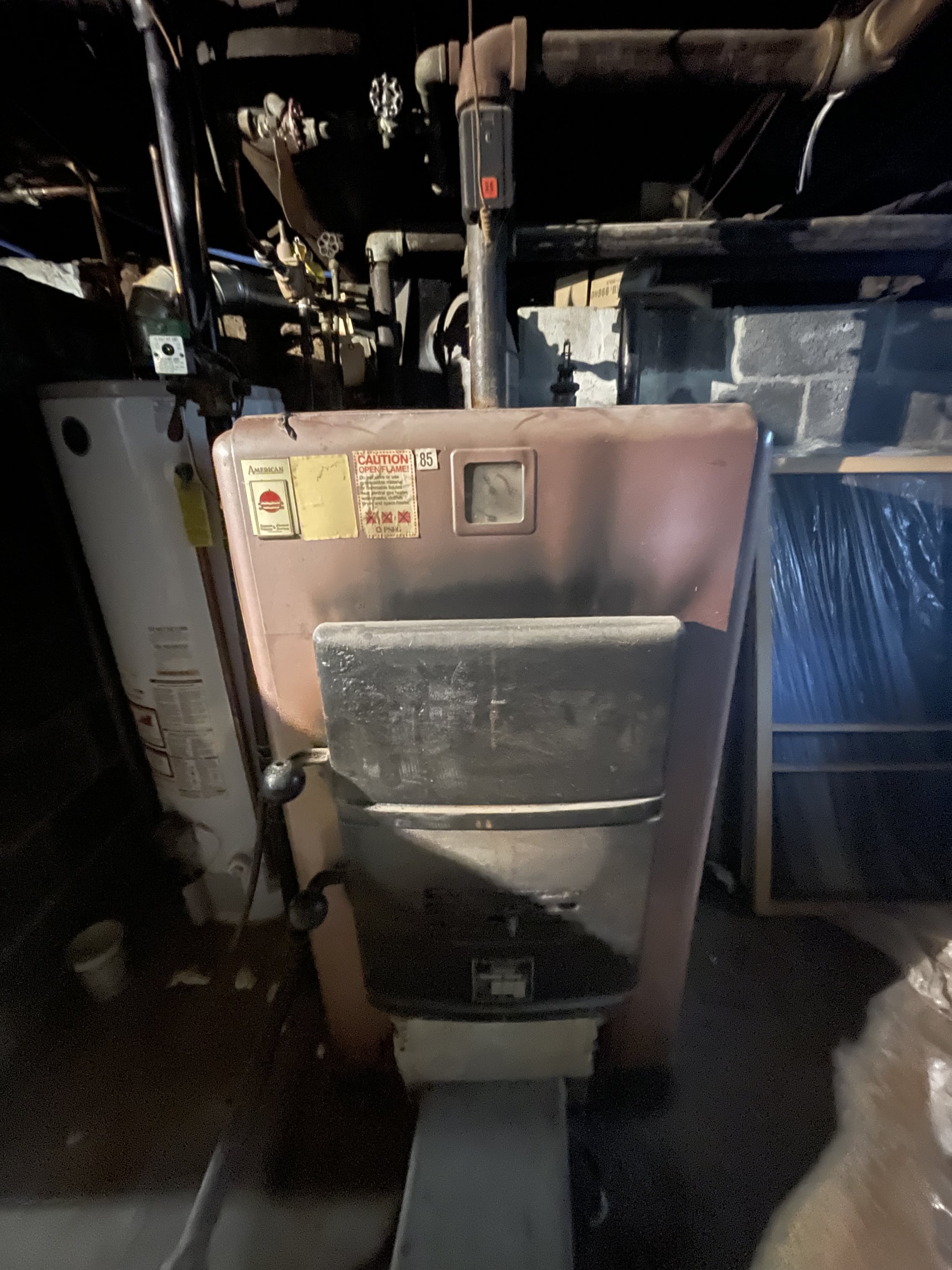
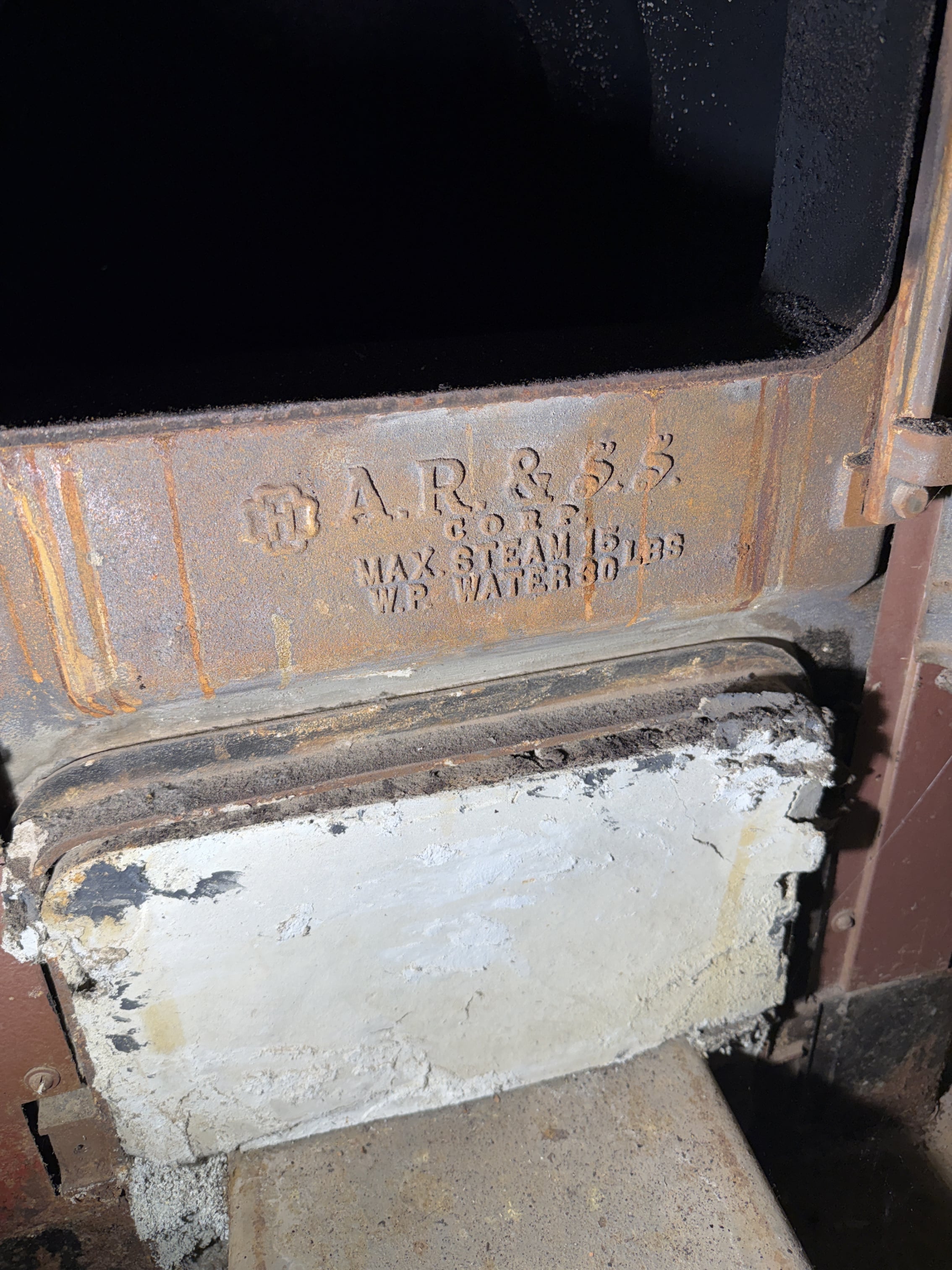
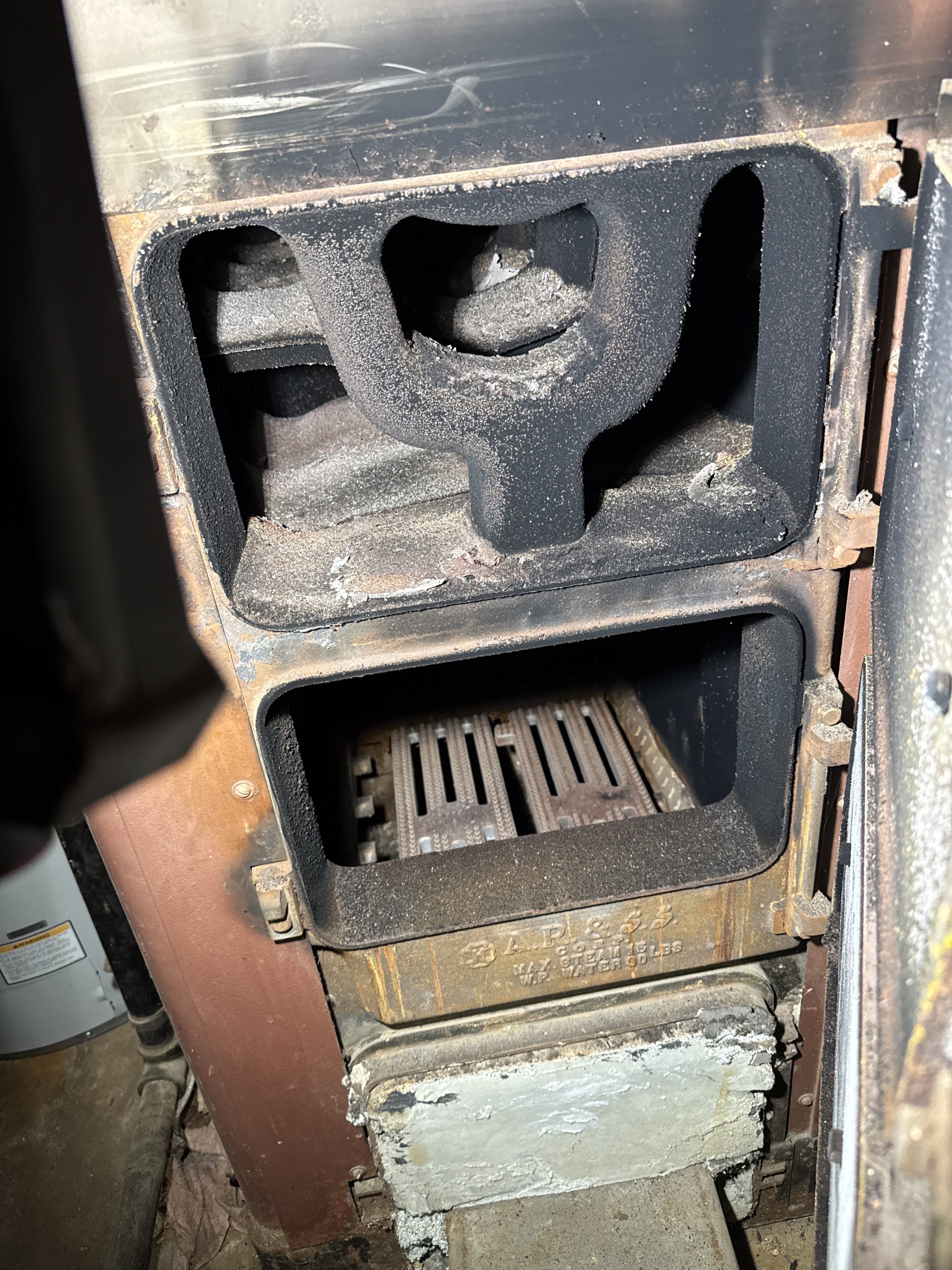
Purchased an old house with an old boiler. Doing some research found similarities to the American Standard Severn Series 1954. Gas fed hot water system. Boiler needs to be serviced but not sure where to start. Boiler is located in the cellar, 1st floor which has the tstat has decent heat, but hot water is not making up to the second floor. Mainly radiators but do have baseboard on portion of 1st floor. Any advice out there?
Comments
-
Good old boiler.
1st step is to check the water pressure in the boiler. You should have about 15 psi when the boiler is cold. When the water is heated it may gain pressure to the low 20s but should not be over 25 psi.
The gauge on you boiler may be faulty. Best bet is to get a 0-30 psi gauge at a big box or hardware store. You can install it on a drain valve (flush some water out of the drain valve first) and use this to check against the boiler gauge. Once you know the pressure is ok bleed the radiators on the 2d floor to see if they are air bound.
You could have a water feeder or expansion tank issue. Report back what you find.
 2
-
Where are you located, we might know someone.
Many many things could be wrong.
How experienced are you in plumbing and heating?
 2
-
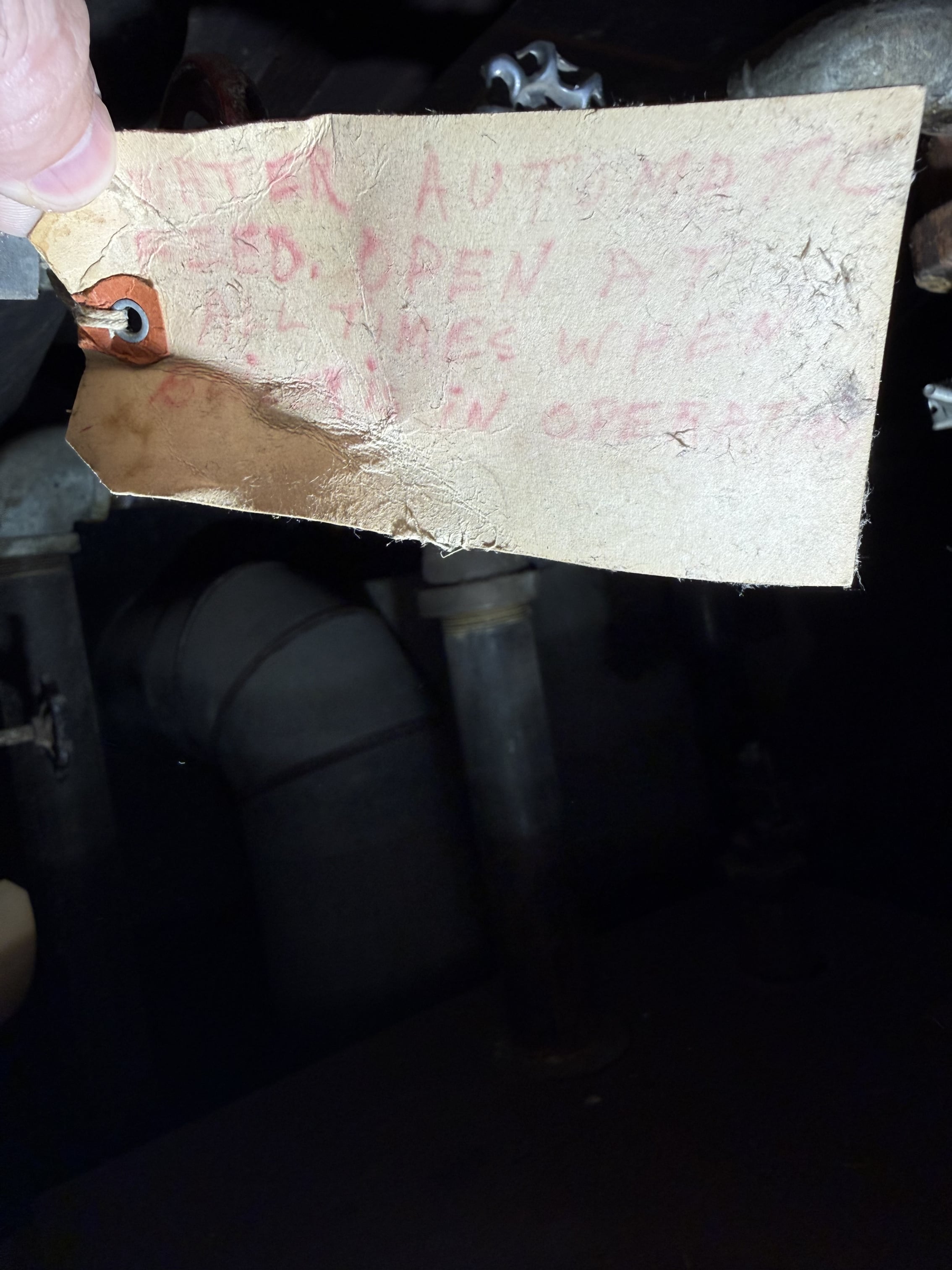
That boiler may be old enough to have a manual water feed valve rather than the automatic pressure reducing type feeder that became standard in the 1950s. I had the same model in my house, installed in 1947.
Is there a cylindrical steel expansion tank in the ceiling over the boiler?
—
Bburd1 -
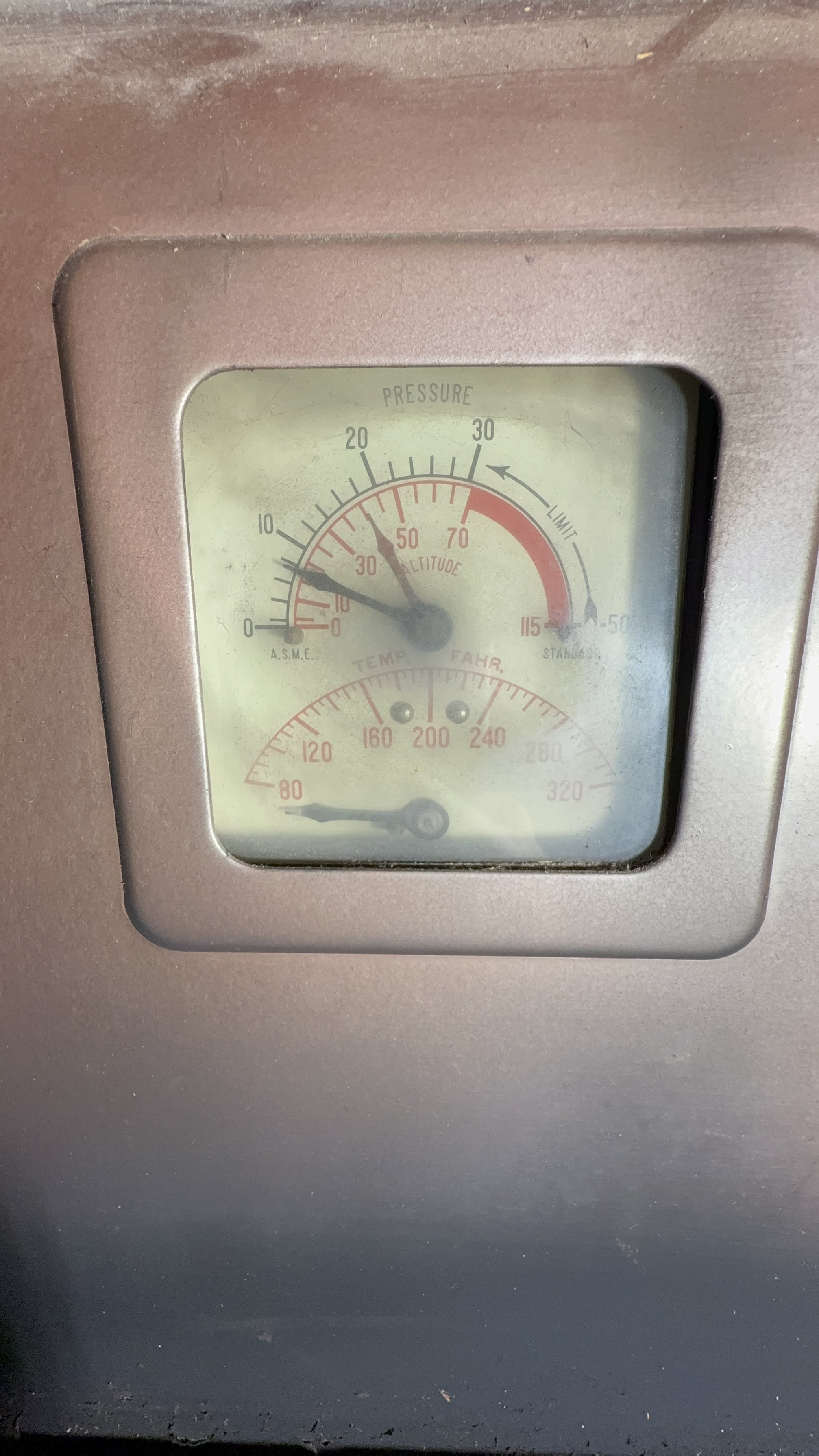
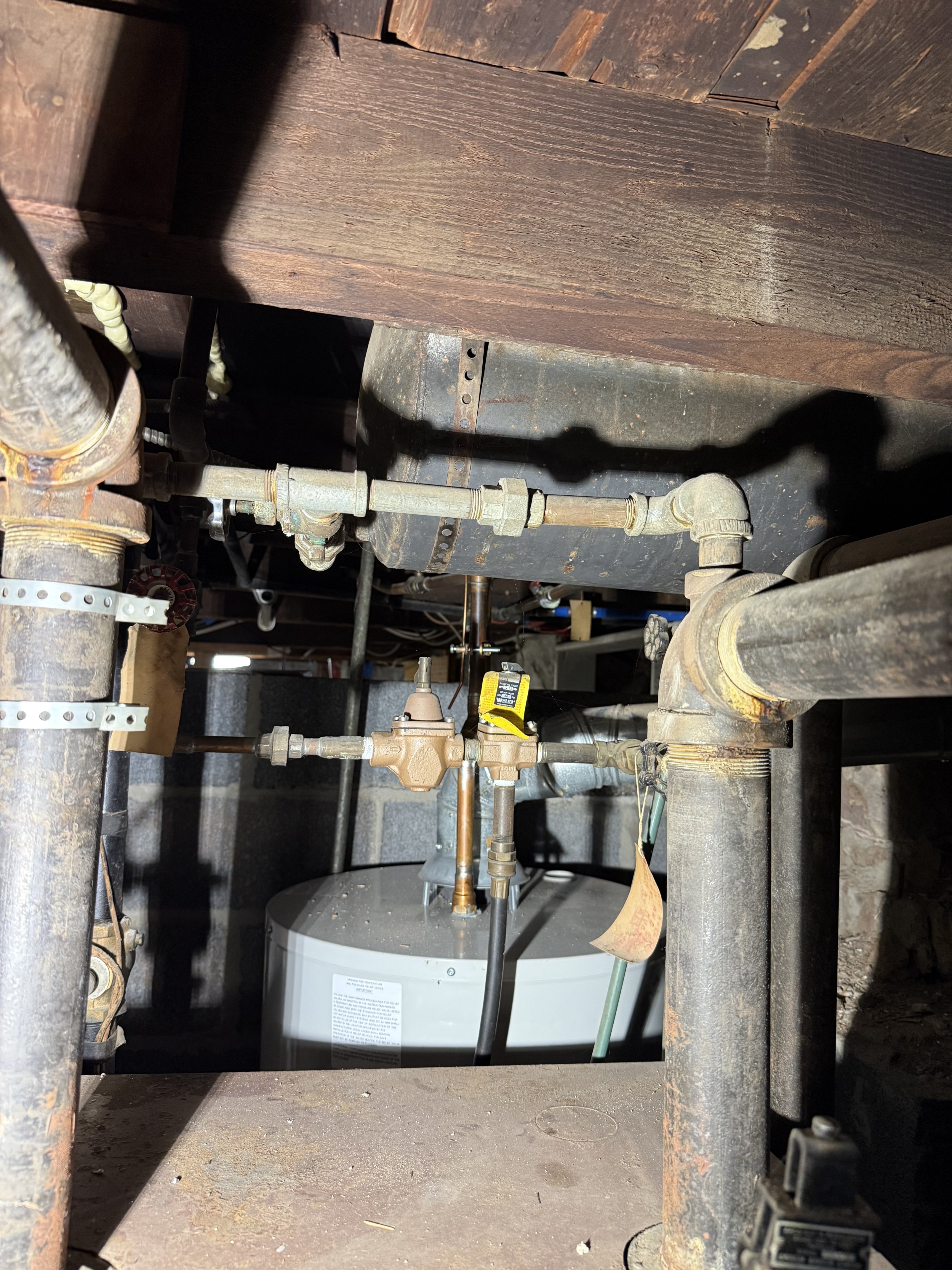
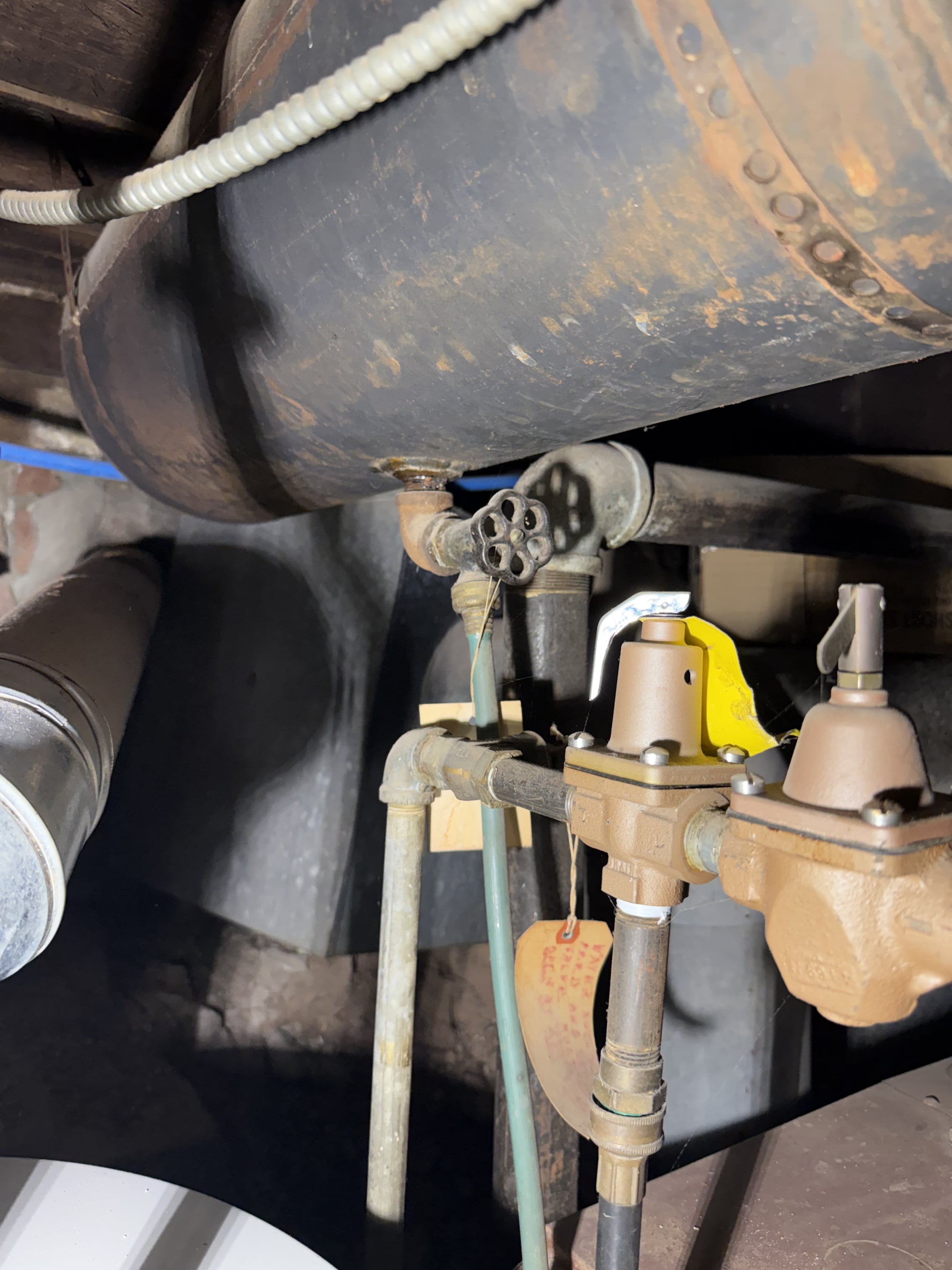
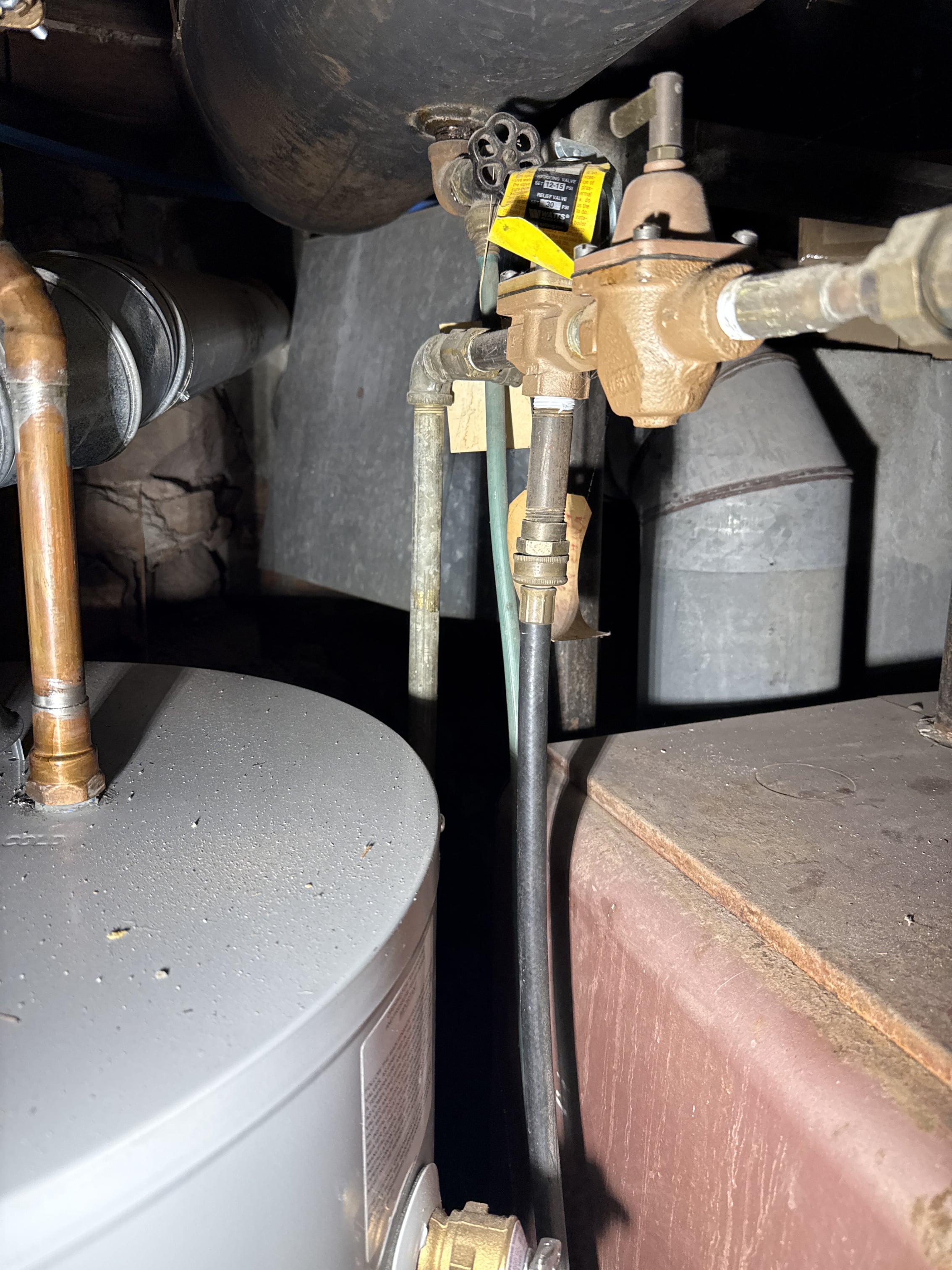
It's hard to tell but the pressure gauge looks bottomed out. There is a feed valve and backflow preventer both could be blocked up. Or the gate valve could be closed
Miss Hall's School service mechanic, greenhouse teacher, dog walker and designated driver
1 -
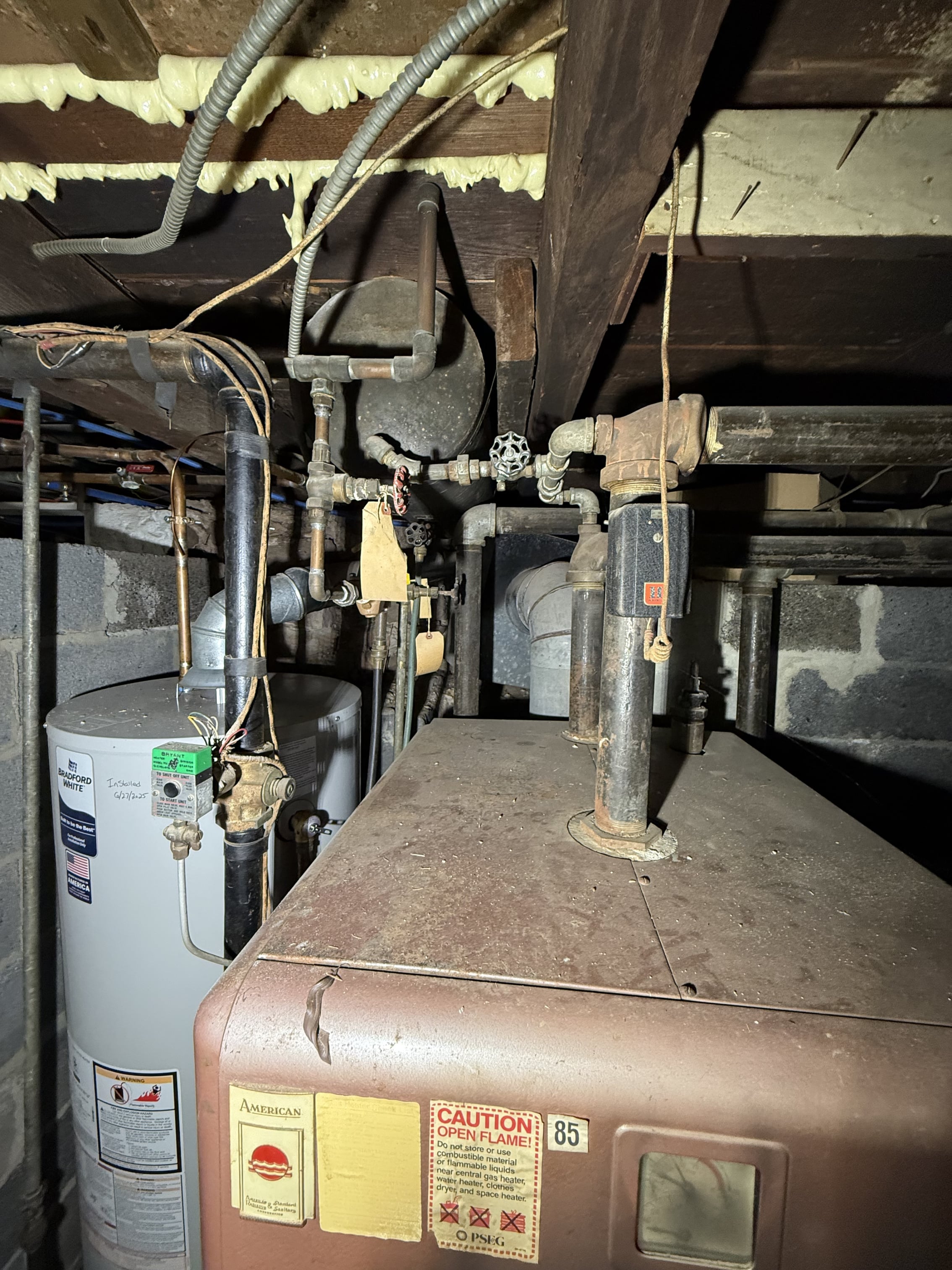
Thanks for the feedback! Few more photos to keep the gears turning out there.
Looks like I have an auto feed & the ex. Tank has seen better days.
Haven’t verified the pressure gauge is accurate yet, project for the weekend but thinking I may try to bleed the radiators, unless anyone is opposed?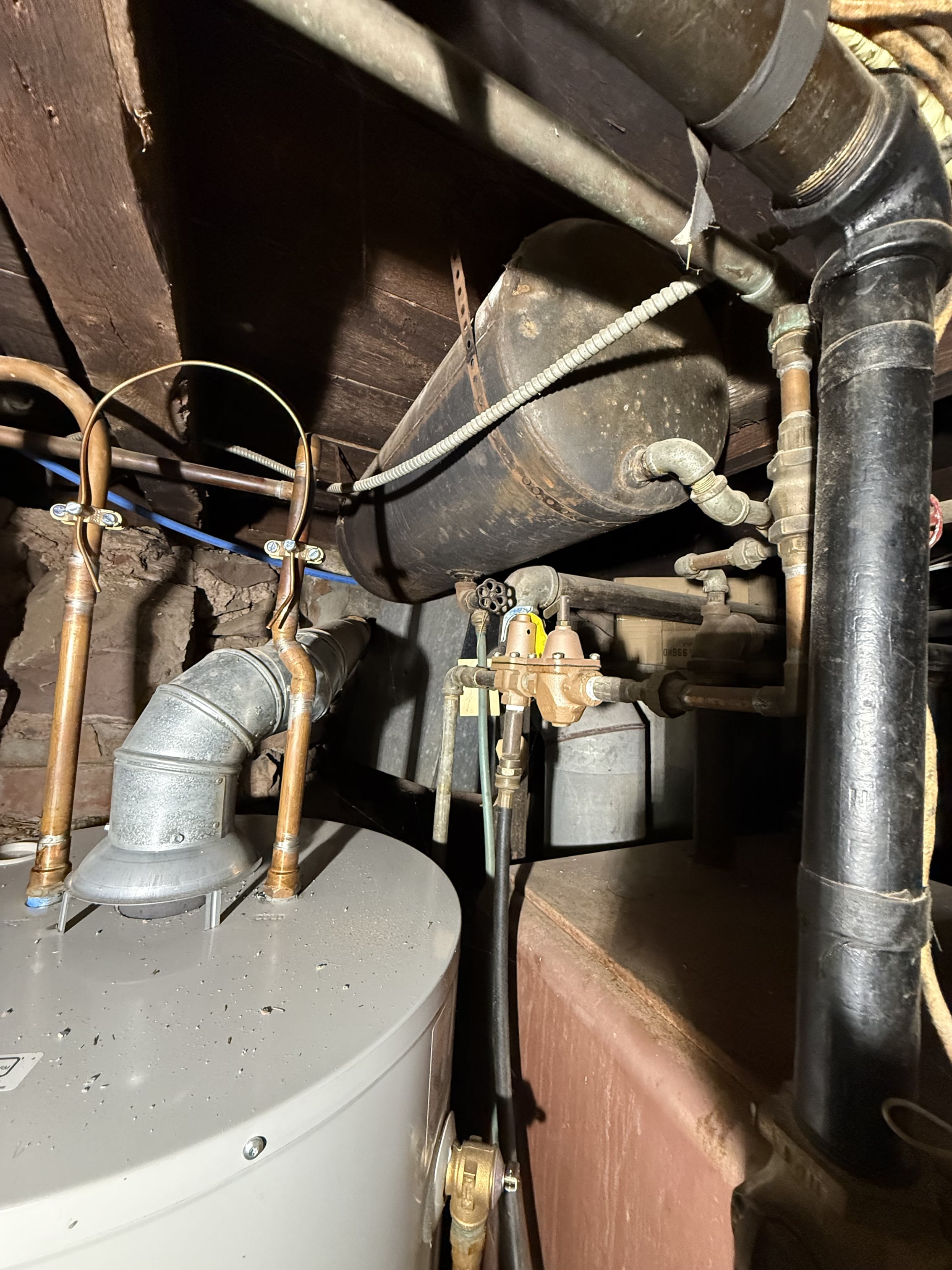
 0
-
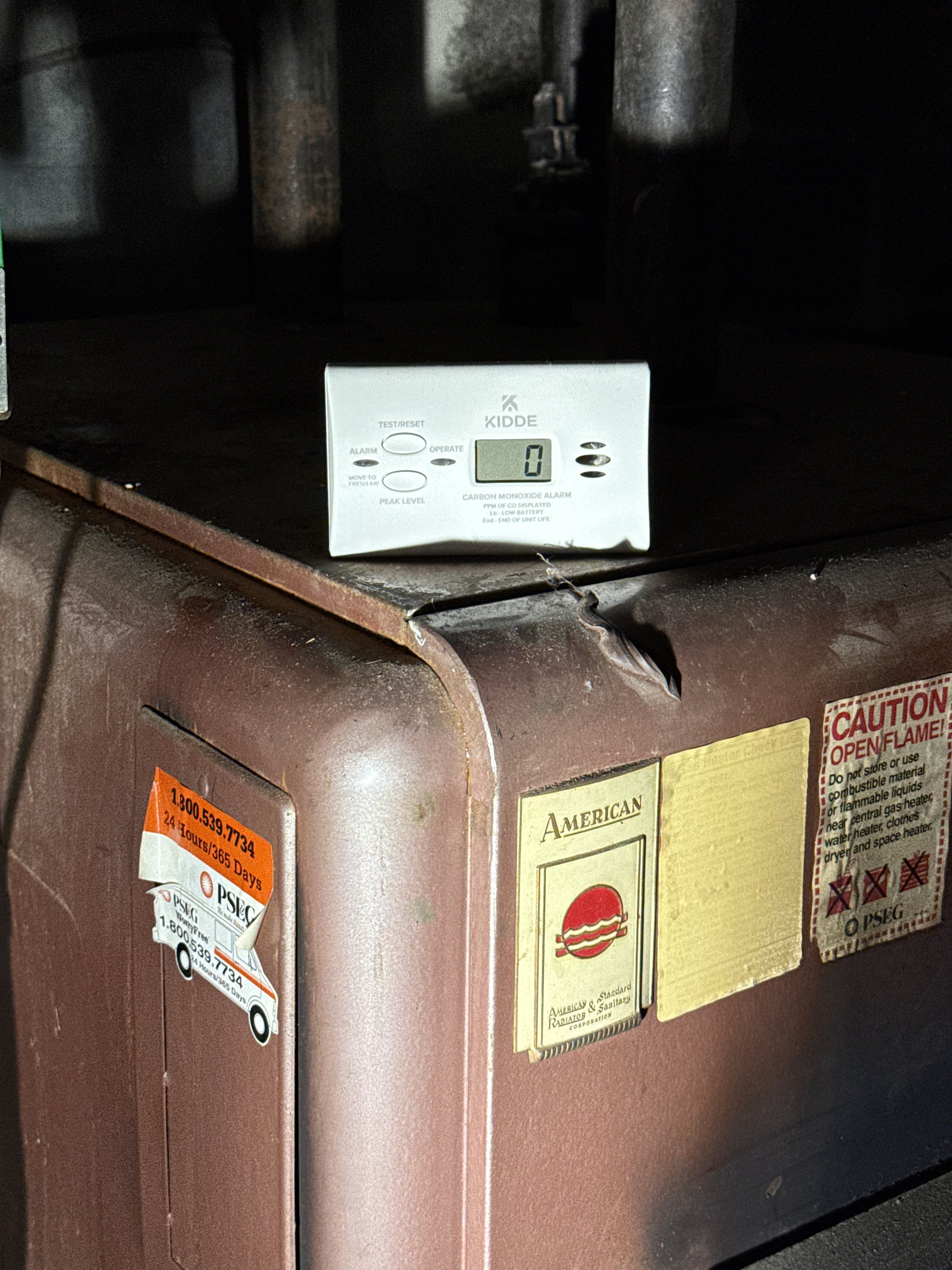
also get a good low level CO detector. Look like some spillage around this front doors
Bob "hot rod" Rohr
trainer for Caleffi NA
Living the hydronic dream 2
-
Your gauge shows 8 psig of water pressure, not enough to completely fill second floor radiators. The red pointer should have been set at installation to the normal cold fill pressure for your system. This suggests that your pressure reducing (automatic feed) valve is not working, or that a manual valve upstream from it is closed. There is no point in bleeding the upper floor radiators until fresh water can enter the system again.
Your expansion tank is a compression type and needs periodic draining to restore the air cushion. Can you post some photos of the pipe connection between that tank and the boiler?
—
Bburd1 -
-
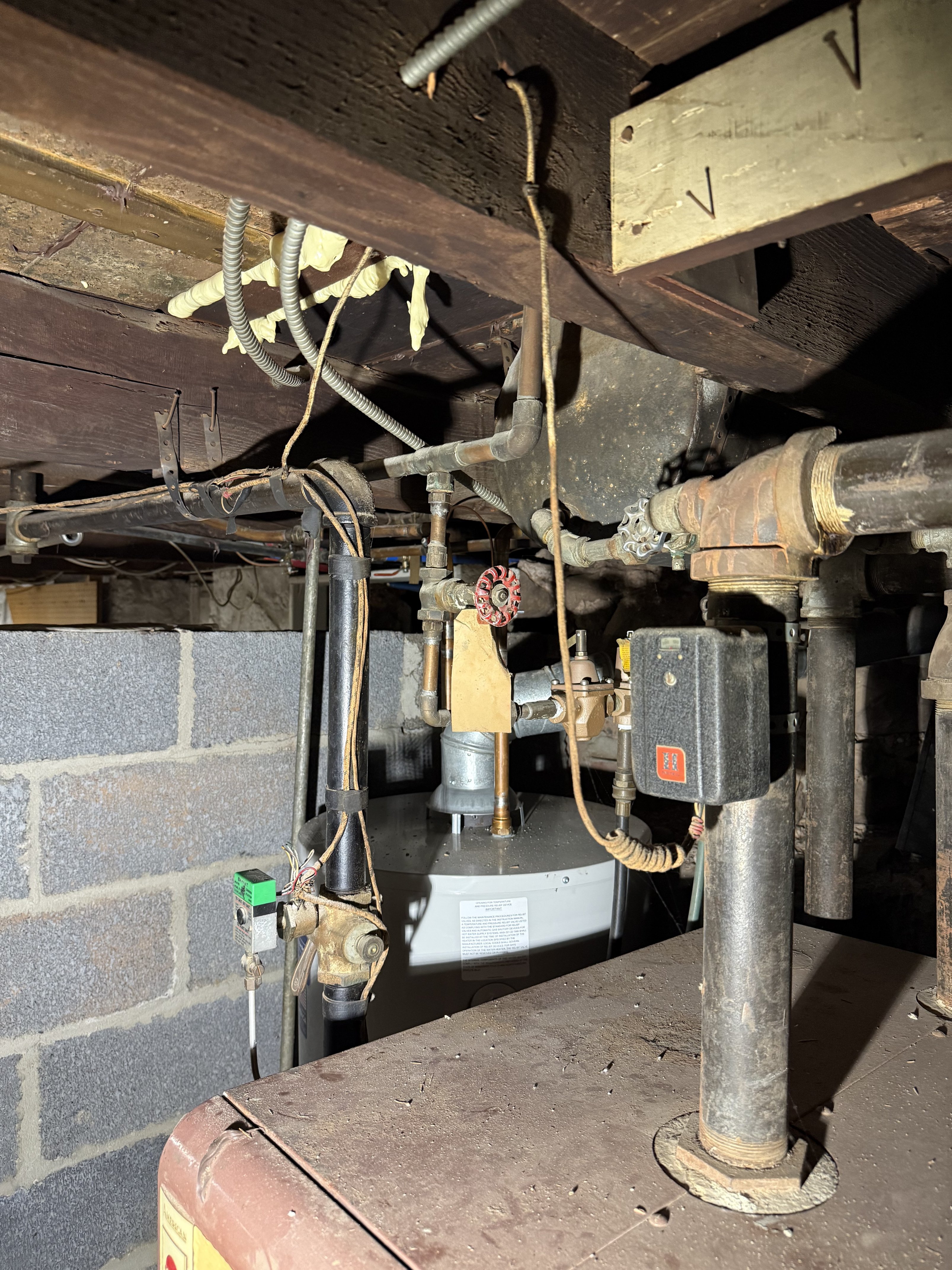
You appear to have a gravity hot water system with a steel compression tank to maintain balance and flow in the system as I see no circulators or wiring for them. I always liked how these systems worked.
Steel compression tanks are not ment to be drained and refilled periodically as it allows oxygen back into the closed system.
A steel compression tank has either a drain-o-tank valve or an airtrol valve or both.
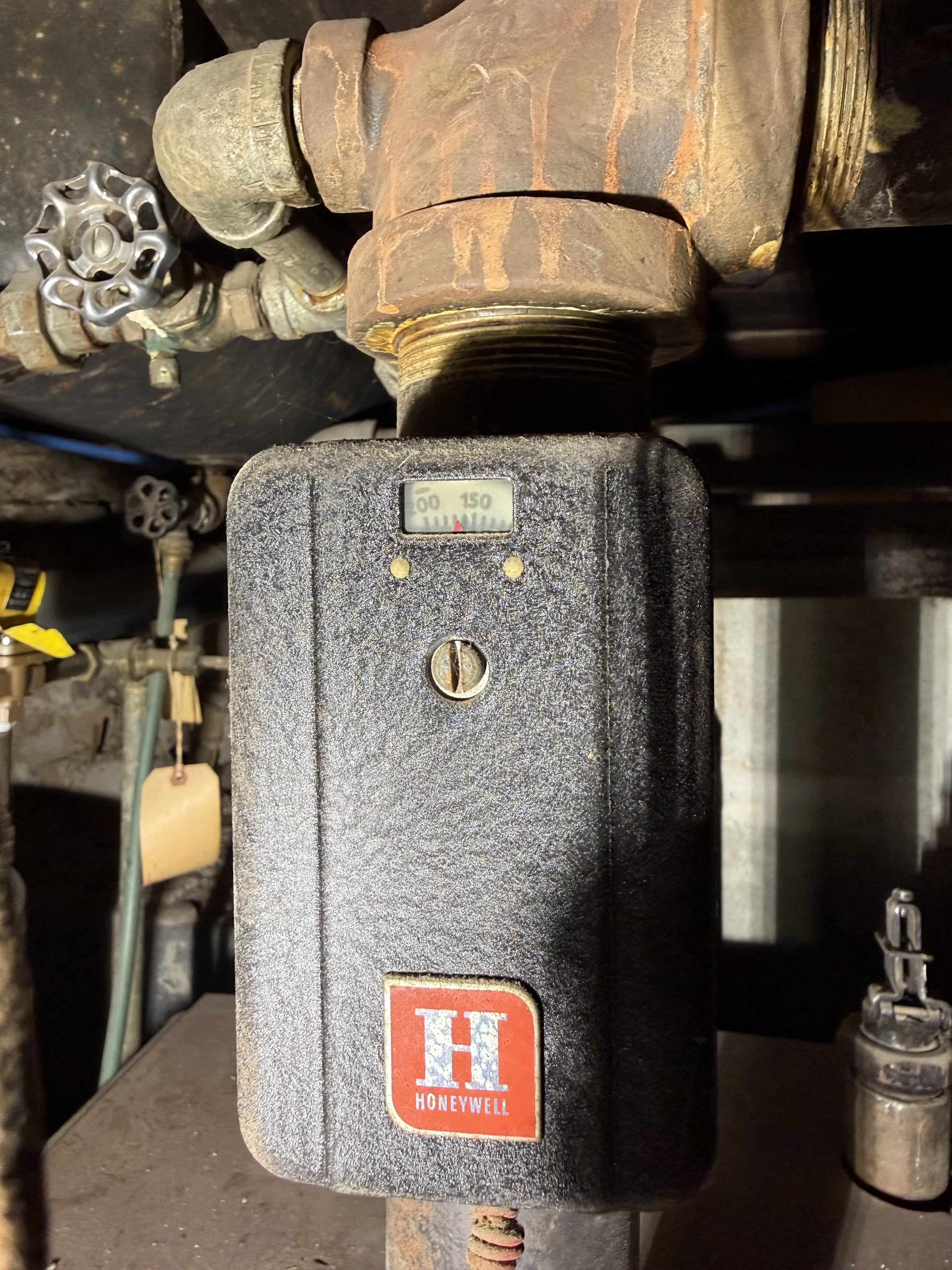
You have a single Honeywell clamp on aquastat that is set at 170 degrees for the high limit to get the water moving by using the thermostat in your home to activate the boilers burner to heat the water.
1 -
yes! I keep saying it’s gravity fed and get looks like I’m crazy. What do I do to get water circulating throughout the system??
0 -
you increase the pressure and bleed the upper radiators. 8 psig can push the water up at most 18 ft.
the compression tank looks fine although the air management devices are more for pumped systems and rely on the flow from the pump to pull the air bubbles with the water to some extent. pressure and temp changes will move air to some extent but it works better with a circulator.
that being said, there is no reason not to keep it as a gravity system as long as you are using that boiler.
0 -
if the prv and valve are hopelessly corroded up you can fill it using a hose connected to one of the drains.
i can't read what the tag on the prv says
0 -
Wow! Interesting old boiler. The plate says “hand fired,” so it started life burning coal and was converted to gas at some point. That’s useful to know for a few reasons.
For the second floor, check these in order:
- Look at the pressure gauge with the system cold. You need about 12 to 15 psi to push water up to a second floor. If it reads lower, the radiators up there are likely half empty.
- Bleed the second-floor radiators. Air collects at the top of the system, and an air-bound radiator stays cold even when everything else works.
- Find out whether there’s a circulator pump at all. Many of these were originally gravity systems with big pipes. If someone added a pump, make sure it actually runs when the thermostat calls for heat.
- Check the expansion tank. If it’s an old steel tank in the ceiling and it’s waterlogged, the pressure will swing and air will keep getting into the system.
0 -
You should really check the pressure before you start bleeding things. If your low on water, it will make things more difficult.
1 -
That's exactly what you do. As mentioned, the gauge reads 8 psi. You want 12 psi cold. So get a 0-60 psi gauge with a hose adapter and check the accuracy of the tridicator. Its probably correct. You could manually bring it up to 15 psi to give you a little more pressure to the second floor for bleeding the radiators.
If it is 8 psi, then the feeder isn't feeding. Why?
But if it was my house, I'd be more concerned with those scorch marks. Gas produces CO before soot. And you've got soot.

 5
-
I neglected to mention this earlier, but you could order some 3M Stanbroil self adhesive stove gasket from amazon for the doors on the boiler if they are a still operable and you feel confident enough to do the simple repair.
You have to measure how wide the existing flat gasket is to correctly order the right width and thickness of gasket for the boiler.
The 3M Stanbroil gasket comes in a small cardboard box in 6 foot lengths.
If you decide to do the repair please be sure to purchase a package of the black 3M sanding sheets too, you can find these sanding sheets in your local Lowe's or home despot.
1 -
there should not be soot inside the boiler, something isn't burning right.
i think that drain would work but there might be one easier to get to.
0 -
you need someone with a combustion analyzer that knows how to use it. those are more like an oil burner where the combustion has to be set up by a tech.
0 -
Copy. First step verify psi, bleed radiators & hope for heat.
0 -
I would find another valve if possible, like the boiler drain. You'll be in there with one hand, so dont use ALL your strength to open the valve. If that thing snap its over, Johnny.
0 -
Its been a long time since I've seen an American Standard double door. I doubt they tapped for a drain valve back in the day. I'd say look on the return pipe down low but with a gravity system, who knows?
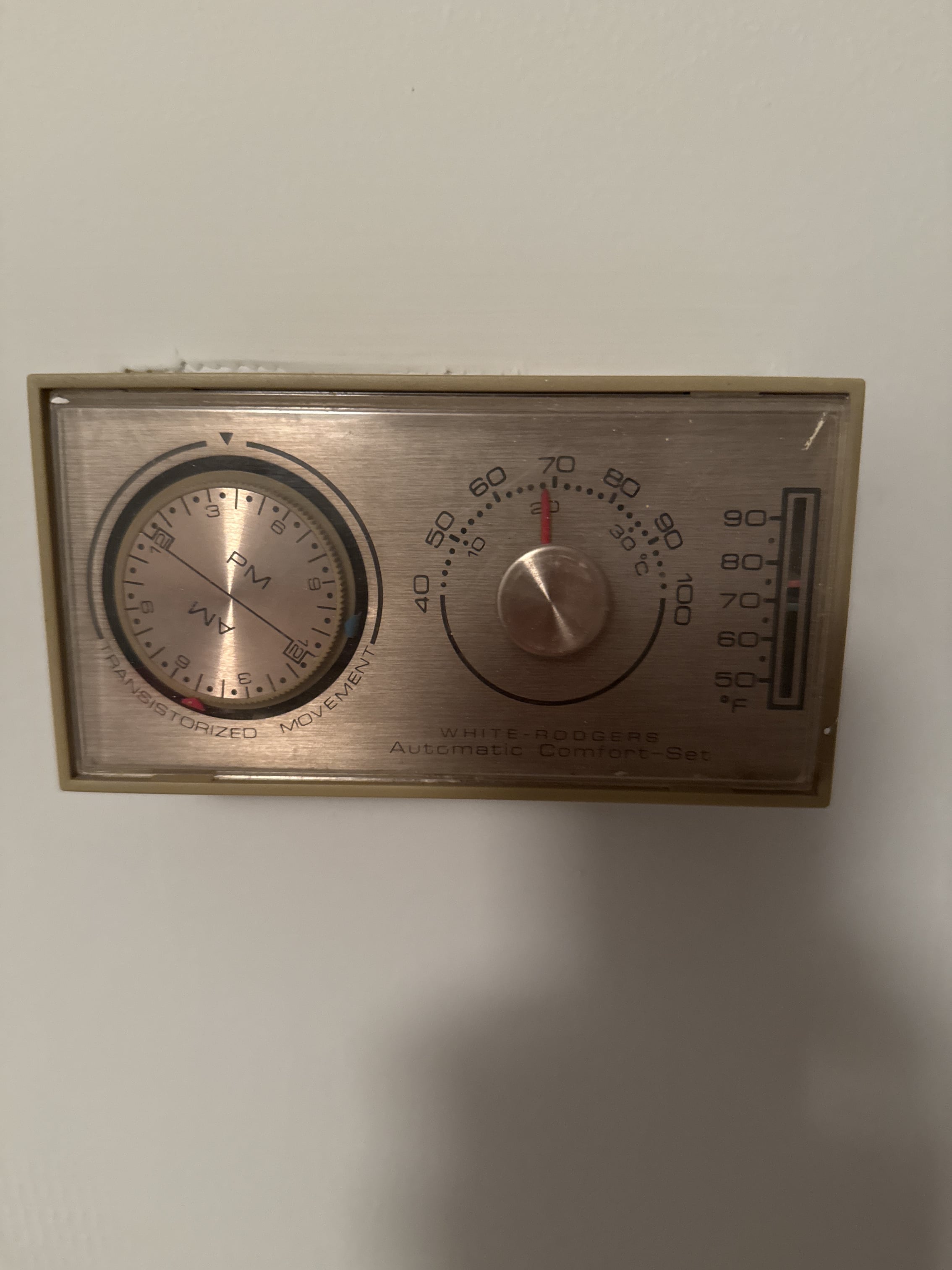
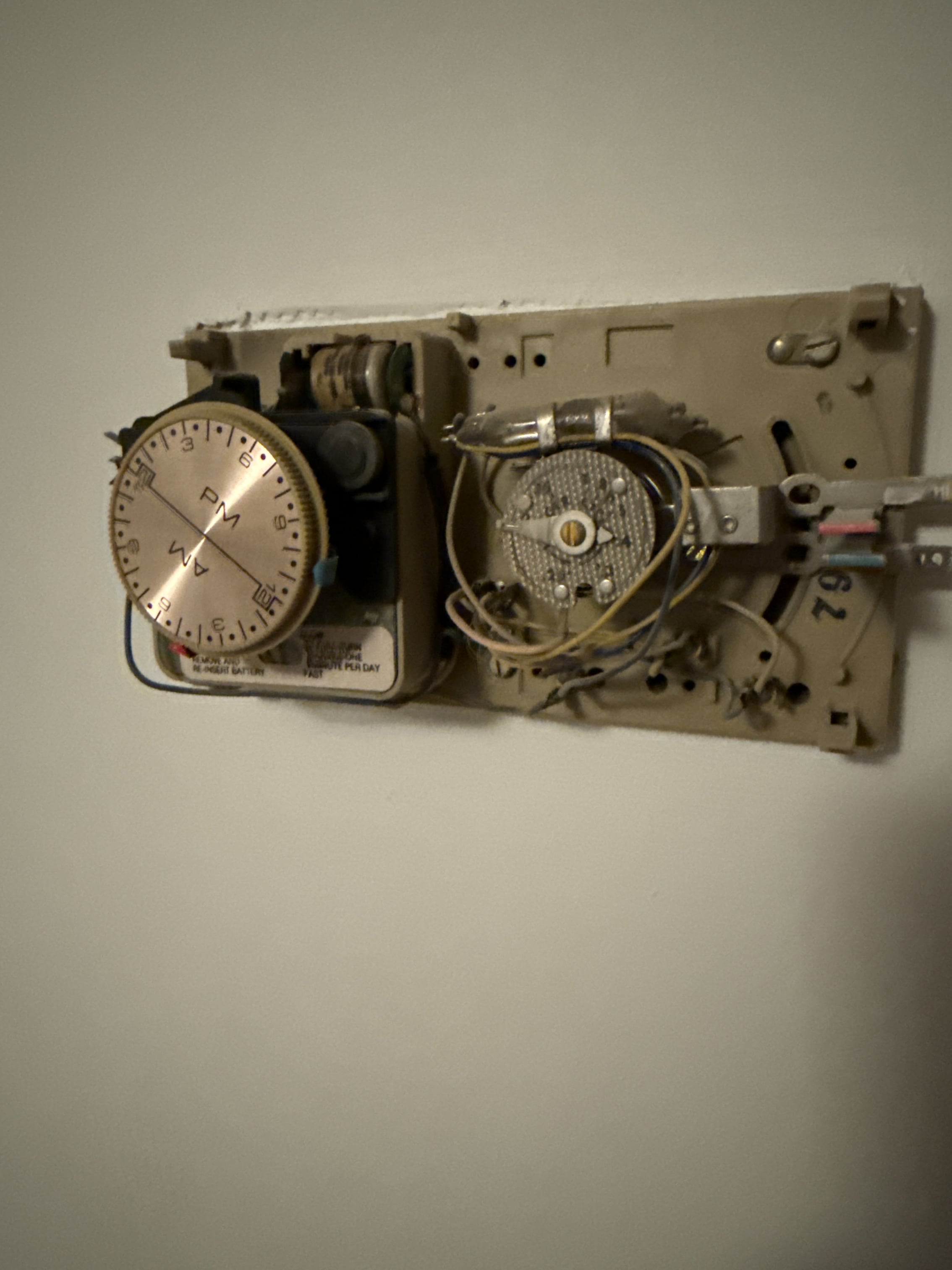
The thermostat is fine as long as it's level, there's no heavy dust on the mercury bulb, and the anticipator is set correctly. You want simple? I pretty much use only Honeywell. The T4 is nice but simple, only I'm not sure if they still offer it. Find some different models and download the Installation manual to see if any offer CPH for gravity. If not, a CPH set for steam might be close. Those who have experience with gravity systems might know better. Whatever it is, it needs to be battery powered.
And don't forget to address those scorch marks. That boiler needs service, vacuum, combustion and draft tests.
1 -
I am not too concerned by the amount of soot. Who knows when it was last cleaned. But the boiler should be cleaned and checkd to see if light off is smooth. The soot marks around the doors could mean the door needs re gasketing and it is just a normal puff from starting. Combustion test is needed.

 3
-
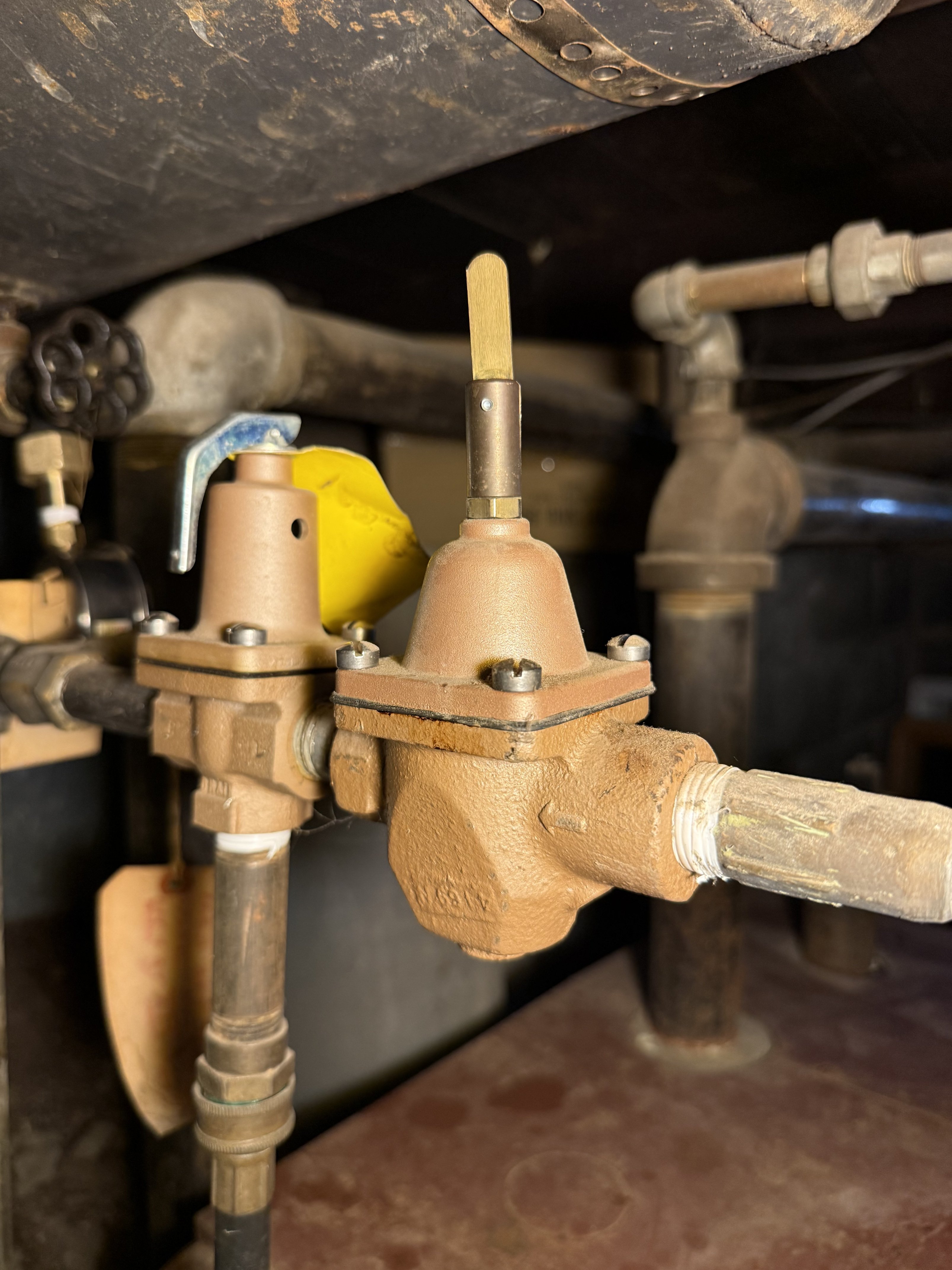
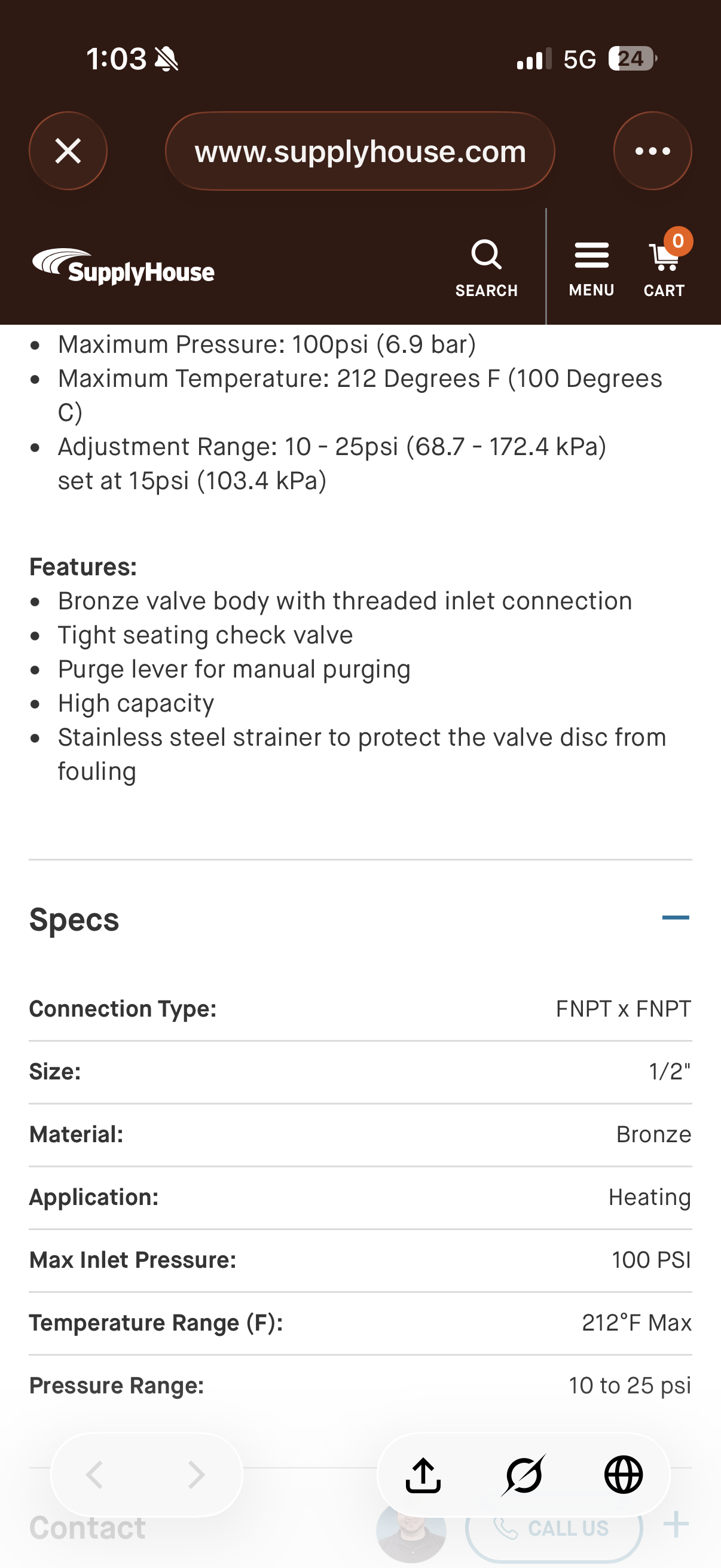
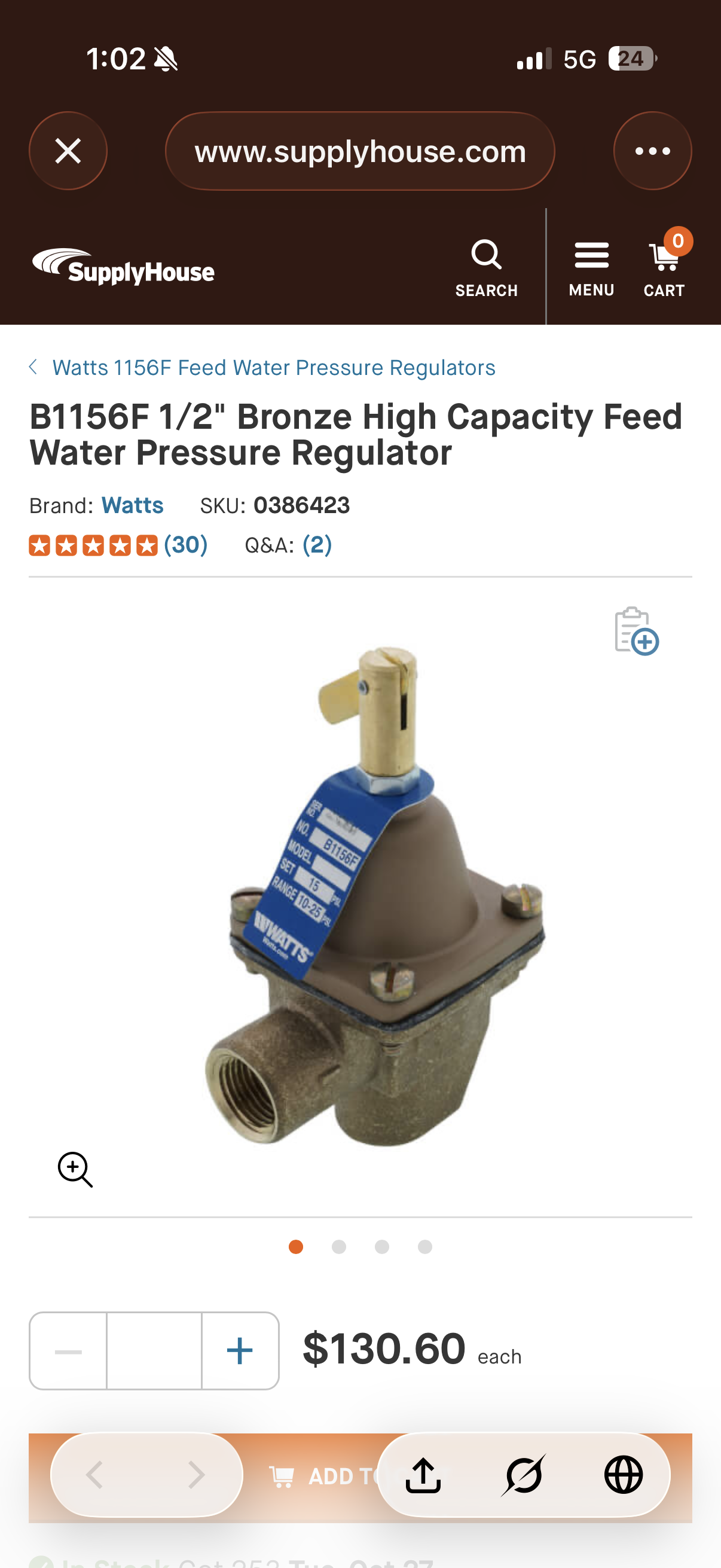
team, how do I add water, do I lift the PRV or operate the auto feed? If auto feed I believe it has failed I have a drain line hooked up to the PRV so operating the handle only drains water I can install a ball valve but want to confirm how to add water
 0
-
Yes you lift the fast fill lever like you have done. If it will not feed get a garden hose and a washing machine hose (or a female x female hose connector) and feed the water into a drain valve on the boiler. Or replace the feeder or replace the feeder with a ball valve temporally.
1 -
Be sure to close the valve under the steel compression tank as you do not want to flood the tank either.
0 -
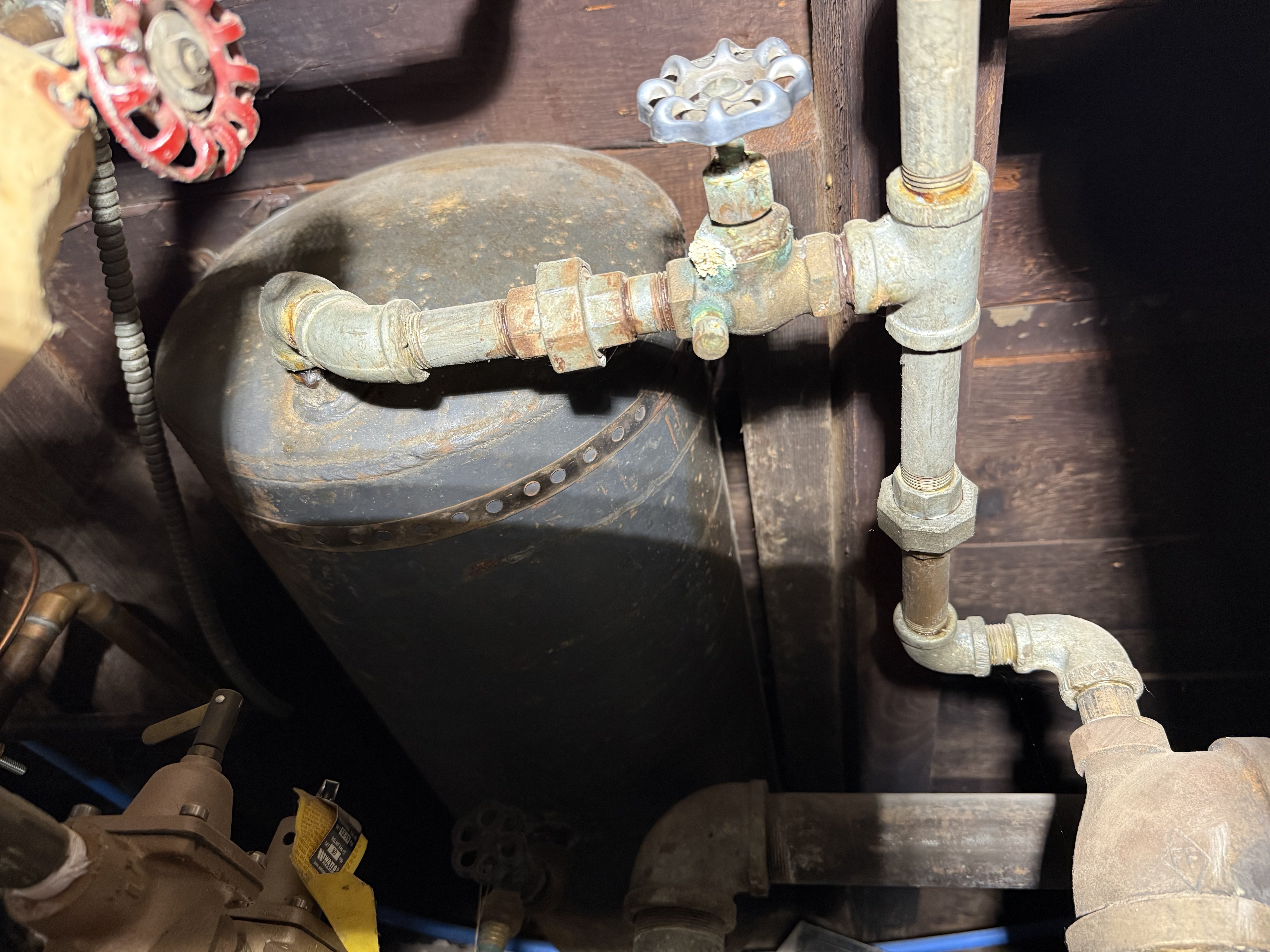
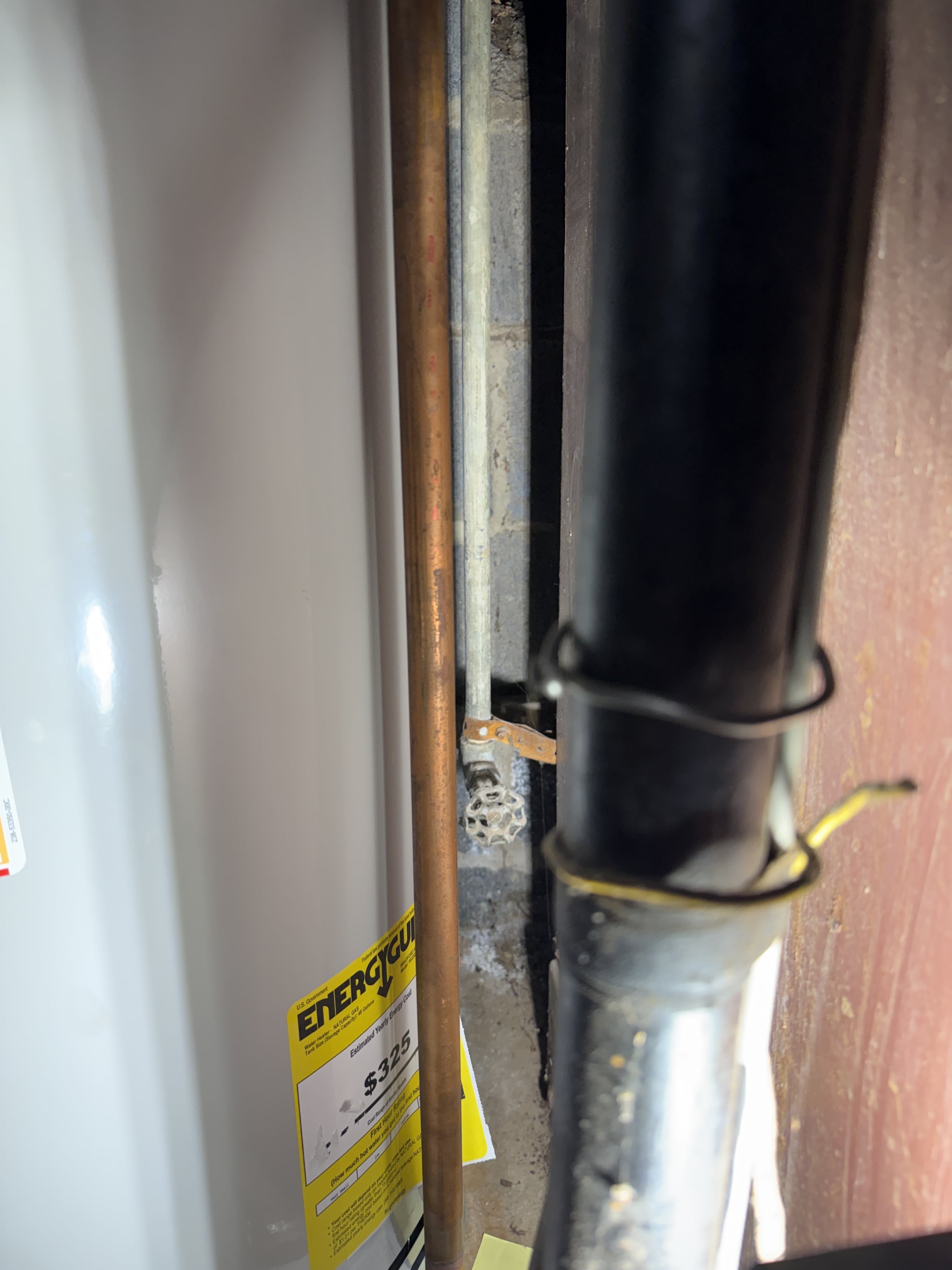
I believe the compression tank valve is my drain valve… I searched high and low for another valve and have located three. The tank, the PRV and the seized valve downstream of the PRV. Think my only option is replacing the auto feed.
0 -
I'm not sure — studying the piping a little — but you may also have a way to drain the compression tank. Though they don't need regular attention, they can get waterlogged on some systems — and the way to fix that is to close the connection to the rest of the system and then drain the tank right down to empty. Then close the drain and reopen the valve to the rest of the system and bring the system pressure up to where you want it.
Br. Jamie, osb
Building superintendent/caretaker, 7200 sq. ft. historic house museum with dependencies in New England 3
-
-
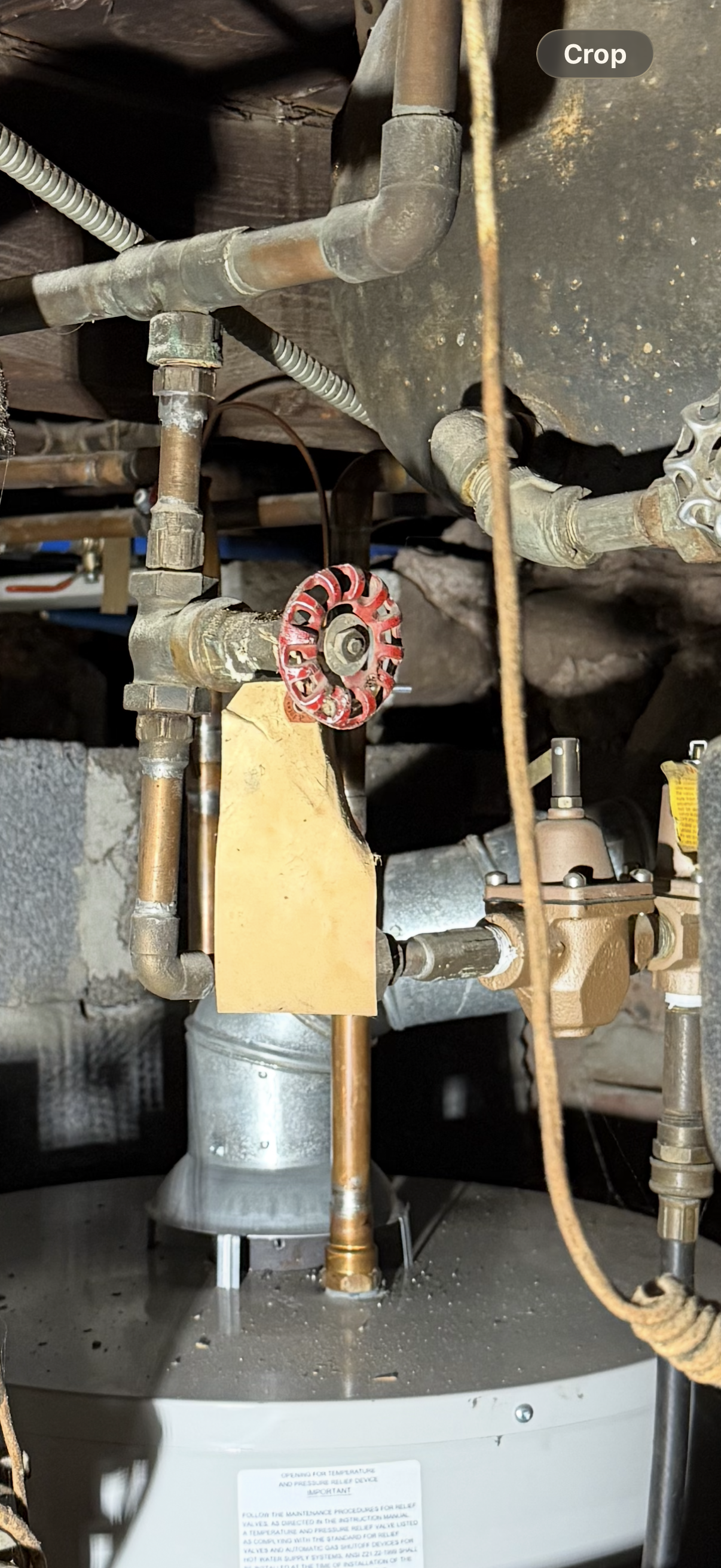
also, is it possible this red valve isn’t working or not allowing water to flow? I tried turning and it turns about 1/8 of a rotation, not sure if left or right is open, odd that the valve looks to open when spun right, but I found it turned left. If that makes sense…
 0
-
that is a gate valve. the gate is stuck if it is only turning 1/8 of a turn. it could be stuck open or closed.
0 -
I have delayed my attempt of switching out the auto fill given we had some cold nights.
Question - Given I don’t have a true drain valve on the boiler, can I hook a hose up to the compression tank to introduce water to bring my PSI up? Thinking I can update my valves come spring rather risking it now.
0 -
I find it difficult to believe someone installed a boiler with no drain valve, but I guess anything is possible.
1 -
I wouldn't run a hose into the compression tank. That tank is supposed to be full of air, not water.
1 -
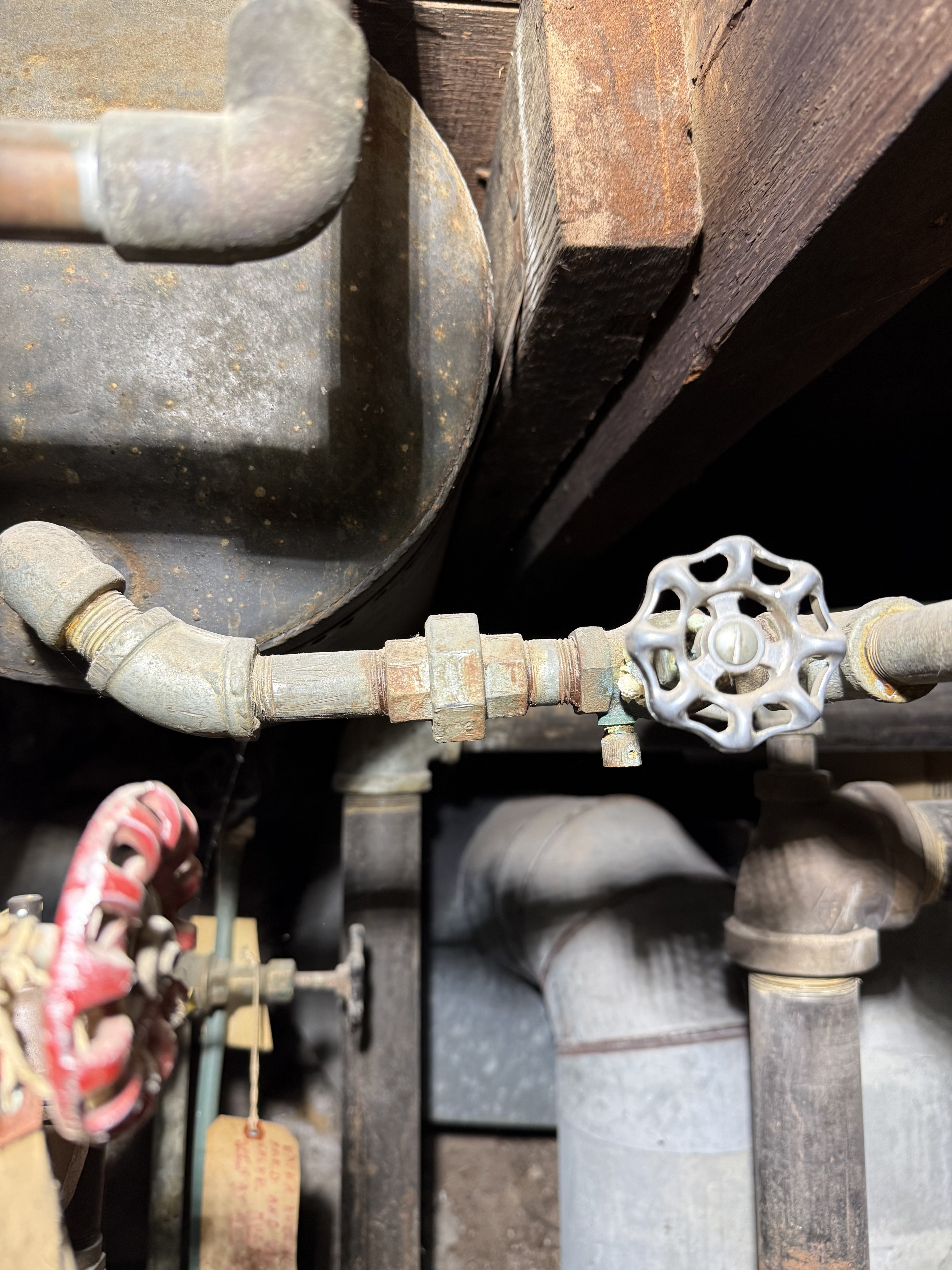
Forgive me if this has been covered. That red handled valve is the supply to the boiler. Open is turned counter clockwise. It very well could be jammed up. The grey handled valve isolates the tank.
That "drain valve" should/would be connected to the boiler. That's how it would maintain pressure. What am I missing? Is it nor connected to the boiler? Maybe it would have been connected with a hose to keep it topped up periodically?
Miss Hall's School service mechanic, greenhouse teacher, dog walker and designated driver
1 -
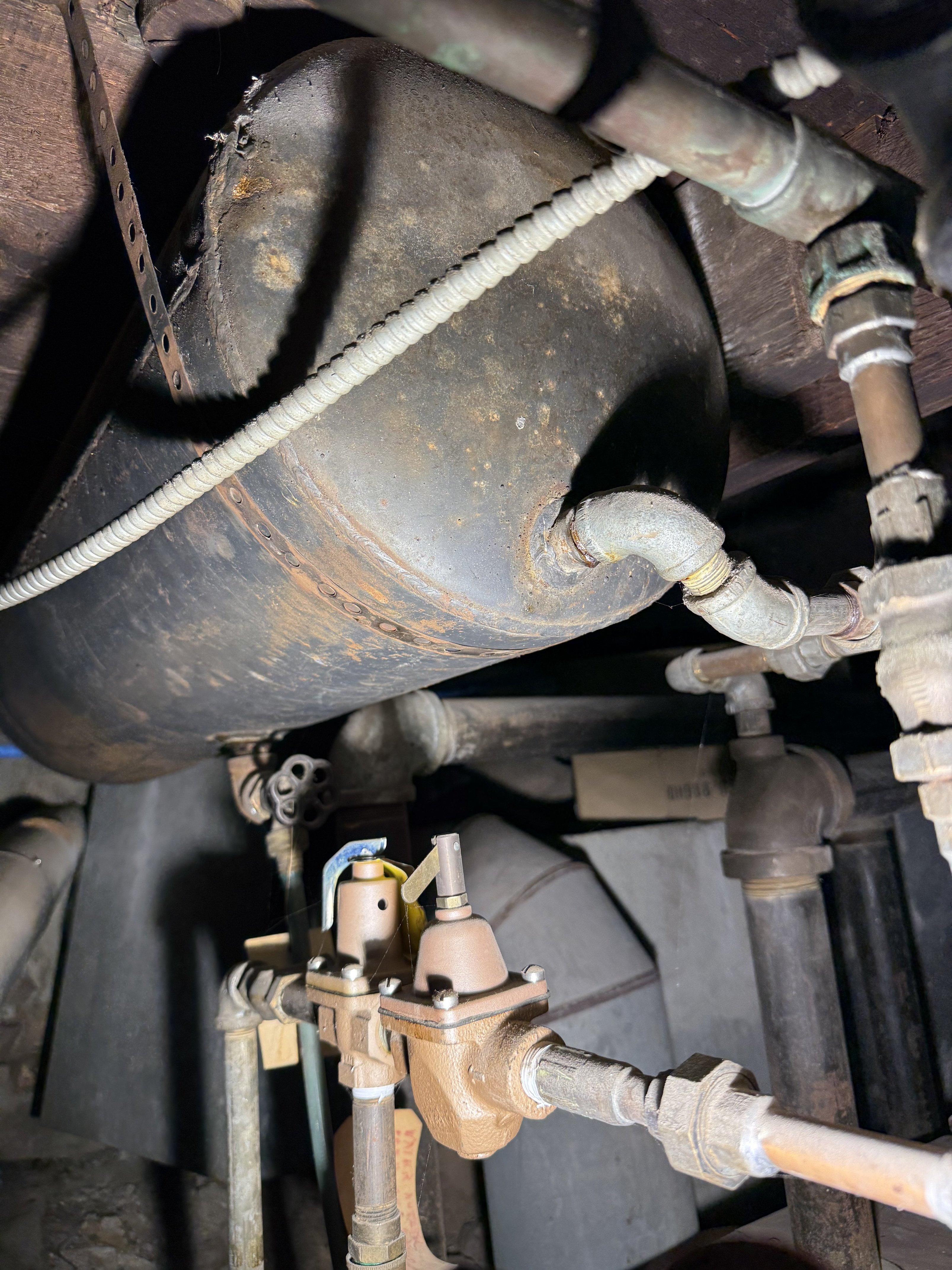
Ok. I hooked a washing machine hose up to the compression tank and started slowly filling. I opened the tank isolation valve DS of the tank to fill the system. Monitoring the gauge on the face of the boiler I successfully brought it up to 12 psi, verified w/ 0-30 gauge hooked up to the tank after disconnecting the hose. Will bleed a few radiators on the second floor this weekend.
question - should I drain the tank after bleeding and would I keep that isolation valve open during operation? I believe it was closed it also leaks when open.1





Categories
- All Categories
- 87.9K THE MAIN WALL
- 3.3K A-C, Heat Pumps & Refrigeration
- 60 Biomass
- 430 Carbon Monoxide Awareness
- 134 Chimneys & Flues
- 2.2K Domestic Hot Water
- 6K Gas Heating
- 124 Geothermal
- 170 Indoor-Air Quality
- 3.9K Oil Heating
- 80 Pipe Deterioration
- 1.1K Plumbing
- 6.7K Radiant Heating
- 397 Solar
- 16.1K Strictly Steam
- 3.5K Thermostats and Controls
- 56 Water Quality
- 51 Industry Classes
- 51 Job Opportunities
- 18 Recall Announcements