Welcome! Here are the website rules, as well as some tips for using this forum.
Click here to Find a Contractor in your area.
If our community has helped you, please consider making a contribution to support this website. Thanks!
why can't I weld copper?

Comments
-
Do you want to braze copper, or weld copper?
Both can be done. But I'm not understanding your question?
You can absolutely braze over a pinhole using 15% silphos.
Single pipe 392sqft system with an EG-40 rated for 325sqft and it's silent and balanced at all times.
 1
1 -
I've used 15% silphos to repair burst convector coils many times. Gotta chew the fins away to get in to the split sometimes. Also repaired a pinhole in a steam main, but it took some 55% to wet the steel before I could fill with the 15%.
0 -
If you scuff just around the pin hole, and you add a tiny bit of flux right at the hole, you can usually blob some solder and stop the leak. This of course is a temporary solution but will buy you time, but to answer your question, you need the right brazing rod. I still wouldn't trust it - one pin hole often means there's another close by.
1 -
That'll be up to you to figure out. Most plumbing/HVAC guys can braze up a pinhole pretty easily, and any decent TIG welder can weld copper.
 1
1 -
Hi, I'd go with the 15% silphos. Use mapp gas. I repaired many freeze damaged copper solar collectors using this approach. More or less heat affects how the filler metal flows, so you have a lot of control. I do like to clean the copper thoroughly first.
Yours, Larry
 3
3 -
what are you trying to accomplish?
0 -
When I'm trying to fall asleep I remember stuff from decades ago. Like when installing new underground water service. Sometimes somehow new copper pipe got dinged in the trench. When nobody was around of course. Patching; brazing; and welding was prohibited.
1 -
sems like a flare union would be the obvious choice.
0 -
As far as I recall brazing is allowed for buried pipe soft soldering isn't.
A flare works but a pack joint or similar coupler would probably be the first choice most would make.
Single pipe 392sqft system with an EG-40 rated for 325sqft and it's silent and balanced at all times.
0 -
what type copper, how old, what’s in the tube, pressure?
Bob "hot rod" Rohr
trainer for Caleffi NA
Living the hydronic dream0 -
As far as brazing copper it's done all the time especially in refrigeration you can just about fix anything if you can get to the leak. Coils are tough to repair first you have to cut the fins off and the tubing is usually very thin so too much heat and it will disappear in a hurry.
As far as using it on water it will work but I don't know if brazing rod is lead free.
Does solder have to be sanitation approved?
And as @GroundUp up mentioned you can tig copper.
1 -
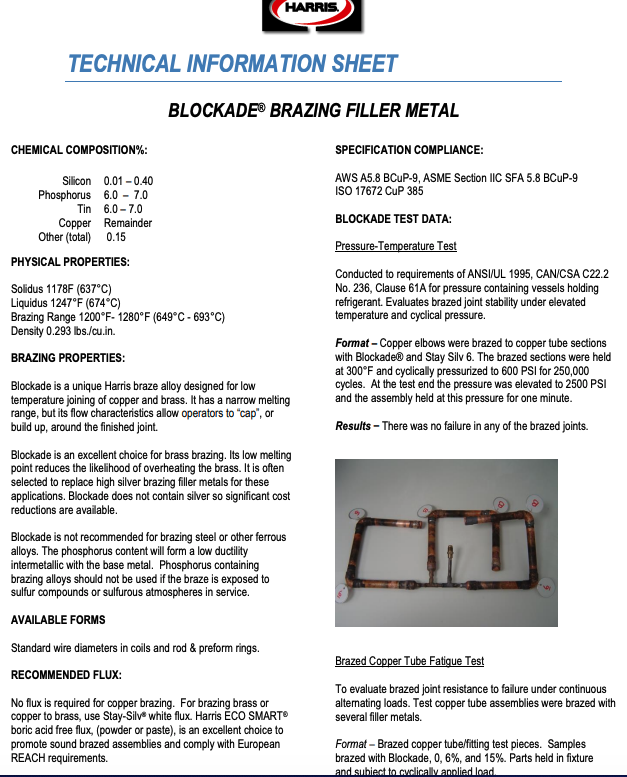
This Blockade is a great product for patching or loose joints. A lot less $$ compared to silver bearing rods.
Low melt point, caps nicely.
Nothing about NSF however if it is potable water.
 Bob "hot rod" Rohr
trainer for Caleffi NA
Living the hydronic dream0 -
If your question is, "why is it prohibited" and not, "is it possible"? The answer is a contamination concern. On a water main, underground, a pin hole is what the backflow people call aspiration. Aspiration on a pipe can cause the venturi affect and with flow changes, turn a pinhole into a suction port (very basic description) and draw ground water into domestic main causing contamination. For a long time soldering underground at all was prohibited (not so anymore I believe) and brazing was supposed to be inspected (dont think so anymore either). With flare unions and water service locking compression fittings, its literally never necessary. I have had to braze repairs on soft copper that supplied gas lamps, but thats fuel code, not plumbing, dont think its at all addressed in the mechanical code.
0 -
I mentioned a pack joint earlier, there's also other variations of it, all of which seem very beefy and durable.
Here's a video showing a few of them and how they work. I don't remember why I picked a pack joint over the others, but it's the only one I've used and I trusted it enough to even use it in my basement.
Single pipe 392sqft system with an EG-40 rated for 325sqft and it's silent and balanced at all times.
0 -
0
-
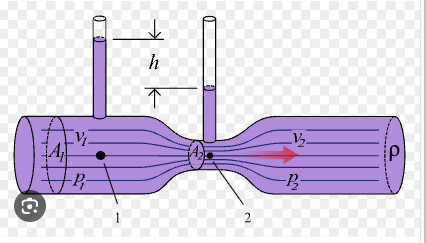
I think you would need an actual venturi for any flow to be pulled into a pipe or tube under pressure?
The venturi creates a low pressure zone, this is how a carburetor works, the soap nozzle on your pressure washer, or your aquarium vacuum.
Backflow or backsiphonage would be need to create a negative pressure to pull water in. Which could be possible with a broken main or large fire hydrant draw up stream.
 Bob "hot rod" Rohr
trainer for Caleffi NA
Living the hydronic dream0 -
I think solder underground is correctly prohibited. But I bet SuperGirl can find countless examples with her xray vision. I've come across them numerous times. I also think that there's gazillions of leaking solder connections underground since I've come across those too.
0 -
silly question
Did you get all the water out!
0 -
that might be the main reason not to solder underground
0 -
Exactly right...sort of. All you need is restriction and flow and the venturi effect can occur, so imagine a rock fell on the water main as the backfill was occurring (no hole, just a dink in the pipe), then a poorly solder joint is directly downstream. Picture a tiny hole where the hand drwn image is labeled vacuum tube. With the high velocity through the restriction a LOWER pressure zone is created. The hole would then become a vacuum port and draw ground water in. None of this is at all likely, just possible which is why backflow preventers are a huge industry. (Can you tell I am a certified backflow preventer tester?) Im sure at least a few people on here have the certification as well.
1 -
One more thing, "venturi" is an effect, not a thing. We call venturi tees venturis because of the effect, not the other way around. So we dont need a venturi to produce a venturi. We can purposely create the effect by using a tee designed to produce the effect, but it can occur without our intervention...like a hole in a pipe underground.
1 -
do actual water mains run much velocity?
0 -
The Italian company I work for manufactures venturis. AKA venturi tubes. Venturis are what make a measurable balance valve possible. You take a pressure reading across the venturi to translate into a flow number.
It’s fitting since the Italian physicist Giovanni Venturi discovered the principle in the 1700’s
Venturi (noun) is a device.
Venturi Effect is the concept or principle, and it can be as simple as a restriction in a pipe or tube. The cone, orifice, or restriction disc in the diverter tee is the venturi, that creates the Venturi Effect
Bob "hot rod" Rohr
trainer for Caleffi NA
Living the hydronic dream1 -
except in a diverter tee it isn't really a venturi, it is splitting the flow between the branch and the run, the partition splits the flow, it doesn't force all of the flow down in to a smaller passage. if the venturi effect were the main operating principal it wouldn't be a disaster if you put one in backwards.
1 -
good point!
Bob "hot rod" Rohr
trainer for Caleffi NA
Living the hydronic dream1 -
Given the fact that street water mains and building service lines are often within a few feet of the building house drain and sewers/Septic systems (sometimes stacked in the same trench) AND usually above them, cross contamination via a pipe break is a very real and potentially harmful possibility. Mad Dog
 1
1 -
shouldn’t that be “we’re in close proximity “!
0





Categories
- All Categories
- 87.9K THE MAIN WALL
- 3.3K A-C, Heat Pumps & Refrigeration
- 60 Biomass
- 430 Carbon Monoxide Awareness
- 133 Chimneys & Flues
- 2.2K Domestic Hot Water
- 6K Gas Heating
- 124 Geothermal
- 170 Indoor-Air Quality
- 3.9K Oil Heating
- 80 Pipe Deterioration
- 1.1K Plumbing
- 6.7K Radiant Heating
- 397 Solar
- 16.1K Strictly Steam
- 3.5K Thermostats and Controls
- 56 Water Quality
- 51 Industry Classes
- 51 Job Opportunities
- 18 Recall Announcements