Opinions needed on needed boiler piping repair

Hello,
I am hoping to get information / opinions / reassurance from the experts here.
Problem:
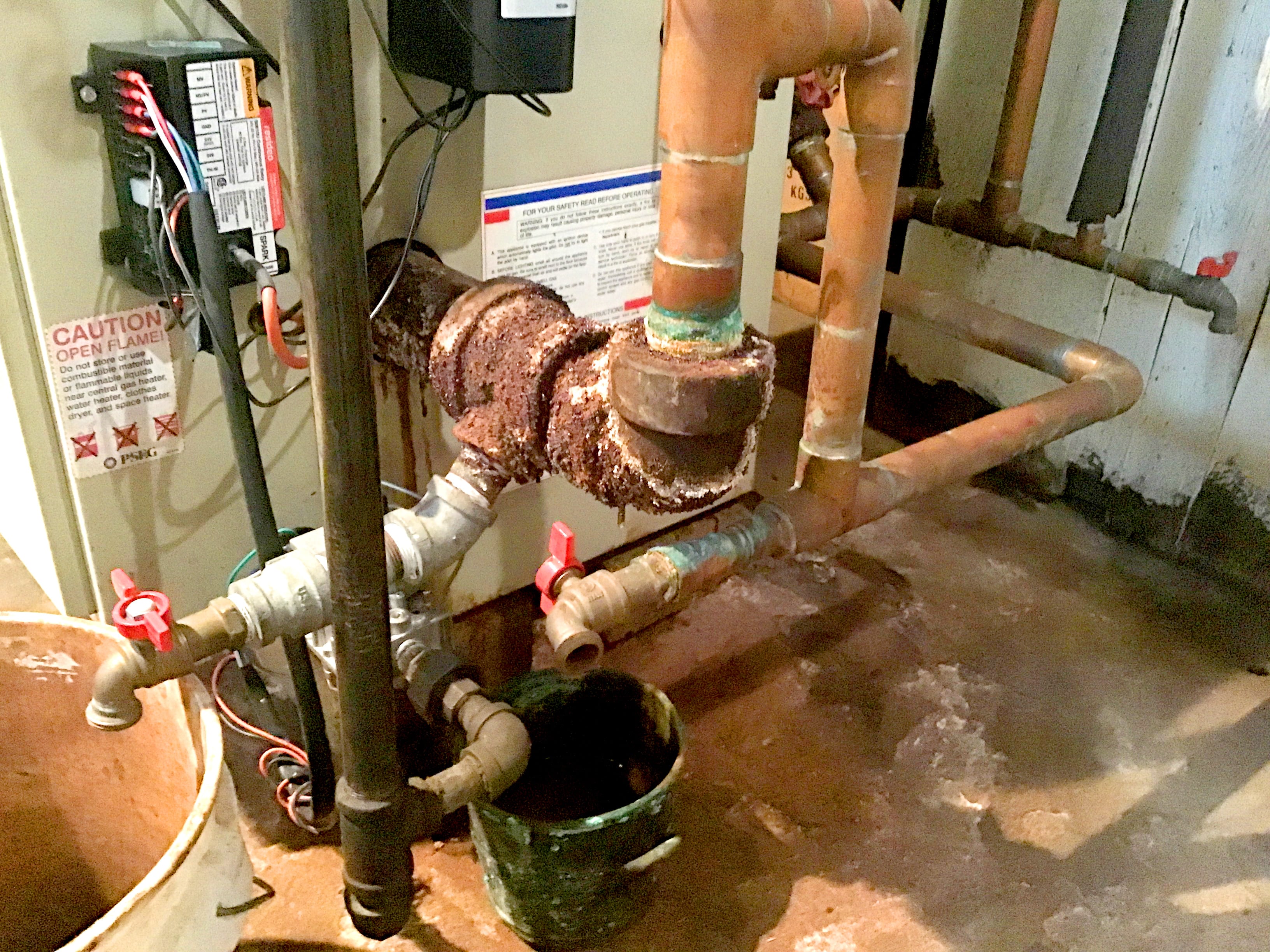
There has been a continuous slow-drip leak from the underside of the return piping of my boiler for quite a few years now. Two years ago, I got a quote from an incredibly reputable plumbing contractor that included replacing the copper Hartford loop with the proper material. But because I had an emergency vet expense shortly after, I wasn't able to swing the repair at the time. Since my boiler is getting up in years (installed in December 1992 by a previous homeowner), I was hoping maybe a replacement could be in the cards in the not-too-distant future. But money has continued to be very tight, so nothing has been done yet. During the off-season this year, the return has gotten increasingly corroded around the whole thing.
This week, I had the gas and electric company come to check the system before the heating season gets going (I have a service contract with them). Once the boiler got going, a bit of steam began to waft from the return pipe, so I can't wait any longer to fix it.
Dilemma:
The tech said I can get the return piping replaced for the cost of 1–2 hours of labor; the current Hartford loop will be left. He did acknowledge that it shouldn't be copper, but said it was in good shape. (It was installed November 2006.) I booked it for next week, but am starting to stress about it.
If I were in a less strapped situation, I wouldn't hesitate to do the complete repair, but that's not my reality. I have a couple of other home issues yelling for attention, although heat is obviously incredibly important. Is there any risk or downside to leaving the Hartford loop at this time? I could always replace it later if it becomes a problem. The return pipe seems pretty straightforward to me (though I'm just a hopeful-thinking layperson!), but is there any risk it could be installed incorrectly? I'd hate to have the Harford loop act up in a few months and then learn the return is wrong and end up spending more over the long run.
Not sure if it's needed, but I am including a pic.
Thanks in advance for any responses.
Comments
-
That all does look pretty crusty… but I understand your dilemma. Been there…
Quite right — the Hartford Loop shouldn't be copper. But it's doing no harm where it is, and it doesn't appear to be leaking. In your setting, there's no harm to locating and repairing the leak and getting on with life.
Br. Jamie, osb
Building superintendent/caretaker, 7200 sq. ft. historic house museum with dependencies in New England
 3
-
Anything below the water line, is probably better off in copper. Won't build up all that lovely sludge, that steel builds up. If it was copper going to the boiler, with brass between the boiler and the copper, that probably would not be leaking
 2
-
Leave the HL as it is and just replace what is leaking and you will be fine. If its not broke don't fix it.
3 -
I'll echo what the others have said. But I would remove all of the black pipe and the fittings and replace with copper and a union on the vertical piping. Your worries in regards to that issue will be over.
Miss Hall's School service mechanic, greenhouse teacher, dog walker and designated driver
1 -
Thanks for the reassurance, @Jamie Hall @STEAM DOCTOR @EBEBRATT-Ed @Grallert. I have a tendency to overthink and over-worry.
0 -
It appears that there’s a leak where the black nipple connects to the boiler. That could be a problem when trying to get it loose from the block. No one can say for sure until they try.
Bob Boan
You can choose to do what you want, but you cannot choose the consequences.1 -
-
Yes.
Bob Boan
You can choose to do what you want, but you cannot choose the consequences.1 -
Do what you gotta do....and don't give it a second thought. Mad Dog

 4
-
I've realized I was more concerned about what could go wrong with the repair of the return, so extra thank you to @Ironman for giving me a head's up by noticing the potential hiccup.
Thanks, all!
0 -
@Mad Dog_2 @Ironman @EBEBRATT-Ed @Jamie Hall
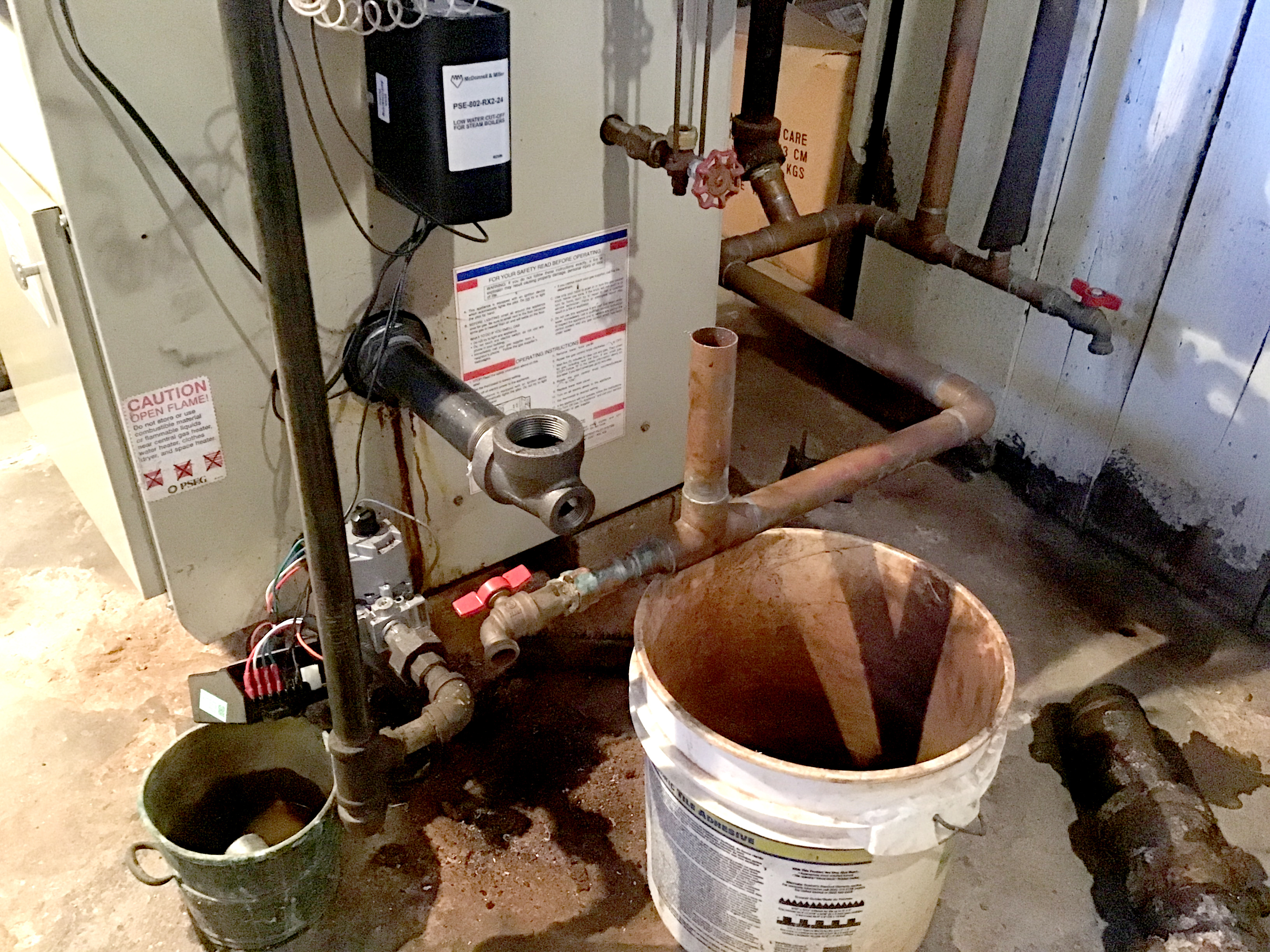
Any of you see any red flags with what's happening? Gas company's techs are here now. I almost had a heart attack to discover how much of the Hartford Loop was removed.
 0
-
There might be a struggle to get a valve in the end of that cast tee, but that could be the angle of the picture.
No red flags.
Miss Hall's School service mechanic, greenhouse teacher, dog walker and designated driver
1 -
you'll probably have to skim the boiler a couple times to get the oil form that new pipe out.
 1
-
Funny you should say that @mattmia2
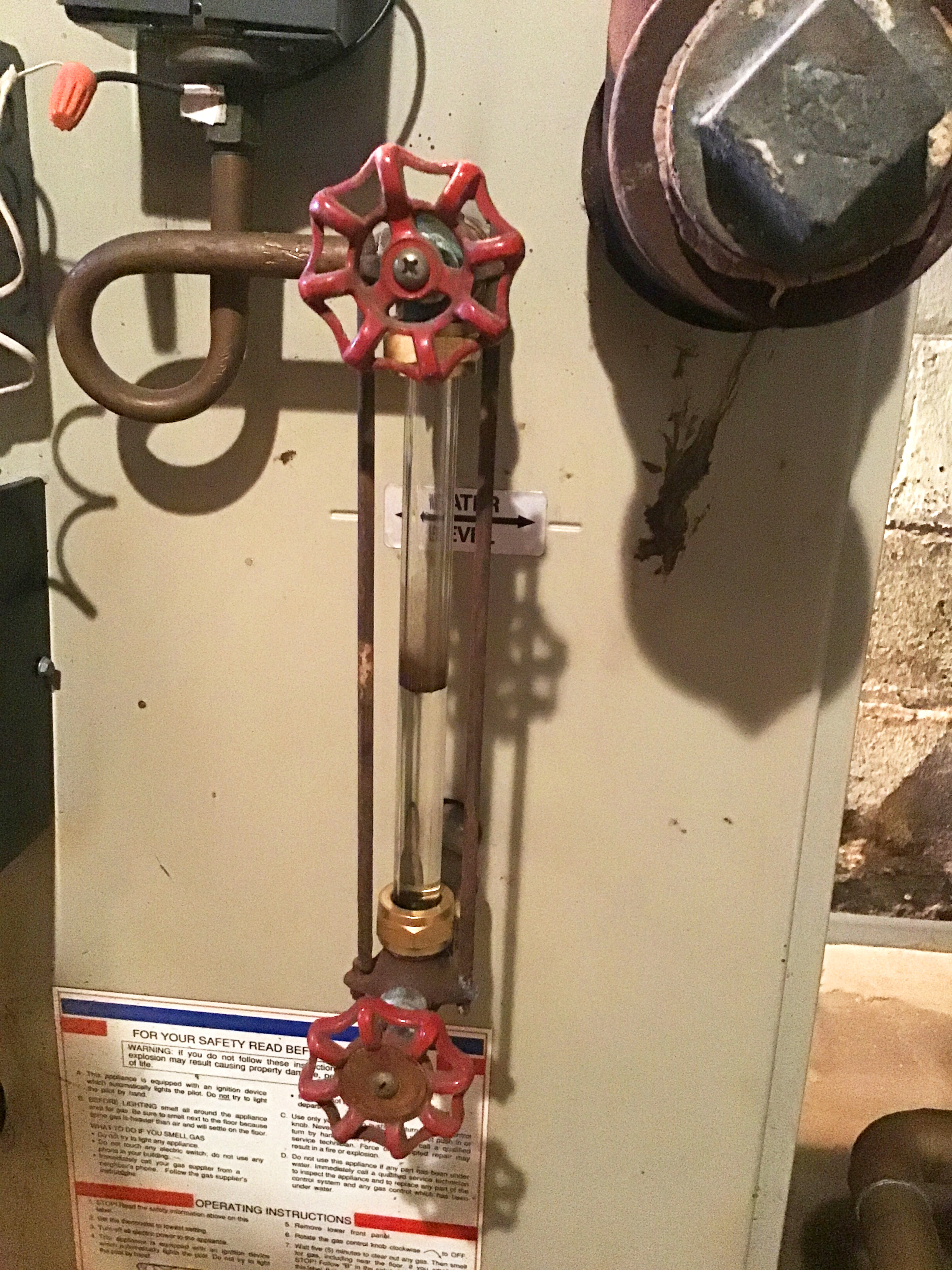
I had pointed out the color of the water in gauge as not being normal (too gray-ish / black-ish) and I was assured it was OK (did look more brown-ish when a light was put behind it). Just a quick search on The Wall am seeing skimming is not something I'd be comfortable doing myself. [SIGH]Oh, but they did say they put a cleaner in. Can't wait to find out if that's wrong. 😬
0 -
If you find that the boiler water surges (the water jumps up and down in the gauge glass) and you hear more noise than you are used to, call the repair contractor and report the issue as a change in performance from what you experienced before the repair. The pipes may not be leaking, but the heat is not working properly and the system is noisy.
When the repairman arrives, have the manufacturer’s instructions for skimming the boiler ready for them.
Remember to provide as little technical information as possible until the repairman arrives. State things like, “It’s making noises it didn’t make before,” “Some of the radiators are not heating,” or any other simple symptoms the customer service representative (CSR) can understand as a problem.
Getting too technical with the CSR may only delay dispatching the service technician.
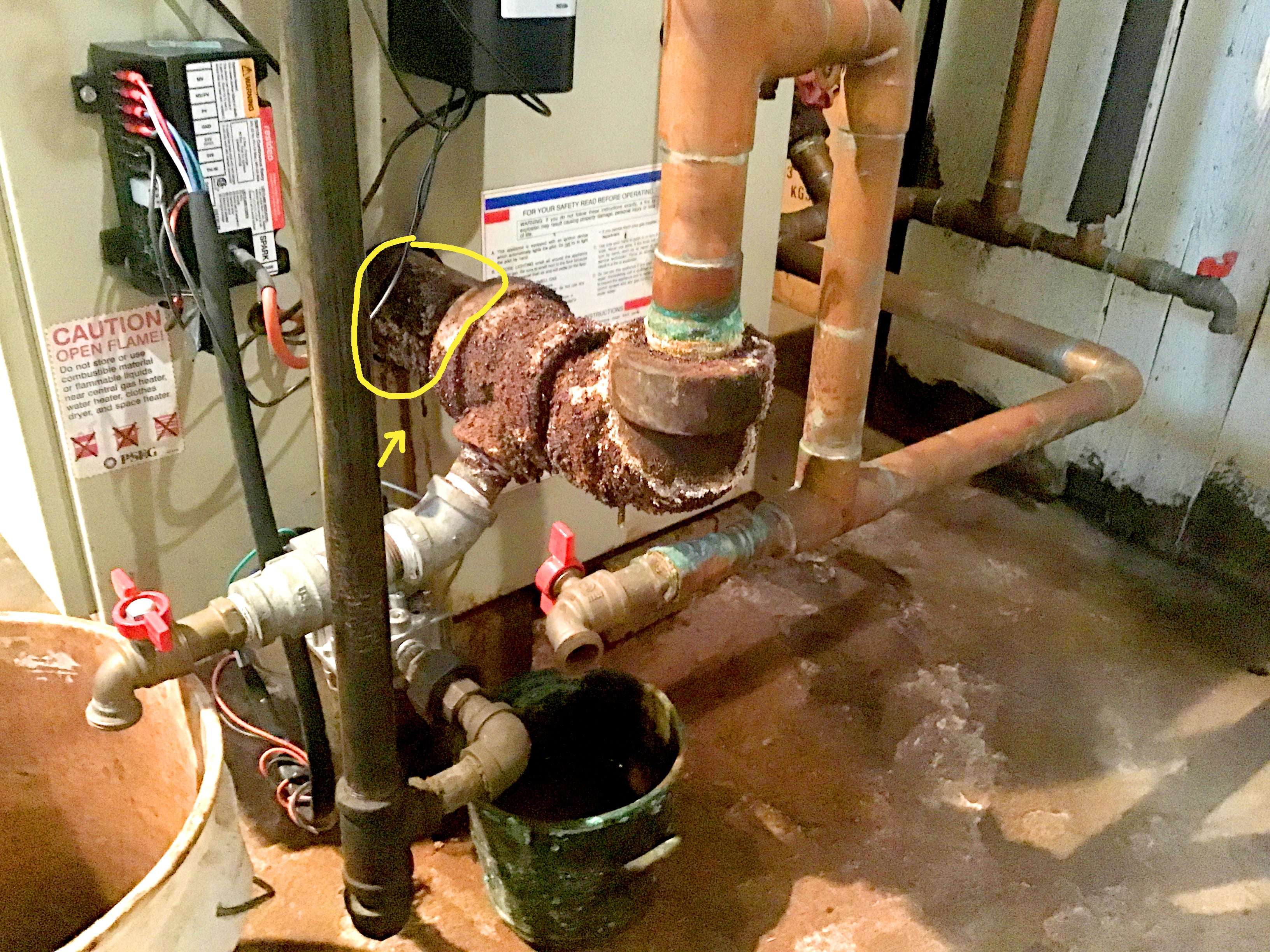
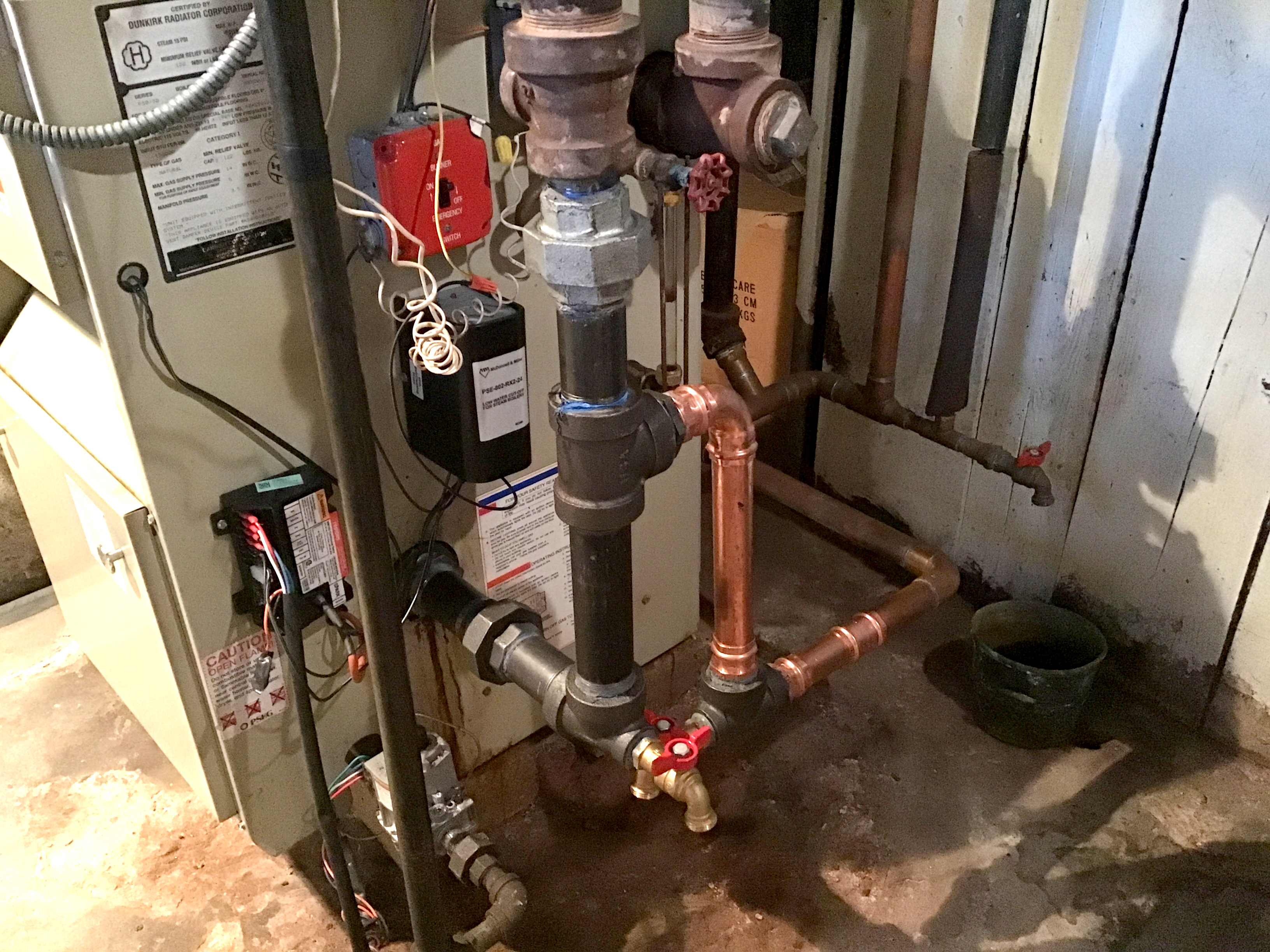
BTW: what does the final repair look like?
Edward Young Retired
After you make that expensive repair and you still have the same problem, What will you check next?
1 -
Thank you for the tips @EdTheHeaterMan
It's my gas company and I can just schedule service online without details. The water does jump, but that's not new for my system. Heat's not needed a whole lot yet; just enough to take the chill off in the morning. Will seek out the manufacturer's skimming instructions.
This is what the gauge looks like now while the heat's off. I'm assuming that's the oil on the top now rather than mixed in earlier when the heat was on.
 0
-
looks like oil to me. they should have skimmed it as part of the repair work. Looks like that plug at the upper right is the skim port.
2 -
-
Gas Company Repair.
0 -
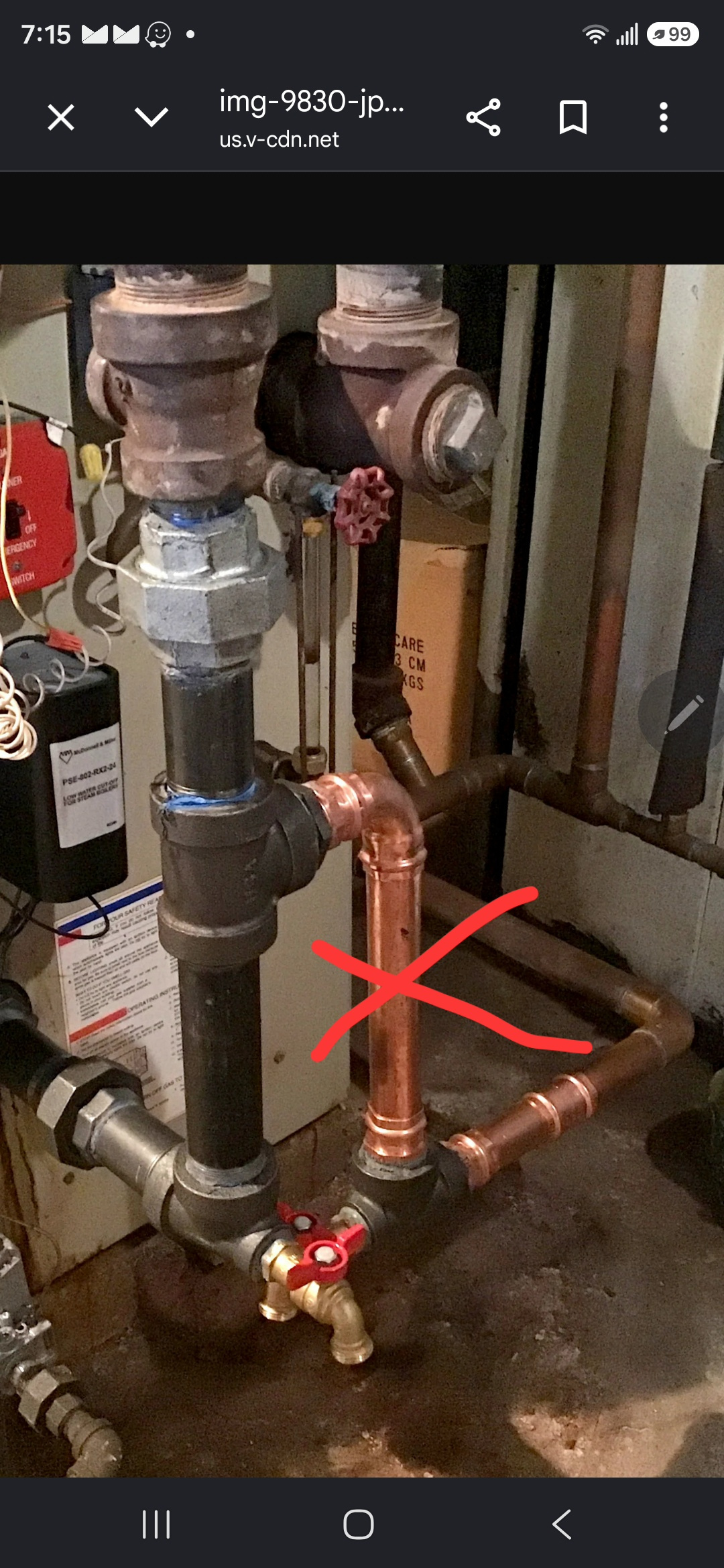
They did a nice, neat job. We always install a gate valve - or in a pinch a ball valve - where X marks the spot for isolation and power flushing of the wet returns, but you Good-to-Go-Bro!!!! Mad Dog
1





Categories
- All Categories
- 87.9K THE MAIN WALL
- 3.3K A-C, Heat Pumps & Refrigeration
- 60 Biomass
- 430 Carbon Monoxide Awareness
- 134 Chimneys & Flues
- 2.2K Domestic Hot Water
- 6K Gas Heating
- 124 Geothermal
- 170 Indoor-Air Quality
- 3.9K Oil Heating
- 80 Pipe Deterioration
- 1.1K Plumbing
- 6.7K Radiant Heating
- 397 Solar
- 16.1K Strictly Steam
- 3.5K Thermostats and Controls
- 56 Water Quality
- 51 Industry Classes
- 51 Job Opportunities
- 18 Recall Announcements