Staple-up concerns after install

I had full house heating upgrade this past June, including a Rinnai combi boiler, baseboard in the basement, and staple-up pex for the main floor. Since then I've had two leaks in the pex tubing from it being penetrated by existing nails/screws while shifting/expanding. The installers came back to repair both with crimp couplings, even though I asked the to replace the entire loop. They were talking like it is so hard to see every little screw point and this sort of thing is inevitable, but I'm not buying it. For about half of the runs, they used high quality solid plates that separate the pex from the floor. If they had used these throughout there would have been no possibility of punctures. For the rest though they cheaped out and used plates that look a lot like aluminum foil bent over the tubing. The cheap plates also make SO much noise, constant crackling any time the heat is on.
Am I within reason to demand that they replace the cheap plates and the full loop where the leaks occurred? I put it off for a while but I'm finally getting the final inspection from the city soon. With winter coming I want to insulate the ceiling, but not if there's a risk of another leak! I know the couplings are legal, and used in plumbing all the time, but I'm still having a hard time accepting them when I wouldn't need them if they had done thing properly to begin with.
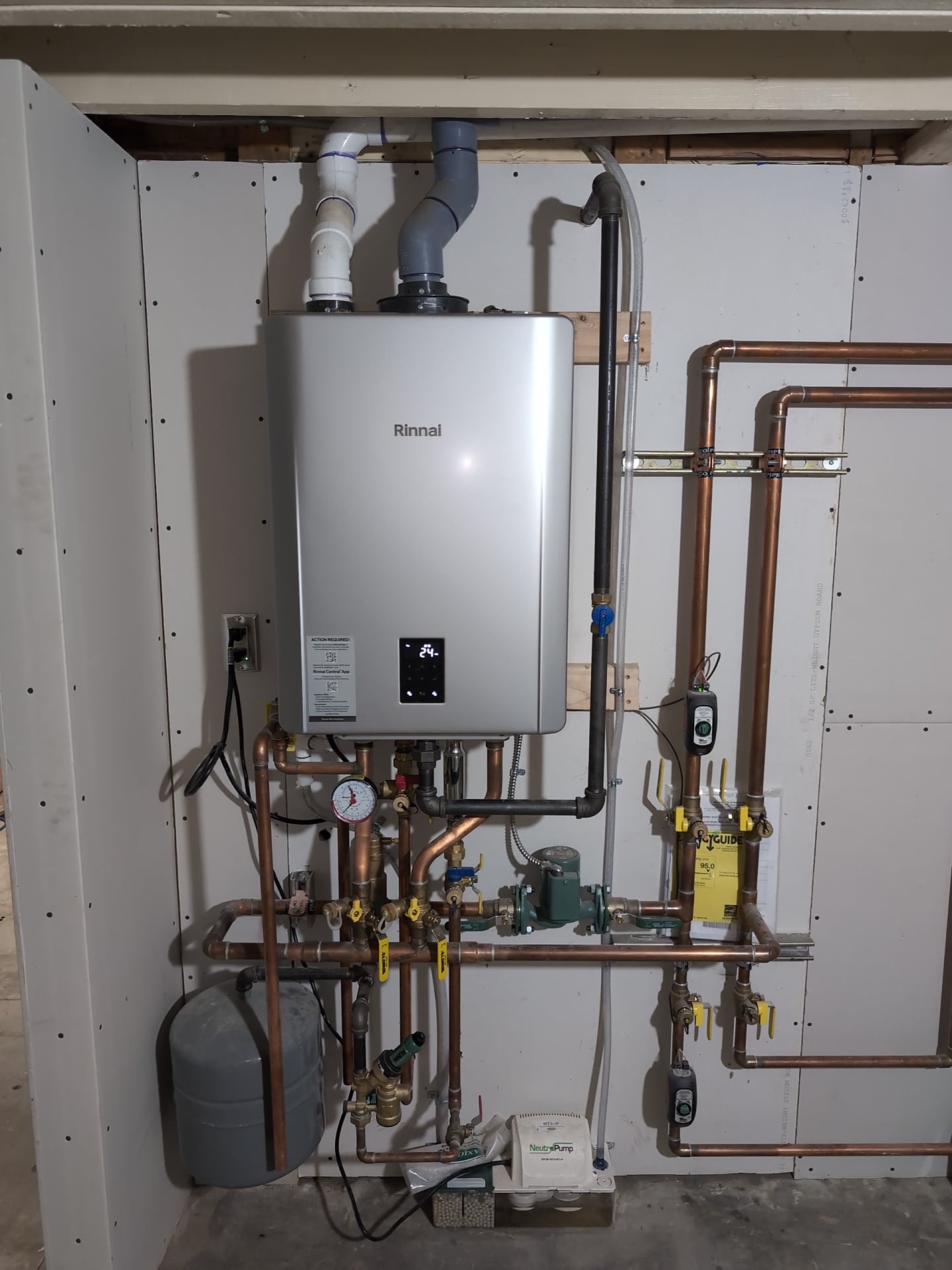
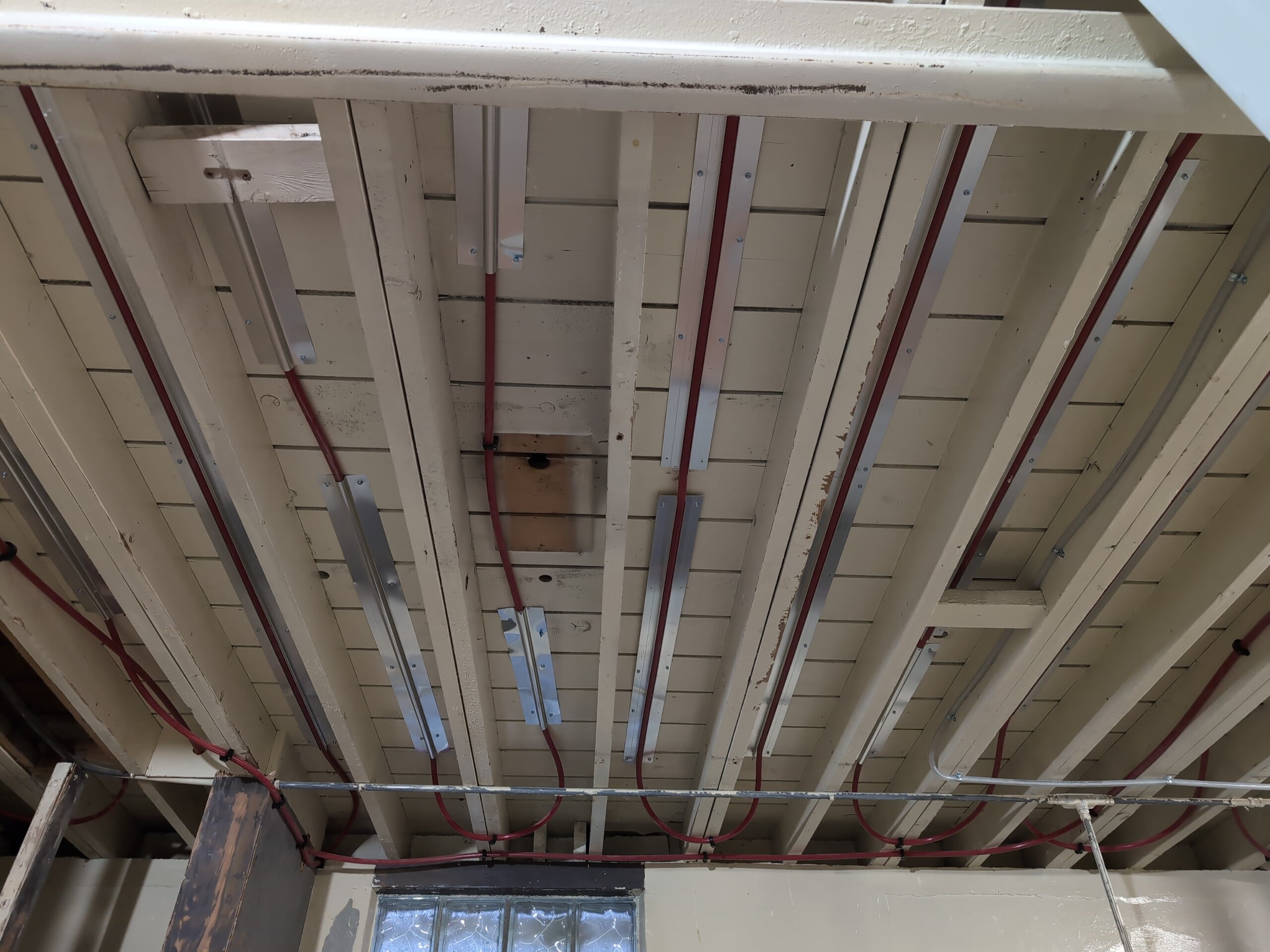
Two different types of plates
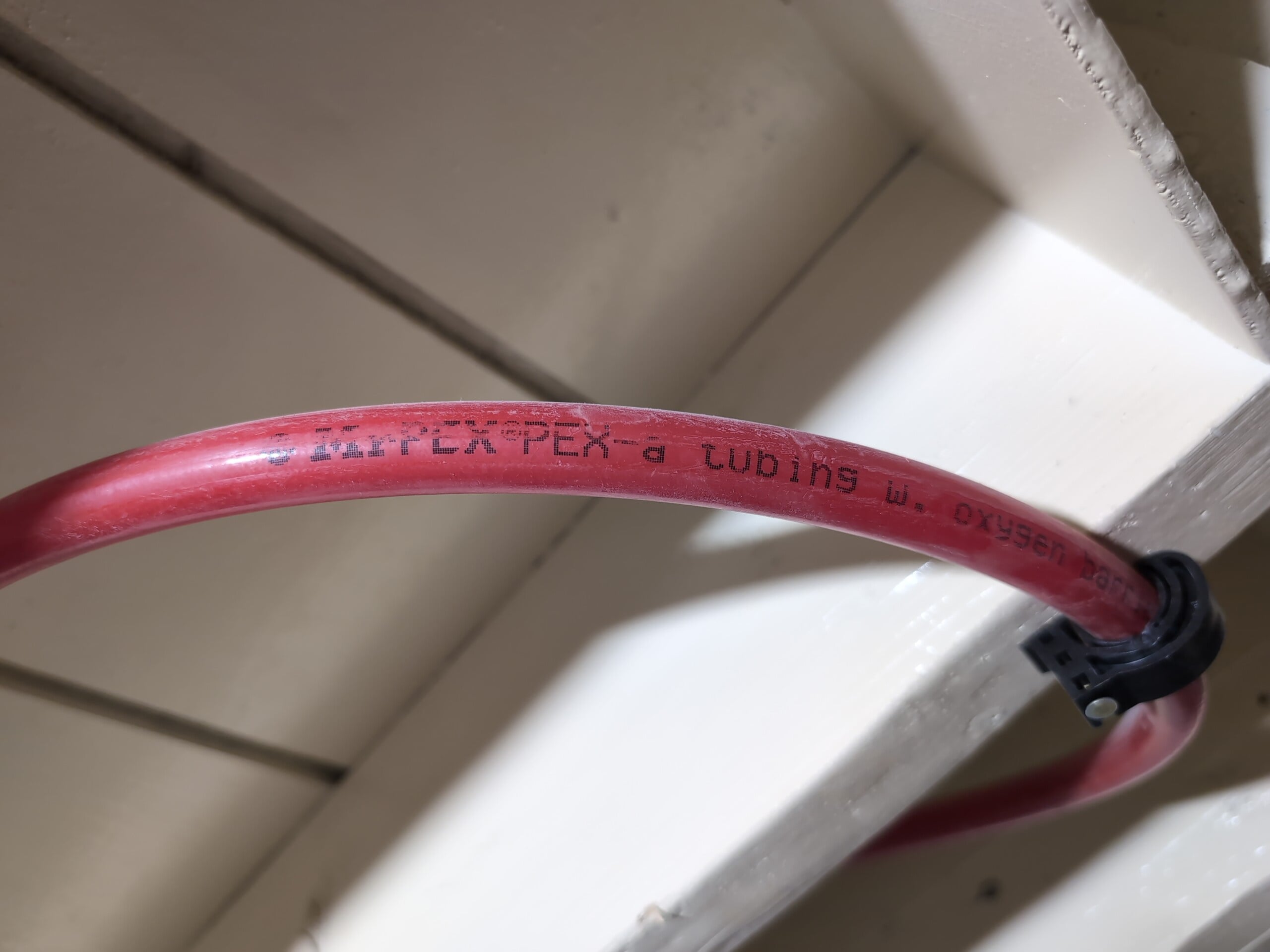
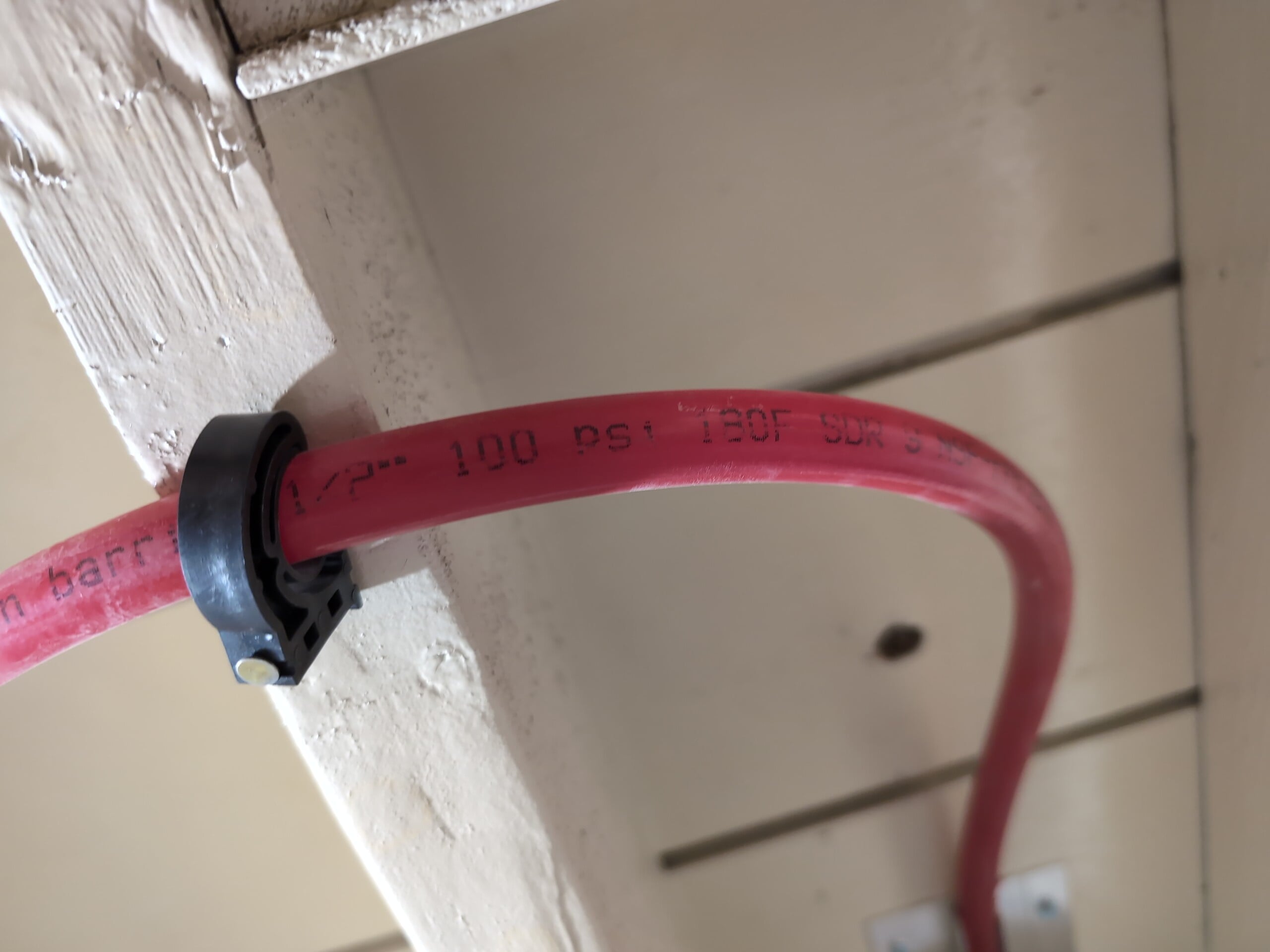
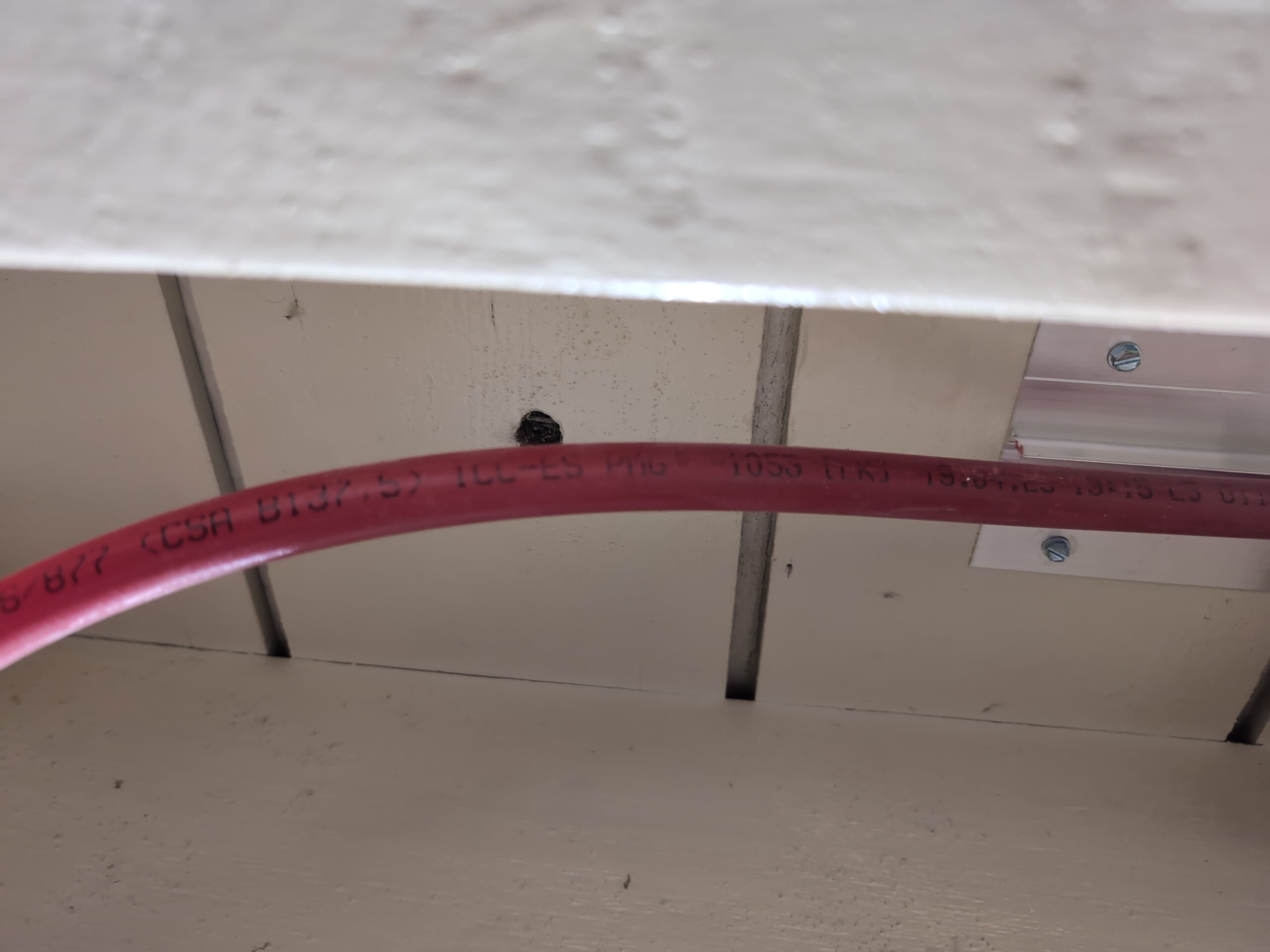
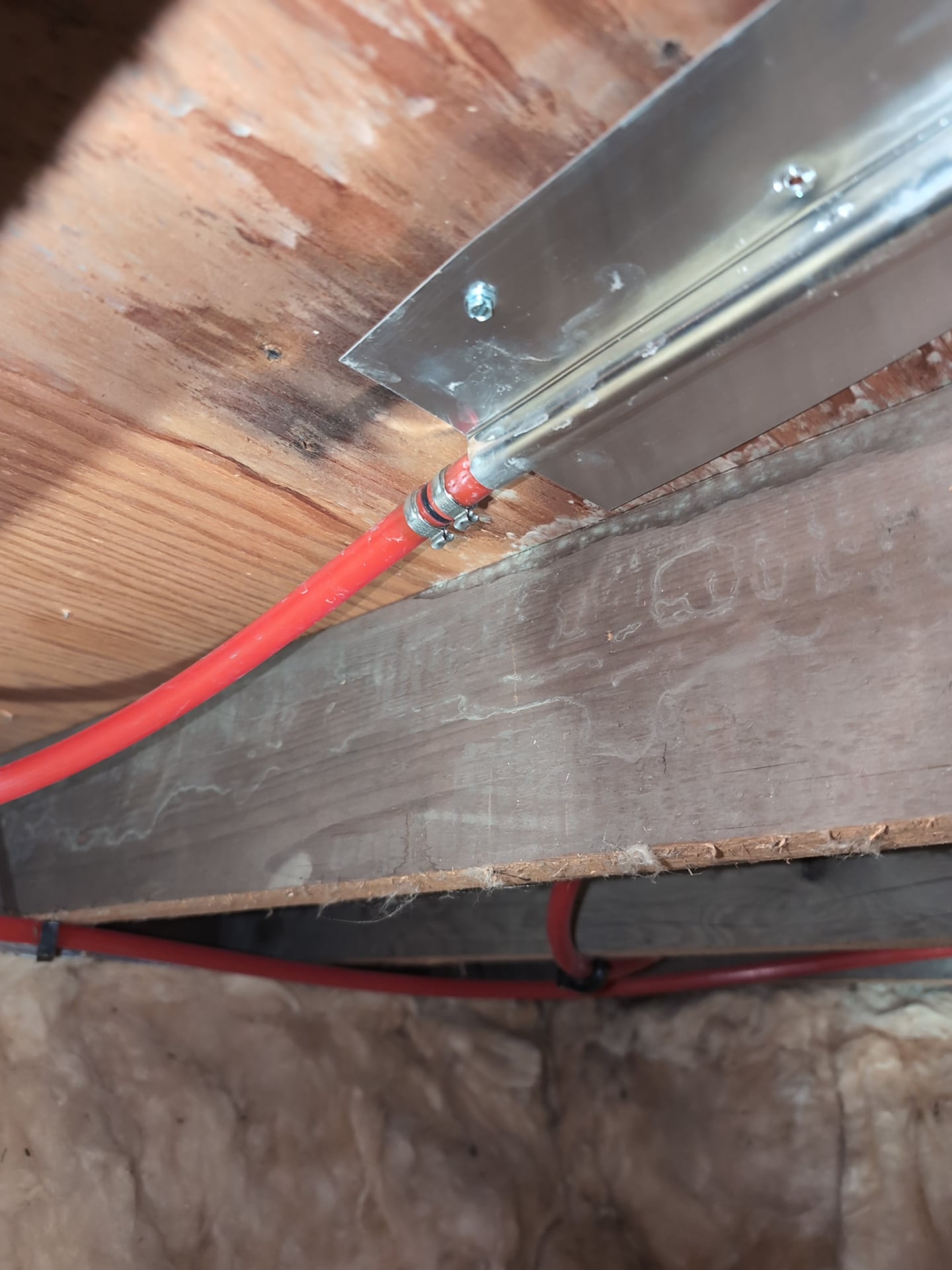
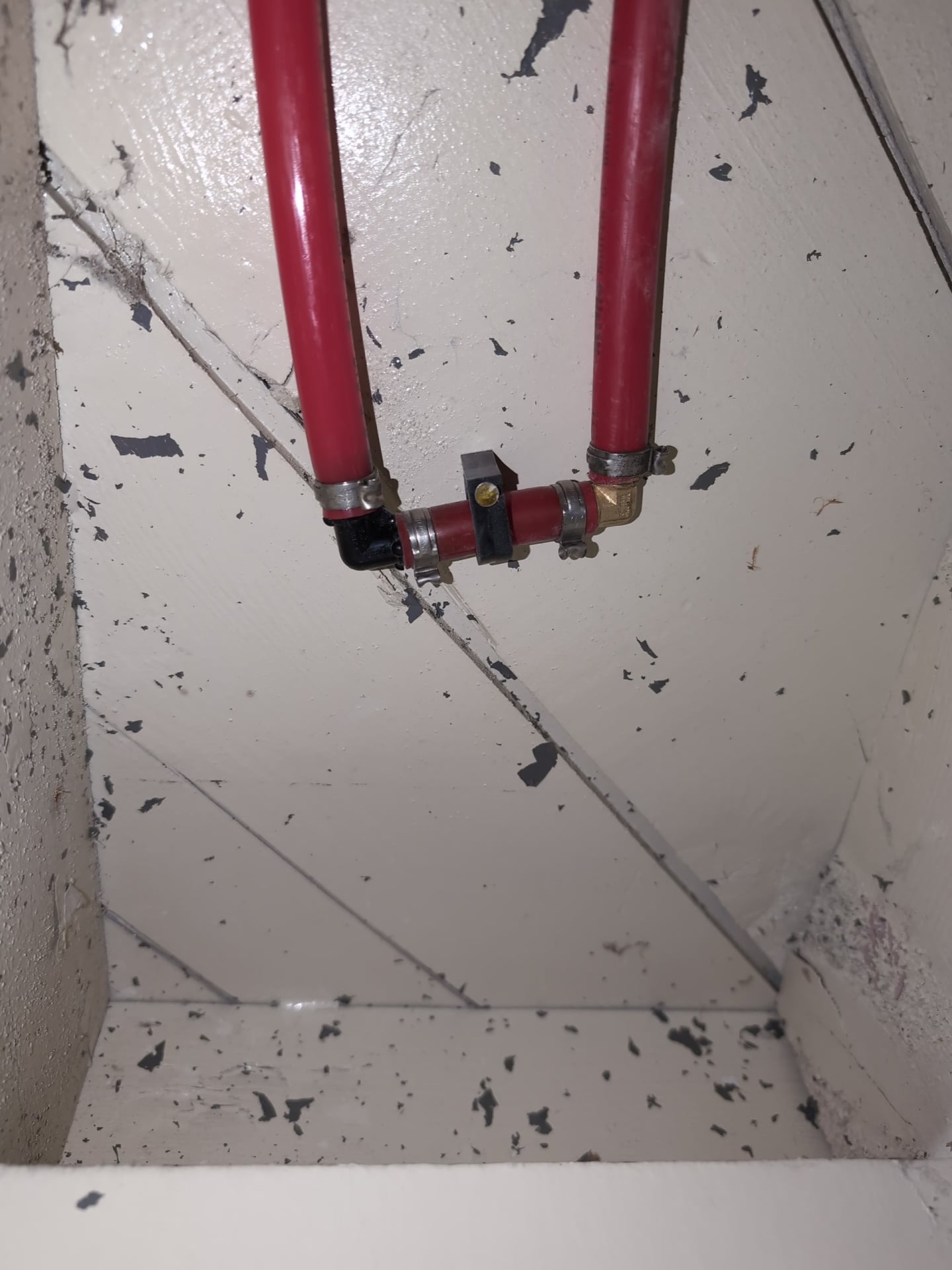
I also found this in a hidden corner of a different loop, apparently original to the install
Thanks!
Comments
-
You've been through one winter with this? Did it heat the space well?
The joints are probably fine. I much prefer to see expansion fittings over crimp. And brass over poly but I can't quote you evidence brass is better.
It is disappointing to see the taco circ installed with the incorrect orientation of the motor axis.
What is your climate? With only one tube per joist bay, that would be hard to keep up with many cold regions.
Is the outdoor reset function on? That can improve efficiency, make the heating run "all the time" at lower temp so you get less issues with expansion and contraction noises
0 -
since it is pex a i would rather see expansion couplings but crimp couplings done correctly are acceptable. i don't think i would push them to replace the whole loop.
finding the nails isn't hard if you are paying attention. maybe they need to take the plates down and check and replace any sections of tubing that they skewered on a nail.
what did they spec for the plates? it is hard to hold them to a specific product if it wasn't called out in the spec although you can make them make the plates they did use not make noise when they move.
0 -
The tin foil plates are not “bad”. In heat output they are a step up from only tubing under the floor and the extruded plates are another step up. It is possible they used what they needed for the heat output. I do many jobs with only tubing. Plates or not is determined by the heat demands of the room, the available or desired supply water temps and the R-value of the floor. A coupling is not a big deal, however, I cringe seeing those elbows. They add a fair bit of head but if it’s a loop with plenty of flow vs the other loops it will be fine. Long story short, the question is, does it do what it is supposed to? That is, warm the floor or the whole room, whichever is the design.
1 -
You can demand all you want, but a company that doesn't know how to install a gas line, circulator, or underfloor tubing correctly isn't likely to oblige. There is nothing wrong with the couplings or the beer can plates, but some diligence should have been applied prior to installation of the tubing. Removing the talons on the ends of each loop will help significantly with noise. So while I sympathize with you, they have no obligation to replace the whole loop and frankly, they shouldn't. But they should come back and fix the pump (horizontal motor), gas line (no sediment trap), and remove those talons for nothing.
1 -
Any nails or screws that were protruding through the floor should have been ground off before the installation of the tubing. If they did not take care to do this, you have the possibility of more leaks showing up.
Unless you’re in a very mild climate, that floor is not gonna produce enough heat during cold weather with only one tube per joist bay.
The tubing should not be strapped down at the “U” bend. It needs to be allowed to expand there.
I’m not impressed with what they did - at least not in a positive way.
Bob Boan
You can choose to do what you want, but you cannot choose the consequences. 3
3 -
The extruded plates are so much better—they protect the pex and make great heat absorption from the pex and transfer to the wood floor. I have no idea why they mix and matched these types in their install.
NJ Steam Homeowner.
See my sight glass boiler videos: https://bit.ly/3sZW1el0 -
for noise I assume the ones that run the entire length with no gap are the noisy ones?
there is supposed to be a minimum gap between the plates to allow for some expansion.
Download the Taco pump manual and show them that they have installed the circulator incorrectly. it will fail much more quickly installed like that.
show the inspector that the installer failed to install a dirt leg on the gas line
It is absolutely normal to ask for a new loop when a brand new system got a hole in the tubing before inspection was final. They used some of the least expensive pex around, they can swing a new loop. the part you are stuck with is the underfloor system is mostly all installed incorrectly. it MAY work, but it is not what was paid for unless your quote says something like "contractor will just slap the tubing and plates up randomly and fingers-crossed maybe it works" Now is the time to complain.
0 -
Appreciate the responses. It sounds like there may be bigger concerns than the couplings. As for whether I am in a cold climate, I am in Anchorage, Alaska, so yes. But it may not be clear in the photo that the joists are only spaced 12-13 inches apart. I had them run the ends of the loops under them rather than through them because they are such small boards I was afraid of compromising the integrity by drilling so many holes through them.
I have not been through a winter yet with the system, it was only installed this past June. It's kept up so far but temperatures have only been in the 30s. Without insulation though, a lot of heat is falling into the basement. Now I'm a little worried. I had hoped that proper calculations and sizing were done. This was a large part of my reason to hire professionals rather than DIY. I'm going to have to ask some questions.
0 -
Yes forgot to add that. You must have insulation on the lower level side to stop heat from transferring to the cooler space below. I guess I naively assumed they were doing that yet
0 -
They did exclude the insulation from the beginning, I was aware I would have to do that myself. I hoped everything else would be done properly though.
1




Categories
- All Categories
- 87.8K THE MAIN WALL
- 3.3K A-C, Heat Pumps & Refrigeration
- 60 Biomass
- 430 Carbon Monoxide Awareness
- 133 Chimneys & Flues
- 2.2K Domestic Hot Water
- 6K Gas Heating
- 124 Geothermal
- 170 Indoor-Air Quality
- 3.9K Oil Heating
- 79 Pipe Deterioration
- 1.1K Plumbing
- 6.7K Radiant Heating
- 396 Solar
- 16.1K Strictly Steam
- 3.5K Thermostats and Controls
- 56 Water Quality
- 51 Industry Classes
- 51 Job Opportunities
- 18 Recall Announcements