Replace or Rebuild or Convert

My steam boiler has developed a slow leak. I've talked with three local contractors regarding the best solution and have gotten three very different answers.
One contractor says we may be able to rebuild depending on if it's the seal that's leaking or one or two sections. He also gave me a price for putting in a new boiler.
Another contractor says rebuilding is never a good solution. So he gave me a price that was twice what the first contractor gave me for a new boiler.
The third contractor thinks I should convert to a hot water system.
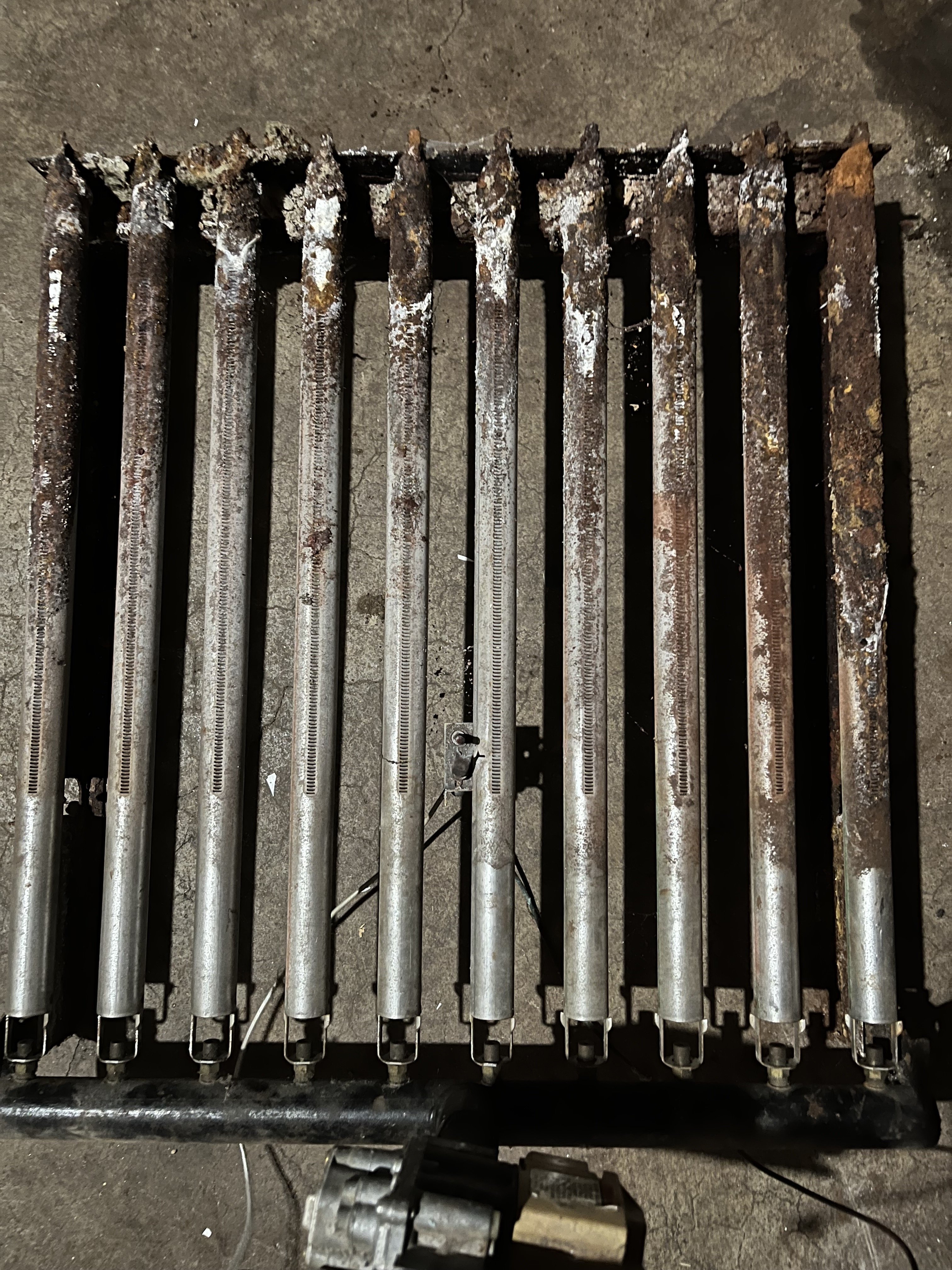
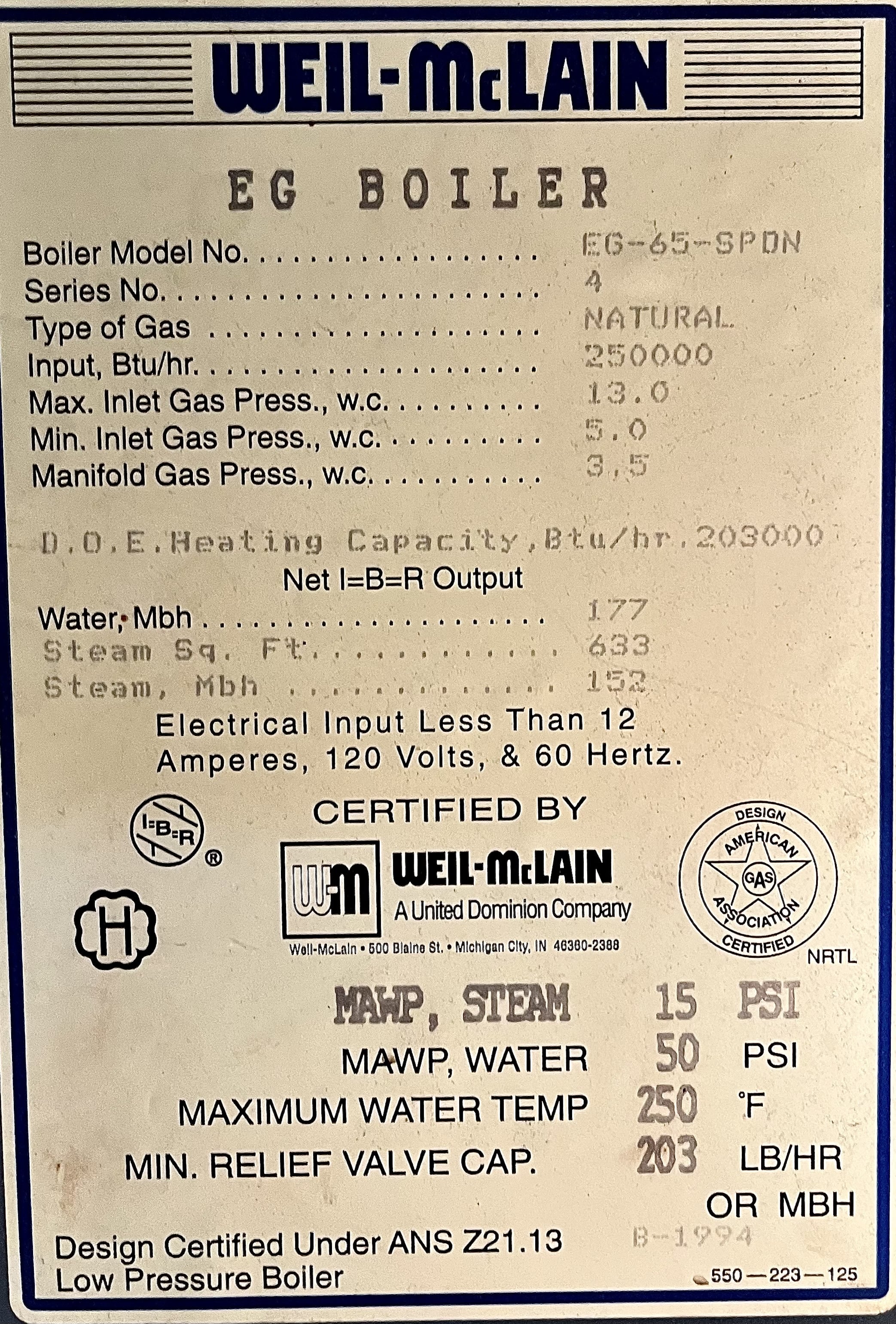
I have attached photos of the burner and the boiler info. I have no idea what the cost of installing a new boiler should be or if it's a good idea to attempt a rebuild or a hot water conversion.
I live in a small town in the midwest. My house, radiators and piping are 100 urs. old. The boiler has worked fine since I acquired the house six yrs. ago. It's a 2 pipe steam system.
Any feedback appreciated.
Comments
-
show number three the door
have number one and number two measure the EDR?
If not you can throw them out also.250,000 BTU/h, 630 EDR is huge
 1
1 -
Based on the corrosion I see on that burner tray I'd say it's way more than a slow leak. I have the same boiler and when my original got a leak it dripped all winter to the tune of gallons per day and didn't corrode the burners that much. Either you've had a leak for years, or the leak is fairly bad.
Based on that label it appears to be a 1994 vintage which is 32 years old. For me it makes no sense to try and rebuild a 32 year old boiler.
Replacement of the steam boiler would be my vote. That said, you need to make sure they do it right, starting with sizing the boiler correctly. You have a fairly large boiler for a single family home and I'd guess it's oversized. I'd be taking measurements and working up the size myself first to verify they are doing it correctly. We are happy to help with this part, it's fairly easy to do. After that they need to make sure to follow the manual and pipe it correctly in black pipe. I would suggest you get that in writing so you have some accountability for them. We don't discuss pricing here, but it's going to be expensive no matter which choice you make.
1 -
Don't switch to hot water so take that off the list.
Obviously the water has been leaking down on to the burners and rusted them up. Weather the boiler can be fixed is something difficult to tell from here. Weil Mclain makes good boilers so there is that and that boiler is still made.
That is a large boiler 250, 000 btus
The first thing to do because a lot of boilers installed in the past are oversized (this isn't a good thing; more is not better) is to measure all of the radiators and determine the EDR capacity. This will point you to the correct boiler size. We can help with that. We need height, length and width and some pictures.
This may seem like nonsense if your old boiler did the job, but trust me it is important.
We also can't talk price on this forum so there is that.
Once you have the total EDR load we can pick the boiler.
The most important thing is the correct contractor that knows steam. He has to pipe the boiler in accordance with the instruction manual and skim the water when he is done. Again, I can't stress this enough. Some contractors are hacks (sad to say) and will not follow the instructions.
Don't become a 'Heating HelpHorror Story"
 3
3 -
As @pecmsg , your number three — the hot water conversion — is worthless. They may be a good person — but not someone you want "helping" you. Bye-bye.
Now on rebuild or replace. That type of boiler is, generally, excellent — so the real question is exactly what is leaking and where. It may be quite possible to repair it, as your number one says— if it is a leaking seal and the problem hasn't been going on too long. On the other hand, a straight replacement could also be done, and would not be difficult — that boiler is still made. @pecmsg had a good point, though: has anyone added up the actual radiators in the house? That's what determines the size of a steam boiler, and it is possible that a smaller boiler of the same basic design might work. It would be worth finding out.
Br. Jamie, osb
Building superintendent/caretaker, 7200 sq. ft. historic house museum with dependencies in New England1 -
converting to hot water is a terrible idea. fix the steam problems. hot water is a lot more pressure and weight on the piping and you may find leaks in pipes or radiators you don't have at the .5 psig or so the steam is at.
how old is the boiler? a rebuild is likely only a good idea in a small boiler if it is pretty new and it is because of gasket failures. you spend the labor to take it apart and put it back together then a section rust out and you have to do it again or replace the boiler anyhow.

 3
3 -
Thank you, everyone.
@KC_Jones, @EBEBRATT-Ed: I will go measure the radiators and post them tonight. Thank you! 1
1 -
-
@Steamhead I'm in Fairfield, Iowa. 60 miles west of Burlington, Iowa and 60 miles south of Iowa City.
0 -
@KC_Jones, @EBEBRATT-Ed Here are the details. I have 12 radiators, 6 on one loop and 6 on the other loop. It's a two pipe system. There are 9 radiators on the first floor and 3 radiators on the second floor. First floor- 1233 sq. ft. Second floor 900 sq. ft. There is a split unit on the second floor.
Radiator measurements:
47" length, 23" tall, 8.75" wide;
59.5" length, 23" tall, 8.75" wide;
23" length, 23" tall, 8.75" wide;
47.5" length, 23" tall, 8.75" wide;
20" length, 35" tall, 8.75" wide;
39" length, 26"tall, 3" wide
31" length, 35" tall, 8.75" wide
30" length, 23" tall, 8.75" wide
26". length, 18" tall, 3" wide
35' length, 35" tall, 8.75" wide
37.5" length, 35" tall, 8.75"wide
33' length, 35" tall, 8.75" wide
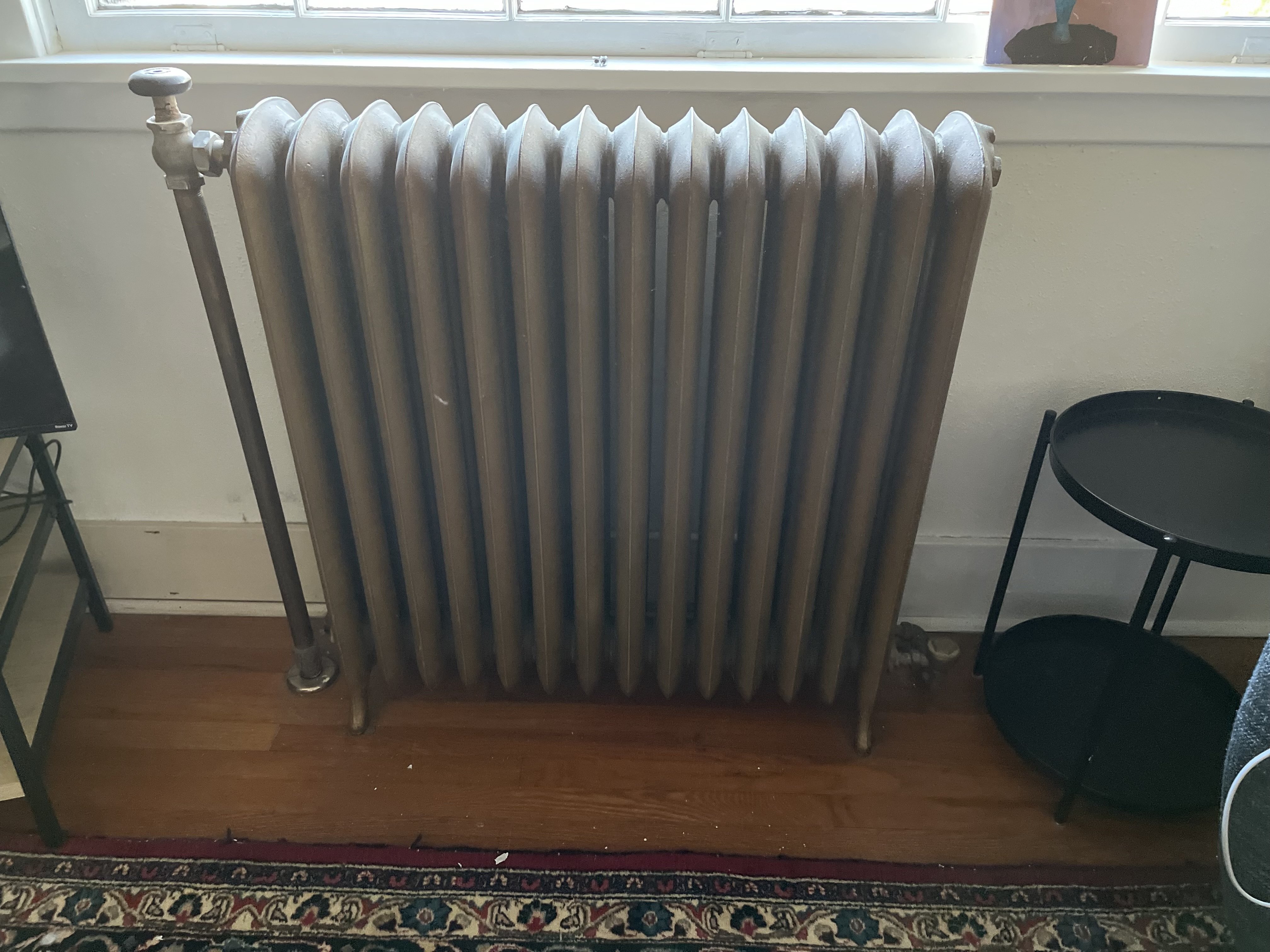
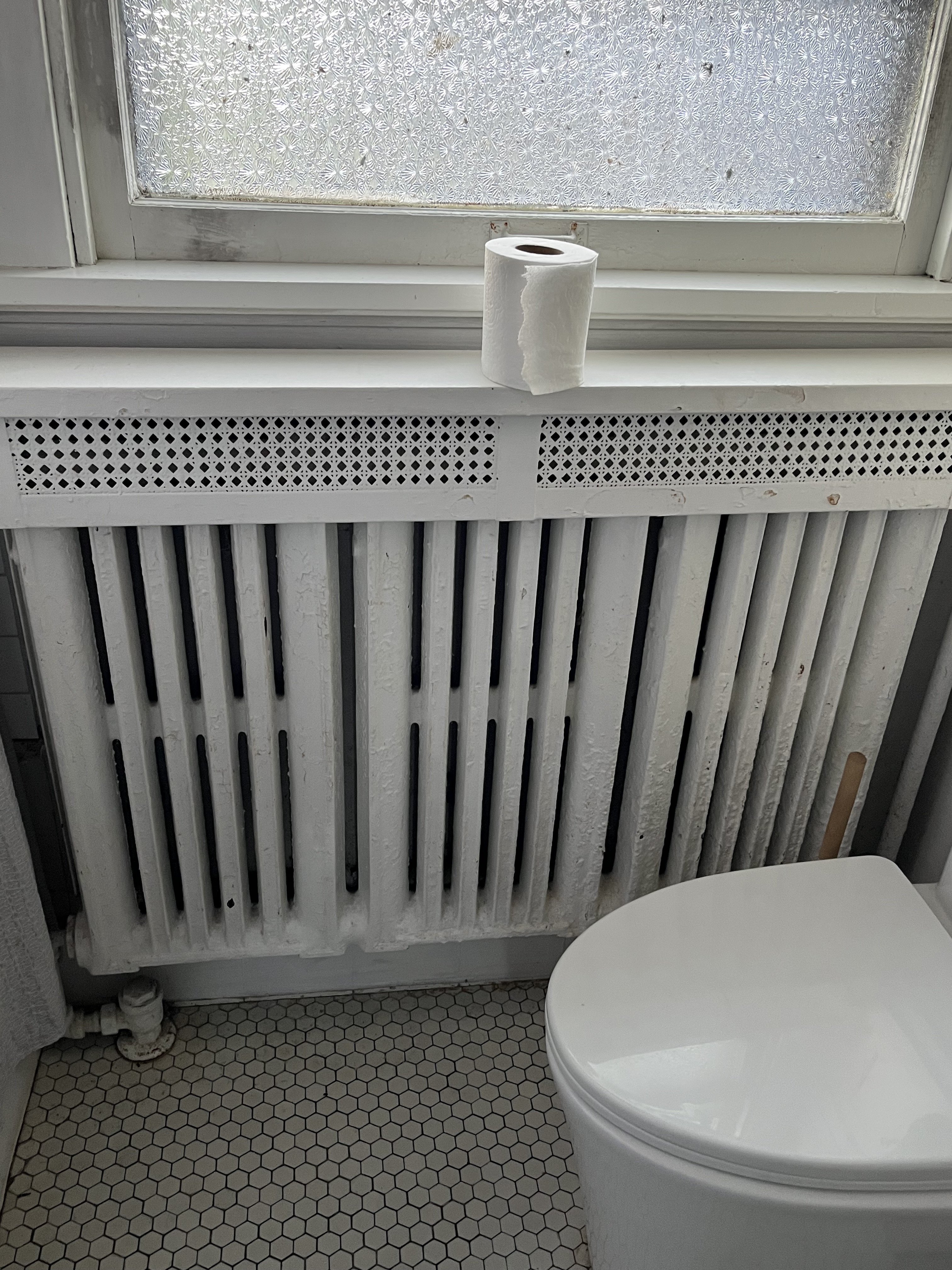
Three photos. 10 radiators are similar design to first photo. The second photo is one of the two 3" wide radiators. Third photo shows the end of one of the 10 similar design radiators.
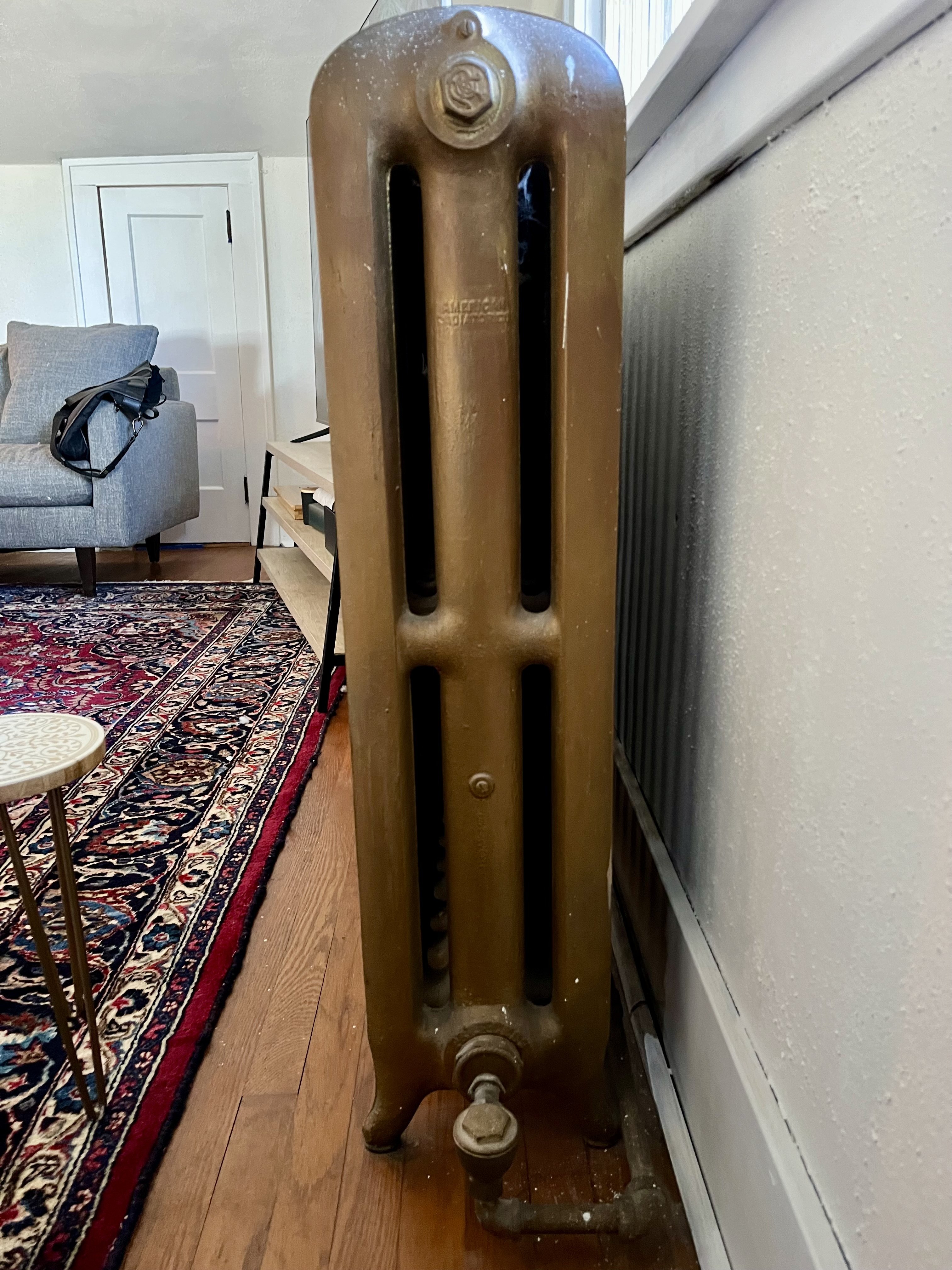 0
0 -
And well south of that "long, lonesome highway east of Omaha" that Bob Seger sang about. Yes, I've been to Iowa, though not to Fairfield.
You might see if you can sweet-talk @The Steam Whisperer to come out from Chicago to have a look, and maybe consult.
0 -
That looks like a standard type of Vapor system. Vapor is ultra-low-pressure 2-pipe steam, and was the Cadillac of heating in its day. It's still one of the best systems out there.
The trap on the bathroom radiator looks original, and might be a Webster 02H. The others look like Hoffman 17C units.
Are there any cast-iron devices in the piping around the boiler? Any traps at the ends of the steam mains?0 -
you think those are warren webster valves that have the thimmble like orifice in the valve union?
0 -
Hard to tell, from here. @Stardance , are there any names on those valves?
0 -
This boiler suffered years of short cycling. Most of the corrosion you see is from products of combustion condensing around the heat exchanger. If you've insulated your home, replaced windows - short cycling got even worse. Replace it with a smaller unit.
0 -
It may have short cycled. Maybe not. Steam system boilers are sized on EDR, NOT on building heat loss. How many times do we need to say that? If the boiler is properly sized with regard to the radiation, it will not short cycle.
Improvements in building envelope will reduce the number of times it needs to run in a day, and possibly the length of each run — thus saving fuel as expected. But they WON'T alter the timings within any given run.
It does look as though it may be a vapour (low pressure) system, in which case a useful addition to the new boiler will be a vapourstat pressure control, rather than the standard pressurestat.
I don't have a copy of Every Darn Radiator — but someone does, and with the info. and pictures someone can add up the EDR for you, @Stardance and check your boiler size. At a very rough guess, just looking at the radiators withuot the book, I'm going to say somewhere around 400 square feet, so the existing boiler may be one size too large.
Br. Jamie, osb
Building superintendent/caretaker, 7200 sq. ft. historic house museum with dependencies in New England0 -
Replacing the boiler because of its age and leak is the right place to start, but it must be done correctly.
The above EDR measurements are crucial. As mentioned above, there is no substitute for that. Also, while you are at it, rebuild each trap in the system and make sure the installation instructions are followed. There have been countless issues discussed on this forum about "NEAR BOILER PIPING". And how it wasnt done. Doing the job correctly has no substitute.
@Stardance It's good that you came here. Hope you can find that contractor.
0 -
I am not an expert but corrosion pattern matches condensation dripping from outer, colder, parts of the heat exchanger. Looking at boiler's specs, the steam Mbh is 177 which is oversized for 1200sqft home. Even if radiators match boilers steam sq ft the boiler will be short cycled by they thermostat.
 0
0 -
Oh dear. Look at the steam square feet, not mbh. Learn how to size steam boilers…
That said, Isuspect it is oversize for the radiation (probably 400 to 500 square feet), but with the thermostat properly adjusted even an oversize boiler will come up to steam temperature before cycling — unlike a hot water boiler, which is what you may be thinking of.
Br. Jamie, osb
Building superintendent/caretaker, 7200 sq. ft. historic house museum with dependencies in New England0 -
@Steamhead, there are traps at the end of the steam mains. I replaced a defective one a couple years ago. And yes, those are Hoffman 17c steam traps. There is one more device near the boiler that's a Trane Direct Return trap in this photo.
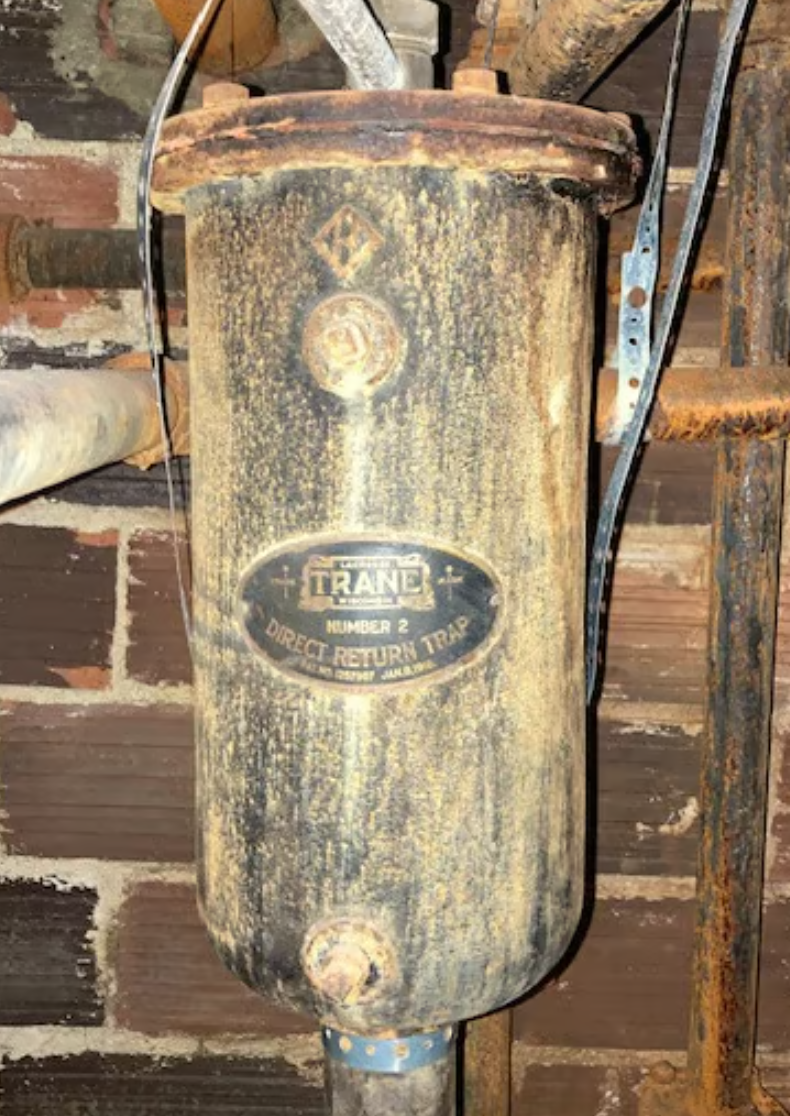 0
0 -
Great information, but what is really needed for length is the number of sections on each radiator. The wall hung radiators I found information on, but the floor standing ones we would need number of sections per radiator and I can plug it into my calculator and get you a system EDR.
EDIT
I'd also add, just for clarity, height is measured from the floor.
0 -
Got it, makes sense. It's terribly inefficient but does not cause environment for flue condensation since heating only happens when water is turned into steam. That corrosion got me fooled.
0 -
@KC_Jones here is the corrected radiator info. I added 3" to the height of the floor standing units and measured the thickness of each section.
Radiator measurements:
47" length, 26" tall, 8.75" wide 19 sections 2" thick
59.5" length, 26" tall, 8.75" wide 20 sections 2" thick
23" length, 26" tall, 8.75" wide 9 sections 2" thick
47.5" length, 26" tall, 8.75" wide 19 sections 2" thick
20" length, 35" tall, 3" wide 18 sections (6 are 2" thick, 12 are 1.5" thick) wall mounted
39" length, 29"tall, 8.75" wide 13 sections 1.75" thick
19" length, 38" tall, 8.75" wide 8 sections 1.75" thick
30" length, 26" tall, 8.75" wide 12 sections 1.75" thick
26". length, 21" tall, 3" wide 12 sections (4 are 2" thick, 8 are 1.5" thick) wall mounted
35' length, 38" tall, 8.75" wide 14 sections 2" thick
37.5" length, 38" tall, 8.75"wide 15 sections 2" thick
33' length, 38" tall, 8.75" wide 13 sections 2" thick
0


Categories
- All Categories
- 87.8K THE MAIN WALL
- 3.3K A-C, Heat Pumps & Refrigeration
- 60 Biomass
- 430 Carbon Monoxide Awareness
- 133 Chimneys & Flues
- 2.2K Domestic Hot Water
- 6K Gas Heating
- 124 Geothermal
- 170 Indoor-Air Quality
- 3.9K Oil Heating
- 79 Pipe Deterioration
- 1.1K Plumbing
- 6.7K Radiant Heating
- 396 Solar
- 16.1K Strictly Steam
- 3.5K Thermostats and Controls
- 56 Water Quality
- 51 Industry Classes
- 51 Job Opportunities
- 18 Recall Announcements