Whitworth Threads?

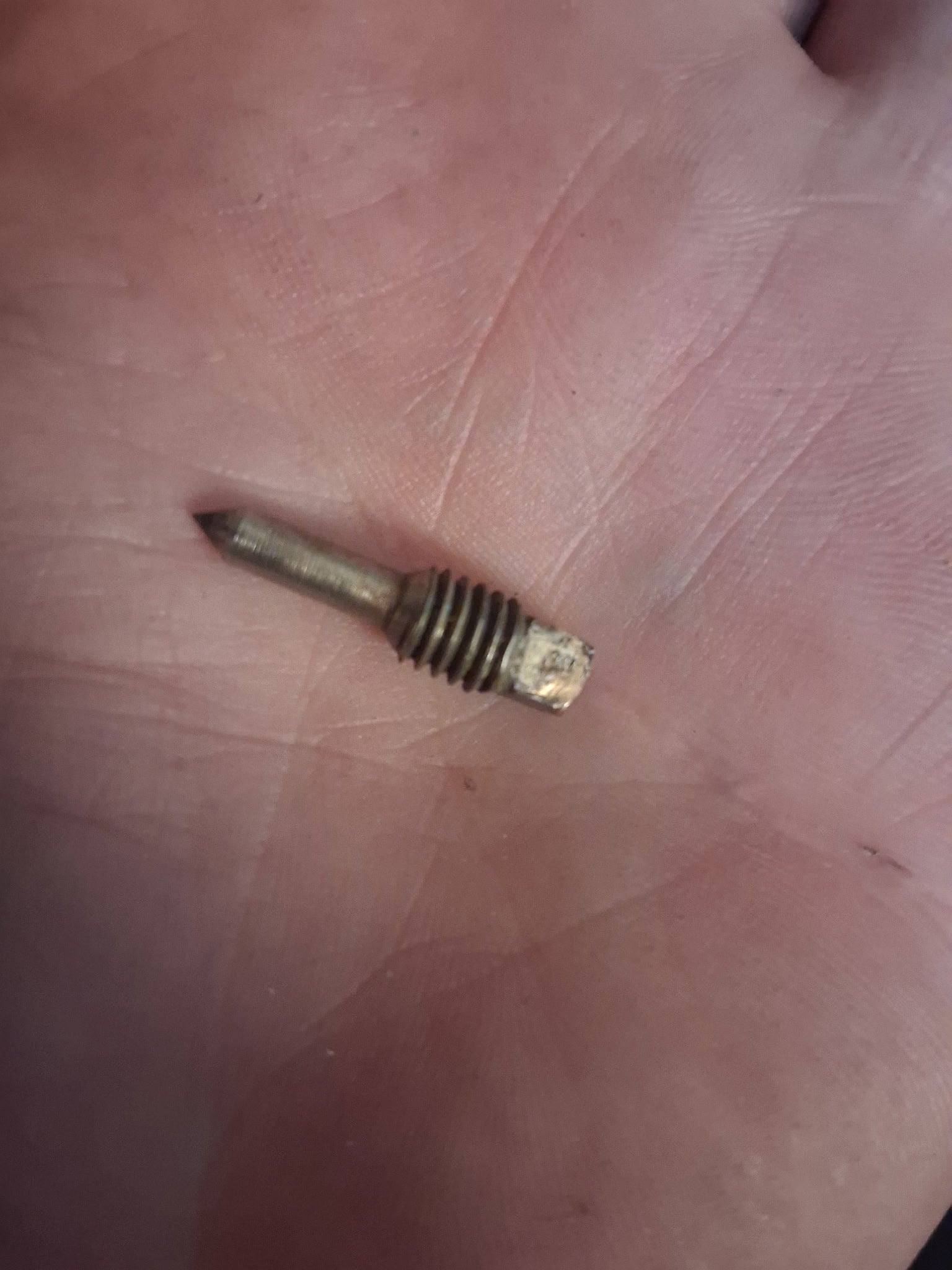
I lost that part of a bleeder valve on a 100-year-old cast iron radiator. I was going to buy a screw at the hardware store and turn it down in my lathe but its not metric or SAE. I don't have a clue if any of the bleeder valves i see for sale with 1/8 or 1/4 NPT will fit and I am scared witless at the ide even trying to remove the old bleed valve because i don't want break anything and make my situation worse. Any body have a clue as to where I can get that part?
Comments
-
probably proprietary to whoever made that valve.
0 -
Just take the old bleeder out and replace the whole thing. They seldom break. If they do which is unlikely you just drill and tap it going a size larger if you have to. Most are 1/8" so drill and tap it for 1/4" Ips. But it is not likely to break.

 2
2 -
You have a lathe. A properly outfitted Lathe can cut threads. Measure and match. Maybe dabble in the Machinist's Handbook a bit.
" not metric or SAE " maybe the old USS (United States Standard) or UNC (Unified National Coarse).
National - U.S. Gas Boiler 45+ Years Old
Steam 300 SQ. FT. - EDR 347
One Pipe System
 2
2 -
Many times you do not need a drill if the bleeder threads break off inside. Often, you can set the tap inward and turn it with the broken piece still in the hole.
0 -
Bspt and bspp fittings are still used I the industry. You could probably find something nominal of mcmaster Carr or something and modify it.
0 -
It looks a lot like an acme thread and valve stems are an application where acme threads are used.
0 -
With a snuggly fitting wrench the bleeder body should come right out. You could use a torch to heat it up first. If it breaks a reverse twist drill of the correct size will likely remove what's left behind.
Miss Hall's School service mechanic, greenhouse teacher, dog walker and designated driver
0 -
Imperial threads ( Whitworth, and USA threads like SAE, NC, NF, USS, are determined by the number of threads per inch. On the other hand, Metric threads are determined by the number of threads per millimeter.
Whitworth threads have a 55 degree angle and rounded crests and roots. Metric and our USA threads are of 60 degree angle.
The best way to determine the pitch of a thread is to use a set of machinist's thread pitch gauges. I frequently use a tap with a known thread pitch as a gauge to determine the pitch of a thread I need to measure.
Knowing the pitch and the OD of the thread is what's usually needed to determine the actual thread size.
Dennis Pataki. Former Service Manager and Heating Pump Product Manager for Nash Engineering Company. Phone: 1-888 853 9963
Website: www.nashjenningspumps.com
The first step in solving any problem is TO IDENTIFY THE PROBLEM.0 -
you can also measure a couple with a micrometer or caliper and divide by the number you measured, then invert if you are using tpi instead of the actual pitch to measure the thread.
0 -
Unusual to see something that diameter with such a coarse thread.
a 1/4 bolt coarse thread is 20 tpiIt could be a specific thread cut to give you quick and wide opening
A 6 point socket is a good way to remove bleeders if it is a hex shape. Brass doesn’t usually seize tight in iron.
Bob "hot rod" Rohr
trainer for Caleffi NA
Living the hydronic dream1



Categories
- All Categories
- 87.9K THE MAIN WALL
- 3.3K A-C, Heat Pumps & Refrigeration
- 60 Biomass
- 430 Carbon Monoxide Awareness
- 133 Chimneys & Flues
- 2.2K Domestic Hot Water
- 6K Gas Heating
- 124 Geothermal
- 170 Indoor-Air Quality
- 3.9K Oil Heating
- 80 Pipe Deterioration
- 1.1K Plumbing
- 6.7K Radiant Heating
- 397 Solar
- 16.1K Strictly Steam
- 3.5K Thermostats and Controls
- 56 Water Quality
- 51 Industry Classes
- 51 Job Opportunities
- 18 Recall Announcements