Pipes to one Steam Radiator Banging in Nursery

Hello - I have a very old home with steam radiators. I believe they are steam because they all have vents on the top left corner that let out steam periodically. The pipes inside the wall going to one of my radiators bang terribly just after we turn the system on or just after it calls for heat again. I don’t tend to notice the radiator itself shaking; it instead feels like the pipes inside the wall are going to bang their way out of the wall. It is terribly loud and scary and is in our nursery which is just awful. I don’t think the air vent is faulty because we had replaced them and I do see it lets steam out the same way the others do. Any tips on how to stop the banging?
Comments
-
water is remaining trapped in a settled pipe. The water cools between calls for heat and then when the steam hits it on the next call for heat, it causes the banging.
the hardest part of fixing this will be finding a professional who understands this.
NJ Steam Homeowner.
See my sight glass boiler videos: https://bit.ly/3sZW1el0 -
Where are you located? We may well know someone who can help…
In the meantime, a photo of a radiator? I'm concerned about two things: first, the location of the vent— on steam it should be about a third of the way up the radiator on the end opposite the steam inlet, not at the top. Second, it shouldn't let steam out — air yes, but not steam.
Br. Jamie, osb
Building superintendent/caretaker, 7200 sq. ft. historic house museum with dependencies in New England0 -
Those things are important, but for the original poster's clarity, I will say they have nothing to do with the banging.
NJ Steam Homeowner.
See my sight glass boiler videos: https://bit.ly/3sZW1el0 -
Have we ruled out thermal expansion / contraction causing the pipes to pop as they slide against something?
Single pipe 392sqft system with an EG-40 rated for 325sqft and it's silent and balanced at all times.
0 -
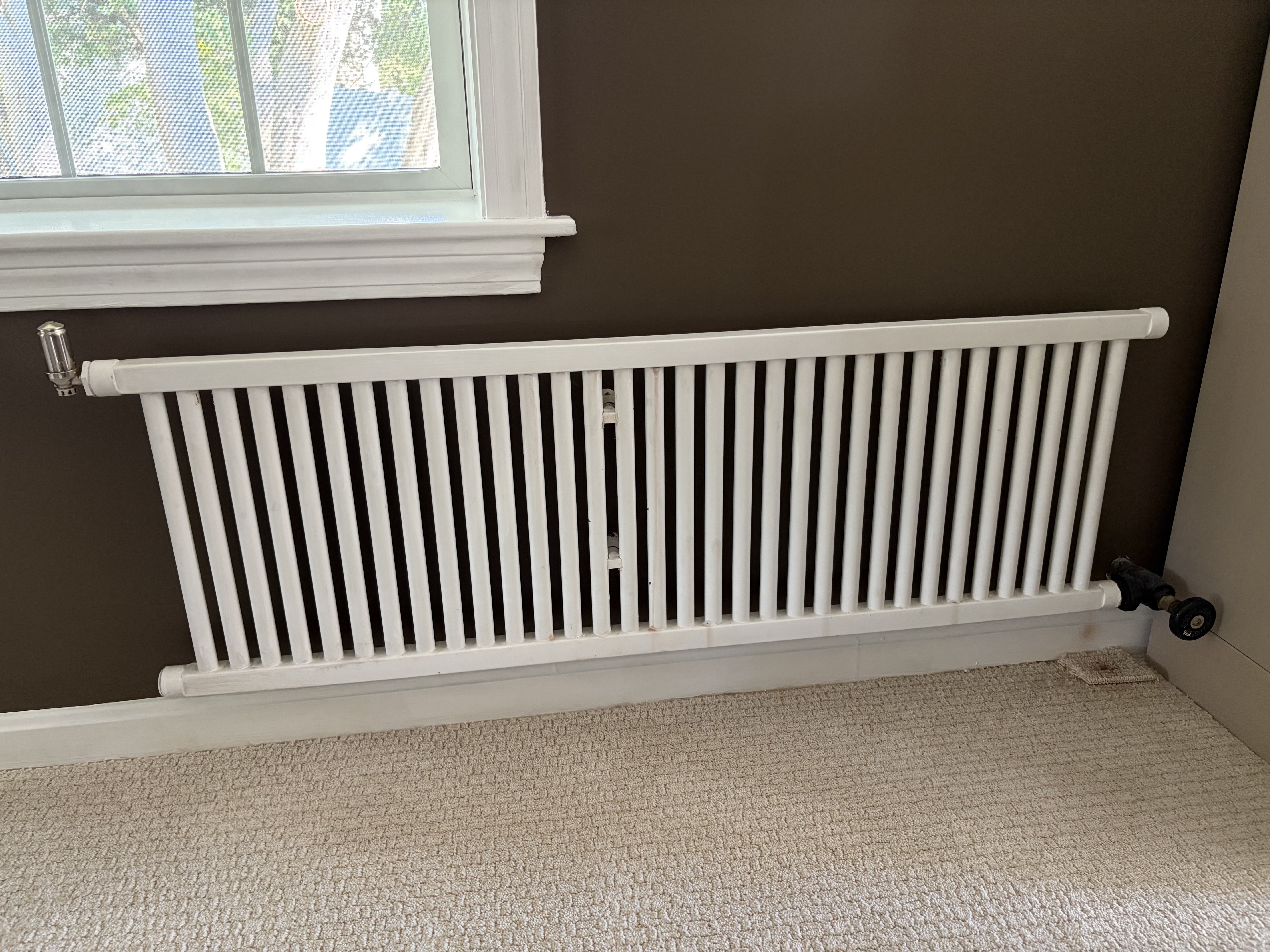
here is a pic of the radiator! We are located near Framingham, MA. Thank you for your help! It’s been hard trying to research and find anyone who knows anything about radiators.
0 -
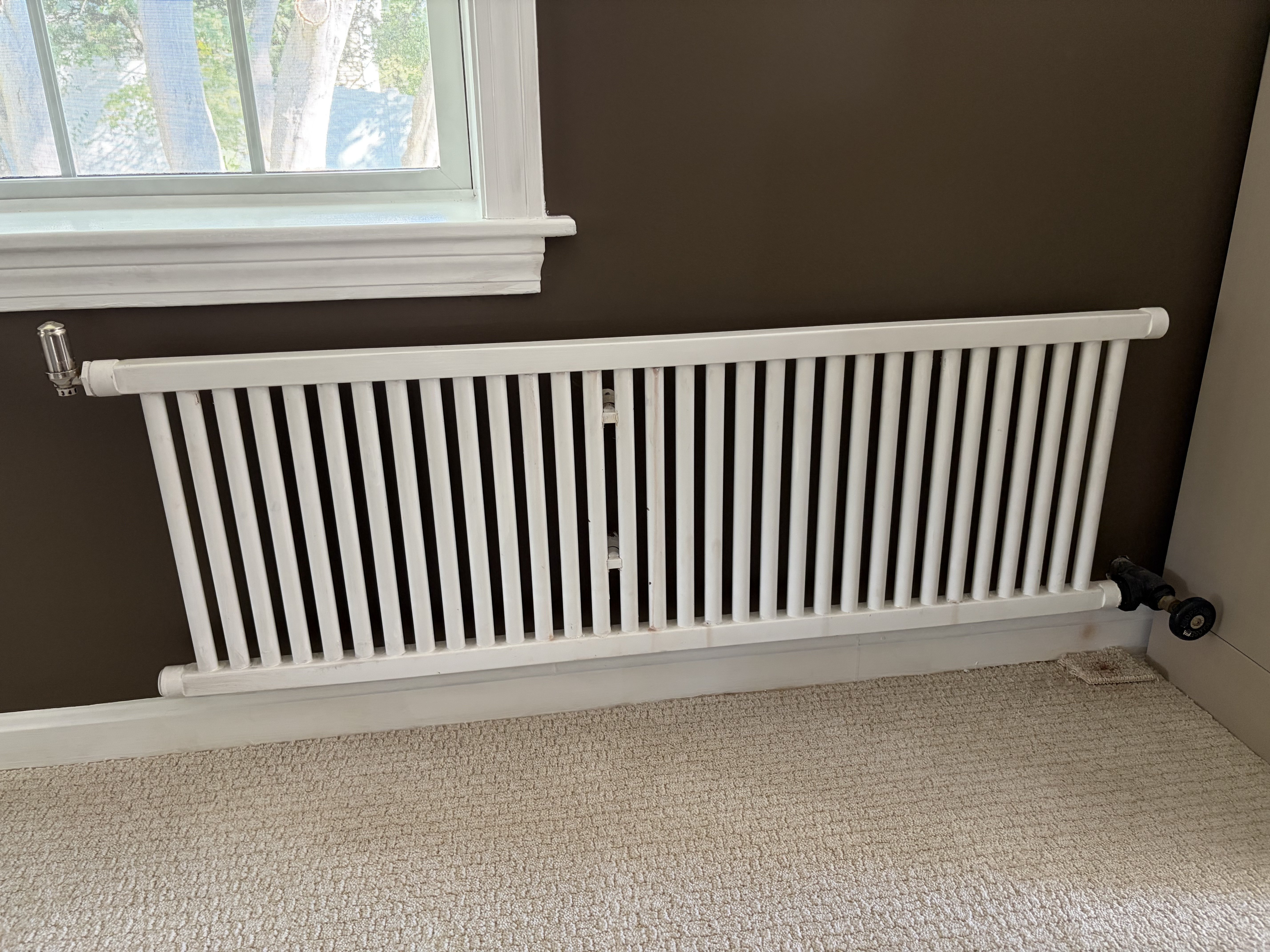
here is a pic of the radiator! We are located near Framingham, MA. Thank you for your help! It’s been hard trying to research and find anyone who knows anything about radiators.
0 -
Also, I put a level on the radiator and it is ever so slightly leaning to the left, meaning it’s ever so slightly pitched away from the pipe coming out of the ground … which I think is bad? You will also see a stained extra piece of carpet below that pipe because it leaks water down there onto the carpet. I assume that’s bad too but do not know what to do or how to communicate to a repair person what I need to do to fix it
0 -
OK — on that type of radiator, the vent needs to be exactly where you have it! Great! That's why pictures are important.
Now the drip — is probably from the valve, and you might take a really close look. If it looks as though it's coming out on the stem with the handle on, that's easy (yeah, right) to fix — you will see that the stem goes through a fairly good sized nut which is threaded onto the valve body. That's called the packing nut, and if you can find a wrench which fits, try giving it a bit of a turn clockwise and see it that helps.
And the radiator does need to be sloped wo that the valve end is lowest — I'd say at least a half inch lower than the other end. Depending on how it's hung on the wall, you may be able to raise the end with the vent on it enough.
Make sure that that valve is all the way open!
All that may help with the banging — but I wouldn't count on it. For top quality steam service, though, try @New England SteamWorks .
Br. Jamie, osb
Building superintendent/caretaker, 7200 sq. ft. historic house museum with dependencies in New England0 -
@New England SteamWorks as @Jamie Hall mentioned or @Charlie from wmass . they both are usually busy so you may have to wait.
0 -
Are the other radiators in the system also that type or has only that radiator been replaced? That type of radiator will be more sensitive to pitch than conventional cast iron radiators because of its lower mass and smaller passages.
 1
1 -
What is the history? Did it ever work properly? When did it start banging.…? Were there any changes made?
 1
1 -
As Paul has said, the problem is the saging pipe in the wall. If you have access to the basement, you might be able to identify the pipe going to this very radiator and raise it ever so slightly to fix the pitch. At the end of the day this is not rocket science. If you have access to basement and can fix the problematic pitch = great! If not, the walls have to be opened to find and fix the pipe.
»»» See my steam heat YouTube videos:
https://www.youtube.com/@HeatingBlog0 -
Of course that banging would be in the Nursery. There is no other place in your home that would be more inconvenient. Who needs a sleeping baby anyway, Right?
Edward Young Retired
After you make that expensive repair and you still have the same problem, What will you check next?

 2
2 -
@mcmurphynora Mentions here that the radiator is back-pitched. He may be able to lift/pitch the radiator toward the valve so that condensate can drain properly. I would do that before opening the walls.
1 -
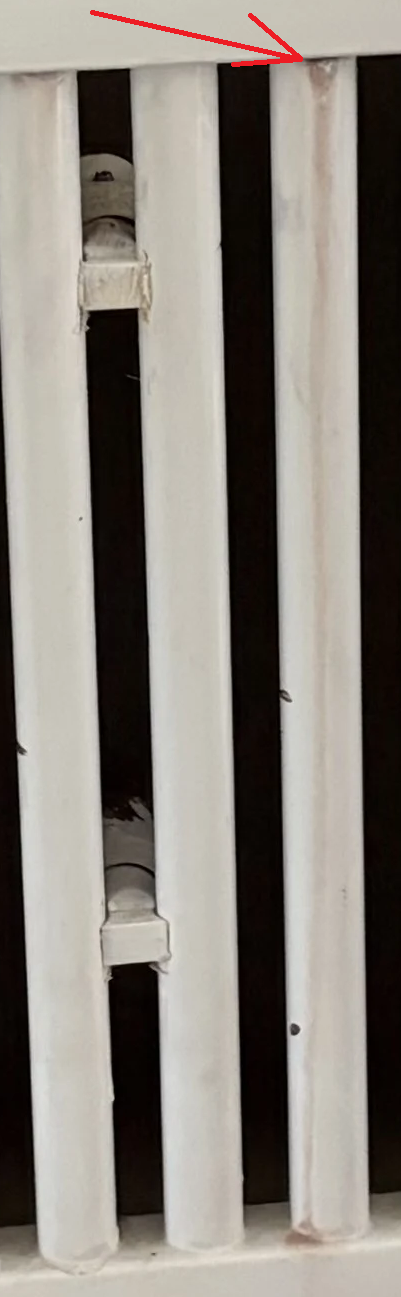
Here is what I see. Depending where the puddled water is that is causing the hammering the radiator pitch could be improved and/or the radiator as a whole may need to be raised to improve the pitch of the supply pipes.
These mounting clamps will need to be dealt with.
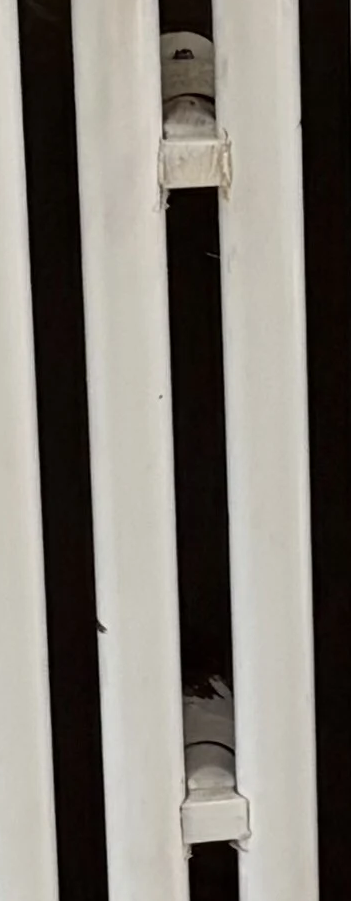
The wall may have to be modified to lift the supply pipe.
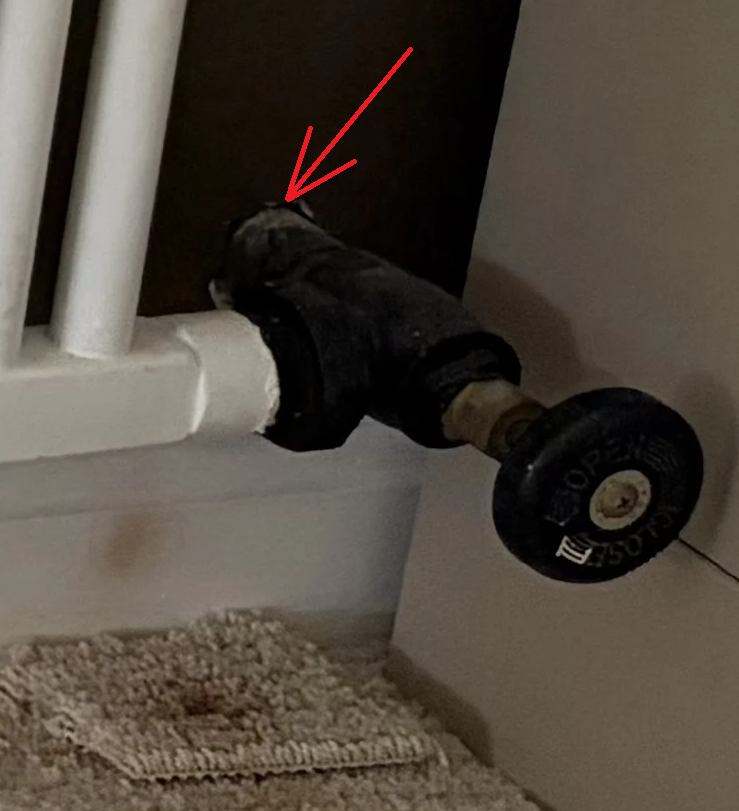
Is this radiator leaking ???
 National - U.S. Gas Boiler 45+ Years Old
Steam 300 SQ. FT. - EDR 347
One Pipe System0 -
or if those hangers are sagging you could just wedge something under the far end of it. It is much lighter than a CI radiator but it still probably weighs 100#-200#
i bet those hangers are supposed to be installed at 2 different points horizontally in the top 1/3 of the radiator so but someone didn't read the instructions. There is a lot of rotational force on the hangers where they are now.
0 -
I agree with you leveling should at least be tried and that is a weird radiator. However, my rather extreme experiments with backwards pitch of a radiator resulted in no hammer, so the walls or basement might still be required to look at
NJ Steam Homeowner.
See my sight glass boiler videos: https://bit.ly/3sZW1el 1
1 -
That radiator will act a lot different than a cast iron radiator. It will be more like a convector or fin tube.
Since the mass of the steel tubing is much less than a cast iron casting it will heat much faster so the steam will progress in to the radiator much faster, in a cast iron radiator having to heat the cast iron will make the steam progress slowly so it will be able to heat any water in the bottom of the radiator more gradually.
That tube header at the bottom is much smaller than the nipples between the sections of a cast iron radiator so the steam that is coming in faster also has less room to pass over the water in the bottom of the radiator without interacting with it or picking up a slug of the water when the steam collapses at the surface of the water causing hammer.
Fixing the pitch and putting a slower vent on it may make the hammer go away if it still heats adequately with the slower vent.
1 -
it’s definitely worth a try as I said, but I’m not holding my breath
NJ Steam Homeowner.
See my sight glass boiler videos: https://bit.ly/3sZW1el0 -
slowing down the vent can help make an issue in the runout somewhere less of a problem even if it doesn't actually fix the issue with water being trapped somewhere.
1 -
Maybe! Not in my case though. Had to raise the pipe and finally replace it
NJ Steam Homeowner.
See my sight glass boiler videos: https://bit.ly/3sZW1el0 -
Same with mine, there was no difference between no vent at all, and a Gorton #4.
Single pipe 392sqft system with an EG-40 rated for 325sqft and it's silent and balanced at all times.
0





Categories
- All Categories
- 87.8K THE MAIN WALL
- 3.3K A-C, Heat Pumps & Refrigeration
- 60 Biomass
- 430 Carbon Monoxide Awareness
- 133 Chimneys & Flues
- 2.2K Domestic Hot Water
- 6K Gas Heating
- 124 Geothermal
- 170 Indoor-Air Quality
- 3.9K Oil Heating
- 79 Pipe Deterioration
- 1.1K Plumbing
- 6.7K Radiant Heating
- 397 Solar
- 16.1K Strictly Steam
- 3.5K Thermostats and Controls
- 56 Water Quality
- 51 Industry Classes
- 51 Job Opportunities
- 18 Recall Announcements