Help choosing a boiler for high mass and low mass radiant heating.

The house is located in Central Vermont. It contains a 1400 foot walk out basement. Three sides are 7 foot below grade. 2 foot above grade. The four basement walls are 10 inch thick poured concrete. The walls are currently uninsulated, but will eventually be framed and insulated. The slab is 4 inch concrete, embedded with 1200 feet of 1/2” Uponor PEX A, on six circuits. Attached to 2 inch foam board, a vapor barrier, on 1 to 3 feet of three-quarter inch, compacted, crushed stone. The basement is sitting in a blasted out section of ledge rock.
I was told the basement has a design heat loss of 15,000 BTU.
(For last year’s past heating season the slab was heated with a Takaji 140 TH3M tankless water heater with a floor set point of 55°, producing a room temperature at 4 feet of 60° +/-. maximum propane use of 5.5 gallons/day, during a 2 day period with an outdoor temperature of -10°. The purpose of the tankless was to keep the house and basement from freezing. The tankless will be removed and used for DHW only. this was sufficient for its purpose. However, the long trunk lines and head of the tankless heater produced a unacceptable input output temperature. 25° difference if I recall.)
The main house is single floor with the design heat loss of 30.8 K BTU, 22 BTU/hr/sf. The design heat loss figures were provided by a boiler installer, whom I no longer have contact. I did do my own J calculations, and got values close to his.
There is 1100 feet on 8 circuits (2 are kickplate heaters), of 1/2” Uponor PEX A. Installed on approximately 8 inch centers below the 3/4” Advantec sub-floor, covered by 3/8 inch laminate flooring. The PEX is attached to the underside of the flooring with Uponor’s aluminum track, between the joists. There will be insulation provided below the PEX, in the joist cavity at a future date. The supply lines currently run back to a manifold placed above the basement slab manifold. both in the center of the house on the east wall. However, this system is not connected to a heat source yet.
Question: Should I move the main floor manifold to the center of the house, and just run 1 inch trunk lines to the boiler in an attempt for consistent floor temperatures?
A plumber friend plans on providing me with a Altac 080 65,000 BTU condensing boiler, to hook up to the two zones of PEX. I will make use of the two zone capability of the boiler. In addition, a separate pump and zone valve for the Toe kicks.
My concern is how to balance the high mass of the slab, and the low mass of the laminated floor living area. I do have access to a 15 gallon storage tank for the low mass portion. However, I’m thinking I should just switch on the basement zone for a few minutes every time the low mass floor zone is active.
I should note that the living area will also be heated at times with a woodstove. But when we are not in the house, the Altac boiler needs to be able to function on its own keeping the house at 65° and the basement slab at about 60.
Even after reviewing @EdTheHeaterMan , @hot_rod , idronics publivations, plus YouTube videos, there are so many different designs I don’t know where to start to accurately combine the two mass systems.
Additionally, I’m not sure if the Altec is the proper size. With occasional use of a woodstove it should be sufficient. I’m not sure if a larger Altec would be overkill. Any help would be appreciative. I do travel and don’t always have access to cell coverage so my response may be delayed.
Greg
Comments
-
A few questions:
- There is 1100 feet on 8 circuits (2 are kickplate heaters), of 1/2” Uponor PEX A. Installed on approximately 8 inch centers below the 3/4” Advantec sub-floor, covered by 3/8 inch laminate flooring. Is the PEX attached to the underside of the flooring with Uponor’s aluminum track, between the joists?
- Are all 1100 Sq Ft of floor using the 8" space tubing? (or only the part that is not heated by the kickplate heaters)
- What percentage or what square feet if the 1100 is radiant and what percentage or square feed of 1100 has the Kickplate heaters?
- What size are the Kickplate heaters?
- How are the Kickplate heaters connected to the rest of the system?
I also want to know if what you are calling a Kick plate heater, also known as toe-kick or kickspace heater, are compact heating units designed to fit into the 3½-inch cavity beneath kitchen cabinets, bathroom vanities, or stair risers.
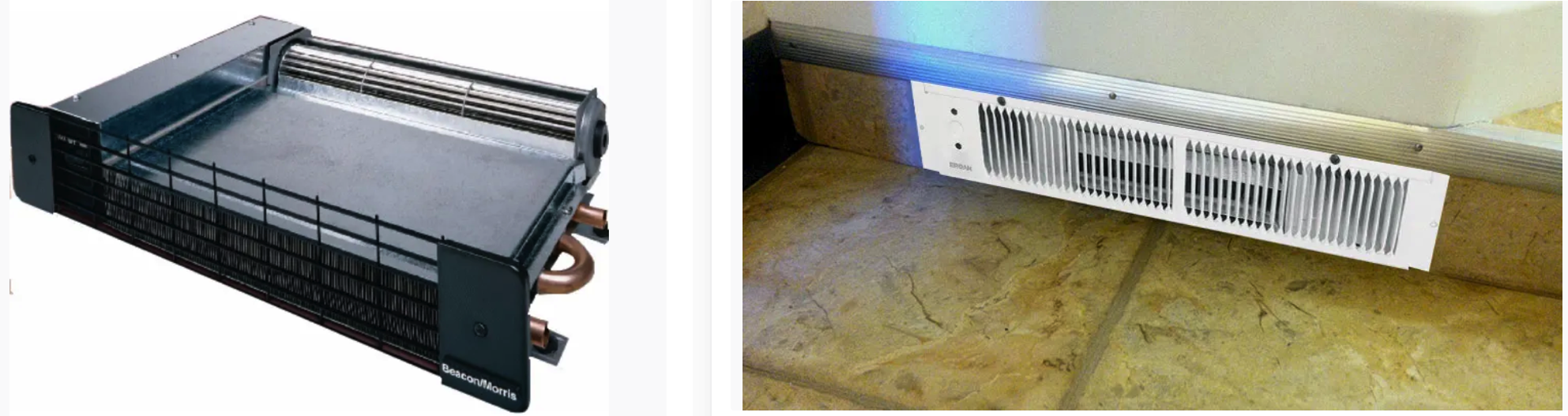
If that is the case, then you have three different heating-water temperature requirements to deal with. The kickplate heaters are very comfortable operating with 150°F to 190°F water, while the in-slab radiant and the under-floor radiant will normally operate at substantially lower temperatures.
The basement slab may occasionally require supply-water temperatures above 110°F under design conditions, depending on the heat loss and slab construction.
I would be particularly careful with the radiant tubing under the laminate flooring. The required water temperature needs to be calculated based on the heat loss, tubing spacing, aluminum transfer plates, subfloor thickness, and the R-value of the finished flooring. More importantly, the floor-surface temperature must remain within the laminate flooring manufacturer's allowable temperature limit.
So you really don't have one water temperature that is necessarily appropriate for all three types of emitters. The kickplate heaters, slab radiant, and under-floor radiant may each need their own temperature control or mixing strategy.
Once you have determined the basic strategy for the system, almost any boiler can give you the results you are looking for. A cast-iron 80% AFUE boiler with proper return-water temperature control will work, as will a modulating-condensing boiler.
The boiler selection is not the big question here. In my opinion, the system design is much more important.
- Start with the load calculation
- Select the temperature control design for each of the heat emitters
- Kick Space Temperature
- Slab floor Temperature control
- Under Floor/ staple-up Temperature control system
- select the boiler that is the correct size for the system.
Edward Young Retired
After you make that expensive repair and you still have the same problem, What will you check next?
0 -
so that boiler is fine for a 45,000 heat load.
This boiler?
You may be sble to get away with a two temperature system maybe a around 90-100 supply to the slab
The upstairs could need 120 or higher depending on floor coverings The kickspace heaters can operate down to 120 supply
Ideally you could find the original design to confirm supply temperatures
If not it will be a bit of trial and error to dial in the system
Bob "hot rod" Rohr
trainer for Caleffi NA
Living the hydronic dream0 -
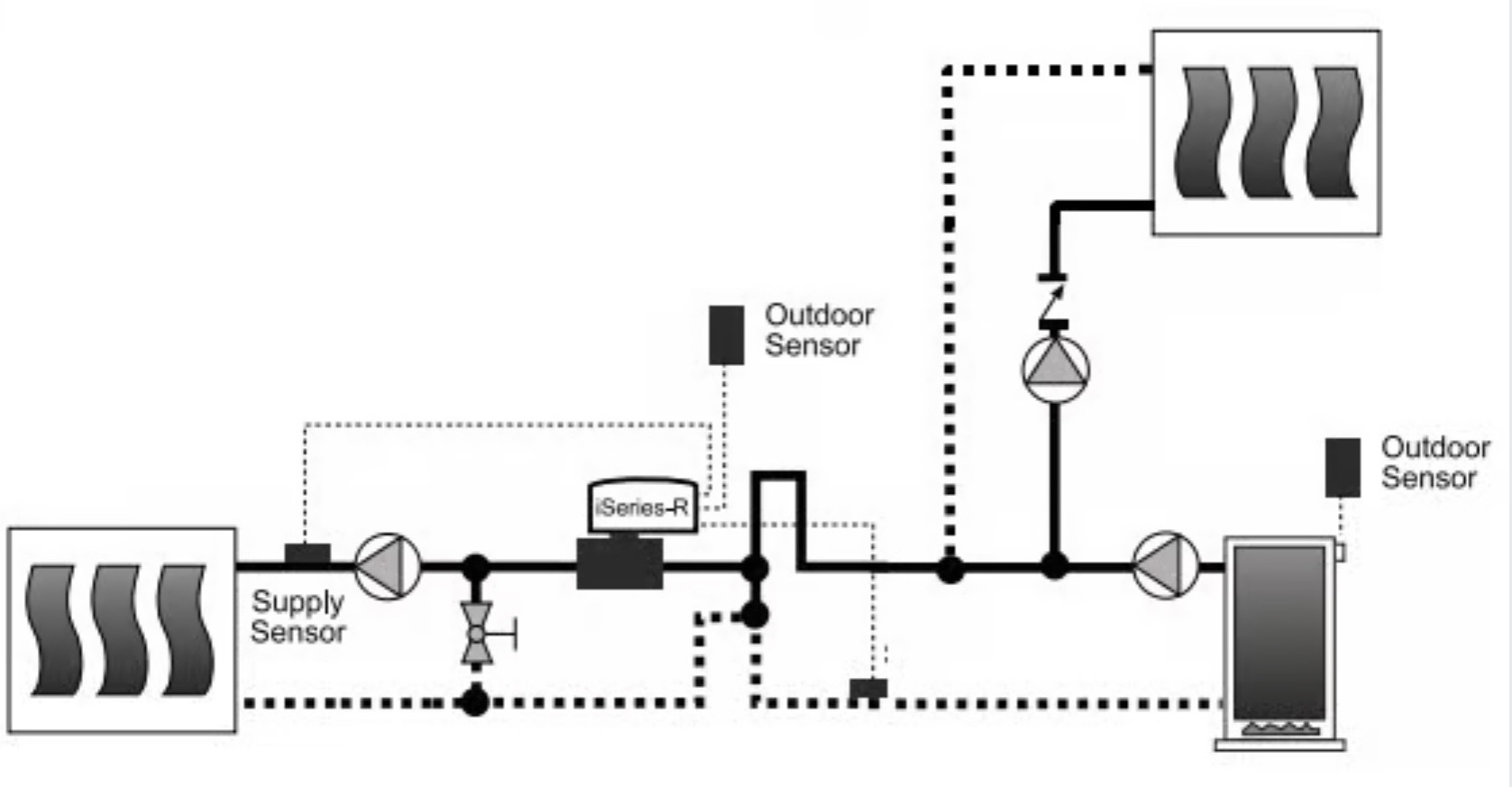
I kind of like the Taco iSeries-R valves for this job. You can use the boiler’s outdoor-reset function to control the highest-temperature KickSpace loops.
Then you can use an iSeries valve with its outdoor-reset control to essentially “reset the reset.” I think this is a great idea, and I hope this technology does not go away anytime soon.
The idea is that the lower-temperature zones take the water temperature provided by the boiler and mix return water with it, adding or mixing in hotter boiler water as needed to produce the lower supply-water temperature required by that zone.
The control uses its own outdoor sensor to automatically lower the water temperature supplied to the related zone as the outdoor temperature rises, while increasing it as the outdoor temperature falls. This allows each lower-temperature zone to receive only the water temperature needed to maintain the desired comfort level.
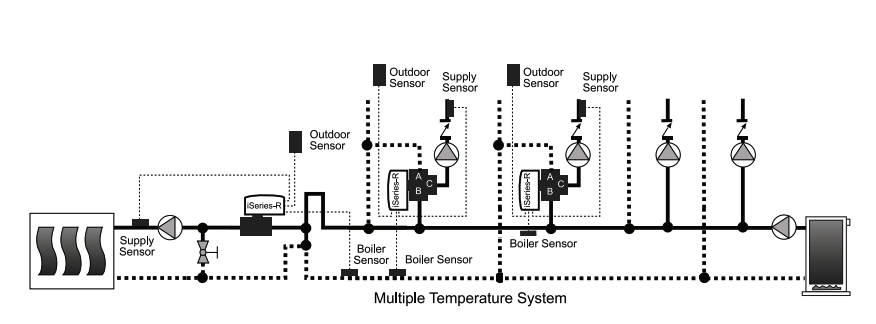
In this above example there are 4 different temperatures. The highest temperatures come directly off of the hottest boiler water and can return to the supply with closely spaced tees or back to the return, both are acceptable depending on your design. The second and third zones temperatures are using a mixing valve with the iSeries-R actuator to obtain the desired temperature. the last zone is using the lowest temperature boiler water from the system and that is using an injection design to add just enough hot water to the loop(s) to get the desired floor temperature.
Those valves are not inexpensive, but they eliminate the need for additional or separate valves and ODR controls to operate those valves. @hot_rod has more experience designing these systems and may have a different idea. But I think this might be your lowest cost design for what you are trying to accomplish.
Edward Young Retired
After you make that expensive repair and you still have the same problem, What will you check next?
 1
1 -
As @EdTheHeaterMan and @hot_rod have said and implied (I like @EdTheHeaterMan 's scheme just above!) the boiler isn't an issue. Any boiler which will supply the required BTUh power will work. Myself I would probably pick a modulating one for this application, as it will alter itself (again — outdoor reset!) to match the actual load better.
And as they had said, the dseign and control of the system as a whole is the key to it. Part of that — which they didn't really cover — is to ensure that the actual heat input capabilities of the various spaces is well related to the space, considering use and exposure and such things.
Br. Jamie, osb
Building superintendent/caretaker, 7200 sq. ft. historic house museum with dependencies in New England 1
1 -
Kick heaters are often used if the floor cannot cover the load. Of maybe it is a one, low temperature system and the kick adds some kick?
If it is the fan type they are a bit noisy, suck and blow pet hair. Use them only when necessary.
i'd like to see you do a two temperature system. With low loads and required temperatures within 20° of one another, here is a simple method.
Assume the basement is one zone.
The boiler is a 10-1 turndown so it ramps down to 8,000. Perfect. It is probably a two temperature boiler control, however one temperature at a time.
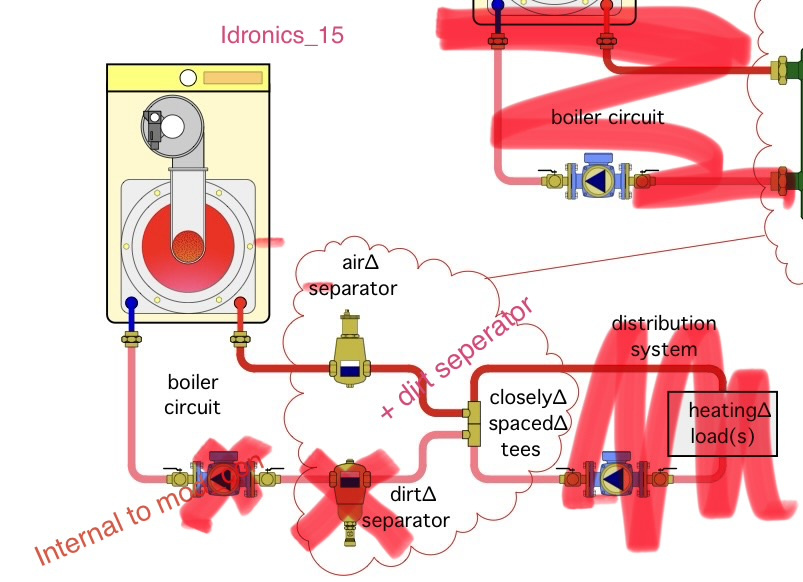
An option I have used several times is proportional reset. From Idronics 7
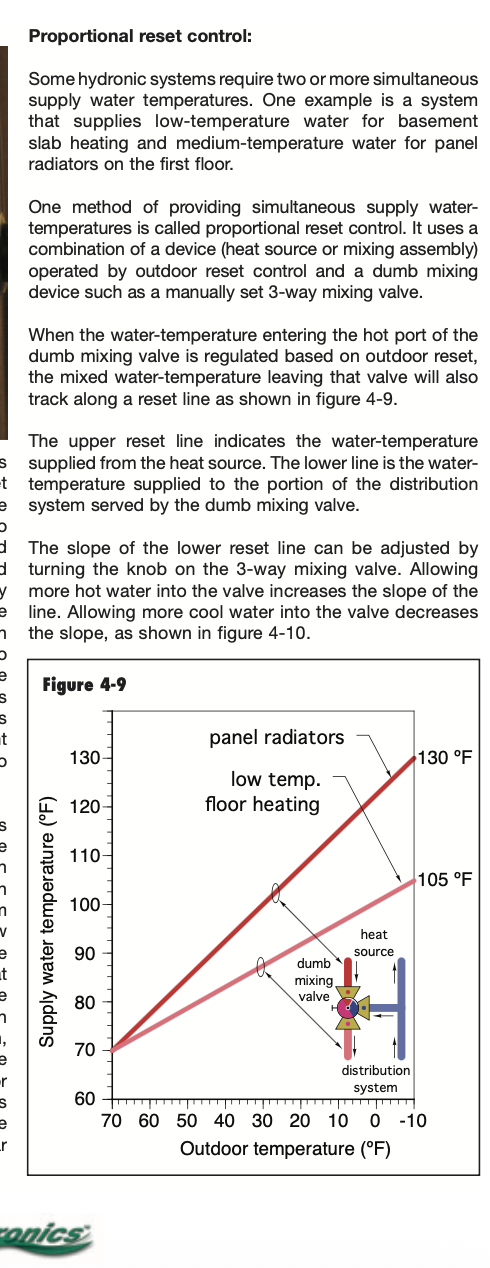
Run the boiler at the highest temperature required for the plates, lets say 130 on design day.
Run the boiler on ODR.
The low temperature zone is done with a manual 3 way mix valve. It tracks along with the boiler temperature.
So set it at 100° on a design day for the slab zone. As the boiler temperature ramps down, so does the mix temperature.
Here is an examples.
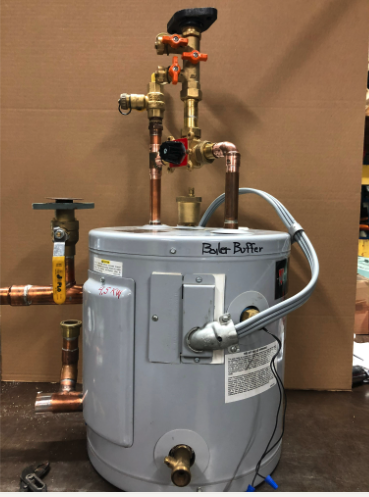
If you have a buffer, better yet, it give you some capacity and a hydraulic separation.
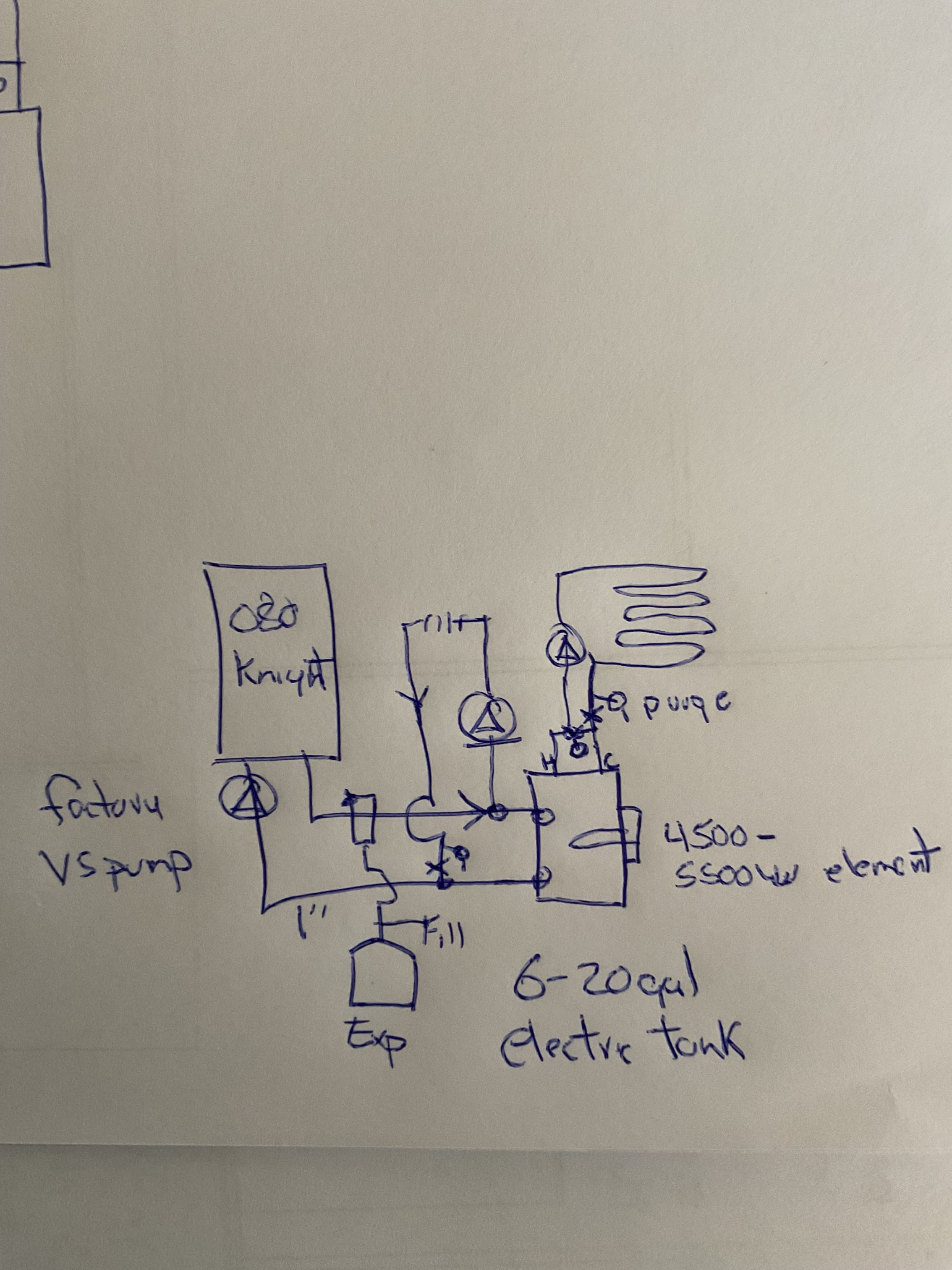
A small electric tank as a buffer.
Boiler S&R on left. High temperature teed off that S&R as a 2 pipe buffer. 3 way mix valve on top.
Boiler sensor in tank. The tank operates the boiler firing.
A control and motor could be added to the 3 way for more temperature control, also.
I also stuck a 4500 w element into it for 15, 300 back up (dual fuel) option. If the boiler fails, plug it into a 30A range receptacle
 Bob "hot rod" Rohr
trainer for Caleffi NA
Living the hydronic dream0 -
Ed, Jamie, Bob, Yes, I am referring to this kick space heater; . My reason for calling them a kick plate heater, is every time you see one on a job the plate is kicked in.There are two of these installed on the main level of the house.
One is located in the bathroom on the south facing wall. It’s purpose? The wife wants it. is it needed probably not. The one circuit of the under floor 1100 foot low mass zone , covered this area quite well.The second one is located in the Arctic entry, located in the north east corner. It’s purpose is mainly to dry off winter boots.
Ed, these heaters are not part of the 1100 foot circuit. The 1100 foot circuit has six circuits.
Currently these two kick space heaters are left unconnected with their supply and returns lines capped off. I was uncertain how to hook these into the boiler. My original thought was a third zone. From the factory, the Aquastat that is set for 120°, however, I measured the turn on for the one in the master bath at 125°. I planned on bypassing the Aquastat and having the motors turn on via an external relay when the main floor called for heat. Bob is correct. They do collect a lot of dust and pet hair. I have replaced motors in a couple clients systems. (I am a retired licensed electrician in New Jersey, at the other end of the state from Ed.)
Yes, my problem is this potential three zone system may require three different supply temperatures. but I’m only going to use two system water temperatures. no way am I going to get 150° system water temperature just for these two heaters. 120° +- for the underfloor low mass zone. 100°+-for the high mass basement slab. Bob, I will try these kickplate heaters with a separate zone valve on the 120° circuit. Thank you!
The whole reason for my initial question. How to manage the two different water temperatures.
As for my choice in boilers, my Plumber (from Pennsylvania area), said the Altac 080 65,000 BTU,(the one Bob referenced), that Altac was the most customer friendly to non-plumbers. Navien, as an example will not even talk to a end user on the tech-support line.
From my heat loss loads, the 65,000 BTU unit should suffice. In central Vermont, it’s difficult to find a reliable, knowledgeable, radiant system-educated Plumber, who is willing to come out to the sticks to service a unit.
If someone could recommend a manufacturer and unit size that will meet my needs, and assist me when the unit fails, please make a suggestion.
Jaime, Exhaust venting requirements, force me to use a modulating condensing boiler. Venting is through the north side of the house using 2” PCV in a periscope configuration.
As far as outdoor reset for this particular boiler, I believe they determine this in the software based on the inlet and outlet water temperatures. This was on one of their YouTube videos, but the link isn’t working here. This Altac unit does have terminals for an outdoor thermistor. I need to spend some time reading how to configure it. Ed, I just reviewed the taco valves. Certainly seems simple enough. i’m using 1 inch supply lines to the manifold these valves have an acceptable Cv and low head loss. But they are expensive! Nice set up in your drawing but bringing the boiler up to 150+ degrees just for two kick plate heaters, seems to me, a waste of propane. not yet sure how this configuration would affect the condensing of the boiler. I plan on using.
However, I really like Bob’s idea. Never thought of making the buffer tank a-small electric fired water heater as a backup! Much easier than my plan of plumbing the Takaji 140 TH3M tankless water heater into the system as back up. Especially considering the circulating pump is cast-iron, our DHW would be full of rust. Bob,what water heater brand is in your picture? I thought those units were only 3KW?
Bob, I believe this unit does have a connection for a boiler sensor. Most of the fixtures(air, dirt separator, fill valve, etc.) I used in the plumbing are Caleffi. For the three-way mixing valve how is this?https://www.supplyhouse.com/Caleffi-521619AC-1-Sweat-MixCal-3-way-Thermostatic-Mixing-Valve-w-Temp-Gauge-and-Inlet-Port-Check-Valves
Are you familiar with the Burnham ALTAC-080, 65,000 BTU, software controlled ODR? I’m guessing I’m better off, attaching the external thermister for ODR. again I need to study the manual to ensure the unit uses the external ODR as opposed to internal software. I have read and reread, Idronics 7 several times. Actually printed it out so I could mark it up. Over the next week I’m going to sketch out a system and upload it for your suggestions. Thanks for all your help guys. Greg
Greg
0 -
There are plenty of of great mod cons out there. Many share the same components, heat exchanger, gas valve, etc.
I like the Lochinvar Knight, based on many installations, rep and factory support, easy to service. It comes with a variable speed boiler circulator. I think the Knight comes with an additional sensor to use on the tank.
The 3 keys are:
Proper installation, piping and venting
Good water quality, buy a deionized cartridge to fill
Proper combustion setup, day one!
If you are handy a mod con can be cleaned and serviced in a few hours, watch the factory videos. You’ll need a combustion analyzer and some training. Both for start and after cleaning. I suspect all brands have online training webinars and videos.How often they need service depends a lot on what they breathe Dust, pollen, bugs, etc. some can go years without needing service, others need yearly cleaning. It is site specific.
The pic is a 6 gallon Lochinvar tank. I chose it because it had top and side connections. Most small tanks do as they are under counter use.
It came with a 1500w element, 120v. It is a standard screw in element, you can get up to 5500w on a 240v 30a circuit 5500w = 17,270 btu/ hr.
There are also 6000w elements but they tend to be too long for the small tanks.There are multiple ways to pipe a system like this, all have pros and cons. The manual 3 way is inexpensive and gives you ODR on both temperatures. It is limited to one zone however. Multiple loops are fine, on one zone. I used this system in two of my own places, so I know it works well.
Here is how I controlled kick space heaters on low radiant temperatures. This is adjustable down to 70f.
Heat output will be limited at low SWT. But for a mud room or bath air movement, anything above 110-115 still feels warm. Just swap out the factory one that snaps on the heater piping.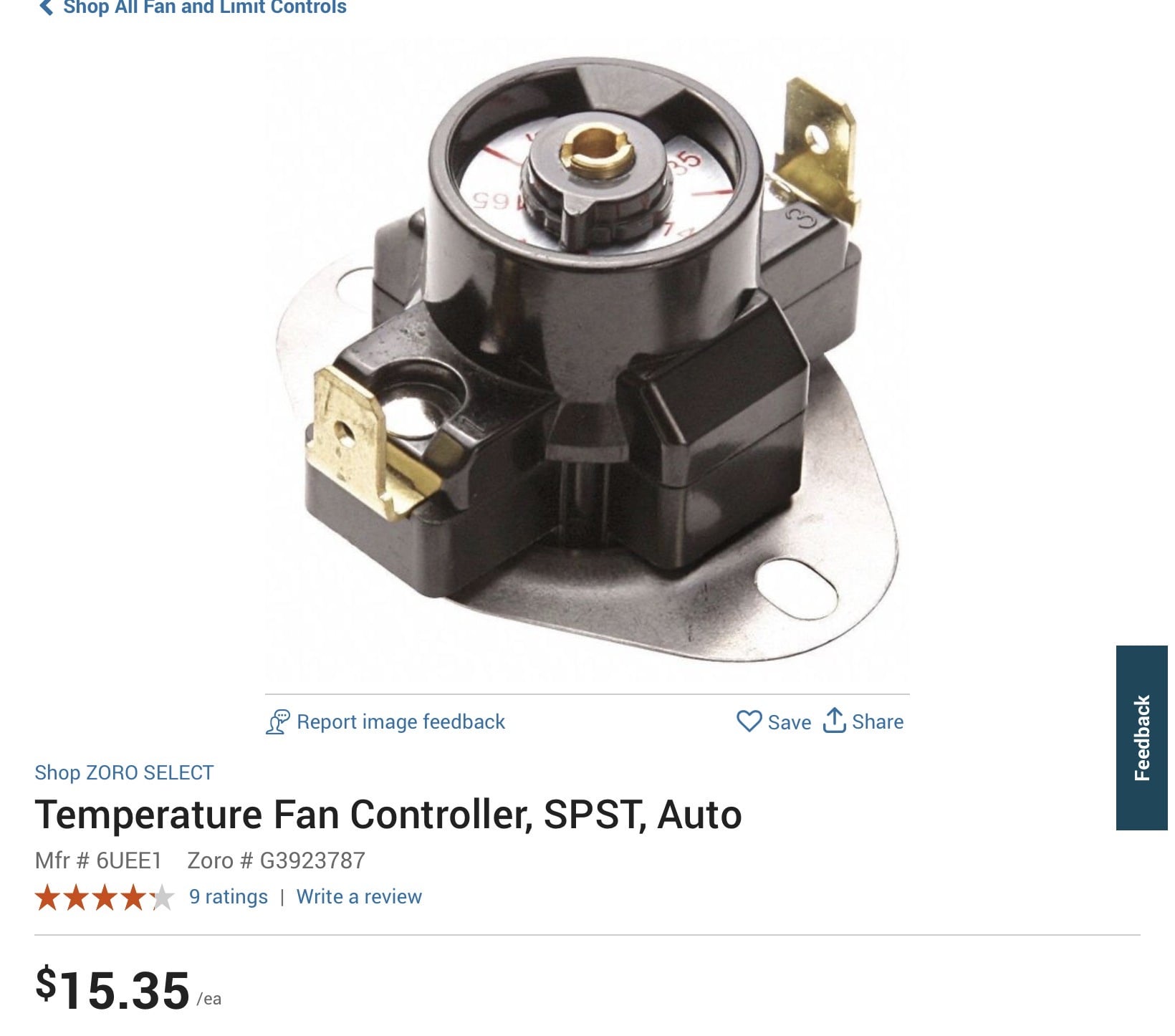
 Bob "hot rod" Rohr
trainer for Caleffi NA
Living the hydronic dream0 -
If you are looking at only 2 temperatures then you only need one Taco iSeries-R valve head. You can select the two port valve and use what I call the "injection method" to maintain the lower water temperature floor.
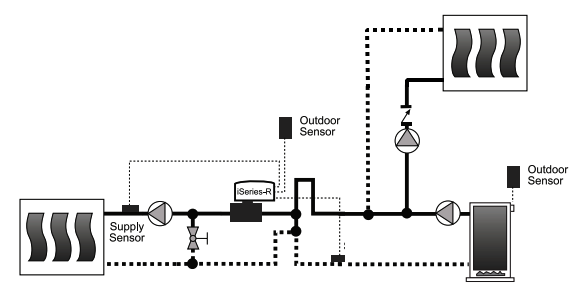
The whole idea behind outdoor reset (ODR) is to provide the water temperature needed to match the building’s actual heat loss at any given outdoor temperature. As the outdoor temperature changes, the required supply-water temperature changes with it. Ideally, the boiler operates for longer cycles at the lowest practical water temperature while providing only the amount of heat the building needs.
In a properly designed system, the thermostats should have very little work to do. They are still there to prevent overheating and compensate for things that outdoor reset cannot predict, such as solar gain, cooking, fireplaces, or a room full of people. The circulators can also be selected or controlled to provide only the flow required by the system, although outdoor reset itself does not reduce circulator electrical consumption unless variable-speed pumping or some other form of pump control is being used.
With @hot_rod 's idea, you don't get the exact calculated water temperature for the lower-temperature zone, but you probably don't need to. This isn't rocket surgery. That's what thermostats are for. So, in your situation, I might be inclined to use the buffer tank and a simple “dumb” mixing valve.
With the lower water temperature being supplied to the “kickplate” (LOL) heaters, you could easily control each one with a zone valve operated by its thermostat. The thermostat could call for the zone valve, and the zone-valve end switch could then operate the kickspace-heater fan directly.*
You don't necessarily have to make those thermostats fire the boiler. You could allow the floor-heating system and buffer tank to control boiler operation and simply let the kickspace heaters use the heat that is available in the buffer tank.
I would, however, add a temperature control or aquastat to the kickspace-heater fan circuit with a lower cut-in temperature and a smaller differential, so the fan cannot operate unless sufficiently warm water is actually available. Otherwise, sooner or later, somebody is going to get a blast of cold air and wonder who designed this crazy thing.
Check the end-switch voltage and current ratings to be sure it can handle the 120-volt motor load. If you are using Taco 570 Series zone valves, you cannot switch 120 volts directly through the end switch because terminal #2 is common to both the end switch and the 24-volt motor circuit. In that case, an isolation relay is in order.
Edward Young Retired
After you make that expensive repair and you still have the same problem, What will you check next?
0 -
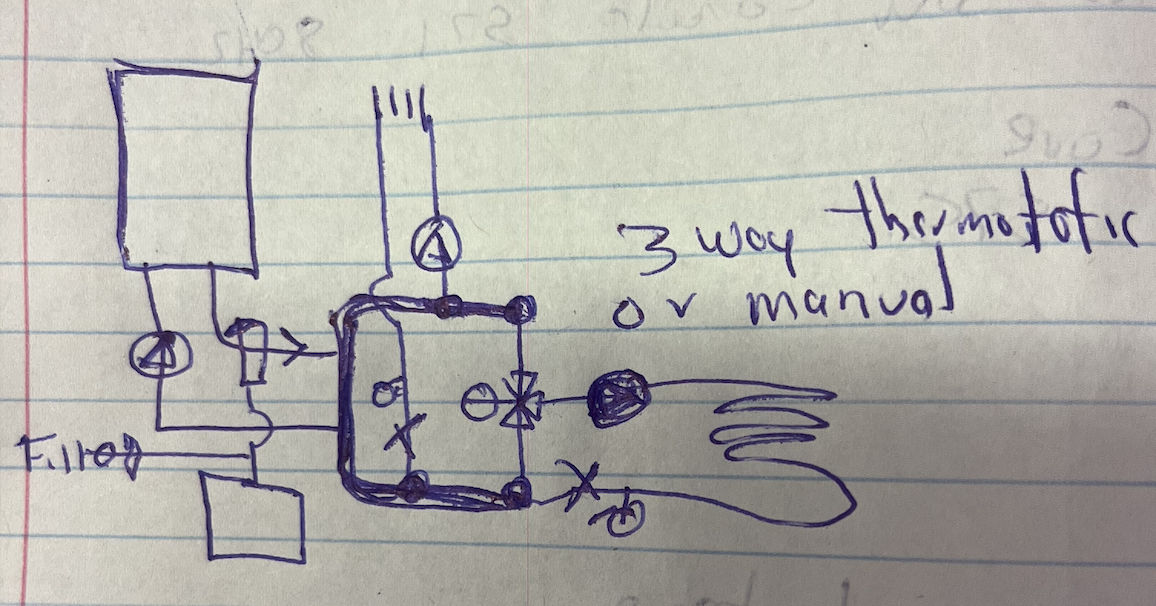
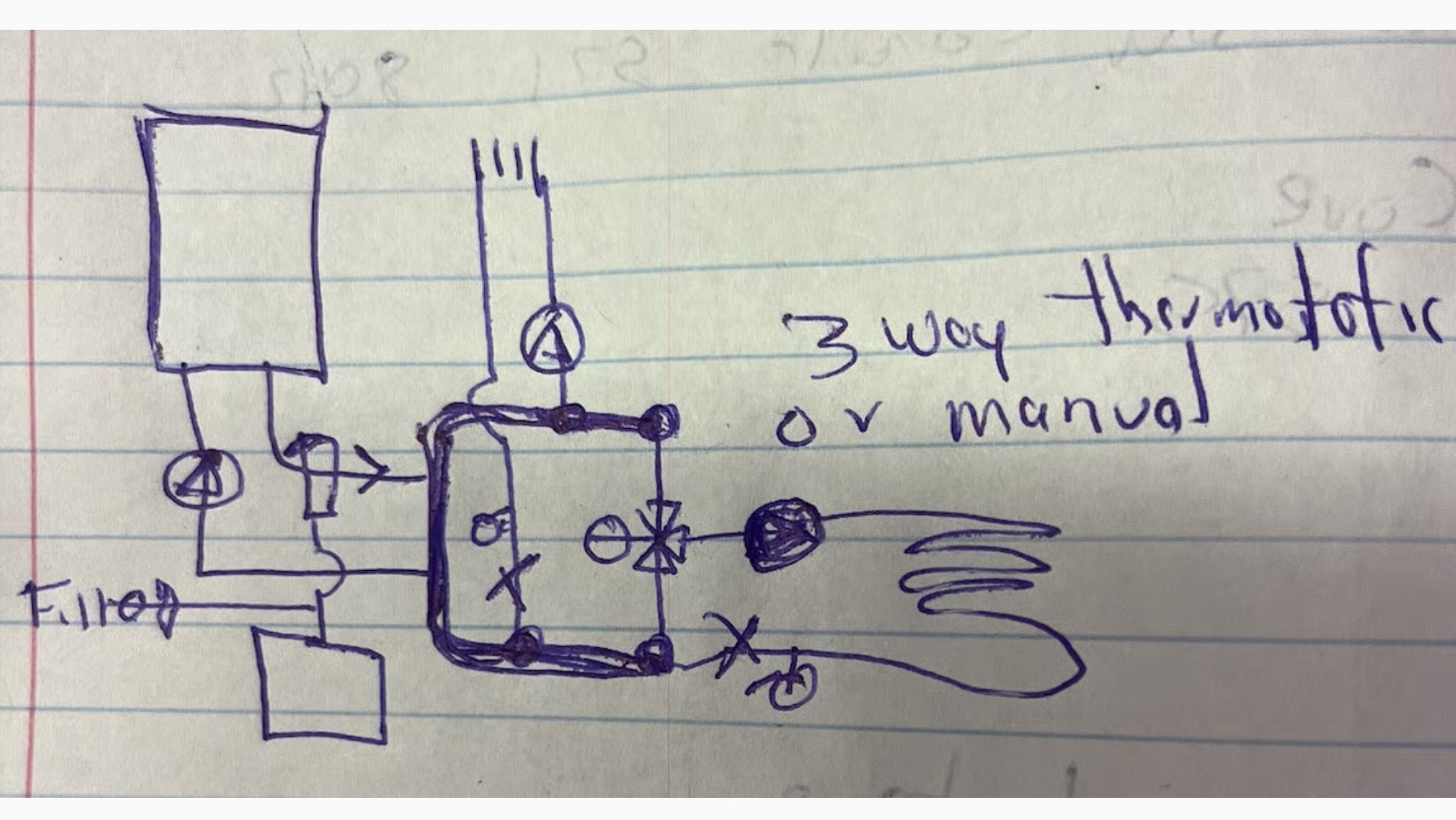
Simpler yet, Harveys Horseshoe
Boiler injects into u shape loop, high temp, and low temp via a 3 way thermostatic.
If you zone the kickspace they would be your lowest load, but still a good match for a boiler that turns down to 8,000 BTU/ hr
 Bob "hot rod" Rohr
trainer for Caleffi NA
Living the hydronic dream0 -
Sorry for the delay. No access to a computer/Internet. Don’t know about you guys, but I can’t type on a phone!
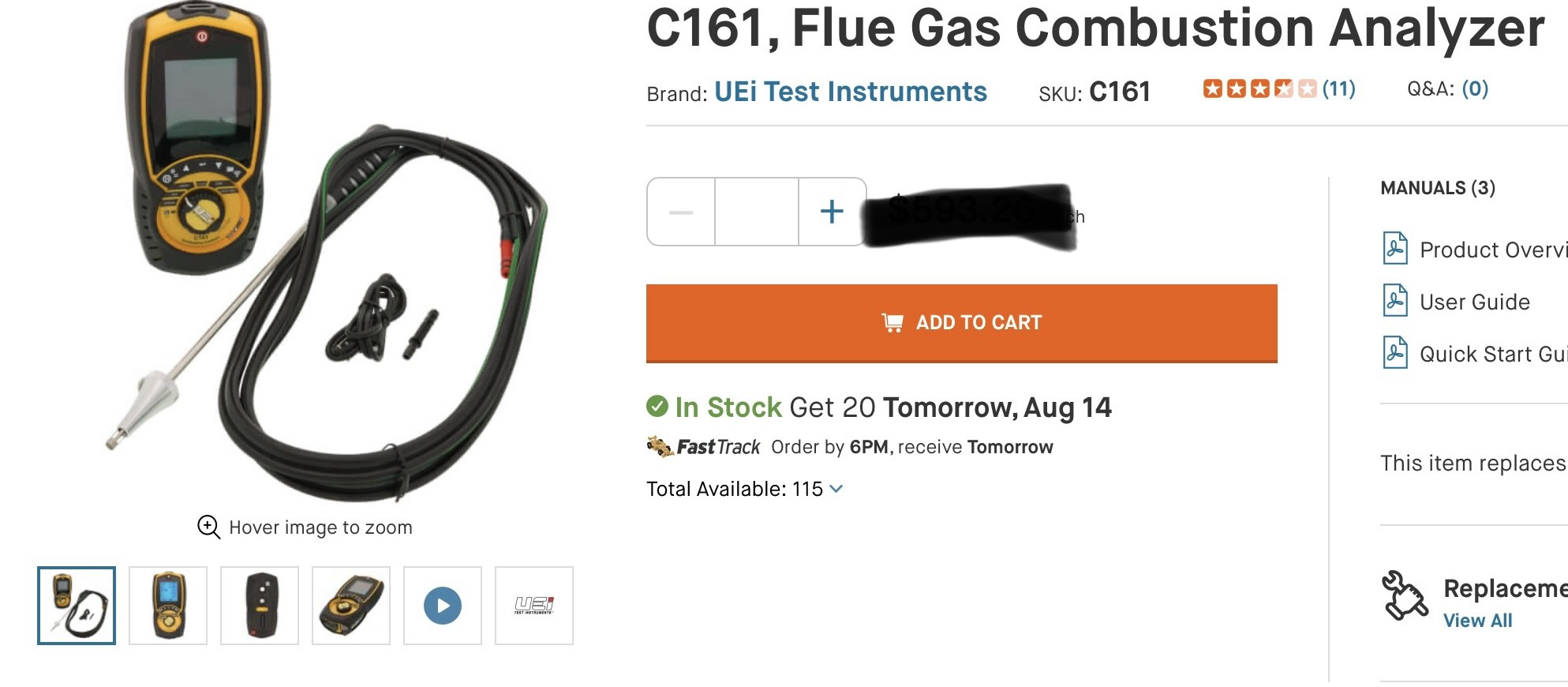
As both Bob and Ed have pointed out in the past a CO analyzer is required to set up a boiler. As I will only need this to set up and repair my installed equipment, will this device suffice? https://www.supplyhouse.com/UEi-Test-Instruments-C161-C161-Flue-Gas-Combustion-Analyzer
After reviewing installation videos, it suggest the Burnham Alta 080, CO calibration is performed in its onboard software. But the actual installation instructions do suggest a manual calibration.Whereas the Lochinvar WHB085N, requires manual CO calibration additional two dual port manometer. I will be purchasing a manometer for whole house make up air.
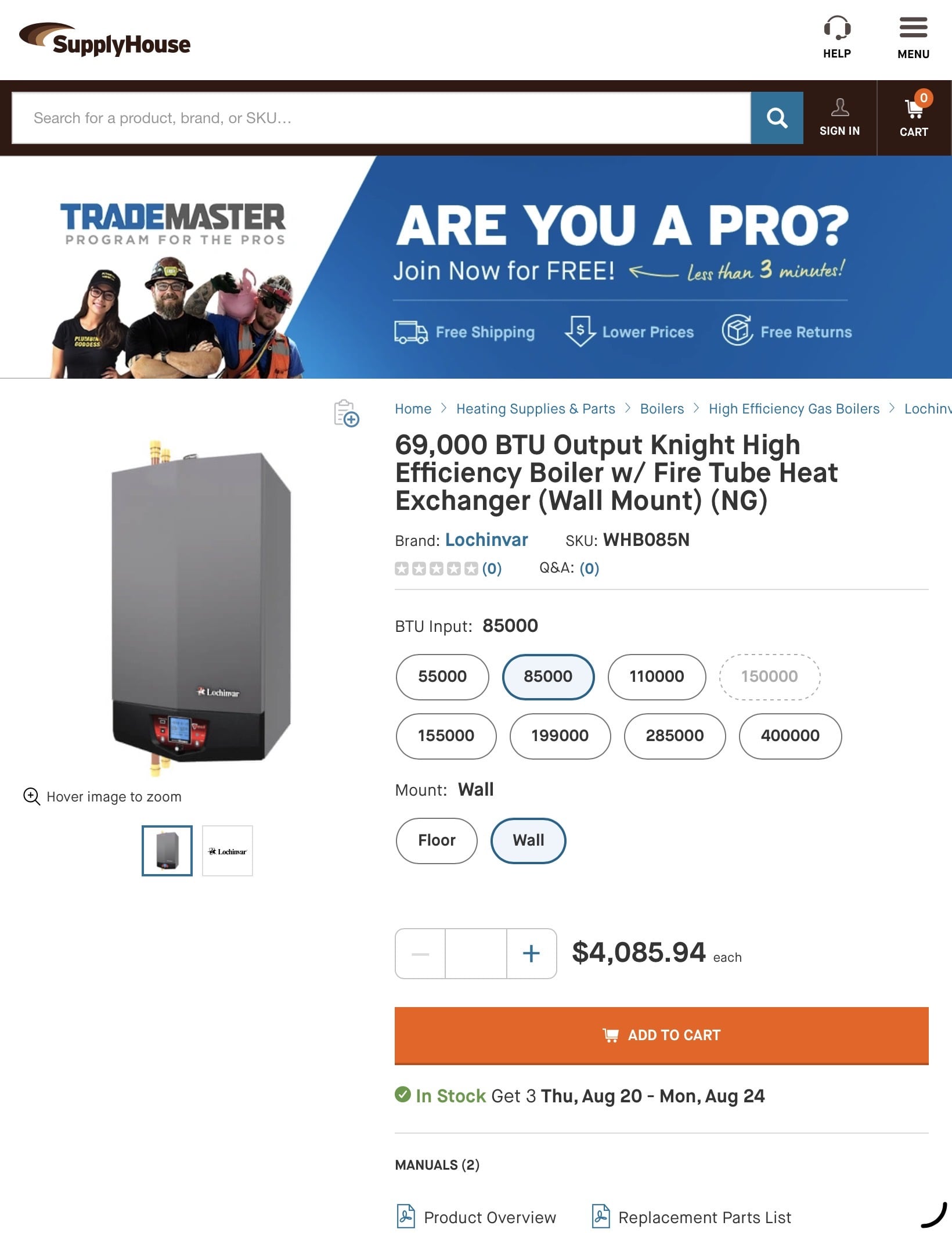
I am struggling to determine if the Lochinvar WHB085N’s will surpass the Alta 080 in lifespan and reliability. It is about $1500 more expensive.
Ed, after more research, I do think the Taco I-series is a superior alternative to a dumb three-way valve, and worth the investment. You make an excellent point with this statement: “Otherwise, sooner or later, somebody is going to get a blast of cold air and wonder who designed this crazy thing.”
your sketch:Appears in my mind, functionally similar (plus the smart valve) to Bob’s:
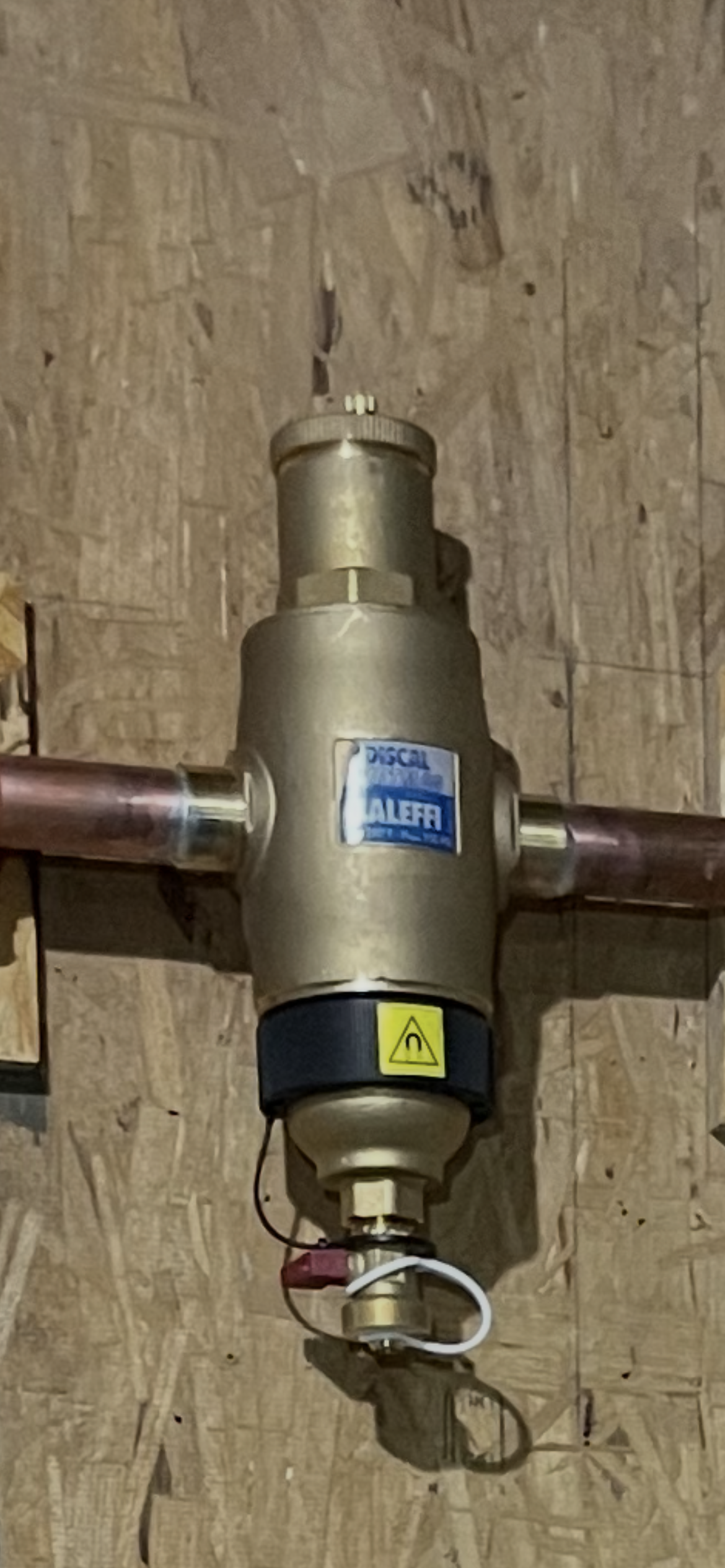
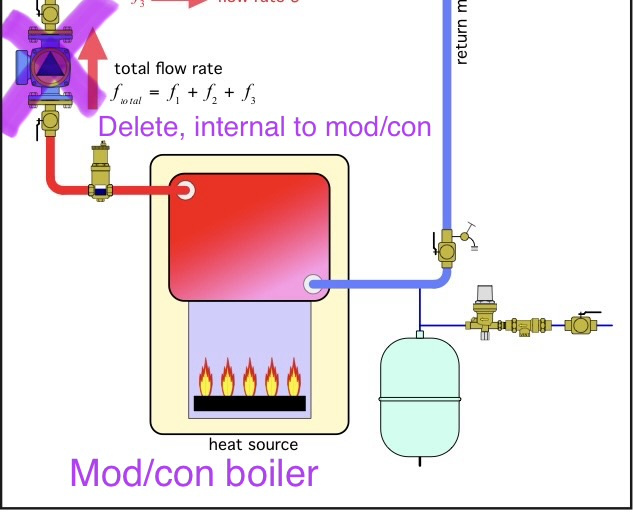
This will be the configuration I plan to use, with the modifications I outlined below. I may still add a electric hot water, buffer tank. I’ll sketch my planned system after you guys critique my comments.I currently have this air/magnetic dirt separator in my slab heater:
I was hoping to use it in this configuration:
In one of the “coffee with caleffi” videos, there was some confusion as to where to install it in the loop. What is the best practice in my application?
For my fill/make up water I planned on this configuration:Does it really matter if you’re on the hot or cold side of the boiler? How does that affect the internal pump on a mod con, with best practice to push away from the expansion tank?
Does this sketch contradict pump expansion tank placement?
I really appreciate your years of talent and experience in assisting me setting up my system. Sorry for the long post, but that’s what happens when I think too much. Greg
Greg
0 -
Good Bluetooth connected analyzer
1 -
same one I use
Bob "hot rod" Rohr
trainer for Caleffi NA
Living the hydronic dream0 -
The Taco iSeries-R valve is pricey. I believe it is a little overkill for your small system. My own radiant-floor system, and others that I have installed for customers, all used the “dumb” mixing valve, and I believe that the idea @hot_rod alluded to will serve you just fine for less cost.
That two temperature line shown in figure 4-9 ( and 4-10 if you happen to look up the article ) will be as accurate as you need it to be. It will just take some fine tuning/trial and error. The Valve actuator on the Taco valve will be less trial and error, but you will still need to make fine tuning adjustments for the first season and perhaps the second season.
I would not spend the $$$ on the valve unless I found the dumb mixing valve to be too problematic. Truth be told, you may not even need two temperatures with those two different floors. I used the same temperature for a slab floor and a staple up system in a home I lived in for several years and was happy with the wall thermostat being the only control for each zone, while the ODR from the boiler did the temperature adjusting based on the weather. I thought the staple up was lagging behind most of the time, but that was just me being over-sensitive to the workings of my design.
If I still lived there I may have tried the Taco iSeries-R to see if it made a difference, but alas, I never got the chance.
Edward Young Retired
After you make that expensive repair and you still have the same problem, What will you check next?

 3
3 -
Well, then, I guess I’m getting the dumb valve. The smart valve would be an easy add-on. I’ll just put my money towards the Lochinvar Knight 08xx. There seems to be a whole lot of videos geared towards the install and maintenance of the Lochinvar Knight.
Greg
0 -
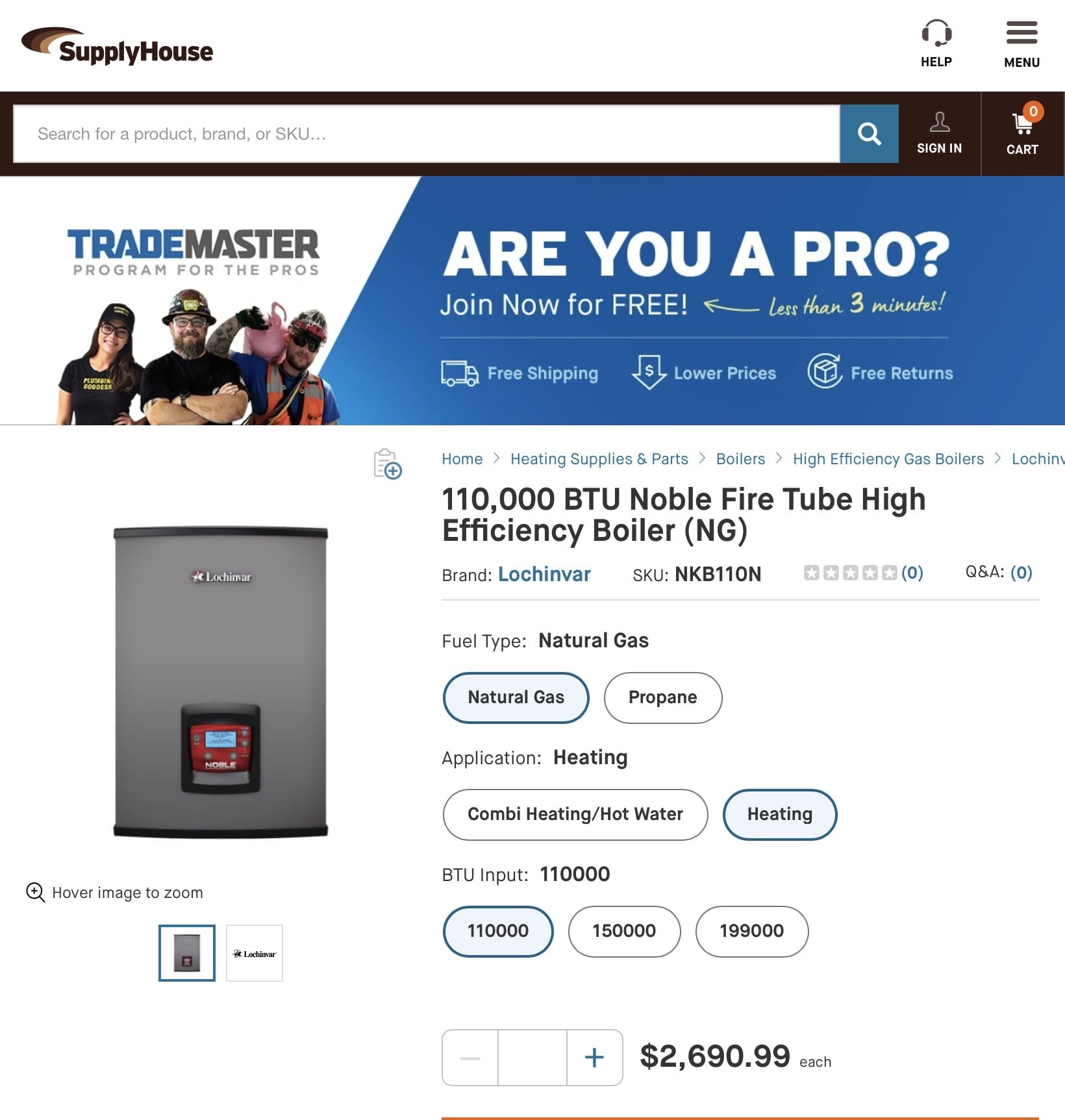
The Lochinvar Nobel is a price point mod con. Smaller HX, less control function. Still plenty of features for what you need. It would be a 110,000.
 Bob "hot rod" Rohr
trainer for Caleffi NA
Living the hydronic dream0 -
OK Bob, you found my favorite long-term supplier! and I see they don’t supply the Noble in a 80 K range. They do, however, sell the 110 pre-configured for LP gas! Is the 110 a bit oversized for my application? Looks like it’s maximum turn down should be 11,000 BTU. Would this require me to have a 10 gallon or so buffer tank on the low mess floor radiant circuit?
Greg
0 -
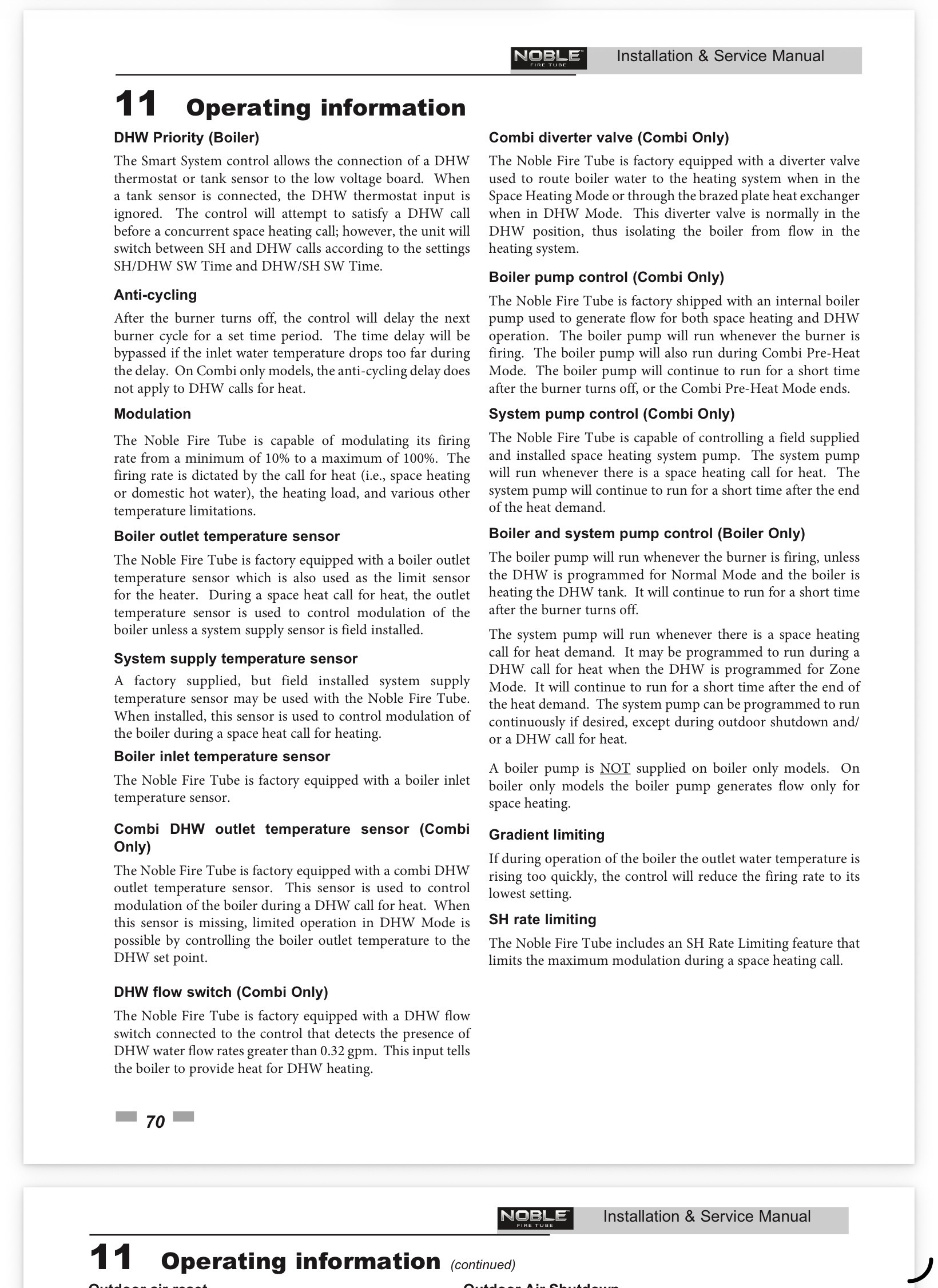
The 110 a little bit larger than what you need. The control has some nice features, you can limit the firing rate to say 68,000. It has an anti cycling function also, and gradient limiting. All these can be set up to limit excessive cycling.
You still want to have some sort of hydraulic separation.
This could be primary secondary piping, a hydraulic separators or a buffer tank.
The cost difference between a separator and a small buffer is not that great. If you want the electric back up, which could be tied to a PV grid someday, for some additional RE input, then use a small electric tank s a buffer
 Bob "hot rod" Rohr
trainer for Caleffi NA
Living the hydronic dream1 -
hi Bob, I did order the combustion gas analyzer that you and PC7060 suggested.
After reviewing, I don’t know how many Lochinvar videos, looks like the 110 propane version should work, without being too oversized.
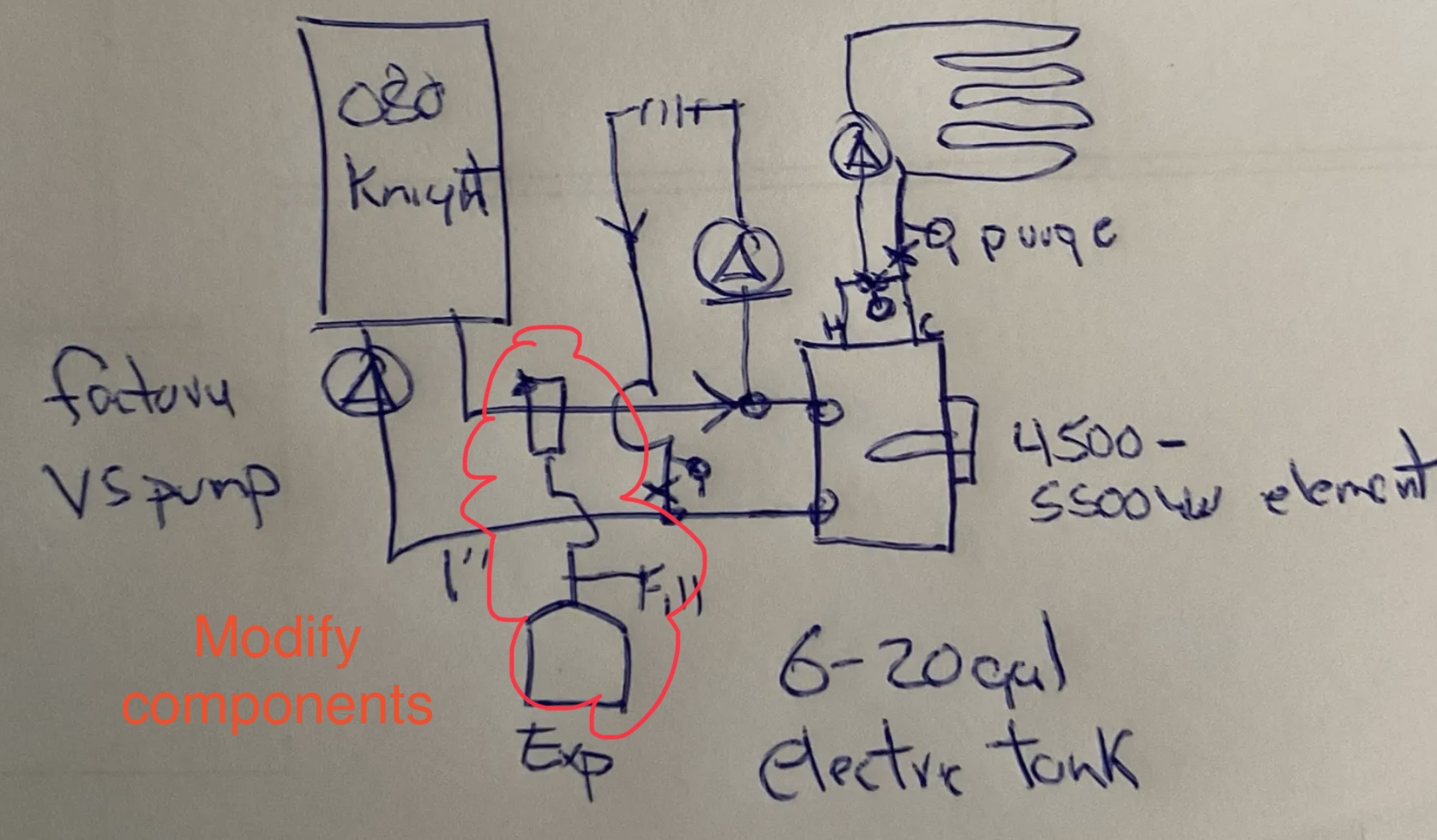
I’ve been working on a component sketch with your suggestions. Will post when I get back in town. I like the idea of a electric 6 gallon buffer tank. I’m planning on having the low mass floor and the toekick heaters running through the buffer tank through closely space T’s, based on some of the Caleffi setups.Greg
1 -
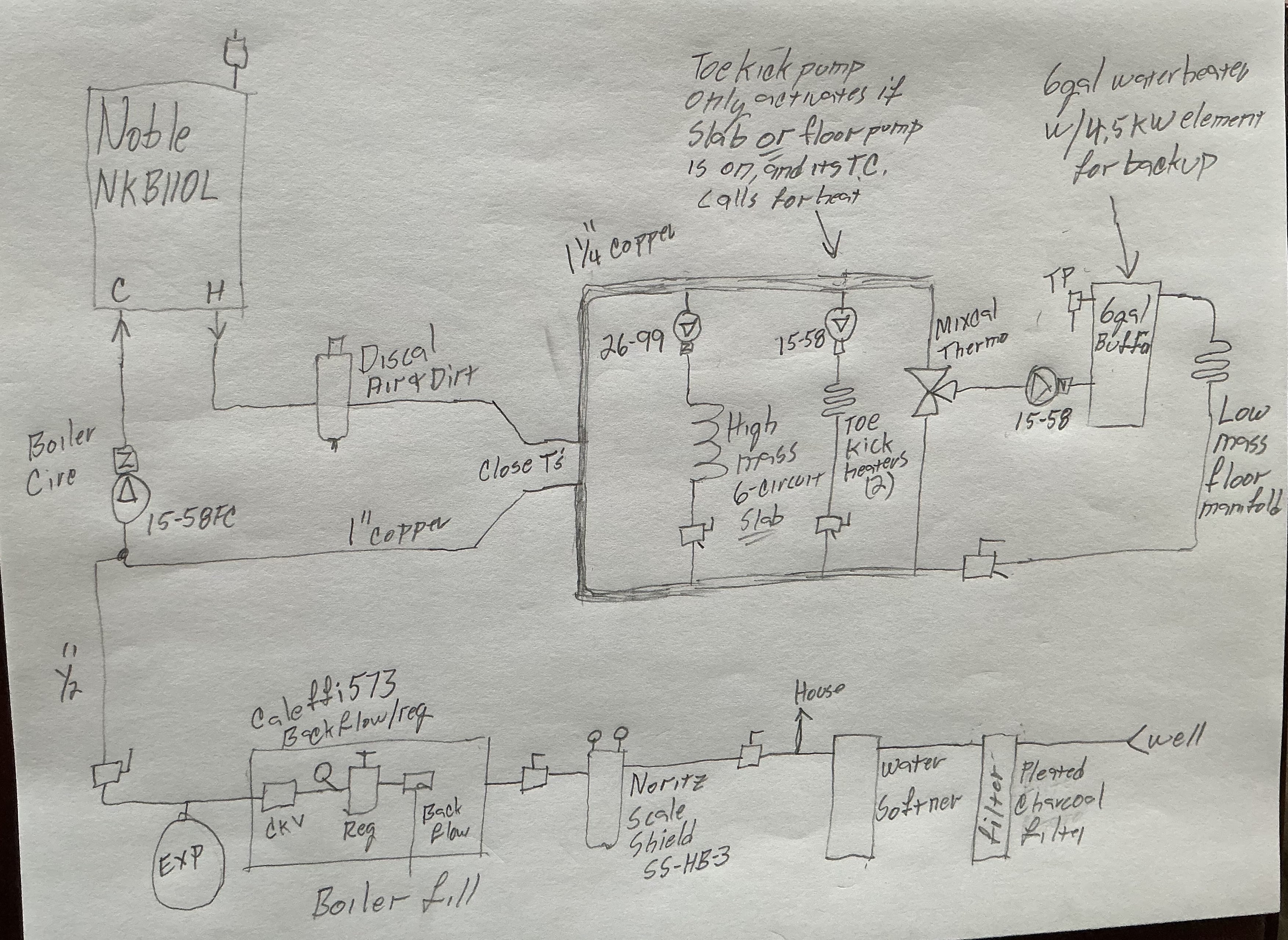
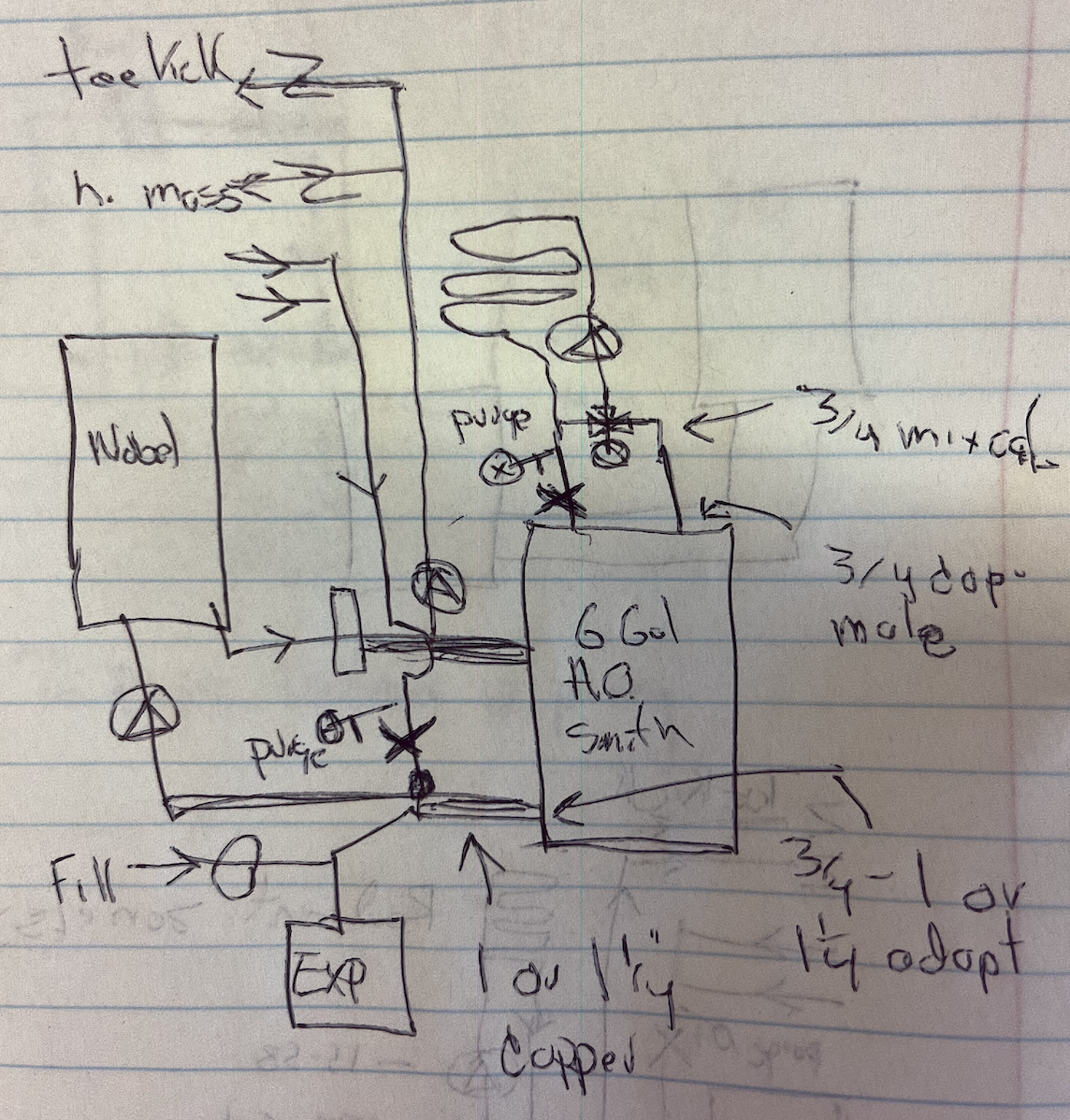
I plan on using the Lovinvar noble 110 propane mod/con boiler. Some of the components I already have. They were used with a tankless water heater to provide temporary heat to the slab last winter. I believe I’m following your “Harvey’s Horseshoe” layout.
For the buffer tank, this AO smith 6 gallon water heater unit is standard single cold in, hot out, with 3/4” inch nipples. I believe this restricts the location to being used just for the low mass radiant floor heating. although I don’t know if this is the best location. Should the boiler fail, the water heater can act as a temporary heater.
The low mass floor heat is 6 circuits totaling 1100 feet of PEX A,attached with aluminum reflector plates, between the Joist cavities,under 3/4” advantec subfloor plywood. Above the plywood is laminate flooring.The joist cavities will be insulated at a later date.
Since the toe kick heaters are such a low btu load, their circulating pump will only be active when the basement slab pump or the floor pump is active, and only if there thermostat calls for heat. This is simple to achieve with a couple DPDT relays. Their 120° thermostat was replaced by the adjustable fan thermostat suggested above. other suggestions?
I think the nortiz scale shield, is similar to most deionized filter filters. If you know of a better unit, let me know.Thanks, Greg
Greg
0 -
It is a bit more complicated than need be. Since you are spending the time and % let the whole system leverage the buffer, not just the mixed down zone.
Take the 6 gallon tank and remove those heat trapper nipples in the side ports. They all have flapper checks that restrict flow.
For the boiler connection into those side taps, get two - 3/4 mip X 1 or 1-1/4 copper. sweat press, whatever.
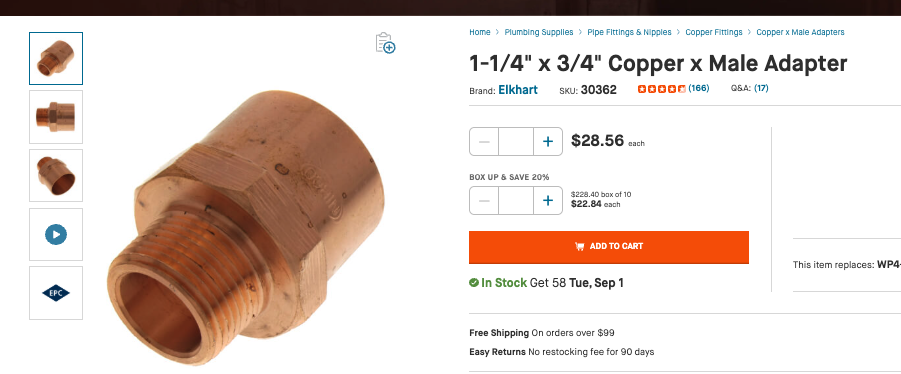
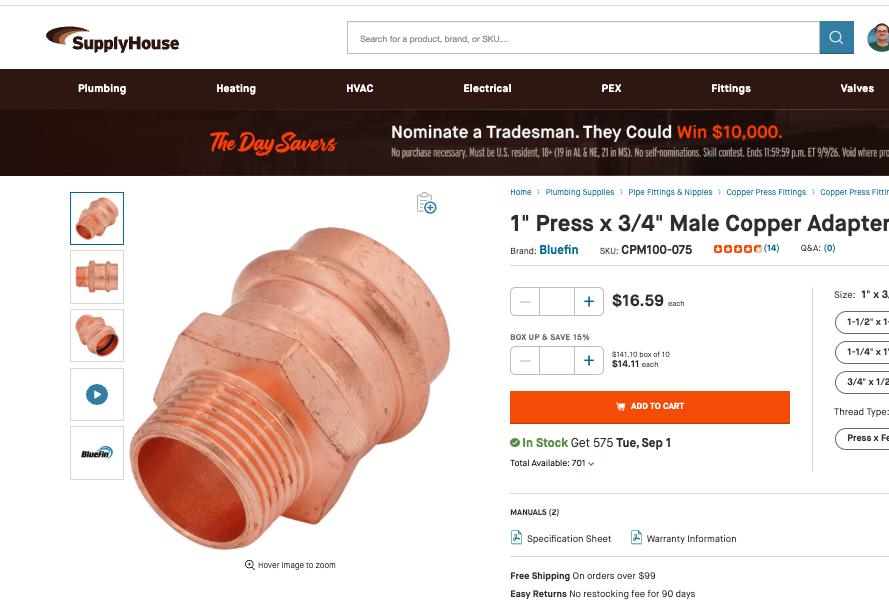
Now you have the increase and the LLH built. It is that piping right at the tank that becomes the "closely spaced tees"
The high temperature zones take off that 1 or 1-1/4 " piping at the tank.
Personally I would use one pump, two zone valves. Why the 29-99??
So these two zones run at whatever the boiler operates at, ODR controlled ideally.
The low temperature mix valve is fine with the 3/4 connections on the top, two - 3/4 mipX sweat adapters, screwed right into the tank.
This low temp zone always runs at the mix valve temperature, regardless where the boiler or tank is set. Assuming the boiler is hotter than the mix valve setting :)
Really no reason to use any 1-1/4 for the flow that boiler needs. But no harm if you want to spend the bucks.
That small short reduction into the tank, just presents a small velocity increase in that section, it works just fine. Much the same as a reduced port ball valve.
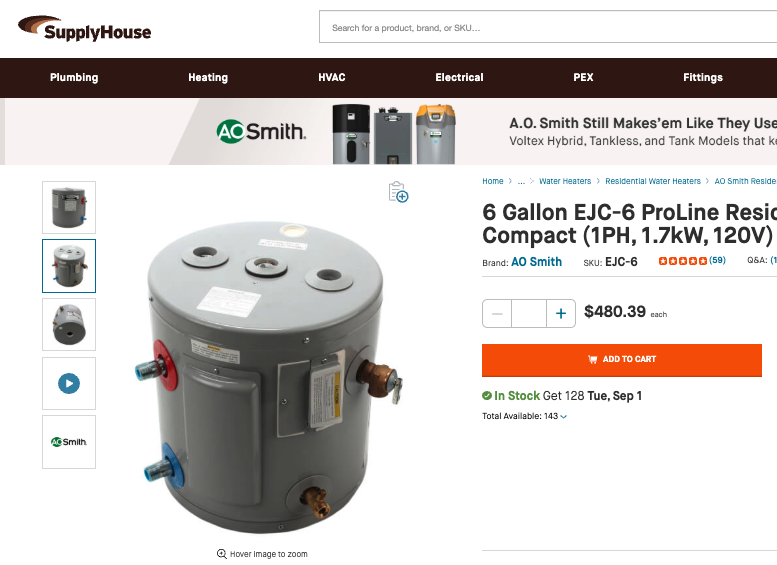
 Bob "hot rod" Rohr
trainer for Caleffi NA
Living the hydronic dream0 -
@hot_rod. I like it! I actually forgot about the zone valve idea that you and @EdTheHeaterMan mentioned earlier.
My reason for not including the 6 gallon water heater buffer tank in the complete secondary zone piping, was not 100% certain that the AO water tank (you link above, and the one I planned on purchasing) offered both a side and top access ports. no help when I called AO Smith. Just read off the same tech document I was reading.
One tech document I just read, did say a plugged input in addition to an anode up top, so I just ordered the tank. If it does not top ports, I’ll rethink the design.The 26-99 pump. Last winter I used a Takaji tankless water heater to temporarily provide heat to the basement slab during construction. The high head loss of this water heater and the added 40 feet of 1 inch PEX A, to the manifold, necessitated this pump. Even with it, i was only able to manage 2.7 GPM at top speed. The new boiler will now be positioned within 10 feet of both high mass and low mass manifolds. I will not need the 26-99 for this new layout, however I’m using it rather than having it sit on the shelf.
Question; not sure why I do not need 1-1/4” in any portion of the primary or secondary circuits. Or exactly where a larger pipe would be required. Plan on using 1” copper and 1” PEX A between boiler circulator, 1”x3/4”x1” T, and buffer tank. Same with boiler output to air/dirt separator, to 1”x3/4”x1” T, to buffer tank. Will use 1”-3/4” reducer male adapters for the boiler and buffer tank. Thanks. Greg.
Greg
0 -
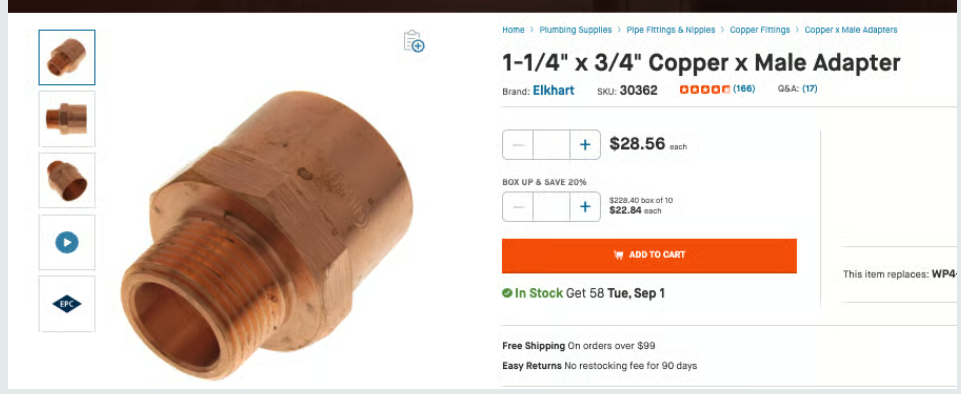
That section of piping right at the tank is the hydraulic serparation. So increasing the size allows adequate flow for the multiple pumps. With your load numbers (gpm needed) 1 inch will work. Better yet increase the tank to 1-1/4" just for 12" of so where the multiple pumps connect. So a 3/4 male X 1-1/4" copper adapter.
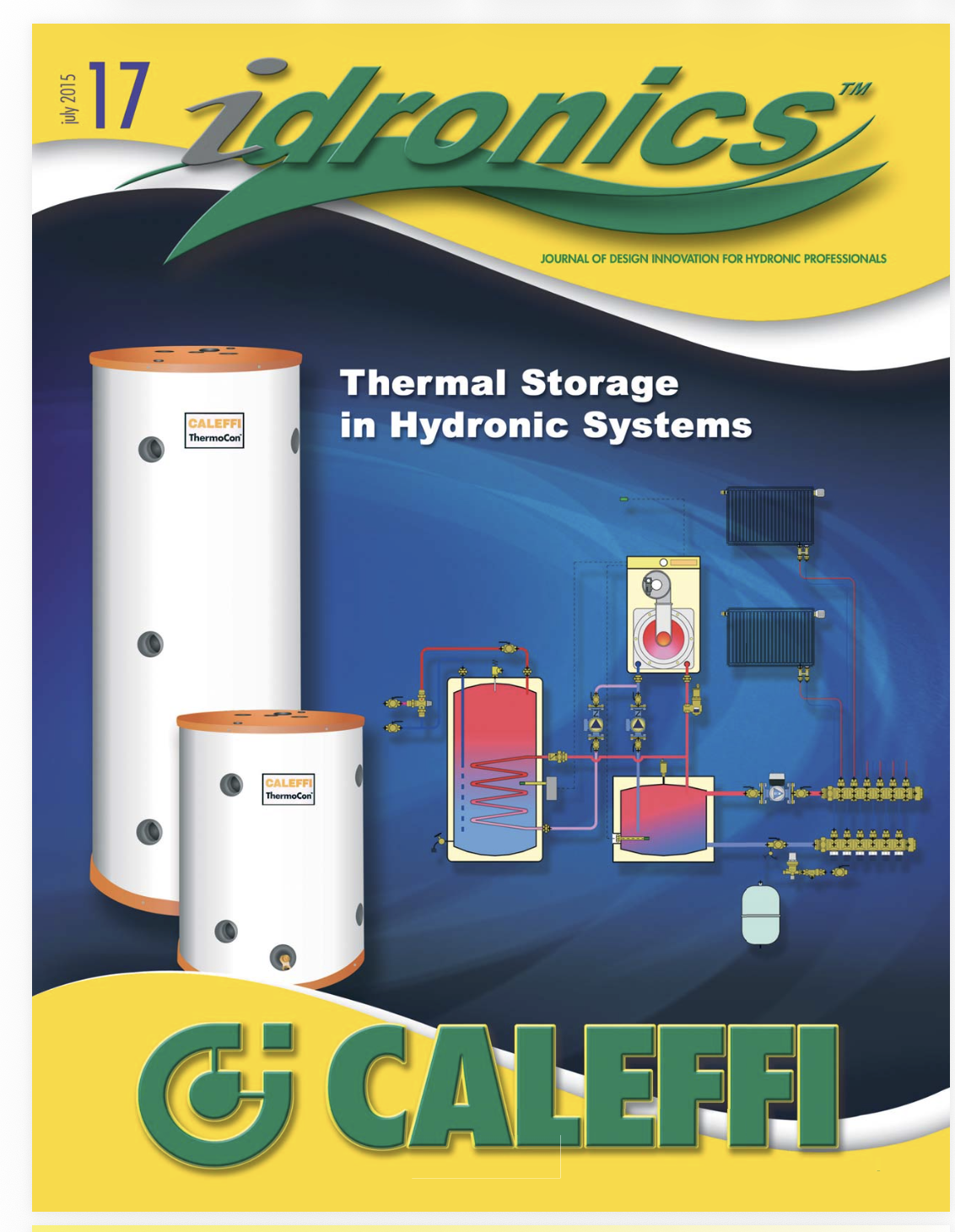
Idronics 17 goes into more detail.
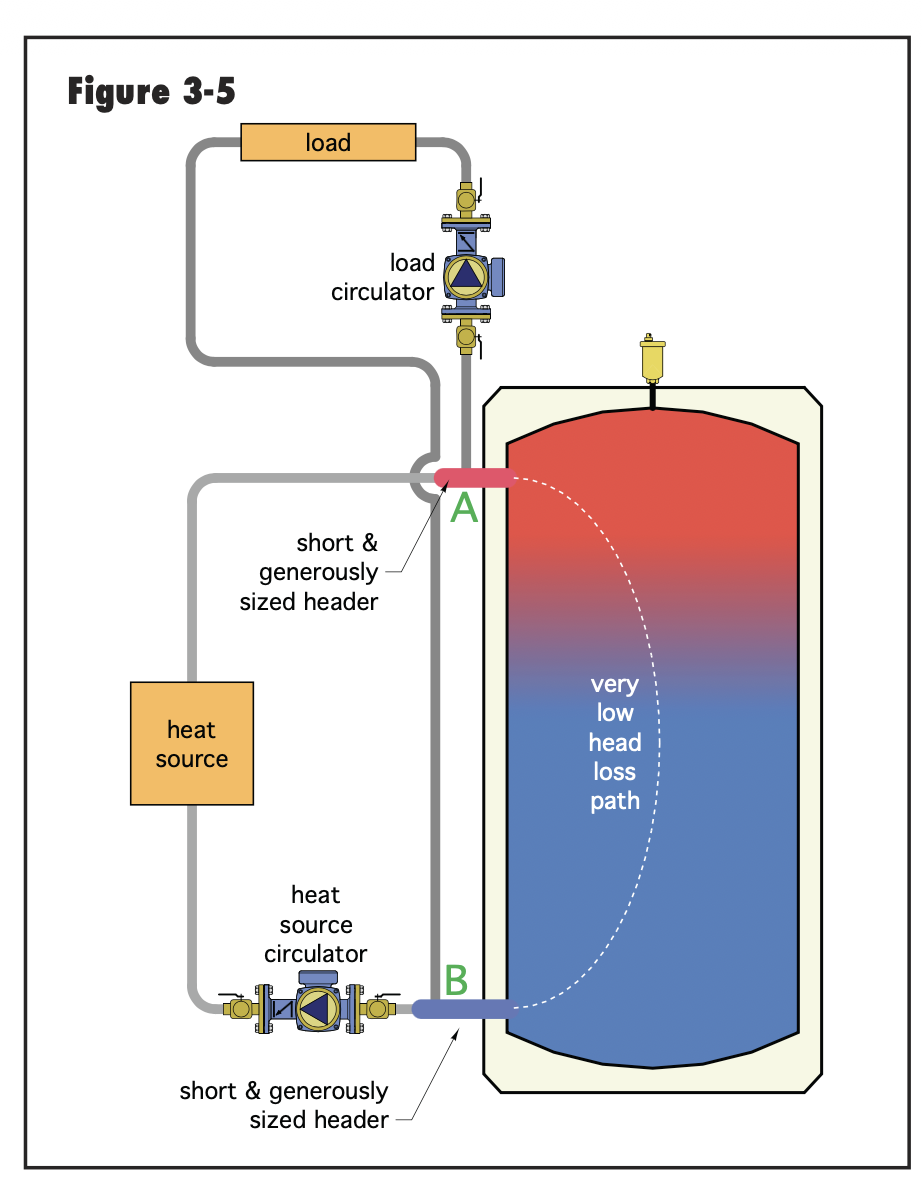
You will want check valves in the pumps, one in the boiler loop also.
All the 6 gallon tanks I have bought have side and top taps, as they are designed for under counter installation options.
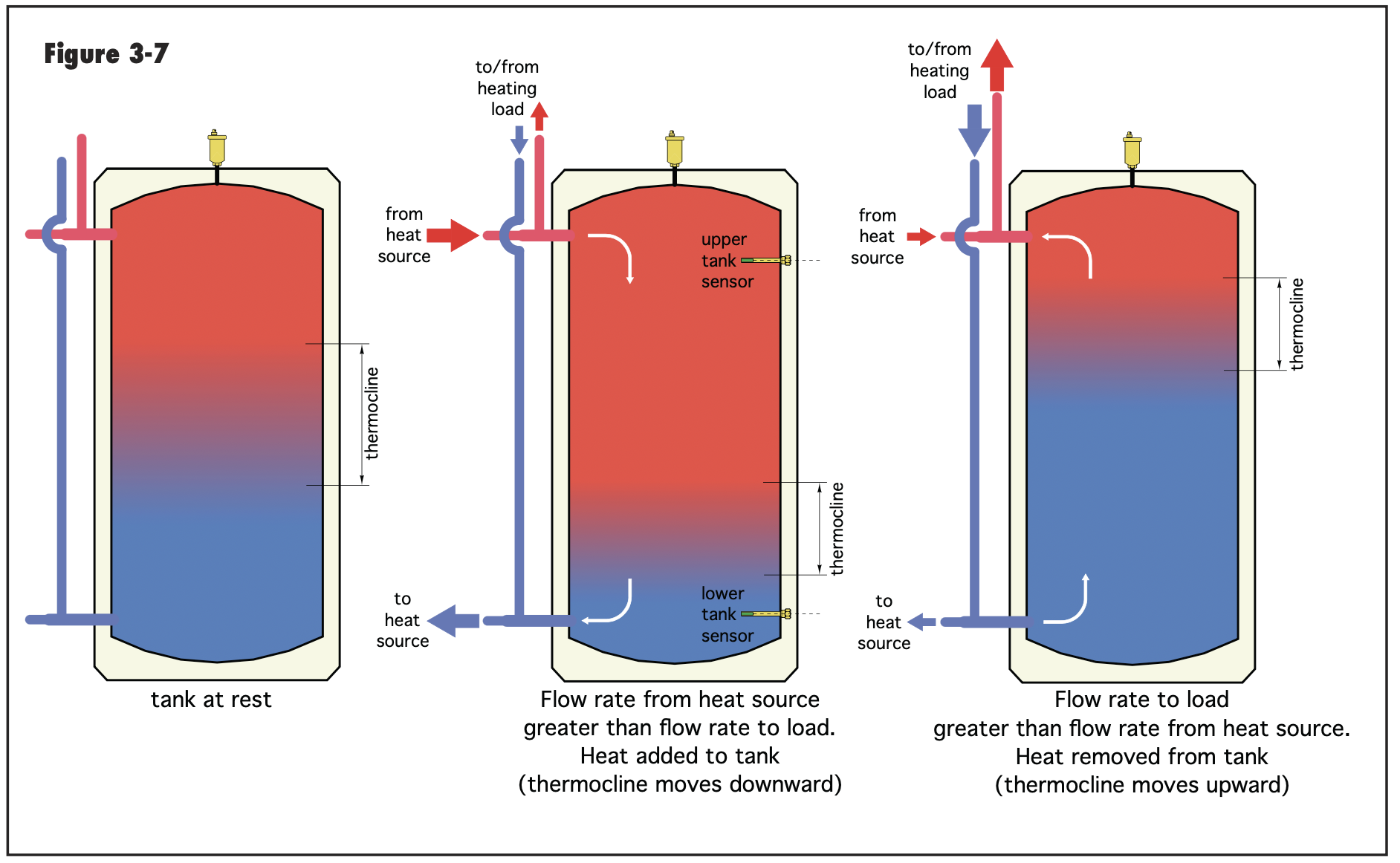
 Bob "hot rod" Rohr
trainer for Caleffi NA
Living the hydronic dream1 -
I wouldn't hook my boiler system to a softened water feed line. look into installing a glycol feeder instead, and fill it with a controlled boiler fluid like DI water or a premix ready to use glycol blend if you are using glycol
1 -
@hot_rod thank you for all your help! I’m reading idronics17 now. Should have most of the equipment Midweek.
Greg
1 -
@GGross , I understand your concerns now.
This topic was very insightful. I will put the noritz scale shield on the water inlet for our tankless water heater.
No water softener for the boiler. Boiler feed will be from the well, through a charcoal filter cartridge, through Puropal-lw, to the boiler feed. During the system fill, inject a pint of fernox f1 conditioner.I don’t have any of the equipment for hardness, TDS, PH, etc. testing. I may be able to get 30 gallons of DI water, but without the ability to test it, it may do more harm than good. Still questioning using fernox F1.
Greg
Greg
0


Categories
- All Categories
- 87.8K THE MAIN WALL
- 3.3K A-C, Heat Pumps & Refrigeration
- 60 Biomass
- 430 Carbon Monoxide Awareness
- 133 Chimneys & Flues
- 2.2K Domestic Hot Water
- 6K Gas Heating
- 124 Geothermal
- 170 Indoor-Air Quality
- 3.9K Oil Heating
- 79 Pipe Deterioration
- 1.1K Plumbing
- 6.7K Radiant Heating
- 397 Solar
- 16.1K Strictly Steam
- 3.5K Thermostats and Controls
- 56 Water Quality
- 51 Industry Classes
- 51 Job Opportunities
- 18 Recall Announcements